

Picture a crafts fair on a Sunday afternoon. One stall is stacked with Madhubani paintings, fish and peacocks in red and yellow, each sheet rolled and tied with string. You pick one up and ask the seller if it is authentic. He says yes. Of course he does. That answer costs him nothing.
Now ask him something else. Ask who painted it.
Most people who want to know how to know if art is authentic start with the first question. It feels like the sensible one. It is the weak one, because almost anyone can say yes to it. The second question is much harder to fake. Either the seller gives you a name, a village and a story you can check, or he goes vague. Our artisans. Some ladies from Bihar. That vagueness is your answer.
At Rooftop we sell folk and tribal art from hundreds of painters, and this small switch in the question does more work than any magnifying glass. Here is why it works, what a good answer sounds like, and what to do when you get a bad one.
Authentic is a word that can mean anything
Ask five people what makes a painting authentic and you will hear five different things. For one person it means painted by hand. For another it means the painter belongs to the community the art form comes from. Someone else cares about natural colours. Someone else only means it is not a fake copy of a famous work.
A seller can say yes to every one of these and still tell you very little. A painting can be made by hand in a city workshop by someone who picked up the style from a video last month. It is hand-painted. Is it authentic? That depends on which meaning you had in mind, and the seller gets to choose.
Even the law only goes part of the way. Madhubani, Warli and Pattachitra are registered as Geographical Indications, which ties those names to the regions they come from. That is useful. But a GI tag describes a region. It cannot tell you whose hand held the brush on the sheet in front of you.
Who made it can. It is a question with one answer, and the answer leads somewhere.
A name is a paper trail
Once you know who made a painting, you can check almost everything else. A name leads to a village. The village leads to a community or a teacher. The teacher leads to a style. The artist's other work shows you whether this painting looks like theirs. Awards, exhibitions, interviews and past sales all hang off that one name.
Without a name, you have none of this. You are left judging the painting on looks alone, and looks are exactly what a good copyist is good at.
So let us follow a few names and see where they go.
The woman from the building site
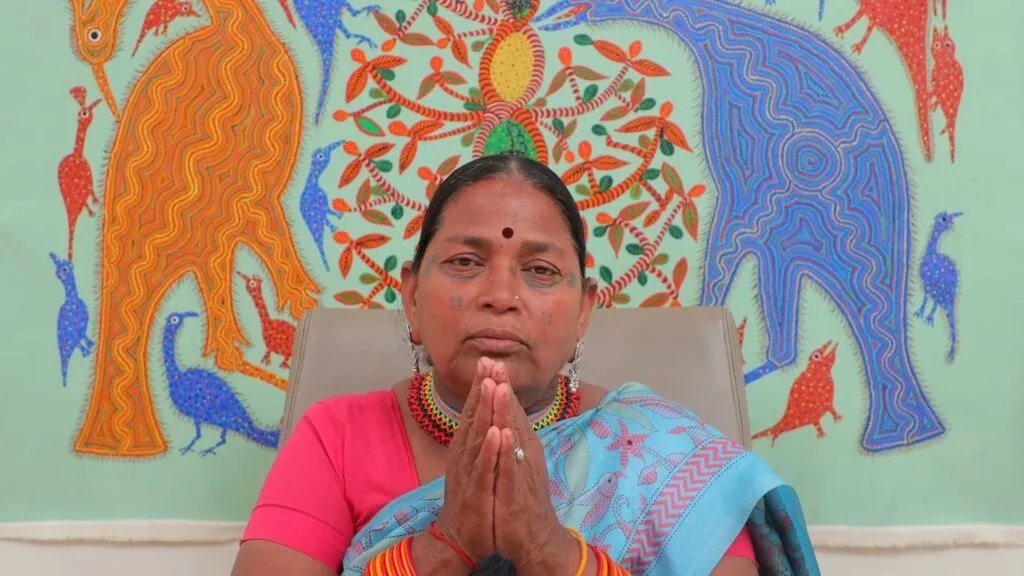
Padma Shri Bhuri Bai · Image source: Rooftop
Bhuri Bai grew up in Pitol, a village in the Jhabua district of Madhya Pradesh. She started painting at ten, on walls, the way Bhil women always had. As a young woman she worked as a daily wage labourer on a construction site in Bhopal. That is where the artist Jagdish Swaminathan saw what she could do and invited her to paint at Bharat Bhavan.
She became the first Bhil artist to paint on paper and canvas instead of mud walls. Years later she received the Padma Shri. Her profile on Rooftop, under Bhuri Bai, carries the full story.
Why should a buyer care about any of this? Because the story can be checked, and it pins down a style. A Bhuri Bai painting has her animals, her trees and her way of filling a body with rows of colour. If someone sells you a Bhuri Bai that looks like nothing else she has made, her name gives you the means to notice.
Her friend Lado Bai also came to painting through Swaminathan. Look at her lizard and frogs.
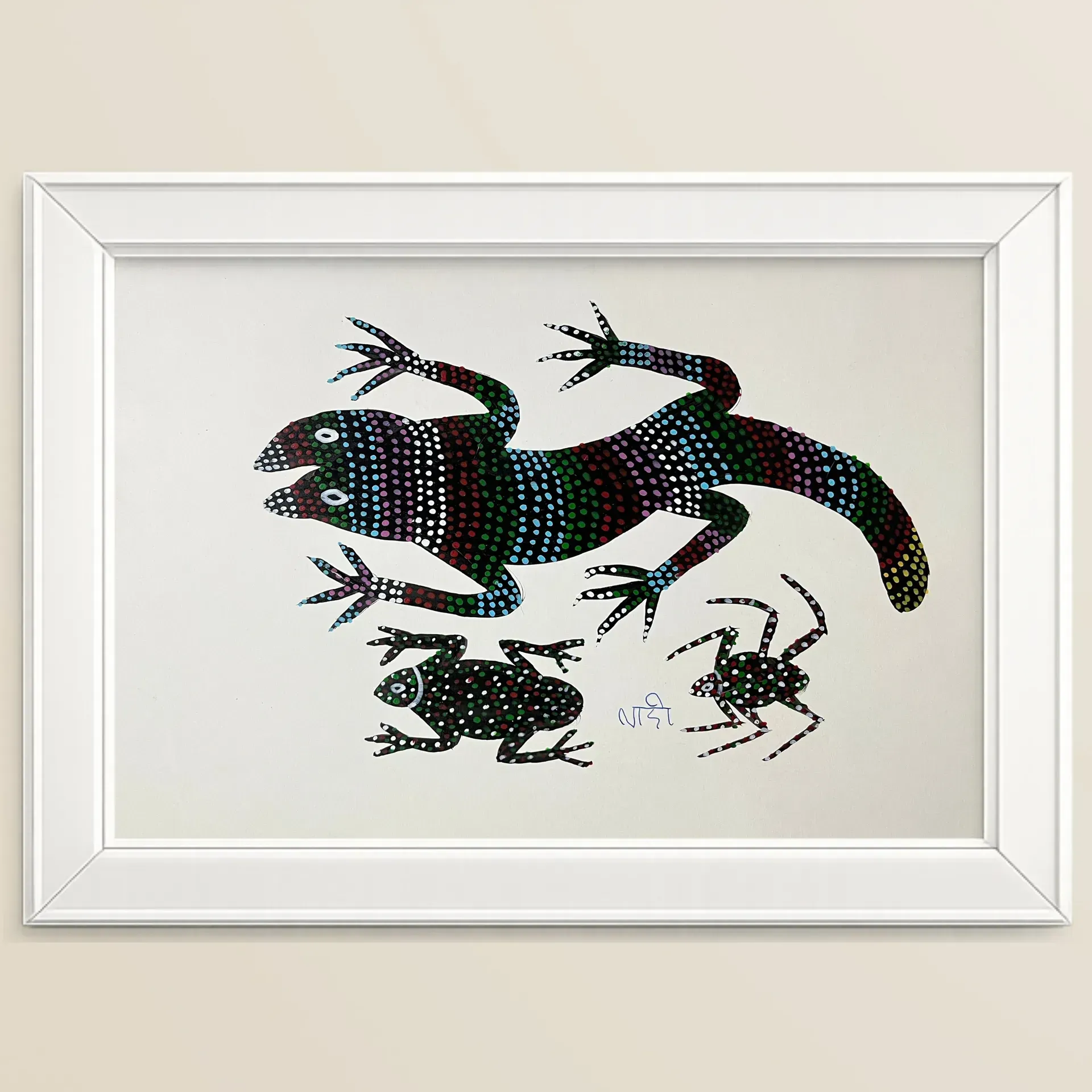
Lizard and frogs · Lado Bai · Acrylic on paper · Image source: Rooftop
Every surface is dots, and the dots are hers. She lays down dark silhouettes first, then cyan, pink, green, red and white, one dot at a time. A printed copy would carry the same colours. It would lose the small wobble of a hand that placed each dot separately, and it would arrive with no name you could look up.
The family name on a Warli painting
Warli is probably the most copied tribal art form in India. A circle, a triangle and a line are easy to reproduce, so they turn up on tea towels, phone covers and hotel lobbies. Ask whether any of these is authentic Warli and you will get a shrug.
Ask who made it and the Warli world gets small very quickly. Warli painting comes from the Warli community of Palghar and Thane in Maharashtra. The artist most tied to its modern life was Jivya Soma Mhase, who received the Padma Shri and took Warli from walls onto paper and into museums abroad. His son Sadashiv and his grandsons Pravin and Vijay still paint.
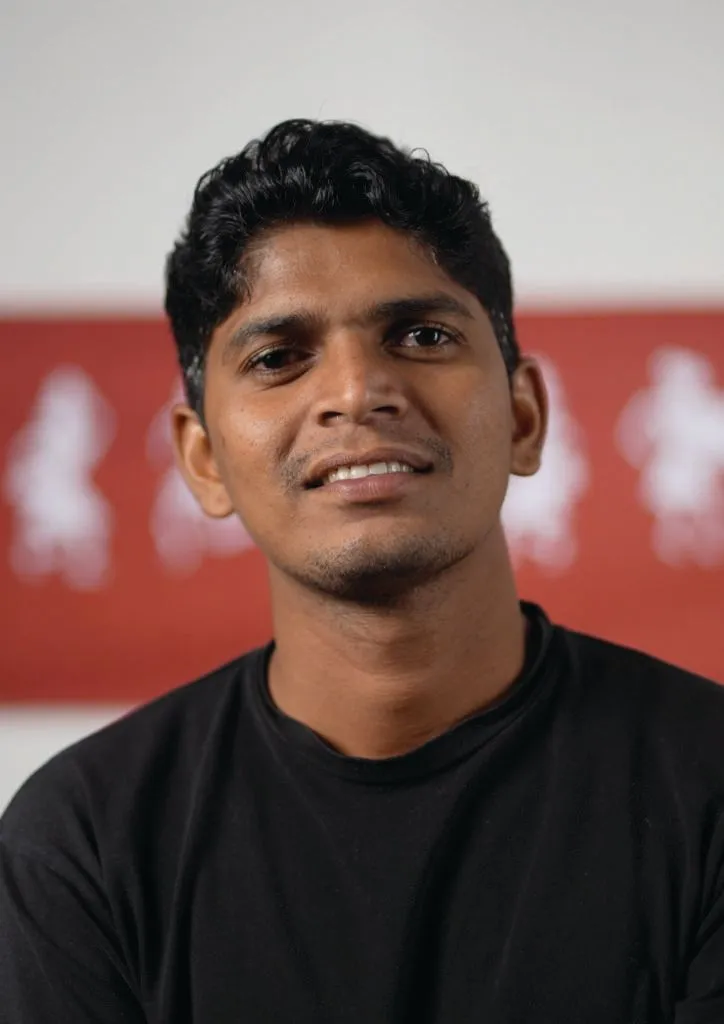
Pravin Mhase, grandson of Padma Shri Jivya Soma Mhase · Image source: Rooftop
Pravin Mhase paints on Majarpat, a ground of cow dung, the same earth Warli families use to plaster the walls of their homes. In The Warli Tree of Life, animals gather around a single tree, and every shape is a circle, a triangle or a line. You could copy the image on a printer. You could not copy the uneven cow dung ground you feel under your fingers, or the name of a painter whose grandfather changed the art form.
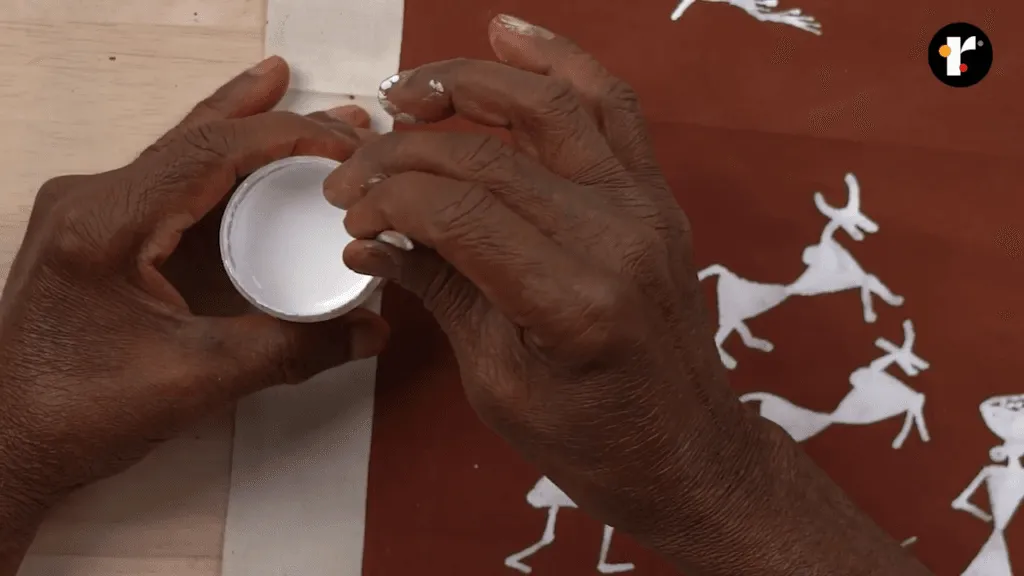
A still from Rooftop's Warli course, taught by the Mhase family · Image source: Rooftop
Most Warli paintings show crowds at harvests, weddings and dances. Pravin's The Delicate Web of Life shows a spider. When a painter from the family that shaped modern Warli picks a quiet subject, it tells you something about him as well as about Warli. That is the sort of thing a name lets you see.
The honest copy
The next story shows that authenticity lives in the claim a seller makes, more than in the object.
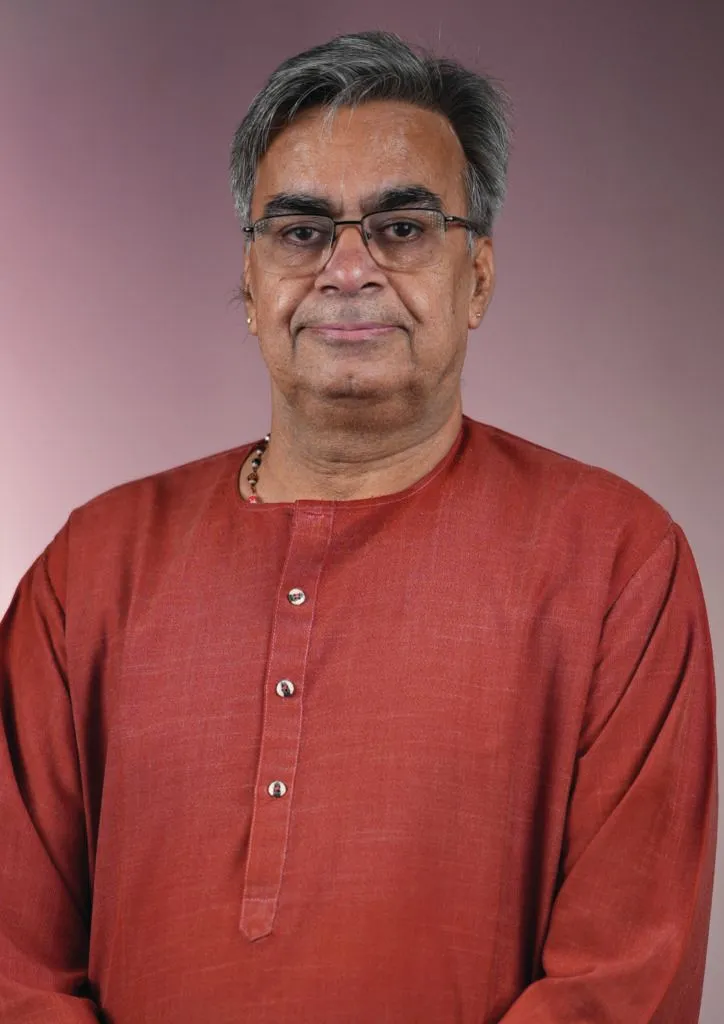
Mahaveer Swami, the painter credited with reviving the Bikaner school · Image source: Rooftop
Mahaveer Swami was born in 1959 into a family of traditional Bikaner artists. He trained under the late Vedpal Sharma Bannu, and for years he painted commissioned replicas of Mughal and Rajasthani masterworks, copying old paintings line for line. That is how he built the control he is known for. He went on to win the National Award, and Rooftop credits him with reviving the Bikaner school.
A replica by Mahaveer Swami, sold as a replica by Mahaveer Swami, is an honest painting. A master made it by hand and the seller described it truthfully. The same replica, sold as a 17th-century original, is a fraud. Nothing about the paint changed. Only the claim did.
That is the whole argument in one example. Asking who made it checks whether the claim matches the maker. Asking whether it is authentic lets the seller hide inside a word.
If you want to see what years of patient copying do to a hand, his Bikaner miniature course teaches the method he uses for everything he paints, from a desert leaf to a god.
Authentic does not have to mean born into it
Some buyers swing too far the other way. They decide a painting only counts if the painter was born into the community. That rule would shut out some of the finest artists working today.
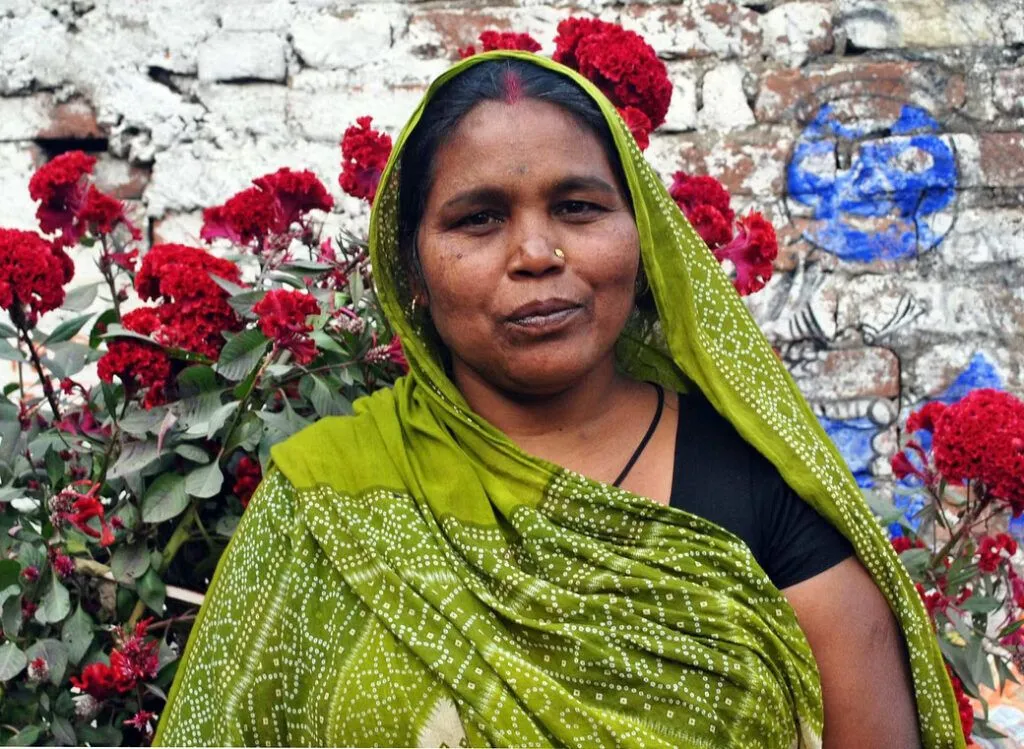
Padma Shri Dulari Devi · Image source: Rooftop
Dulari Devi came from a fishing community in Mithila. She worked as a domestic helper in the home of an artist, learned to paint there, and later trained with the master Mahasundari Devi. She now holds the Padma Shri, and she paints women's lives and social change alongside the gods and myths of Mithila.
Her route into Madhubani painting did not follow the usual line. Her work is Madhubani in every way that counts, with the double-line borders, the filled shapes and the stories. And her name tells you exactly whose hand you are looking at. You can learn from that hand as well, because the Madhubani course by Dulari Devi opens with her own story before a single line is drawn.
So the test is not where the painter was born. It is whether you know who the painter is, and whether the painting fits that person.
What a good answer sounds like
When you ask who made it, listen for detail.
A useful answer gives you:
- A full name, not a group.
- A village or a district.
- Where they learned, whether from a parent, a guru or a family workshop.
- Other work by the same painter that you can look at.
- Some sign that the painter is paid fairly, such as a royalty on each sale.
A weak answer sounds like our artisans, a women's cooperative in Bihar, or tribal painters from Madhya Pradesh. Any of these could be true. Cooperatives do real work, and plenty of good painters belong to one. But a cooperative has members, and members have names. Ask which member painted this piece. A seller who works directly with painters will know. A seller who buys stock by the bundle will not.
Some traditions are made by more than one pair of hands. A large cloth may be drawn by a senior painter and coloured with help from family or students. That is normal and honest. The Dhanalakota family of Cheriyal painters lives in Hyderabad and paints together every day: Nageshwar, his wife Padma, and their sons Sai Kiran and Sravan. A good seller will tell you whose workshop a piece came from and who led the work.
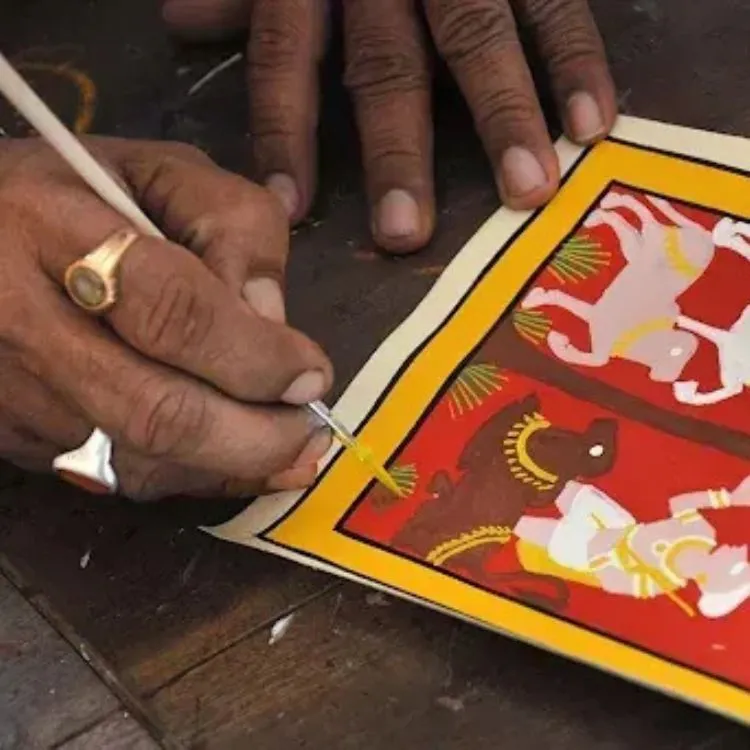
The making of a Cheriyal painting by the Dhanalakota family · Image source: Rooftop
Also watch for the name that does not match the work. If a listing credits a well-known artist and the painting looks nothing like the rest of their output, trust your eyes over the label. Then ask to see more of the artist's paintings so you can compare.
Why sellers go vague
It helps to know why a seller cannot answer, because the reason changes what you do next.
Sometimes the seller is a reseller three steps from the painter. The work passed through a wholesaler and an agent before it reached the stall, and the name fell off somewhere along the way. The painting may be perfectly good. You just cannot know, and you should pay accordingly.
Sometimes the work comes from a production unit where styles are learned fast and painted in volume. These pieces are hand-made, and they are often cheap for a reason. They are decor. Nothing is wrong with decor, as long as nobody sells it to you as something else.
And sometimes the seller is hiding something. The name would show that the work is copied, or printed, or credited to someone who never touched it. Vagueness protects them. Your question takes that protection away.
Read the painting for its maker
Paintings carry their makers inside them if you know where to look.
Start with the signature. Many folk and tribal painters sign their work, often along the bottom edge, in Hindi or English. A signature is not proof on its own, since a signature can be copied too. But a missing signature on a painting sold as a named artist's work is worth a polite question.
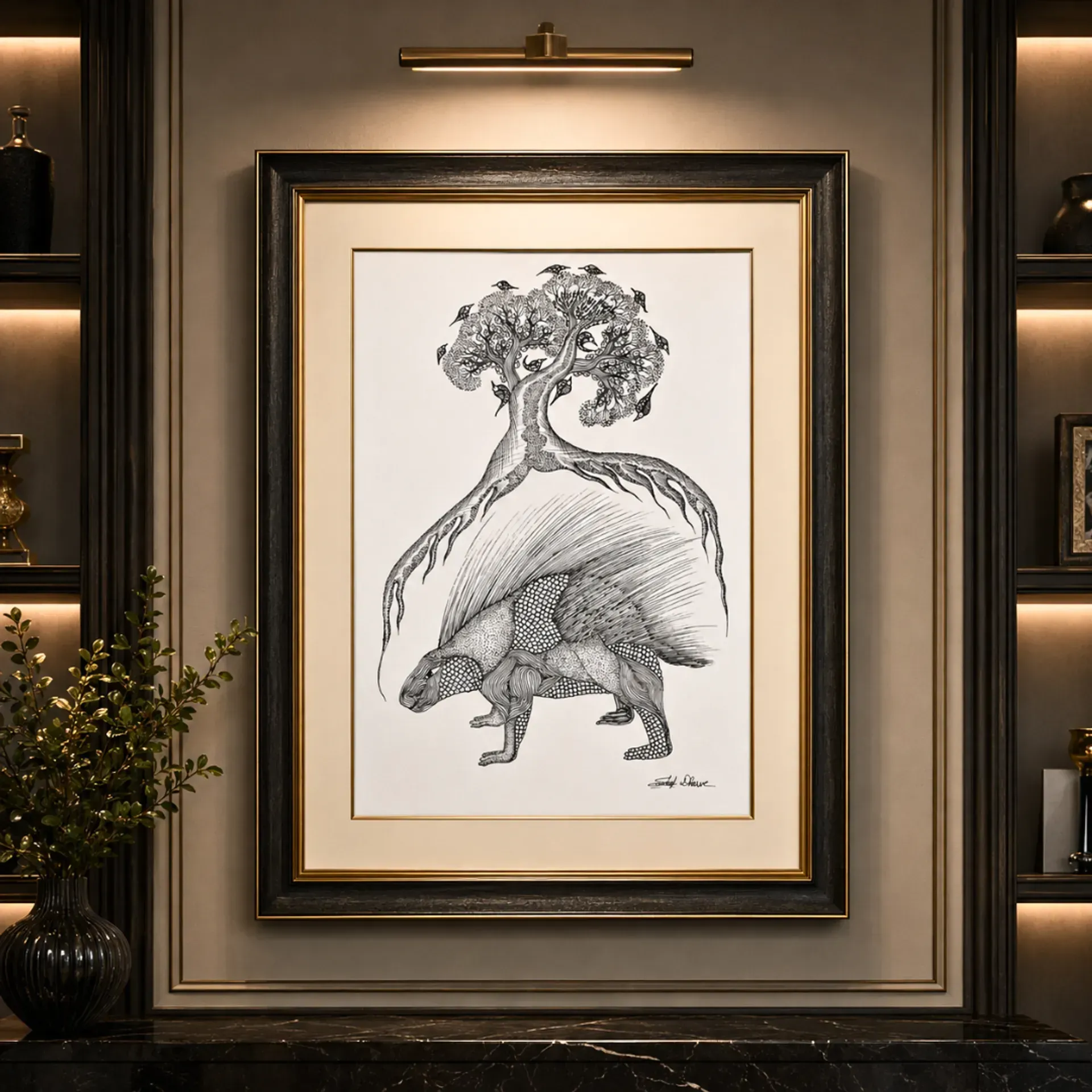
Porcupine · Sandip Dhurve · Gond painting · Image source: Rooftop
Then look at the hand. In Gond painting, every artist develops a signature fill, a pattern of dashes, dots or fish scales that works almost like handwriting. In Sandip Dhurve's porcupine, the animal's quills turn into roots, a trunk and a canopy full of birds, all built from dotwork and fine hatching. Set it beside a Gond painting by someone else and the fills look different, the way two people's handwriting does. The Gond course with Venkat Raman Singh Shyam spends real time on this, and learners build a fill of their own by the end.
Look at the materials, too. Kishor Gayen, a Paitkar painter from Amadubi in Jharkhand, works in natural colours on handmade paper.
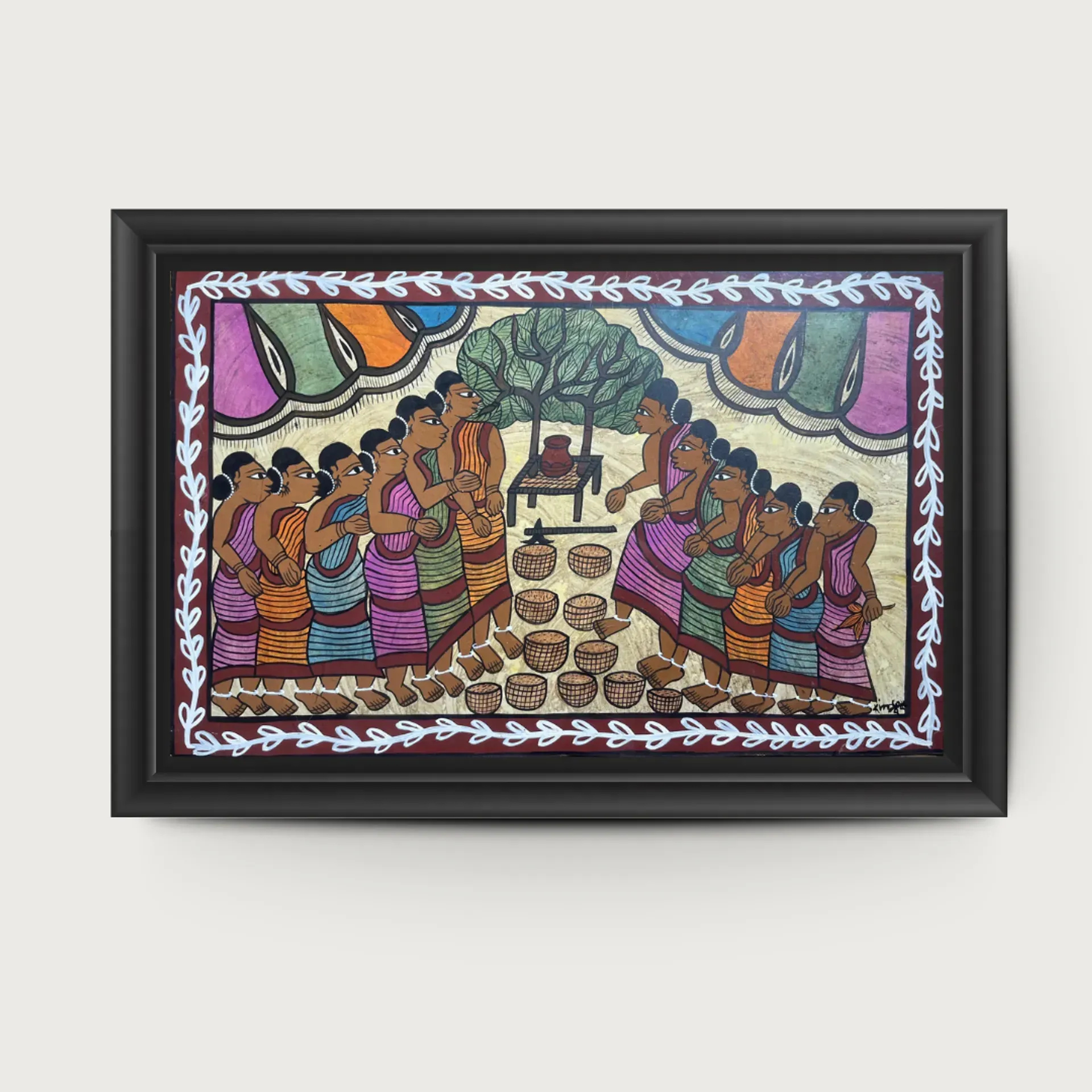
Lagre Courting Dance Under the Canopy · Kishor Gayen · 22 x 14 in · Natural colours on handmade paper
In Paitkar painting, red comes from hematite, yellow from ochre or turmeric, orange from the palash flower and black from burnt rice or lamp soot. Colours like these sit flat and slightly chalky on the page. When a listing says natural colours, and the painter's name and village line up with a tradition that uses them, each detail supports the next. When the colours look glossy and plastic, the story and the object have stopped agreeing.
Many painters still grind these colours themselves, and they can show you how it is done.
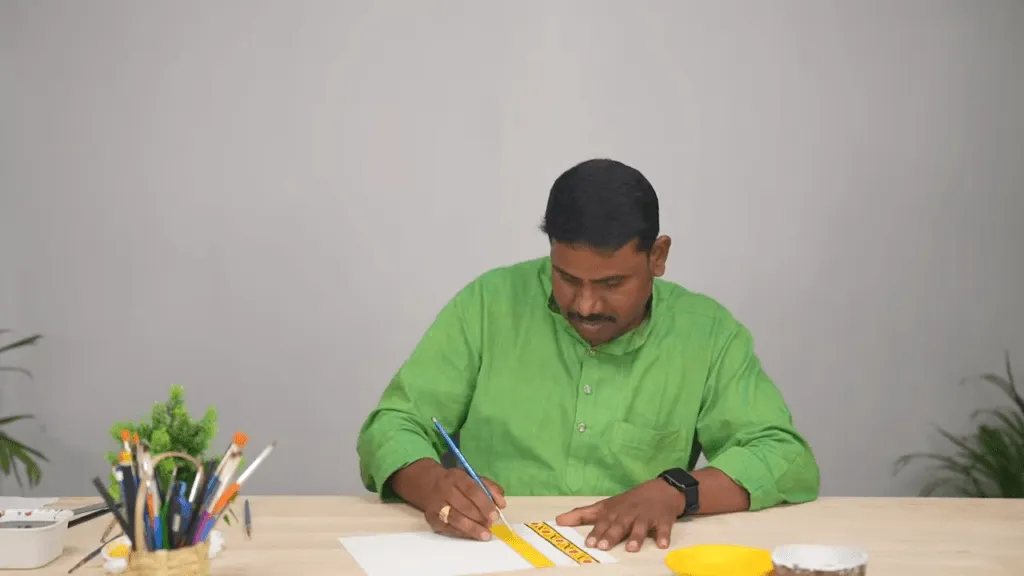
Natural colours being prepared by hand, a still from Rooftop's Cheriyal course with the Dhanalakota family · Image source: Rooftop
Now put two of Kishor Gayen's paintings side by side. His smaller Tribal Lifestyle XIII packs several moments of village life onto one sheet, with patterned clothes repeating from figure to figure in flat blocks of vermilion, yellow, blue and green. The same palette and the same way of lining people up across the page turn up in both works. That is what comparing a painting with the artist's other work means in practice.
Even one small painting can point to a place. Chetan Parshuram Gangavane paints in the Chitrakathi style of Pinguli, with bold outlines, flat colour and a border that recalls the illustrated panels storytellers once used. His Tulsi Vrindavan Worship shows women gathered round the raised tulsi planter in a Maharashtrian courtyard. The painter, his village, his style and his subject all agree with each other. In practice, that agreement is what authentic looks like.
Buying online, where you cannot touch it
Online, you lose the chance to tilt a painting under a lamp, so make the seller do it for you.
Ask for photos in daylight, straight on, with no filter. Ask for a close-up of one small detail, such as an eye or a border. Ask for a photo of the back, and of the edges if it is on canvas. If the painting is by a living artist, ask whether there are process photos or a short video of the work in progress. Painters who work by hand usually have these, and a good seller is glad to share them.
On Rooftop, every listing has an enquiry button for exactly these questions. Use it. A seller who gets annoyed by questions about the maker is telling you something.
Where the physical checks fit in
None of this means you should skip the basic checks. Tilt the painting under a light and look for paint texture. Zoom in with your phone and look for brush edges rather than a printer's dot pattern. Turn it over. Our guide to telling a hand-painted work from a print walks through eight of these checks in detail.
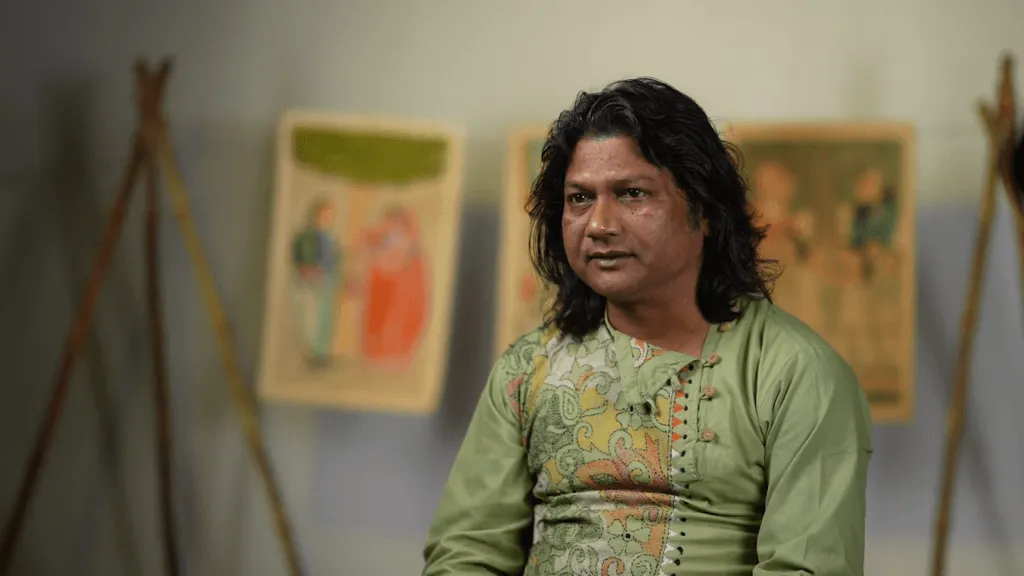
A still from Rooftop's Kalighat course with Anwar Chitrakar · Image source: Rooftop
Physical checks answer one question, though. They tell you whether something was painted by hand. They cannot tell you by whom. Two Pichwai paintings of the same scene are never identical, as our guide to your first Pichwai explains, because two painters never make exactly the same choices. That is good news when you are spotting prints. It still does not tell you whose choices you are looking at. For that, you need the name.
What a certificate of authenticity proves
A certificate helps. It is also just a piece of paper that a seller writes.
A good one names the artist, the art form, the medium, the surface and the size. It comes from a seller who can link the work to that artist and who will still be around if a question comes up later. A certificate that says handmade Indian art and nothing more proves almost nothing.
At Rooftop, every artwork is painted by a verified artist who is named on the listing, every painting ships with a certificate of authenticity, and the artist earns a royalty on every sale. We hold ourselves to that because it is the standard we would ask of any seller. If a seller cannot tell you who made the work, the certificate is decoration.
Price is a clue as well
Price will not tell you who made a painting. It will tell you when a story does not add up.
A detailed three-foot Pichwai, painted by hand over weeks, cannot cost the same as a cushion cover. When the price is impossible for the work involved, something in the story is wrong.
At the top end, prices follow names. Rooftop's artist pages record a painting by Gond artist Gariba Singh Tekam selling for ₹3,30,108 at Saffronart in 2020, and Baiga painter Jodhaiya Bai's Untitled realising ₹48,00,000 at Pundole's in March 2025. Those figures attach to people. Collectors paid for a Tekam and a Jodhaiya Bai, and the art form came along with the name. If you ever hope a painting will hold its value, the name is what carries it. Our honest look at whether art is a good investment goes further into this.
Learn the art form and the hand becomes visible
The quickest way to recognise a maker is to try making the thing yourself.
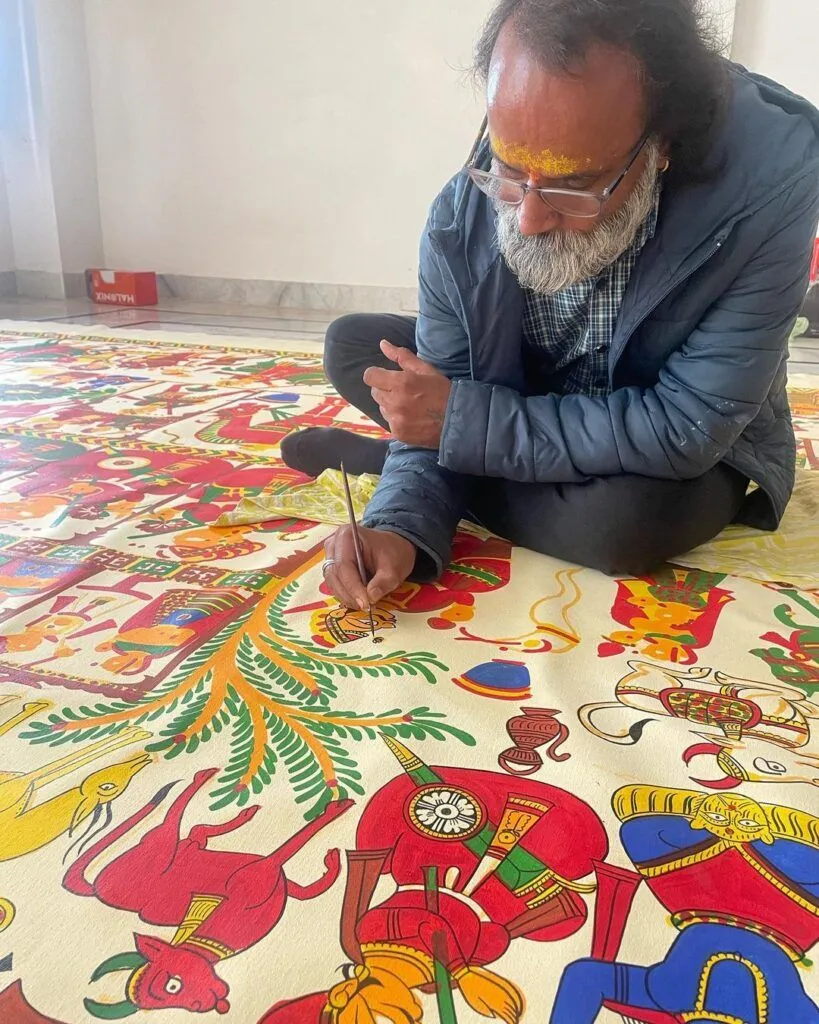
Kalyan Joshi at work on a Phad painting · Image source: @joshi.kalyan, via Rooftop
Spend a few evenings with Kalyan Joshi's Phad course and you learn that Phad colour follows a code, with orange for limbs, red for important figures and green for trees. After that, a Phad with the code jumbled looks wrong to you at once. Place a few hundred dots in Lado Bai's Bhil course and a printed dot will never fool you again. Bhuri Bai teaches the same form in her own Bhil course, and taking both shows you how two hands read one tradition differently. The Warli course by the Mhase family even covers the cheap commercial copies that worry Warli artists, in the family's own words.
Each of these is taught by a named master. It is the same question turned around. You are learning from someone whose name you know.
A short checklist for your next purchase
- Ask who painted it, and expect a full name.
- Ask where they live and who taught them.
- Look at their other work and see whether this piece fits.
- Check the materials against the tradition and the listing.
- Tilt it, zoom in and turn it over to confirm it is hand-painted.
- Read the certificate and look for the artist's name on it.
- Check that the price makes sense for the work involved.
- Ask how the artist gets paid.
Browse Rooftop's original paintings, where every listing names the painter.
Frequently asked questions
How do I know if a piece of Indian art is authentic?
Ask who made it. A real answer gives you a full name, a village, a teacher and other work you can compare. Then confirm the piece is hand-painted by checking for paint texture and brush edges, and ask for a certificate that names the artist.
Does a GI tag mean a painting is authentic?
A GI tag protects the name of an art form tied to a region, such as Madhubani or Warli. It does not tell you who painted a particular work, so use it alongside the artist's name.
Is a certificate of authenticity enough on its own?
Only if it names the artist and comes from a seller who can link the work to that artist. A certificate with no name on it proves very little.
Are Rooftop paintings authentic?
Every painting on Rooftop is hand-painted by a verified artist named on the listing. Each one ships with a certificate of authenticity, and the artist earns a royalty on the sale.
The question at the stall
Go back to that crafts fair. The man with the rolled Madhubani paintings might be an honest seller with honest work. He might not. You will not find out by asking whether the paintings are authentic. Ask whose hands made them. If he can tell you, you go home with a painting and a person behind it. If he cannot, you go home with a picture of a fish.