15% OFF
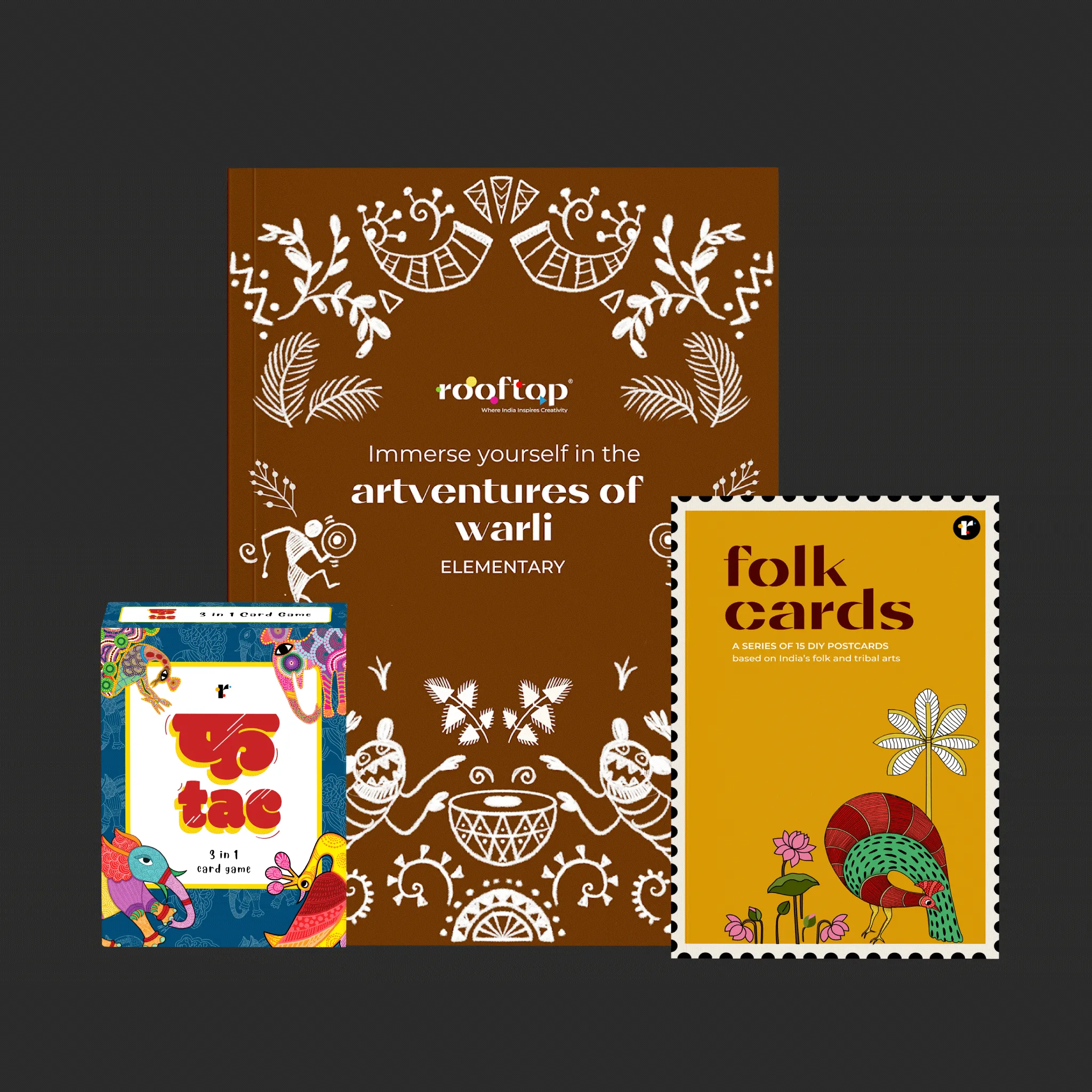
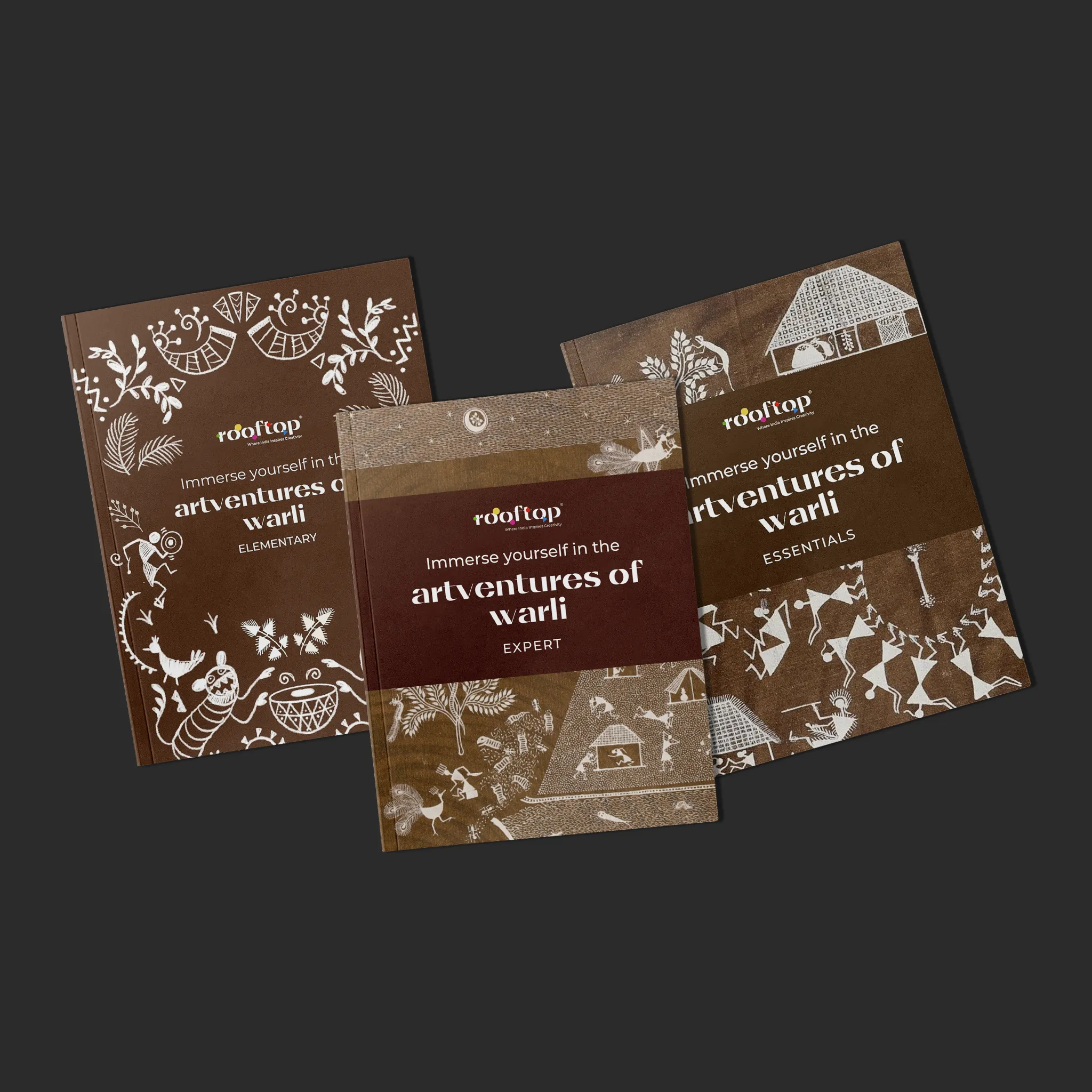
Artventures of Warli : A Creative Journey Through Tribal India (Set of 3)
$ 69$ 79


Let's explore the art form of Warli!
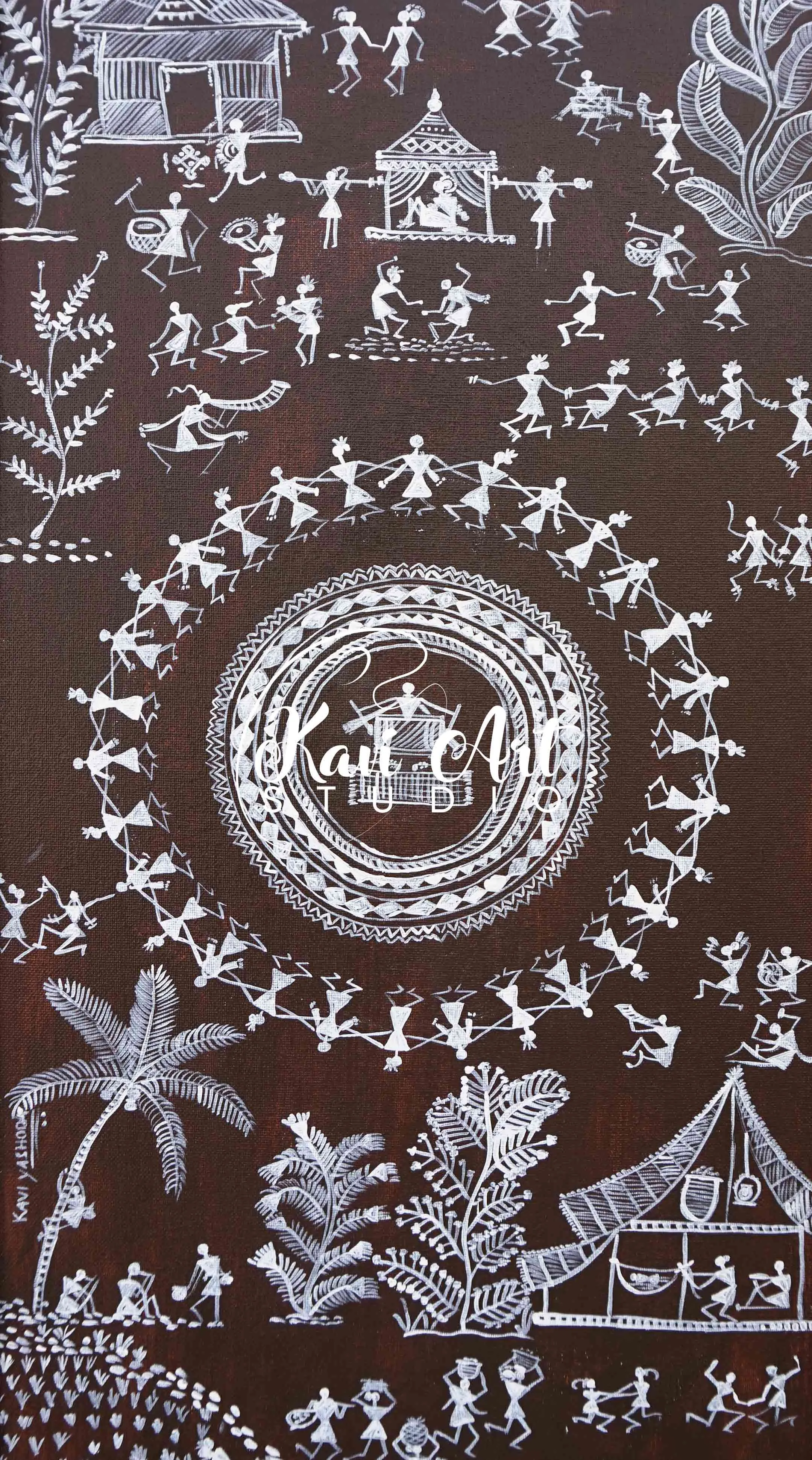
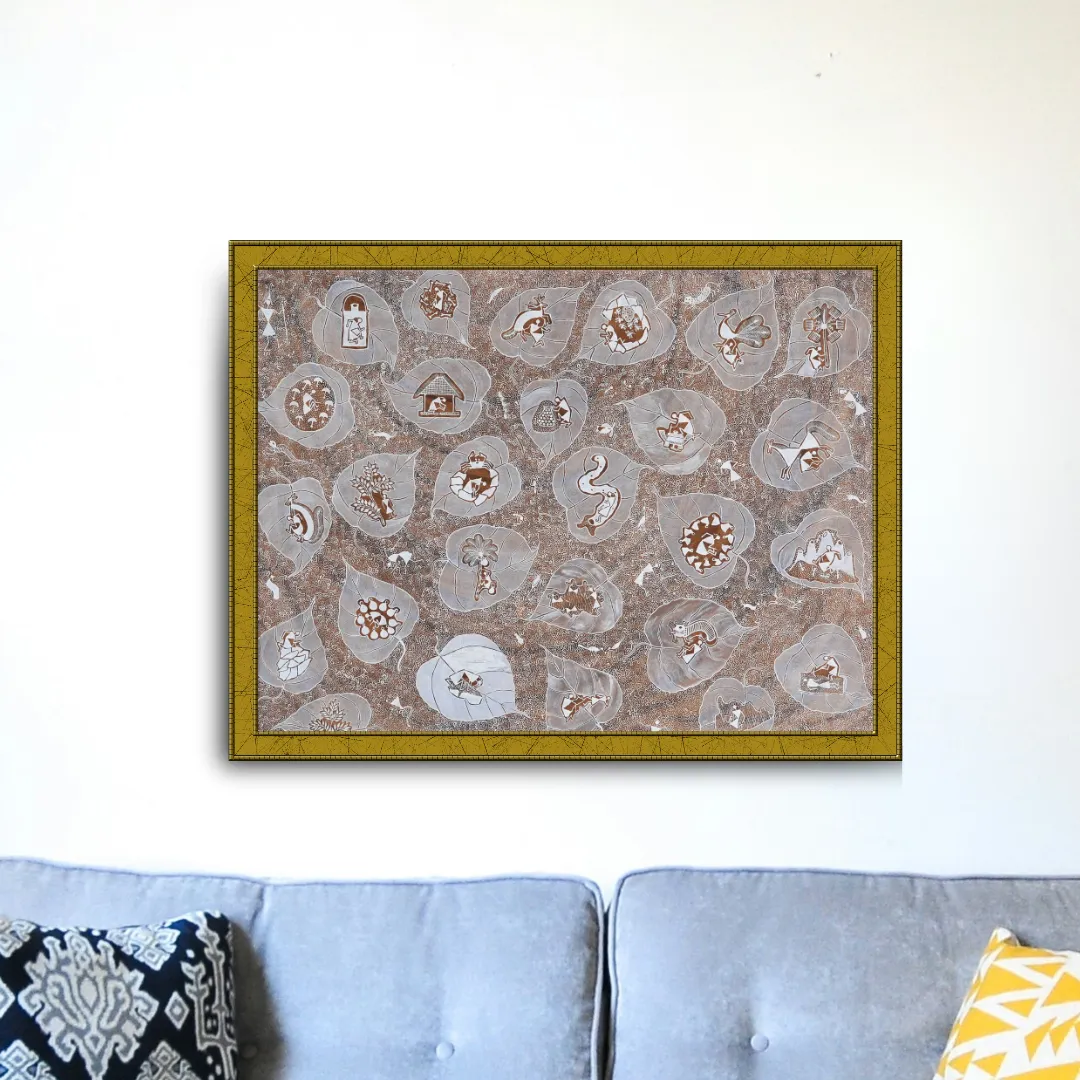
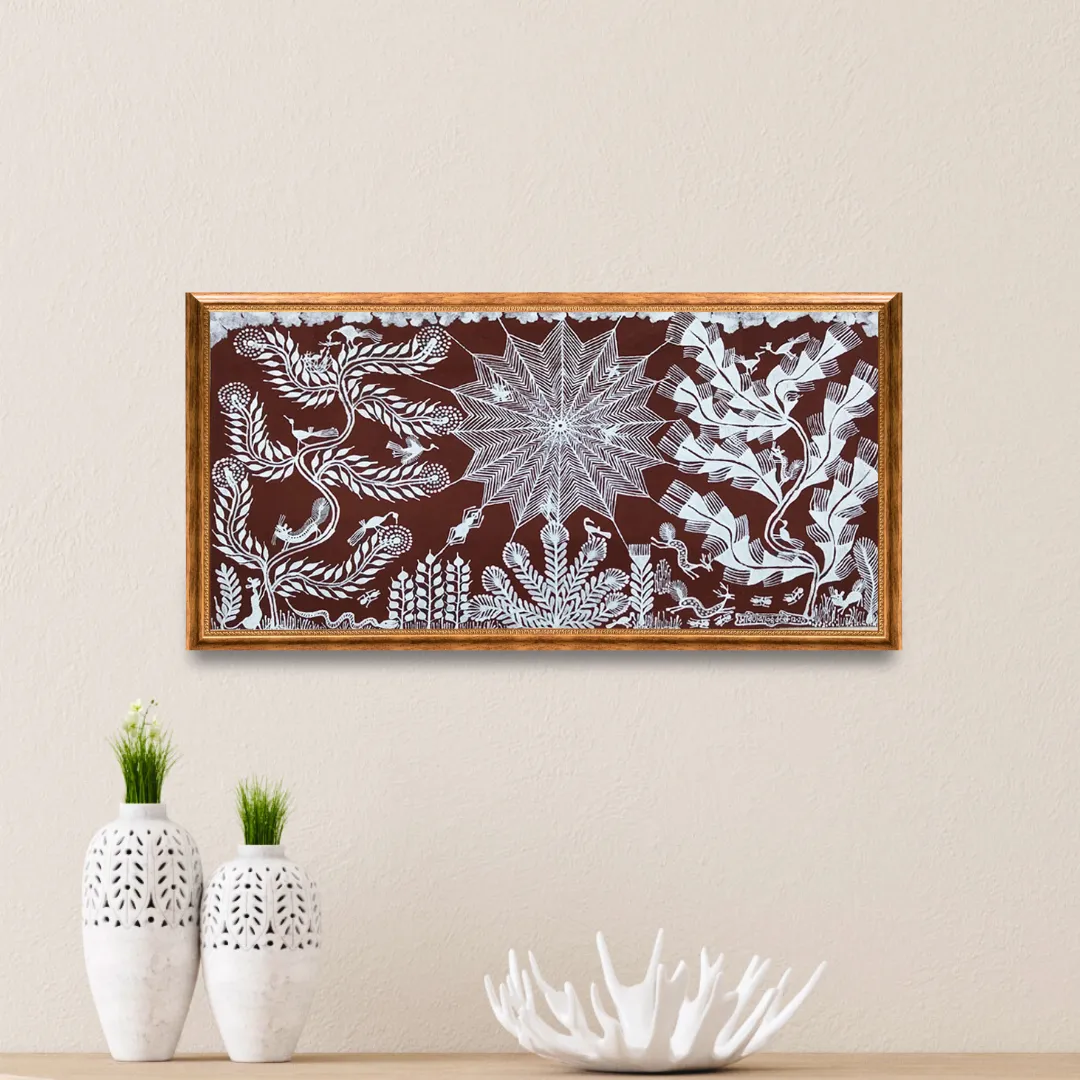
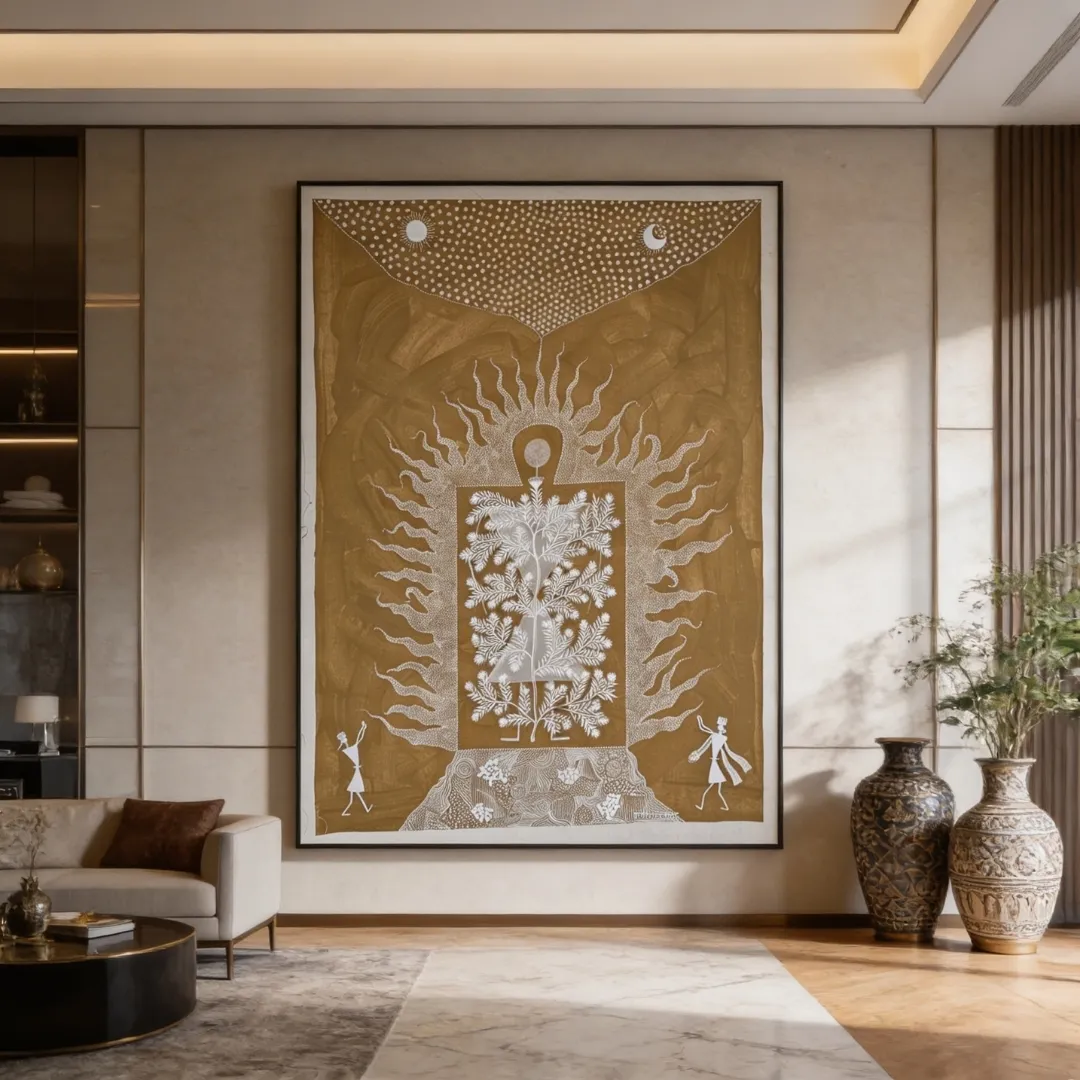
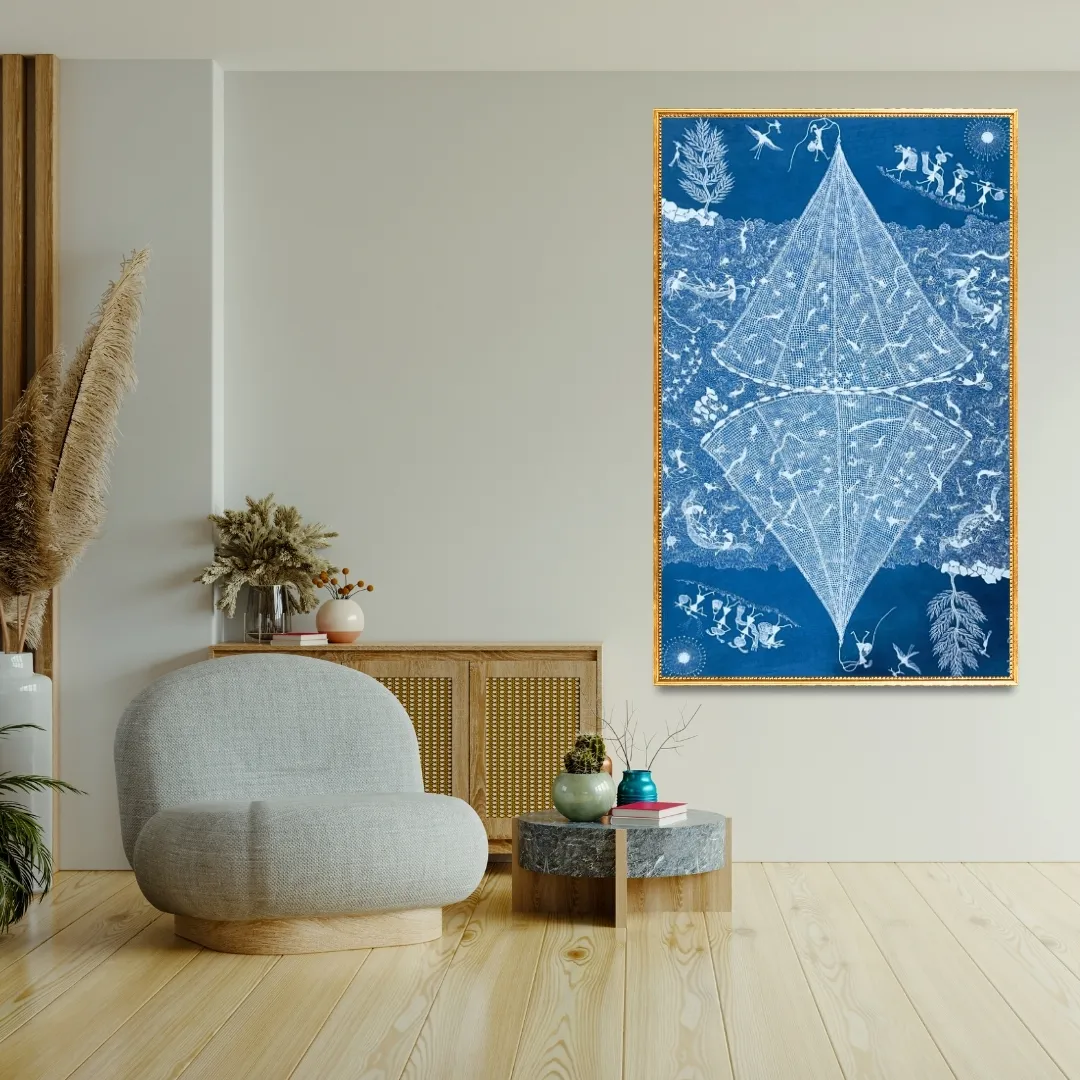
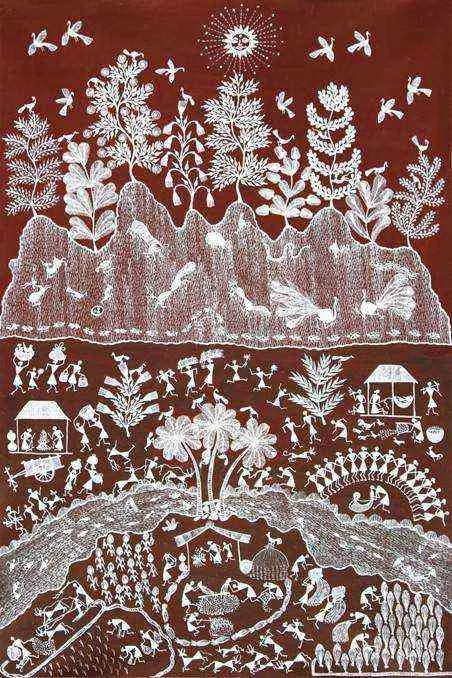
Warli art is one of India’s oldest and most instantly recognisable folk painting traditions, practised by the Warli tribe of Maharashtra’s northern Sahyadri range. Using just white pigment on an earthy red-brown ground, Warli artists capture the full rhythm of village life – harvest dances, wedding rituals, forest animals, and the sacred circle of existence. Today this minimalist tribal art has travelled from mud walls to galleries, fashion runways, and canvases without losing any of its raw ceremonial power.
What Is Warli Art?
Warli art is a tribal painting tradition created by the Warli community of Maharashtra, India. The paintings use simple geometric forms – circles, triangles, and squares – to represent human figures, animals, trees, and the natural world. The word “Warli” itself originates from the word “warla”, meaning a piece of land, pointing to the deep bond this art has with the earth.
Traditionally painted by married women known as suvasinis on the walls of homes during wedding ceremonies, the art depicts the animistic beliefs, customs, and rituals of the Warli community alongside Hindu devotional themes centred on Shiva and Parvati. The Warli people regard Mother Earth as their entire universe, and every aspect of life from creation to destruction finds expression in these paintings. White paste made from rice flour mixed with water and a binding agent is applied over a base of cow dung and geru (brick-red ochre), giving each piece its distinctive warm, textured ground.
History and Origin of Warli Art
The precise era of Warli art’s creation is not firmly established, but existing literature traces the tradition back to between 2,500 and 3,000 BCE. Some scholars note that Warli compositions resemble the rock shelter paintings found at Bhimbetka and Raisen in Madhya Pradesh, which date to between 5,000 and 10,000 BCE, suggesting a shared visual ancestry with other ancient Indian tribal traditions. Researchers also draw parallels with Saura art of Odisha, noting that both traditions share common themes despite their distinct communities and regional contexts.
In documented history, roots of the current Warli painting style can be traced to around the early 10th century CE. The Warli tribe lives in the districts stretching from Charoti to Palghar and across other rural areas of Maharashtra, near the northern Sahyadri range. For centuries, Warli art was a community ritual rather than a commercial product – practised at the walls of homes, passed down from mothers and daughters-in-law, and embedded in the cycles of marriage, harvest, and prayer. The modern shift came when Padma Shri artist Jivya Soma Mashe began painting on canvas in the 1970s, making the tradition portable and durable. This move to paper and canvas opened Warli to national and international audiences while keeping its visual grammar intact.
Key Features and Visual Style of Warli Art
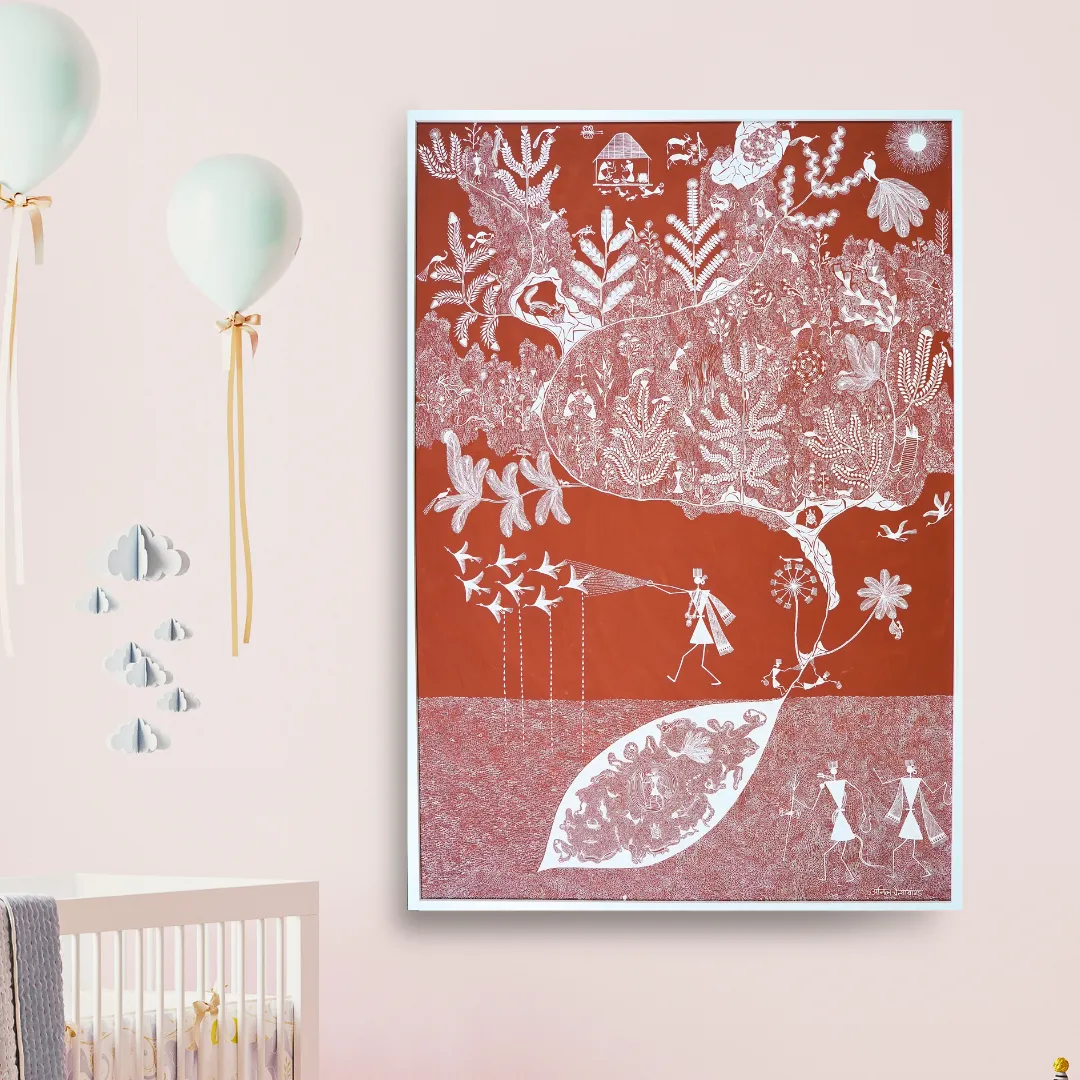
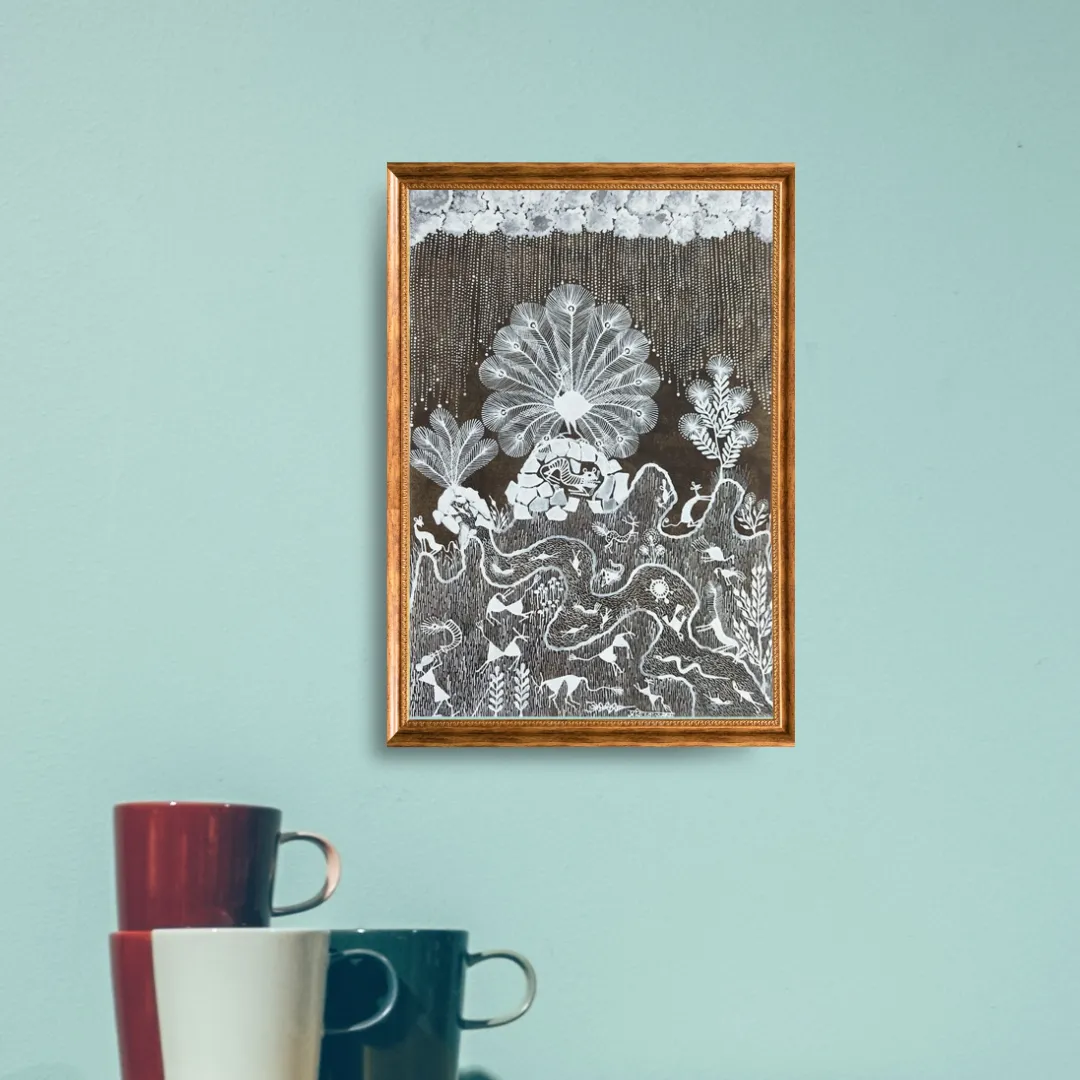
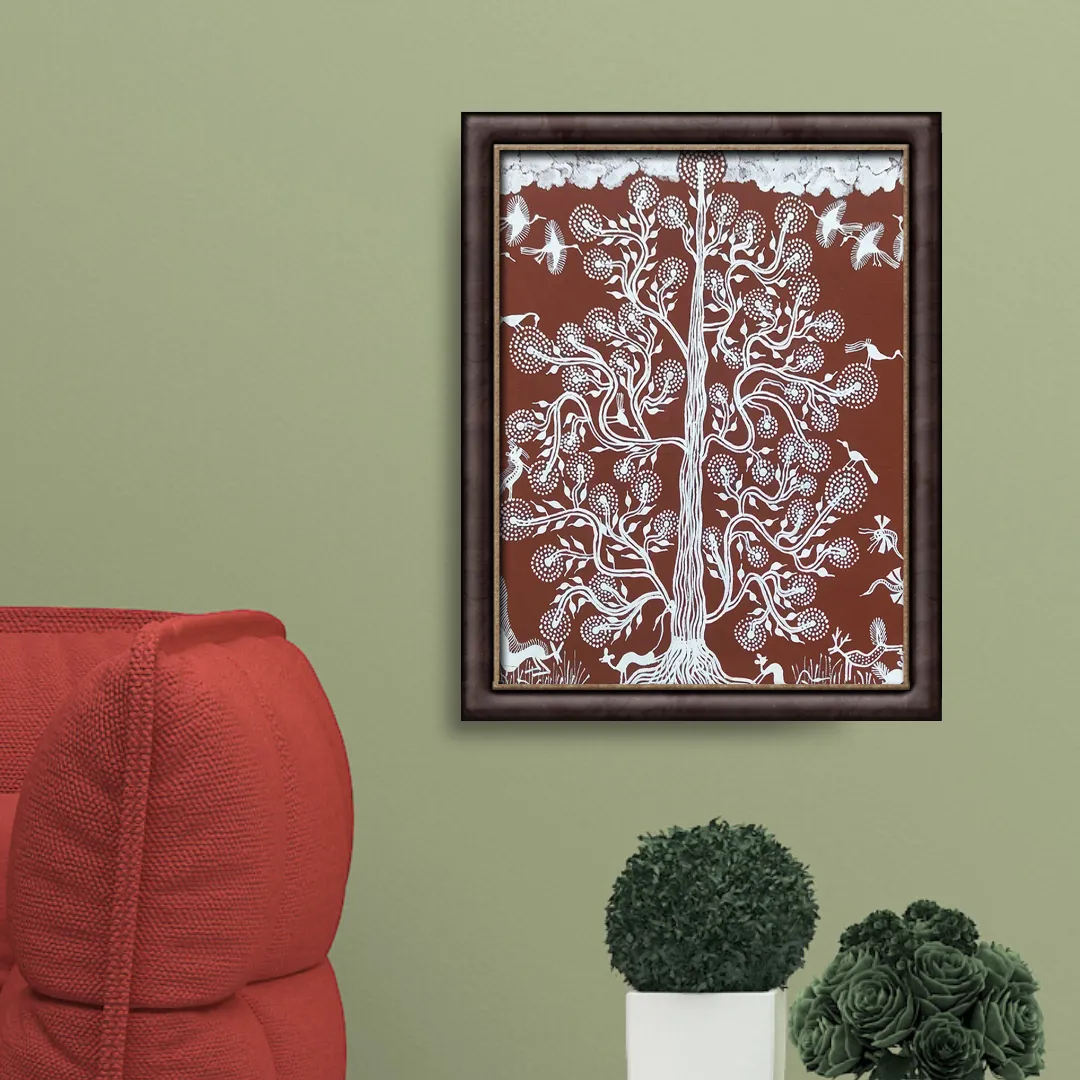
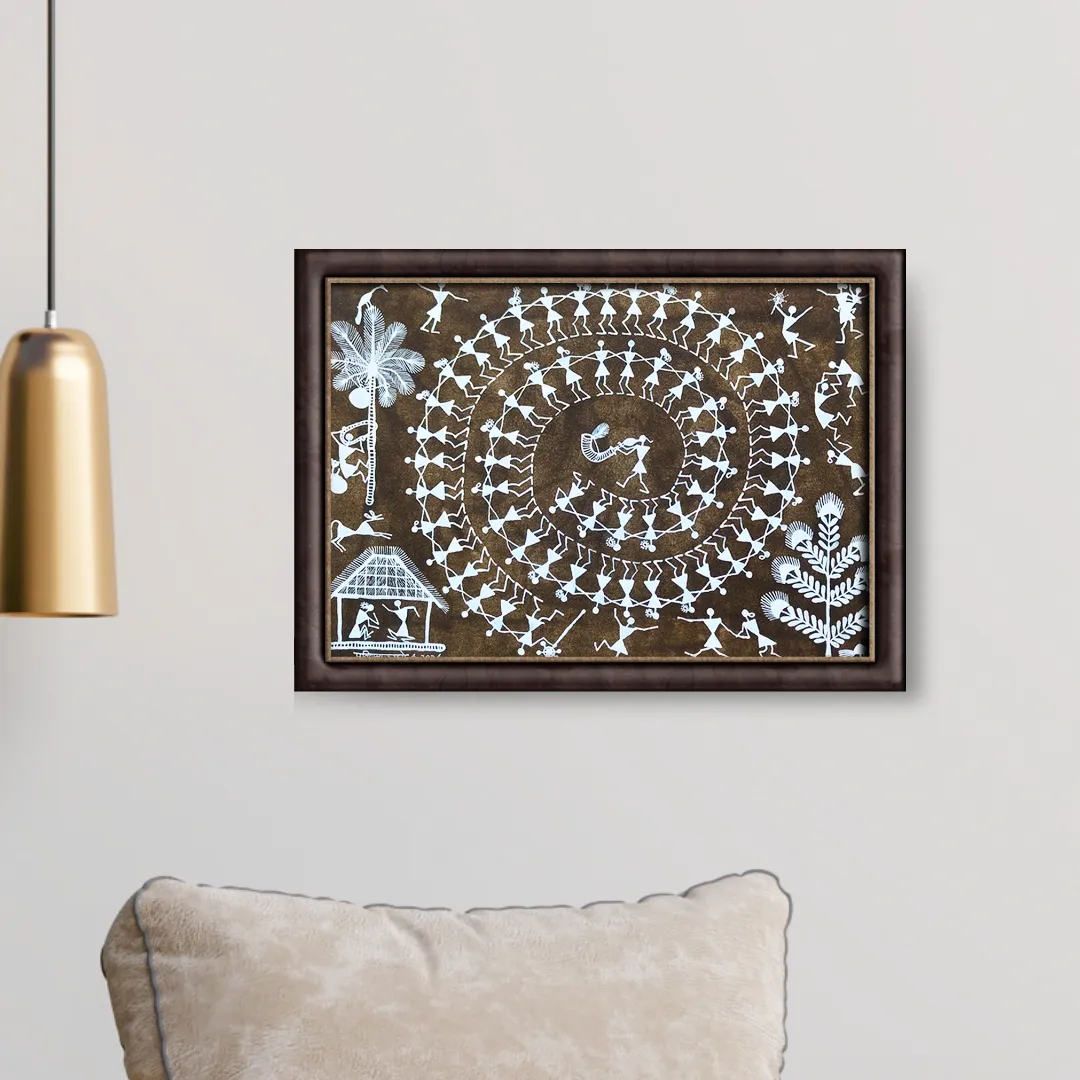
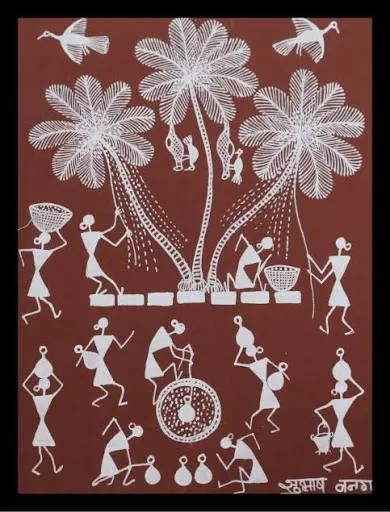
Warli paintings are immediately recognisable by their white-on-earth-tone palette and their lively scenes of community life. The tradition emphasises the linearity of the line: human faces are circular, arms and legs are drawn as straight strokes, and women are identified by their distinctive hair bun. The overall effect is one of animated minimalism – spare in detail but deeply expressive in mood.
Colour palette : white pigment (rice flour paste mixed with water and adhesive) on a background coated with cow dung and geru (brick-red ochre); additional hues such as henna, indigo, ochre, and earthy mud are used on cloth and canvas.
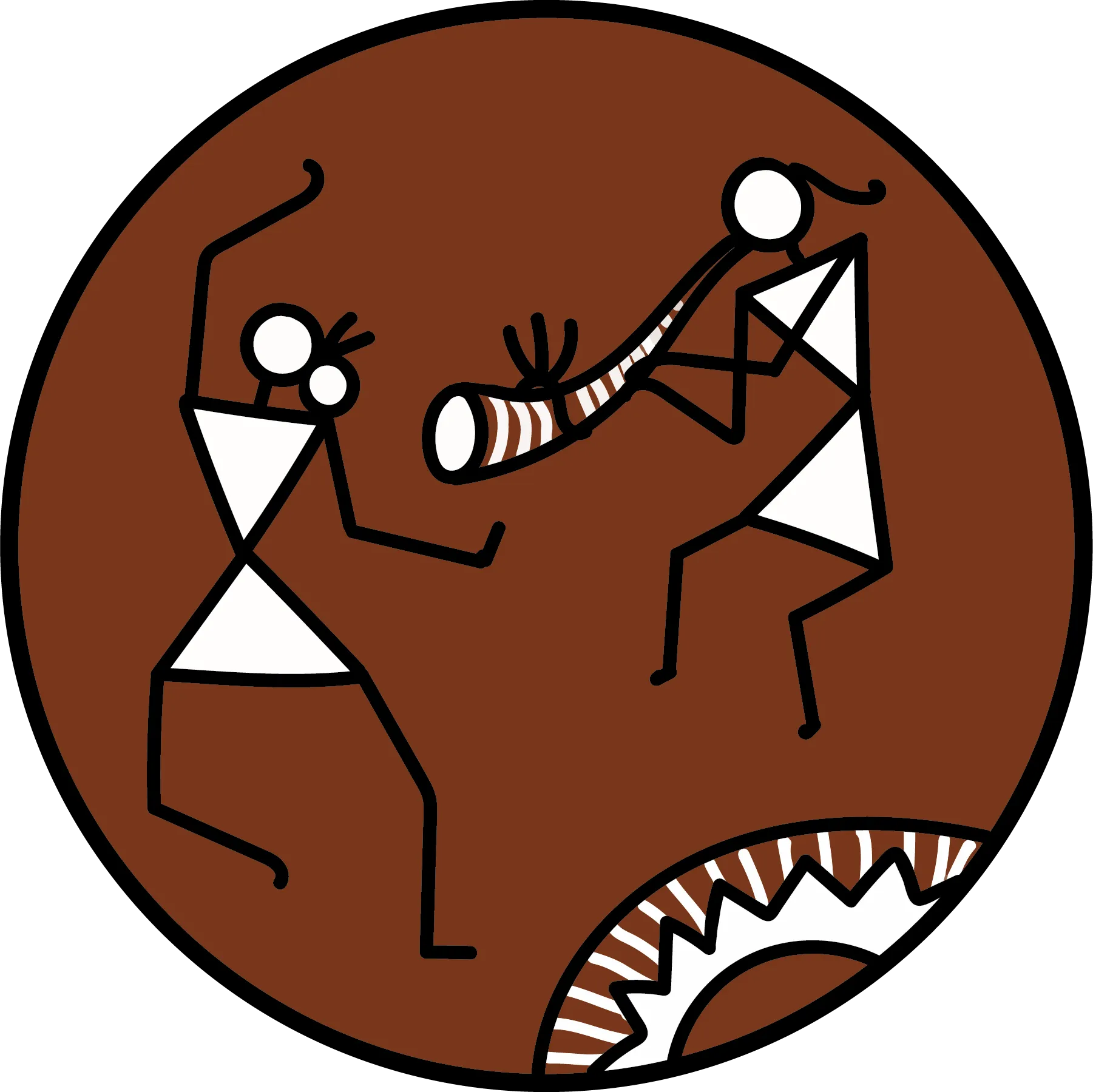
Central motif – the Tarpa dance : a circular dance formation performed around the Tarpa (a wind instrument) that represents the Circle of Life and is the most iconic image in Warli compositions.
Geometric human figures : circular heads, triangular torsos, and linear limbs create a style that is both schematic and instantly legible across cultures.
Tools and materials : bamboo or wood sticks were traditionally used to create fine lines; today artists also use brushes, and for canvas work they build a base from cow dung, coal, indigo, mud, and geru mixed with glue, then apply poster colour mixed with glue for durability.
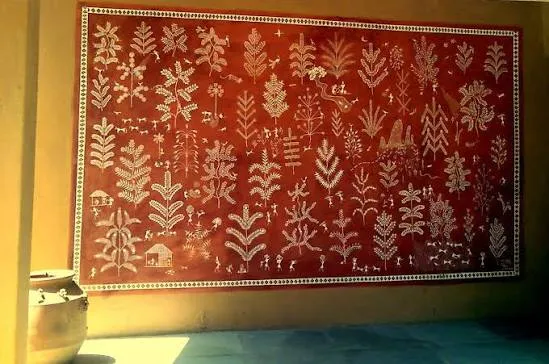
Themes and narratives : hunting scenes, farming cycles, wedding rituals, forest animals, and the movements of everyday rural life all appear alongside devotional imagery of Shiva, Parvati, and other deities.
Wall scale and orientation : traditional wall paintings are sized to the available wall surface; the canvas is ironed upside down to make it wrinkle-free before painting begins.
Famous Artists of Warli Art
Jivya Soma Mashe (Thane district, Maharashtra) is universally regarded as the father of modern Warli painting. Awarded the Padma Shri, he was the first to bring the art from walls to canvas, transforming a ritual practice into a celebrated contemporary art form with an international following.
Balu Mashe (Thane district, Maharashtra) is the son and artistic heir of Jivya Soma Mashe. He has continued his father’s legacy and works to keep the traditional visual grammar of Warli alive while adapting compositions for modern collectors and gallery audiences.
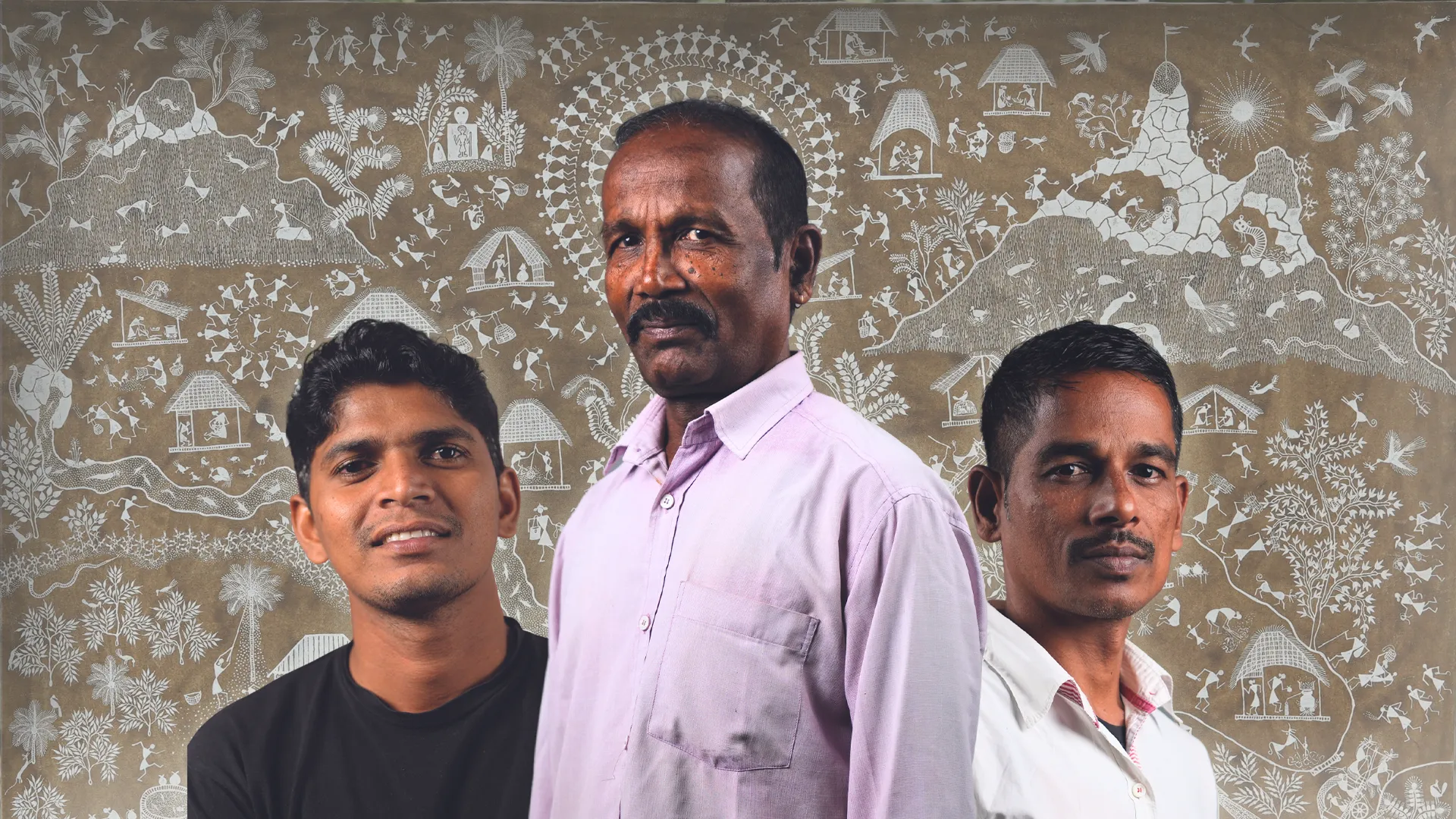
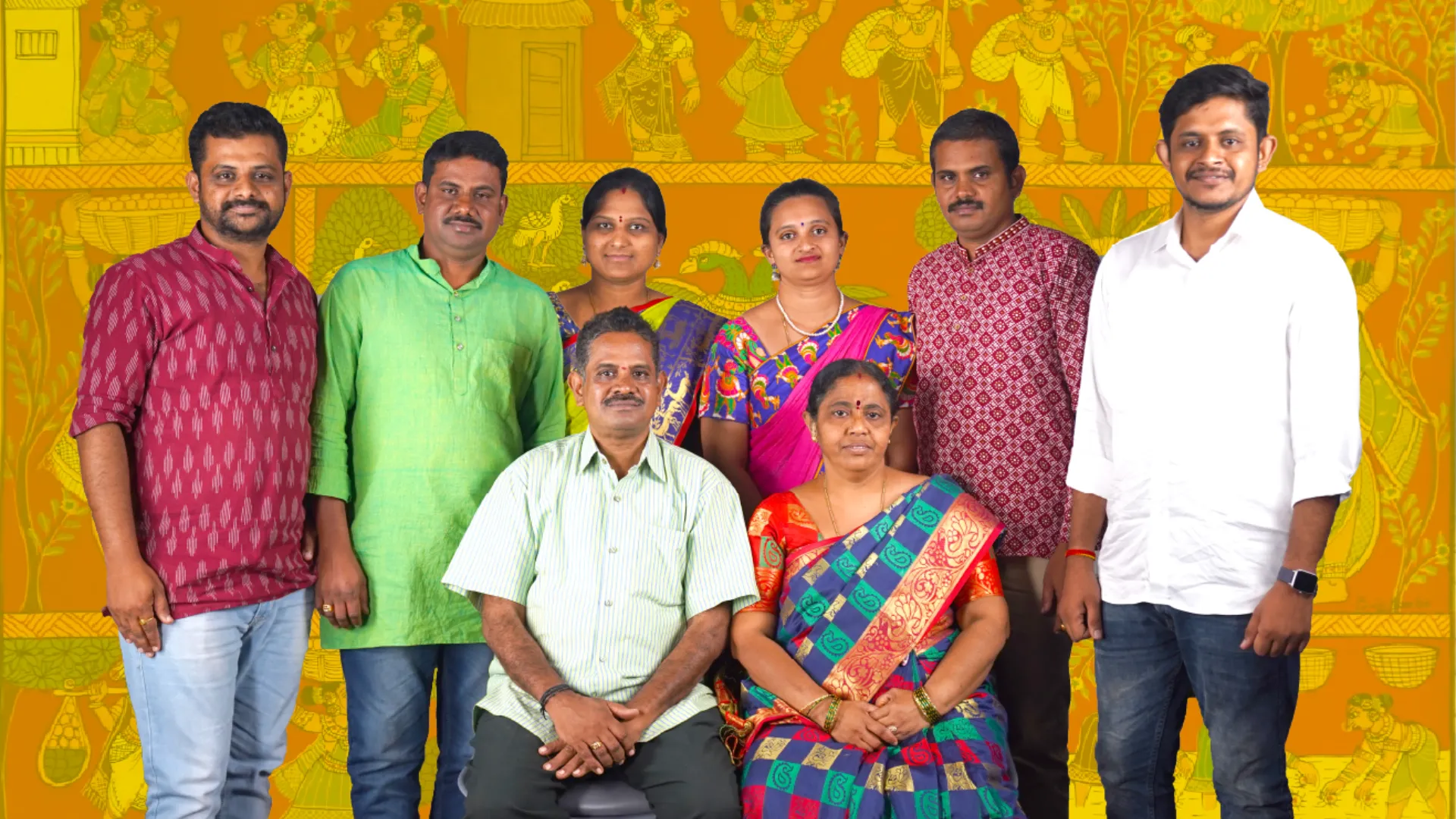
Rajesh Mashe (Dahanu, Palghar, Maharashtra) represents the next generation of the Mashe family, one of Maharashtra’s most celebrated Warli artist lineages. His work bridges ceremonial tradition and contemporary art exhibition. The Mhase family of the Palghar and Thane region is known for keeping the community-based teaching tradition of Warli alive. You can learn directly from them through the Warli course on Rooftop, which offers structured online lessons in the traditional method.
Archana Shastri is a contemporary Warli practitioner who has helped carry the art form into urban design contexts, collaborating with Indian designers and contributing to Warli’s visibility on national and international platforms, including its association with the Make in India programme.
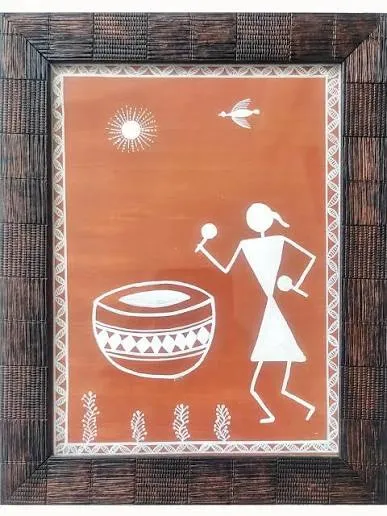
If you want to learn Warli art online, Rooftop offers a dedicated course taught by the Mhase family – one of the most respected Warli artist families from the Palghar region of Maharashtra. The course covers the traditional materials, the geometric figure style, and the process of building compositions from the ground up, exactly as the art has been practised for generations. You can also try a hands-on session through the authentic Warli painting experience on Rooftop, or browse all available courses to find the right learning path for you.
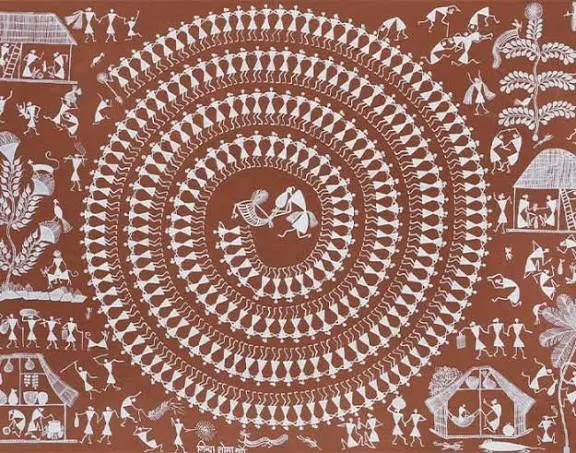
Original Warli art painting can be seen in the tribal villages of the Dahanu, Jawhar, and Palghar districts of Maharashtra, where wall paintings still appear on homes during wedding seasons. Major museums in Mumbai and New Delhi, including the Chhatrapati Shivaji Maharaj Vastu Sangrahalaya, hold important Warli collections. The Tribal Cultural Museum in Pune is also a valuable resource. While Warli painting images are widely shared online, nothing compares to viewing the original artwork in person.
To buy authentic Warli paintings online, the Rooftop shop carries original works sourced directly from Warli artists. Buying through Rooftop ensures the work is genuine and that the artist receives fair compensation. State emporiums in Maharashtra and the Tribes India outlets run by TRIFED are also reliable sources for authentic pieces.
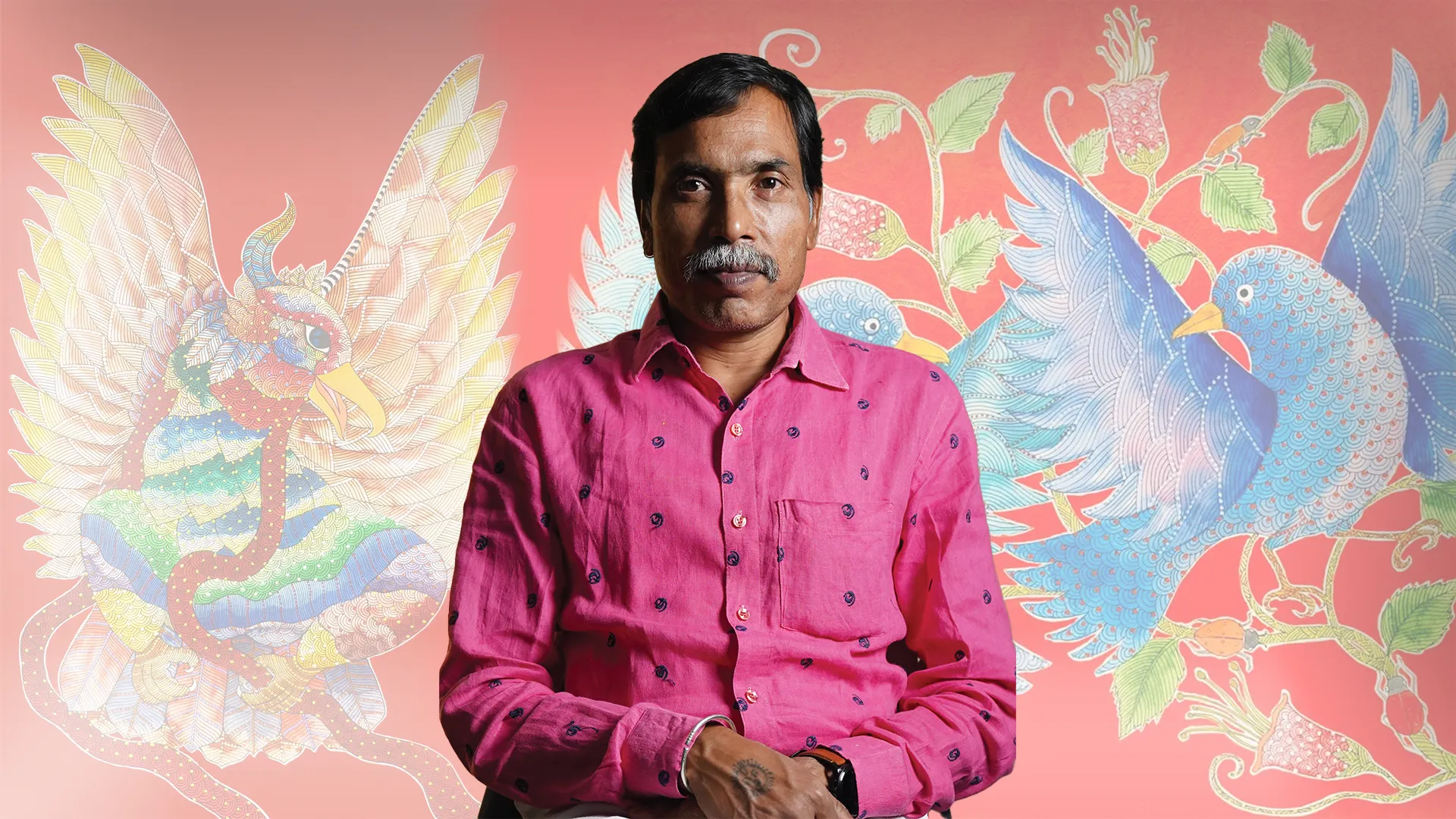
What is Warli art and where does it come from?
Warli art is a tribal painting tradition of the Warli community of Maharashtra, India, practised in the districts of Dahanu, Jawhar, and Palghar near the northern Sahyadri range. It uses white geometric figures painted on an earthy red-brown ground to depict village life, ritual ceremonies, and natural surroundings. The word "Warli" comes from "warla," meaning a piece of land. Its roots are traced to between 2,500 and 3,000 BCE, making it one of India’s most ancient living art traditions.
Which state and community in India practises Warli tribal art?
Warli tribal art is practised by the Warli community of Maharashtra, primarily in the northern Sahyadri region spanning the districts of Charoti to Palghar. The community holds animistic beliefs combined with Hindu devotional practices centred on Shiva and Parvati, and regards Mother Earth as the centre of all existence. While traditionally the domain of married women (suvasinis) who painted during weddings, today men and younger community members also practise and teach the art form.
Who are the most famous Warli art artists in India?
The most celebrated Warli artist is Jivya Soma Mashe of Thane district, who was awarded the Padma Shri for bringing the art from mud walls to canvas and gallery spaces. His son Balu Mashe has continued this legacy. The Mhase family of the Palghar region is also widely respected for keeping the teaching tradition alive. In the contemporary sphere, Warli has attracted Indian designers and was showcased internationally as part of the Make in India programme when designer Archana Kochhar exhibited Warli-inspired work at New York Fashion Week.
What materials and colours are used in Warli art painting?
The primary pigment in Warli art painting is a white paste made from rice flour mixed with water and a binding agent such as gum or glue. This is applied over a base of cow dung and geru (brick-red ochre), which gives the background its warm earthy tone. For painting on cloth or canvas, artists prepare a ground from cow dung, coal, indigo, mud, and geru mixed with glue, and then apply poster colour mixed with glue for durability. Bamboo or wood sticks were the traditional tools for drawing fine lines; brushes are also commonly used today.
Can I learn Warli art online in India?
Yes, you can learn Warli art online through the Warli course offered by the Mhase family on Rooftop. The course is taught by a family of practising Warli artists from Palghar, Maharashtra, and covers the traditional technique from base preparation to finished composition. Rooftop also offers an authentic Warli painting experience for those who prefer a shorter hands-on introduction to Indian folk art.
Where can I buy authentic Warli paintings online?
Authentic Warli paintings are available through the Rooftop shop, where original works are sourced directly from Warli artists and sold with full provenance. State emporiums in Maharashtra and TRIFED’s Tribes India outlets are also reliable offline sources. When buying online, always verify that the seller names the artist and their village – genuine Warli tribal art carries the identity of its maker.
Warli art has endured for thousands of years because it captures something universal in the simplest possible lines. Whether you are drawn to its ceremonial origins, its striking visual style, or its connection to community life in rural Maharashtra, there is always more to discover. Explore Warli art courses and experiences on Rooftop and begin your journey into one of India’s most beloved folk traditions.
Sources
Dalmia, Yashodhara. The Painted World of the Warlis: Art and Ritual of the Warli Tribes of Maharashtra. Lalit Kala Akademi, 1988.
Nair, Sunita. India Indigenous Artists. Sunita Nair, 2018.
Satyawadi, S. Unique Art of Warli Paintings. D.K. Printworld, 2010.
Image Sources
"Celebration of Life – Framed Warli Painting." Exotic India Art, https://www.exoticindiaart.com/product/paintings/celebration-of-life-framed-warli-painting-watercolor-on-handmade-paper-by-gaurav-rajput-ldc804/. Accessed 16 July 2026.
"Warli." MahaTribes, https://mahatribes.com/warli/warli-painting-2. Accessed 16 July 2026.
"Warli Art." Mojarto, https://www.mojarto.com/artworks/folk-art/unknown-artist/warli-art/MA263229. Accessed 16 July 2026.
"Warli Art Classes." Kavi Art Studio, https://www.kaviartstudio.in/courses/warli-art-classes. Accessed 16 July 2026.
"Warli Painting." Impart Encyclopedia of Art, https://imp-art.org/articles/warli-painting/. Accessed 16 July 2026.
"Warli Painting." Wikipedia, Wikimedia Foundation, https://en.wikipedia.org/wiki/Warli_painting. Accessed 16 July 2026.