

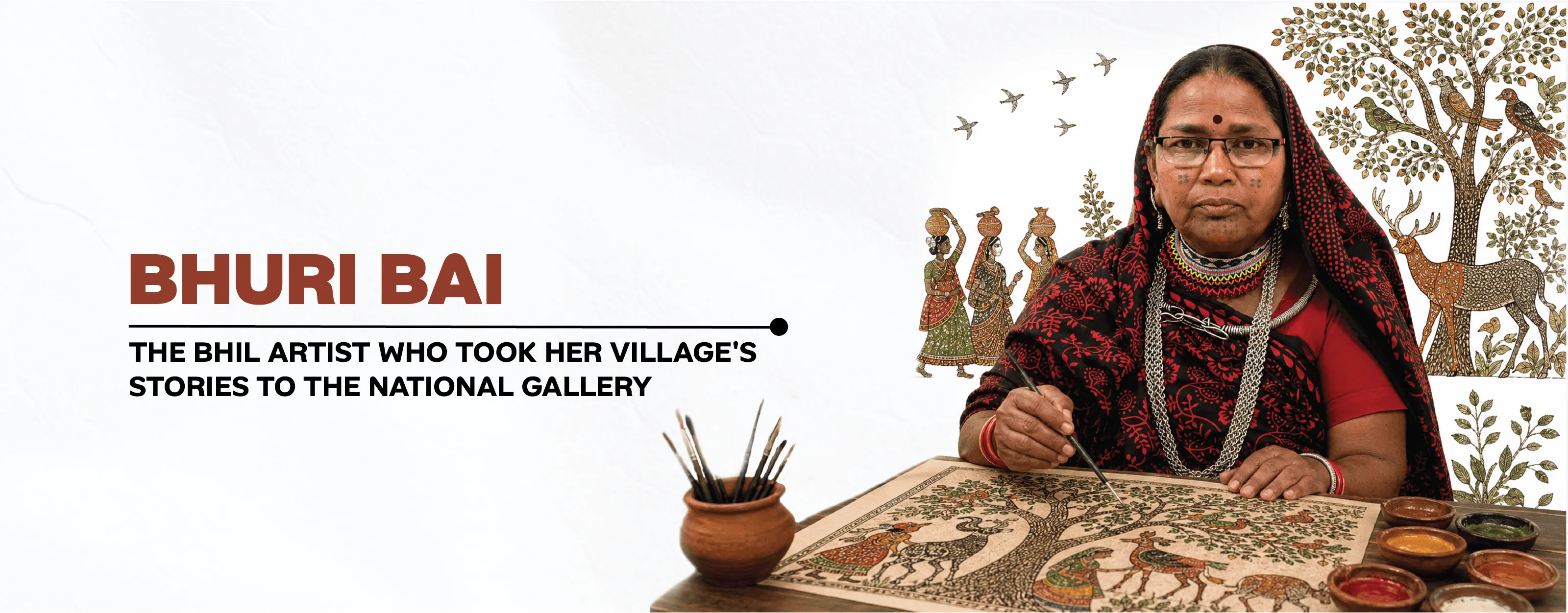
Bhuri Bai: The Bhil Artist Who Took Her Village's Stories to the National Gallery
Get to know about Bhuri Bai, a contemporary folk artist of the Bhil Artwork from the Bhil community of Madhya Pradesh.

Kartik Gaggar
Author
Bhuri Bai, a Bhil artist, born during 1960 in Pitol village of the Jhabua district in Madhya Pradesh is a part of the Bhil Community, which is one of the India’s largest indigenous communities. Being born in the culture of it, it influenced Bhuri Bai’s childhood to be rich in and full of songs, rituals, folklores, tattoos and traditional practices, all being now prominently visible in her Bhil Art.
Young girls and women were traditionally not permitted to paint Pithora murals , so as a child she observed the centuries-old Pithora style of painting. She then began experimenting by painting on the mud walls of her family home. Taking inspirations from myths, her village, life, forests, animals, deities, and community traditions, she began her art journey by illustrating them using natural pigments, mud, wet soil, and locally available materials.
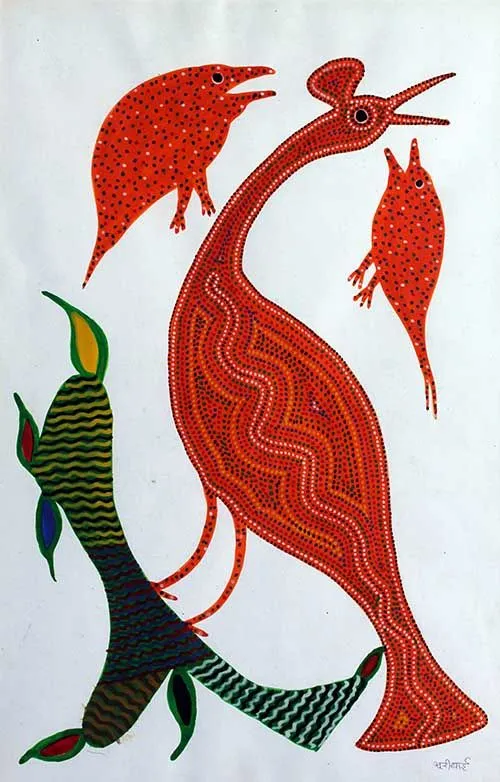
Bhil Art by Bhuri Bai. Source - Wikipedia

Early Struggles and Turning Point
Bhuri Bai used to work as a daily wage laborer with her husband and faced immense struggles in her life but this work brought her to Bhopal. She became a construction worker at the site of Bharat Bhavan, marking a turning point in her life.
Jagdish Swaminathan, the then Director of the institution of Bharat Bhavan met the seventeen-year-old Bhuri Bai and recognized her talent, encouraging her to paint by providing her with brushes, poster colors, paper and other materials. As someone who came from a village obtaining art materials was only possible by extracting natural pigments from plants and soil, she utilized her full potential to display the use of professional materials and expressed her art and its forms.
As a first time experience of using ready-made paints and brushes, she hesitated at first only to become an artist later. She walked on the path of Swaminathan’s encouragement and painted her family’s ancestral horse.
She became the first woman from Bhil community to paint on paper and canvas, marking a significant moment in history. It also marked a new chapter in the history of Bhil art and artists.
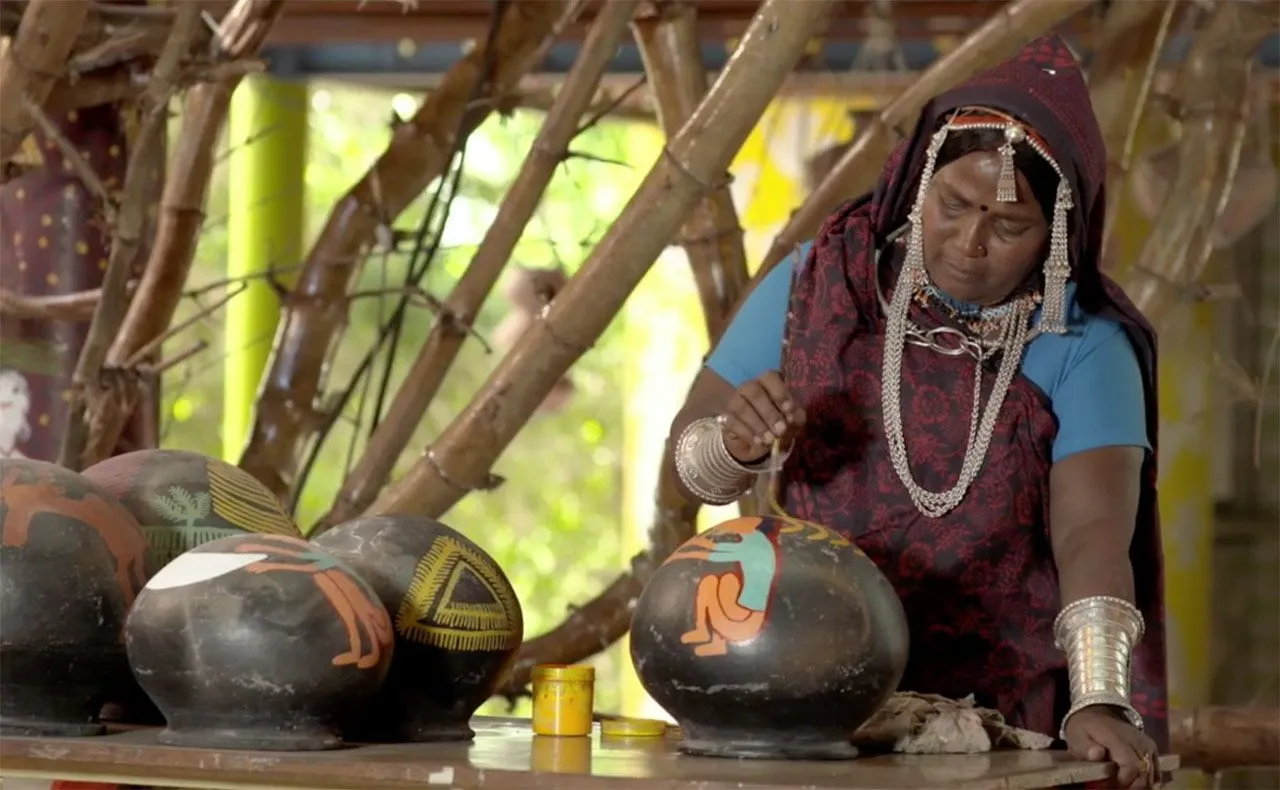
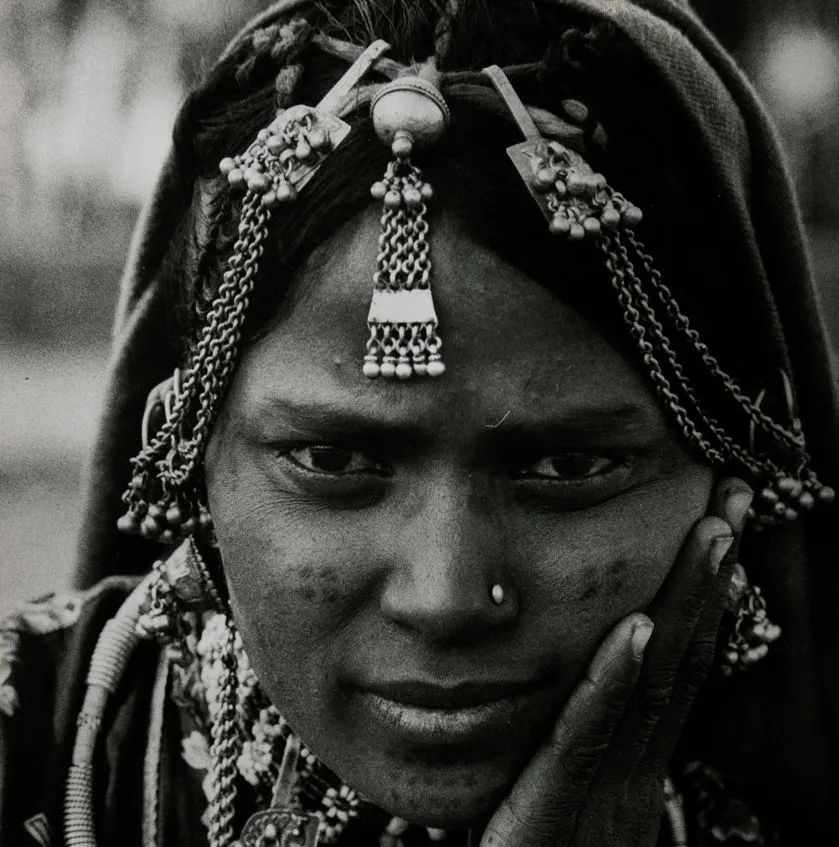
Image Portraying Bhuri Bai. Source - Wikimedia

Emergence as a Contemporary Bhil Artist
Bhuri Bai became a contemporary folk artist, marking a shift from traditional village walls made from natural paint to paper and canvas. She expressed the Bhil community and its components in a visual language which were later displayed and started to reach galleries, museums, institutions and audience beyond the village context. This was an important shift considering the expression and recognition of folk art and artists.
Her work later focused on every possible aspect of the culture of Bhil and daily life. She started illustrating and expressing her struggles, pain, memories and experiences that she had through out her life. She also depicted Bhil deities, memorial pillars known as Gatla, clothing, jewellery, tattoos, huts, granaries, markets, festivals, dances, oral stories, forests, animals, trees and other scenes from her village life. She had become an expert in translation of what she had seen on canvas. Her paintings depicted the very different dimensions of Bhil life and culture.
Bhil Artist Bhuri Bai. Source - Map India Org.
Artistic Style and Themes
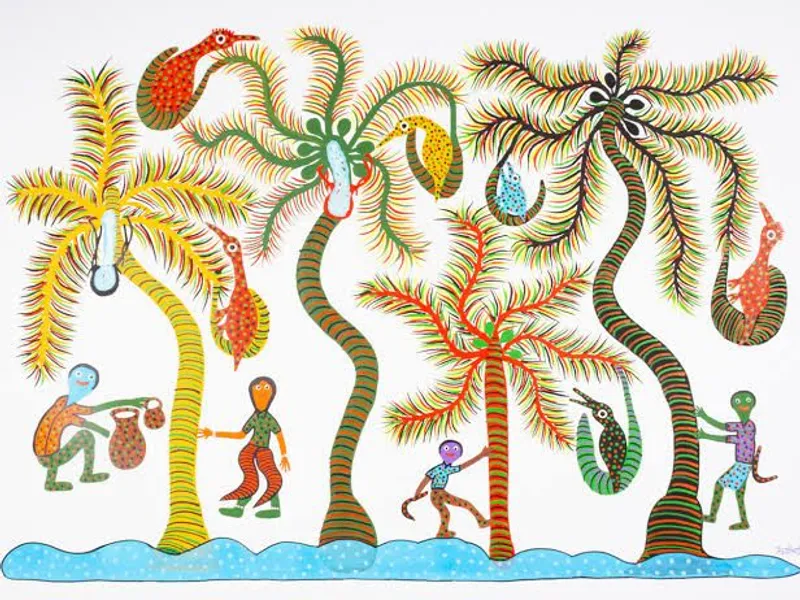
Bhuri Bai is known for her dotted techniques, which remains deeply rooted in the Bhil traditions, is often compared to the Australian Aboriginal art. Her art and paintings also showcase elongated and surreal forms that are filles with the same dotted techniques. They also prominently show intricate patterns, spirals, coiling and other designs. As considering the Bhil art, dots create movement, texture and a symbolic meaning. They often try to represent elements like rain, stars, seeds agricultural labour and everyday life.
Her paintings and art are all often filled with earthly yet vibrant colors. Ochres, browns, brick reds, and creams form the foundation of her palette, while brighter colors highlight birds, flowers, clothing, and ceremonial elements. She often used figures, animals and plants as a vibrant surface of energy as well. The colors in the paintings reflect the soil, leaves, bark, leaves, stones and landscapes of the natural world that predominantly shaped her childhood and upbringing. Other traditional subjects in her work often portrayed ornaments, songs, festivals, dances, huts, and granaries. She also presented other subjects like village rituals, folklore, myths, forests, wildlife, traditional attire.
As time passed, her thoughts and imagination spread to include modern components, but instead of presenting the modern elements like televisions, cars, buses, airplanes and even cell phones as distractions or disruptions, she put them as and alongside traditional symbols, natural objects, trees and animals. She successfully reflected the coexistence of tribal memory and the modern day contemporary life. The autobiographical works of her also explored certain ways in which folk art adapts to modern markets while it raised questions about the autonomy of tribal artists.
The required artistic expression of Bhuri Bai can be understood and learned with the help of Bhil Art Course by Bhuri Bai on the Rooftop App, where she teaches the foundation of the style, philosophy behind the motifs and much more.
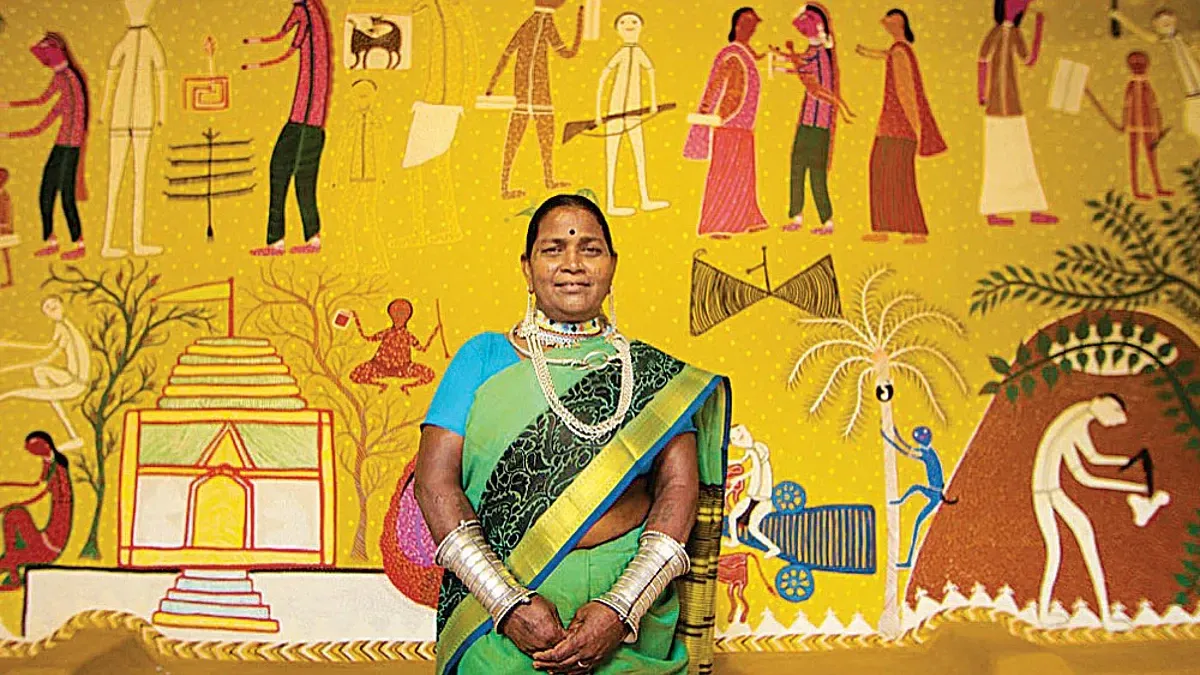
Artist Bhuri Bai. Source - Open The Magazine.
Major Works
My Village (2015), one of Bhuri Bai’s most significant work, is a monumental mural measuring 79 by 191 inches with the scenes of tribal life unfold across a flat picture plane. Every element in the work receives equal importance. There are women carrying water pots, men tending livestock, children playing, fruit-bearing trees, birds, animals, and landscape features coexist without hierarchy. The work presents village life with honesty and affection, depicting both labor and celebration, hardship and belonging while it also functions as a topographical map of memory, recreating the universe of her childhood in Jhabua, Madhya Pradesh.
Her major work also counts a notable achievement is a 100-foot-long wall mural that narrates her life story, where there is illustration of her train journey to Bhopal and her experiences working at the Bharat Bhavan. It also highlights the moment of her meeting with Indira Gandhi after the completion of the institution.
“Story of the Jungle” painted by her was sold Sotheby's auction in 2007, receiving international attention.
Other Bhuri Bai Paintings on Rooftop App like Birds at Play, Stampede in the Village, Peahen under a Tree, Tree of Life etc. can be found and explored.
"Tradition is not about preservation, but legacy."
National and International Recognition
The galleries and museums of Europe, Australia and the United States exhibited her work and art as her reputation grew throughout the years. Bhil art and its involvement in international conversations about contemporary and indigenous art came into picture because of these exhibitions and display. Following the same, she was invited and participated in a workshop as part of presidential delegation in Australia in 1999 that brought together Australian Aboriginal artists and tribal artists from India. This further made her international profile strong.
Her personal achievements apart from professional ones often include receiving a ₹40,000 award, traveling by airplane to America. She also conducted art and craft workshops in different states across India.
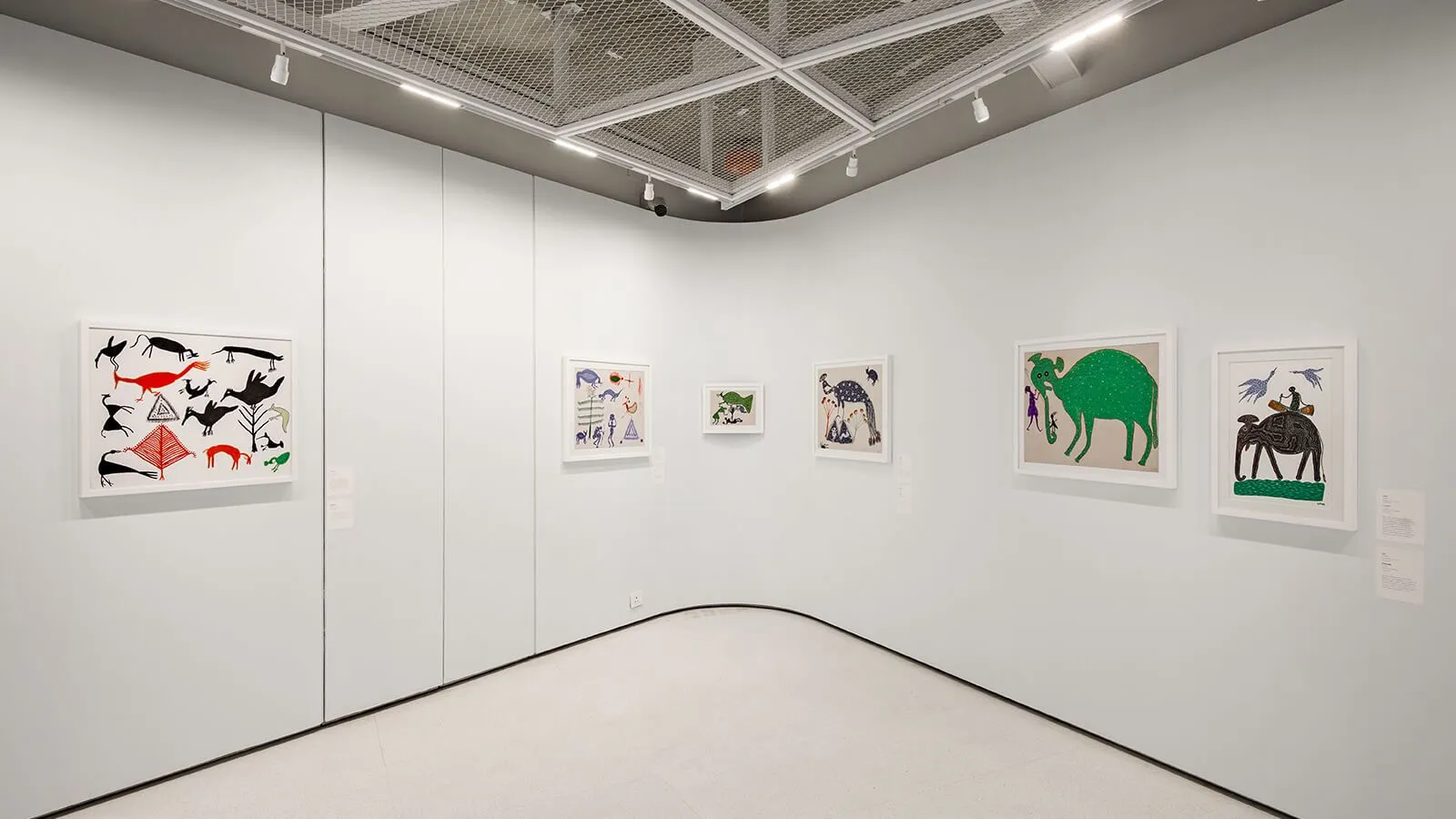
Bhuri Bai - My Life As An Artist Exhibition. Source - TRI Art and Culture.
Awards and Honors
The highest award conferred by the Government of Madhya Pradesh in the field of art, the Shikhar Samman was received by Bhuri Bai in 1986-87. Later, she was honored with the Ahilya Samman by the Government of Madhya Pradesh in 1998, following the Rani Durgavati Award (2009). Padma Shri, one of India's highest civilian honors, was received by her in the year 2021 in recognition of her extraordinary contributions to art and culture.
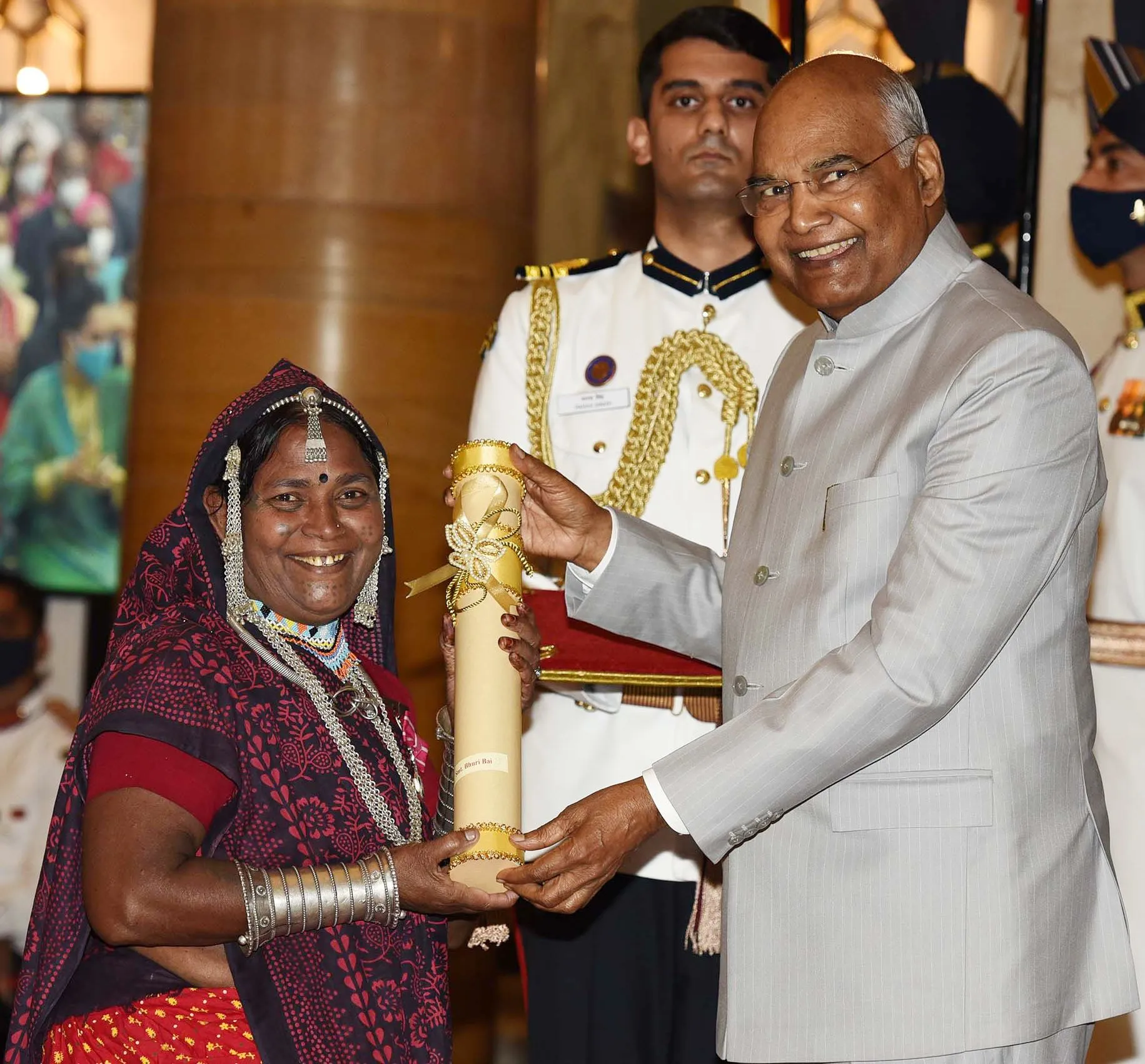
Bhuri Bai receiving the Padma Shri Award. Source - Wikipedia.
Legacy and Influence
Currently, Bhuri Bai works as an artist at the Adivasi Lok Kala Academy in Bhopal. Her association with the Tribal Museum since 2002 is also remarkable. Bhil art has increasingly become a women-led practice that records births, deaths, folklore, rituals, and community memory as beyond her own artistic practice and work, she has devoted her time in order to preserve and teach the Bhil art especially to young girls apart from family and other community members.
Her art and success has inspires other artists including Lado Bai. Her and the artists’ contribution to the greater recognition of the Adivasi artistic traditions and culture is beyond their ritual origins. Bhuri Bai has preserved a world of memory, nature, resilience, and cultural identity through her vibrant canvases, simultaneously, she demonstrated how even in contemporary contexts, indigenous traditions can thrive and adapt.
Rooftop App offers a comprehensive course on Bhil Art by Bhuri Bai and Bhil Art by Lado Bai where one can get to understand and decode the art form by learning how to build visual harmony through layering and colour, while exploring themes rooted in tribal culture. Whether you’re new to painting or looking to explore India’s tribal art traditions, this course is an enriching experience for anyone who loves detail, pattern, and storytelling through art by Bhuri Bai herself.