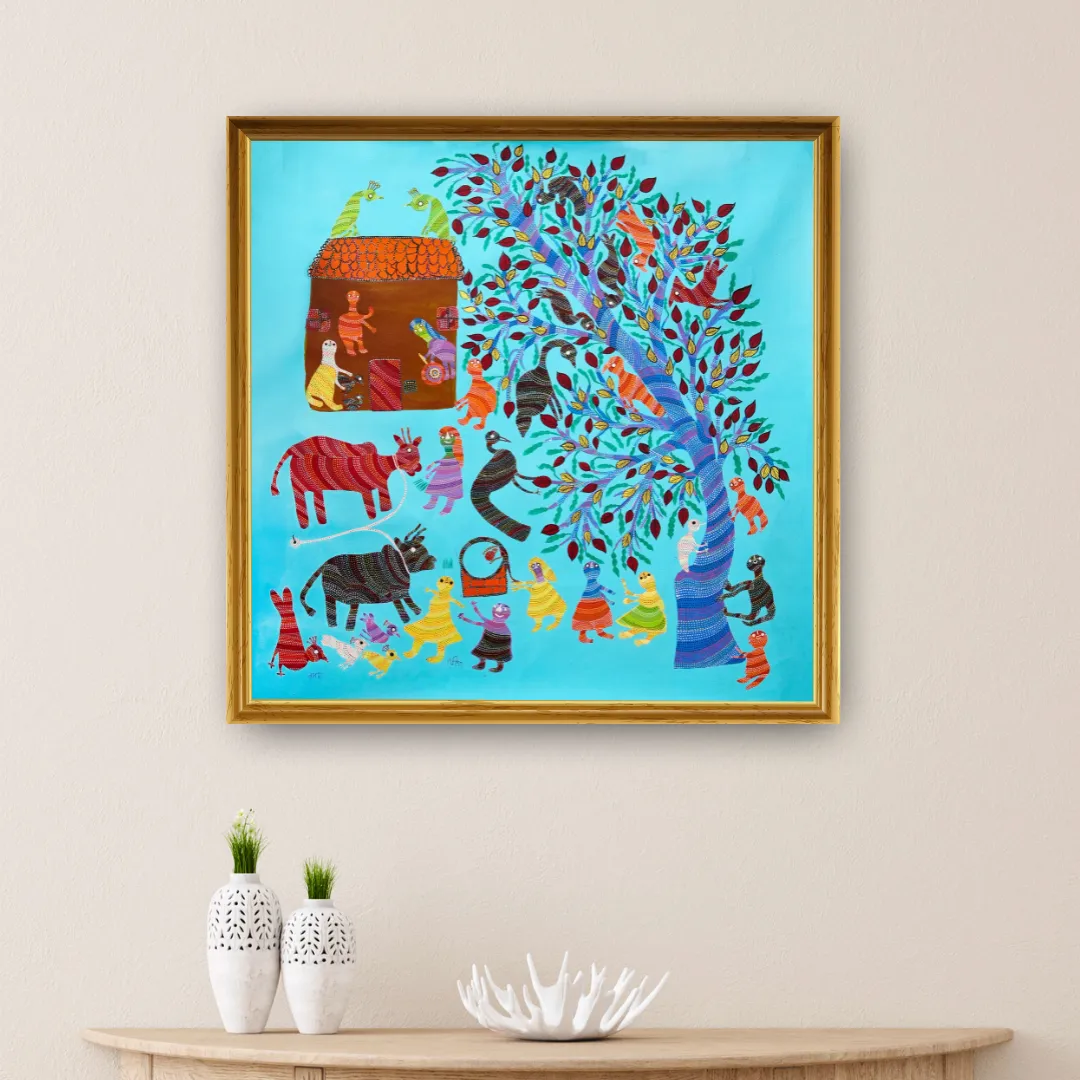
A Day in Village
$ 569


Let's explore the art of Indian tribes - Bhil Art
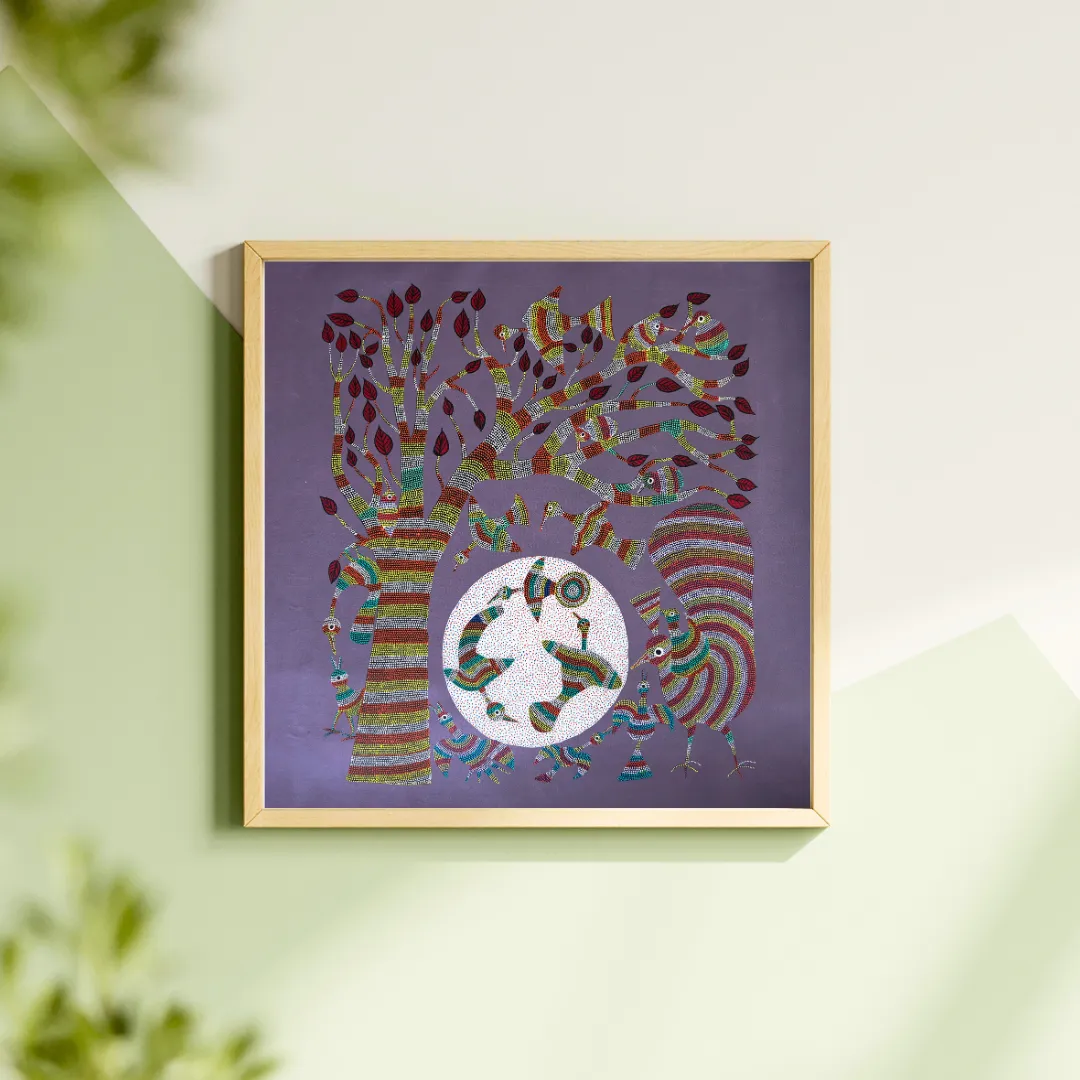
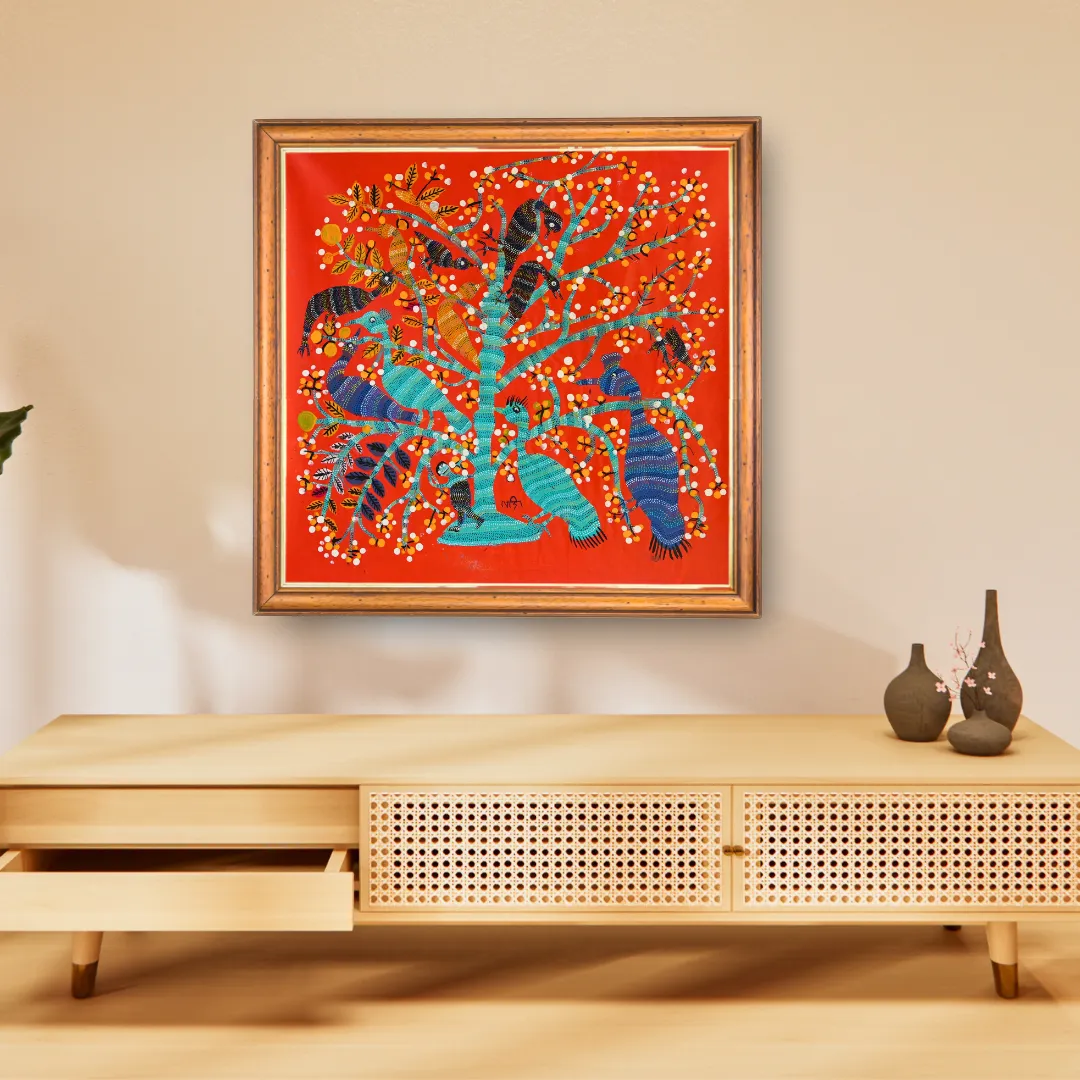
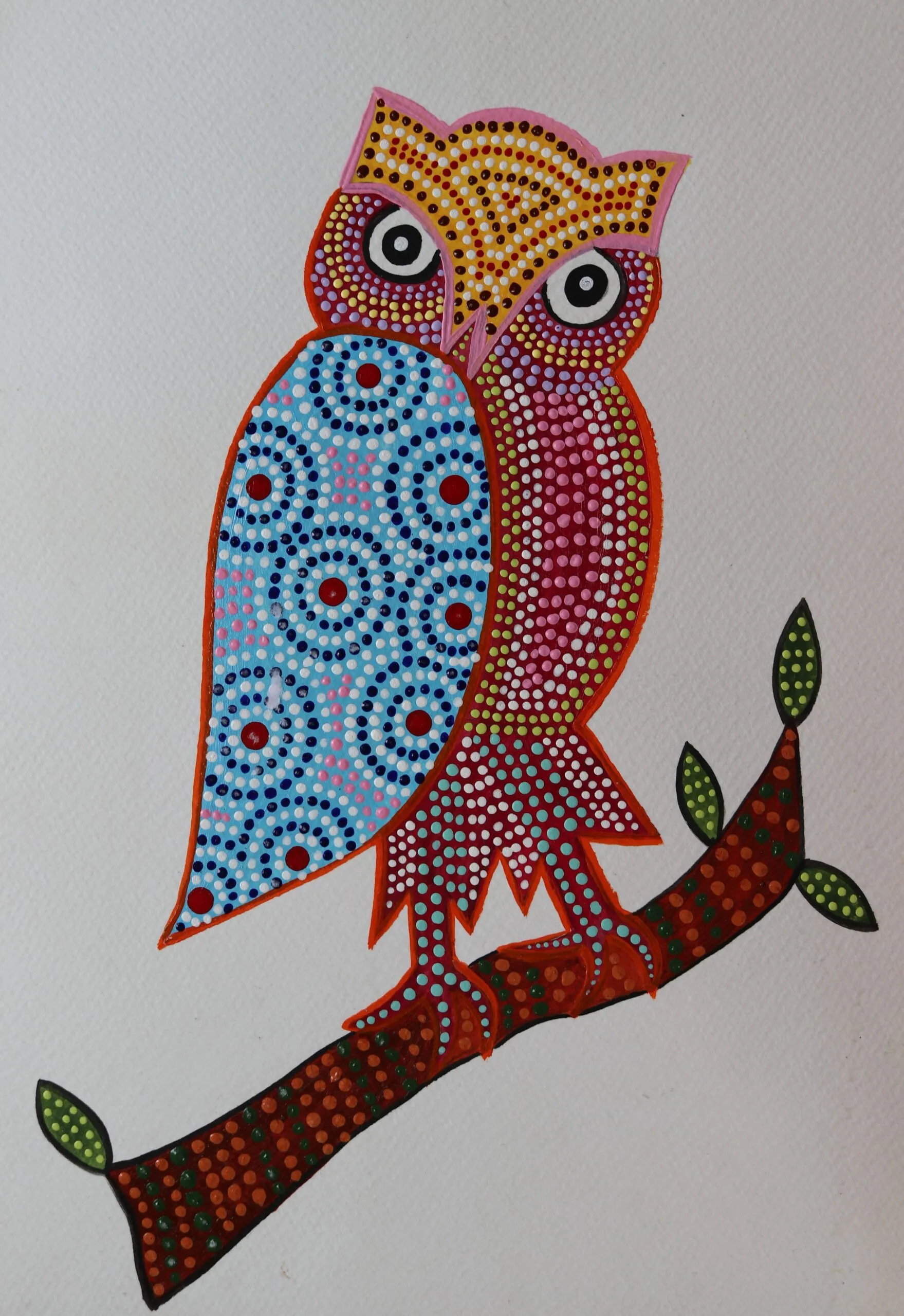
In the forests and farmlands of central India, the Bhil art tradition has been alive for generations — painted first on clay walls and mud floors, and now recognised on the world stage as one of the most distinctive forms of Indian folk art. Made by the Bhil tribal community across Madhya Pradesh, Rajasthan, Gujarat, and Maharashtra, these paintings are immediately recognisable by their dense, rhythmic dots that fill every figure and form. Each dot is not just decorative: it represents an ancestor, a prayer, a connection between the living and those who came before.
What Is Bhil Art?
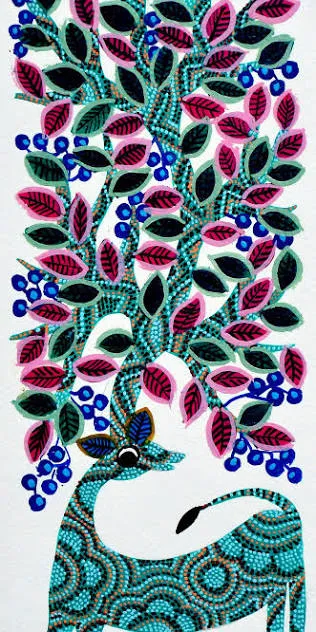
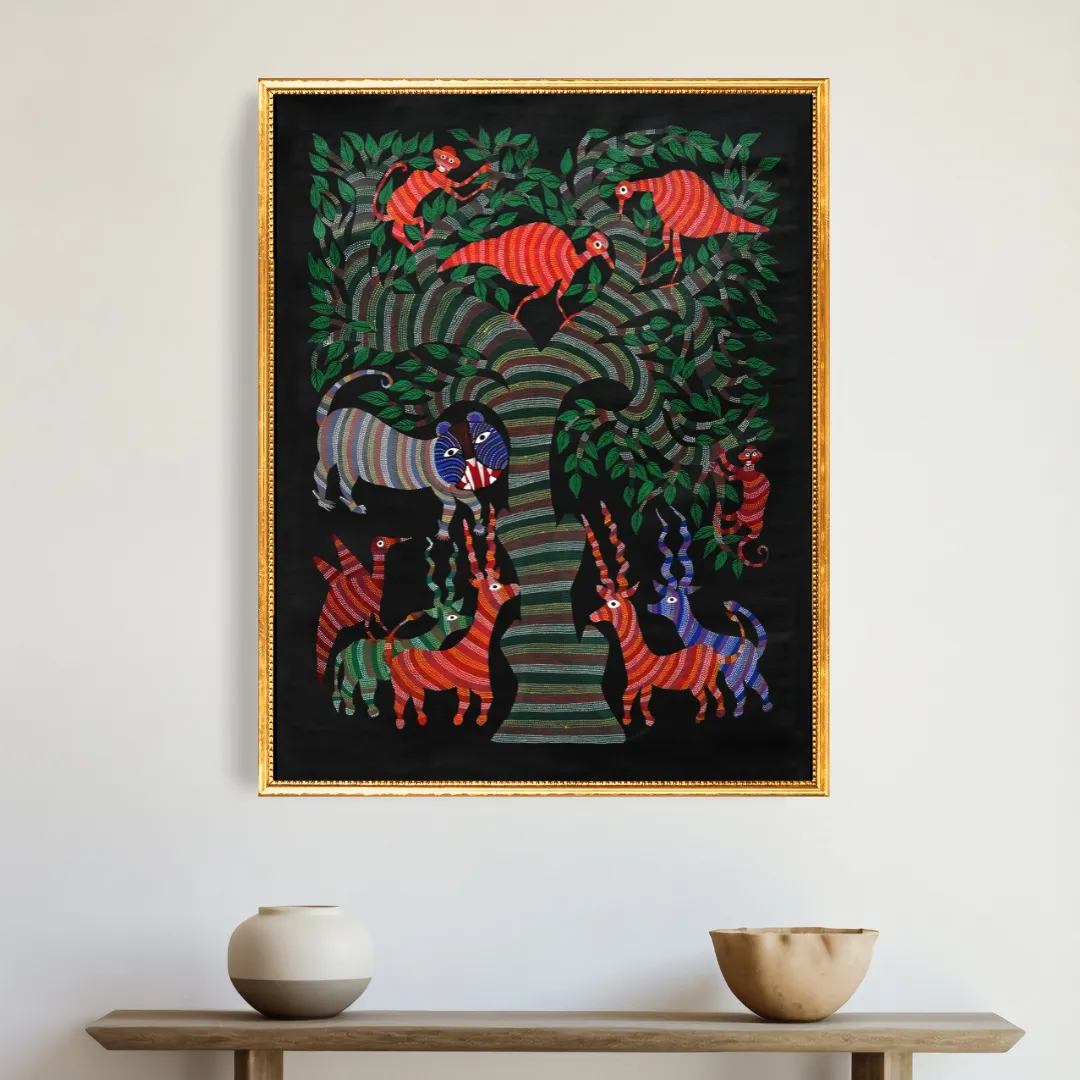
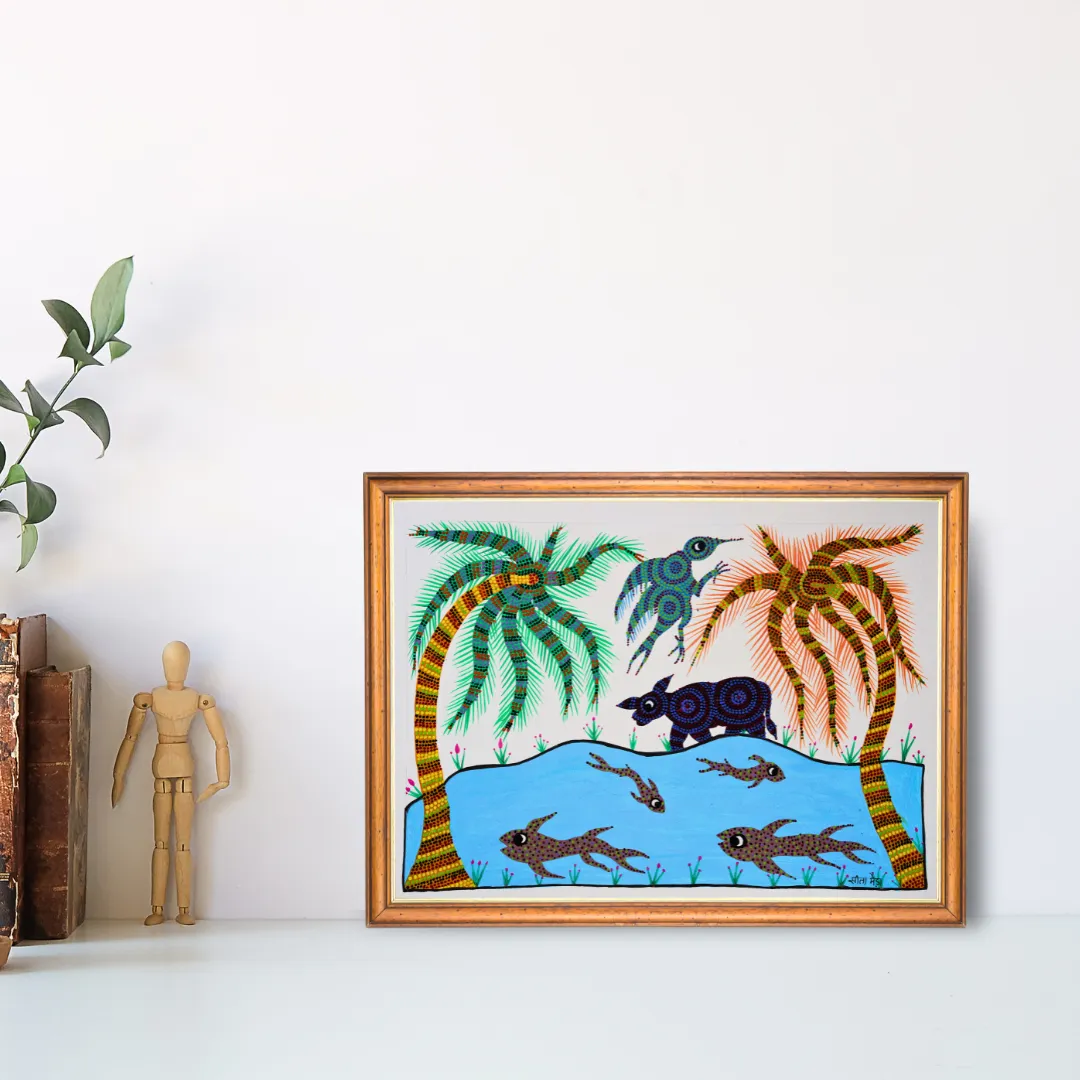
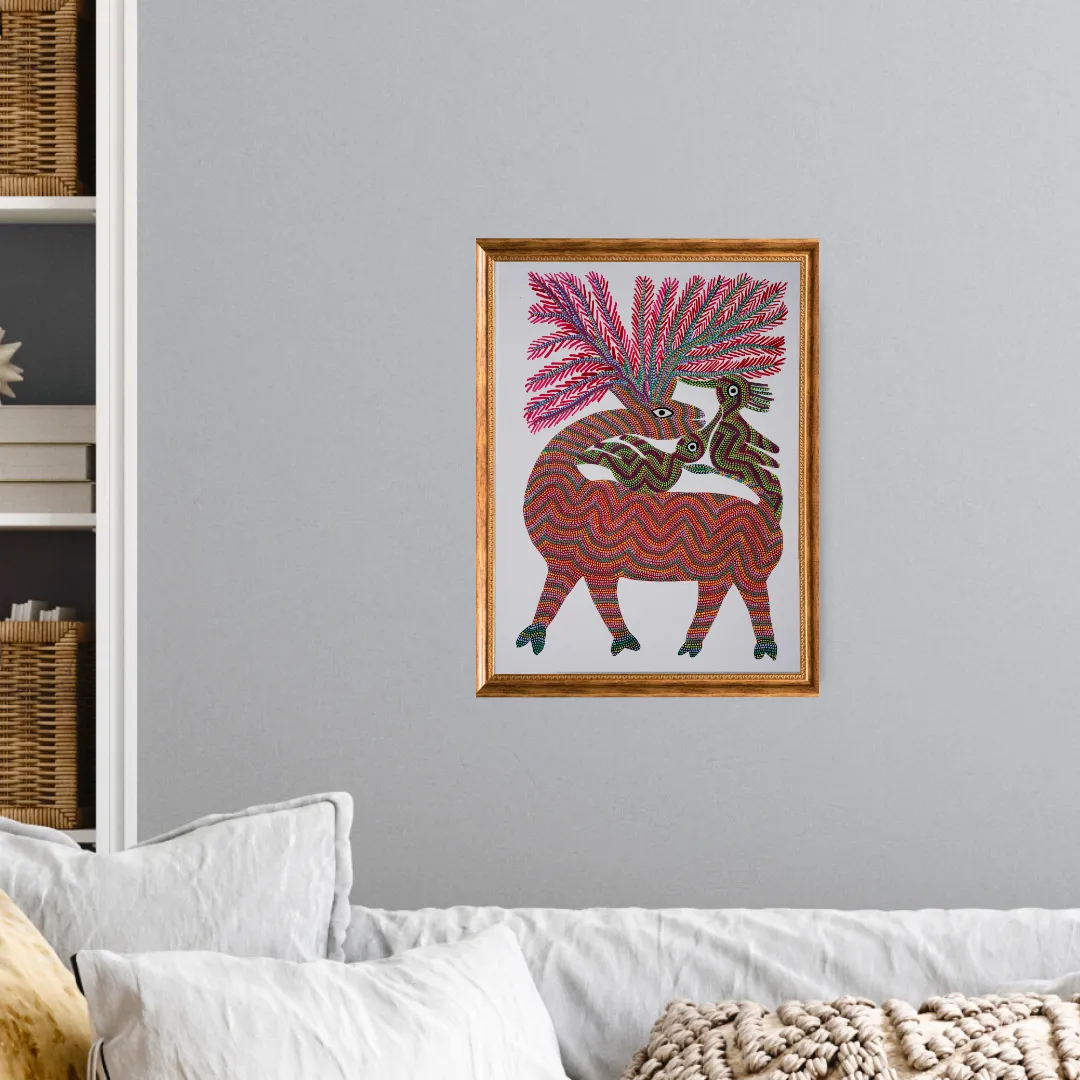
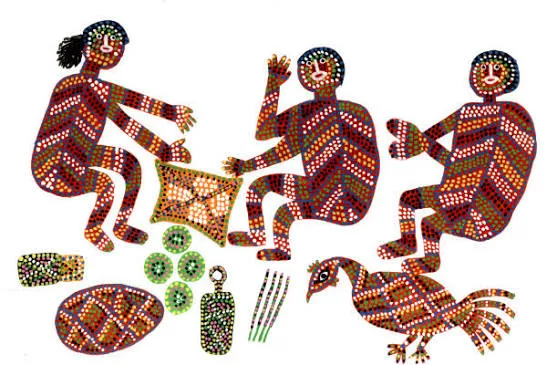
Bhil art is a dot-based tribal painting tradition practised by the Bhil community, the second-largest tribal group in India. The art originates primarily in Madhya Pradesh and Rajasthan, with practitioners also found in Gujarat and Maharashtra. At its core, Bhil painting is a spiritual practice: every dot painted on a figure represents an ancestor being invoked for the well-being of the community. Figures are large and surreal in scale, their bodies and backgrounds filled entirely with dots arranged in contrasting colour patterns.
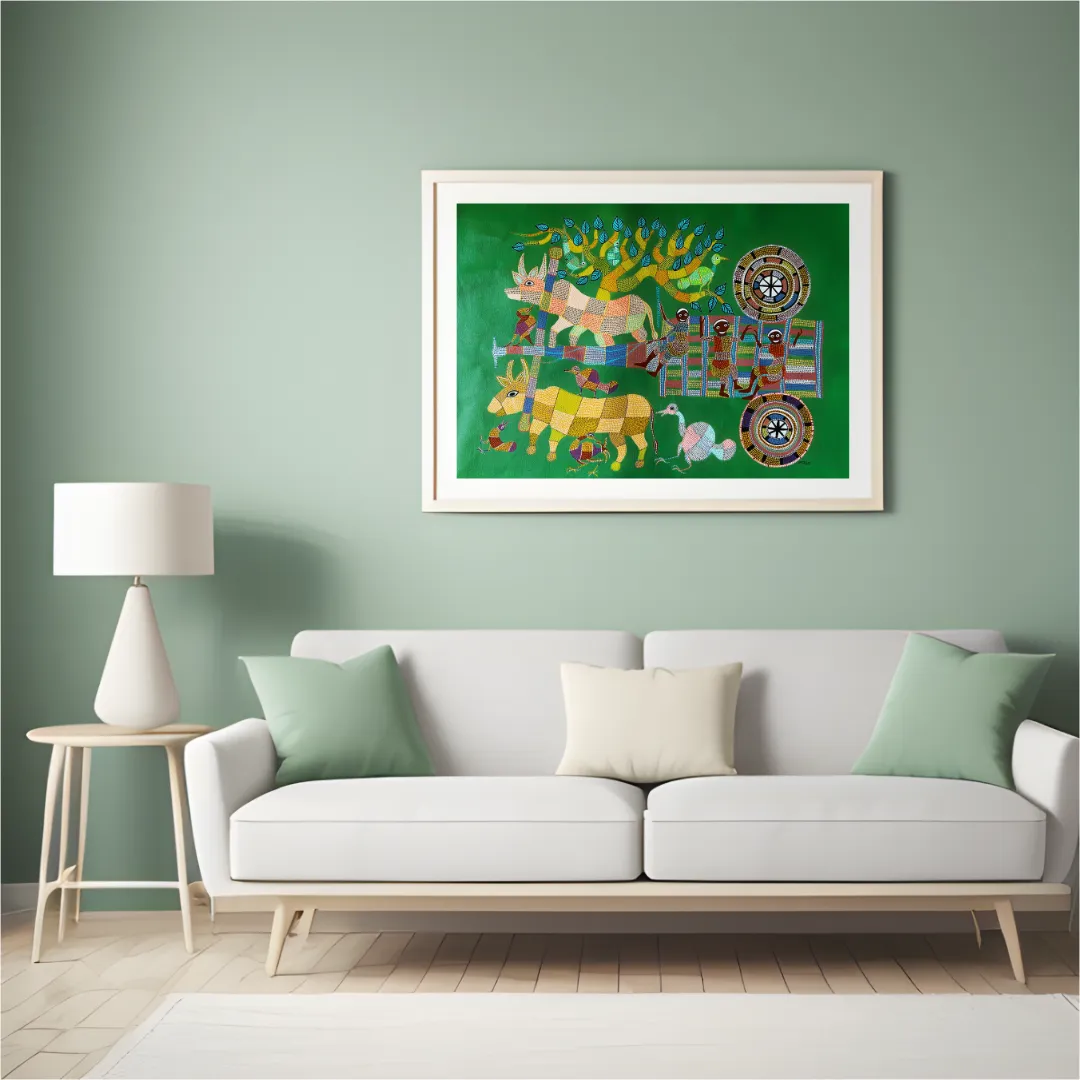
The paintings cover themes drawn from nature, mythology, and everyday tribal life — deities, animals, insects, the sun and moon, births, deaths, and festivals. Colours are traditionally made from natural materials: turmeric for yellow, blueberries for blue and purple, lamp soot for black, and limestone for white. These pigments are ground into powder and mixed with warm water or rice powder to create paint, and neem sticks or other twigs serve as brushes. Today, Bhil art painting India has moved to paper and canvas while retaining its original visual language.
History and Origin
The word Bhil derives from the Dravidian terms 'Bil' (billu) or 'Vil' (villu), both meaning bow, which reflects the community's historical identity as skilled archers. The Bhils of Rajasthan were appointed as Shikaris (hunters) by the Rajput rulers and were regarded as a warrior tribe of the Mewar region. Their ancestries are traced in legend: some scholars connect the Bhils to Eklavya, the legendary archer of the Mahabharata, while others hold that Valmiki, author of the Ramayana, belonged to the Bhil tribe. In Bhil mythology, a woman named Shabari offered Lord Rama berries (ber), a story that some connect symbolically to the dots that define their paintings.
The Bhils are divided into two groups: the Central or pure Bhils, who live in the mountainous regions of Madhya Pradesh, Maharashtra, Gujarat, and Rajasthan, and the Eastern Rajput Bhils, who inhabit parts of Tripura. Originally a nomadic tribe, they settled in Rajasthan and took up agriculture, which became the foundation of their artistic identity. Their paintings depict harvests, festivals, and nature because these are the rhythms of the life they live. The art form is transgenerational: it is passed from mothers to their children, keeping the tradition rooted in family and community.
For the Bhils, painting is a form of prayer. The themes they create draw on religious epics, myths, and tribal legends, and the finished paintings serve as offerings to gods and goddesses during festivals. The men of the tribe perform the dance traditions of Ghoomai and Gair, ritualistic theatrical forms performed during July and August to celebrate the festival of Sharavana, and these ceremonies form part of the cultural world that Bhil painting depicts.
Key Features and Visual Style
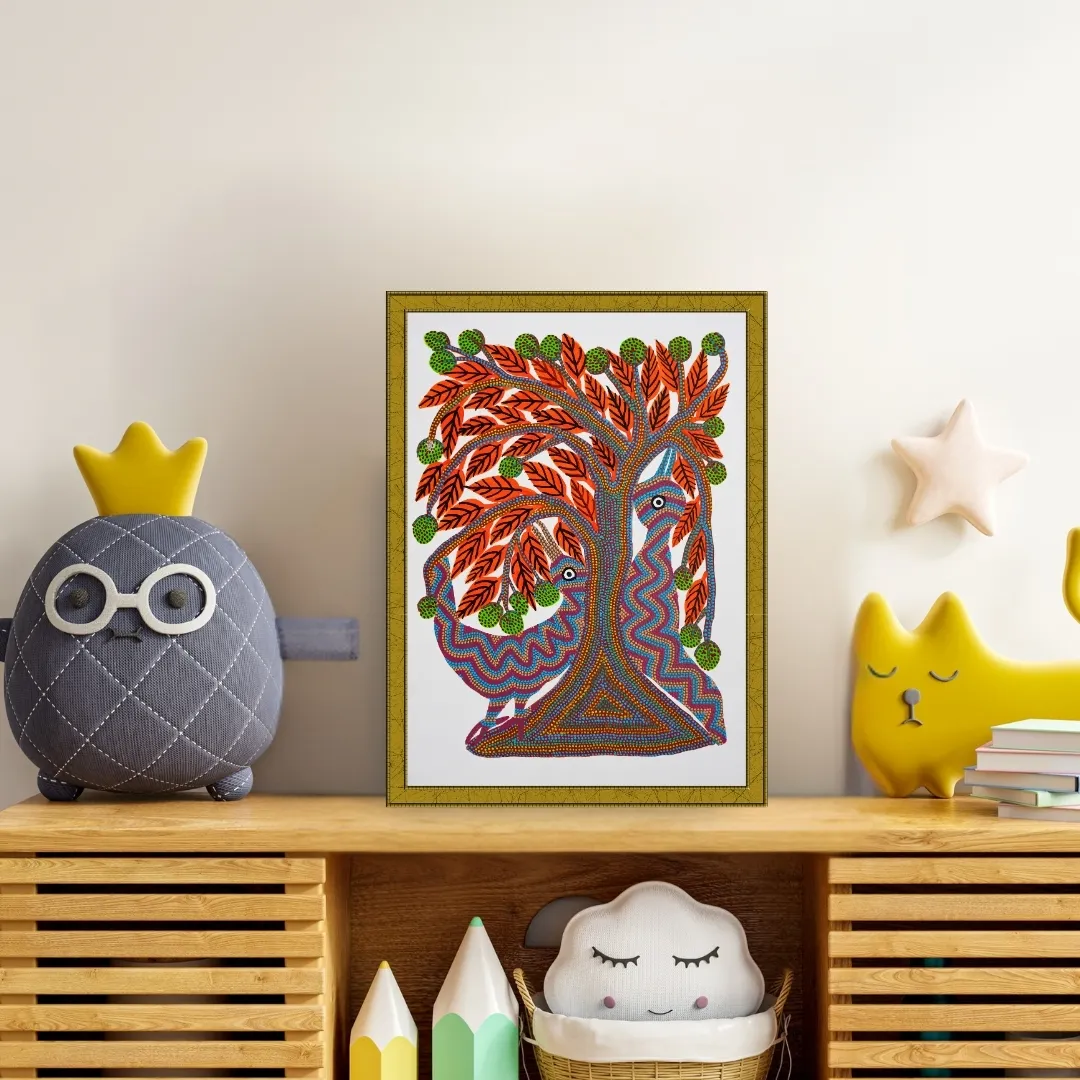
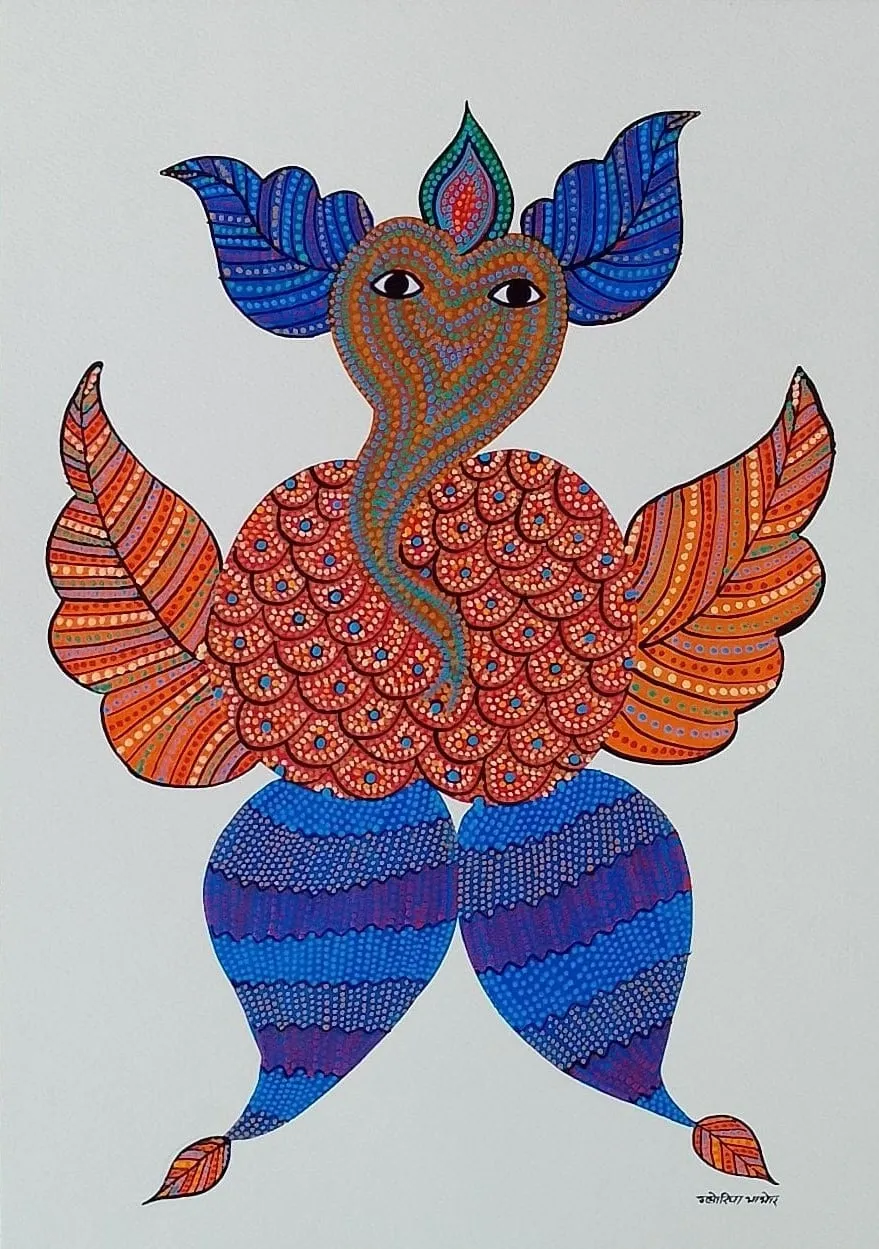
What makes Bhil tribal art instantly recognisable is the technique of filling every subject — human figures, animals, trees, even the background — with densely placed dots in colours that contrast sharply with one another. This stippling method is reminiscent of pointillism in Western art history, but in Bhil painting it carries deep ritual meaning rather than being a purely visual technique.
Dot-based filling technique : Every painted figure is filled with rows or patterns of dots, creating texture across large, surreal shapes. Each dot is understood to invoke an ancestor and is both decorative and spiritually meaningful.
Natural colour palette : Traditional Bhil colours are made from turmeric (yellow), blueberry extracts (blue and purple), lamp soot (black), and powdered limestone (white), all mixed with warm water or rice powder as a binding medium.
Central motifs : Animals, deities, ancestors, insects, the sun and moon, harvest scenes, births, deaths, and festivals are the primary subjects, rendered through dots, lines, and geometric patterns.
Wall preparation and base : For traditional wall paintings, the surface is prepared with a mixture of plaster and mud called mittchitra before pigments are applied. Today the same visual grammar is applied to paper and canvas.
Contrast harmony : The dot colours are always chosen in contrasting harmony with the background, creating a vibrating visual rhythm that is unique to each artist, who develops a personal dot style as their artistic identity.
Famous Artists of Bhil Art
Several artists from the Bhil community have brought this tradition to national and international attention, shifting Bhil art painting India from village walls to galleries worldwide.
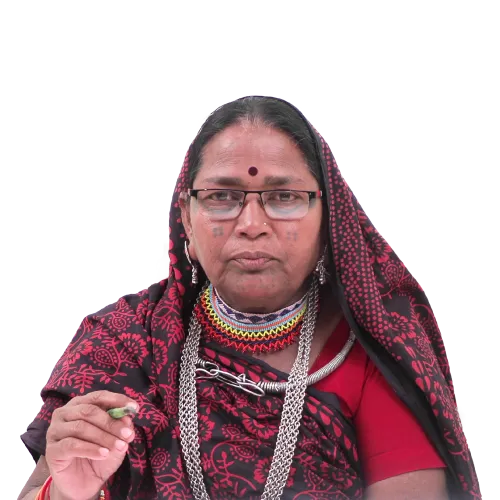
Bhuri Bai, from Jhabua in Madhya Pradesh, is widely considered the pioneering figure in the modernisation of Bhil painting. She is credited with being the first Bhil artist to transfer the tradition from clay walls to paper and canvas, a shift that made the art form portable and collectible. She received the Padma Shri in 1986 and has exhibited internationally. Bhuri Bai teaches her craft on Rooftop through the Bhil art course by Bhuri Bai.
Lado Bai, also from Madhya Pradesh, is known for her intricate dot compositions and her skill in working with natural dyes. She represents the continuation of traditional Bhil techniques in a contemporary context and teaches her approach through the Bhil art course by Lado Bai on Rooftop.
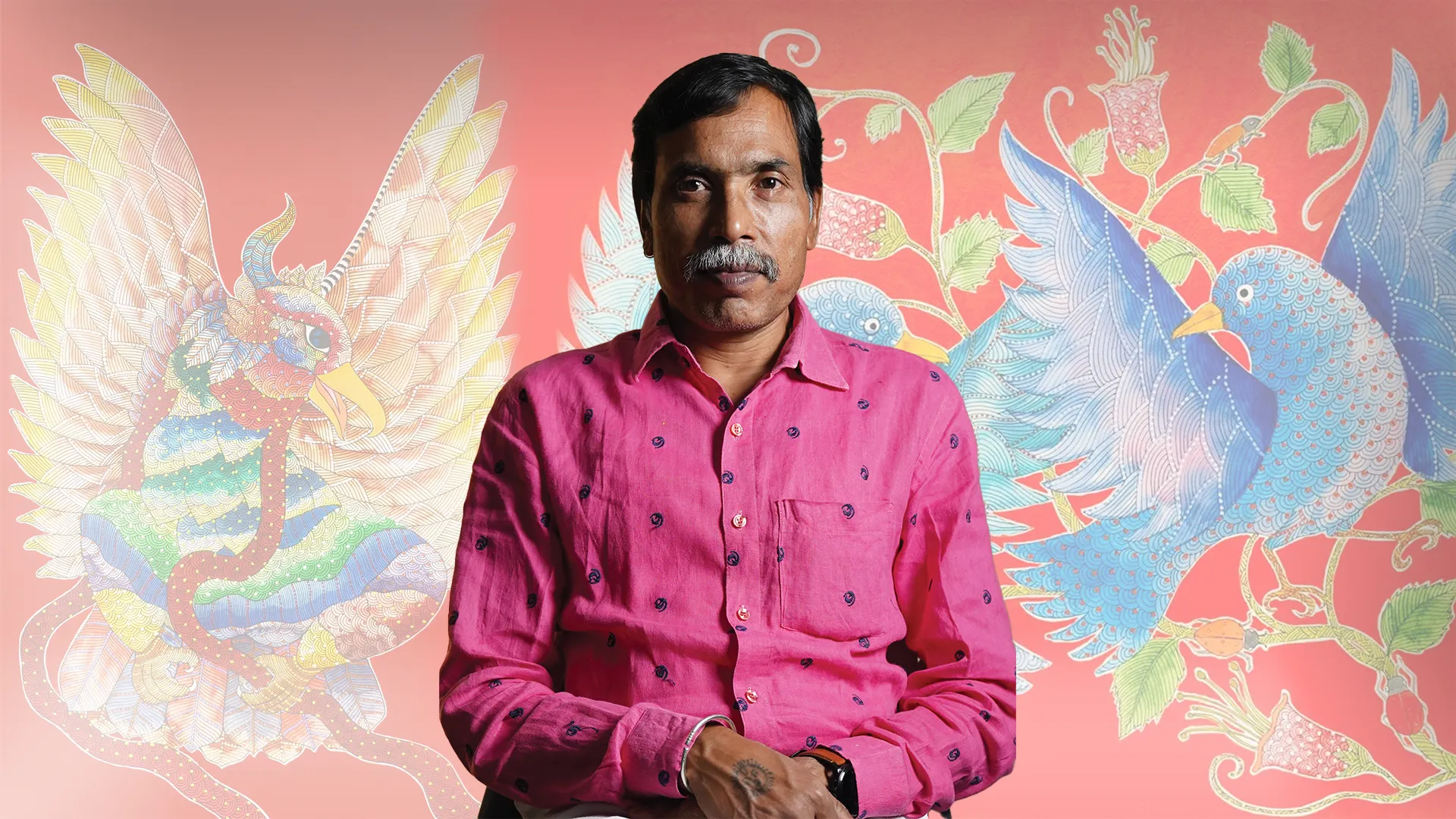
Nankusia Shyam, from Madhya Pradesh, is celebrated for large-format Bhil paintings that draw on themes from nature and Bhil mythology. His works often feature the distinctive large, surreal figures filled with dots that characterise the tradition at its most expressive.
Sher Singh Shyam, also from Madhya Pradesh, is known for narrative works depicting Bhil festivals, community life, and the dance forms of Ghoomai and Gair. His paintings bring the ceremonial world of the Bhil community vividly to the viewer.
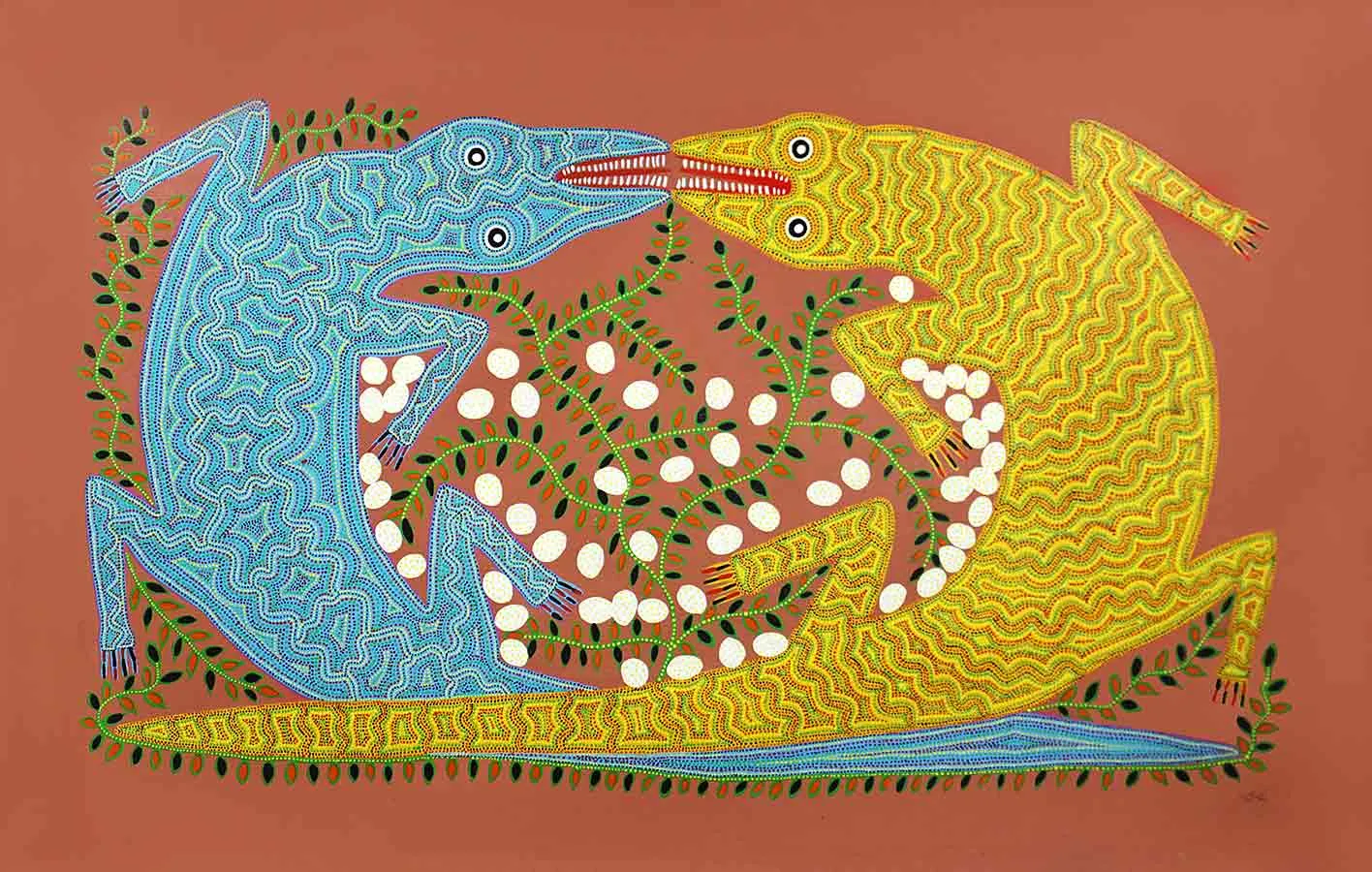
If you are asking how to learn Bhil art online, Rooftop offers structured Bhil art courses taught directly by master artists from the Bhil community. The course by Bhuri Bai covers the foundational philosophy and dot technique, while the course by Lado Bai focuses on traditional colour preparation and composition. Both courses teach the art as it is actually practised, not as a simplified craft exercise.
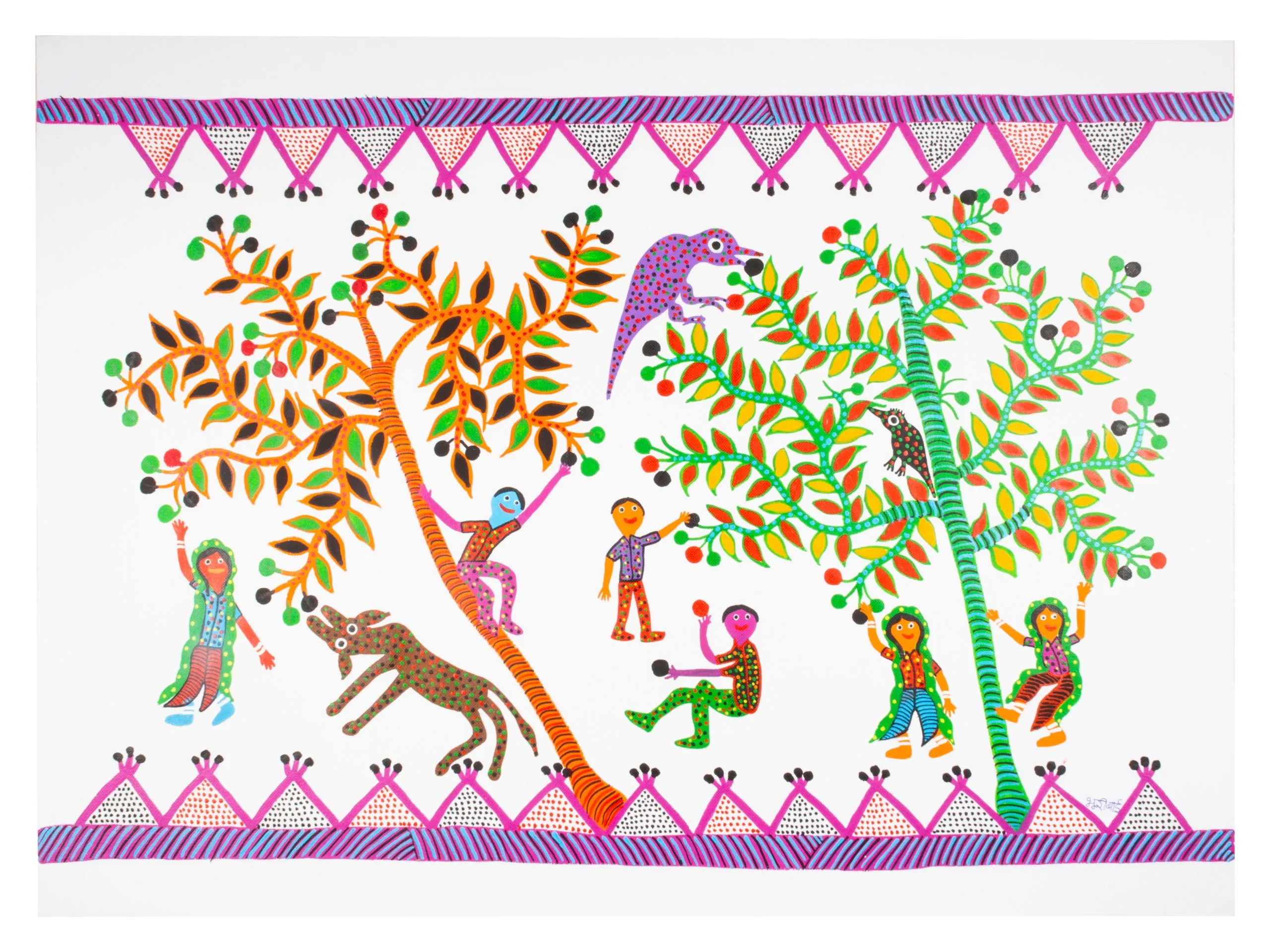
Bhil paintings can be seen in person at tribal art festivals in Madhya Pradesh and Rajasthan, particularly in Jhabua district and during the Sharavana festival season. Major museums with folk and tribal art collections, including the Indira Gandhi Rashtriya Manav Sangrahalaya in Bhopal, hold significant Bhil works. Bhils are also skilled clay sculptors who create figures of horses, elephants, tigers, and Bhil deities - these can be found at craft fairs across central India. For those who want to buy Bhil paintings online, the Rooftop shop carries original works by practising Bhil artists. Purchasing directly from the platform ensures that the artist receives a fair share of the sale and that you receive a piece with a clear provenance.
What is Bhil art and where does it come from?
Bhil art is a dot-based tribal painting tradition from the Bhil community, one of the largest tribal groups in India. It originates from Madhya Pradesh and Rajasthan, with practitioners also spread across Gujarat and Maharashtra. The paintings are made by filling large, surreal figures with dense patterns of dots, each of which is understood to represent an ancestor. The tradition began on the clay walls and mud floors of Bhil homes and has since expanded to paper andkota bundi canvas.
Which community practices Bhil tribal art and where do they live?
Bhil art is made by the Bhil tribal community, the second-largest tribal group in India. The Bhils are divided into two groups: the Central Bhils, who live in Madhya Pradesh, Maharashtra, Gujarat, and Rajasthan, and the Eastern Rajput Bhils, who inhabit parts of Tripura. The largest concentration of Bhil painters is found in Madhya Pradesh, particularly in Jhabua district, which remains the heartland of the Bhil art of Madhya Pradesh.
What materials and colours are used in Bhil art painting?
Traditional Bhil art uses colours made entirely from natural sources. Turmeric produces yellow; blueberries yield blue and purple; lamp soot creates black; and powdered limestone is used for white. These materials are ground and mixed with warm water or rice powder to make paint, and neem sticks or small twigs are used as brushes. For wall paintings, the surface is first prepared with a mud and plaster mixture called mittchitra before painting begins.
Who are the most famous Bhil art artists in India?
The most celebrated Bhil artist is Bhuri Bai from Jhabua, Madhya Pradesh, who received the Padma Shri in 1986 and is credited with bringing Bhil painting from walls to canvas for the first time. Other notable names include Lado Bai, known for her natural dye work and fine dot compositions, Nankusia Shyam, celebrated for large-format mythological paintings, and Sher Singh Shyam, whose narrative works depict Bhil festivals and ceremonies.
How is Bhil art different from Pithora or Gond painting?
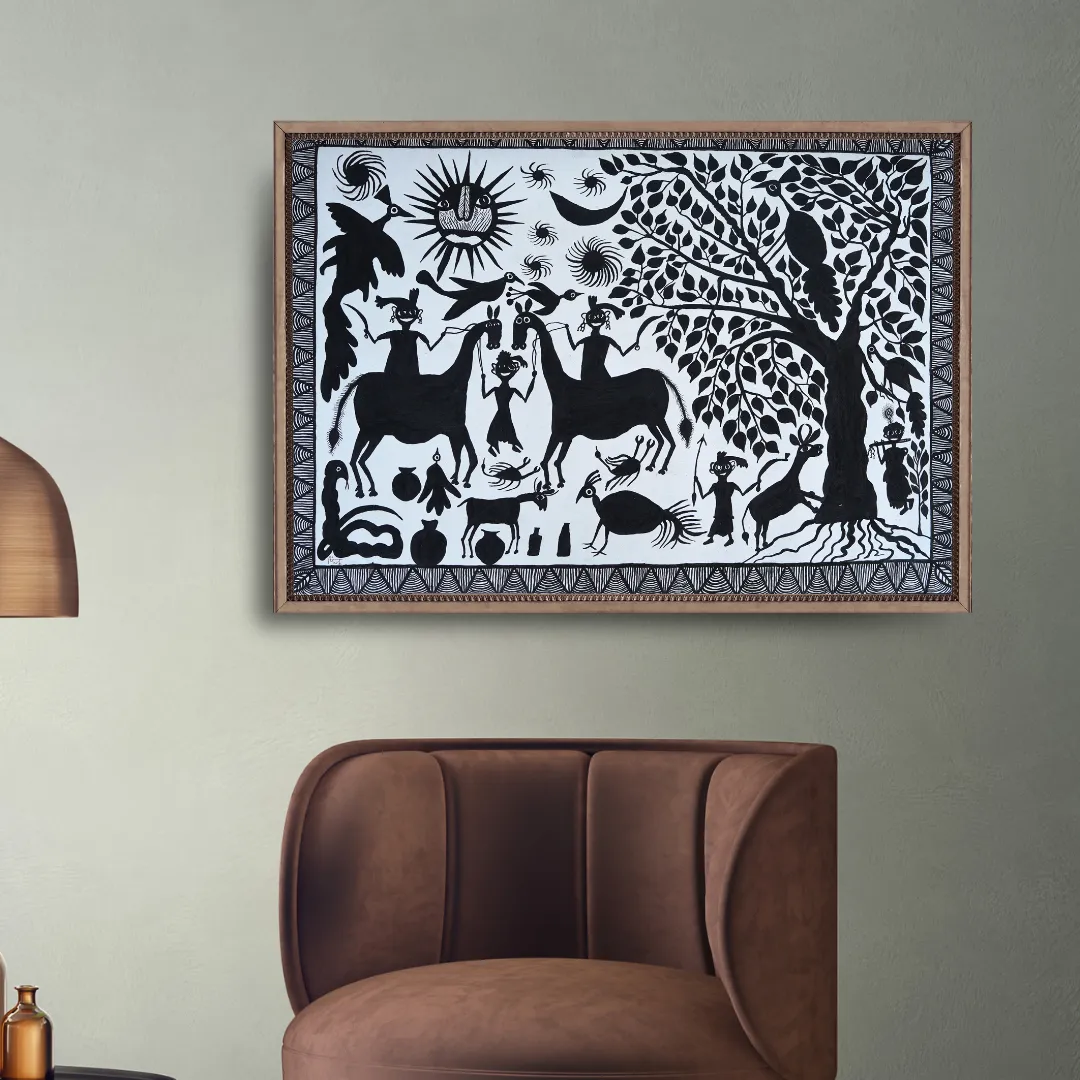
All three are tribal painting traditions from central India, but each is visually and culturally distinct. Bhil art is defined by its all-over dot filling technique, where every figure and background element is covered in dense, contrasting dots representing ancestors. Pithora painting is a ceremonial art form practised during rituals, featuring horses and deities in a flowing narrative style. Gond art, from the Gond tribe of Madhya Pradesh, uses lines and patterns rather than dots to create intricate natural scenes.
Bhil art carries within it a complete world: the agricultural rhythms of a community, the faces of their ancestors, the gods they honour, and the festivals they live by. It is one of the most spiritually grounded art forms in India, and one that is gaining the global recognition it has always deserved. Explore the Bhil art courses on Rooftop and begin learning this tradition directly from the artists who carry it forward.
Sources
Jod, M. Bhil Culture. Arihant Prakashan, 2015.
Monteiro, Ana, Faiz Ullah, and K. P. Jayasankar. Many Voices, Many Worlds: Critical Perspectives on Community Media in India. SAGE Publications, 2021.
Raghbeer, Anjali. A Jar of Sound: Bhil Art. Wisdom Tree Publishers, 2014.
Ranjan, Aditi, and M. P. Ranjan. Handmade in India: A Geographic Encyclopaedia of Indian Handicrafts. Abbeville Press, 2009.
Sabnani, Nina. A Bhil Story. Tulika Publishers, 2014.
Image Sources
"Bhil Painting: A Journey into India's Tribal Art, Culture & Legacy." Gallery Unique Art, https://galleryuniqueart.com/blog/bhil-painting/bhil-painting-a-journey-into-indias-tribal-art-culture-legacy. Accessed 16 July 2026. ([galleryuniqueart.com][1])
"Bhil Painting: An Art of Storytelling." MagicDecor, https://magicdecor.in/blog/bhil-painting-an-art-of-storytelling/. Accessed 16 July 2026. ([Magicdecor®][2])
"Bhil Pithora Painting #11 (10 × 14 in.)." International Indian Folk Art Gallery, https://indianfolkart.org/product/bhil-pithora-painting-11-10-x-14/. Accessed 16 July 2026.
"Stepping Inside a Bhil Painting." Museum of Art & Photography (MAP), https://map-india.org/map-events/stepping-inside-a-bhil-painting-2/. Accessed 16 July 2026.
"The Tree of Life – Bhil Art." Rhiti Chatterjee Bose, https://rhitichatterjeebose.com/portfolios/bhil-art/. Accessed 16 July 2026.
"Tiger and Tigress – Gond Painting." Abhivyaktii, https://www.abhivyaktii.com/products/copy-of-gond-painting-sher-sherni. Accessed 16 July 2026.