
Pithora Painting: The Sacred Tribal Art of the Rathwa People
Let's learn about Pithora paintings!
Introduction and Origin
Among India's most spiritually charged art forms, Pithora painting is a sacred ritual practice of the Rathwa tribe, created not for display but as an act of devotion. Practiced across the tribal districts of Gujarat and Madhya Pradesh, these elaborate wall paintings are made as offerings to Baba Pithora, the community's most important deity. More than an art form, each Pithora painting is a living prayer painted onto the walls of a home, completed with ceremony, chant, and the blessing of a priest.
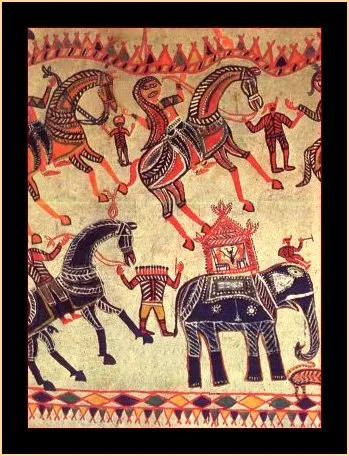
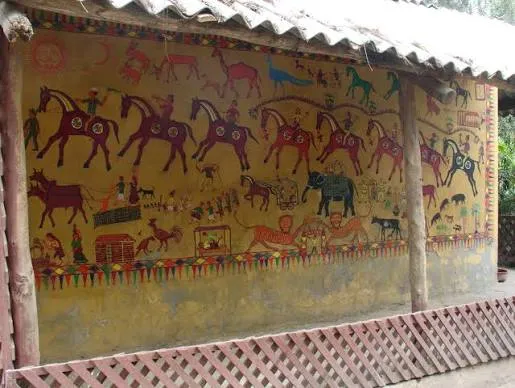
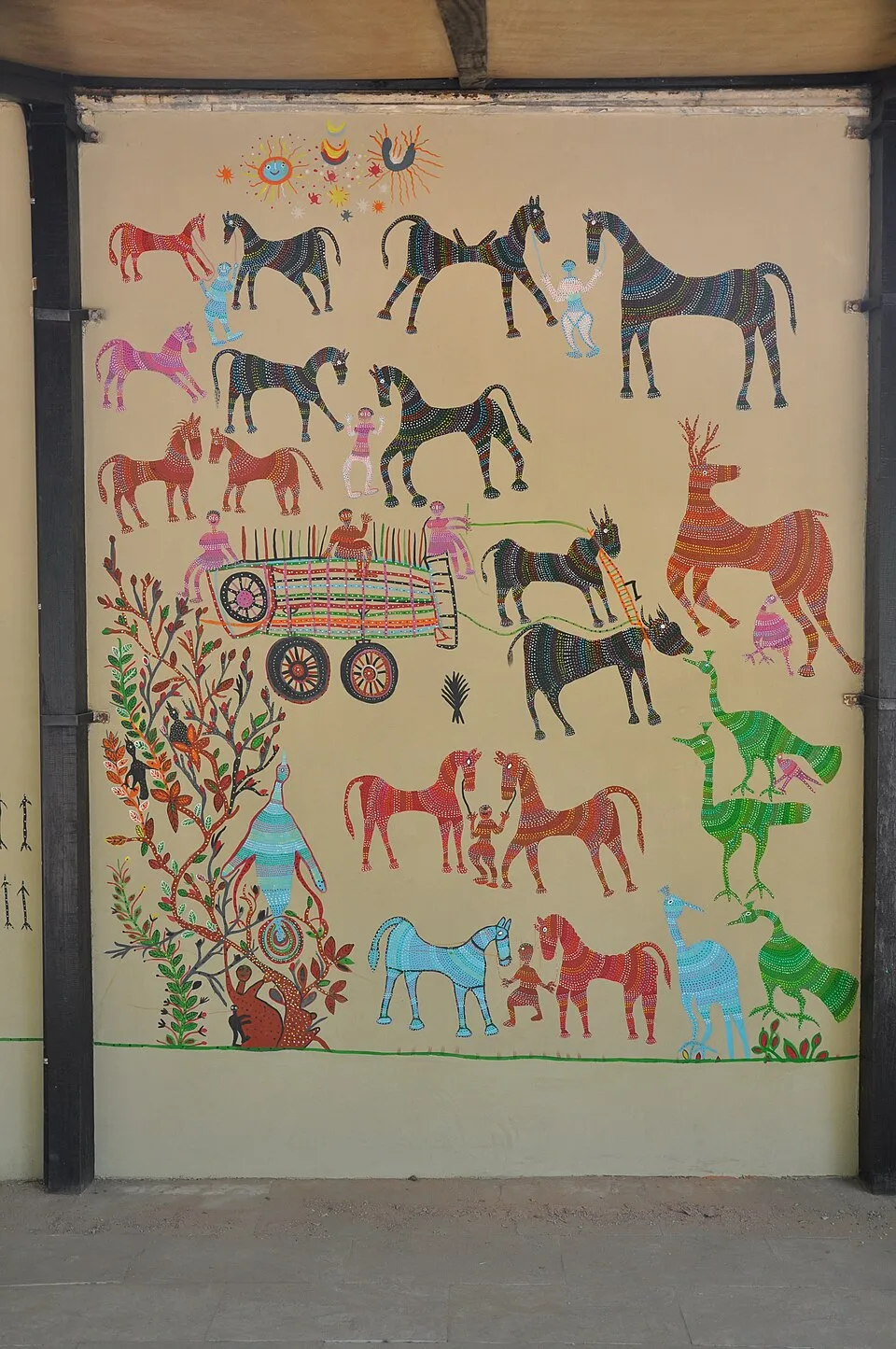
What Is Pithora Painting? Pithora painting is a tribal ritual art made by the Rathwa, Bhilala, Nayak, and Tadi communities of Gujarat and Madhya Pradesh, with the Rathwa and Bhilala tribes being its primary practitioners today. The paintings are made exclusively by men, known as Lakharas, on the interior walls of homes. Visually, Pithora paintings are dense, narrative compositions filled with horses, elephants, deities, animals, and scenes from daily and mythological life. The entire painting is divided into two halves by a wavy blue line representing a river: the upper half depicts the heavenly cosmos and deities, while the lower half shows the earthly world of wildlife, harvests, cows, bulls, and modern transportation. These paintings serve as offerings of thanksgiving to Baba Pithora, also known as Babo Pithoro, when the deity grants the family a wish such as prosperity, safety, or good health.
History and Origin
The Rathwa community traces its origins to the Rath Vistar region of Madhya Pradesh, from where they migrated to Gujarat over time. Today, Rathwa settlements are spread across the districts of Panchmahal, Vadodara, Chhota Udaipur, and Dahod in Gujarat, as well as in areas along the borders of Madhya Pradesh. The name Pithora comes from the deity Baba Pithora himself, whose origin is recounted in a powerful community legend. According to this myth, the King of Gods, Raja Indra, had seven sisters, one of whom, Rani Kandi Koyal, went into the forest and conceived a child with Raja Kanjurana outside of wedlock. She set the child afloat in a stream, where two of Raja Indra's other sisters, Rani Kajal and Rani Makher, found and nursed him. Rani Kajal named the abandoned child Pithora and gave him shelter in their palace. In adulthood, Pithora was chosen by Raja Indra to marry Pithori, the royal bride selected for him. The art form emerged as a means to invoke and honour this deity across generations.
Key Features and Famous Artists
Key Features and Visual Style
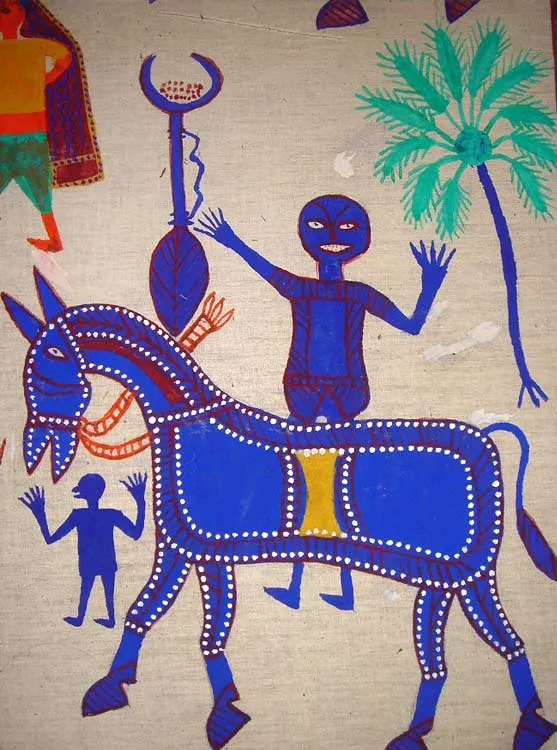
A Pithora painting is immediately recognisable by its dense, story-driven composition set on a white wall surface. The entire painting is framed as a sacred enclosure, representing a protected ritual space. Two distinct types exist: ardho pithoro (half Pithora, with five to nine riderless horses except for Lord Ganesha) and akho pithoro (complete Pithora, with eighteen horses with riders). Characters in these paintings have minimal bodily anatomy, functioning as symbols rather than realistic figures. They illustrate a narrative sequence drawn from mythology and everyday life.
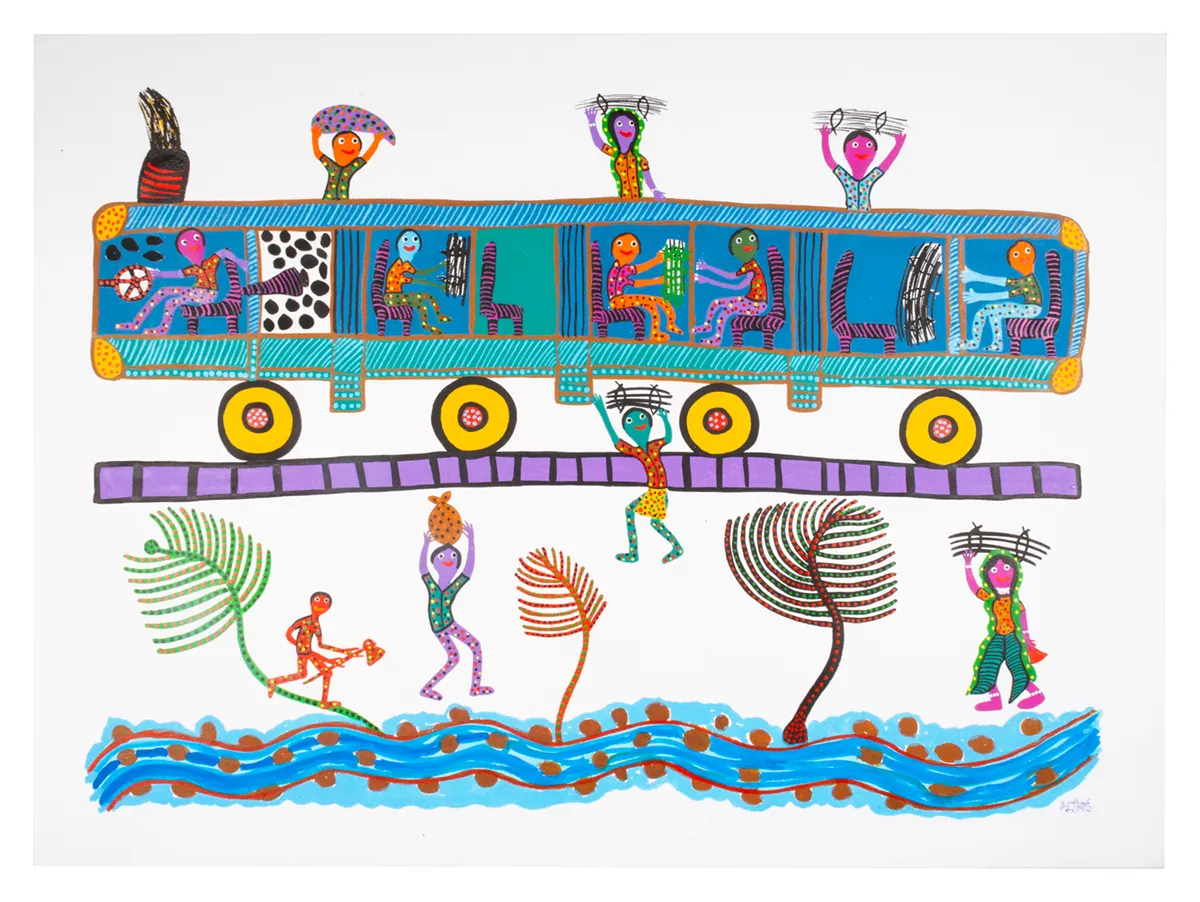
The paintings are divided by a wavy blue line representing a river, separating the upper celestial realm from the lower earthly realm.
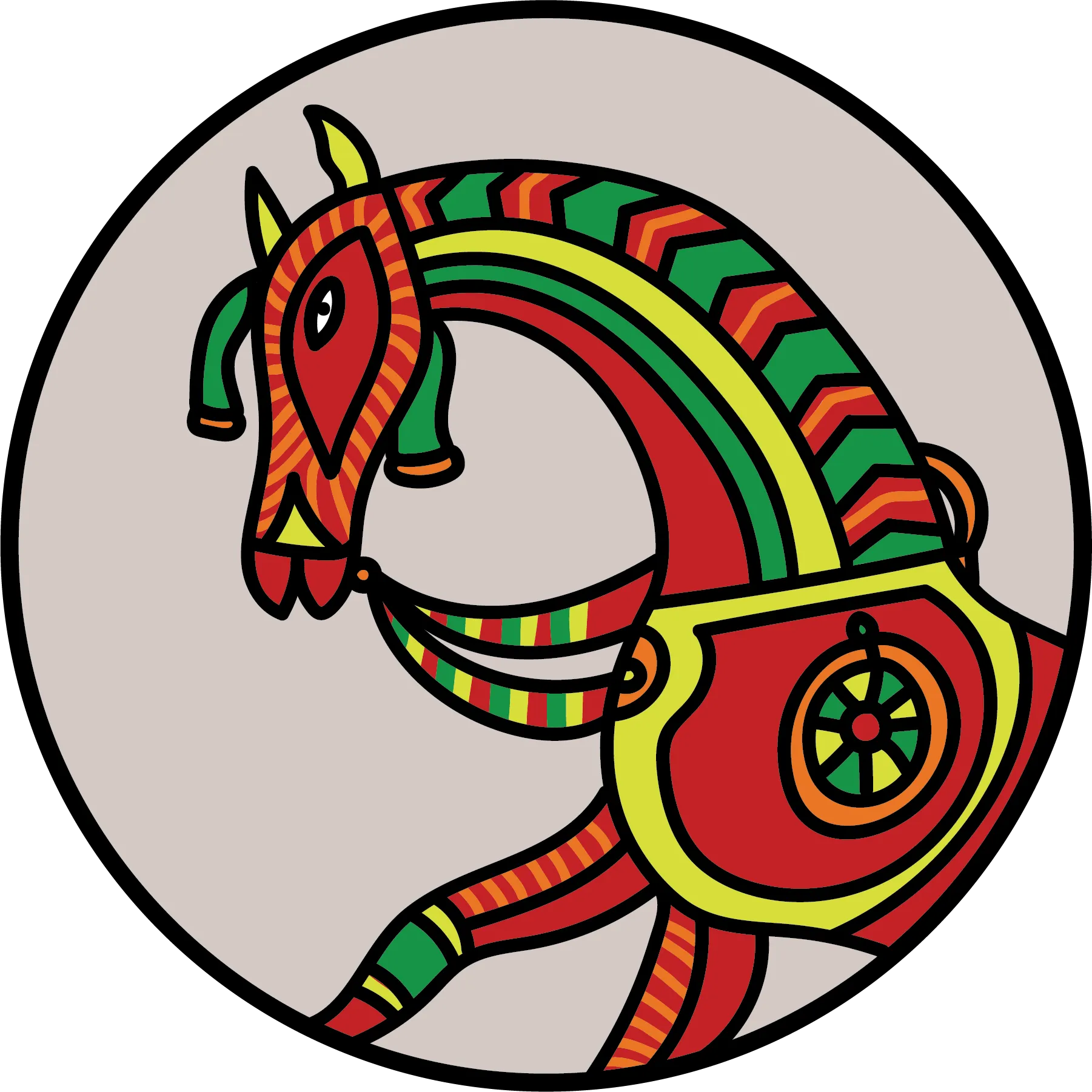
Common motifs include horses, elephants, Lord Ganesha, Pithora and Pithori (the divine couple), birds, trees, cows, bulls, and modern symbols like railway tracks, buses, aeroplanes, and computers.
Colours used include vibrant greens, oranges, blues, and pinks derived from both natural and synthetic sources; the wall surface is prepared with cow dung, water, and white clay (pandurya) or white lime powder (chuna) in a process called Lipai.
The Lipai process is carried out by young unmarried girls of the community over seven to eight days, adding multiple coats of the mixture to create a smooth white canvas.
Painting is done with twigs, stems, hands, and artificial brushes; artists primarily use earthy tones within a primary colour scheme, with other vibrant colours added alongside.
Completion of the paintings is marked by ritual ceremony, with the Badwa (priest) chanting hymns throughout the painting process to bless the work and protect the artists from evil spirits.
Famous Artists of Pithora Painting
Because Pithora painting remains deeply embedded in ritual and community life, it has fewer widely documented artists compared to court-based Indian art traditions. The following artists and practitioners have contributed significantly to bringing awareness of this tradition beyond the tribal community.
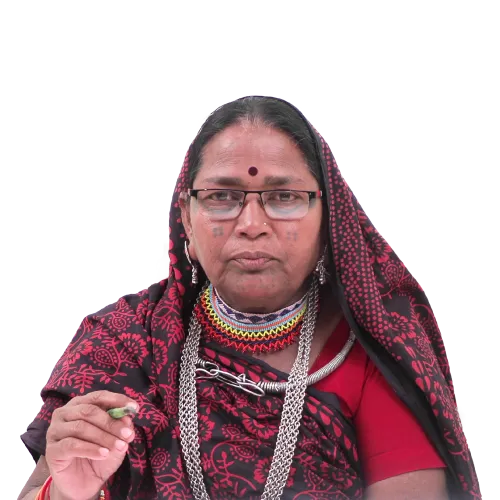
Lado Bai, from the Bhil community of Madhya Pradesh and Gujarat, is one of the most celebrated Bhil artists whose work captures the visual vocabulary shared between Bhil and Rathwa traditions. Her work is part of Rooftop's Bhil art course.
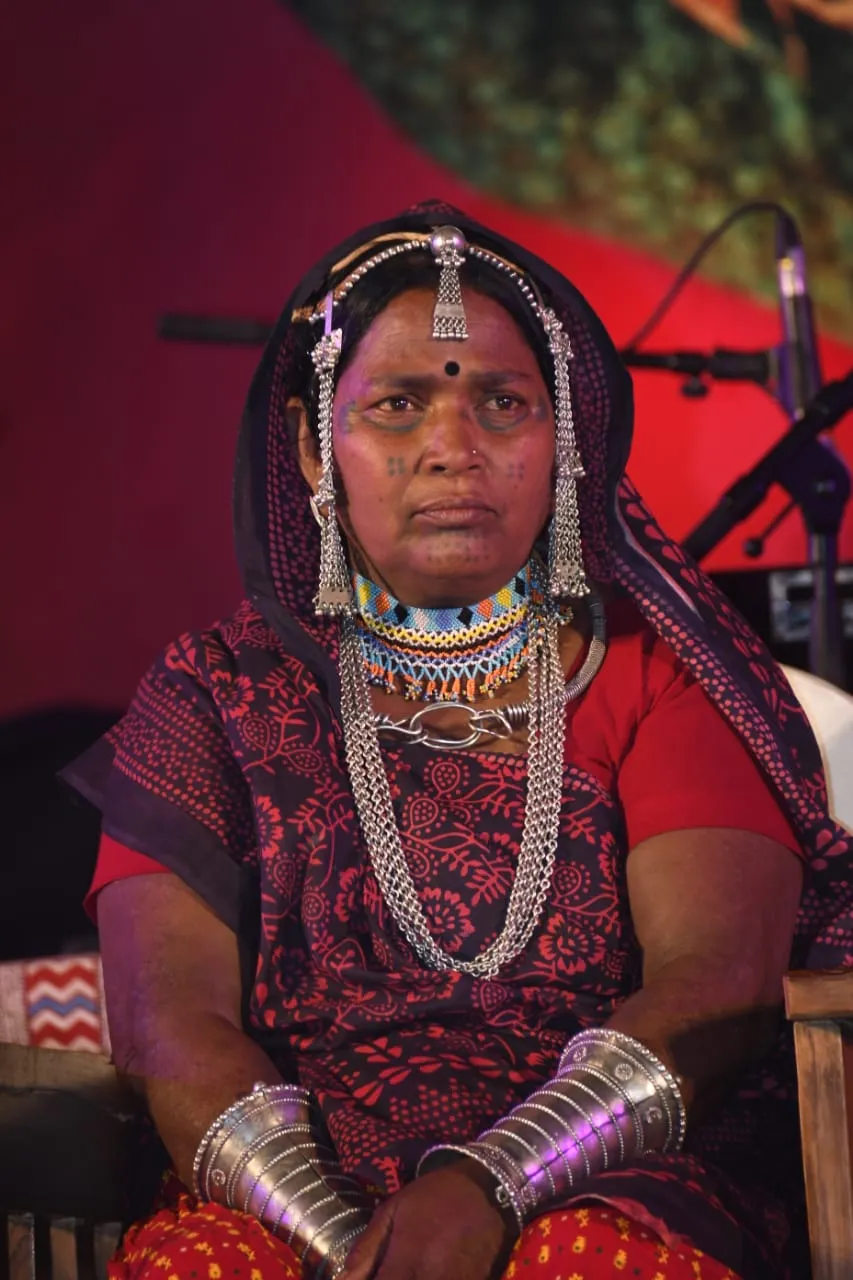
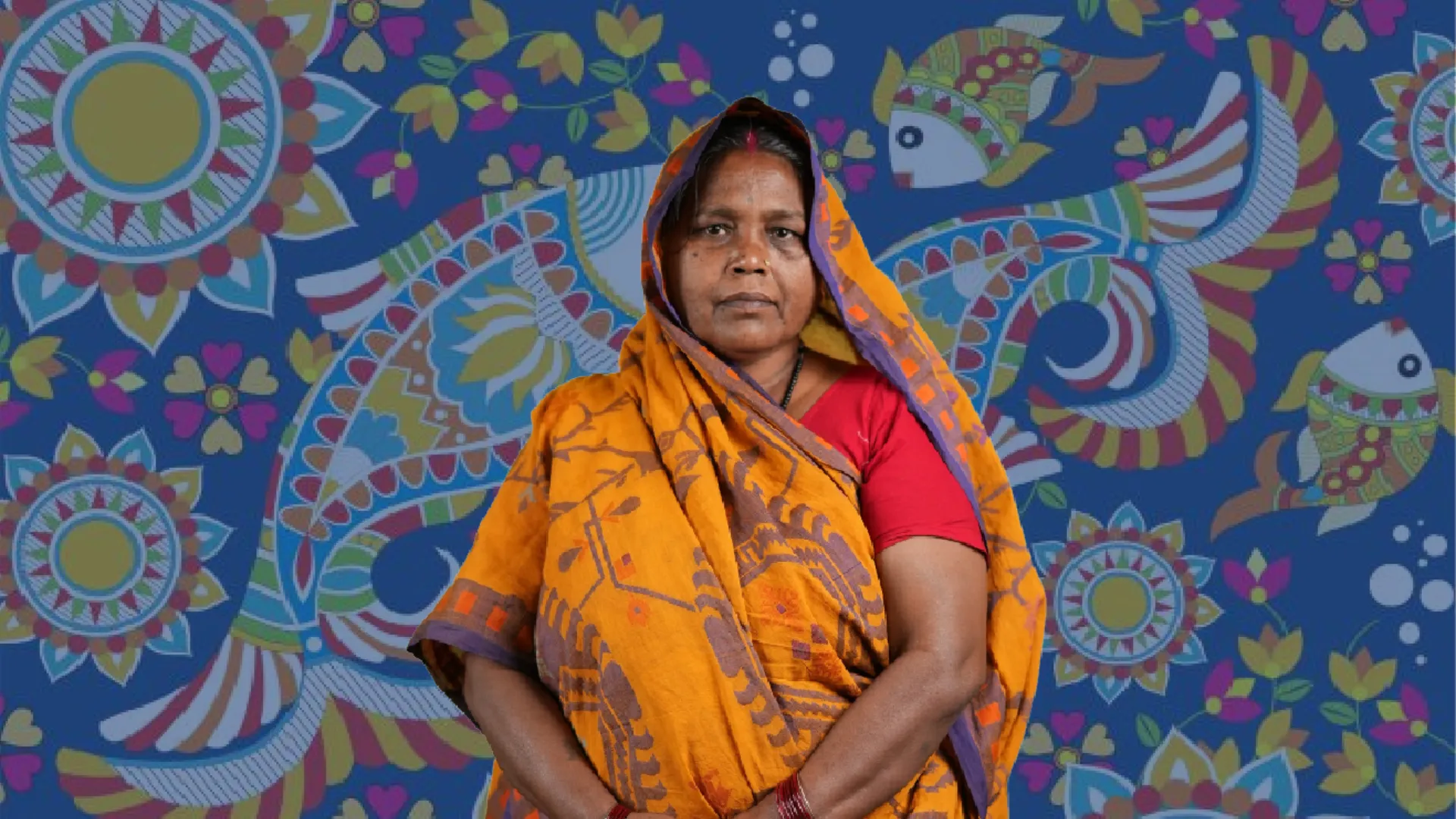
Bhuri Bai, from Pitol village in Madhya Pradesh, is a Padma Shri recipient and one of the most recognised voices for tribal art from this region. Her Bhil-style paintings hold a similar narrative tradition to Pithora. Her work can be explored through Rooftop's Bhil art course by Bhuri Bai.
Beyond individual practitioners, Pithora painting is created collectively by a group of six or seven men working together under the supervision of a Badwa, making it as much a community practice as an individual artistic pursuit. Rathwa Lakhara artists from Panchmahal and Chhota Udaipur districts continue this tradition as a living ritual to this day.
How to Learn Pithora Painting
If you are wondering how to learn about Pithora painting and the tribal art traditions of Gujarat and Madhya Pradesh, Rooftop offers a range of Indian folk art courses taught by master artists from these living traditions. The Bhil art traditions closely related to Pithora are taught by practising artists, giving learners direct access to the techniques, stories, and cultural context behind the work. Whether you are an art student, a curious learner, or a collector, these courses offer a genuine grounding in traditional Indian art from the source.
Where to See and Buy Pithora Painting
Pithora paintings in their traditional form are found on the walls of homes in tribal villages in Panchmahal, Vadodara, Chhota Udaipur, and Dahod districts of Gujarat, as well as in border areas of Madhya Pradesh. Contemporary adaptations of Pithora designs appear on textiles and as wall hangings, and are exhibited at craft fairs and tribal art exhibitions across India. While the tribes consider Pithora paintings to be divine and not a commodity, contemporary prints and derivative works can be found through folk art platforms. Explore Rooftop's shop for authentic Indian tribal and folk artworks, and the Art Wiki to discover related traditions.
Learn Pithora
Frequently Asked Questions
What is Pithora painting and where does it come from?
Pithora painting is a sacred tribal art form practised by the Rathwa community of Gujarat and Madhya Pradesh in India. The paintings are created as ritual offerings to Baba Pithora, the community's primary deity, and are painted on the inner walls of homes to mark an answered wish or as an act of thanksgiving. The art form takes its name from the deity Baba Pithora himself.
Which communities in India practise Pithora painting?
Pithora paintings are made by the Rathwa, Bhilala, Nayak, and Tadi tribal communities, with the Rathwa and Bhilala tribes being the main practitioners today. The Rathwa community originally lived in the Rath Vistar region of Madhya Pradesh and later migrated to Gujarat, where they are now spread across Panchmahal, Vadodara, Chhota Udaipur, and Dahod districts. These paintings are made exclusively by men called Lakharas.
What do Pithora paintings look like and what are their main motifs?
A Pithora painting is a large, dense wall painting divided into two halves by a wavy blue line representing a river. The upper half depicts celestial beings and deities, while the lower half shows animals, harvests, and scenes from everyday life. Central to the composition are horses, elephants, Lord Ganesha, and the divine couple Pithora and Pithori. Contemporary versions also include modern symbols like aeroplanes, buses, and railway tracks.
What materials and colours are used in Pithora painting?
The wall surface is prepared through a process called Lipai, in which young unmarried girls of the community apply multiple layers of cow dung, water, and either white clay (pandurya) or white lime powder (chuna) over seven to eight days. Once dry, the surface is painted with both natural and synthetic colours using twigs, stems, hands, and artificial brushes. Vibrant colours like green, orange, blue, and pink are commonly used.
What is the ritual significance of the Badwa in Pithora painting?
The Badwa is the priest of the Rathwa tribe who supervises the entire process of creating a Pithora painting. While the Lakharas paint, the Badwa chants and sings hymns to bless the painting and protect the artists from evil spirits. The completion of the paintings is a community event celebrated with ceremony. Without the Badwa's involvement, the painting is not considered a legitimate ritual offering.
Can I learn Pithora painting or related tribal art online in India?
Pithora painting itself is a community ritual art taught within the tribe, but the closely related Bhil art traditions, which share similar visual vocabulary and tribal origins, can be learned through Rooftop's folk art courses. These courses are taught by master artists who practice living tribal traditions from Gujarat and Madhya Pradesh. The Art Wiki on Rooftop also provides in-depth reference material on Pithora and related Indian folk art forms.
Pithora painting is one of India's most spiritually grounded tribal art forms, where every brushstroke carries the weight of devotion, myth, and community identity. To explore more living art traditions like this one, visit Rooftop's Art Wiki or browse courses taught by master folk artists and begin your own connection with India's tribal art heritage.
Bibliography
Sources
- Shah, H. (1980). *The ritual painting of the God Pithora Baba: a tribal ritual in Central Gujarat. Zurich: Ethnologisches Zeitschrift.
Image Sources
"Bhuri Bai, Who Became a Laborer Turned Artist after Reaching Bharat Bhavan..." Dainik Bhaskar, https://www.bhaskar.com/local/mp/bhopal/news/bhuri-bai-who-became-a-laborer-turned-artist-after-reaching-bharat-bhawan-told-the-stage-for-me-to-be-the-chief-guest-on-this-stage-is-more-than-getting-padma-shri-128228765.html. Accessed 16 July 2026.
"File: Pithora Painting at Crafts Museum.jpg." Wikimedia Commons, https://commons.wikimedia.org/wiki/File:Pithora_Painting_at_Crafts_Museum.jpg. Accessed 16 July 2026.
"Pithora (Painting)." Wikipedia, Wikimedia Foundation, https://en.wikipedia.org/wiki/Pithora_%28painting%29. Accessed 16 July 2026.
"Pithora Painting." Impart Encyclopedia of Art, 21 Apr. 2022, https://imp-art.org/articles/pithora-painting/. Accessed 16 July 2026.
"Pithora Painting." Indian Heritage, https://www.indian-heritage.org/painting/pithoro.html. Accessed 16 July 2026.
"Study: Pithora Painting, Gujarat." Gaatha – Craft of India, https://gaatha.org/Craft-of-India/study-pithora-painting-gujarat/. Accessed 16 July 2026.