

Most people meet Rajasthani miniature painting in a museum, behind glass, with a label that says something like "Mewar, c. 1650". The painter is usually anonymous. The painting looks finished in a way that feels out of reach, as if nobody could possibly make one today.
People do make them today. In Bikaner, Udaipur, Kota, Deogarh and Nathdwara, families still grind their own colours, burnish their own paper and pass a squirrel-hair brush from one generation to the next. Rooftop has recorded five of them teaching their own school of miniature painting, and you can learn from any of them online, from wherever you are.
This guide walks through all five courses: who teaches each one, what makes that school look the way it does, and how to pick the one you should start with. If you are new to Indian art courses online and wondering whether miniature is too hard for a beginner, read the last two sections first.
What makes a miniature a miniature
The word misleads people. A Rajasthani miniature is not defined by size alone. Some court paintings run larger than a sheet of A4. What makes it a miniature is the way it is built.
The surface is traditionally wasli, sheets of handmade paper pasted together and rubbed smooth with a stone until the brush glides. Colours come from minerals, earth and plants, ground fine and bound with gum. The brushes are tiny, often a few hairs from a squirrel's tail. Shading is done with pardaz, a slow build-up of fine strokes and dots instead of a wash. A single face can take a day.
Each court in Rajasthan took these shared methods and pushed them somewhere different. Mughal painters who left Delhi in the 17th and 18th centuries found work in Rajput courts, and their technique blended with local taste. That is why a Bikaner painting feels cool and refined while a Mewar painting feels warm and bold, even though both use the same tools.
Learning one school well teaches you the method behind all of them. Learning the right school first keeps you interested long enough to get there.
The five miniature courses on Rooftop
Bikaner miniature with Mahaveer Swami
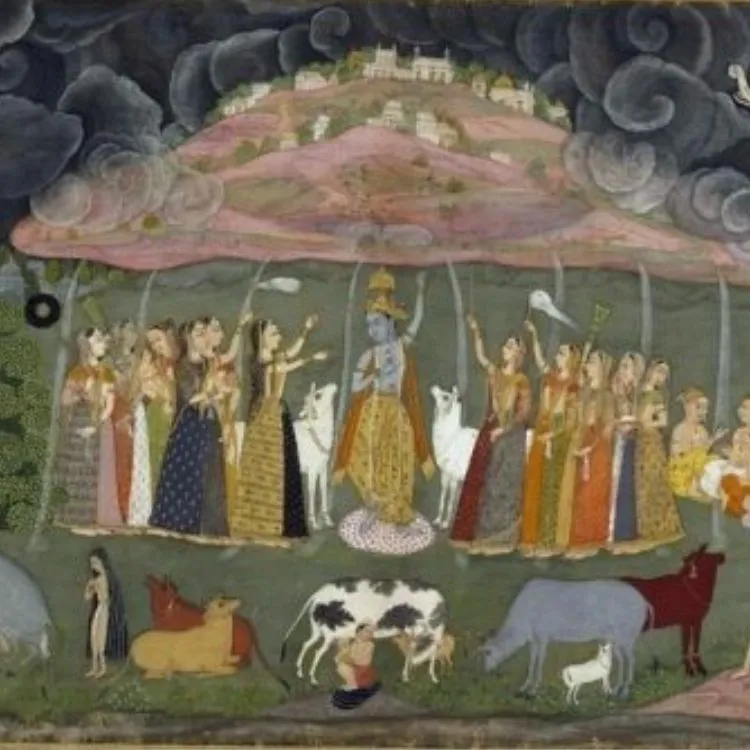
Krishna lifting Mount Govardhan, a Bikaner miniature from around 1690 (British Museum)
Bikaner miniature painting grew out of the court of Rao Bika's descendants and came closer to Mughal painting than most Rajput schools. Colours are soft, drawing is delicate, and the backgrounds often open into layered greenery. Unusually for Indian miniature, Bikaner artists like Ali Raza often signed their work, so we know many of their names.
The school had faded by the time Mahaveer Swami came to it. Born in 1959 into a family of traditional Bikaner artists, he trained under the late Vedpal Sharma "Bannu" and spent his early years painting commissioned replicas of Mughal and Rajasthani masterworks. Copying old paintings, line for line, built the control he is known for now. He went on to win the National Award and has shown work in Paris, New York and Washington. Rooftop credits him with reviving the Bikaner school.
In the Bikaner miniature course, he teaches the method he uses for everything he paints: preparing the surface, the pigments, the fine brushwork and the layered pardaz shading that gives Bikaner work its depth. He paints a leaf and a god the same way, with the same patience, and our long piece on how he paints desert plants nobody had documented explains why that matters.
Start here if you like quiet, precise work and want to learn shading properly.
Mewar miniature with Bhanwar Lal Kumawat
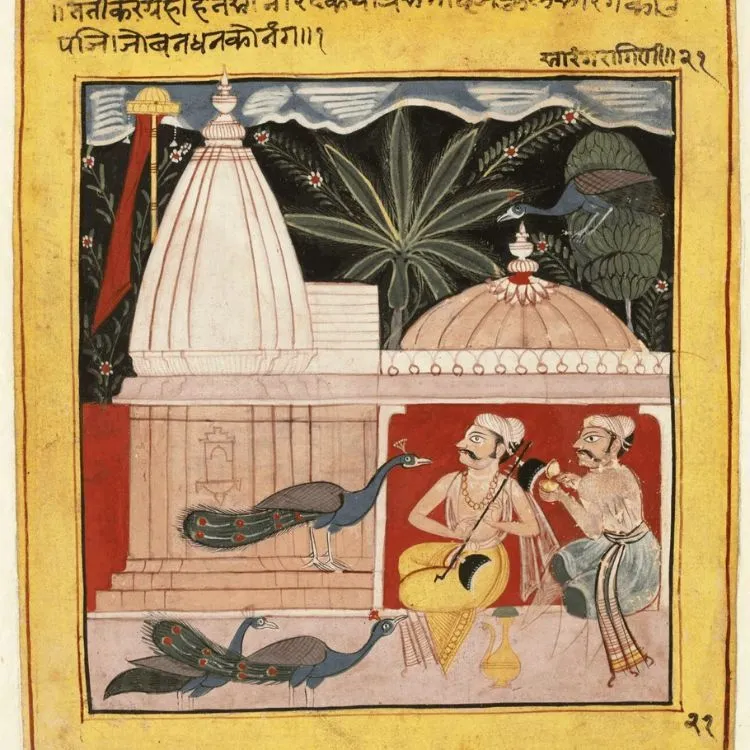
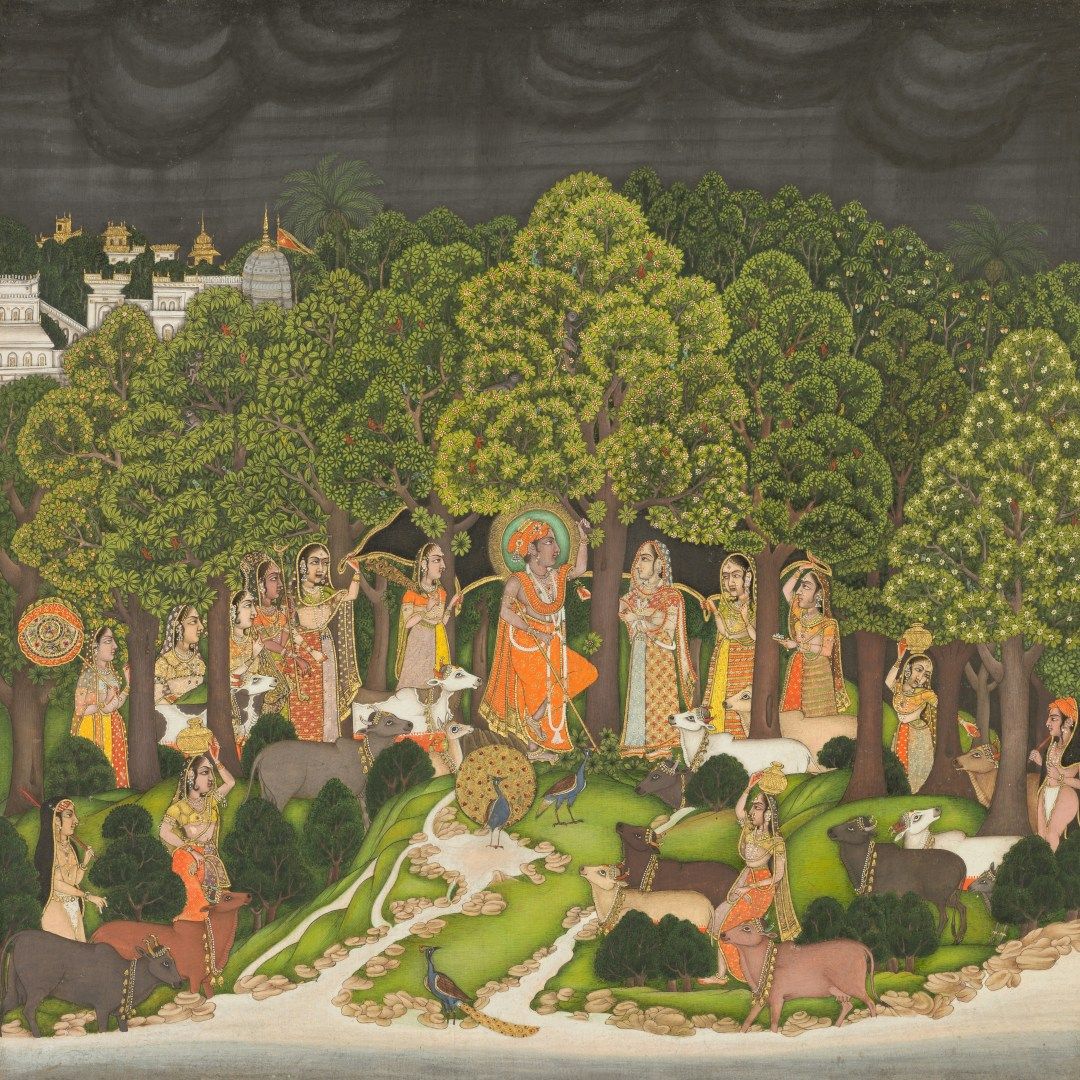
A Mewar miniature painting, the school taught by Bhanwar Lal Kumawat on Rooftop
Mewar miniature painting comes from Udaipur and the Sisodia court, and it is the most confident of the Rajasthani schools. Lines are bold. Reds and yellows are saturated. Stories from the Gita Govinda and the Ramayana unfold across architecture and flat landscape, and the 17th-century painter Sahibdin set much of the vocabulary that later Mewar artists used. If you want to see where it all started, our profile of Sahibdin and the Mewar school is a good primer.
Bhanwar Lal Kumawat's family painting runs back to his grandfather. There was a stretch when the work dried up and his father turned to masonry to keep the household going. Kumawat came back to the brush, and today his painting decorates restaurants in Chennai and Bengaluru as well as private homes.
The Mewar miniature course suits people who like strong colour and clear storytelling. Mewar is a good first school because its drawing is direct. You learn to place figures, fill colour flat and outline cleanly before you worry about soft shading.
Kota-Bundi miniature with Mohammed Luqman
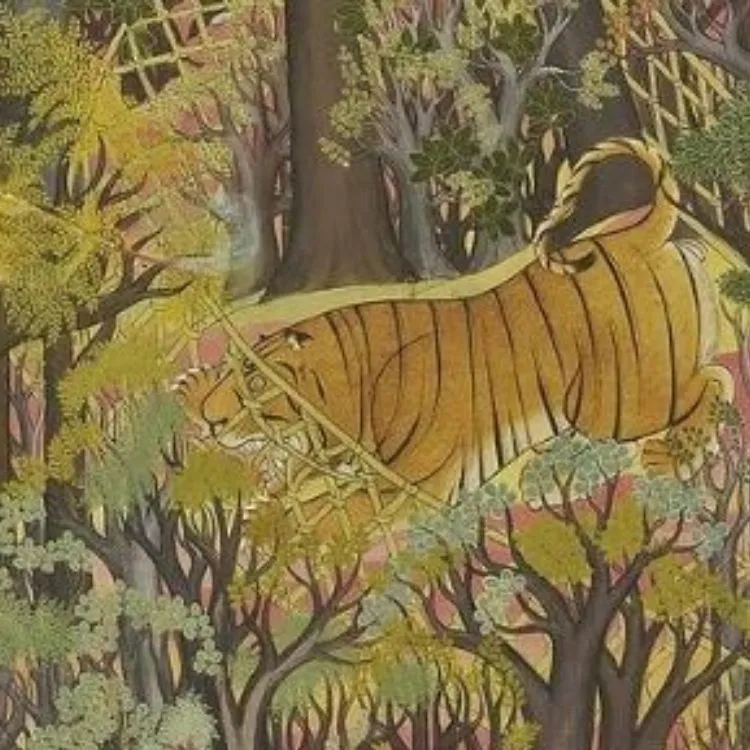
Maharao Umed Singh of Kota on a hunt, a classic subject of the Kota school
Bundi and Kota sit next to each other in southeastern Rajasthan, and their painting traditions are closely linked. Bundi loved detail and bright colour, and its ragamala paintings, which give each musical mode a scene and a mood, are some of the loveliest in Indian art. Kota took the same vocabulary into the jungle. Its hunting scenes are crowded with movement: rulers on elephants, tigers mid-leap, dense trees and rocks. Our Kota miniature and Bundi painting wiki pages go deeper into how the two differ.
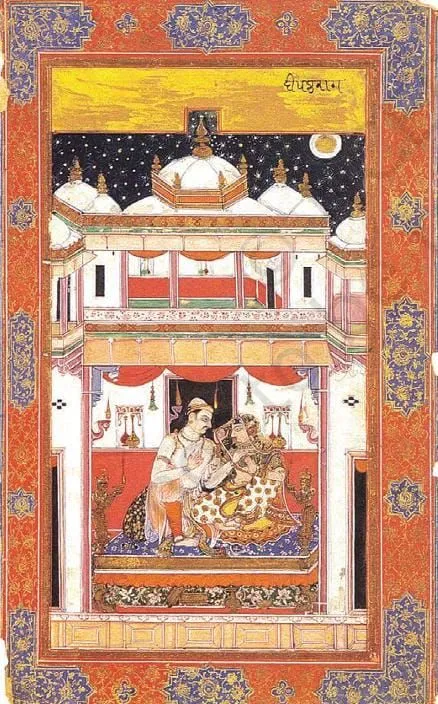
Raga Dipak, a page from a Bundi ragamala, where each musical mode gets its own scene
Sheikh Mohammed Luqman is a fifth-generation miniature painter and one of the people keeping the Kota-Bundi line alive. In the Kota-Bundi miniature course, the focus is on nature, emotion and the layered landscapes the school is famous for.
Pick this one if you are drawn to animals, forests and drama. It is also good practice for anyone who struggles with backgrounds, because in Kota-Bundi the background often matters as much as the people in front of it.
Deogarh miniature with Virendra Bannu
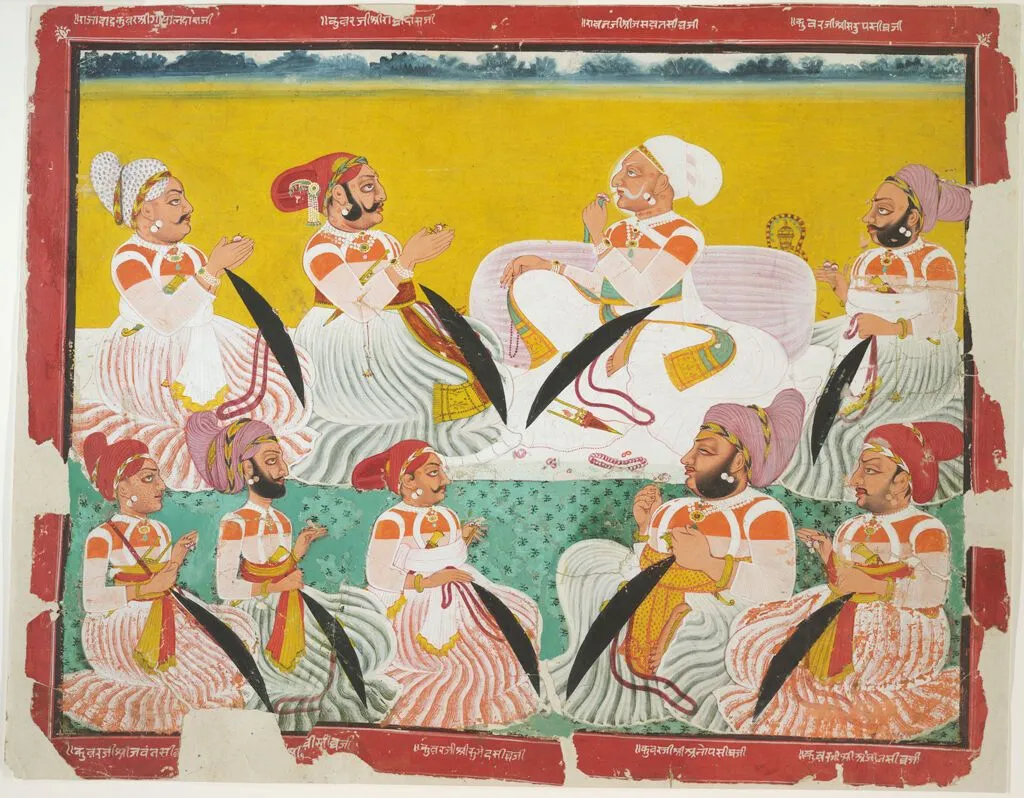
Rawat Jaswant Singh of Deogarh, painted by Bagta around 1776
Deogarh was a thikana, a smaller estate under the Mewar umbrella, and in the late 18th century a painter named Bagta gave it a style of its own. Deogarh paintings use an aerial view of landscape, show court life in fine detail, and sometimes slip into humour. Some of Bagta's portraits read almost like caricature, with a wit you do not expect from royal painting.
Virendra Bannu is a seventh-generation artist. His family's practice came close to disappearing in his lifetime, and he brought it back into demand. In Rooftop's miniature teaching, he is the one who guides learners through sketching the human figure, which is the part most beginners find hardest.
The Deogarh miniature course is the one to choose if faces and figures are what you want to master. A good Deogarh face carries character, and learning to draw one well will improve every other school you try.
Nathdwara miniature with Anandi Lal Sharma
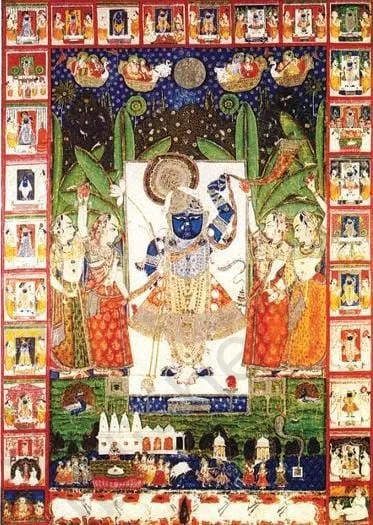
Shrinathji on Sharad Purnima, a Nathdwara painting from around 1800
Nathdwara is a temple town near Udaipur, home to Shrinathji, the form of Krishna worshipped by the Pushtimarg tradition. Its painting is devotional before anything else. Shrinathji stands at the centre, and lotuses, cows and peacocks fill the space around him in deep blue, yellow and orange. The same town gave the world the Pichwai, the large cloth painting hung behind the deity.
Anandi Lal Sharma learned from his father and is known for making his own colours from natural pigment. That matters more than it sounds. Ready-made paint behaves differently from stone colour ground by hand, and learning from someone who prepares his own palette teaches you why old Nathdwara painting has the glow it does.
The Nathdwara miniature course fits learners who care about the devotional side of the art, or who want to move on to Pichwai later. If that is you, also look at Rajaram Sharma's Pichwai course. He trained in the guru-shishya tradition at Nathdwara under the late Tulsidas Chitrakar and paints both Pichwai and miniature.
Which school should you start with?
Here is the honest version, based on what people usually enjoy first.
| If you like... | Start with | Why |
|---|---|---|
| Bold colour and clear stories | Mewar | Flat colour and strong outline are easier to control early on |
| Animals, forests, movement | Kota-Bundi | Landscapes and hunts reward patience with backgrounds |
| Faces and people | Deogarh | Figure drawing is the core skill here |
| Fine shading and calm | Bikaner | Teaches pardaz, the shading method behind all miniature work |
| Devotional themes | Nathdwara | Leads naturally into Pichwai |
If you still cannot decide, choose the painting you would hang at home. Browse Rooftop's miniature paintings for ten minutes and notice which ones you keep going back to. That is your school.
Is miniature painting too hard for beginners?
It is slow. It is not closed to beginners.
The biggest adjustment is speed. In most painting classes you finish something in an afternoon. In miniature painting, the first few weeks are about control: holding a fine brush steady, laying colour without streaks, building tone with small strokes. Many learners spend a whole session on one border. That is normal, and it is how the masters learned too. Mahaveer Swami built his skill by copying old paintings for years.
A few things make it easier:
- Work small. A 4 x 6 inch piece is a full project when you are starting.
- Rest your hand. Miniature painters often support the painting hand on the other hand or on a block. Our guide to miniature painting tools covers holders and magnifiers.
- Use good light. Daylight from the side shows you every stroke.
- Expect your first face to look wrong. Paint ten.
If you want a sense of how long it takes to get comfortable, our piece on how long it takes to learn a traditional art form is realistic about it.
What you get with a Rooftop course
Rooftop's master courses are recorded, so you learn at your own pace and rewatch any step. Each course begins with the artist introducing their family, their school and the story of the art, then moves into hands-on painting.
Along the way you can submit your artwork for feedback from the master, and when you finish you receive a certificate. Maestro courses also come with an art kit delivered to your door, with an activity book, practice material and a few things to colour. Check each course page for its current format, length and language, since these vary from course to course.
The bigger point is who you learn from. Every one of these five painters comes from a family that has done this work for generations. When you pay for a course, part of that money goes back to keeping the school alive.
Want to learn in person instead?
Online courses work well for most people, because you can pause, rewind and practise on your own schedule. Some learners also want a day in a studio.
If you are travelling in Rajasthan, our sister company Rajasthan Studio runs hands-on sessions with miniature painters: a miniature painting experience in Udaipur with Kanhaiya Sharma and a miniature painting workshop in Jaipur with Padma Shri S. Shakir Ali. A day like that pairs well with an online course. You see the brushes, the paper and the stone in person, then go home and practise properly.
Before you begin
Read a little about the schools first. It makes the lessons land better. These are good places to start:
- The most famous Rajasthani miniature paintings from each school
- Miniature painting in India and its iconic schools
- The chronicles of Kishangarh miniature painting
- The Jodhpur school
Then pick one school and stay with it for a while. The families teaching these courses spent lifetimes on a single style. Giving one of them a few months is a good way to begin.
Browse all of Rooftop's Indian art courses online or, if you are still deciding what to learn, read our guide to learning traditional Indian art online from anywhere in the world.
Frequently asked questions
Can I learn Rajasthani miniature painting online?
Yes. Rooftop has recorded courses in five schools, Bikaner, Mewar, Kota-Bundi, Deogarh and Nathdwara, each taught by a hereditary master. You learn at your own pace and can submit your work for feedback.
Which miniature school is easiest for beginners?
Mewar is usually the gentlest start because it relies on flat colour and strong outline. Bikaner is the best choice if you specifically want to learn fine shading.
What materials do I need for miniature painting?
Fine brushes, smooth paper or wasli, and opaque colours such as gouache or prepared natural pigments. Each course explains the materials its artist uses, and Maestro courses include an art kit.
Do I get a certificate?
Yes, Rooftop courses give a certificate on completion.