

Bundi School of Painting: Rajasthan's Forest Miniature Tradition
Let's learn about one of the many miniature paintings from Rajasthan. Let's learn about Bundi art!
Introduction and Origin
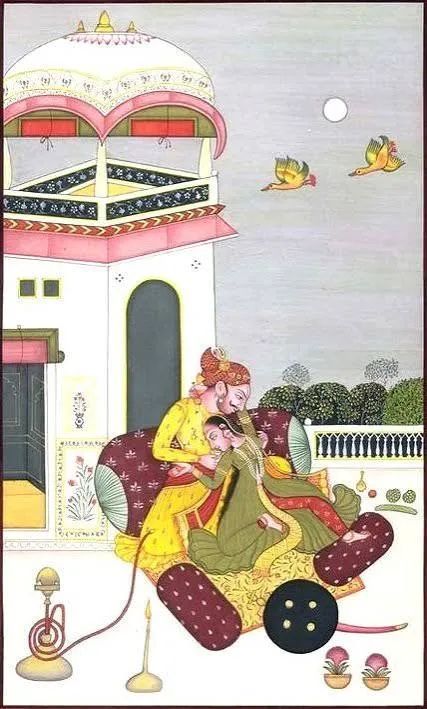
Tucked away in the hills of southern Rajasthan, the Bundi school of painting stands apart from every other Rajput miniature tradition. Where Jaipur favoured grandeur and Mewar leaned toward devotion, Bundi built a world of lush forests, deep-blue skies, and women rendered with impossible grace. Dating back to at least 1591, this style of Bundi painting India appeals to art lovers, historians, and collectors who want to understand what genuine Rajasthani miniature art looks like before the courts grew standardised and formulaic.
What Is Bundi School of Painting?
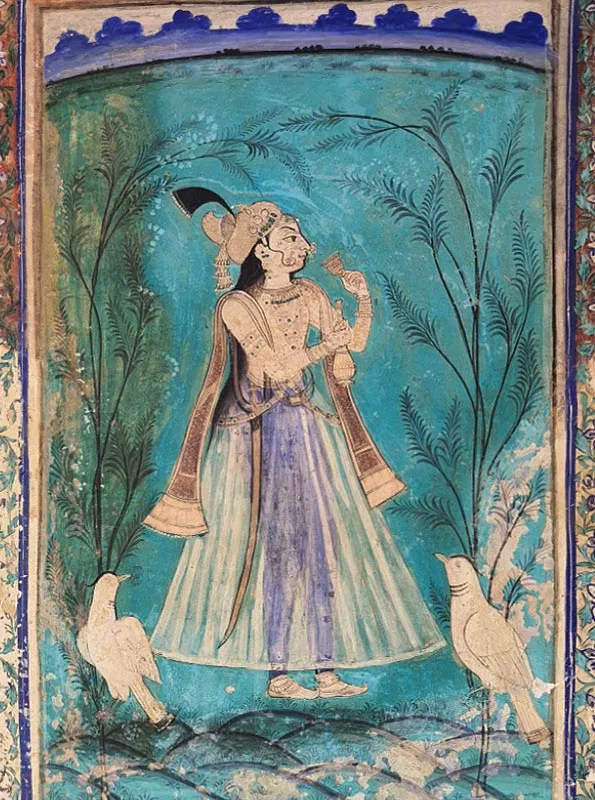
The Bundi school of painting is a Rajput miniature tradition that originated in Bundi, a princely state in the Hadoti region of present-day Rajasthan. It blends Mughal compositional sensibility with Deccan richness to produce paintings that are unmistakably their own. The art is characterised by dense green vegetation, dramatic dark skies, elongated female figures with bejewelled attire, and lively animal imagery. Themes range from Krishna-Lila and Ragamala compositions to royal hunting scenes, court portraits, and festival celebrations. Traditionally executed on wasli - a layered handmade paper prepared specifically for miniature painting - the works use pigments ground from conch shells, precious stones, metals such as silver and gold, berries, vegetables, soil, and cow dung. The Bundi school of painting was patronised by Rajput royalty, who regarded these works as a mark of social distinction and used them to document royal activities and portraits.
History and Origin
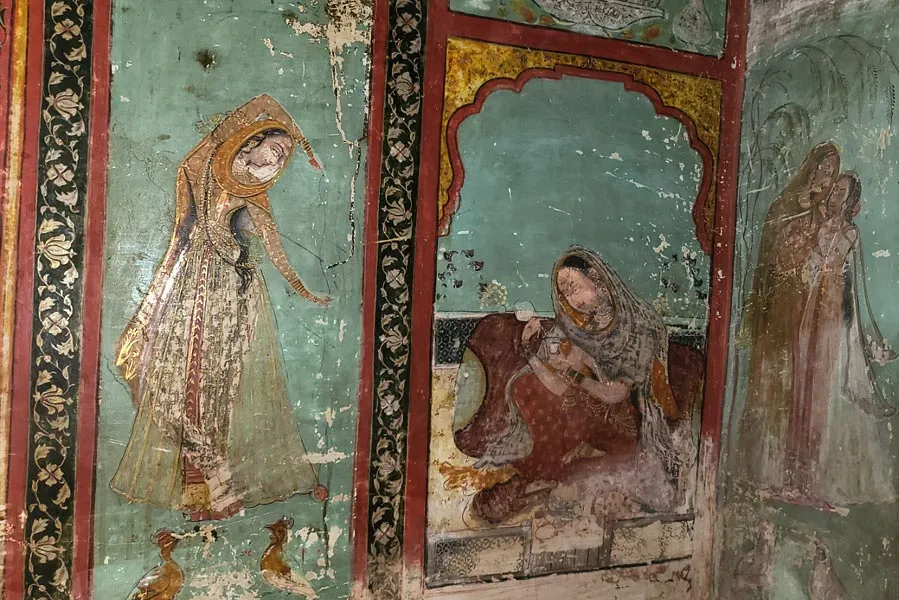
The name Bundi comes from the narrow valley once called Bandu-Ka-Nal. Bandu was the title of the chief of the Meena tribe, who originally occupied this region, and Nal referred to the narrow passes through the hills. The earliest traceable examples of Bundi painting India date to 1591, making this one of the older documented Rajput painting schools. The region came to wider artistic notice when, in 1605, the Mughal emperor Akbar - impressed by the respect he received from Bundi - gifted the royal family three master painters from Chunar, near Varanasi. These artists, who had previously worked on palm leaves, introduced fresco techniques and began painting walls inside the palaces of Badal Mahal and Chitra Shala. As the artisan community spread into Jodhpur, Mewar, and Marwar, the style travelled with them. The 18th century brought elaborate portraiture and lustre; the 19th century saw a cooler, more subdued palette and a gradual loss of the tradition's earlier vitality.
Key Features and Famous Artists
Key Features and Visual Style
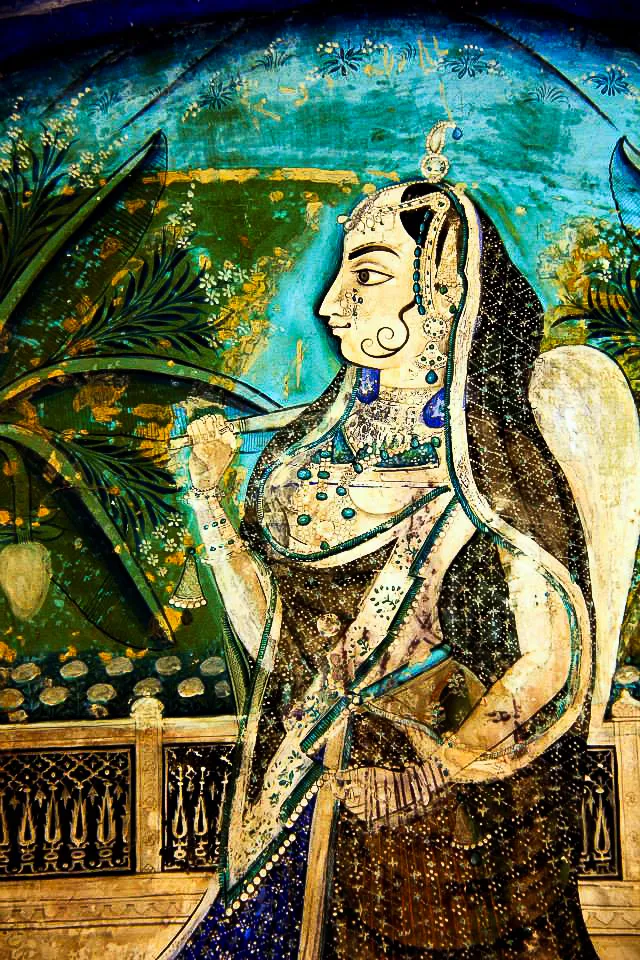
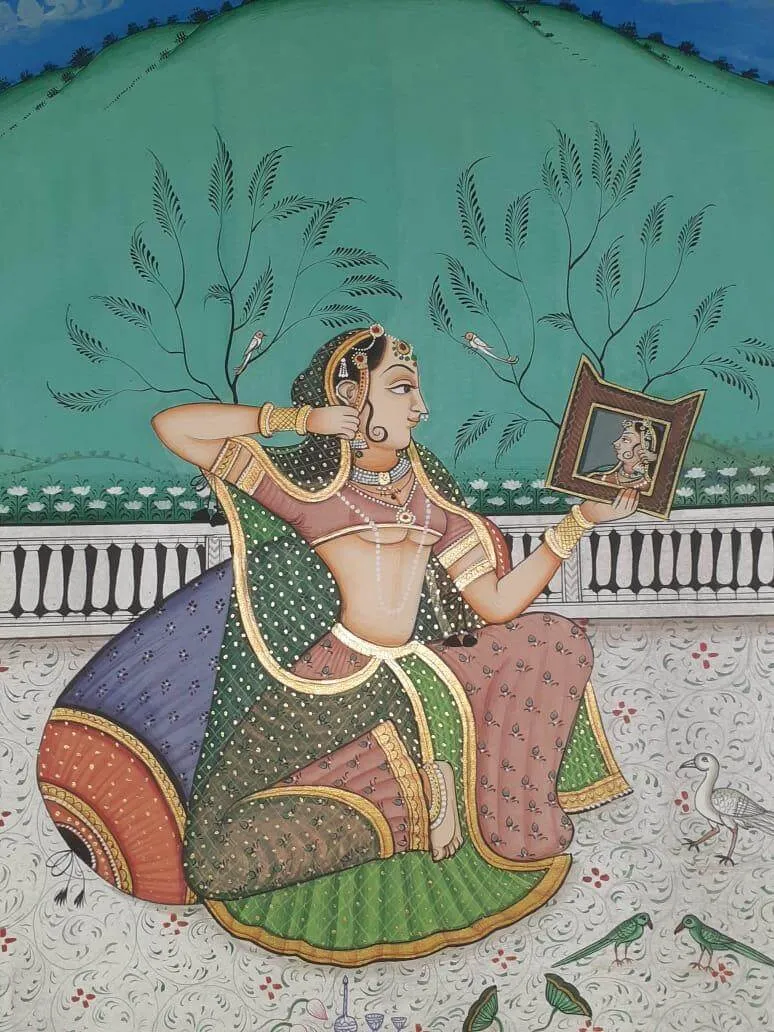
Bundi miniatures are instantly recognisable once you know what to look for. The paintings carry a specific set of visual signatures that set them apart from other schools of Rajasthani miniature art. Women are drawn tall and slender with elongated eyes, heavily jewelled clothing, and a posture that conveys both dignity and sensuality. Dense foliage, flowering trees, and hilly landscapes anchor nearly every composition.
Pigments sourced from natural minerals, semi-precious stones, conch shells, metals, and plant-based dyes including berries, vegetables, and cow dung.
Painting executed on wasli - sheets of handmade paper glued together for thickness - as well as on wall surfaces as frescoes.
Brushes made from the natural hair of squirrels and camels, enabling fine detailing in figures and foliage.
Dominant motifs include Raginis (wives of Ragas), Nayikas (heroines), Krishna-Radha courtship, Ragamala poetry cycles, and royal hunting and court scenes.
Dark, dramatic skies rendered in deep blue or black against lush green vegetation to evoke the hilly terrain of the Bundi region.
Finished paintings were burnished with agate to bring out the vibrancy and depth of the layered pigments.
Famous Artists of Bundi School of Painting
Named artists from the Bundi tradition are relatively rare in historical records, since court painters often worked anonymously under the direction of a head artisan. However, some key figures and contributors have been documented across different periods of the tradition.
Mohammed Luqman is a contemporary master of the Kota-Bundi miniature style from Rajasthan and teaches this tradition through his course on Rooftop, making the classical techniques of this school accessible to learners across India.
The Chunar painters gifted by Akbar to the Bundi royal family in 1605 are historically significant as the artists who introduced fresco traditions to Bundi, working on the celebrated palace murals of Badal Mahal and Chitra Shala.
Bhawani Shankar Sharma is a Rajasthan-based master practitioner of fresco painting, a closely related tradition to Bundi's palace murals, who has taught this technique through his Rooftop fresco course.
How to Learn Bundi School of Painting
If you want to learn Bundi school of painting, the most direct route is to study with a master who has actually practised the tradition. Rooftop's online courses connect learners with artists rooted in these traditions - you can start with the Kota-Bundi miniature course by Mohammed Luqman, which covers the classical techniques, pigments, and compositional conventions of this school. The courses are self-paced and taught in a format that suits working adults and students alike.
Where to See and Buy Bundi School of Painting
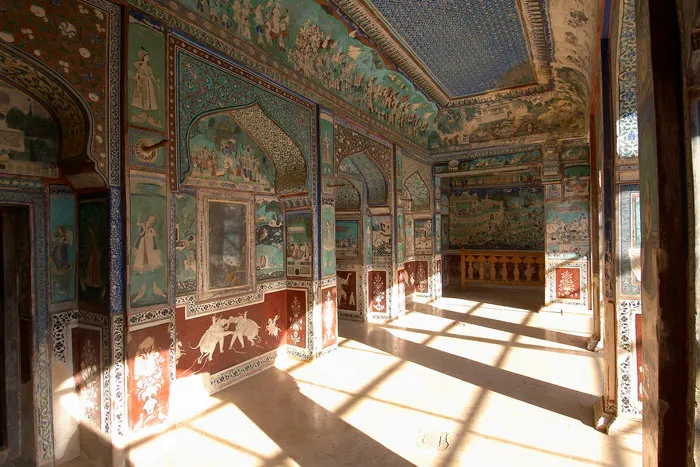
The palace complex at Bundi - particularly the murals of Badal Mahal and Chitra Shala - remains the most important site for experiencing this traditional Indian art in its original context. The National Museum in New Delhi and the City Palace Museum in Jaipur hold notable Bundi miniature collections. Collectors and enthusiasts can find authentic works and related Indian folk art through Rooftop's shop, which carries original traditional artworks, or through the Rooftop Art Wiki for deeper reference on related Rajasthani traditions.
Learn Bundi Miniature

Frequently Asked Questions
What is the Bundi school of painting and where does it come from?
The Bundi school of painting is a Rajput miniature tradition from Bundi, a town in the Hadoti region of Rajasthan. It dates to at least 1591 and is known for its lush forest landscapes, Ragamala poetry paintings, and dramatically dark skies. The style blends Mughal and Deccan influences with a distinctly local visual sensibility tied to the hilly terrain of the Bundi region.
Which community or region in India practises Bundi painting?
Bundi painting originates from the Bundi region of Rajasthan, which was historically occupied by the Meena tribe. The artisan communities who developed and carried this painting tradition worked within the royal courts of Bundi and later spread to the neighbouring regions of Jodhpur, Mewar, and Marwar as they followed patronage. The two main languages spoken in the region are Haroti and Khararhi.
What are the main themes depicted in Bundi school paintings?
Bundi paintings cover a wide range of themes centred on Rajput court life and Hindu devotion. The most common subjects include Krishna-Lila compositions, Ragamala and Rasikapriya poetry cycles, Nayika-Bhed (typologies of heroines), royal hunting scenes, festival celebrations such as Teej and Gangaur, and court portraiture. A series called Ragamalas translates written poetic Ragas into visual form and is among the most celebrated contributions of this school.
What materials and tools are used in traditional Bundi miniature painting?
Traditional Bundi paintings use pigments collected in powder form from natural sources including conch shells, semi-precious and precious stones, metals such as silver and gold, and natural dyes from berries, vegetables, soil, and cow dung. These powdered pigments are mixed with water and a binding agent such as glue before application. Brushes are made from squirrel and camel tail hair. The surface used is wasli - handmade paper sheets glued together to create a thicker base - and the finished painting is burnished with agate.
Can I learn Bundi school of painting online in India?
Yes. Rooftop offers an online course in the Kota-Bundi miniature tradition taught by Mohammed Luqman, a practising master of this style from Rajasthan. The course covers the classical techniques, pigments, and subject matter associated with the Bundi school. It is self-paced and accessible from anywhere in India.
Where can I see original Bundi school paintings in India?
The most important place to see Bundi school paintings in their original setting is the Bundi palace complex in Rajasthan, particularly the Badal Mahal and Chitra Shala, which contain wall murals created by painters gifted to the royal court by Akbar in 1605. The National Museum in New Delhi and the City Palace Museum in Jaipur also hold significant collections. For those interested in the Kishangarh and Kota styles that developed in parallel, the Rooftop Art Wiki covers these related Rajasthani traditions in detail.
The Bundi school of painting is one of Rajasthan's most distinctive contributions to India's miniature art legacy - a tradition that captured a landscape, a court culture, and a vision of feminine grace unlike anything else in Indian folk art. Explore the Kota-Bundi miniature course on Rooftop and begin learning this tradition from a master who carries it forward today.
Bibliography
Sources
Beach, M.C., Lauwaert, H. and Gobyn, W. (2014) An unknown treasure in Rajasthan: the Bundi wall paintings. London: Thames & Hudson.
Jiwan, S. (1999) A Study Of Bundi School Of Painting. Ajmer: Abhinav Publications.
Image Sources
"Bundi Painting Rajasthan." Gaatha, https://gaatha.org/Craft-of-India/bundi-painting-rajasthan/. Accessed 21 July 2026.
"Bundi School of Painting." Hadoti Palace, https://www.hadotipalace.com/bundi-school-painting. Accessed 21 July 2026.
"Bundi Paintings: A School of Charming Rajasthani Miniatures." Maverickbird, https://maverickbird.com/india/west/rajasthan-india-3/bundi-paintings-a-school-of-charming-rajasthani-miniatures/. Accessed 21 July 2026.
"The Art of Bundi Miniature Paintings." Kaisori, https://kaisori.com/blogs/kaisori-discovers/the-love-of-bundi-miniature-paintings. Accessed 21 July 2026.
"The Amazing Story Behind the Famous Bundi Paintings." Shantala Painting, 24 May 2019, https://shantalapainting.wordpress.com/2019/05/24/amazing-story-famous-boundi-paintings-emerging-shantala-palat/. Accessed 21 July 2026.