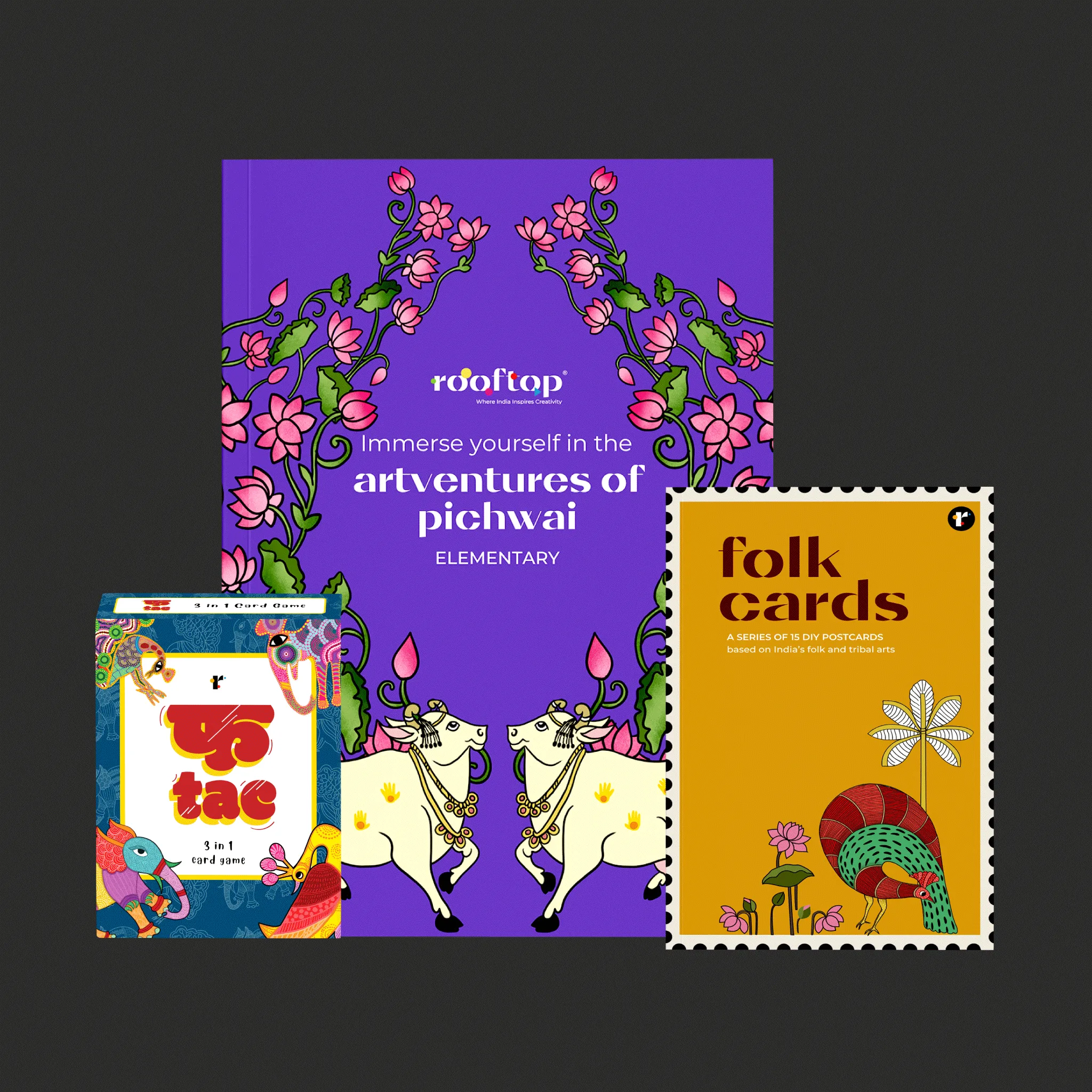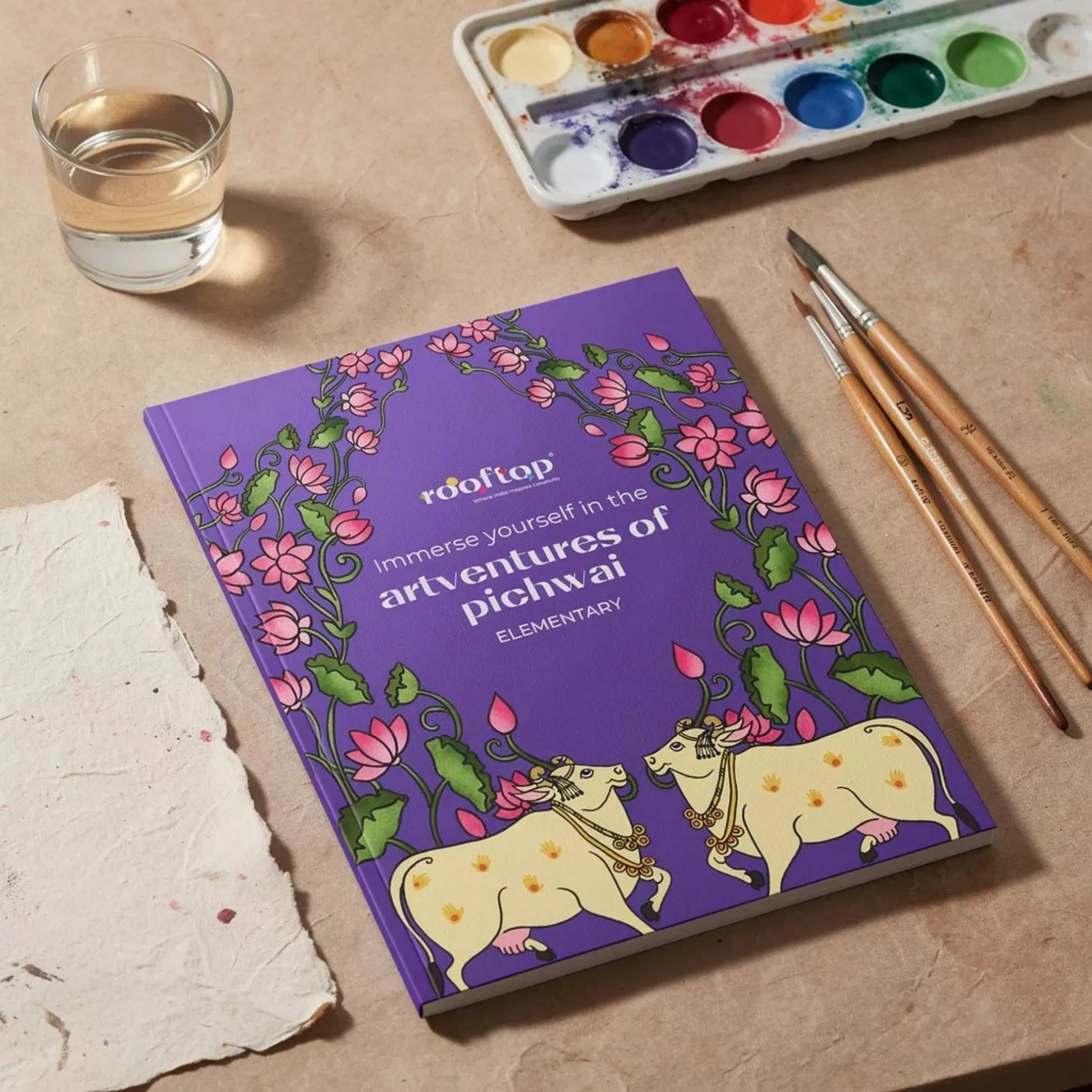
Artventures of Pichwai - Elementary
$ 19


Explore the intricacies of the traditional folk art of Nathdwara - Pichwai
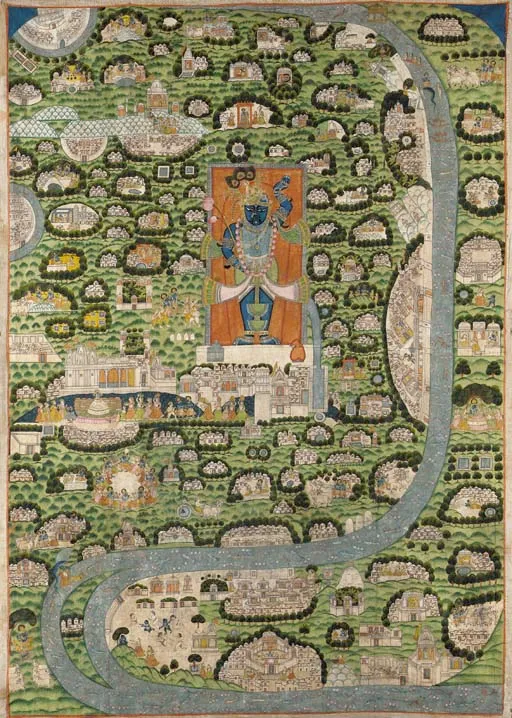
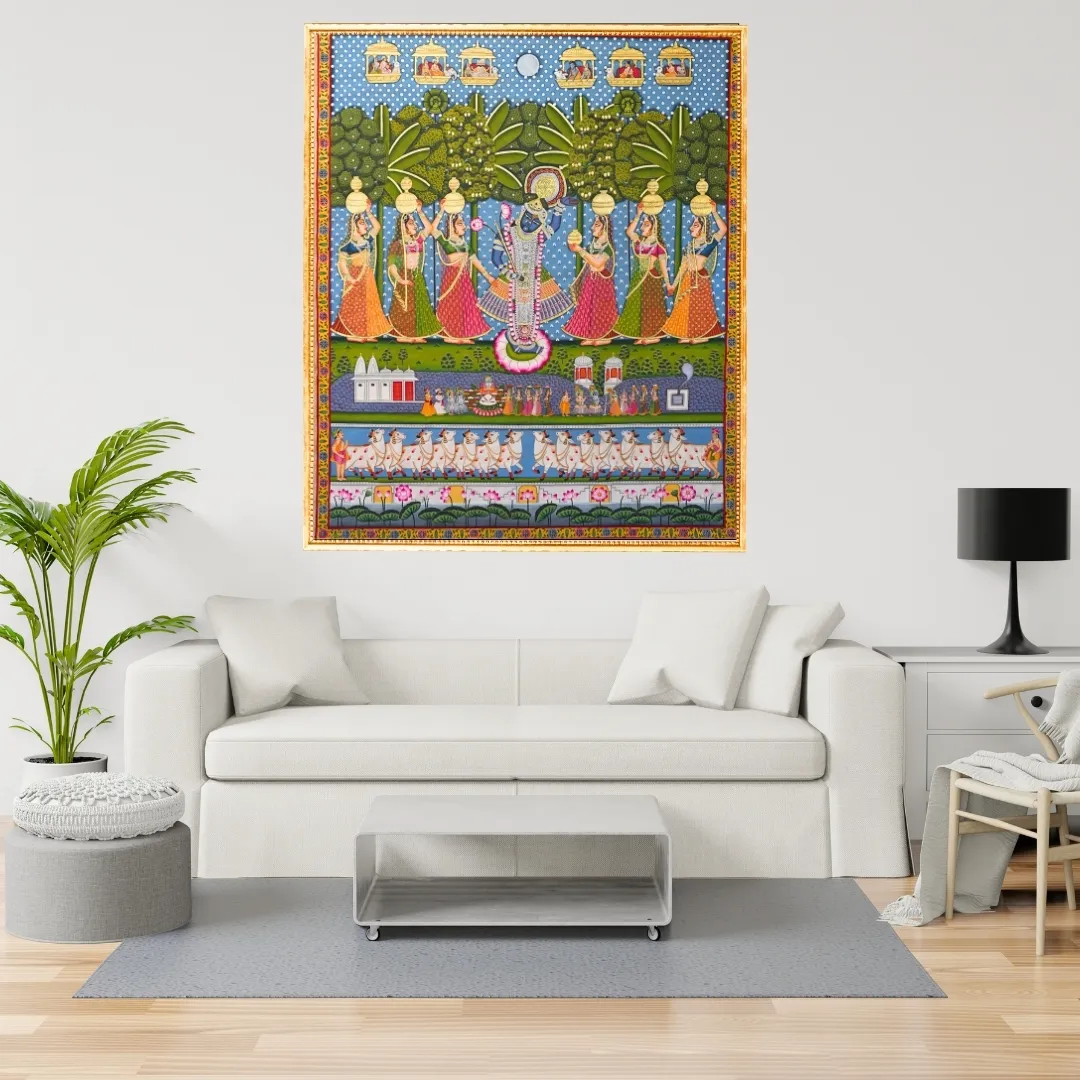
In the temple town of Nathdwara, Rajasthan, a painted cloth tradition has been kept alive for over 400 years. Pichwai painting is a devotional art form created as a backdrop for the idol of Shrinathji, the seven-year-old form of Lord Krishna revered in the Pushtimarg faith. Each painting narrates a different story from Krishna’s life, changing with the seasons and festivals throughout the year. Today, Pichwai painting India-wide is recognised as one of the most spiritually significant and visually detailed traditions in Indian folk art.
What Is Pichwai Painting?
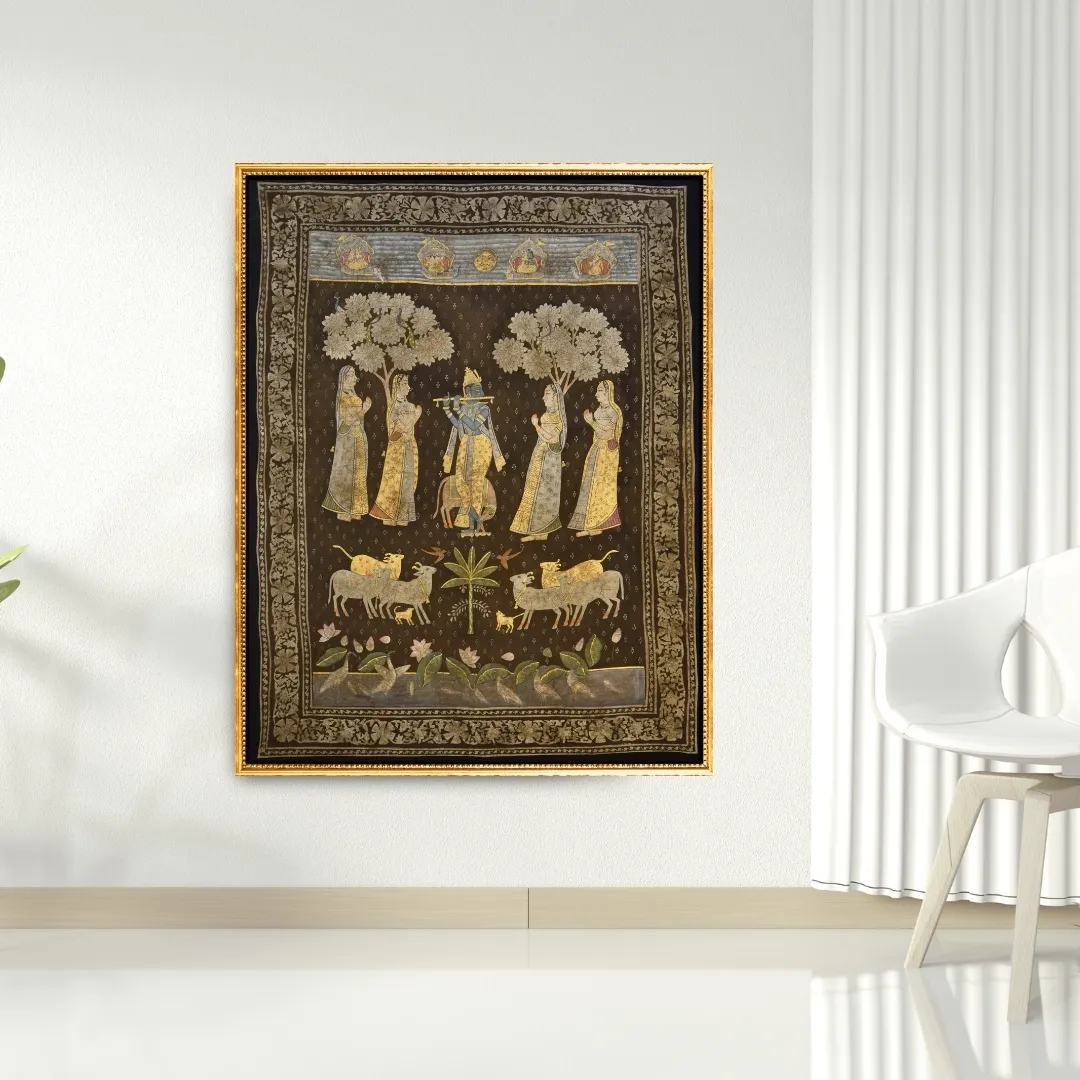
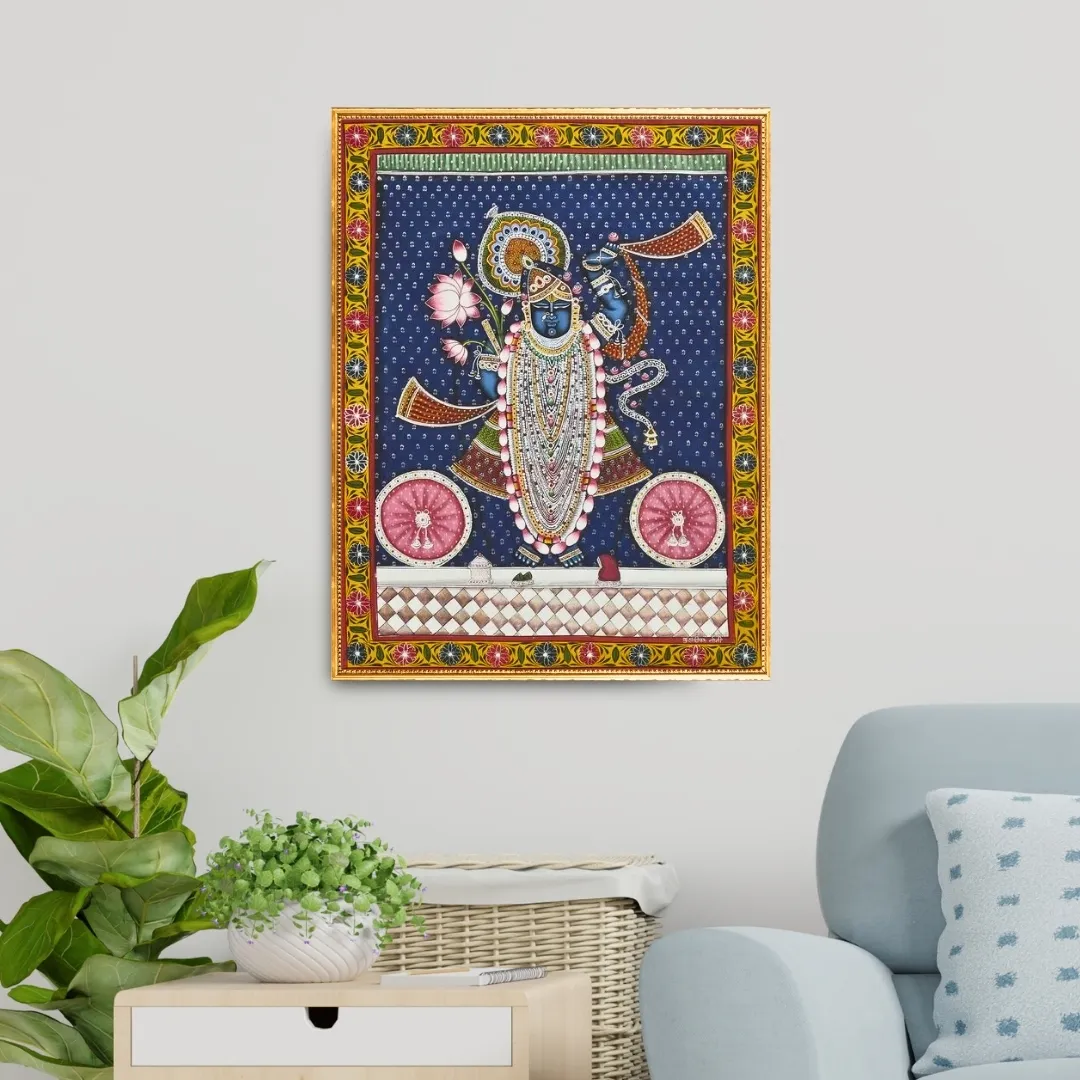
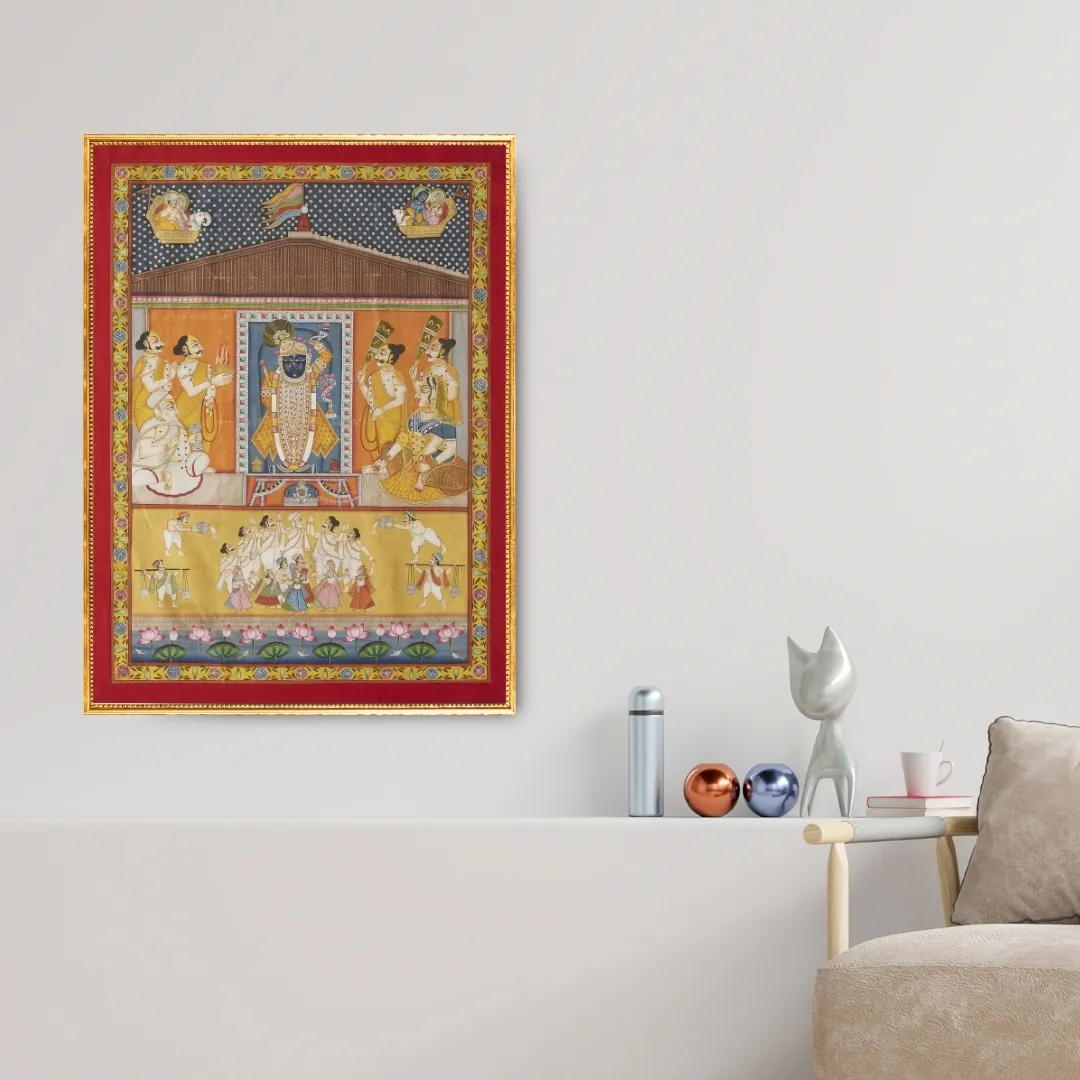
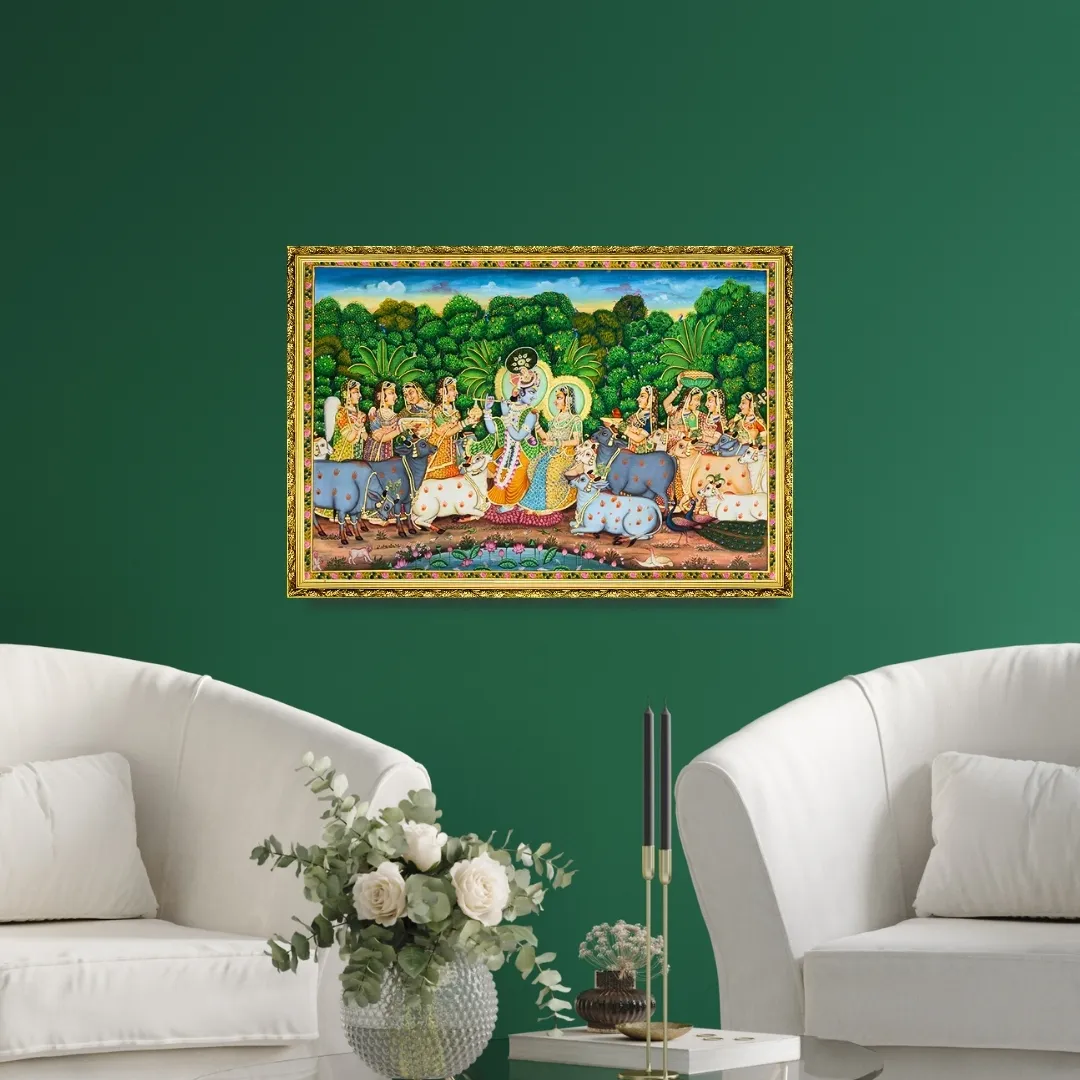
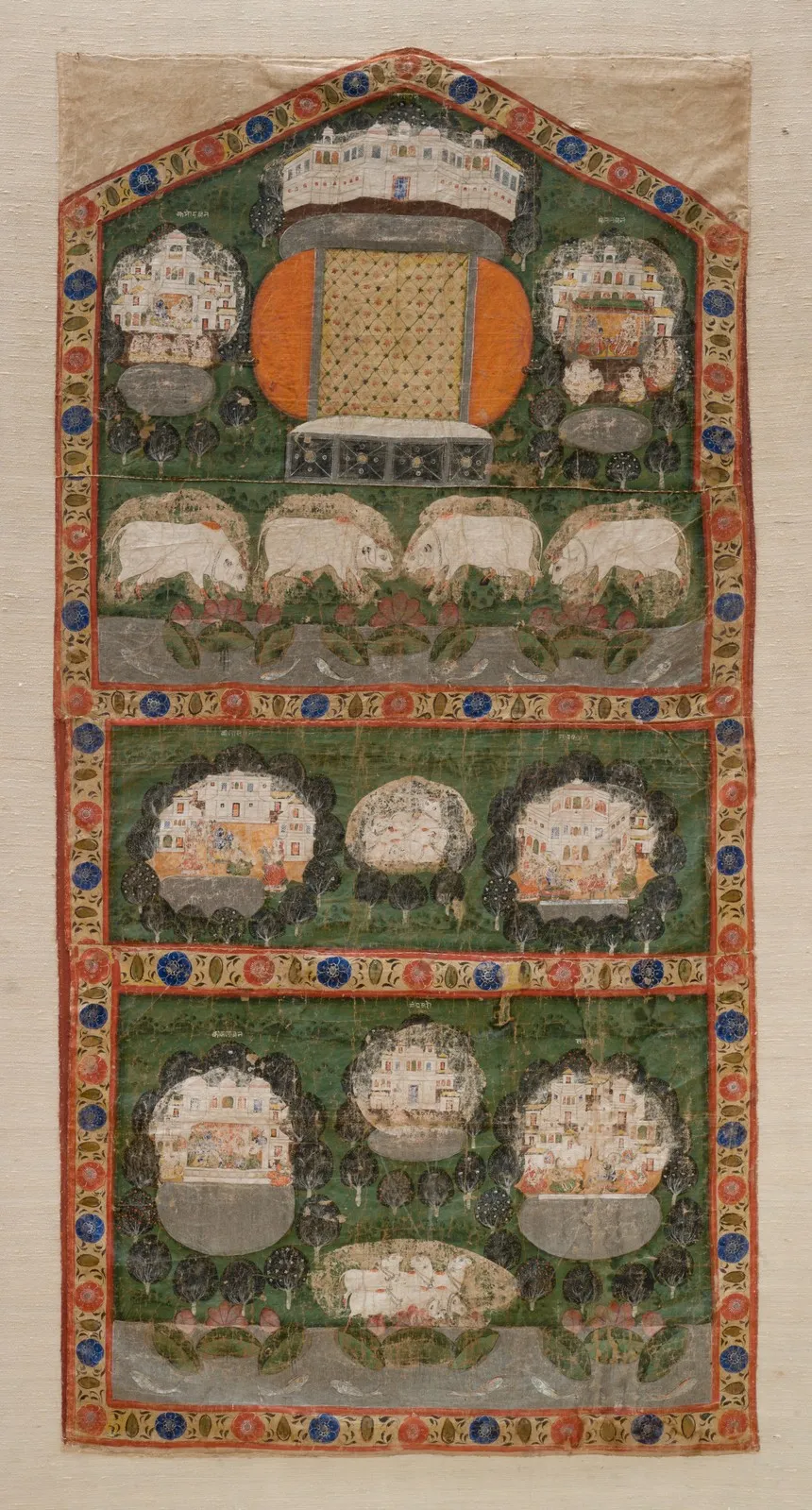
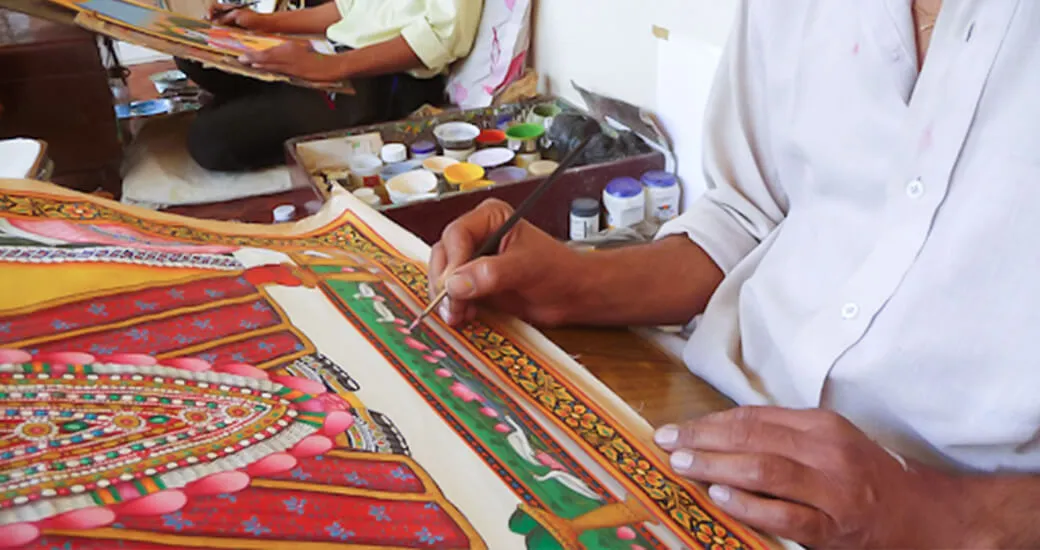
So what is Pichwai art, exactly? Pichwai painting is a devotional textile art originating in Nathdwara, a consecrated town in the Rajsamand district of Rajasthan, approximately 45 kilometres from Udaipur. The word “Pichwai” comes from the Sanskrit words ‘pichh’ (meaning “at the back”) and ‘wai’ (meaning “hanging”) - together referring to a cloth hung behind a deity. Pichwai paintings are made on hand-spun cotton cloth, which is starched, dried, and then painted with natural colours made from coal, gold, silver, indigo, zinc, and saffron. They are also embellished with zardozi work, gold thread stitching, pearls, and gota work. Traditionally, Pichwai paintings were used as backdrops in the Shrinathji temple during festivals and religious ceremonies, where they served to narrate incidents from the life of Lord Krishna to devotees.
History and Origin
The tradition of Pichwai painting began in the 16th century CE, when the Shrinathji temple at Nathdwara was established. The Pushtimarg school, founded by the philosopher and devotee Shri Vallabhacharya in the latter half of the 15th century CE, gave rise to this art. Vallabhacharya was an ardent follower of Shrinathji, and the spiritual movement he founded, known as the Pushtimarg sect, belongs to the Vaishnava tradition and centres on the worship of Shri Krishna. Under his influence, communities of artists from the Gaur, Jangid, and Mewara communities began to produce embroidered and painted depictions of Krishna’s life on cotton cloth, which were hung behind the idol of Shrinathji in the temple. Another community, the Pushtimargis, further patronised this tradition. Over centuries, the art has adapted to contemporary audiences - paintings have reduced in size from 10-12 feet to 2-4 feet, and the two popular forms that emerged are Kota Bundi and Nathdwara.
Key Features and Visual Style
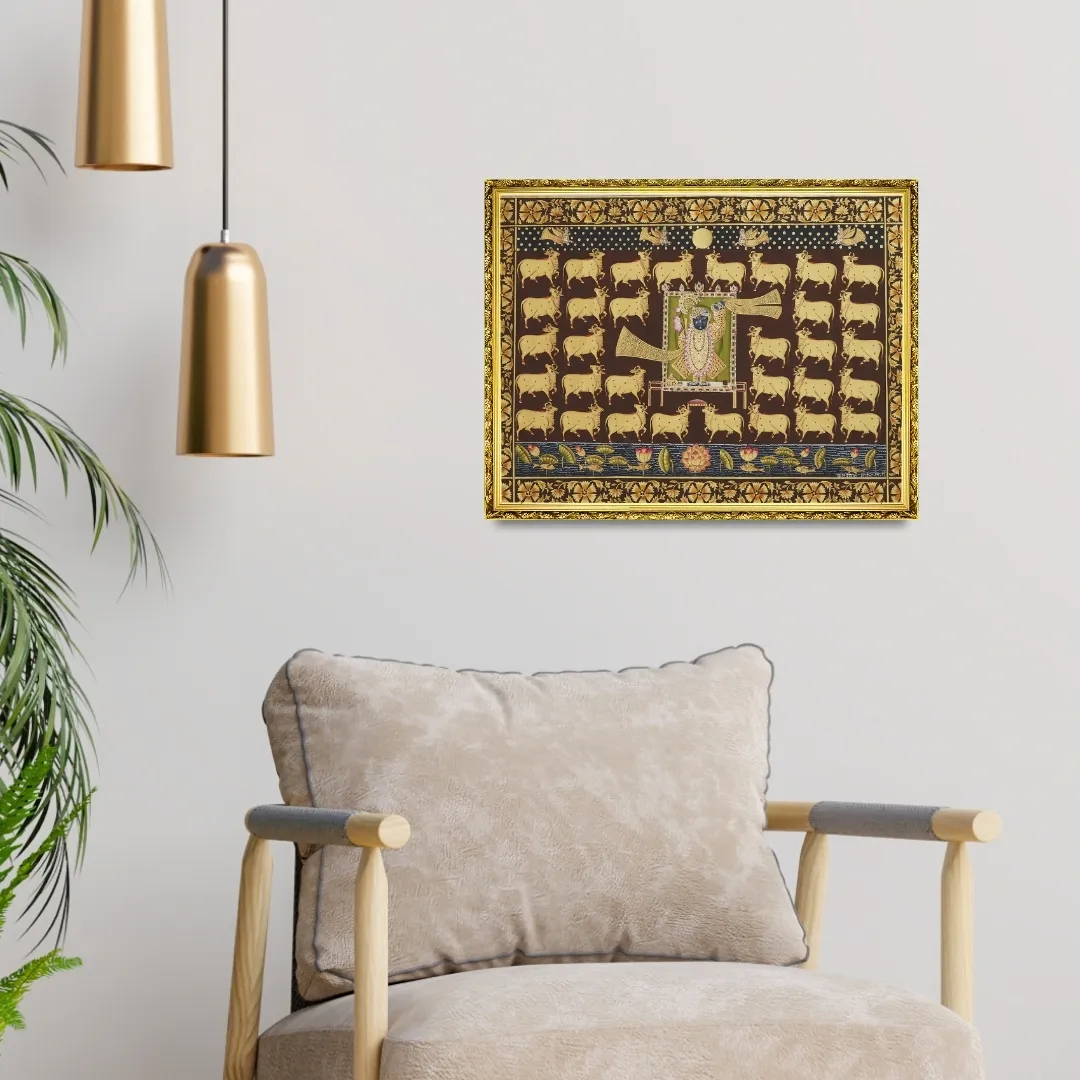
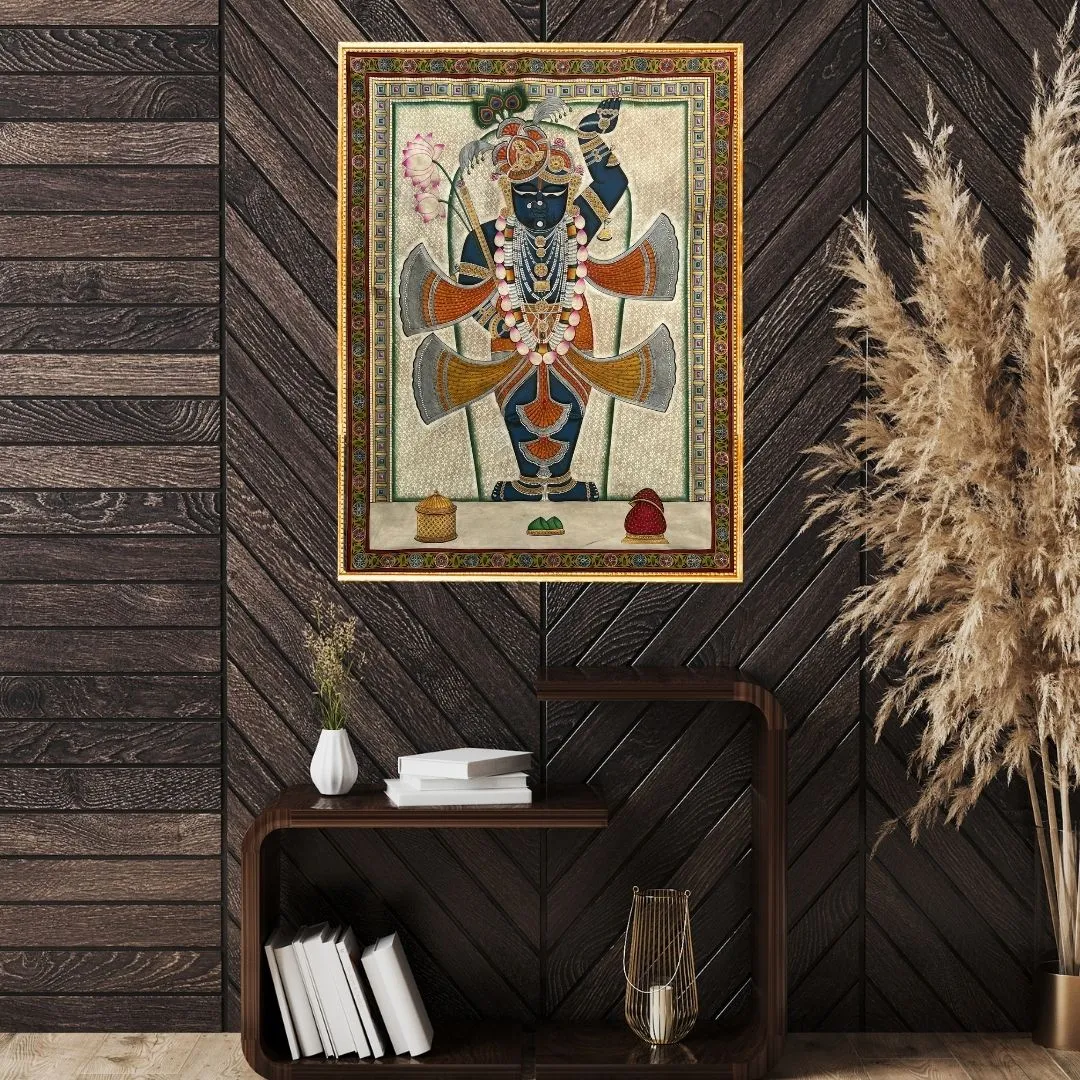
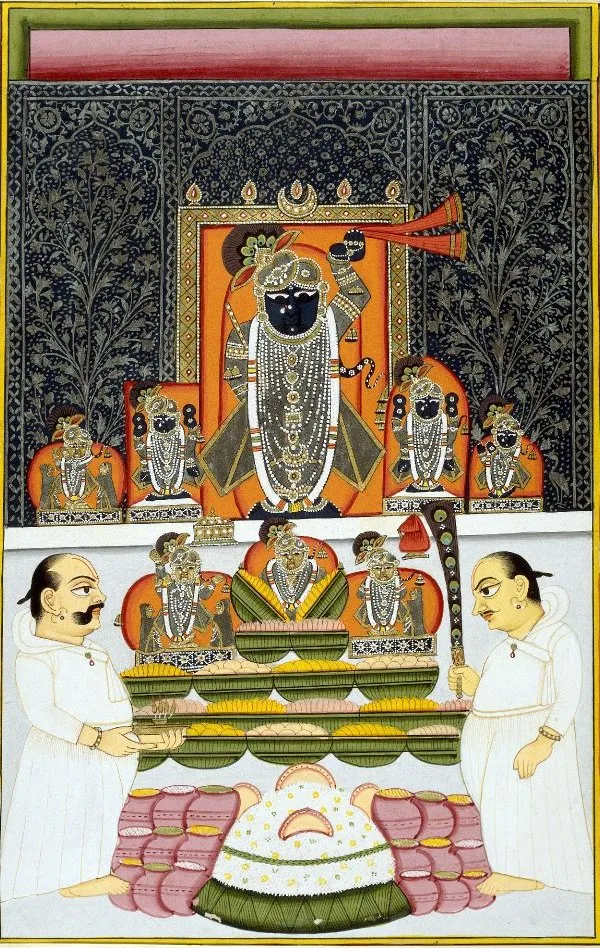
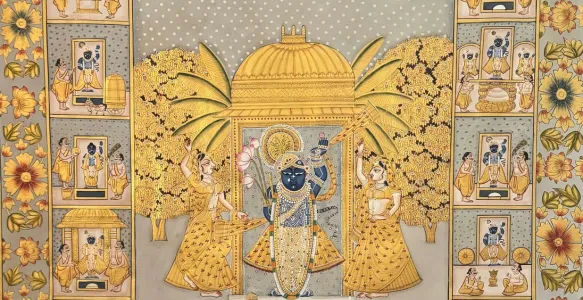
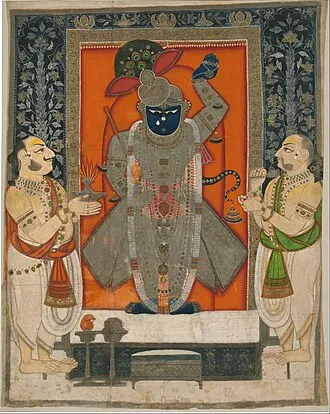
Traditional Pichwai paintings are among the most technically detailed and ritually specific art forms in India. The central figure is always Shrinathji, the Bal Swaroop (child form) of Lord Krishna, depicted with a big nose, large eyes, and a rounded belly. His face is painted to radiate divine emotions. The design of a traditional Pichwai generally contains 24 panels called ‘Swaroops’, and each painting is assigned to a particular season or festival of the Pushtimarg calendar.
Natural pigments including coal, gold, silver, indigo, zinc, and saffron are the primary colour sources, with yellow, black, and red used most prominently.
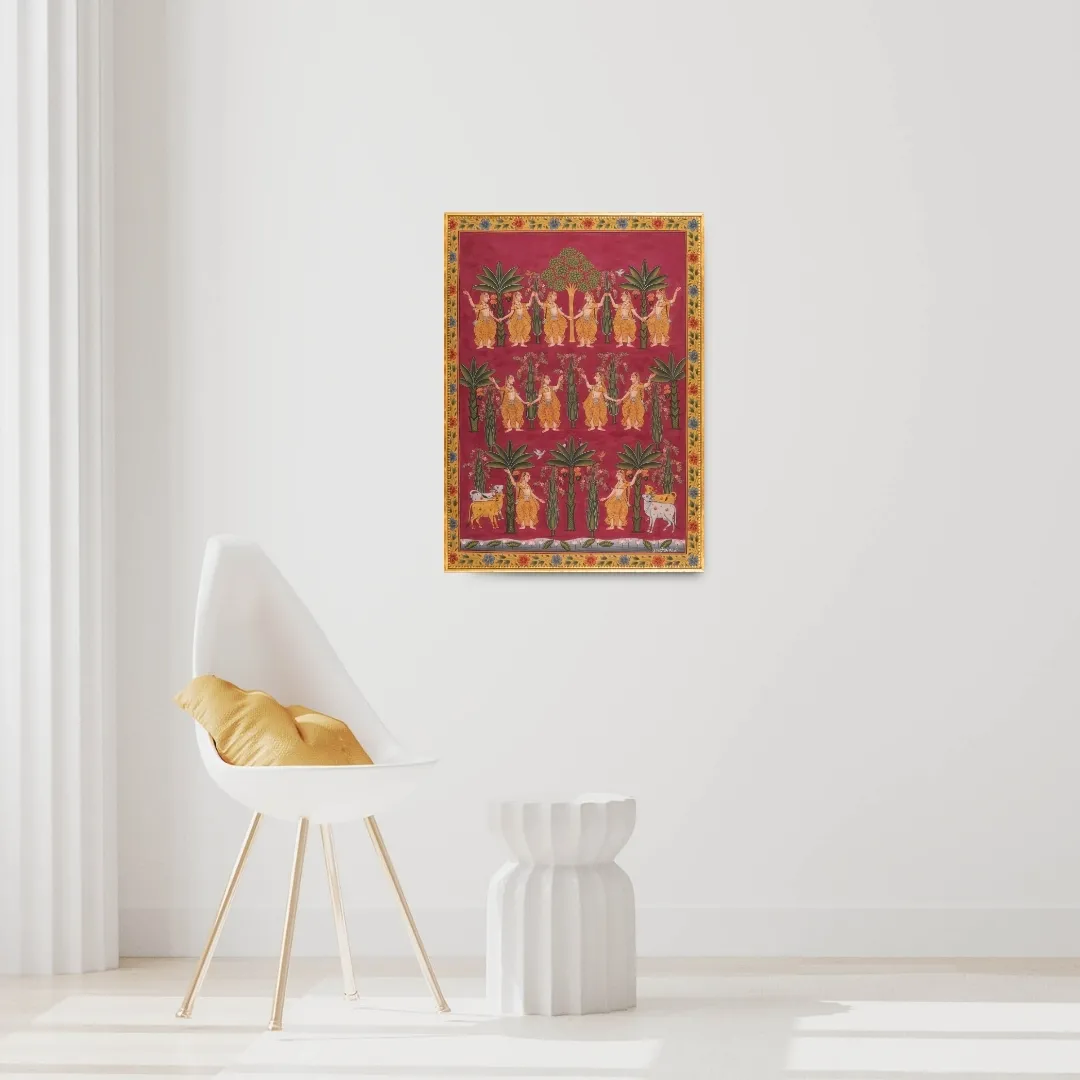
Motifs include Radha, gopis, lotuses, and cows alongside Shrinathji, drawn from legends such as the Govardhan Parvat episode, Annakuta, Ras Lila, Daan Lila, Gopashtami, Janmashtami, Govardhan Puja, Sharad Purnima, and Holi.
The cotton cloth base is starched and dried before the artist sketches and paints in layers; the process can take more than a week or even months for a single piece.
Embellishments include intricate zardozi embroidery, gold thread stitching, pearl work, and gota applique on a cotton or velvet base.
The paintings also feature figures from the Pushtimarg shrine histories, including Goswami priests and other sacred personages alongside Shrinathji.
Some backdrops also depict other important figures in the Pushtimarg pantheon, including specific priests and sacred attendants of the deity.
Famous Artists of Pichwai Painting
Several artists have shaped the modern identity of Pichwai painting and worked to keep it alive for new generations.
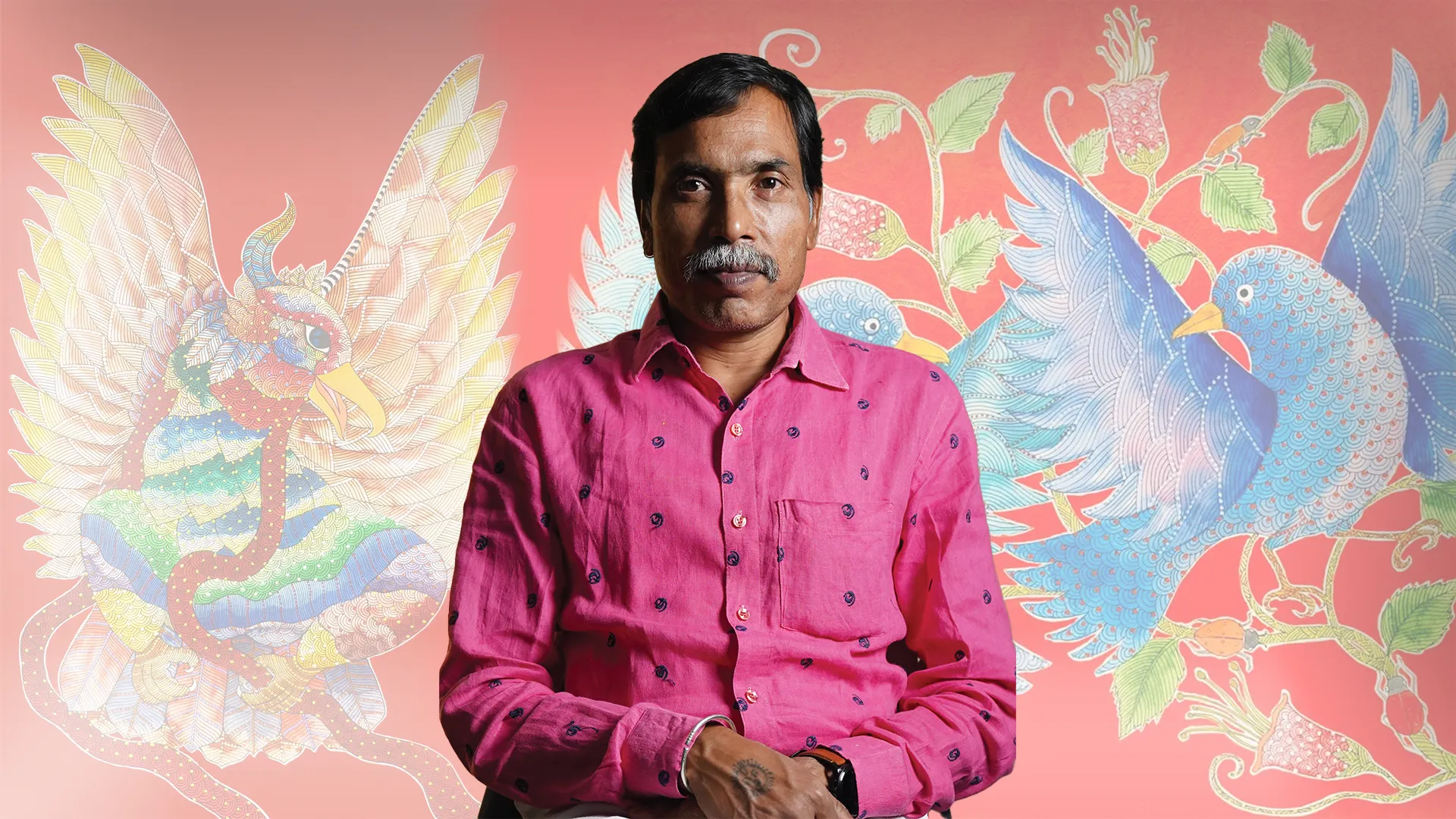
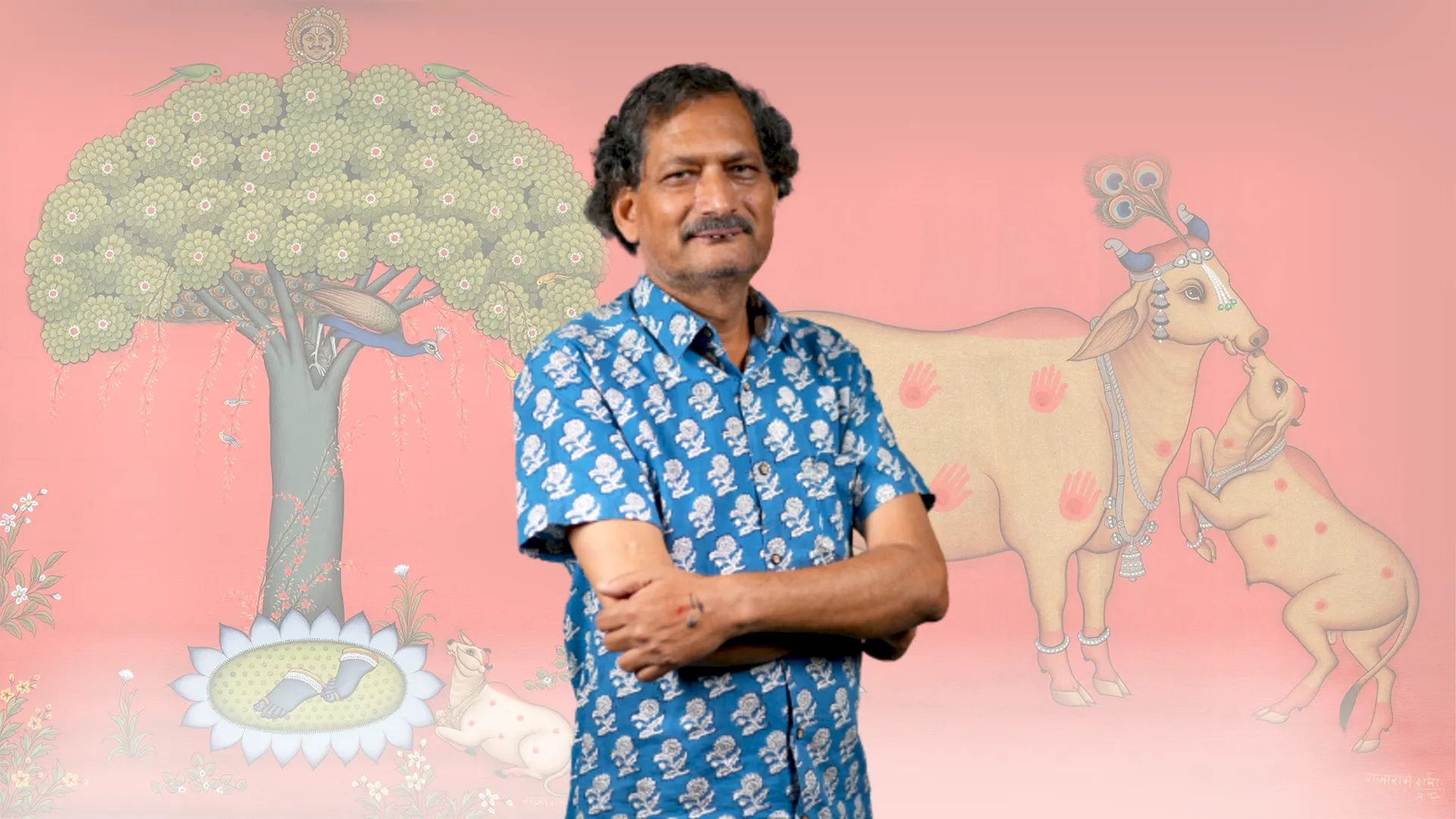
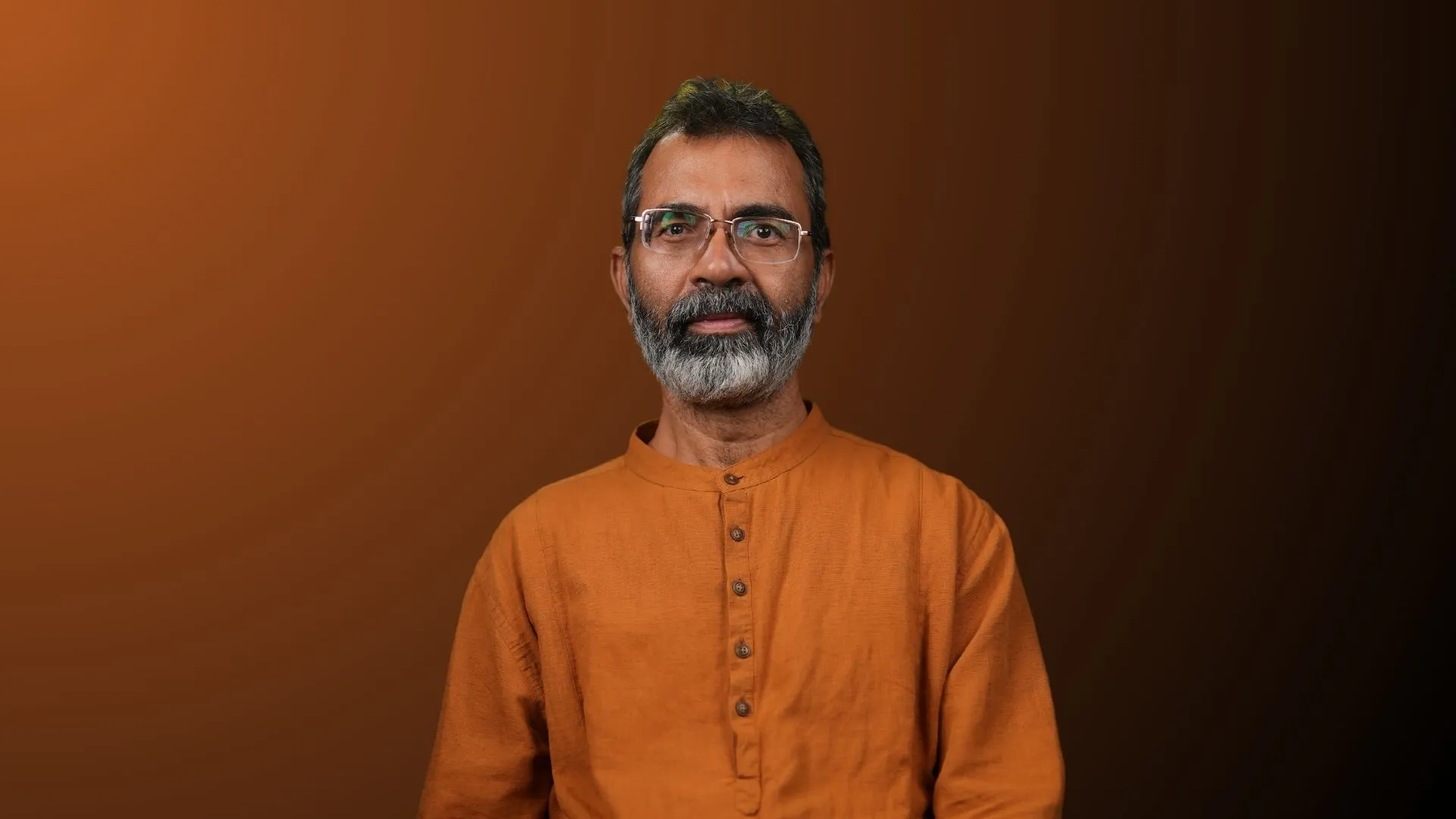
Rajaram Sharma, from the Bhilwara district of Rajasthan, is one of the most prominent Pichwai artists working today. He was trained under Tulsidasji Chitrakar, who served as the head of the Shrinathji temple, and he is actively committed to passing this art to the next generation. His Pichwai art course on Rooftop brings this temple tradition to learners across India.
Anandi Lal Sharma, a master artist from Nathdwara, has spent decades practising and teaching the Nathdwara miniature style closely associated with Pichwai. His course is available on Rooftop through the Nathdwara miniature course.
Artists working inside the Nathdwara temples continue the classical Pichwai tradition as it was practised in the 16th century, producing paintings for the temple’s seasonal liturgical cycle. These temple artists remain the most direct custodians of the original Pushtimarg painting conventions.
If you want to learn Pichwai painting online, Rooftop offers a dedicated course taught by master artist Rajaram Sharma from Bhilwara, Rajasthan. The Pichwai art course covers the foundational techniques of this devotional art, from preparing the cotton cloth to painting Shrinathji’s iconic form with natural pigments. For those interested in the Nathdwara miniature tradition related to Pichwai, the platform also hosts courses from other Rajasthan-based masters. You can explore the full range of Indian folk art courses on Rooftop.
The finest Pichwai paintings can be seen inside the Shrinathji temple at Nathdwara, Rajasthan, where they continue to be used as ritual backdrops. Museums such as the National Museum in New Delhi and the City Palace Museum in Udaipur also hold notable collections. Festivals like Janmashtami and Annakuta bring out especially elaborate Pichwai displays in Nathdwara. While pichwai painting images HD are widely shared online, nothing compares to viewing the original cloth and brushwork in person. If you want to buy Pichwai painting online, authentic works are available through Rooftop’s shop. You can also join a Pichwai painting experience to create your own piece under artist guidance.
What is Pichwai painting and where does it come from?
Pichwai painting is a devotional textile art from Nathdwara, a town in Rajsamand district, Rajasthan, approximately 45 kilometres from Udaipur. The name comes from the Sanskrit words for “at the back” and “hanging”, describing the cloth hung behind the Shrinathji deity. It is a 400-year-old tradition rooted in the Pushtimarg sect of the Vaishnava faith. Each painting narrates a story or festival from Lord Krishna’s life.
Which state and community practises Pichwai art in India?
Pichwai painting India belongs to Rajasthan, specifically the temple town of Nathdwara. Historically, three main artist communities produced these works: the Gaur, Jangid, and Mewara communities. The Pushtimarg sect, founded by Vallabhacharya in the 15th century CE, also patronised a distinct tradition of Pichwai production, and some artists still work inside the Nathdwara temple complex today.
What materials and colours are used in Pichwai painting?
Pichwai paintings are made on hand-spun cotton cloth that is starched and dried before painting begins. Pigments are traditionally natural, derived from coal, gold, silver, indigo, zinc, and saffron. Yellow, black, and red are the most frequently used colours. The finished works are often embellished with zardozi embroidery, gold thread, pearls, and gota applique on a cotton or velvet base.
Who are the most notable Pichwai painting artists in India?
Rajaram Sharma from Bhilwara, Rajasthan, is one of the most prominent living Pichwai artists; he trained under Tulsidasji Chitrakar, the former head of the Shrinathji temple. Anandi Lal Sharma from Nathdwara is a master of the closely related Nathdwara miniature style. Artists working inside the Nathdwara temple continue the classical liturgical painting tradition as part of the temple’s ongoing ritual cycle.
Can I learn Pichwai painting online in India?
Yes, Pichwai painting can be learned online through Rooftop’s Pichwai art course taught by Rajaram Sharma. The course is structured for learners at all levels and teaches the core techniques directly from a master artist. Rooftop also offers a Pichwai painting experience for those who want a shorter hands-on introduction to the art form.
Where can I buy authentic Pichwai paintings?
Authentic Pichwai paintings can be purchased from artists and galleries in Nathdwara, Rajasthan, which remains the primary centre of production. Online, Rooftop’s shop carries original works in Pichwai Art Rajasthan. When buying, look for paintings on cotton or velvet with natural pigments and traditional embellishments rather than mass-produced acrylic prints, which are widely available but lack the ritual and artistic authenticity of hand-painted originals.
Pichwai painting stands apart in the landscape of Indian folk art for its deep roots in living temple worship and its extraordinary technical detail. Each painting is a conversation between devotion and craft, made by artists whose families have served the Shrinathji temple for generations. Explore Pichwai painting courses on Rooftop and begin your own journey into one of Rajasthan’s most sacred art traditions.
Sources
Lyons, T. (2004) The Artists of Nathdwara. Ahmedabad: Mapin Publishing Pvt. Ltd.
Krishna, K., Talwar, K. (2007) In Adoration of Krishna Pichhwais of Shrinathji. Mumbai: Roli Books.
Lazaro, D. (2005) The Pichhvai Painting Tradition of Rajasthan. Ahmedabad: Mapin Publishing Pvt. Ltd.
Image Sources
"Art of Pichwai Painting." Cottage9, https://www.cottage9.com/art-technique/art-of-pichwai-painting/. Accessed 16 July 2026.
"Nathdwara Srinathji." Wikimedia Commons, https://upload.wikimedia.org/wikipedia/commons/thumb/c/ca/Nathdwara_srinathji.jpg/500px-Nathdwara_srinathji.jpg. Accessed 16 July 2026.
"Pichhwai." Wikipedia, Wikimedia Foundation, https://en.wikipedia.org/wiki/Pichhwai. Accessed 16 July 2026.
"Pichhwai." Wikipedia, Wikimedia Foundation, https://en.wikipedia.org/wiki/Pichhwai. Accessed 16 July 2026.
"Pichwai by Unknown Rajasthani Artist." Wikimedia Commons, https://upload.wikimedia.org/wikipedia/commons/3/3d/Pichwai_by_unknown_Rajasthani_artist.jpg. Accessed 16 July 2026.
"Pichwai Paintings: A Comprehensive Guide to History, Techniques and Types." Artflute, https://www.artflute.com/blog/pichwai-paintings-a-comprehensive-guide-to-history-techniques-and-types. Accessed 16 July 2026.