
Tippani - The Folk Dance Tradition of Gujarat
Explore the origins and cultural significance of Tippani Dance, a unique folk tradition inspired by the strength and unity of village life.
Introduction
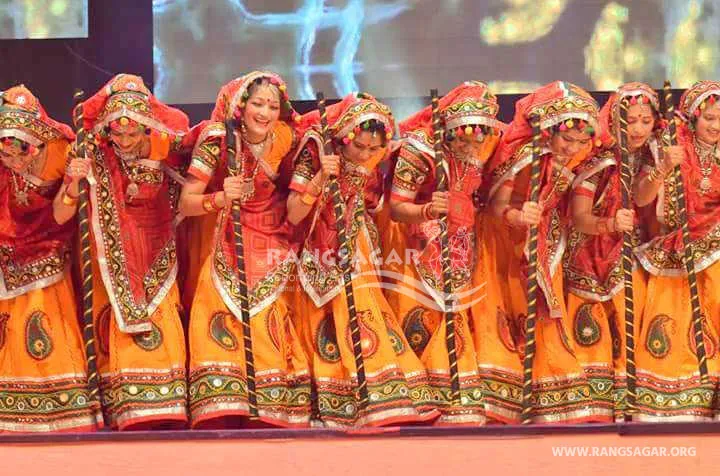
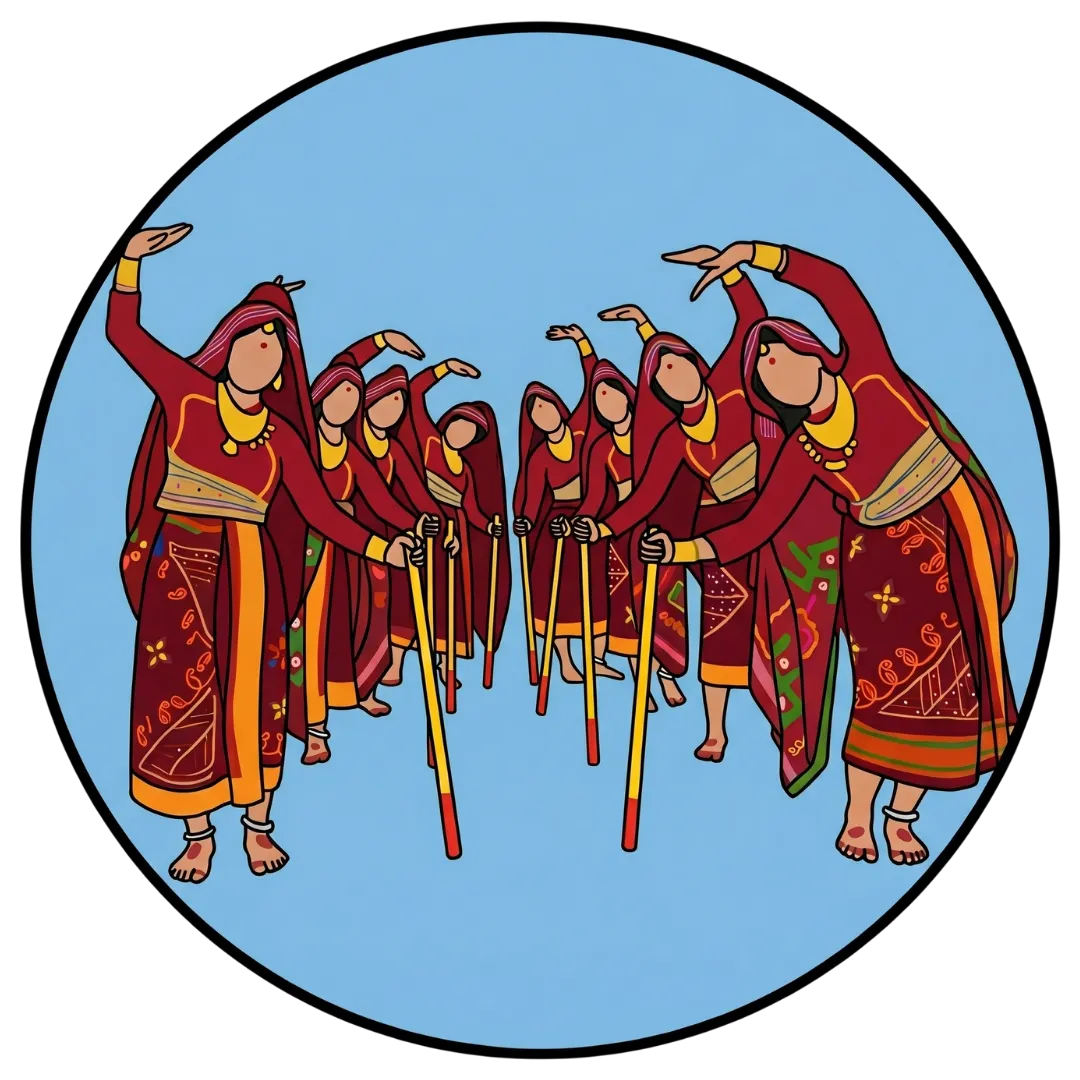
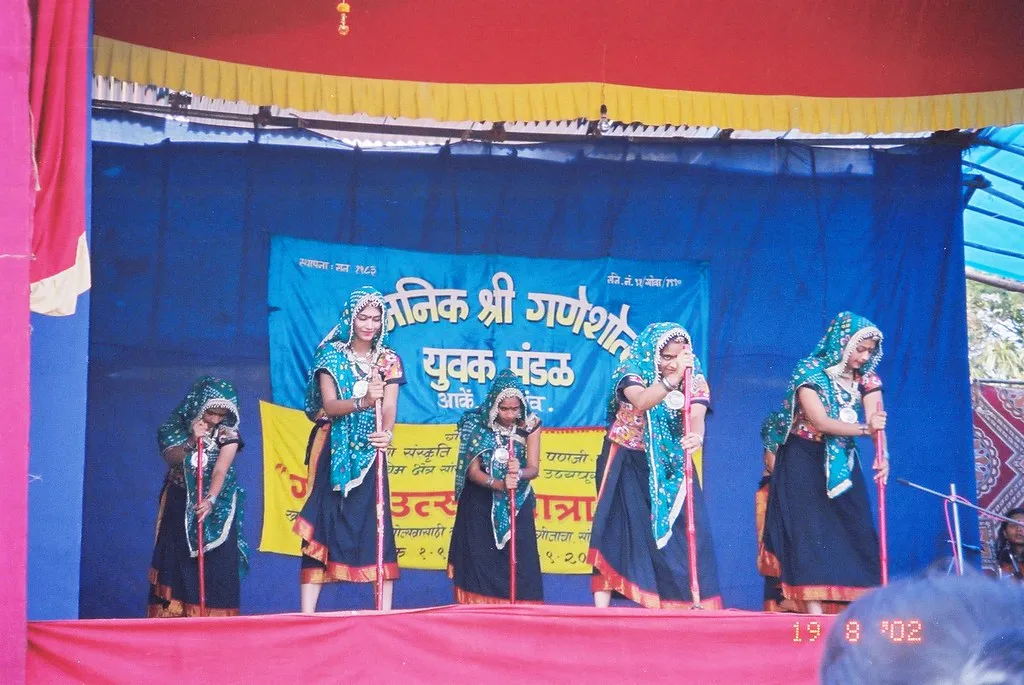
Tippani is a women's folk dance of Gujarat, originating in the coastal Chorwad and Veraval region of Saurashtra. It was developed by women laborers from the Koli community who worked in construction, using the tippani, a long wooden pole with a weighted square block at its base, to compact lime and earth into building foundations. The rhythmic striking of these poles against the ground, which workers performed to coordinate their labor and relieve its monotony, developed over time into a structured folk dance performance. The dance is performed in two opposite rows, with the women striking the ground with tippani poles in coordinated patterns while singing work songs.
Etymology
The dance takes its name from the tippani, the distinctive wooden implement that is both the tool of the original labor and the central prop of the dance. The tippani is approximately 175 centimeters in length with a square weighted block called 'garbo' at its base. The garbo end is struck against the ground in the labor action of compacting lime; in the dance, this action is translated into rhythmic performance. The word 'tippani' is a Gujarati regional term specific to this implement and the dance tradition.
Origin
Tippani originated in the Chorwad and Veraval region of Saurashtra, a coastal zone where the Koli and Kharva fishing and labor communities are historically settled. The dance developed from the actual work practice of women who used tippani poles to compress lime into house and building foundations. This functional origin distinguishes Tippani from most other folk dance traditions, which typically develop from devotional, seasonal, or ceremonial contexts. The transition from work rhythm to performance dance reflects a broader pattern in South Asian folk culture in which occupational rhythms are aestheticized into performance.
Location
Tippani is concentrated in the coastal districts of Saurashtra: primarily in Junagadh, Gir Somnath, Amreli, and Bhavnagar districts. Its original center is the Chorwad and Veraval region. The dance is performed at community festivals in these coastal areas and, to a lesser extent, at state cultural events.
Community
Tippani is performed by women of the Koli and Kharva communities of coastal Saurashtra. Both are communities with historical associations with coastal labor, fishing, and small-scale construction work. The dance is women-only in its traditional form. As a labor-derived tradition, it carries the cultural identity of working-class coastal communities in Gujarat and serves as a marker of the specific social and occupational history of these groups.
Relevance
Tippani is one of a small number of Indian folk dances with a directly documented occupational origin. This makes it culturally significant as evidence of the aesthetic transformation of labor in folk tradition. The dance is classified as medium-visibility and vulnerable: it is known within Gujarat's folk dance landscape and is occasionally presented at state cultural events, but its practice within the originating community has declined as the construction methods that produced it have been superseded by modern building technologies.
History
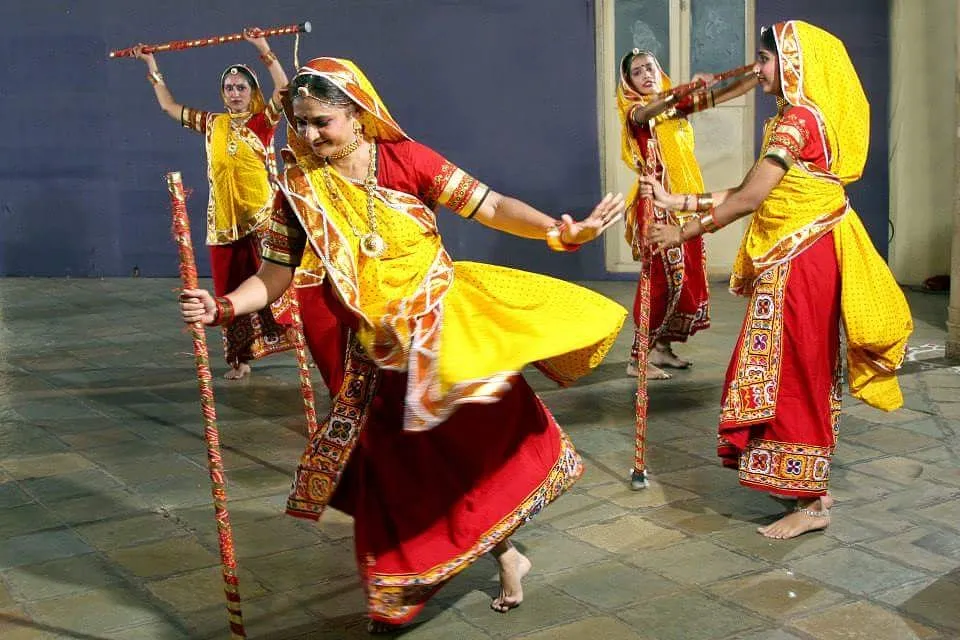
Tippani belongs to a category of work-song and work-dance traditions that are widely documented across India, in which the rhythms and physical actions of labor are incorporated into musical and choreographic performance. The specific practice of using weighted poles to compact construction materials, which generated the Tippani tradition, was common in coastal Gujarat before the adoption of modern construction machinery. As women stopped using the tippani in actual construction work through the mid-to-late twentieth century, the dance form became detached from its functional context and continued as a performance tradition at festivals and celebrations.
Culture and Societies
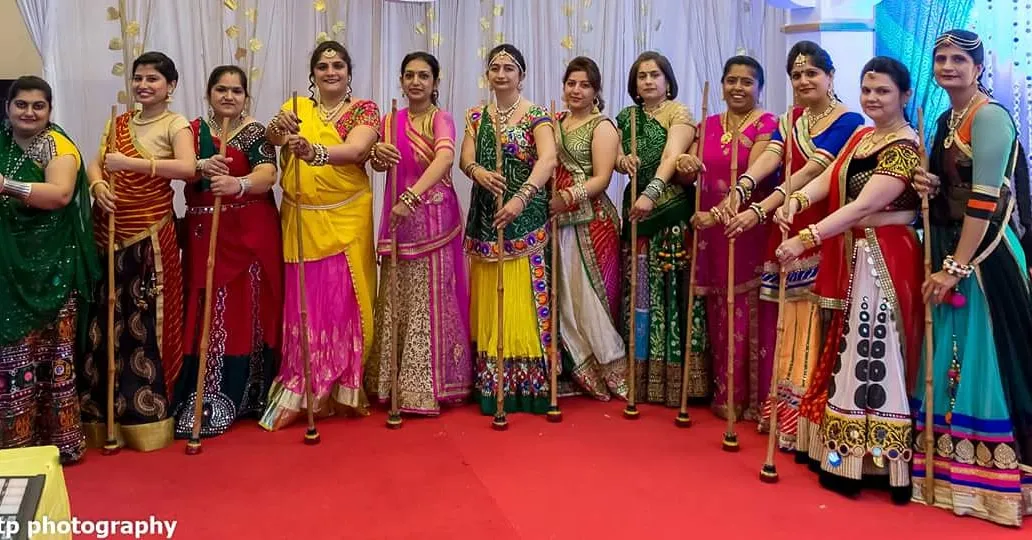
Tippani is performed at community festivals including Holi, Diwali, and weddings in the Koli and Kharva communities of coastal Saurashtra. The performance involves two rows of women facing each other, each holding a tippani pole, striking the ground in coordinated rhythmic patterns to create a complex percussive soundscape from the poles alone. Work songs (the original labor songs sung during foundation compaction) are incorporated into the performance. The communal structure of the dance, with its two-row formation and coordinated striking, mirrors the actual work practice from which it derived.
Religious Significance
No specific religious significance has been established for Tippani in the available documentation. The dance is performed at festivals that have general religious or calendrical significance (Holi, Diwali) but is not itself a devotional or ritual act. It is primarily a social and cultural performance that marks community identity and the festival calendar of its originating communities.
Understanding the Art
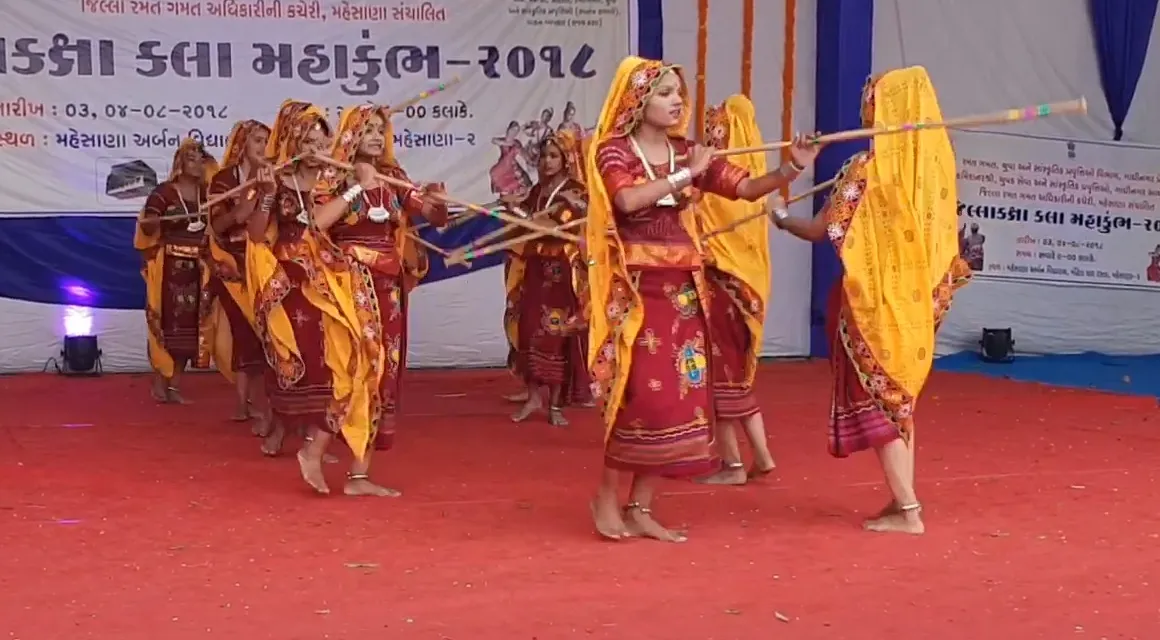
The two rows of women stand facing each other, each holding a tippani pole approximately 175 centimeters in length. They strike the poles against the ground in a coordinated sequence, with both rows striking in unison or in alternating patterns. The physical demand of the dance is significant, requiring upper body strength and coordination. The sound produced by the striking poles is the primary percussion of the form. Work songs in the Koli dialect are sung during the performance. Musical accompaniment includes turi (a wind instrument), thali (brass plate percussion), zanz, manjira, tabla, dhol, and shehnai.
Central Motifs and Their Significance
The tippani pole is both the physical and symbolic center of the tradition. Its dual identity as work tool and dance prop encodes the history of the Koli and Kharva communities as laboring people who transformed the rhythms of physical work into cultural expression. The two-row formation, with the rows facing each other, mirrors the actual arrangement of women working together at a construction site. The work songs preserve the language and concerns of the original labor context.
Process
The dance begins with the women arranging themselves in two parallel rows, facing each other, each woman holding her tippani pole. A lead singer begins the work song, which the group follows in a call-and-response or unison pattern. The pole-striking begins at a moderate tempo and can increase in speed and complexity through the performance. The coordination of the striking patterns across the two rows requires rehearsal and practice within the community.
Mediums Used
The tippani pole, approximately 175 centimeters in length with the weighted garbo block at the base, is the defining implement of the dance. Women's costumes include the kedia (a short embroidered coat), churidars, vibrant embroidered caps or turbans, and a decorative waistband. Costume ornamentation reflects the coastal Saurashtra tradition of bright colors and mirror-work embroidery. Musical accompaniment is provided by turi, thali, zanz, manjira, tabla, dhol, and shehnai.
New Outlook
Tippani is a vulnerable tradition. The functional context of the dance, the use of wooden poles to compact building foundations, has been replaced by modern construction methods, removing the occupational practice from which the dance derived. Younger women in the Koli and Kharva communities are less familiar with the tradition, and its practice is declining. Some revival attempts have been made by Gujarat state cultural bodies and folk arts organizations, and the form appears occasionally at state-level folk festival presentations. A sustained institutional program of documentation, training, and community-based preservation had not been established as of the available sources.
Learn Tippani

Bibliography
Sources
Doshi, Saryu, editor. Dances of Gujarat. Marg Publications, 1971.
Gujarat Kala-Sahitya Parishad. Documentation Reports on Gujarat Folk Dances. Gujarat Kala-Sahitya Parishad, various years.
Kothari, Sunil. Folk Dances of India. Marg Publications, 1994.
Vyas, Rasiklal. Folk Dances of Gujarat. Gujarat Vidyapith, various editions.
Image Sources
“Folk Dances of India.” Rangsagar, https://rangsagar.org/folk-dances-of-india/. Accessed 4 July 2026.
“Tippani Dance.” Kolistan, https://kolistan.blogspot.com/2018/08/tippani-dance.html. Accessed 4 July 2026.
= “Tippani Juriun Dance of Gujarat.” Auchitya, https://www.auchitya.com/tippani-juriun-dance-of-gujarat/. Accessed 4 July 2026.
- “Tippani.” Flickr, uploaded by Rangashree India, https://www.flickr.com/photos/rangashree_india/2382867967. Accessed 4 July 2026.