

Thathera Craft - The Handicraft Tradition of Punjab
Explore Thathera Craft, the handicraft tradition of Punjab, and learn about its origins, techniques, cultural significance, and artistic heritage.
Introduction
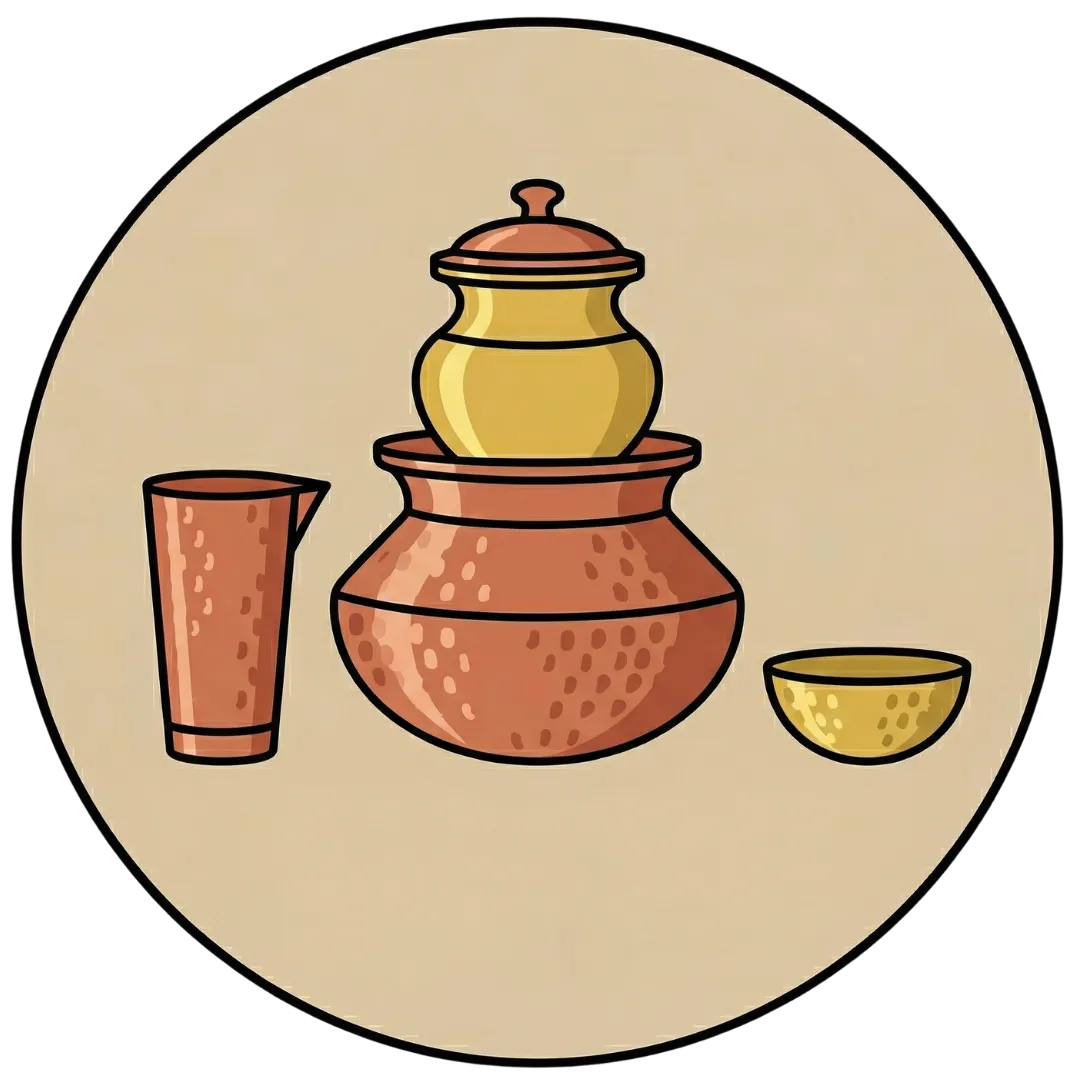
Thathera Craft is a traditional brass and copper utensil-making craft practised by the Thathera community in Jandiala Guru, Amritsar district, Punjab. The craft is inscribed on UNESCO's Representative List of the Intangible Cultural Heritage of Humanity (2014), making it one of the first Indian crafts to receive this specific designation for its utensil-making tradition. The Thateras produce everyday and ceremonial vessels using traditional hand-hammering and shaping techniques without the use of lathes or modern machinery.
Etymology The word Thathera derives from the craft community's name, which in turn comes from the Hindi/Punjabi root relating to copper and brass work. The community is named after their craft practice: those who beat (tha karna) metal into utensils. Sahapedia's documentation ('Tha' Se Thathera) references this derivation.
Origin The craft is documented to have developed in Jandiala Guru, a town historically associated with the brass and copper working communities. The Indian Culture portal of the Ministry of Culture and the IICD documentation record the craft's historical roots in Punjab's metal-working traditions. The Thathera community's presence in Jandiala Guru is established for several centuries, sustained by demand for traditional brass and copper utensils in the region.
Location Jandiala Guru, Amritsar district, Punjab. The craft is concentrated in this specific town, where the Thathera community has historically been resident.
Community The Thateras are a specific caste-identified craft community in Punjab. Their hereditary occupation is brass and copper utensil making, which is transmitted within the community across generations. The community is the holder of the UNESCO-inscribed intangible cultural heritage.
Relevance Thathera Craft is inscribed on UNESCO's Representative List of the Intangible Cultural Heritage of Humanity (2014) under the category of Traditional Brass and Copper Craft of Utensil Making Among the Thatheras of Jandiala Guru, Punjab, India. This is one of the highest levels of international recognition for a traditional craft. The Indian Culture portal documents the craft formally as a government-recognised intangible cultural heritage.
History
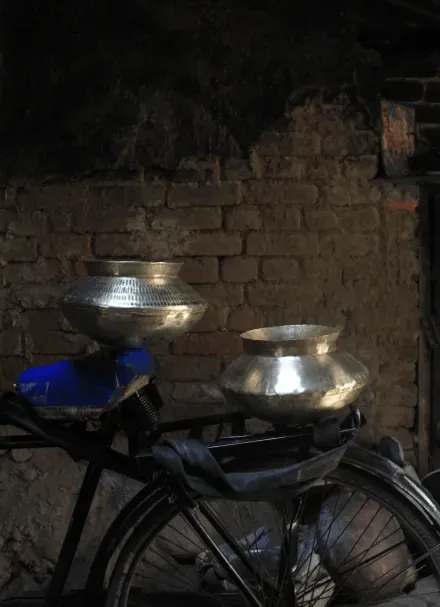
Background The Thathera community and their craft in Jandiala Guru have a multi-generational history documented in UNESCO's inscription files. The craft developed in response to the widespread use of brass and copper utensils in Punjabi households for cooking, serving, and ritual purposes. Traditional brass and copper vessels remain in use for religious ceremonies and daily cooking in many Punjab households, providing continued demand for the craft. The Artsandculture.google.com story on Thathera Metal Craft (produced with Jaipur Virasat Foundation) documents the craft's living practice.
Culture and Societies Brass and copper utensils made by the Thateras are used in everyday domestic life, in religious ceremonies, and in the Sikh gurdwara tradition for langar (community meals) and ritual service. The specific forms of vessels produced by Thateras correspond to established categories of Punjabi domestic and ceremonial use. The UNESCO inscription emphasises the social and cultural functions of the craft within the community and regional society.
Religious Significance The utensils produced by the Thateras have documented religious significance in Sikh practice. Brass and copper vessels are used in gurdwaras for langar service and ritual purposes. The patiala shahi tumblers and traditional serving vessels produced by Thateras are specifically associated with Sikh ceremonial contexts. The craft thus has an active connection to religious practice in Punjab.
Understanding the Art
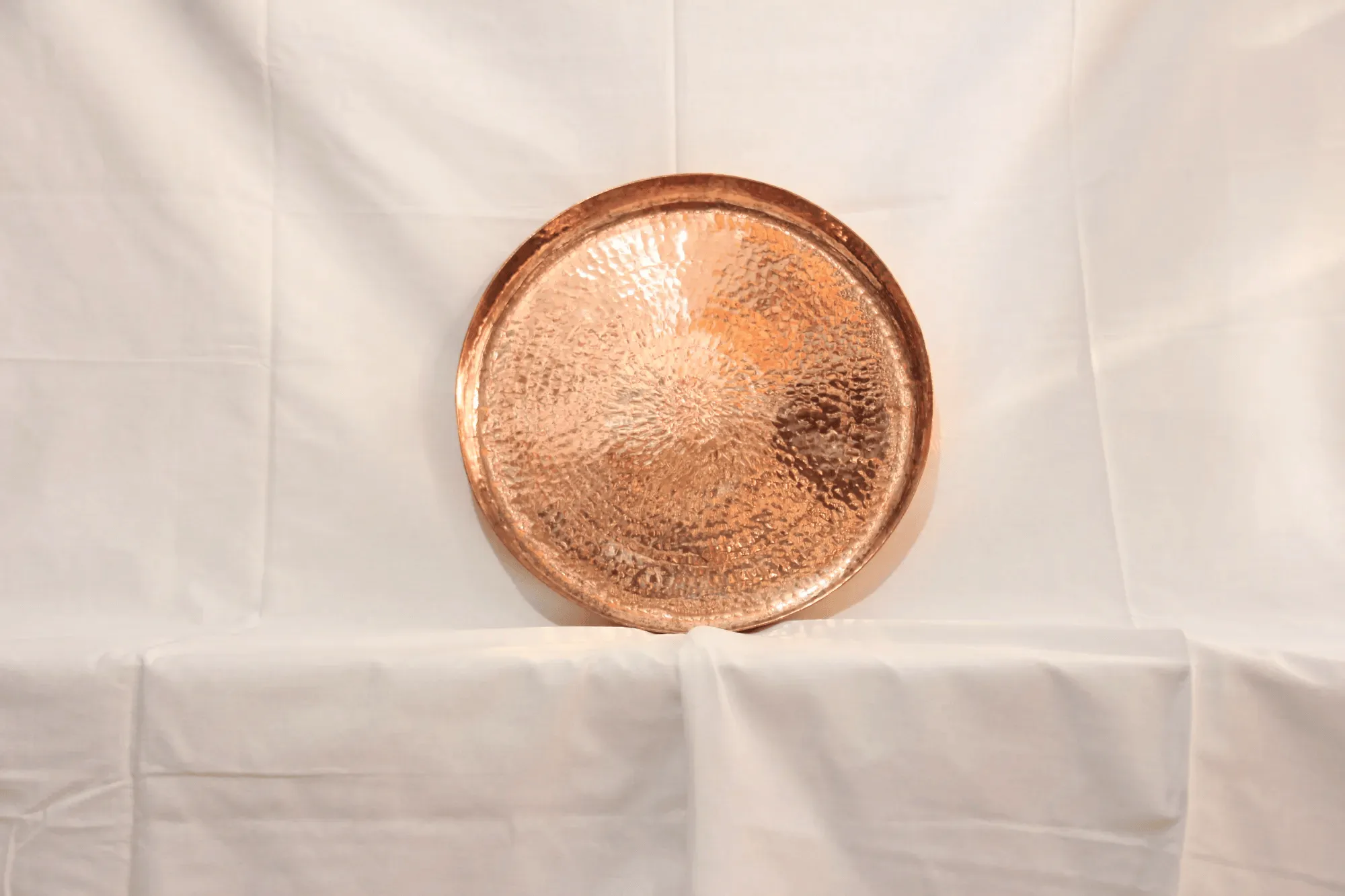
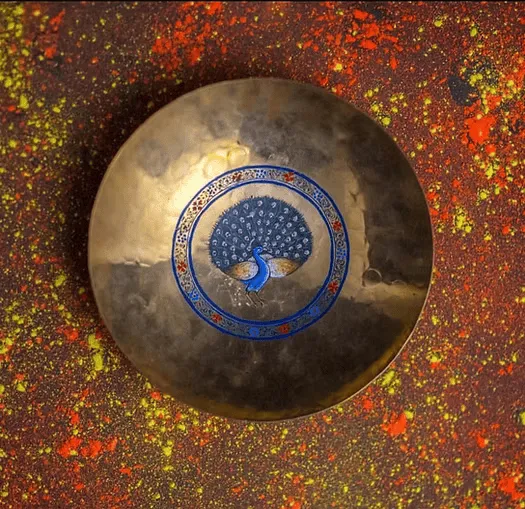
Style Thathera utensils are characterised by the warm golden tone of brass and reddish tone of copper, with smooth, burnished surfaces and precise forms. The objects are produced without lathe turning; all shaping is done by hand hammering over forms. The aesthetic is defined by the regularity of hammer marks visible on the interior of some vessels, and by the precise proportion of traditional vessel forms.
Central Motifs and Their Significance Decoration on Thathera vessels is generally restrained; the primary aesthetic quality lies in the form, proportion, and material of the vessel rather than surface decoration. Some vessels incorporate incised line patterns or basic geometric borders. The emphasis is on functional form rather than decorative elaboration.
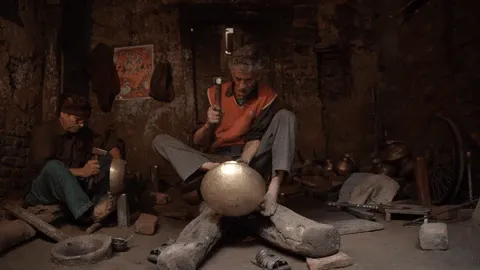
Process The process documented by IICD and the Indian Culture portal involves: casting brass or copper alloy into flat sheets by melting and rolling; annealing (heating and cooling) the sheet to keep it workable; cutting circular blanks from the sheet; shaping the blank into vessel form by sequential hammering over iron forms, rotating and hammering incrementally to achieve the required shape; annealing at intervals to prevent cracking; trimming the rim and finishing the surface by filing and burnishing.
Mediums Used Brass (an alloy of copper and zinc) and copper are the primary materials. Traditional alloy proportions are maintained within the Thathera community. Iron stakes and hammers are the primary tools. No modern machinery is used in traditional production.
New Outlook
The Thathera Craft is classified as endangered. The demand for traditional brass and copper utensils has declined with the widespread adoption of stainless steel and other modern cookware. The UNESCO inscription has raised the craft's profile internationally and stimulated some revival interest. IICD has worked to document and support the craft through training and design development. The community faces economic pressure from declining demand and the difficulty of competing with mass-produced metal goods.
Learn Thathera Craft
Bibliography
Sources
“Tha Se Thathera.” Indian Institute of Crafts and Design, iicd.ac.in.
“‘Tha’ Se Thathera: Lost Sound.” Sahapedia, sahapedia.org.
“Traditional Brass and Copper Craft of Utensil Making among the Thatheras of Jandiala Guru, Punjab.” UNESCO, Representative List of the Intangible Cultural Heritage of Humanity, 2014.
Image Sources
“Thatheras of Jandiala Guru.” Thatheras of Jandiala Guru, NID USTTAD Project documentation, https://thatherasofjandialaguru.wordpress.com/thatheras-of-jandiala-guru/. Accessed on May 02, 2026.
“Th se Thathera: Revival of India’s Only UNESCO Listed Craftform.” P-TAL, 30 Jan. 2024, https://ptal.in/blogs/ayurvedic-metals/th-se-thathera-revival-of-india-s-only-unesco-listed-craftform. Accessed on May 02, 2026.
“P-TAL: Punjab Thathera Art Legacy.” The Design Collective, https://www.thedesigncollective.co.in/post/ptal-punjab-thathera-art-legacy. Accessed on May 02, 2026.