

Veena Making - The Handicraft Tradition of Tamil Nadu
Explore Thanjavur Veena Making, the handicraft tradition of Tamil Nadu, and learn about its origins, techniques, cultural significance, and artistic heritage.
Introduction
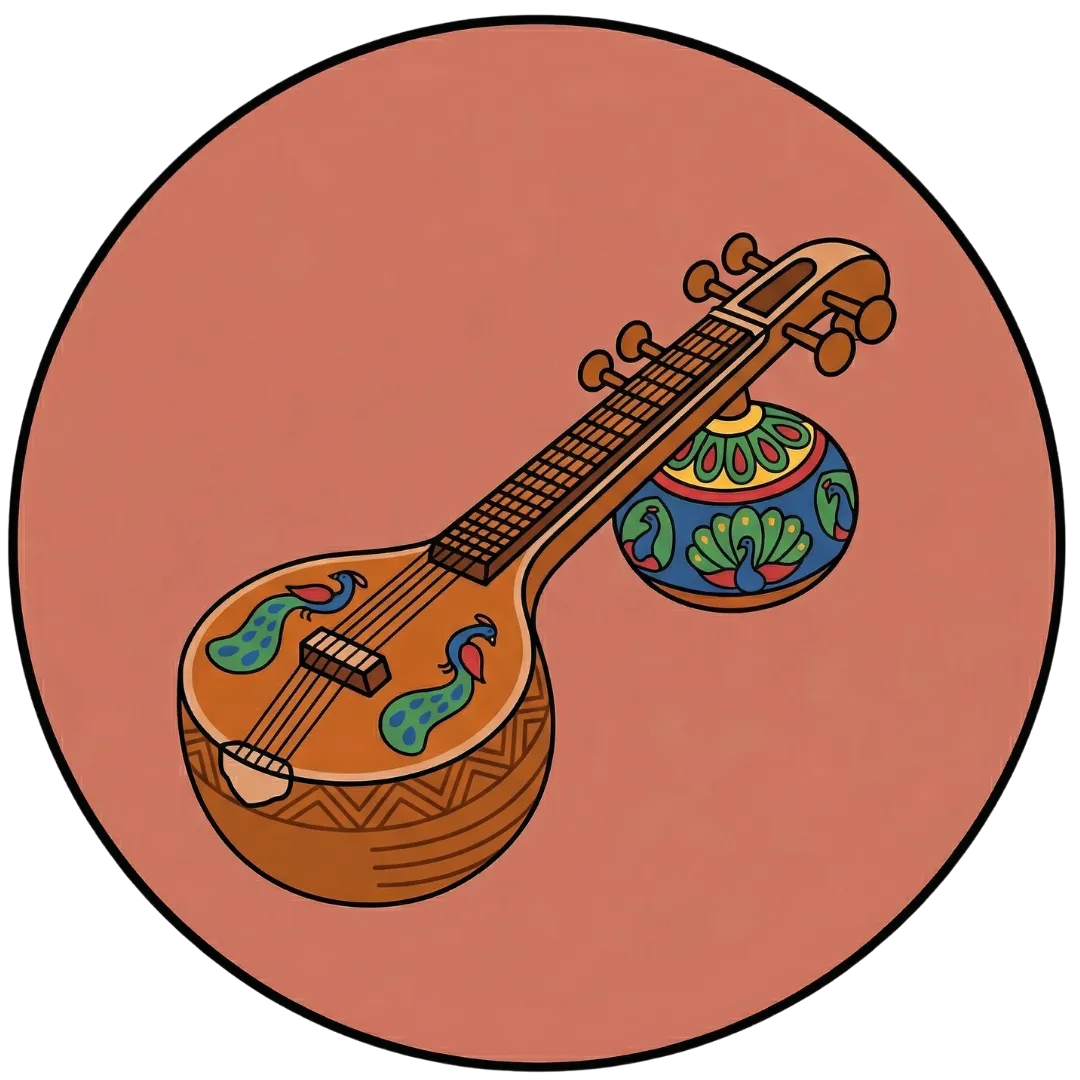
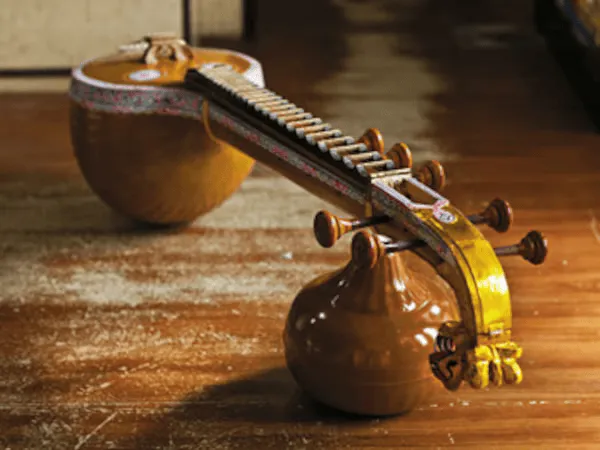
Veena Making refers to the traditional craft of constructing the Saraswati Veena, the principal chordophone of Carnatic classical music, as practised in Thanjavur district, Tamil Nadu. The Thanjavur Veena, also called the Thanjavur Veenai or Saraswati Veena, is a plucked string instrument approximately four feet in length, constructed primarily from jackfruit wood and distinguished by its large resonator body, wide neck, dragon-head tuning box, twenty-four metal frets embedded in beeswax, and seven strings. It is the first musical instrument in India to have received Geographical Indication (GI) status from the Government of India.
Etymology The word 'veena' derives from the Sanskrit root interpreted as 'vanyateiti veena,' meaning 'that which creates a sound is called the Veena.' The word appears in Sanskrit literature from the Rigveda period onward. The specific form documented here, the Saraswati Veena, is named after the goddess Saraswati, the Hindu deity of learning and the arts, who is canonically depicted holding this instrument. The compound term 'Thanjavur Veena' refers to the regionally specific form and production tradition of this instrument in Thanjavur.
Origin The veena as a generic instrument class is referenced in Indian texts as early as 1700 BCE. The Kudimiyamalai inscription in Pudukkottai district, Tamil Nadu, records music lessons in seven root ragas designed by Rudracharya at the command of Pallava King Mahendra Vikrama Varman I (circa 7th century CE), associated with an early evolved form of the veena. The particular structural form of the Saraswati Veena with its characteristic large kudam, long dandi, small secondary resonator, yali carving at the neck end, and 24-fret configuration is associated with refinements under Maratha patronage in Thanjavur from the 17th century onward.
Location Thanjavur district, Tamil Nadu, on the south-east coast of Tamil Nadu. Production is centred in and around Thanjavur town.
Community A small number of hereditary artisan families in Thanjavur are engaged in veena making. Most makers are members of cooperative societies. The craft is classified as endangered due to the very small and declining number of practising families, and because younger generations tend to avoid joining the trade given limited profitability.
Relevance The Thanjavur Veena holds the highest cultural significance within Carnatic classical music as the instrument associated with Goddess Saraswati. The veena's tonal quality improves with age, creating demand for older instruments. The craft is endangered due to the labour-intensive nature of production, limited economic returns, and reluctance of younger generations to enter the trade.
History
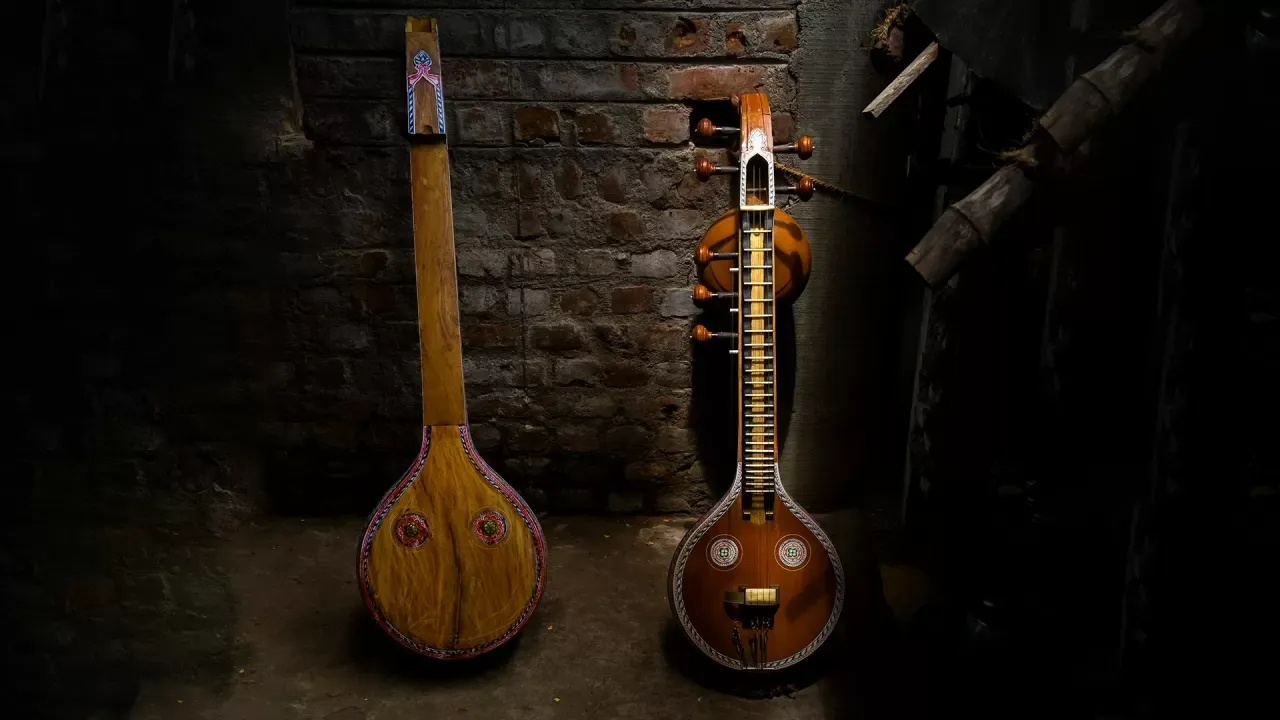
Background Thanjavur's centrality to South Indian classical music was established during the Chola period and reinforced through Vijayanagara Nayak and Maratha patronage. The Maratha rulers of Thanjavur (1675 to 1855) sponsored composers, performers, and instrument makers. The Thanjavur quartet of composers including Tyagaraja, Muthuswami Dikshitar, and Syama Sastri worked during this period. Veena-making families in Thanjavur developed the specific technical standards that distinguish the Thanjavur Veena as a category. The Tamil classic Silappadikaaram references a wooden instrument called Yaazh, a harp-like precursor described as being in the shape of boats, fishes, and crocodiles, which was gradually replaced by the more versatile veena form.
Culture and Societies The veena holds a foundational place in Tamil cultural identity. The instrument is central to Bharatanatyam dance performances, temple devotional music, and the concert tradition of Carnatic classical music. Families producing veenas across generations in Thanjavur have contributed directly to the instrumental standards expected by professional musicians. The instrument occupies a sacred position in Tamil musical culture, reinforced by its iconographic association with Saraswati.
Religious Significance The Saraswati Veena is the defining instrument of Goddess Saraswati, invariably depicted holding it. Lord Shiva in his manifestation as Vinadhara, meaning 'the veena-bearer,' and the sage Narada are also iconographically associated with the instrument. This theological lineage gives the veena a sacred status that permeates its cultural context. Veenas are consecrated and offered to temple deities, and the act of learning and playing the instrument carries spiritual dimension within the Carnatic tradition.
Understanding the Art
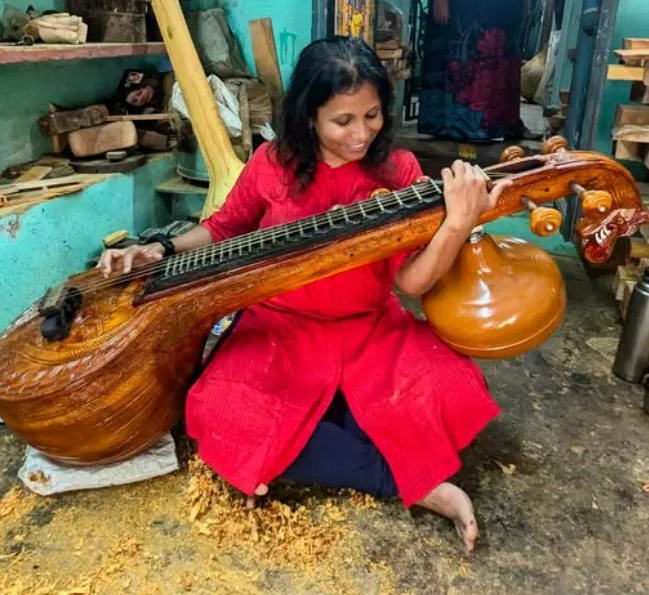
Style The Thanjavur Veena is approximately four feet in length. Its most distinctive feature is the large spherical kudam (resonator body) carved from a single piece of wood, connected to a long, wide-necked dandi, terminating in a yali or dragon-head tuning box. A secondary resonator surakkai is attached to the underside of the neck. The instrument has 24 fixed metal frets (mettu) embedded in beeswax mixed with charcoal powder, allowing chromatic semitone access across the neck. Seven strings are fitted: four main playing strings (vadi) run over the frets, and three drone strings (talam) run alongside the neck without contacting the frets.
Central Motifs and Their Significance The decorative vocabulary of the Thanjavur Veena is drawn from temple carving traditions. The yali, a composite creature combining lion, elephant, and other animal elements, is the dominant carving at the head of the neck, representing a motif ubiquitous in Dravidian temple architecture. Other carved motifs include floral patterns, vine forms, and carved panels on the body. Natural gum, lacquer, and beeswax are used as finishing materials.
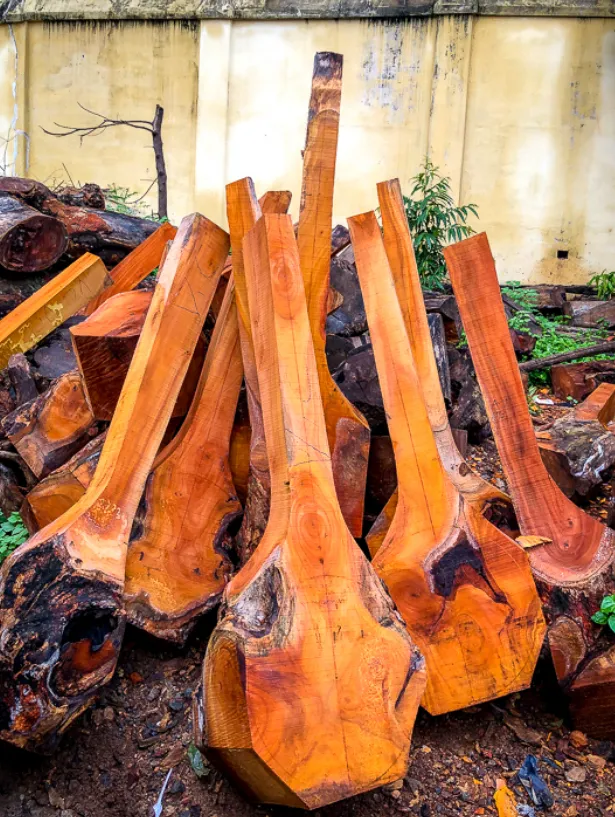
Process Jackfruit wood is the material of choice due to its fine pores that amplify resonance and its adaptability across weather conditions. In the ekantha (single-piece) method, the entire body is carved from a single block of jackfruit wood. In the ottu method, kudam, dandi, and tuning box are made separately and assembled. For the ekantha method, a seasoned jackfruit log is selected and the exterior form is shaped using chisels, hammers, and files. The interior of the kudam is then hollowed out through careful carving. The neck is shaped and graduated according to traditional measurements. The yali head is carved in detail. A mixture of honey wax and black charcoal powder is applied to the top plank surface, onto which the 24 brass frets are affixed at precisely measured intervals. The frets are embedded in this compound and allowed to harden. Strings are attached: brass strings for the lower-pitched main strings (Anumadaram and Mandaram) and steel strings for the higher-pitched strings (Panchnam and Sangam). Three talam drone strings are affixed to side pegs. The body is polished and decorated with carved motifs and natural gum varnish. A complete veena takes approximately 15 to 20 days to produce.
Mediums Used Jackfruit Wood: The primary material for the body, neck, and tuning box, valued for its acoustic properties. Beeswax and Charcoal Powder: Combined to form the compound into which the 24 brass frets are embedded. Brass: Used for the lower two main playing strings (Anumadaram and Mandaram, gauges 24 and 22). Steel: Used for the higher-pitched main playing strings (Panchnam and Sangam, gauges 28 and 32) and the three talam drone strings. Natural Gum and Lacquer: Applied to the instrument body as a surface finish providing both protection and decorative patterning.
New Outlook
The Thanjavur Veena is the first musical instrument in India to receive a GI tag, which restricts the name 'Thanjavur Veenai' to instruments crafted within the region using established methods. The number of practising artisan families is very small. Tourist visits to Thanjavur workshops provide limited supplementary income. The ageing characteristic of jackfruit wood veenas, whereby tonal quality improves with age, has created some secondary market for vintage instruments, but this does not directly benefit production artisans.
Learn Thanjavur Veena Making

Bibliography
Sources
Craft Revival Trust. “Veena (String Instrument) of Thanjavur, Tamil Nadu.” Asia InCH: Encyclopedia of Intangible Cultural Heritage, https://asiainch.org/craft/veena-string-instrument-of-thanjavur-tamil-nadu/. Accessed on May 05, 2026.
Government of India, Office of the Development Commissioner (Handicrafts). “Thanjavur Veenai.” Handicrafts of India, https://handicrafts.nic.in/crafts/All_Crafts/Craft_Categories/Miscellaneous/Music_Instruments/Thanjavur_Veenai/ThanjavurVeenaiWebPage.html. Accessed on May 05, 2026.
Tamil Nadu Tourism. “Veena: Arts and Crafts.” Tamil Nadu Tourism, Government of Tamil Nadu, https://www.tamilnadutourism.tn.gov.in/experiences/veena. Accessed on May 05, 2026.
Thanjavur Smart City Corporation. “Art and Craft.” Thanjavur Smart City, https://thanjavurcorporation.org/tourism/art-craft/. Accessed on May 05, 2026.
Sharma, Manorma, editor. Musical Heritage of India. APH Publishing, 2007. Accessed on May 05, 2026.
Image Sources
“A Visit to the Veena Makers of Thanjavur.” Facebook, posted by Indian Polar Girl, https://www.facebook.com/IndianPolarGirl/posts/a-visit-to-the-veena-makers-of-thanjavurthanjavur-with-its-rich-cultural-heritag/1126607942799192/. Accessed on May 05, 2026.
“The Exquisite Art of Traditional Veena Making in Thanjavur, Tamil Nadu.” The Travelling Camera, Mar. 2023, https://www.travellingcamera.com/2023/03/the-exquisite-art-of-traditional-veena.html. Accessed on May 05, 2026.
“The Last Notes of the Thanjavur Veena.” Forbes India, https://www.forbesindia.com/article/recliner/the-last-notes-of-the-thanjavur-veena/32670/1. Accessed on May 05, 2026.
“Veena: Arts and Crafts.” Tamil Nadu Tourism, Government of Tamil Nadu, https://www.tamilnadutourism.tn.gov.in/experiences/veena. Accessed on May 05, 2026.