
Tamasha - The Folk Dance Tradition of Maharashtra
Explore the vibrant world of Tamasha, where folk music, dance, theatre, and humor come together to celebrate Maharashtra's cultural identity.
Introduction
Introduction
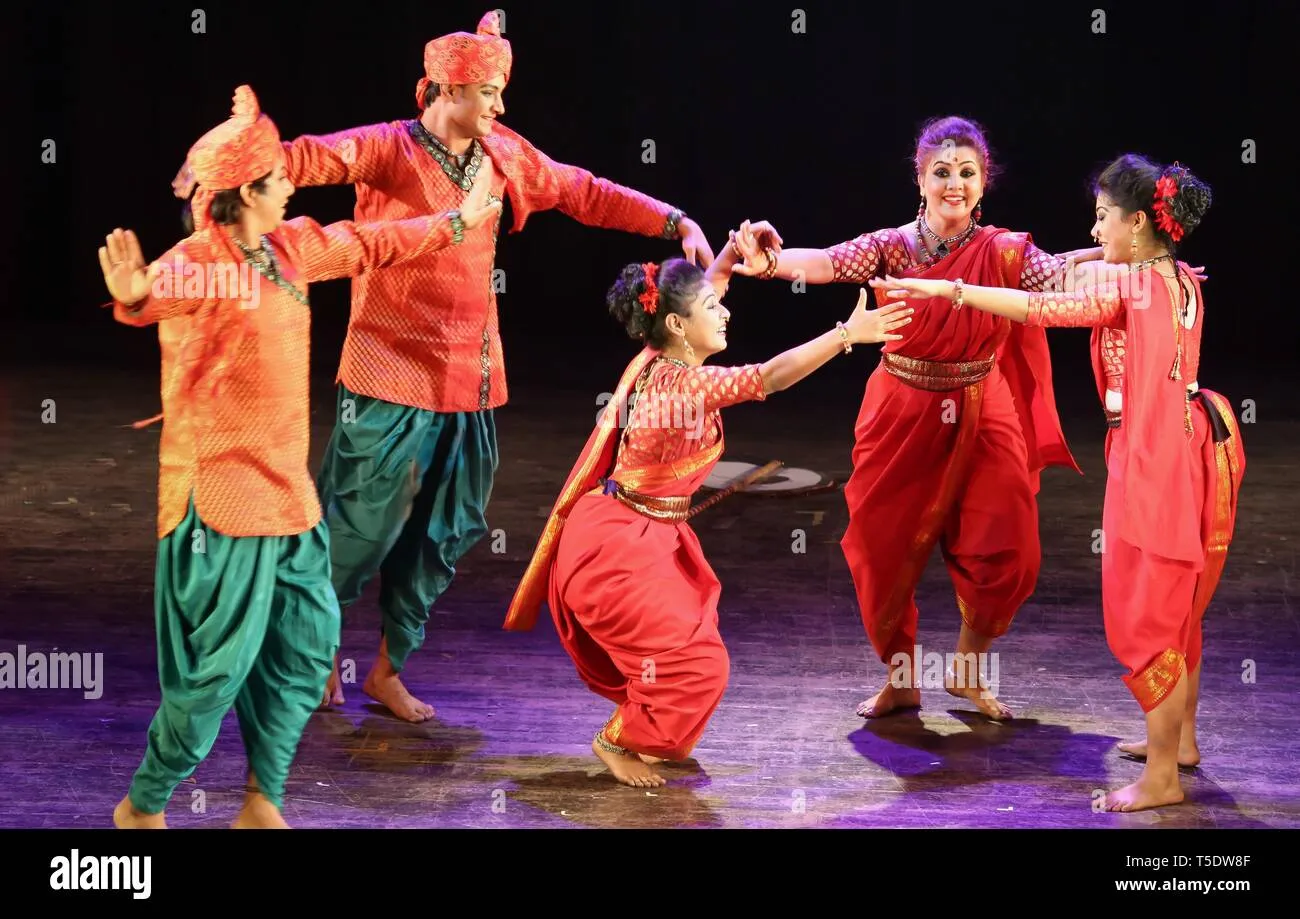
Tamasha is a traditional folk theatre form from Maharashtra, India, that integrates song, dance, poetry, comedy, and dramatic enactment into a single composite performance. It is one of the most significant secular performance traditions of the Deccan region and functions simultaneously as popular entertainment, social commentary, and cultural documentation of rural Maharashtrian life. The word tamasha derives from Persian, entering Marathi through Mughal-era contact, and carries the broad meaning of show, spectacle, or theatrical entertainment. Tamasha is particularly associated with the Lavani musical tradition, vigorous percussion-led performance, and the Kolhati and Mahar communities who have historically been its primary practitioners.
Etymology
The word Tamasha is a loanword from Persian, which in turn borrowed it from Arabic. The Persian term carries the meaning of a show, spectacle, or a sort of theatrical entertainment. Through sustained contact with Mughal armies operating in the Deccan from the sixteenth century onward, the term entered Marathi usage. Colloquially in modern Hindi, Marathi, Kannada, and Urdu, the word has expanded in meaning to also denote fun, nonsense, commotion, or disorder. Some scholars have also noted a possible secondary route through Turkish, which had adopted the term from Arabic before it entered Persian-Urdu literary culture.
Origin
Location: Maharashtra, India; primarily performed across districts such as Pune, Kolhapur, Nashik, and border areas of Karnataka and Gujarat Community: Kolhati, Mahar, Mang, Bhatu, and Asvalvale nomadic communities; Bedia women performers also associated Relevance: One of the defining folk theatre forms of Maharashtra; significant for Marathi literature, Dalit cultural history, and the development of Bollywood idiom
History
Background
Tamasha is documented to have emerged in the late sixteenth century as a form of entertainment provided to Mughal armies garrisoned in the Deccan. Scholar accounts note that camp followers, acrobats, and poets from northern India accompanied the Mughal campaigns southward, introducing elements of Kathak dance, Urdu poetry, and ghazal tradition into the Deccan's existing folk performance ecology. These northern elements merged with local Maharashtrian forms including Gondhal (devotional singing to Parvati), Kirtan, and Dashavatara, producing a syncretic performance genre.
By the seventeenth century, Tamasha had consolidated as a distinct cultural form associated with the territory corresponding to modern Maharashtra. The late Peshwa period of the Maratha Empire in the eighteenth century is recognized as the era in which Tamasha acquired its most structured form. Ram Joshi (1762 to 1812 CE), a poet and composer from Sholapur, is credited in academic literature with formalizing the Lavani component of Tamasha. His compositions remain part of the standard Tamasha repertoire. Two other notable poets of the early nineteenth century, Honaji Bala and Sagan Bhau, were rivals patronized at the court of Bajirao II.
The Industrial migration to Bombay during the nineteenth century brought Tamasha to urban audiences, as rural troupes were initially invited to perform for mill workers concentrated in areas like Girgaum. Distinct urban and rural forms developed accordingly. In 1948, Tamasha and Lavani performances were temporarily banned by Chief Minister Balasaheb Kher on grounds of obscenity. The 1954 establishment of the Union Government's Song and Drama Division reinstated patronage for traditional media including Tamasha for public education purposes. The post-Independence Marathi theatre revival of the 1970s incorporated Tamasha aesthetics into literary drama, most notably in Vijay Tendulkar's Ghashiram Kotwal (1972) and Vijaya Mehta's adaptations of Bertolt Brecht. The Government of Maharashtra has annually conferred the Vithabai Narayangaonkar Lifetime Achievement Award for Tamasha artists since 2006.
Culture and Societies
Tamasha has historically been performed by communities occupying the lower strata of Maharashtra's caste hierarchy. As documented by scholar Shailaja Paik, Dalits were compelled under the Baara Balutedar system from the thirteenth century onward to perform Tamasha as an obligatory service for upper-caste village landlords. The Kolhati community is the most closely associated with Tamasha performance. The Mahar, Mang, and Bhatu communities have also been central to the tradition. Tamasha troupes are organized as performing companies called phads, and the managing head is called the Phadkari. Individual artists are referred to as kalavanths. Historically, male performers called Nachya played female roles, and female performers entered the tradition only from the 1870s onward. Women from the Kolhati and Bedia communities gradually became the central attraction of Tamasha through their Lavani performances. Sangeet bari (musical troupe) performances were often planned, organized, and financed primarily by women, making them a site of relative female agency within an otherwise constrained social structure.
Religious Significance
Tamasha is principally a secular form. While it incorporates brief devotional elements at the outset of performance, including an invocatory song called the Gan dedicated to Lord Ganesha and a dramatized episode called Gaulan that depicts scenes from Krishna's life, these segments function as customary performance structure rather than as religious ritual. The Gondhali tradition of devotional singing in praise of Goddess Parvati influenced the early development of Tamasha, and some scholars note connections to the Khandoba Bhakti tradition. However, the dominant character of Tamasha is secular, social, and often politically pointed. No formal religious affiliation or obligatory ritual context is documented for the form as a whole.
Understanding the Art
Style
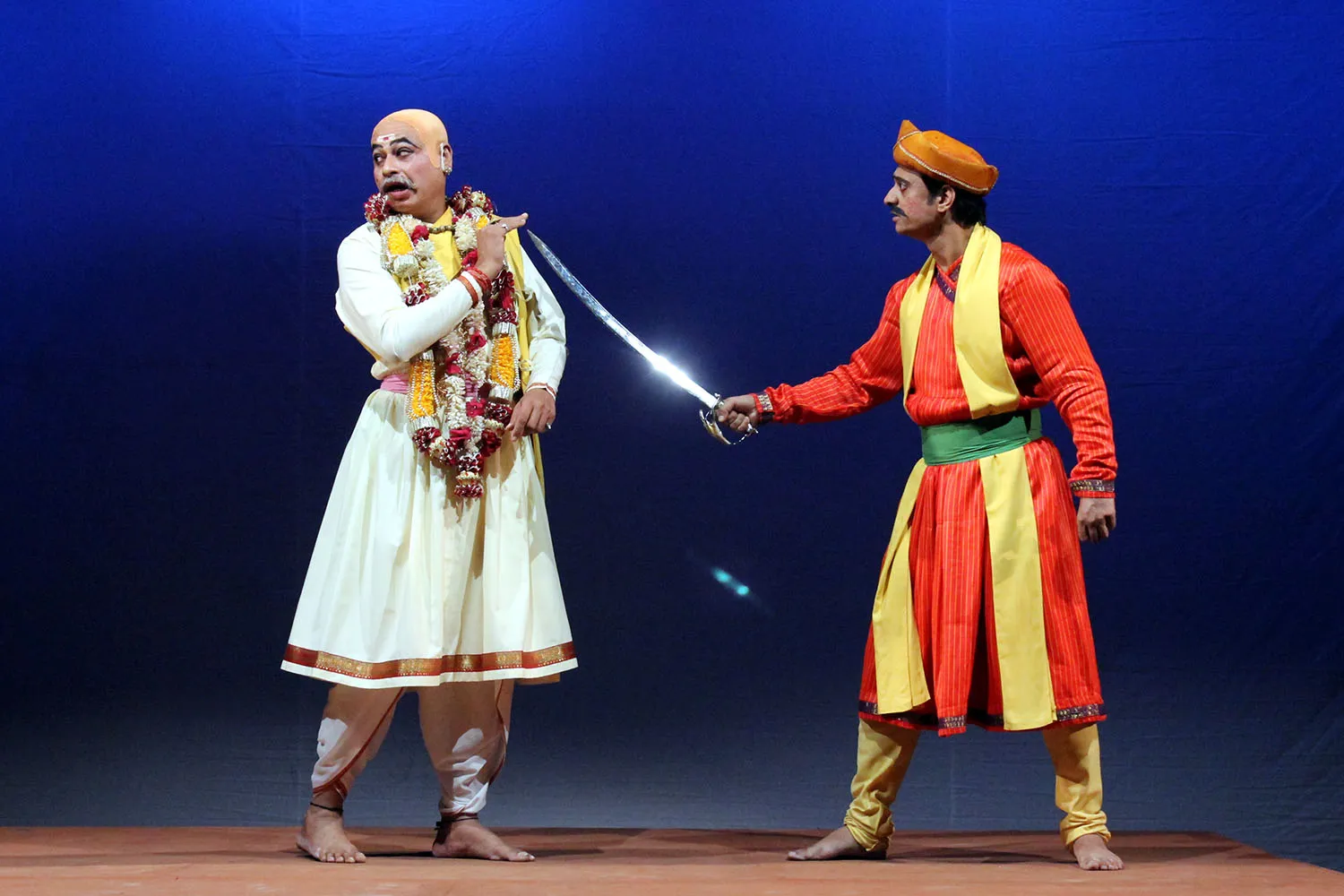
Tamasha divides into two principal forms. The Dholki Bhari (also called Dholaki Fadcha) variety places greater emphasis on dramatic enactment and includes song, dance, and short plays called Vag Natya alongside the standard Lavani segments. The Sangeet Bhari (also called Sangeet Baaricha) variety concentrates on music and dance and does not include a Vag section. Both forms open with the Gan and Gaulan. In the Dholki Bhari format, these are followed by the Vag, a short topical or mythological play. A stock comic character called the Songadya serves as jester, improvising dialogue and building audience rapport throughout the performance. The Sutradhar figure guides the narrative, while the Shahir is the poet-composer and vocalist. Traditional performances are held outdoors on open ground, require no fixed stage, and commence at night following evening rituals. Performances typically last two to three hours.
Central Motifs and Their Significance
Lavani is the defining musical and lyrical centre of Tamasha. Lavani compositions address sensual and romantic themes between women and men, and have historically been written by poets including Ram Joshi, Honaji Bala, Manmathashivalinga, and in the twentieth century by Bashir Momin Kavathekar. There are two main categories of Lavani: Phadachi Lavani performed publicly before heterogeneous audiences, and Baithakichi Lavani performed privately for wealthy patrons. Other recurring thematic motifs include Powada, the heroic ballad form documenting martial histories; the Gavalan or Gaulani sequence depicting Krishna's interactions with milkmaids; and Vag Natya episodes treating mythological narratives, social satire, and in the modern era, issues such as dowry, education, and economic inequality. Acrobatics by female performers are also a conventional component.
Process
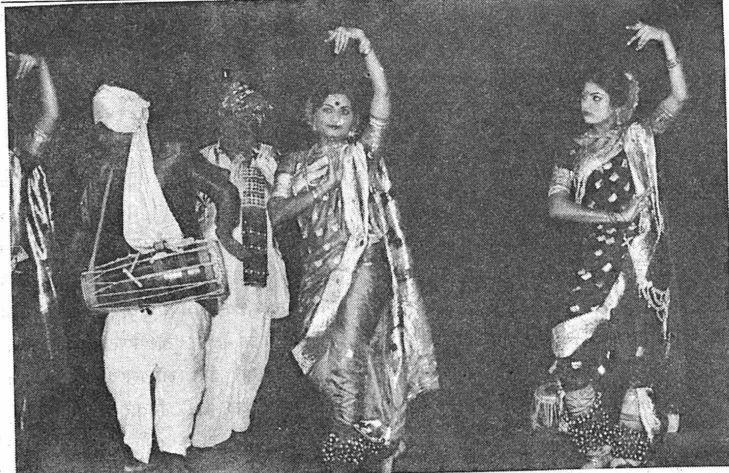
A standard Tamasha performance commences with an offering at the village temple in the morning, followed by a wrestling competition (Kushti) in the evening, and the main performance at night. The Phadkari manages logistics and timing. Musicians enter first, with the percussion establishing the soundscape before the vocal and dance elements begin. The primary percussionists are the Dholkiwala (playing the dholki) and the Halgiwala (playing the halgi). The Gan is sung collectively, followed by the Gaulan. In the Dholki Bhari format, the Vag follows. The Lavani sequence constitutes the central section, during which the female dancer faces the audience and performs the dance while the musicians and vocalists provide rhythmic and melodic accompaniment. The performance ends with a moral or didactic close emphasizing the victory of good over evil.
Mediums Used
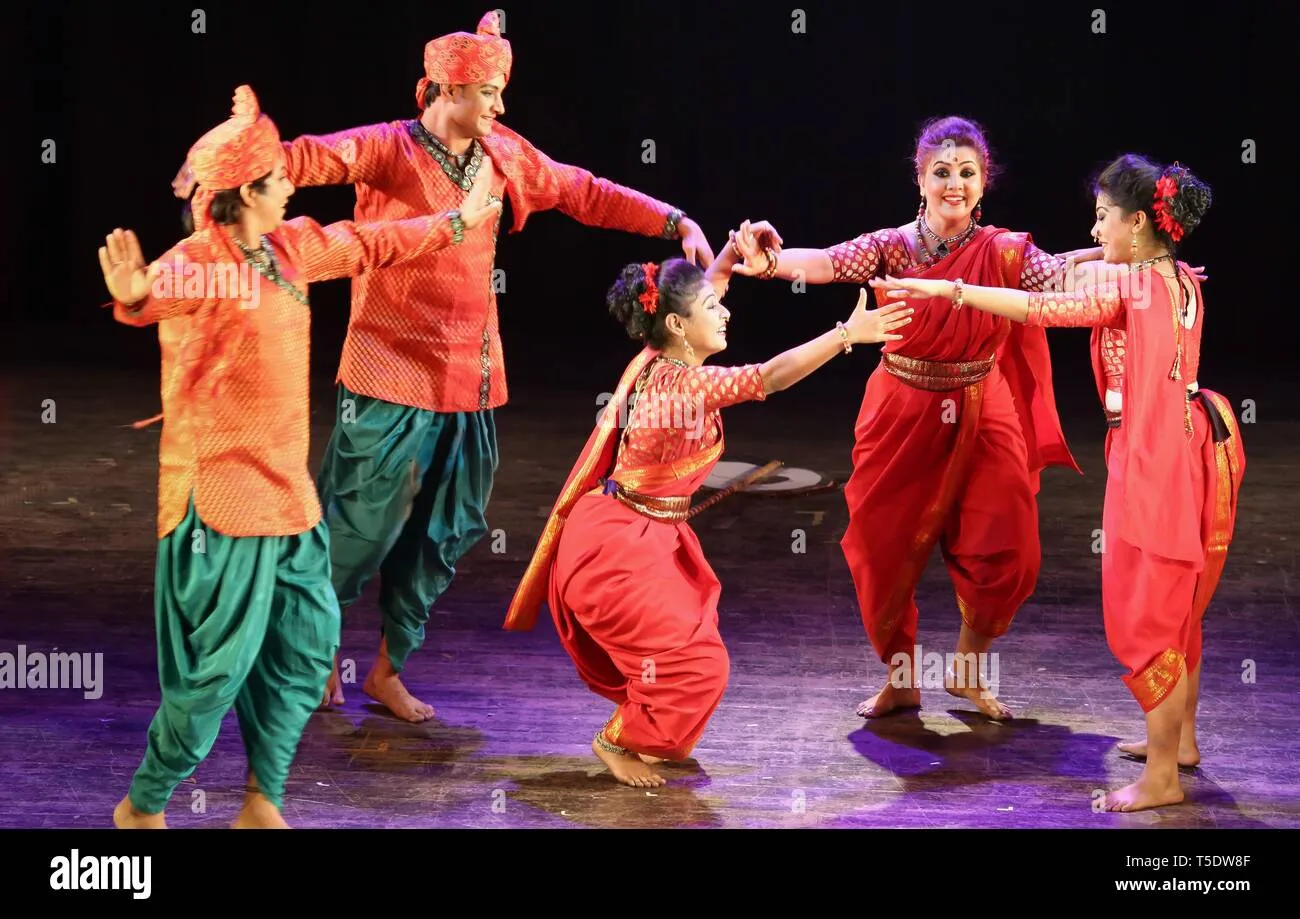
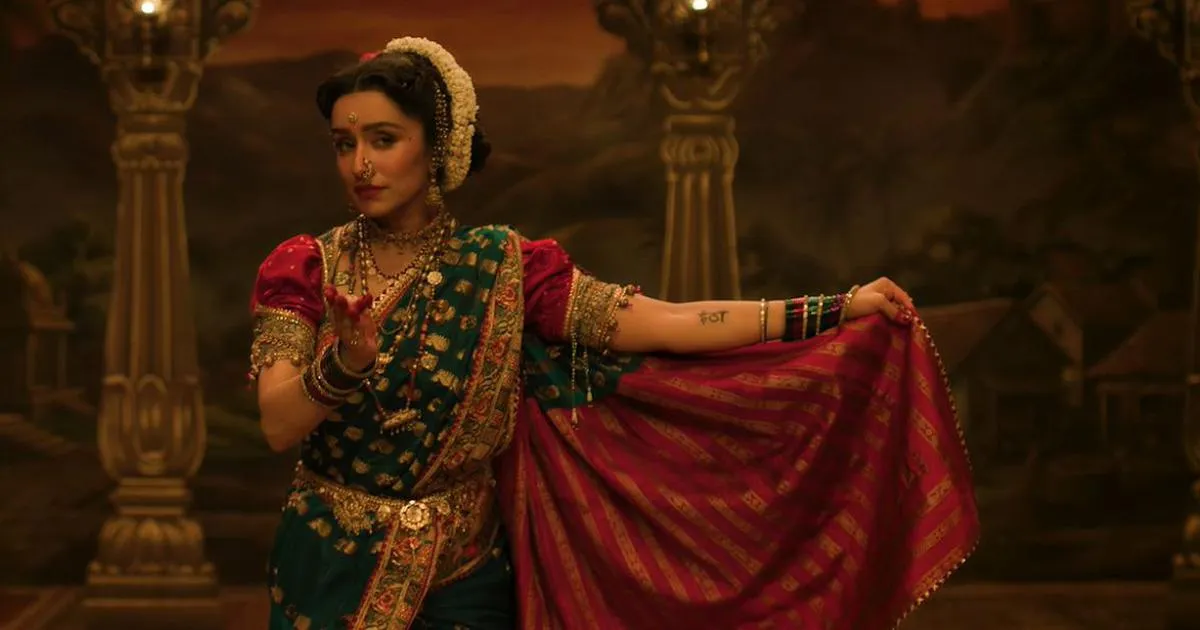
The primary percussion instrument is the dholki, a barrel-shaped double-headed drum whose characteristic slap initiates performances and sets the rhythmic foundation. The halgi is a smaller tambourine-like drum. The tasha is a single-sided drum. The tuntuna (also tumtuna) is a single-stringed drone instrument. The manjeera are small metallic cymbals. The daf is a tambourine with a single leather surface. The kade is a metal triangle. The lejim is a jingle instrument producing rhythmic clatter. The harmonium provides melodic accompaniment. Ghungroos (ankle bells) worn by the dancers emphasize rhythmic footwork. The musical vocabulary of Tamasha incorporates Hindustani ragas including Pilu, Bhairavi, and Yaman alongside indigenous folk melodic systems. Costuming for female performers includes the nine-yard zari-lined Maharashtrian saree (Kachi), a waist belt (kamarpatta), and ornate silver jewelry including large earrings, bangles, and ghungroos.
New Outlook
Contemporary Tamasha faces significant pressures from television, cinema, and digital media, which have steadily reduced rural audiences. As of recent documentation, only eighteen to twenty full-time Tamasha parties operate in Maharashtra, each performing approximately two hundred and ten days annually across districts and some border areas of Karnataka and Gujarat. The COVID-19 pandemic of 2020 severely disrupted the livelihood of Tamasha and Lavani performers who depend on village fairs and festivals. Despite these challenges, Tamasha has achieved cultural rehabilitation through integration into formal Marathi theatre, cinematic representation in films such as Pinjra and Natarang, and government recognition through the Vithabai Narayangaonkar Award. Academic scholarship, including doctoral research such as Tevia Abrams' 1974 dissertation at Michigan State University and peer-reviewed publications in Inter-Asia Cultural Studies, has contributed to the formal documentation of this tradition.
Learn Tamasha
Bibliography
Sources
Abrams, Tevia. Tamasha: People's Theatre of Maharashtra State, India. PhD diss., Michigan State University, 1974.
Bhandare, Sandesh. “Tamasha.” Inter-Asia Cultural Studies, vol. 10, no. 1, 2009, pp. 103–118.
Gargi, Balwant. Folk Theatre of India. University of Washington Press, 1966.
Panda, Aditi. “Tamasha: The Vanishing Folk Art Form of Maharashtra.” Theatre Street Journal, vol. 3, no. 1, 2019, pp. 127–135.
Singh, Lata. “Women Performers as Subjects in Popular Theatres: Tamasha and Nautanki.” History of Sociology of South Asia, vol. 4.
Image Sources
Tamasha.” Alamy, https://www.alamy.com/stock-photo/tamasha-folk-dance.html. Accessed 4 July 2026.
“Tamasha.” Alamy, https://www.alamy.com/stock-photo/tamasha-folk-dance.html. Accessed 4 July 2026.
“Tamasha.” IMPART, https://imp-art.org/articles/tamasha/. Accessed 4 July 2026.
“Tamasha.” Wikimedia Commons, https://commons.wikimedia.org/wiki/File:Tamasha,Konkani_Vishwakosh.png. Accessed 4 July 2026.
“The Long Fade of the Tamasha Tradition in Maharashtra.” Scroll.in, https://scroll.in/reel/1093812/eetha-and-the-long-fade-of-the-tamasha-tradition-in-maharashtra. Accessed 4 July 2026.