

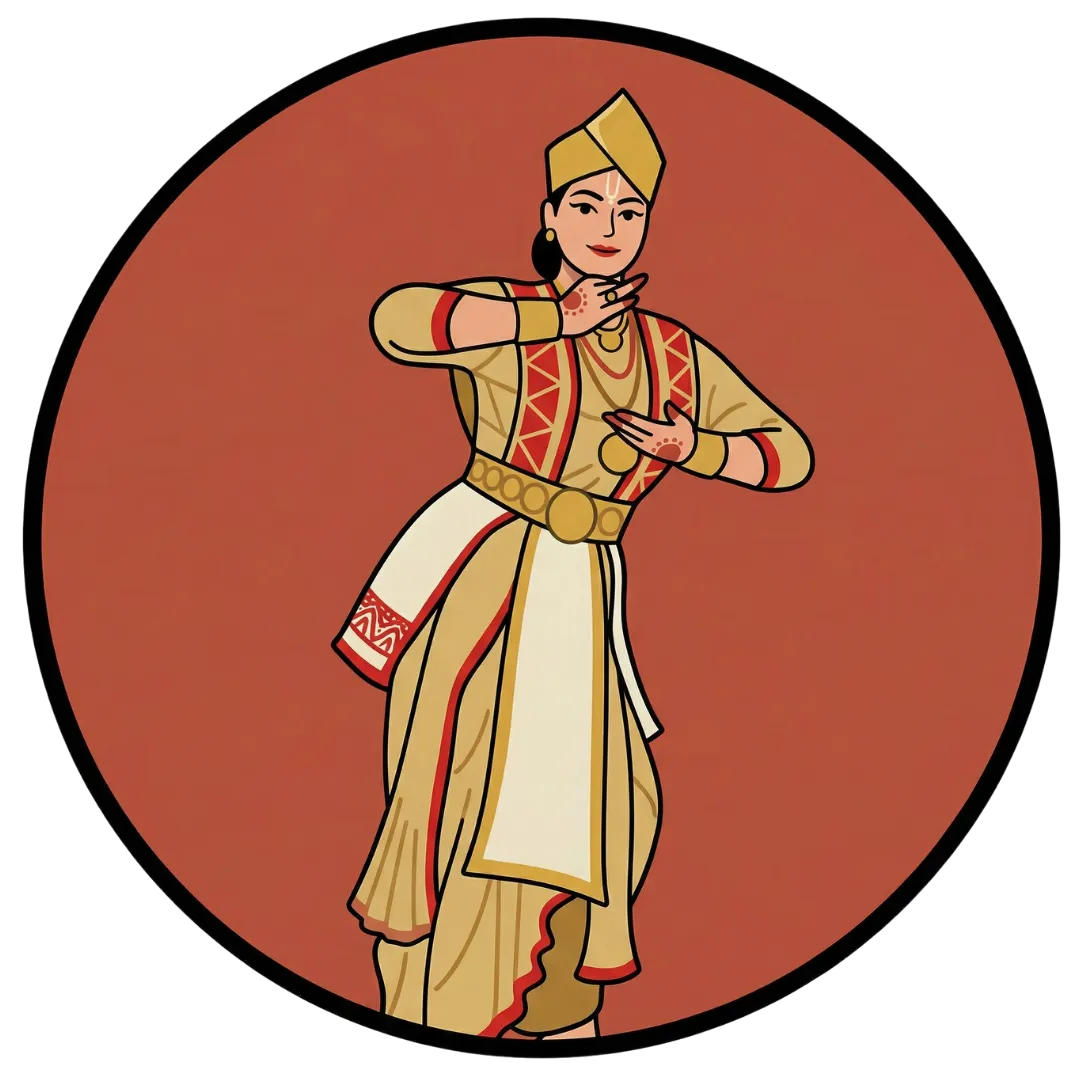
Sattriya - The Classical Dance Form of Assam
Explore Sattriya Nritya, the handicraft tradition of Assam, and learn about its origins, techniques, cultural significance, and artistic heritage.
Introduction
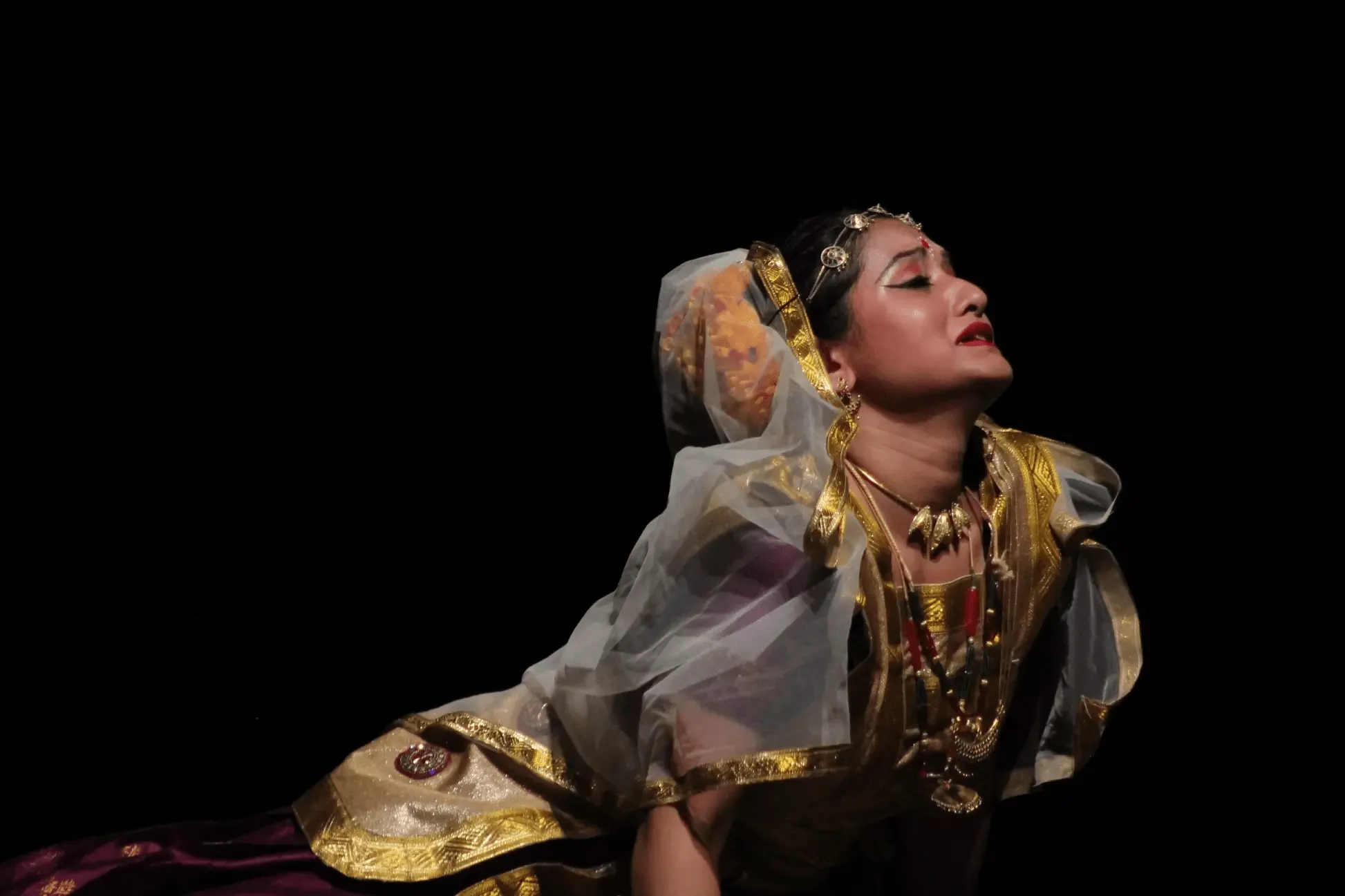
Sattriya, also rendered as Sattriya Nritya, is one of the eight major Indian classical dance forms, recognised by the Sangeet Natak Akademi on 15 November 2000. It originated in fifteenth-century Assam as an integral element of the Bhaona, which are the one-act plays known as Ankiya Nat, composed by the Vaishnava saint-scholar Mahapurusha Srimanta Sankaradeva. The dance tradition was preserved and transmitted for over five centuries within the institutional framework of the Sattra, Vaishnavite monasteries of Assam. Sattriya is a dance-drama genre that incorporates nritta, nritya, and natya, and is characterised by the use of Assamese Pat silk costumes, borgeet (devotional musical compositions), khol drumming, and a codified grammar of hand gestures and body postures.
Etymology The name Sattriya derives directly from the Sattra institution, the Vaishnavite monasteries of Assam where the dance was nurtured, preserved, and transmitted across generations. 'Sattra' refers to the monastic community established as part of the Ekasarana Dharma (also called Mahapurushiya Dharma), the neo-Vaishnavite religious order founded by Sankaradeva. The dance form was known historically by multiple names including Nadu bhangi, Jhumura Naach, Chali-Nach, Behar Nach, and Sutradhari, among others.
Origin Sattriya was instituted in the fifteenth century CE by Mahapurusha Srimanta Sankaradeva (c. 1449–1568), who systematised it as a devotional performance art for the propagation of Ekasarana Dharma. Sankaradeva drew upon ancient texts including the Natya Shastra, integrating elements from folk traditions including Ojapali, Devadasi practices observed during his pilgrimage (including the Mahari devadasi tradition at Jagannath Temple), and regional Assamese dance forms. His principal disciple Mahapurush Madhabdeva further extended the repertoire by composing six Jhumuras (shorter plays depicting the young life of Krishna). According to the Charitaputhi, Sankaradeva was inspired by the Mahari (temple devadasi) art form encountered during his extended pilgrimage across northern and eastern India.
Location Sattriya originated in and remains primarily associated with the Brahmaputra Valley of Assam. The principal Sattra institutions are located across Assam, with significant concentrations in Majuli island, Barpeta, Bardowa, Guwahati, and Nagaon. Following the Sangeet Natak Akademi's 2000 recognition, Sattriya is now taught and performed across India and internationally.
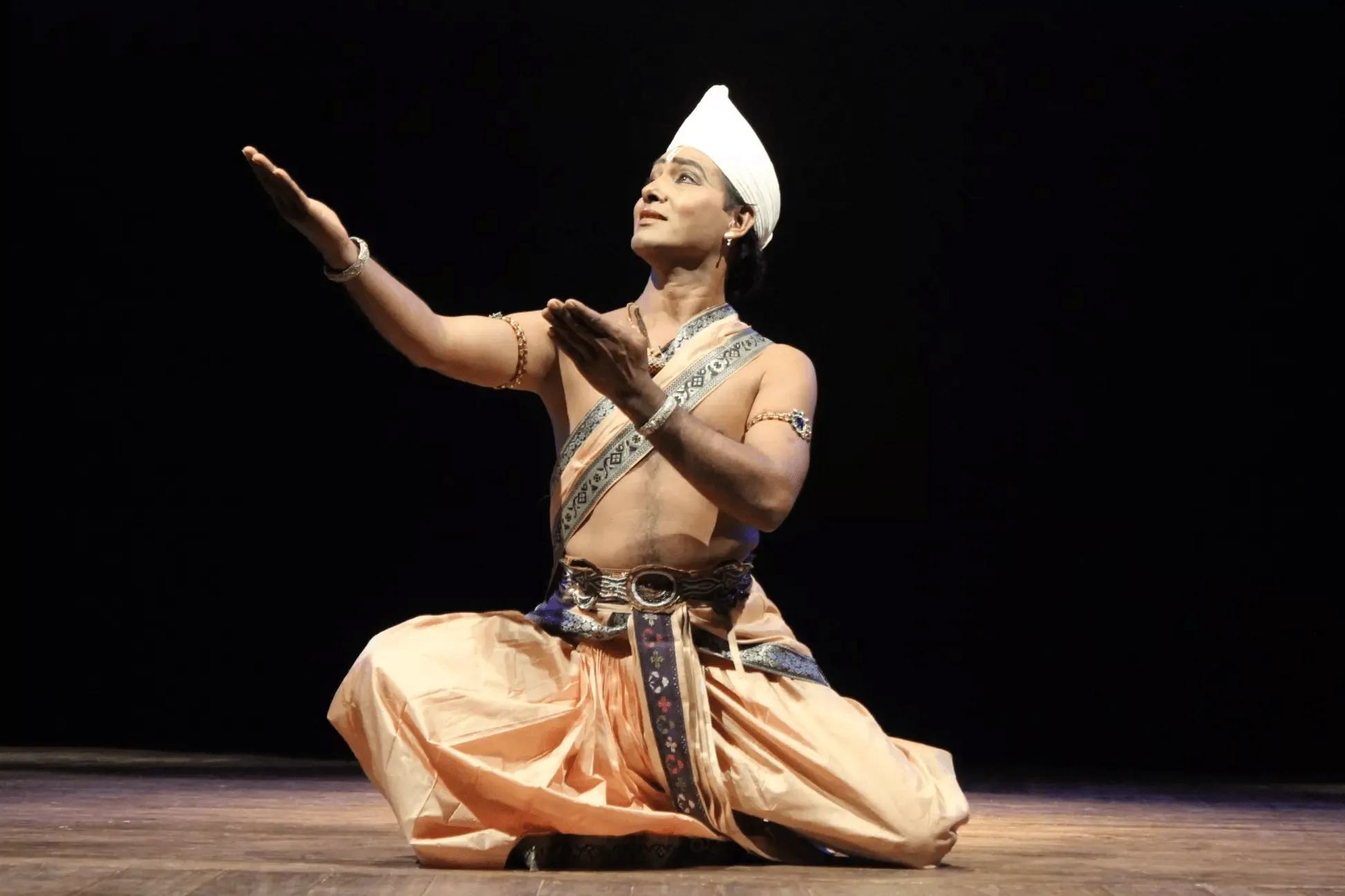
Community Traditionally, Sattriya was performed exclusively by Keuliyabhokots, celibate male monks of the Sattra communities. The dance formed part of the daily worship routine of the monks and was performed during special religious festivals. Monks from diverse caste and tribal backgrounds were accepted into Sattra communities, consistent with Sankaradeva's rejection of caste hierarchy in spiritual practice. In the second half of the twentieth century, the dance moved from the exclusive domain of Sattra monks to include female performers and lay practitioners.
Relevance Classified as High Priority and Thriving. Sattriya received classical recognition from the Sangeet Natak Akademi in 2000, becoming the most recently recognised of the eight classical dance forms. It is included in performing arts curricula across India and has a growing international performance circuit.
History
Background The historical record of dance in Assam extends into antiquity, documented through copper plate inscriptions and sculptures associated with Shaivism and Shaktism. Singing traditions connected to the Ramayana and Mahabharata also appear in Assamese textual records from earlier centuries. The neo-Vaishnavite reform movement led by Sankaradeva in the fifteenth and sixteenth centuries represented a decisive cultural transformation that repositioned devotional performance art within a theologically organised institutional framework.
Sankaradeva, described in scholarship as a polymath encompassing the roles of saint, scholar, poet, playwright, dancer, actor, musician, artist, and social reformer, composed the Ankiya Nat (one-act plays) in the vernacular language Brajawali, a literary idiom combining Assamese and Maithili with intervening Sanskrit verses. These plays were designed for performance in the namghar (community prayer hall) of the Sattra as Bhaona, inclusive devotional theatrical events accessible to audiences from diverse social backgrounds. The cultural historian Kanaklal Baruah, in Axomor Pragoitihaxik Sanskriti (1966), and researcher Maheswar Neog have documented this formation period.
The post-Sankaradeva period saw the development of four major sects within neo-Vaishnavism: Brahma-Samhati, Kal-Samhati, Purusha-Samhati, and Nika-Samhati. Each interpreted Sankaradeva's teachings differently while broadly maintaining the institutional and performative framework of the Sattra. Researchers at ShodhKosh: Journal of Visual and Performing Arts (2024) note that not all dances currently labelled as Sattriya conform to the structural format established by Sankaradeva and Madhabdeva; some are creative elaborations of the style rather than transmissions of the original canon.
In the second half of the twentieth century, Sattriya's transition from Sattra monastic practice to metropolitan stage performance brought both visibility and scholarly scrutiny. The Sangeet Natak Akademi's recognition in 2000 provided institutional legitimacy. Scholars including Lt Sonaram Chutia, Lt Dr Maheswar Neog, Lt Keshav Changkakati, Dr K.D. Goswami, and Jagannath Mahanta have produced research on its history and performance grammar. Narayan Chandra Goswami's Sattriya Nritvar Byakaran (Dibrugarh: Banalata, 2015) and Gopal Chandra Bordoloi's Sattriya Nritvar Tatvik Gyan (Guwahati, 1999) are among the principal scholarly texts in Assamese.
Culture and Societies The Sattra institution remains central to the cultural life of Assam's Vaishnavite communities. In Sattra communities, the daily performance of devotional dance is integrated into monastic worship schedules. The Bhaona (full theatrical performance) continues to be staged at festivals. The Majuli island district of Assam, recognised for its concentration of Sattras, is a UNESCO-designated site of intangible cultural heritage interest. Following the Sangeet Natak Akademi recognition, government institutions including Assam's cultural departments and universities have established Sattriya training programmes.
Leading female exponents of the contemporary period include Indira PP Bora (Padma Shri 2020, Sangeet Natak Akademi Award 1996), Anita Sharma (Sangeet Natak Akademi Award 2014), and Jollymoni Saikia (Akademi Puraskar 2020). Dipjyoti Das and Dipankar Arandhara received the Akademi Puraskar in 2021 for work on contemporary Sattriya. These awards reflect the broadening of practitioner representation beyond the historically exclusive male monastic domain.
Religious Significance Sattriya is fundamentally a religious performance art. Its entire corpus was developed as a vehicle for the propagation of Ekasarana Dharma and the devotional ideal of Bhakti toward Lord Krishna (and more broadly Vishnu and his avatars). The plays enacted in Sattriya are drawn from the Bhagavata Purana, the Mahabharata, and the Ramayana, with a central focus on the Dasavatara (ten incarnations of Vishnu) and the activities of Krishna in his youth (Baal Leela) and heroic deeds.
A notable theological distinction in Sattriya is the absence of the character of Radha from the performance repertoire. Sankaradeva's religious philosophy, rooted in Vedanta, the Bhagavadgita, and the Bhagavata Purana, did not centre on the Radha-Krishna romantic tradition that became prominent in some other Vaishnavite streams. This contrasts with Kuchipudi, Manipuri, and Odissi, where Radha figures centrally. The act of performance itself constitutes a form of worship. In the Sattra context, the dancer's movements and the musician's sounds are understood as offerings to the divine, not merely as aesthetic acts. The khol drum has a particular sacred status in Assamese Vaishnavism.
Understanding the Art
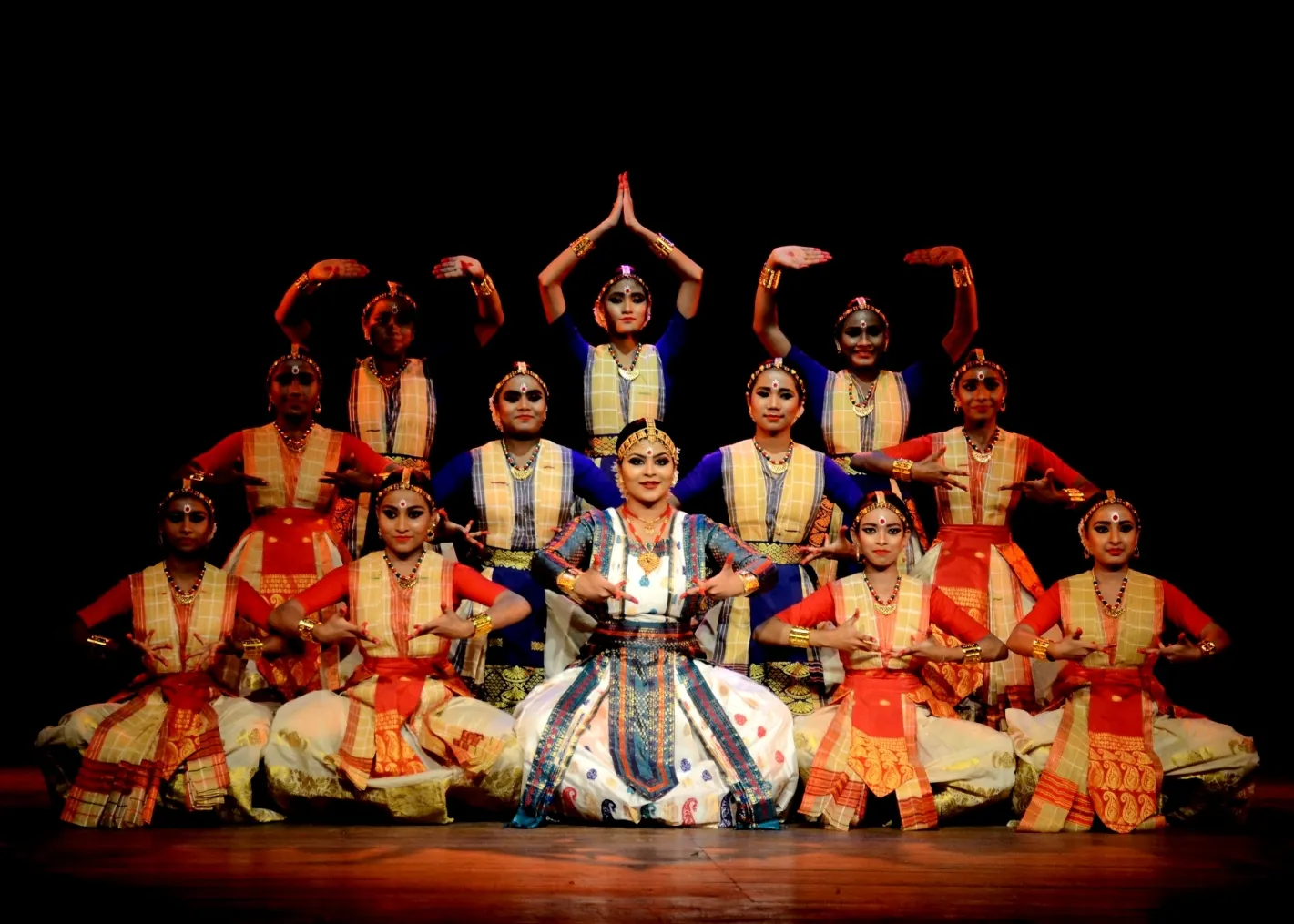
Style Sattriya is characterised by a codified movement grammar structured around 64 Mati Akhara (foundational movement units), equivalent to the 64 elements described in the Natya Shastra. These are organised into sub-categories: Ora, Saata, Jhalak, Sitika, Pak, Jap, Lon, and Khar. The foundational stance differs by gender: Purush Pak for male dancers involves a more erect, symmetrical posture; Prakriti Pak for female dancers involves a slightly more curved, asymmetrical posture.
Two performance styles exist: Paurashik Bhangi (masculine), characterised by more energetic gestures, jumps, and expansive movements; and Stri Bhangi (feminine, Lasya), characterised by delicate, poised, and measured movements. Both styles are recognised within a single performance tradition, distinguishing Sattriya from forms that primarily emphasise one stylistic mode.
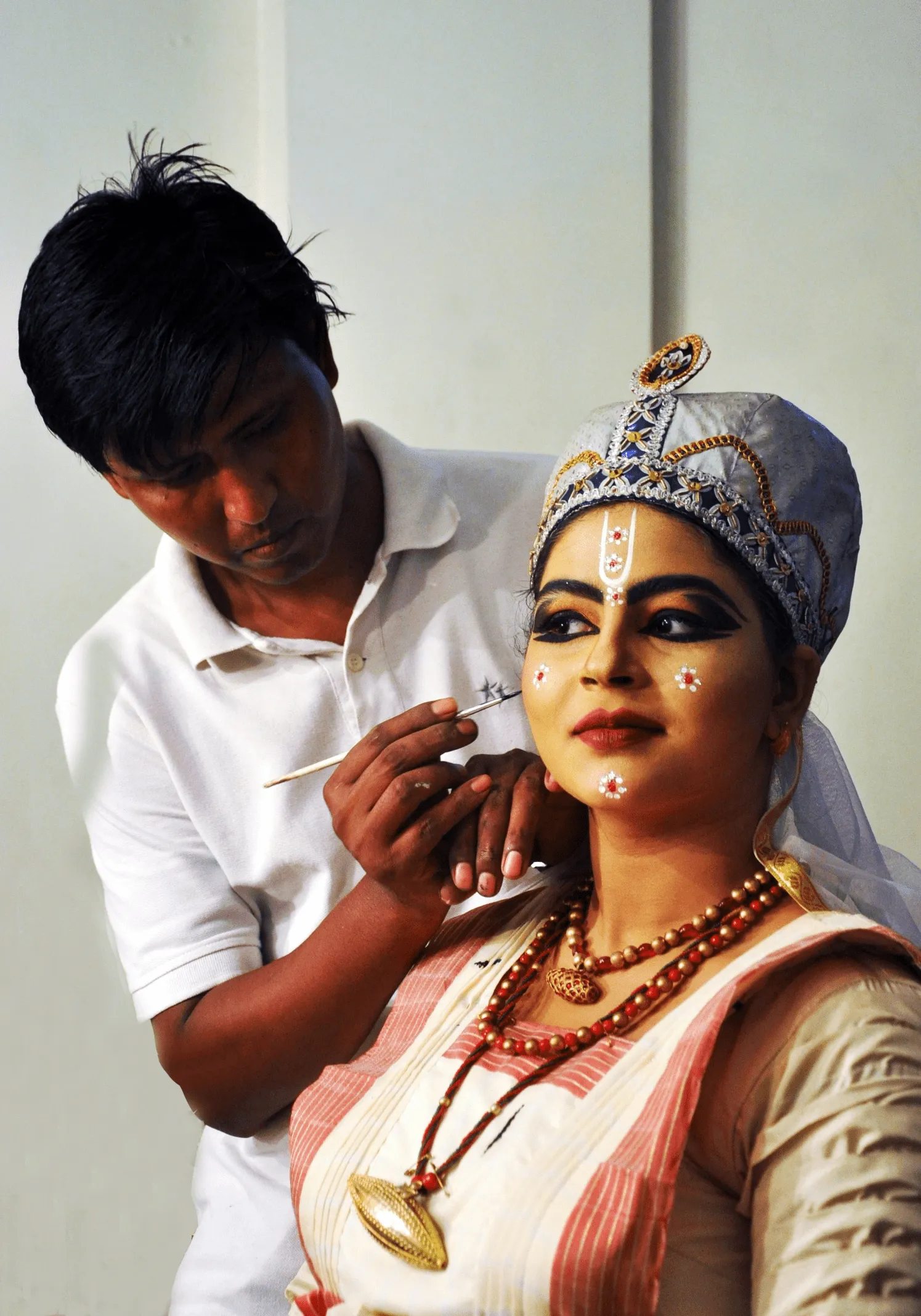
Facial expression (abhinaya) in Sattriya is rooted in the Indian classical aesthetic treatises Natyasastra, Abhinaya Darpana, and Srihastamuktavali, while also incorporating indigenous cultural expressions unique to Assam. The art of mask-making (Mukha) for depicting demons and special characters in Ankiya Naat dramas is an integral associated craft, originating in the Sattra communities.
Central Motifs and Their Significance Sattriya performance themes are drawn from Krishna's life, Rama's narrative, and the broader Vaishnava mythological corpus. Specific named compositions include Krishna Nritya (depicting Krishna's activities), Nadubhangi Nritya, Gopi Pravesh (entrance of the Gopis), Gosain Pravesh, Sutradhara (narrator character), and the Jhumura compositions of Madhabdeva. Compositions called borgeet, authored by Sankaradeva and Madhabdeva, form the musical foundation of Sattriya performance; they are set to classical ragas and performed with khol accompaniment.
Process Traditional Sattriya training follows the gurukula system within the Sattra monastic framework, with younger monks learning from senior practitioners through daily practice integrated into the monastic routine. Contemporary institutional training follows structured curricula, though the Sattra transmission model remains active in Assam. The Sangeet Natak Akademi and Assam's state cultural institutions have invested in documentation and training support.
Mediums Used Sattriya performance uses Assamese Pat (mulberry silk) for costumes, woven with traditional Assamese motifs. Male costume comprises dhoti, chadar (shawl), and paguri (turban); female costume comprises ghuri, chadar, and kanchi (waist cloth). Traditional colours are white or raw silk with red, blue, and yellow for specific compositions. Jewellery follows traditional Assamese design: Kopali (forehead ornament), Muthi Kharu and Gam Kharu (bracelets), Mata Moni (for male dancers), and various neckpieces including Golpata, Dhulbiri, Bena, Jethipata, Dugdugi, Senpata, Dhansira, and Lokaparo.
The primary musical instrument is the khol, a two-faced asymmetrical drum distinctive to Assam, played with fingers. Cymbals (taal, manjira, bhortal, bihutal, patital, khutital), flute (bansuri), and, in modern performances, violin and harmonium, are used. Borgeet compositions provide the vocal and melodic text for performance.
New Outlook
Since the Sangeet Natak Akademi's 2000 recognition, Sattriya has moved rapidly from regional to national to international performance circuits. Contemporary practitioners are performing on stages in Europe, North America, and Southeast Asia. Scholars are investigating its performance grammar through academic frameworks, with Assamese universities and national institutions commissioning documentation projects. Some choreographers are exploring non-mythological themes while retaining Sattriya's technical grammar, a development that has provoked debate about the boundaries of the classical tradition. The movement grammar's strict codification, maintained through centuries of monastic practice, is viewed as both a resource for revival and a constraint on creative expansion.
Learn Sattriya Nritya
Bibliography
Sources
Baruah, Kanaklal. “Axomor Pragoitihaxik Sanskriti.” Axomiya Sanskriti, edited by Hari Prasad Neog and Leela Gogoi, Jorhat, 1966.
Bordoloi, Gopal Chandra. Sattriya Nritvar Tatvik Gyan. Baby Bordoloi, 1999.
Bordoloi, Mowsume, and Sikhamoni Gohain Baruah Hazarika. “The Ahom King and Neo Vaishnavism.” Neo Vaishnavite Sattras of Assam in 21st Century, 2013.
Goswami, Narayan Chandra. Sattriya Nritvar Byakaran. Banalata, 2015.
Goswami, Tridip Kr., and Prahelika Koushik. “Ankiya Bhaona of Sankardeva and Madhabdeva Performed in the Sattra Institution of Assam.” Neo Vaishnavite Sattras of Assam in 21st Century, UGC, NERO, 2013.
Image Sources
“Sattriya Dance: History, Origin, and Features.” Superprof, https://www.superprof.co.in/blog/sattriya-dance-history/. Accessed on May 04, 2026.