
Sambalpuri - The Folk Dance Tradition of Odisha
An exploration of the Sambalpuri Dance, one of Odisha's most celebrated folk dance traditions.
Introduction
Sambalpuri dance is an umbrella designation for the ensemble of folk dance forms originating from the western districts of Odisha, India, rooted in the cultural traditions of the Sambalpuri-speaking communities of the Koshal region. These districts include Bargarh, Jharsuguda, Sambalpur, Sundergarh, Deogarh, Bolangir, Sonepur, Kalahandi, Nuapada, Boudh, and Athmallik. Sambalpuri dance encompasses multiple distinct forms including Dalkhai, Rasarkeli, Jaiphula, Maleshree, Chutkuchuta, Nachnia, Maelajhara, and others. Each form has its own performance context, community association, and musical character, yet all share the foundational acoustic identity of the Dulduli music ensemble (dhol, nisan, tasha, jhanj, and muhuri) and the visual identity of Sambalpuri ikat textiles worn by performers.
Etymology
The term Sambalpuri refers to the cultural and linguistic region centered on Sambalpur, the historic city of western Odisha. The name Sambalpur is documented as being derived from the presiding deity of the region, Maa Samaleswari, whose temple is in Sambalpur. The cultural identity of this region is distinct from coastal Odisha and has been shaped over centuries by the coexistence of tribal communities (Adivasis) and settled agrarian populations speaking the Sambalpuri or Kosli language. Sambalpuri dance forms collectively embody this cultural hybridity.
Origin
Location: Western districts of Odisha: Sambalpur, Bargarh, Bolangir, Sonepur, Jharsuguda, and surrounding areas Community: Multiple tribal and non-tribal communities of western Odisha; principal tribal communities include Binjhal, Mirdha, Kondh, Gond, and Kharia Relevance: Western Odisha's primary cultural identity marker; associated with the Sambalpuri handloom textile tradition and regional festivals
History
Background
Sambalpuri dance forms are rooted in the longstanding coexistence of tribal and agrarian folk communities in western Odisha. The Koshal region, of which Sambalpur is the cultural center, has maintained a distinct cultural identity from the coastal districts of Odisha for centuries. Scholarly documentation by Sahoo (2018) in the Journal of South Asian Studies notes that Sambalpuri dance reflects rural identity in western Odisha. The historian Gangadhar Meher (1862 to 1924), born in Barpali in the undivided Sambalpur district, is remembered for his literary contributions to Sambalpuri cultural articulation. Bhima Bhoi (nineteenth century), a saint, poet, and social reformer from Odisha, is associated with the broader tradition of devotional music that intersects with Sambalpuri performance culture.
The acoustic instruments of western Odisha's folk music are documented as possessing a rarity and distinctiveness that gives them a special status in the broader Indian folk music landscape. These instruments form the basis of the Dulduli music ensemble, which is the defining instrumental character of Sambalpuri dance performances across all forms.
Culture and Societies
Sambalpuri dance forms are connected to specific communal functions or to the worship of deities, maintaining a close relationship between performance and social or ritual life. Community dances are organized for festivals, harvests, marriages, and deity worship across the Koshal region. The Nuakhai festival, western Odisha's primary harvest celebration dedicated to Maa Samaleswari, is among the most important occasions for Sambalpuri dance. Dalkhai and Karma dances are performed at Nuakhai. The Dhanu Jatra (Dhanu Yatra) of Bargarh is documented as the world's largest open-air theatrical performance and is associated with Krishna and Kansa narratives. The Sambalpur Lok Mahotsav is a dedicated folk and tribal cultural festival celebrating Sambalpuri heritage.
Religious Significance
Sambalpuri dance forms carry documented religious significance through their connection to deity worship. Dalkhai is performed in devotion to Dalkhai Devi, a manifestation of Goddess Durga. Karma (also called Karam) is performed in honor of Karamsani Devi or Karam Devta, the deity of fate, who is believed to bestow children and good crops. Rasarkeli and other forms are associated with Krishna and Radha devotional themes. Nuakhai, the primary festival context for Sambalpuri dance, is dedicated to Maa Samaleswari. The Alekh sect musicians of the region use specific instruments during Bhajan and Kirtan in Mahima Gadi religious contexts. Performance is thus embedded in a broad network of community religious observance.
Understanding the Art
Style
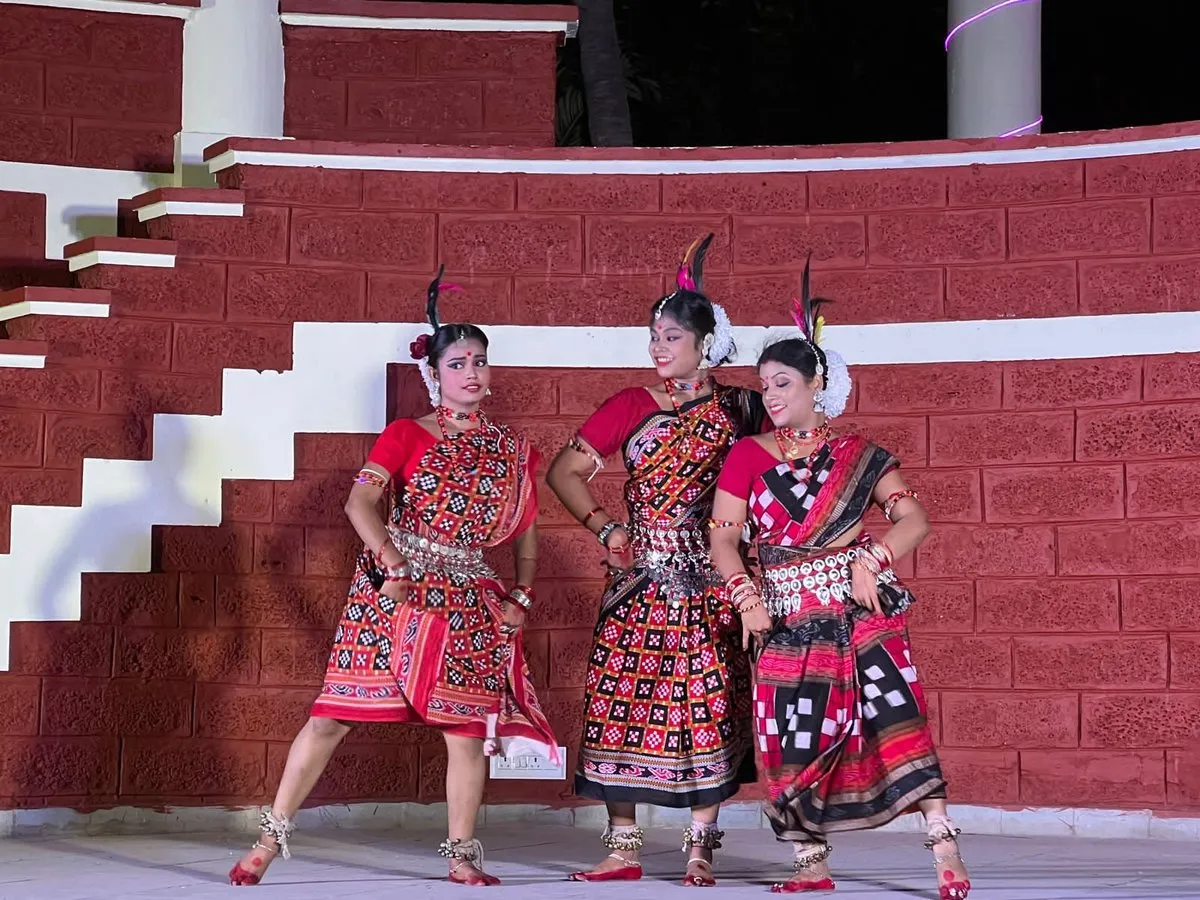
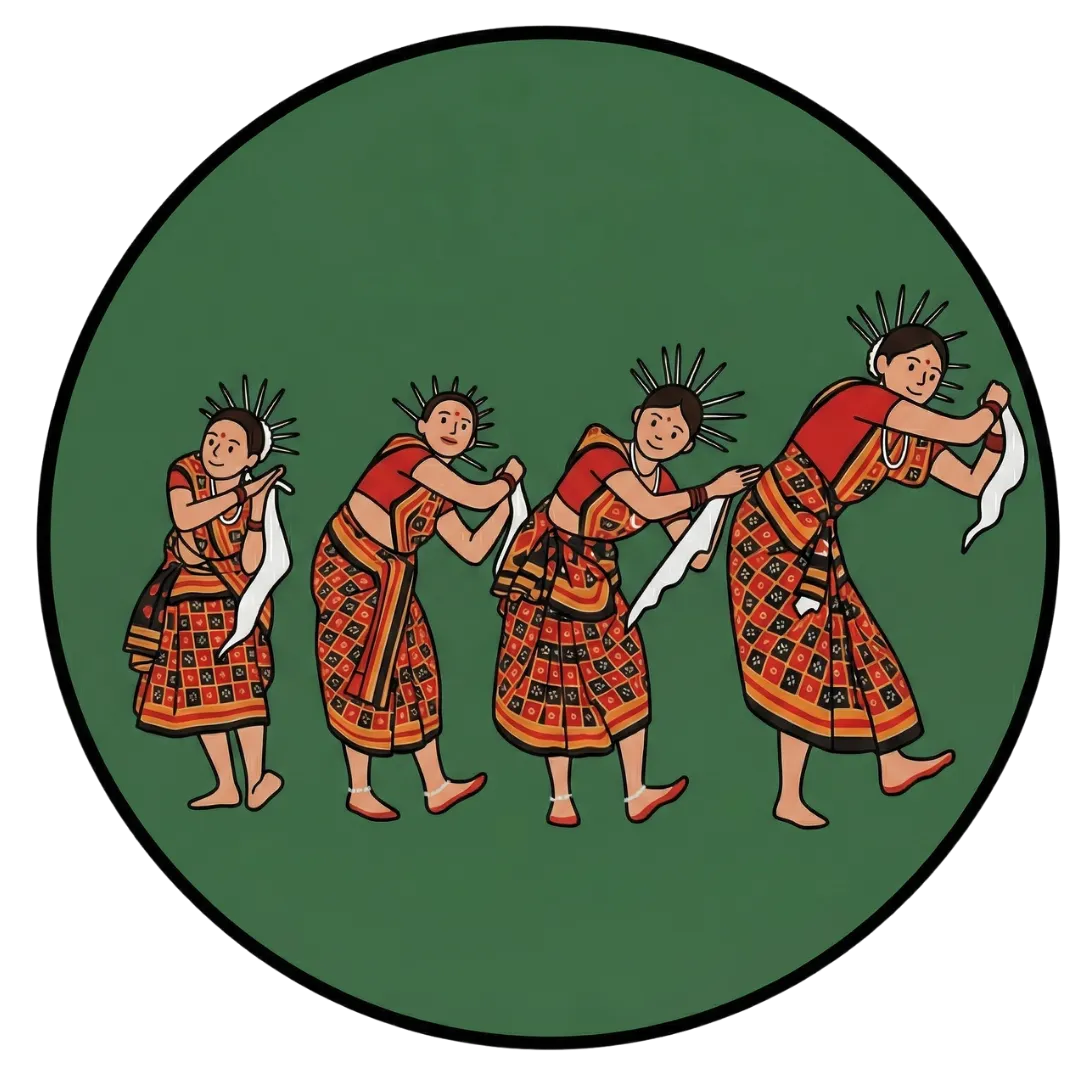
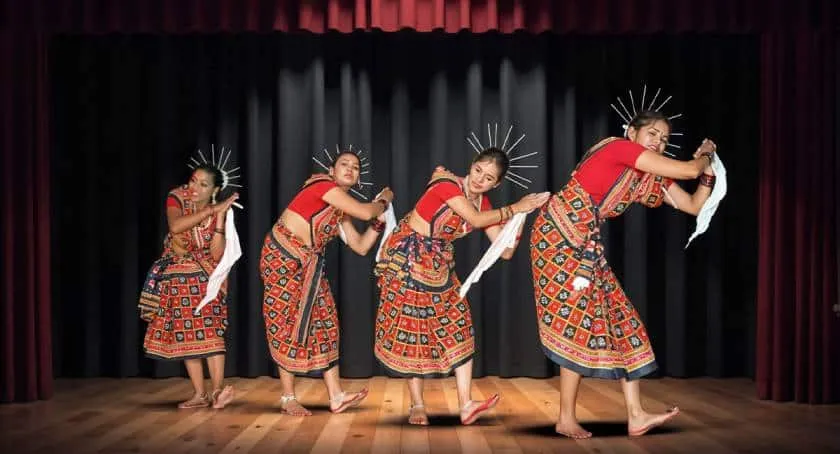
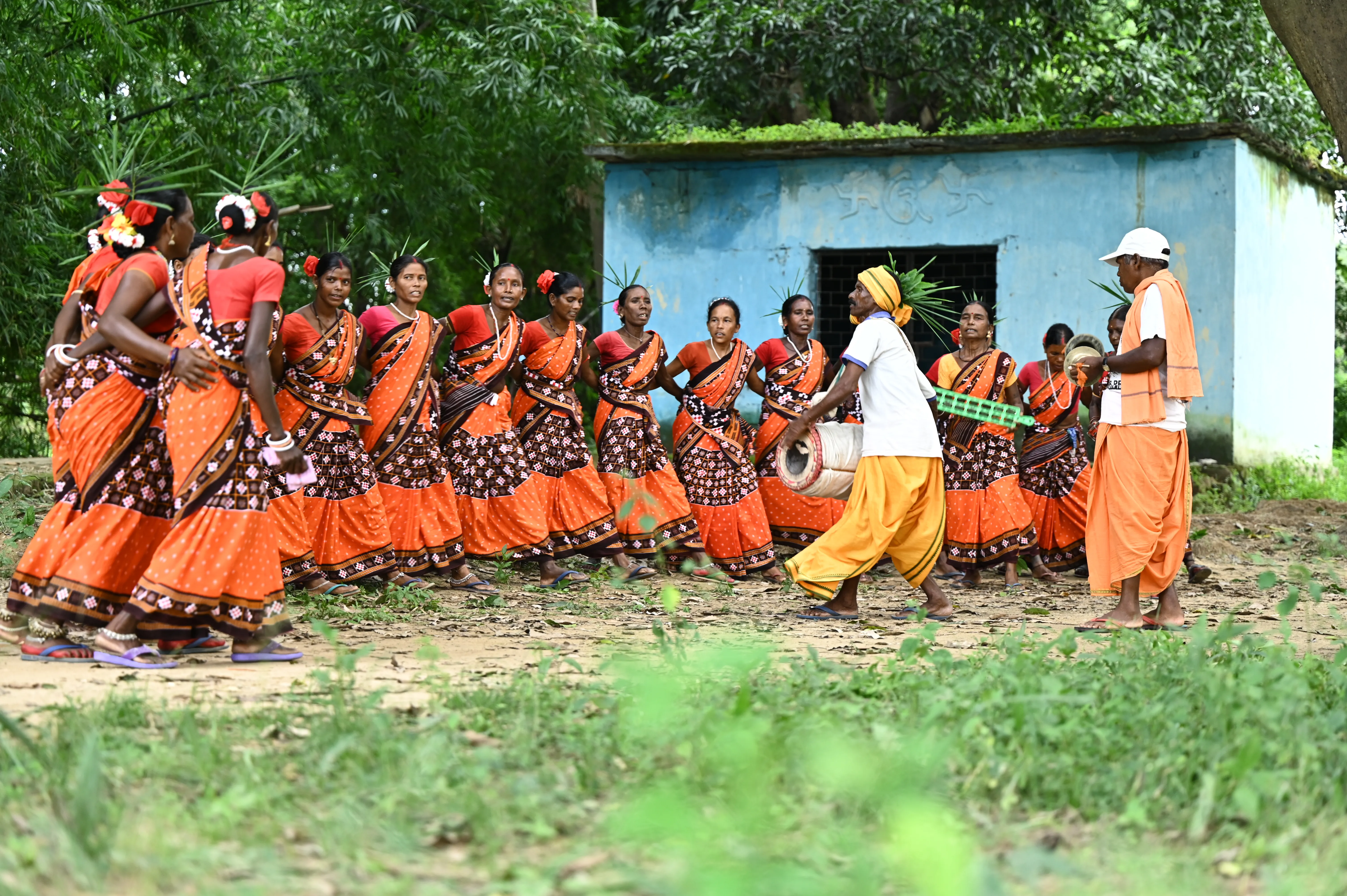
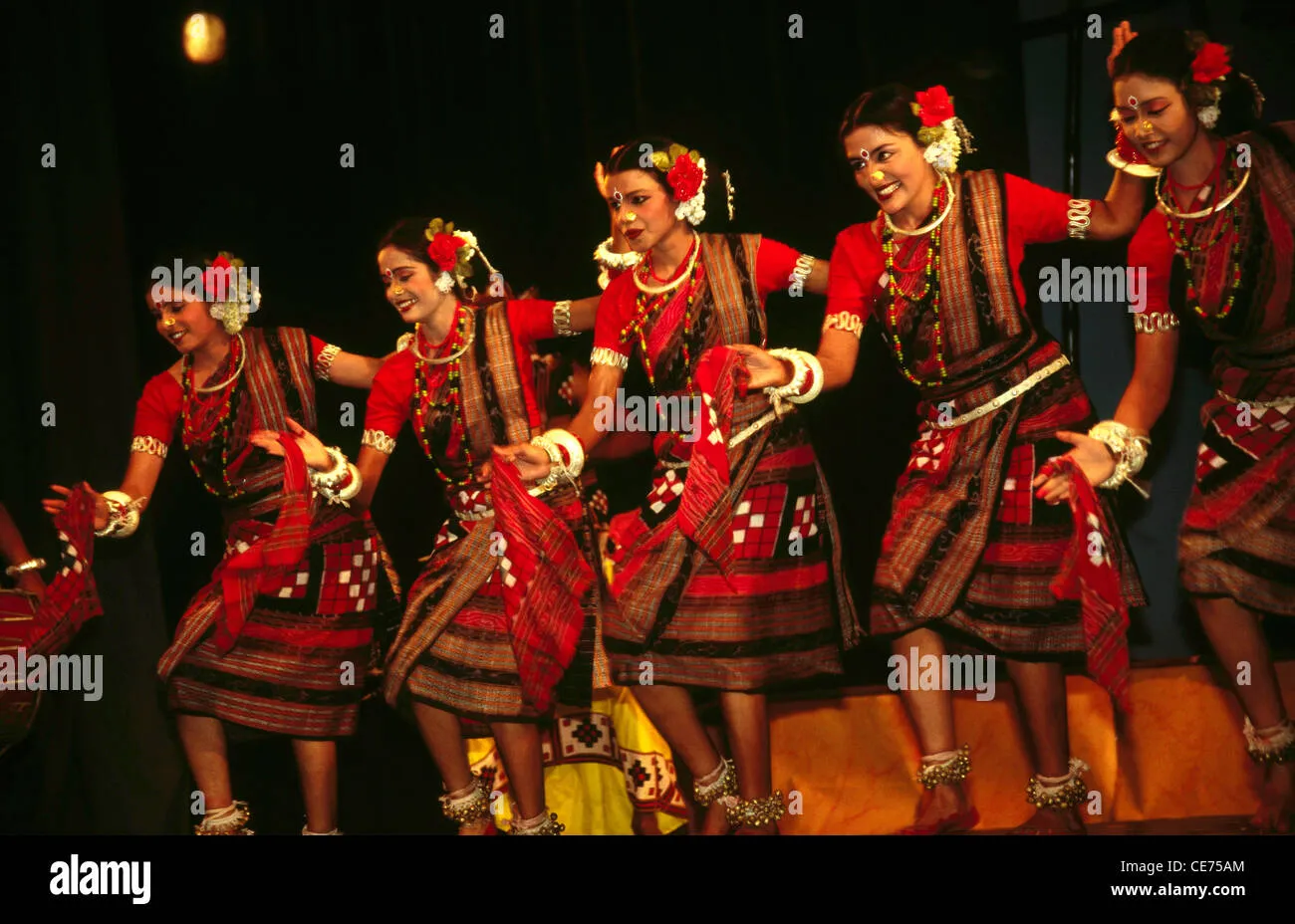
The various Sambalpuri dance forms share certain common stylistic features while differing in detail. Female performers typically stand in lines or semi-circular formations, with movements emphasizing rhythmic footwork, knee bends, and fluid upper body engagement. The Dalkhai form involves the characteristic kneeling movements and clockwise-counterclockwise formations described separately. The Nachnia form, considered one of the oldest Sambalpuri folk dance forms, is performed by male dancers and is associated with marriage ceremonies. Jaiphula and Rasarkeli are love-themed dances performed in a playful, flirtatious manner. Karma dance begins with two rows of entering dancers and proceeds through rhythmic stepping. Instrumentation controls all tempos. Women performers generally wear Sambalpuri sarees in ikat patterns with silver ornaments.
Central Motifs and Their Significance
The central thematic motifs of Sambalpuri dance include agrarian celebration, seasonal change, romantic love (particularly the Radha-Krishna narrative), deity worship, and communal solidarity. The Daldhai is addressed to the goddess; Karma addresses the deity of fate; Rasarkeli depicts romantic courtship. The music of Sambalpuri performance incorporates specific folk ragas and rhythmic patterns rooted in the Sambalpuri language's prosodic traditions. The Nachnia songs follow a narrative structure, beginning slowly and accelerating, with the Kaharba rhythm pattern of eight matras.
Process
Sambalpuri dance forms are primarily transmitted through community practice and family tradition rather than formal institutional training. Young women learn from older women within the community during festival preparations. Performances take place outdoors in village settings, festival grounds, and increasingly on formal stages. Each dance form has its specific seasonal and ritual context that determines when it is appropriately performed. Instruments are played by male community members who accompany female performers.
Mediums Used
The Dulduli ensemble comprising the Dhol (primary rhythm instrument), Nisan (bass), Tasha (treble), Jhanj (cymbal), Dandua Dhol (drama-specific drum), Mandal (slower-rhythm drum of fired clay), and Muhuri (principal melodic wind instrument) forms the core acoustic ensemble of Sambalpuri folk performance. The Muhuri, similar to a shehnai, is the leading melodic instrument in the tradition. The Baensi (flute) provides additional melodic character. Costumes across all Sambalpuri forms emphasize the ikat-woven Sambalpuri saree, with silver jewelry including katria, bandriya, and bahati ornaments.
New Outlook
Sambalpuri dance has achieved substantial national and international recognition alongside the Sambalpuri handloom textile tradition. Dance troupes regularly represent Odisha at national cultural events and international folk festivals. Social media has significantly expanded the reach of Sambalpuri music and dance, particularly through Sambalpuri music videos. Cultural organizations and institutions offer training programs to preserve the tradition for younger generations. Scholarly documentation, including the 2024 paper by Nath and Mishra in ShodhKosh: Journal of Visual and Performing Arts, has contributed to formal academic recognition.
Learn Sambalpuri Dance
Bibliography
Sources
Behera, J. K. Tribal and Traditional Form Dances of India. Report submitted to Centre for Cultural Resources and Training, 2016.
Dash, Padma Lochan. “Celebration of Life: Folk Songs and Dances.” West Odisha: Past and Present, edited by Giridhari Prasad Guru, Western Odisha Development Council, 2019.
Nath, Nibedita, and Supritee Mishra. “An Exploratory Study on Sambalpuri Dance and Music.” ShodhKosh: Journal of Visual and Performing Arts, vol. 5, no. 4, 2024, pp. 183–195.
Nayak, Dwariaknath. “The Folk Songs of Western Odisha.” Identity of Western Odisha, edited by D. K. Behera, Sambalpur University, 2020.
Sahoo, R. “Sambalpuri Dance and Rural Identity in Western Odisha.” Journal of South Asian Studies, 2018.
Image Sources
“Odisha's Traditional Sambalpuri Folk Dance Performing by Local Tribal People, the Culture of Odisha State.” Wikimedia Commons, https://commons.wikimedia.org/wiki/File:Odisha%27s_traditional_Sambalpuri_folk_dance_performing_by_local_tribal_people,_the_culture_of_Odisha_state.jpg. Accessed 4 July 2026.
“Sambalpuri Dance.” Bunkar Valley, https://www.bunkarvalley.com/sambalpuri-dance/. Accessed 4 July 2026.
“Sambalpuri Dance by Sushree Baral.” Wikimedia Commons, https://commons.wikimedia.org/wiki/File:Sambalpuri_dance_by_Sushree_Baral.jpg. Accessed 4 July 2026.
“Sambalpuri Dance Forms.” Wikimedia Commons, https://commons.wikimedia.org/wiki/Category:Sambalpuri_dance_forms. Accessed 4 July 2026.
“Sambalpuri Folk Dance.” Alamy, https://www.alamy.com/stock-photo/folk-dance-sambalpur-orissa.html. Accessed 4 July 2026.