


Pipli Applique - The Handicraft Tradition of Odisha
Explore Pipli Applique, the handicraft tradition of Odisha, and learn about its origins, techniques, cultural significance, and artistic heritage.
Introduction
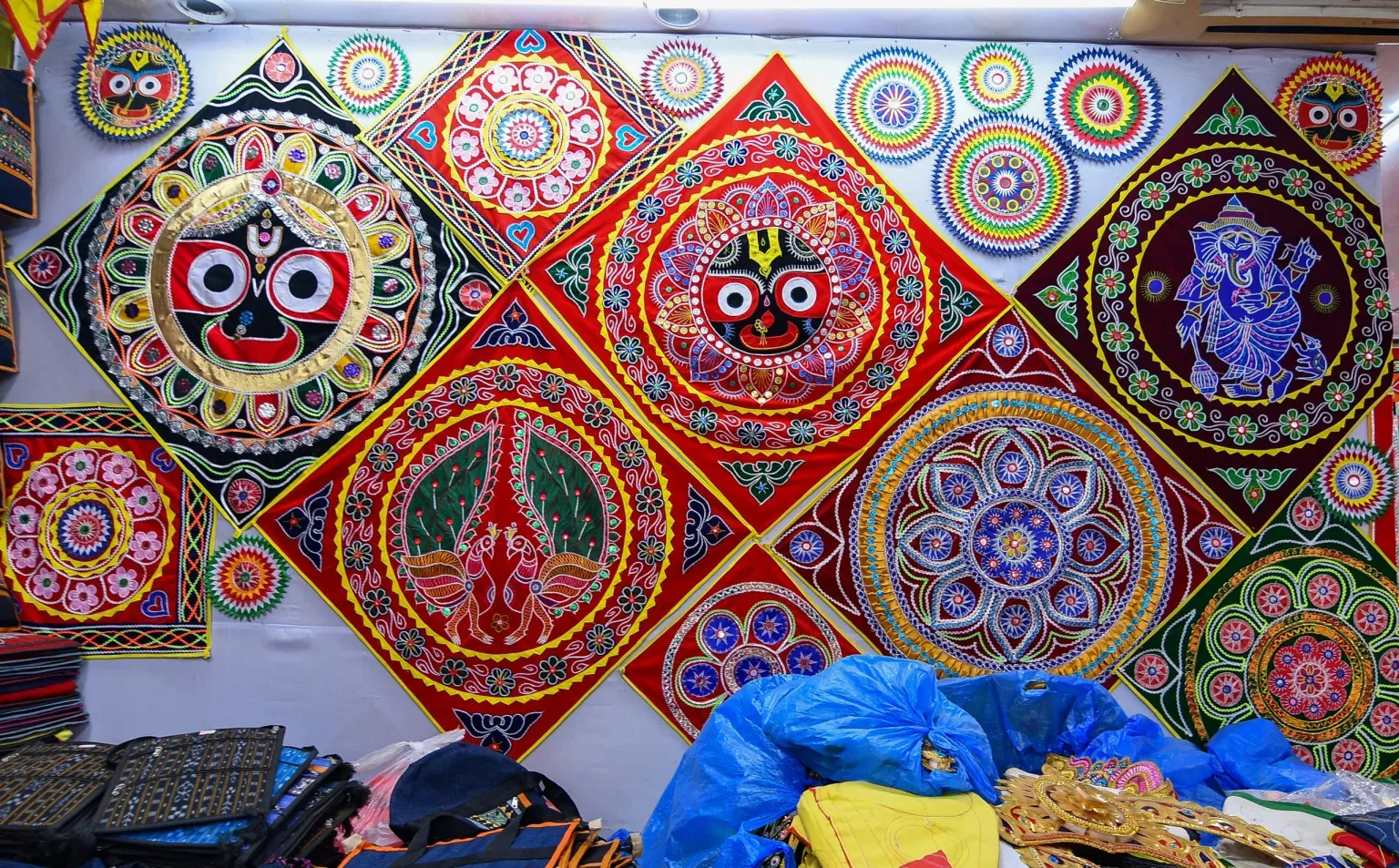
Pipli Applique is a craft of textile applique work produced in Pipli, a town in Puri district, Odisha. The craft involves cutting shapes from coloured fabric and stitching them onto a base cloth to create decorative patterns, traditionally used to make the large hanging decorations (chandua) and canopies used in the Jagannath Temple processions at Puri. Pipli Applique holds GI tag status as a registered handicraft of India. The craft has its origins in the requirements of the Jagannath Temple's Rath Yatra (Chariot Festival) and other temple ceremonial occasions.
Etymology Pipli Applique is named after Pipli town, its primary centre of production. Applique work refers to the technique of attaching cut fabric pieces to a ground fabric, from the French appliquer meaning to apply. The local term for the craft in Odia is chandua work or tarakasi, referencing the decorative canopies that were the original products.
Origin The craft originated in connection with the requirements of the Jagannath Temple at Puri for large decorative applique canopies and hangings used in the Rath Yatra and other ceremonial contexts. The Pipli Handicraft documentation on the official handicrafts.nic.in portal and the Purihandicraft.com history place the origin of the craft within the service tradition of the Jagannath Temple. The specific historical period of origin is not precisely documented, but the craft's development is understood to have occurred over several centuries in connection with the temple's ceremonial requirements.
Location Pipli town, Puri district, Odisha. Pipli is located approximately 35 kilometres from Bhubaneswar on the National Highway. The town is the primary production centre and has been developed as a craft village for Pipli Applique artisans.
Community The craft is produced by artisan communities in Pipli. The traditional producers belong to communities associated with the temple service and decorative crafts of Puri. The craft is produced in workshops in Pipli, often on a family-based production model.
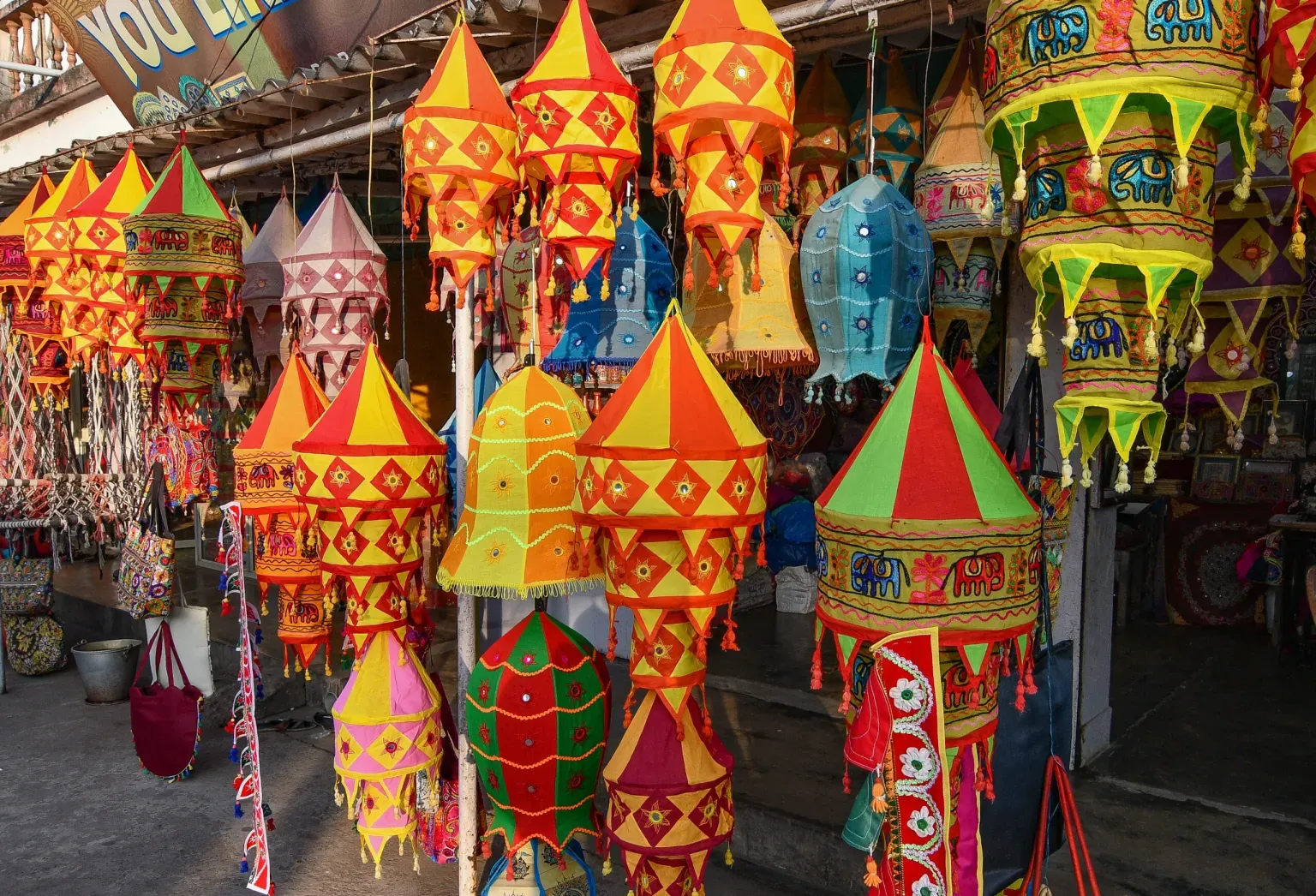
Relevance Pipli Applique is listed in the Geographical Indication Handicrafts Registry published by the Office of the Development Commissioner (Handicrafts). The craft has expanded from its original function of producing temple ceremonial goods to include a wide range of products for domestic, tourism, and export markets including bags, parasols, home furnishings, and decorative hangings.
History
Background The craft's original function was the production of chandua (ceiling canopies), bana (decorative elements for chariots), and other ceremonial textiles for the Rath Yatra of Lord Jagannath. The scale of the Rath Yatra, which involves three large chariots requiring extensive textile decoration, created a sustained demand for applique work that sustained the Pipli artisan community over centuries. The craft later diversified its product range and now serves commercial markets.
Culture and Societies Pipli Applique is embedded in the broader cultural context of the Jagannath tradition of Puri, which is central to Orissan cultural identity. The festive and ceremonial nature of the original products means that the craft is associated with celebration and communal religious life. The expansion of the product range has integrated it into everyday decorative markets without severing its connection to the ceremonial context.
Religious Significance Pipli Applique has documented religious significance as a craft tradition whose primary original function was the production of ceremonial textiles for the Jagannath Temple at Puri. The chandua canopies and chariot decorations produced for the Rath Yatra are integral components of one of India's most significant Hindu festivals. The craft is thus directly embedded in the ritual economy of the Jagannath Temple.
Understanding the Art
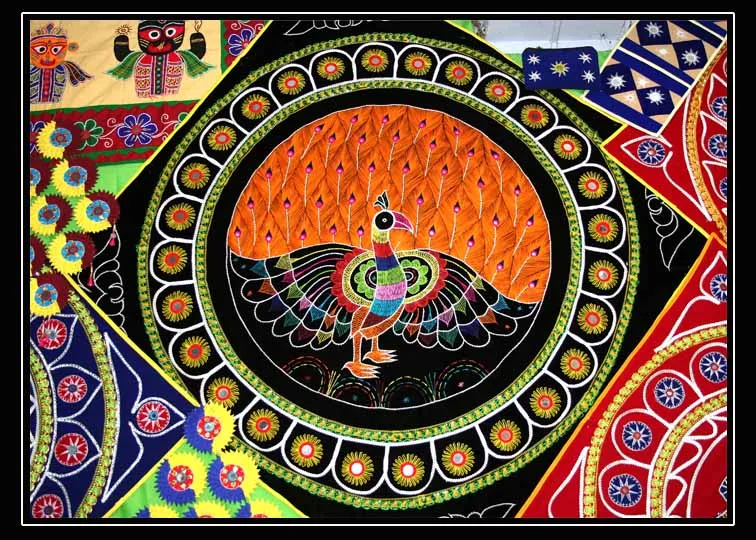
Style Pipli Applique is characterised by bold, brightly coloured fabric shapes cut out and stitched onto a dark (usually black) background cloth. The visual effect is of vivid primary and secondary colours against a strong dark ground. Traditional designs feature lotus flowers, fish, and other motifs associated with Orissan decorative tradition, arranged in repeat patterns or central medallion compositions.
Central Motifs and Their Significance The primary motifs include the lotus (pankaja), fish (matsya), the conch (shankha), flowers, and decorative borders. These motifs carry significance within the Vaishnava devotional tradition of the Jagannath cult: the lotus, conch, and fish are among the eight auspicious symbols (ashtamangala) of Vishnu. Contemporary Pipli Applique has expanded the motif vocabulary to include animals, birds, floral abstractions, and non-traditional forms for commercial markets.
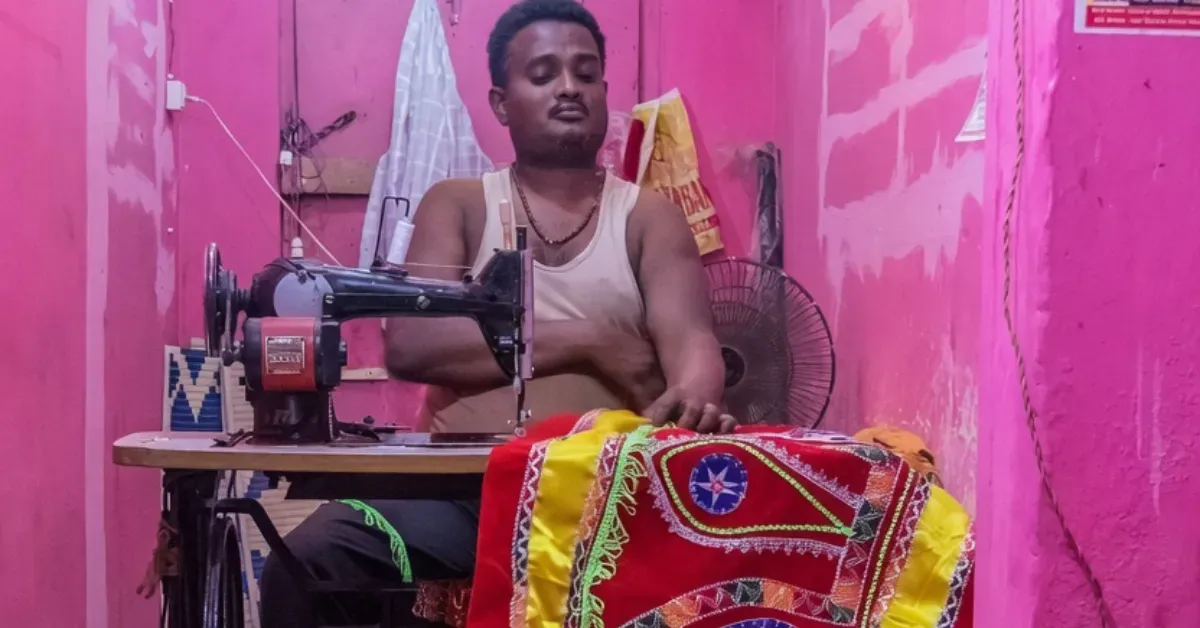
Process The process involves: selecting and preparing fabrics in required colours; cutting out the required shapes using scissors and templates; arranging the cut pieces on the base cloth in the design composition; stitching the edges of each piece onto the base cloth with close whip-stitch or buttonhole stitch; adding embroidery details and mirror work in some designs; and finishing with fringe, trim, or other border elements. The traditional Pipli work uses a specific overcast stitch that creates a characteristic visible border along each applique element.
Mediums Used Primary materials are cotton fabrics in a range of colours for the applique pieces, and cotton or cotton-silk base cloth. Thread for stitching is cotton. Mirror pieces (shisha), sequins, and other embellishments are incorporated in some designs. Traditional work used natural dye fabrics; contemporary production uses commercially dyed fabrics.
New Outlook
Pipli Applique has diversified into a broad product range serving the tourism, home decor, fashion accessories, and export markets. The Pipli craft has strong commercial viability and is classified as a thriving craft. Craft development organisations and the Orissan government have supported infrastructure at Pipli through cluster development programmes.
Learn Pipli Applique

Bibliography
Sources
“Traditional Pipli Applique Work, Pipli, Orissa.” D-Source, Indian Institute of Technology Bombay, dsource.in. Accessed 2 May 2026.
“Traditional Pipli Applique Work.” Development Commissioner (Handicrafts), Ministry of Textiles, Government of India, handicrafts.nic.in. Accessed 2 May 2026.
Image Sources
Hota, Vithika. “Pipili Applique: A Tale of Mangoes, Elephants and Peacocks.” Oaklores, 1 May 2025, oaklores.com/2025/05/01/pipili-applique-a-tale-of-mangoes-elephants-and-peacocks/. Accessed on May 02, 2026.
“Pipli Applique Craft of Odisha Finds Place in Modern Homes.” The Better India, thebetterindia.com/culture/pipli-applique-craft-odisha-modern-homes-revival-11736098. Accessed on May 02, 2026.
“Pipli and Raghurajpur Handicraft Villages of Odisha.” So Many Travel Tales, somanytraveltales.com/pipli-and-raghurajpur-handicraft-villages-of-odisha/. Accessed on May 02, 2026.