

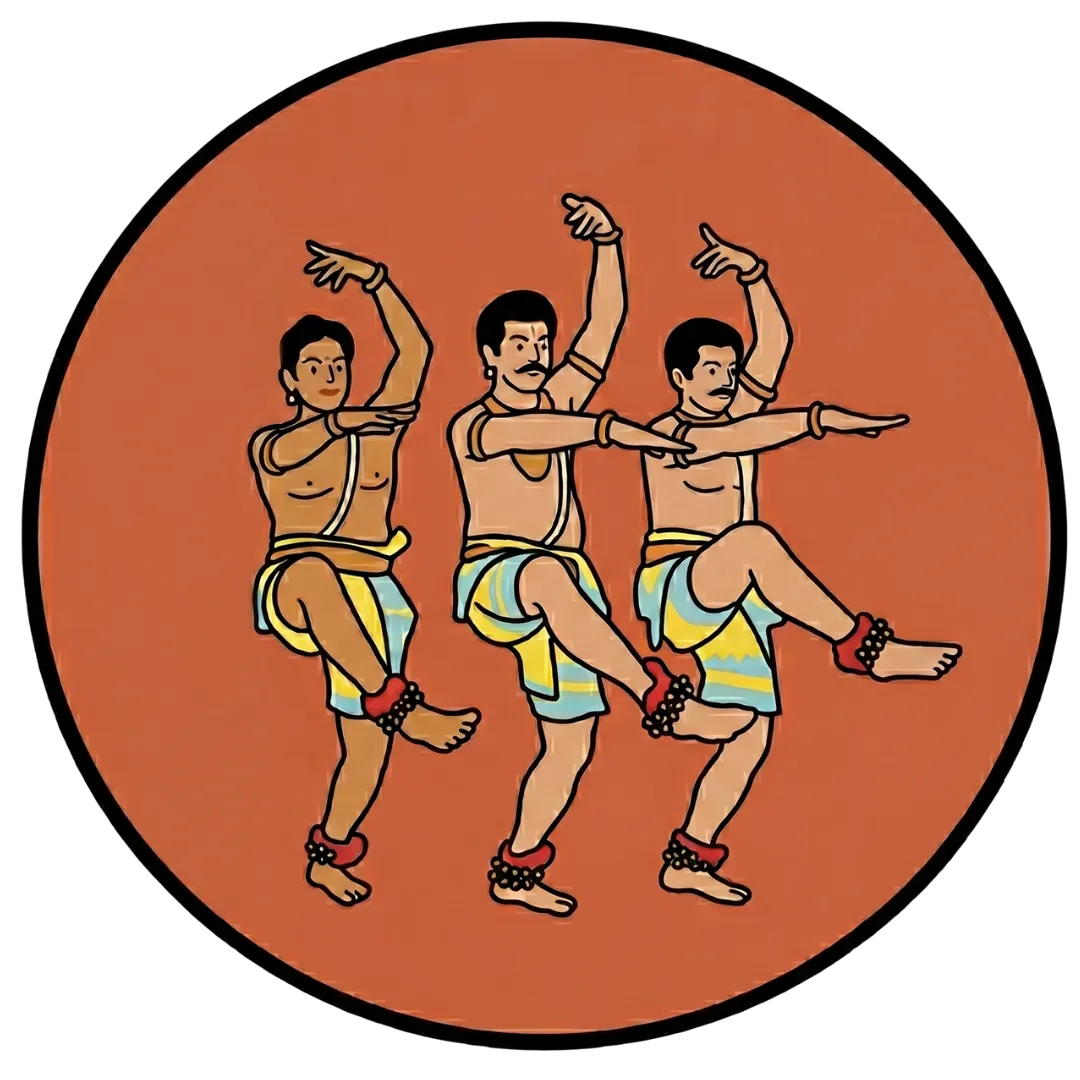
Perini Shivatandavam - The Folk Dance Tradition of Andhra Pradesh
Explore the rich legacy of **Perini Sivatandavam**, an ancient Telugu warrior dance that continues to inspire with its strength and sacred purpose
Introduction
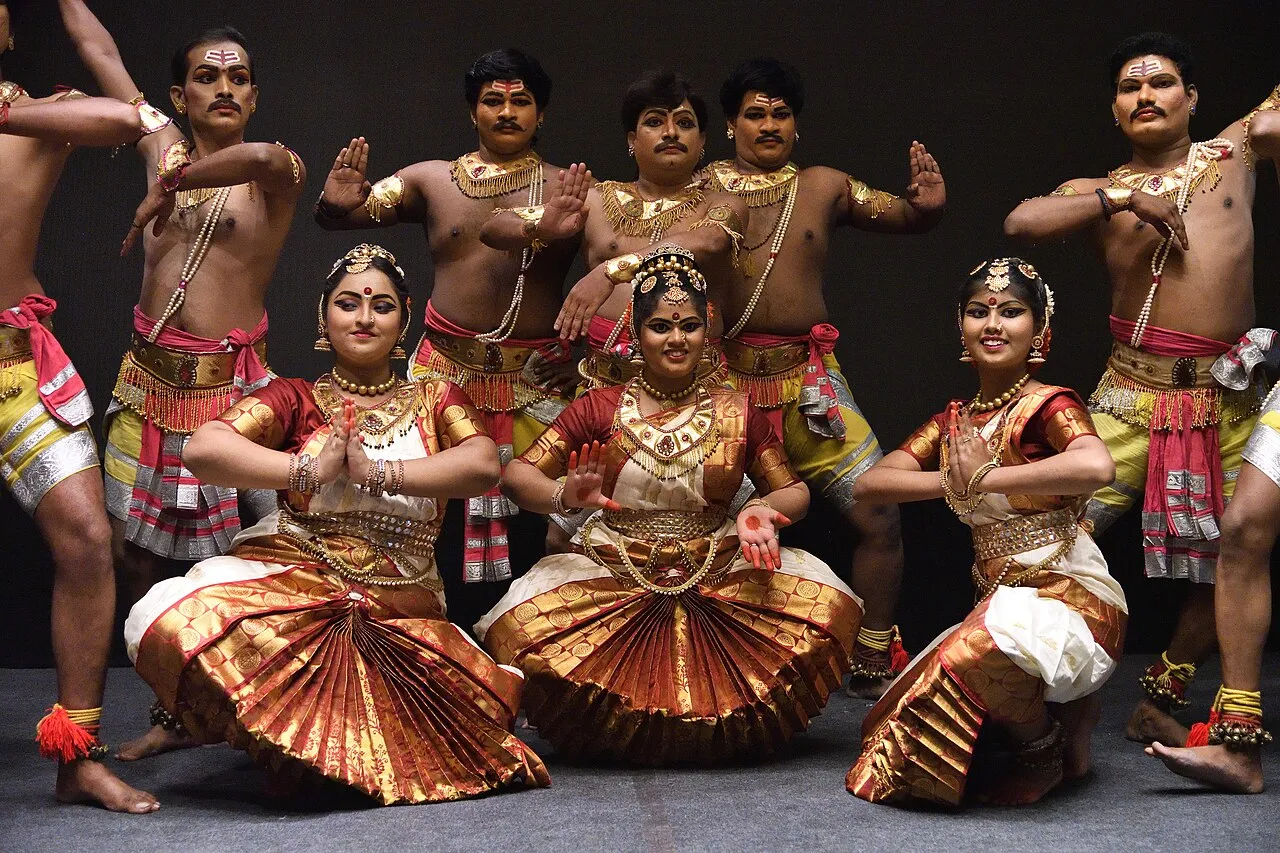
Perini Shivatandavam (also written Perini Sivatandavam or Perini Thandavam) is an ancient male warrior dance form from the Telangana region of India, associated with the Kakatiya dynasty that ruled the present-day Telangana and Andhra Pradesh region from approximately 1083 CE to 1323 CE. The dance was performed by male warriors before battles as an act of devotion to Lord Shiva and as preparation for military engagement. It declined after the fall of the Kakatiya dynasty and was revived in the 20th century by Dr. Nataraja Ramakrishna (Padma Shri), who reconstructed the form through scholarly study of historical texts and temple sculpture at the Ramappa Temple near Warangal.
##Etymology## The name Perini derives from the Sanskrit word Prerana, meaning inspiration or instigation. This etymology reflects the dance's documented function as a means of inspiring warriors before military campaigns. The second component, Shivatandavam, refers to the vigorous dance form (Tandava) associated with Lord Shiva in his aspect as cosmic dancer. The full name therefore signifies an inspiring dance performed in devotion to Shiva's Tandava. The form is also referred to as Perini Thandavam or simply Perini. A feminine-oriented derivative for women performers is called Perini Lasyam (using the Lasya component of dance associated with grace and femininity) or Komala Lasyam.
Origin
The documented history of Perini Shivatandavam begins during the reign of the Kakatiya dynasty, specifically within the reign of King Ganapati Deva (1199 to 1261 CE), whose military commander Jayapa Senani authored the Sanskrit treatise Nritta Ratnavali. This text includes a description of a form called Perani (or Prenkhana) among the folk and desi dance forms of the Andhra region, alongside other forms including Suddha Nartana, Carcari, Rasaka, Danda Rasaka, Shiva Priya, and Kolatam. An earlier reference to Perini appears in the work Bharataarnavam by Nandikeshwara. The dance was performed at natya madapas (dance platforms) in Kakatiya temples including the Thousand Pillar Temple, the Ramappa Temple (Palampet), and the Inavolu Mallanna Temple in Warangal, where carvings of dance poses related to Perini are preserved. The dance is also mentioned in the early medieval Bharataarnavam, as noted by Dr. Nataraja Ramakrishna in his 1968 book Daakshinaatyula Natyakala Charithra.
Location
The historical locus of Perini Shivatandavam is the Warangal region of present-day Telangana, under the Kakatiya kingdom. The Ramappa Temple at Palampet (UNESCO World Heritage Site since 2021) contains sculptural evidence of dance poses that Dr. Nataraja Ramakrishna studied in reconstructing the form. Contemporary performance and training of Perini Shivatandavam is centred in Hyderabad and other urban centres of Telangana, with training programmes established at institutions including SRR Government Art and Science College, Karimnagar. The dance is presented at major cultural events including the Kakatiya Festival, Telangana Formation Day celebrations, and Natyanjali.
Community
Historically, Perini Shivatandavam was performed by male warriors of the Kakatiya period as a ritual preparation for battle. After the fall of the Kakatiya dynasty in 1323 CE following the invasion of Malik Kafur, the dance declined and eventually ceased to be practised as a living tradition. Its revival in the 20th century was the work of a single scholar-practitioner, Dr. Nataraja Ramakrishna, rather than a continuous community transmission. Contemporary practitioners are primarily students trained in the reconstructed form at dance academies and government arts colleges in Telangana. The form currently has a limited but growing community of practitioners.
Relevance
Perini Shivatandavam is historically significant as a documented warrior dance tradition from the medieval Telugu-speaking region with textual support in classical Sanskrit dance literature. Its recovery represents a case of scholarly reconstruction from historical texts and sculptural evidence. The dance has been adopted as a symbol of Telangana's cultural heritage, particularly since Telangana's formation as a separate state in 2014, and features in state cultural events and promotional materials. As of the date of this article, the form had not yet received classical recognition from the Sangeet Natak Akademi, as noted by the Andhra Cultural Portal.
History
Background
The Nritta Ratnavali by Jayapa Senani, written in the courts of Ganapati Deva (1199 to 1261 CE), is the primary historical text documenting Perini within a classification of dance forms. The text distinguishes between Marga (forms following the Natya Shastra) and Desi (regional forms), and places Perini in the Desi category, making it a dance form specific to the Andhra region rather than a pan-Indian classical form. The Ramappa Temple at Palampet, built around 1213 CE during the reign of Ganapati Deva, contains carved natya madapas with sculptural representations of dance poses that provided the primary visual evidence for Dr. Nataraja Ramakrishna's reconstruction.
After the Kakatiya dynasty's collapse in 1323 CE, Perini disappeared from active performance. It remained referenced in historical texts but was not practised. Beginning in 1971, Dr. Nataraja Ramakrishna studied the Nritta Ratnavali, Agama texts, and the sculptural programme at the Ramappa Temple over several years, developing a movement vocabulary for the reconstructed form. He was preparing a commentary on the Nritta Ratnavali as part of a Telugu translation project by Rallapalli Ananta Krishna Sarma, and this study deepened his resolve to stage a revival. The first public performance of the reconstructed Perini Shivatandavam was presented at the first World Telugu Mahasabha in 1975 by three of Dr. Ramakrishna's disciples.
Culture and Societies
The Kakatiya dynasty maintained a significant tradition of temple patronage, constructing natya madapas (dedicated dance halls) within temple complexes specifically for performance. The presence of these performance spaces within temple architecture indicates that dance was integrated into regular temple ritual during the Kakatiya period. Perini Shivatandavam was one component of this broader performance culture that also included devotional forms connected to the temple deity. Following the 20th-century revival, the dance has been presented at national and international cultural festivals, including performances in Indian diaspora contexts.
Religious Significance
Perini Shivatandavam has explicit and well-documented religious associations with Shaivism. The dance was performed before the Nataraja idol (Shiva as cosmic dancer) in the Garbha Gudi (inner sanctum) or natya madapa of Kakatiya temples. Performers sought the blessings of Lord Shiva before military campaigns, and the dance was understood as a form of Aradhana (worship). The vigorous Tandava style of movement is itself an embodiment of the energetic, destructive, and regenerative aspects of Shiva's cosmic dance. This religious dimension has been maintained in contemporary revival performances, which are often presented as offerings at Shiva temples or before images of Nataraja.
Understanding the Art
Style
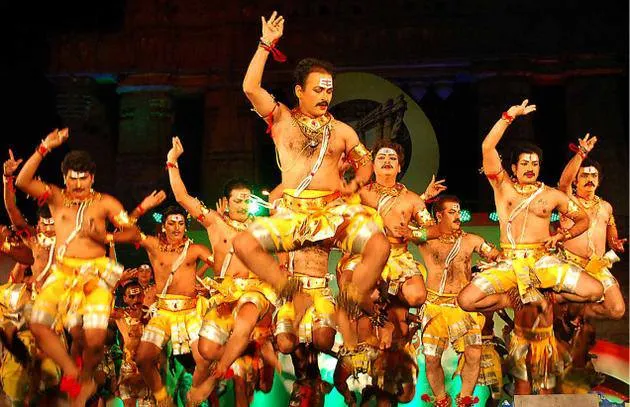
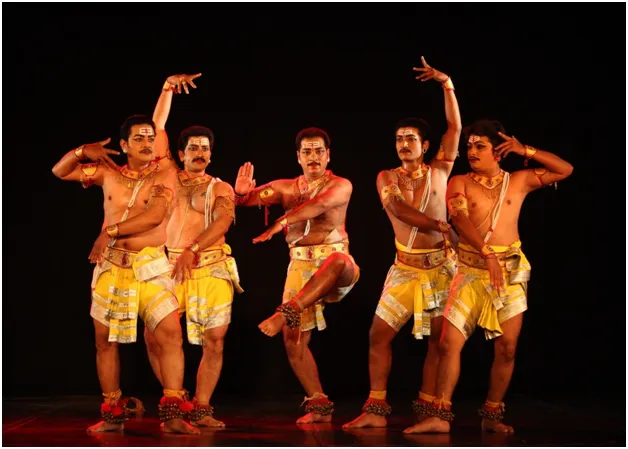
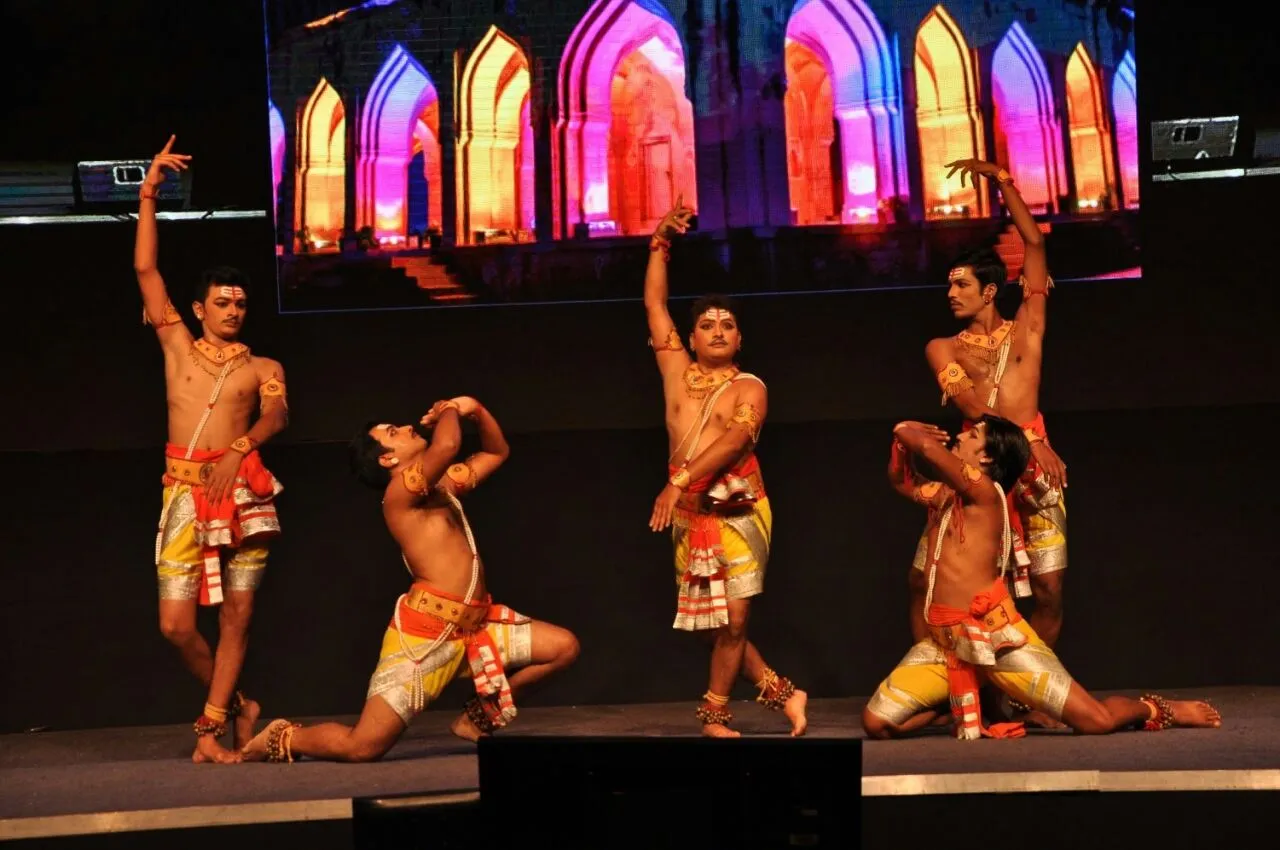
Perini Shivatandavam is characterised by vigorous, energetic male movement (Uddata Tandavam), as distinguished from the graceful feminine Lasya style. The dominant emotional qualities (rasas) are Raudra (fury) and Vira (valour), reflecting the warrior context of the dance's original function. The dance involves fast-paced movement, powerful stamping footwork, athletic jumps, and forceful body postures performed to the loud rhythm of drums. According to the Abhinaya Darpana's classification, Nritta (the form's primary category as Jayapa Senani defined it) consists of bodily movements without evoking Rasa-Bhava (emotional states), making Perini a form emphasising technical and energetic display rather than narrative expression.
Central Motifs and Their Significance
The central visual and thematic reference of Perini Shivatandavam is Lord Shiva in his Tandava aspect. The sculptural carvings at the Ramappa Temple, which served as the primary visual source for the 20th-century reconstruction, depict male figures in vigorous dance poses. A lighter comedic element (Hasya rasa) is noted in the Bhavashrya/Vikata/Vagada component of the Perini Panchangas (five-part structure), as cited in Indian.Temples documentation. This comedic dimension represents a contrast to the predominantly martial and devotional character of the form.
Process
Training in the reconstructed Perini Shivatandavam follows a formal syllabus developed by Dr. Nataraja Ramakrishna and taught at institutions including SRR Government Art and Science College in Karimnagar and at dance academies in Hyderabad. The physically demanding character of the dance requires sustained conditioning. Due to the reconstructed nature of the form, there is no unbroken lineage of guru-to-student transmission; the form depends on the written and institutionalised curriculum established through Dr. Ramakrishna's research.
Mediums Used
The percussion-driven musical accompaniment to Perini Shivatandavam emphasises drums, particularly the loud and fast rhythms appropriate to martial performance. Traditional Andhra percussion instruments including the dhol and mridangam are used. Costumes reflect both the warrior aesthetic and the Shaivite devotional context, incorporating elements consistent with the sculptural representations at the Ramappa Temple. The Perini Lasyam variant for women uses lighter, more fluid movement vocabulary and costuming appropriate to the Lasya style.
New Outlook
Perini Shivatandavam occupies an unusual position as a historically documented but fully reconstructed performance tradition. Its status as Telangana's cultural dance emblem has increased its visibility and institutional support since 2014. The form faces the challenge of limited practitioners due to its physically demanding character and the absence of a continuous lineage community. Scholarly debate exists about the accuracy of the reconstruction relative to the original form as described in the Nritta Ratnavali, as noted in analyses at Indian.Temples and Andhranatyam.org. Documentation projects continue to deepen understanding of the textual and sculptural sources. Its present Vulnerable designation reflects the small number of trained practitioners relative to the breadth of its historical significance.
Learn Perini Shivatandavam
Bibliography
Sources
Ramakrishna, Nataraja. Daakshinaatyula Natyakala Charithra. Telugu.
Senani, Jayapa. Nritta Ratnavali. Translated into Telugu by Rallapalli Ananta Krishna Sarma. Sanskrit treatise, 13th century CE.
Vatsyayan, Kapila. Classical Indian Dance in Literature and the Arts. Sangeet Natak Akademi, 1968.
Image Sources
"Perini Shivatandavam." GoSahin, https://www.gosahin.com/places-to-visit/perini-shivatandavam-dance/. Accessed 3 July 2026.
"Perini Shivatandavam Dance of Telangana – Wikiconference India 2023 – Hyderabad 2023-04-28 8088." Wikimedia Commons, https://commons.wikimedia.org/wiki/File:Perini_Sivatandavam_Dance_Of_Telangana_-Wikiconference_India_2023-_Hyderabad_2023-04-28_8088.jpg. Accessed 3 July 2026.
"Perini Shivatandavam Dance of Telangana – Wikiconference India 2023 – Hyderabad 2023-04-28 8092." Wikimedia Commons, https://commons.wikimedia.org/wiki/File:Perini_Sivatandavam_Dance_Of_Telangana_-Wikiconference_India_2023-_Hyderabad_2023-04-28_8092.jpg. Accessed 3 July 2026.
"पेरीनी शिवतांडवम्." हिन्दी विकिपीडिया, https://hi.wikipedia.org/wiki/%E0%A4%AA%E0%A5%87%E0%A4%B0%E0%A4%BF%E0%A4%A8%E0%A5%80_%E0%A4%B6%E0%A4%BF%E0%A4%B5%E0%A4%A4%E0%A4%BE%E0%A4%82%E0%A4%A1%E0%A4%B5%E0%A4%AE. Accessed 3 July 2026.
"Sri Pavan Kumar Chegomma." Sri Bhakta Ramadasu Government College of Music and Dance, https://sbrgcmd.com/faculty/dance/pavan-kumar-chegomma/. Accessed 3 July 2026.

