

Odissi - The Classical Dance Form of Odisha
Explore Odissi dance, the performance tradition of Andhra Pradesh, and learn about its origins, techniques, cultural significance, and artistic heritage.
Introduction
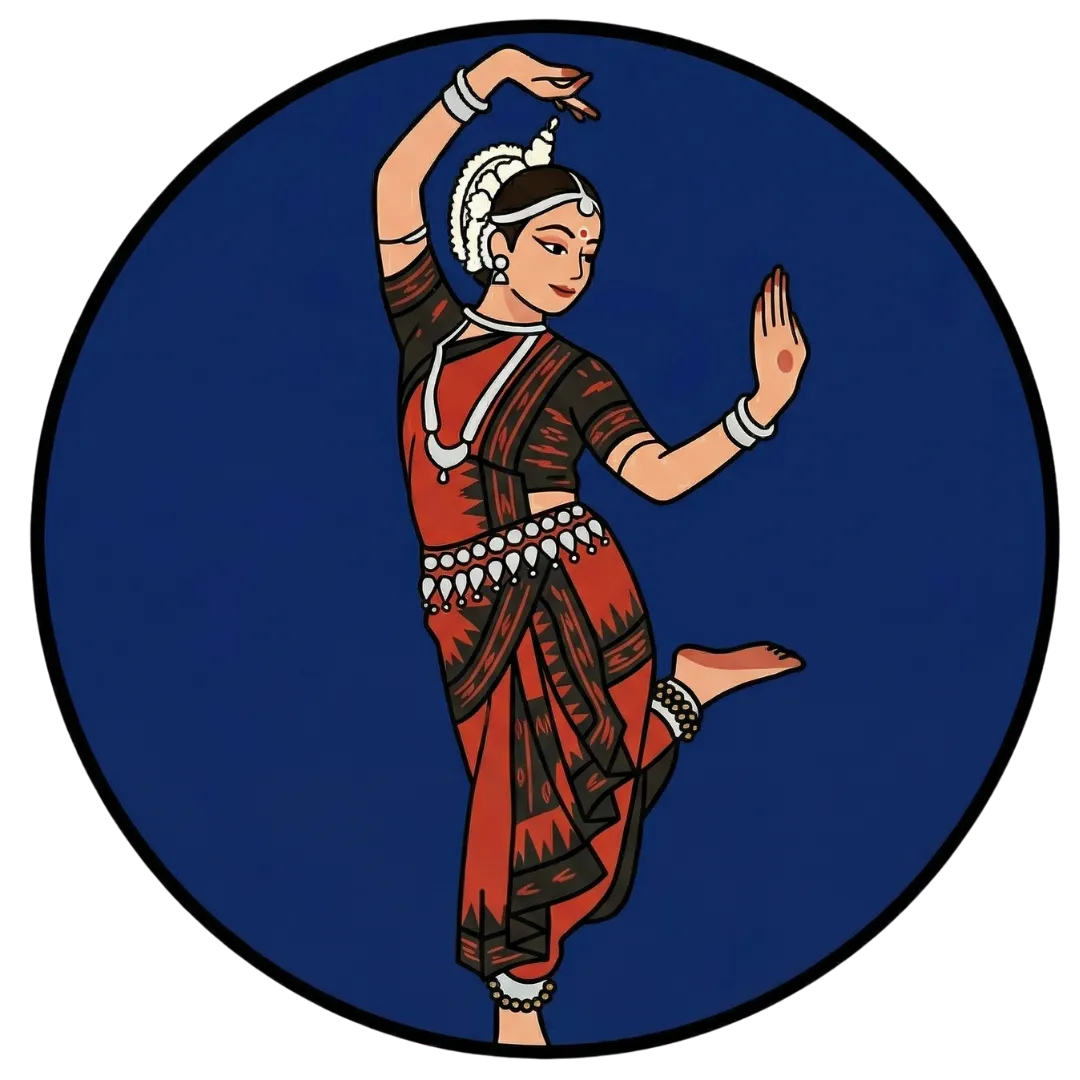
Odissi is among the oldest surviving classical dance forms of India, originating in the temples of Odisha on the eastern coast. It is recognised by the Sangeet Natak Akademi as a major classical dance tradition. Its theoretical foundations trace to the Natya Shastra, which references an Odra-Magadhi style of performance understood by scholars as an antecedent to modern Odissi. Archaeological evidence of dance figures corresponding to Odissi postures exists in Hindu, Buddhist, and Jain sites across Odisha, with dated examples ranging from the 2nd century BCE to the 14th century CE. The form historically developed through three streams: the Mahari (female temple devadasi) tradition, the Nartaki (court dancer) tradition, and the Gotipua (young male dancers in female attire) tradition. The modern classical form was reconstructed and codified in the mid-20th century by artists and scholars including Kelucharan Mohapatra, Pankaj Charan Das, Debaprasad Das, Mayadhar Raut, and Kalicharan Patnaik.
Etymology The name derives from the state of Odisha (formerly Orissa), in ancient times called the Udra or Odra country. Earlier literature spells the form Orissi.
Origin The Natya Shastra references the Odra-Magadhi style. The Ranigumpha caves at Udayagiri, near Bhubaneswar, contain 2nd-century BCE bas-reliefs of dancers in Odissi poses. The Shilpa Prakasha, an illustrated Odishan temple architecture text, and the 16th-century Abhinaya Chandrika by Maheshwara Mahapatra document Odissi postures in textual form. Panel reliefs dated 10th to 14th century in the Jagannath Temple (Puri), Konark Sun Temple, and Brahmeswara Temple (Bhubaneswar) provide sculptural evidence.
Location The Puri-Bhubaneswar-Cuttack-Konark corridor of eastern Odisha. Puri is considered the spiritual home, centred on the Jagannath Temple.
Community Maharis were female ritual specialists dedicated to Lord Jagannath, ritually married to the deity, with socially recognised ceremonial roles. The Gotipua tradition involved young boys performing devotional dance outside the temple system. After the Jagannath temple administration transferred from the King of Puri to the state government in the 1950s, the Mahari tradition ended as a living practice. The Jayantika project (late 1950s), a group effort by Kelucharan Mohapatra, Pankaj Charan Das, Debaprasad Das, and Mayadhar Raut, standardised the modern Odissi grammar.
Relevance Odissi is practised globally. The 1958 All India Dance Seminar in New Delhi, at which Kalicharan Patnaik presented research establishing Odissi's classical credentials, was a decisive moment for the form's national recognition. The Konark Dance Festival, held annually at the Sun Temple, is a major international platform.
History
Background Under the Ganga dynasty (11th–15th centuries), Odissi flourished with dedicated Nata Mandapas (dance halls) in major temples and Maharis holding honoured social positions. The composition of the Gitagovinda (approximately 1180 CE) by poet Jayadeva, deeply rooted in Odishan literary culture, provided the central thematic repertoire. Turkish and Mughal invasions from the medieval period disrupted temple patronage. The anti-nautch movement of the late 19th century and the Madras Presidency's effective ban on temple dancing (1910) accelerated the Mahari tradition's decline. Theatre companies in early 20th-century Cuttack employed Odissi-related dance and provided training contexts for the major revivalists.
Culture and Societies The Bhakti movement, Vaishnavism through the Jagannath cult, Shaivism, and Shaktism all shaped Odissi's thematic content. Scholar Kapila Vatsyayan has noted that Jain text Kalpa Sutra manuscripts from Gujarat contain Odissi-like poses (Chauka, Tribhangi) as marginal decoration, suggesting wide historical diffusion of the form.
Religious Significance Odissi originated as temple worship. Maharis performed as devotional offerings to Lord Jagannath. The Gitagovinda, depicting the love of Radha and Krishna, remains central to the repertoire. A standard Odissi recital begins with Mangalacharan, an invocation to the deity of the performance space.
Understanding the Art
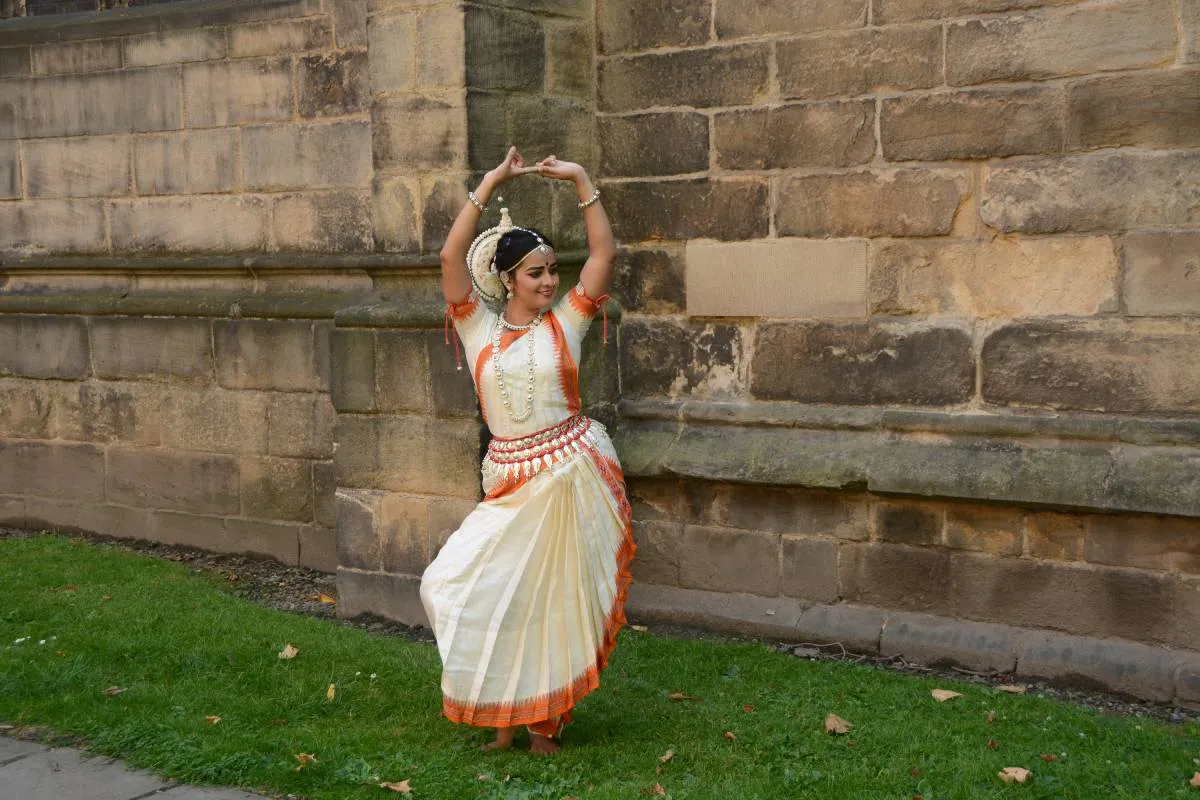
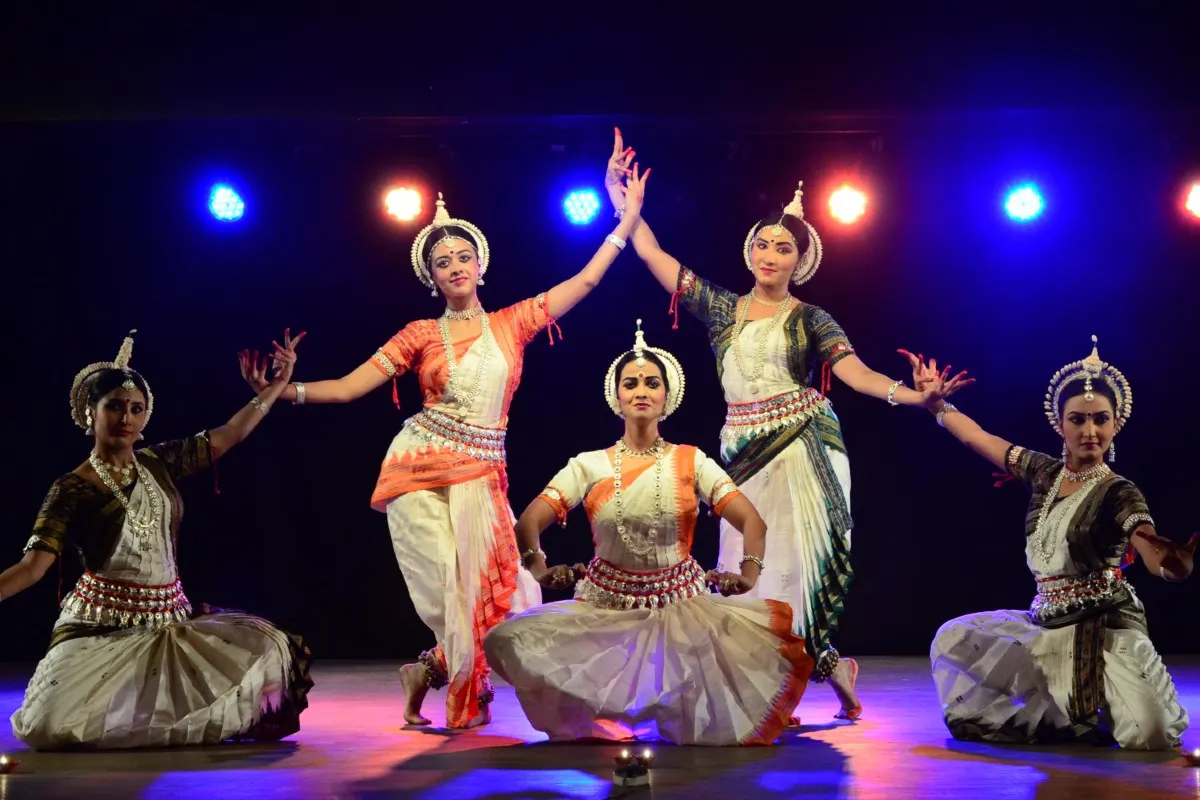
Style The most distinctive postural element is the Tribhangi (three-bend posture), in which the body deflects simultaneously at the head, torso, and hip. The Chauka is a square, symmetrical grounded stance. The standard recital sequence is: Mangalacharan (invocation), Batu (abstract Nritta), Pallavi (lyrical raga expansion), Abhinaya (expressive verse from padams or ashtapadis), and Moksha (concluding dissolution into stillness). The dance has a distinctively lyrical quality with fluid lateral torso shifts.
Central Motifs and Their Significance The Ashtapadis of Jayadeva's Gitagovinda are among the most frequently performed compositions. Lord Jagannath, understood as a form of Vishnu, is the presiding deity. The Tribhangi stance, with its three-point deflection, is understood as representing the form of Lord Jagannath.
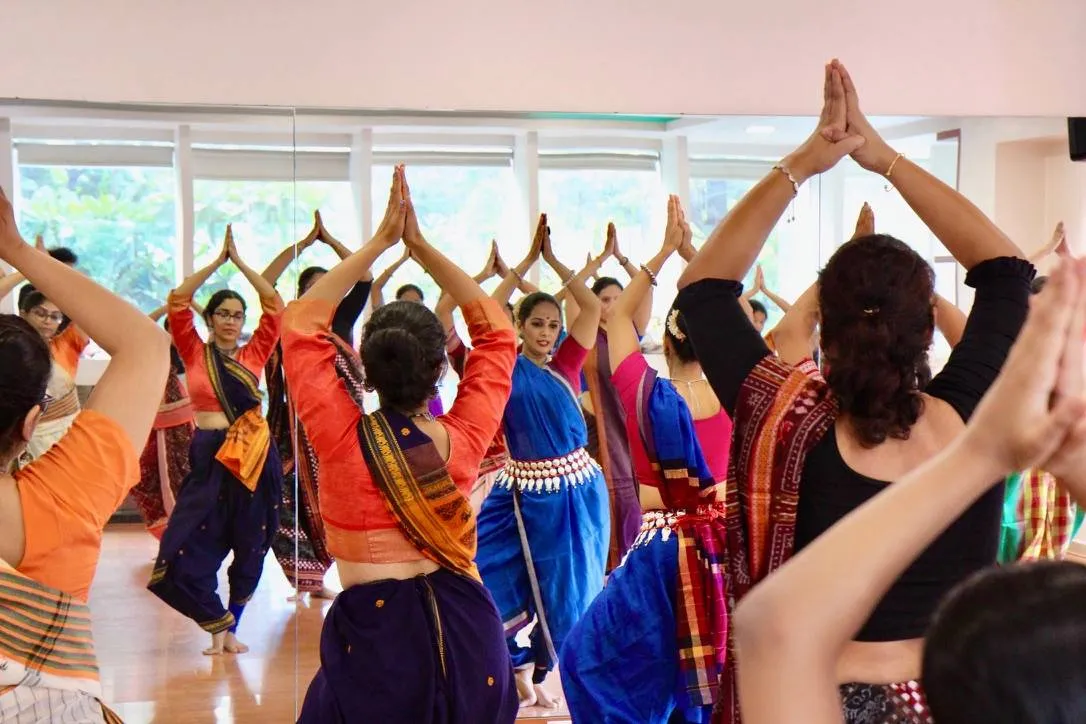
Process Training follows the guru-shishya parampara. The Abhinaya Chandrika and Abhinaya Darpana are the primary pedagogical texts alongside the Natya Shastra. The Jayantika codification standardised mudras, footwork patterns, body positions, and musical repertoire.
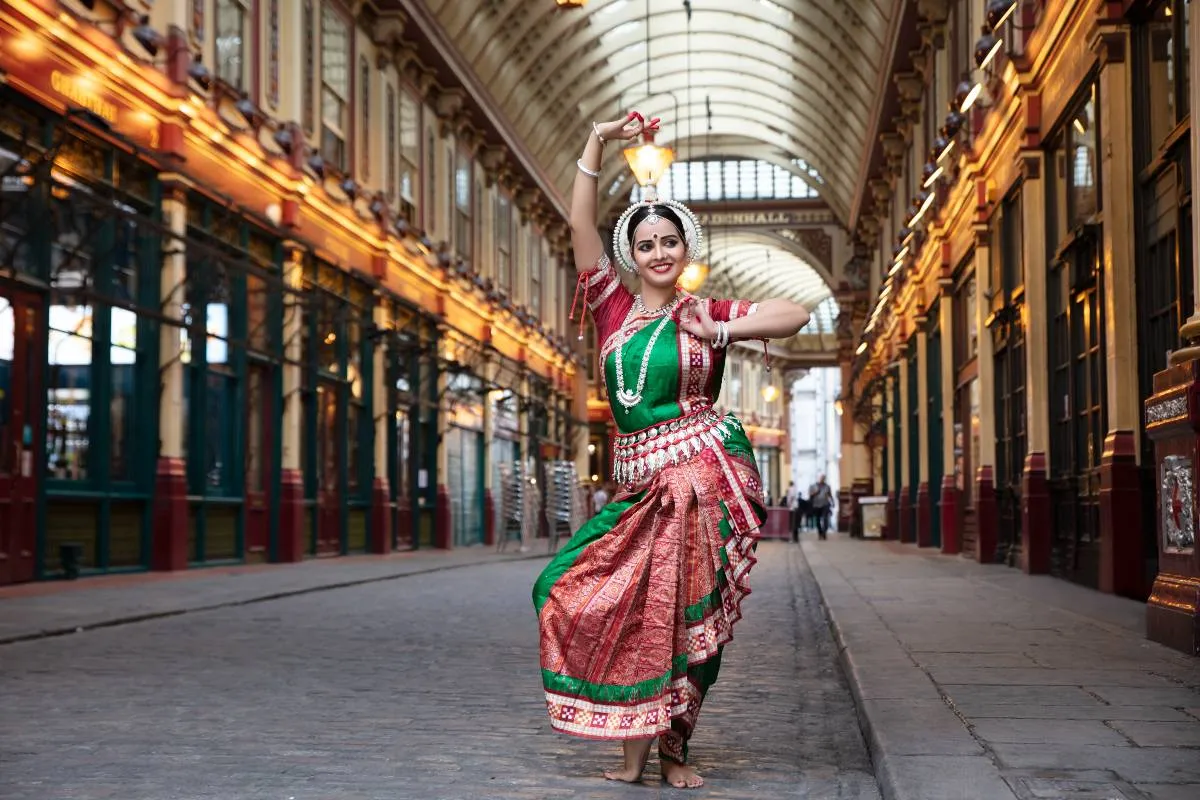
Mediums Used Odissi music uses the classical Odishan tradition (distinct from Hindustani and Carnatic, though related to both). Instruments include mardala (Odishan barrel drum), flute, sitar, and violin. Costumes are brightly coloured Patta silk saris of Odishan textile tradition (Sambalpuri, Bomkai varieties). Jewellery is primarily silver. Hair is arranged in a bun resembling a temple spire.
New Outlook
Experimental themes, male lead performers, and fusion works have expanded contemporary Odissi. The Odisha state government's Odissi Research Centre and annual festivals at Konark support the tradition. International performance and academic research have broadened the form significantly.
Learn Odissi
Bibliography
Sources
Banerji, Anurima. Dance and the Distributed Body: Odissi, Ritual Practice, and Mahari Performance. PhD dissertation, New York University, 2010.
Khokar, Mohan. Traditions of Indian Classical Dance. Clarion Books, 1979.
Mahapatra, Maheshwara. Abhinaya Chandrika. 16th century. Various modern editions.
Vatsyayan, Kapila. Classical Indian Dance in Literature and the Arts. Sangeet Natak Akademi, 1968.
Image Sources
Pracheeti Odissi. “Different Indian Classical Dances.” Pracheeti Odissi, 1 May 2023, https://pracheetiodissi.com/2023/05/01/different-indian-classical-dances/. Accessed on May 19, 2026.
Pracheeti Odissi. “Features of Odissi.” Pracheeti Odissi, 1 May 2023, https://pracheetiodissi.com/2023/05/01/features-of-odissi/. Accessed on May 19, 2026.
Pracheeti Odissi. “Natyashastra.” Pracheeti Odissi, 1 May 2023, https://pracheetiodissi.com/2023/05/01/natyashastra/. Accessed on May 19, 2026.
Pracheeti Odissi. “What Is Odissi Dance?” Pracheeti Odissi, 1 May 2023, https://pracheetiodissi.com/2023/05/01/what-is-odissi-dance/. Accessed on May 19, 2026.