

Madhubani Pottery - The Handicraft Tradition of Bihar
Let us explore Madhubani Pottery together!
Introduction
Madhubani pottery refers to terracotta clay objects produced in the Madhubani and Darbhanga districts of Bihar, India, that are decorated with motifs and visual vocabulary drawn from the Madhubani (Mithila) painting tradition. As a combined craft form, it represents the application of the pictorial language of Madhubani art to fired clay objects including pots, vases, and decorative vessels. The craft must be understood in the context of two distinct but related traditions that converge in this object type: the traditional pottery practice of the Kumbhakar community of the Mithila region, and the well-documented folk painting tradition known as Madhubani art or Mithila painting.
Limited Documentation Notice: As a named, formally defined standalone craft category, Madhubani pottery has limited institutional documentation. The Bihar Tourism portal and the Upendra Maharathi Shilp Anusandhan Sansthan (UMSAS, the government craft research body of Bihar) document terracotta pottery from Darbhanga and Madhubani districts as a separate craft from Madhubani painting, but neither document the combined form under a specific category with its own production history, community structure, or GI recognition. The application of Madhubani painting motifs to pottery objects appears in contemporary craft markets and government skill-building programmes, but dedicated academic monographs on this hybrid form have not been identified. This article is accordingly scoped to what can be verified from available institutional and historical sources.
Etymology: The name Madhubani pottery combines two distinct referents. Madhubani refers to the district in northern Bihar from which both the painting tradition and the pottery production zone take their name. Britannica documents that the town of Madhubani derives its name from the Sanskrit compound madhu (honey) and bani (forest), referring to the honey-producing forests historically abundant in the area. The word pottery is an English-language craft classification denoting objects made from fired clay. The Assamese Madhubani painting tradition from which the decorative vocabulary is drawn is also called Mithila painting, after the ancient cultural and geographic region of which the Madhubani district forms a part. The traditional pottery of the region is practiced by the Kumbhakar caste, whose name is derived from the Sanskrit kumbhakara, meaning maker of pots.
Origin: The two component traditions that constitute Madhubani pottery have distinct origin contexts that must be addressed separately.
The pottery tradition of Bihar has documented archaeological depth. Multiple sources including the Bihar government's arts and craft portal and the InBihar cultural documentation website identify pottery practices in the state extending to the Mauryan and Gupta periods (approximately third century BCE to sixth century CE), with excavations at Nalanda and Rajgir providing archaeological evidence. The Dolls of India terracotta art reference confirms that terracotta art in Bihar extends to the Mauryan period. The Darbhanga area, which encompasses the Madhubani region historically as the district of Madhubani was carved out of the old Darbhanga district only in 1972, is specifically identified in the Dolls of India documentation as well-known for its terracotta objects, including painted clay horses.
The Madhubani painting tradition has a distinct documented origin that is referenced in Hindu textual traditions. The most frequently cited historical reference in government and institutional documentation is from the Ramayana, in which King Janaka of Mithila is said to have commissioned paintings for his daughter Sita's wedding to Prince Rama. Wikipedia's article on Madhubani art and the Bihar Tourism portal note this as the traditional founding narrative, though this is a textual tradition rather than an archaeologically verified origin date. William G. Archer, the British colonial officer who served in the Madhubani district, is credited in multiple sources including the Wikipedia article on Madhubani art as the first person to formally document the painting tradition in 1934, after the Bihar earthquake of that year exposed the interior painted walls of huts.
The specific combination of painted Madhubani motifs on clay pottery objects is not independently documented with a founding date or founding practitioner in the institutional sources reviewed. It appears to represent a development of the post-1960s period when Madhubani painting expanded from its traditional medium of the plastered mud wall to paper, cloth, canvas, and other surfaces, as documented in the Wikipedia article on Madhubani art and the Bihar Tourism portal, which state that the All-India Handicrafts Board encouraged women to apply their painting skills to paper during the 1960s Bihar famine as a livelihood measure. The extension of this impulse to ceramic and terracotta surfaces is consistent with this trajectory but is not separately documented as a named craft transition.
Location: Madhubani pottery production is located within the Madhubani and Darbhanga districts of the Mithila region in northern Bihar. The Bihar Tourism portal identifies Darbhanga and Madhubani districts specifically as the zone of terracotta craft production in Bihar, with the craft providing livelihoods to families of approximately 300 to 500 artisans in these districts on a regular basis. The broader Madhubani painting tradition is concentrated in the villages of Jitwarpur, Ranti, and Rasidpur in Madhubani district, as identified in the Wikipedia article on Madhubani art as the three most notable production centres. The Mithila Chitrakala Sansthan in Madhubani district, referenced in district administration portal documents, conducts classes in terracotta alongside other craft disciplines, indicating the presence of formal terracotta instruction within the Madhubani district institutional infrastructure.
Community: The pottery component of Madhubani pottery is the domain of the Kumbhakar community, which is the traditional potter caste of the region. The Kumbhakar community's role in pottery production within the broader Bihar craft tradition is documented across multiple sources: the Memeraki and Folkartopedia documentation of Manjusha art identifies the Kumbhakar caste as the makers of clay pots used in the Manjusha festival art tradition of Bhagalpur, and terracotta production in the Darbhanga-Madhubani area is documented by Bihar Tourism as conducted by artisans using potters' wheels and local clay. The Madhubani painting tradition, from which the decorative vocabulary derives, was historically the domain of women from multiple castes in the Mithila region, including Brahmin and Kayastha women (who dominated the Bharni and Tantrik styles), and women from lower-caste communities including the Dalit Mallah community, documented in the UMSAS profile of artist Dulari Devi. The gendered dimension is significant: Madhubani painting was historically a female practice within domestic and ritual contexts, while pottery has been practiced by both men and women in the Kumbhakar community, with the potter's wheel operation historically male and decoration female in the broader Indian pottery tradition.
Relevance: The terracotta craft of the Darbhanga and Madhubani districts, as documented by the Bihar Tourism portal, supports the livelihoods of 300 to 500 artisan families on a regular basis. Madhubani painting as a tradition supports approximately 20,000 to 25,000 artisan families in the Madhubani district and elsewhere in Bihar, as recorded by the Bihar Tourism painting portal. The decorated terracotta objects combining both traditions constitute part of the contemporary Bihar craft market, appearing in government-supported skill-building and enterprise initiatives documented by UMSAS. The Mithila Chitrakala Sansthan in Madhubani, which is the state government's principal institutional centre for arts of the Mithila region, formally includes terracotta as a taught discipline alongside Madhubani painting in its three-year degree course curriculum, as recorded in the district administration portal. No separate Geographical Indication tag for Madhubani pottery as a combined craft form has been identified in the sources reviewed. Madhubani painting holds GI status as a painting tradition, as documented in the research paper by Kishalay Raj (Indian Institute of Management Bangalore, 2025).
Shop Madhubani Pottery Products
View all →
Akriti to Sanskriti
Indian Folk Toy
Radiant Symphony
Terracotta Jewellery Set
Pure Sandalwood Royal Lady Sculpture with Intricate Shrine Carving
Cosmic Wings
Artventures of Pichwai - Elementary
The Watchtower
Pure Sandalwood Lace-Carved Heritage Pankha with Peacock Handle
Single Double-Sided Block Printed Cotton Comforter in Yellow Floral Pattern
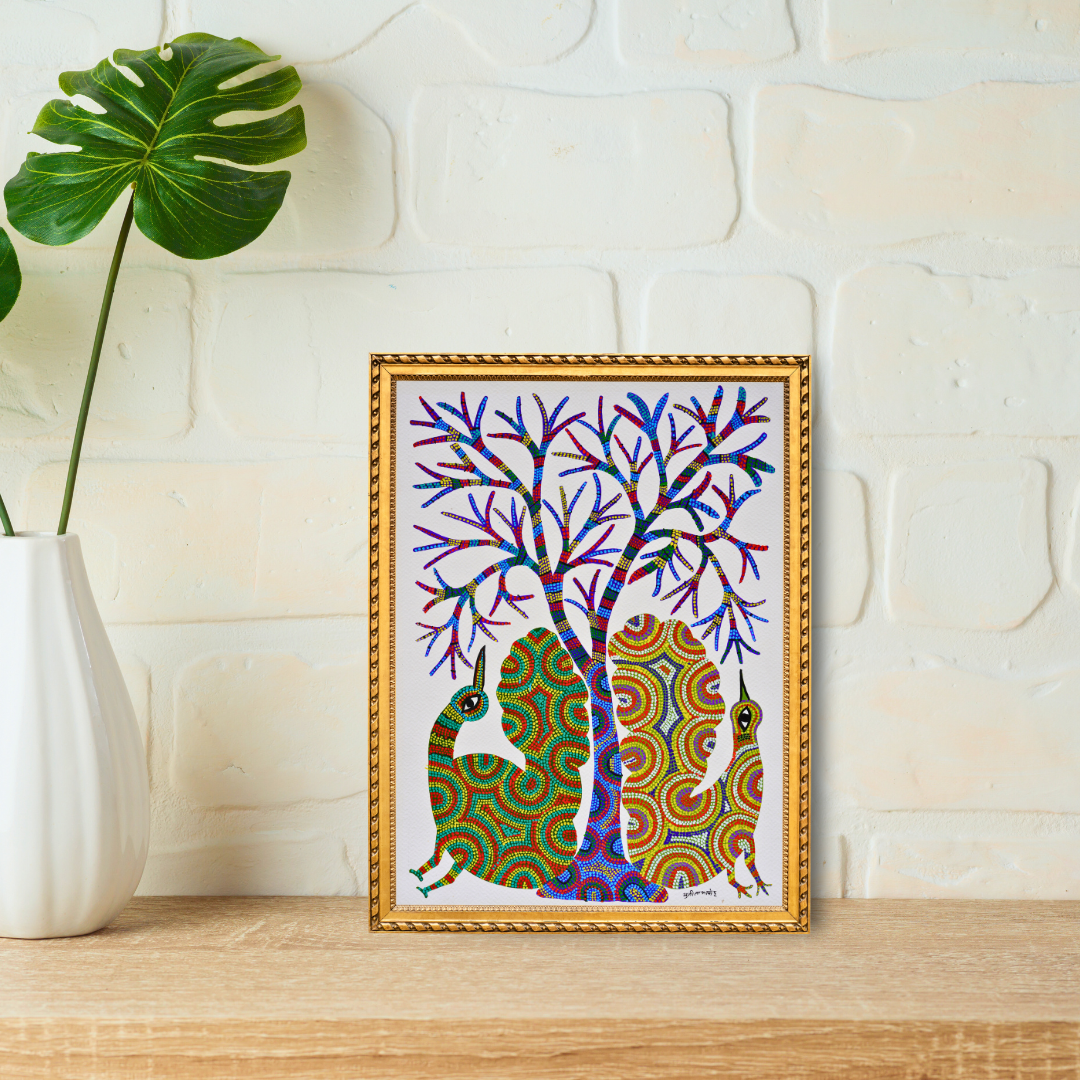
Two Peacocks Under a Tree
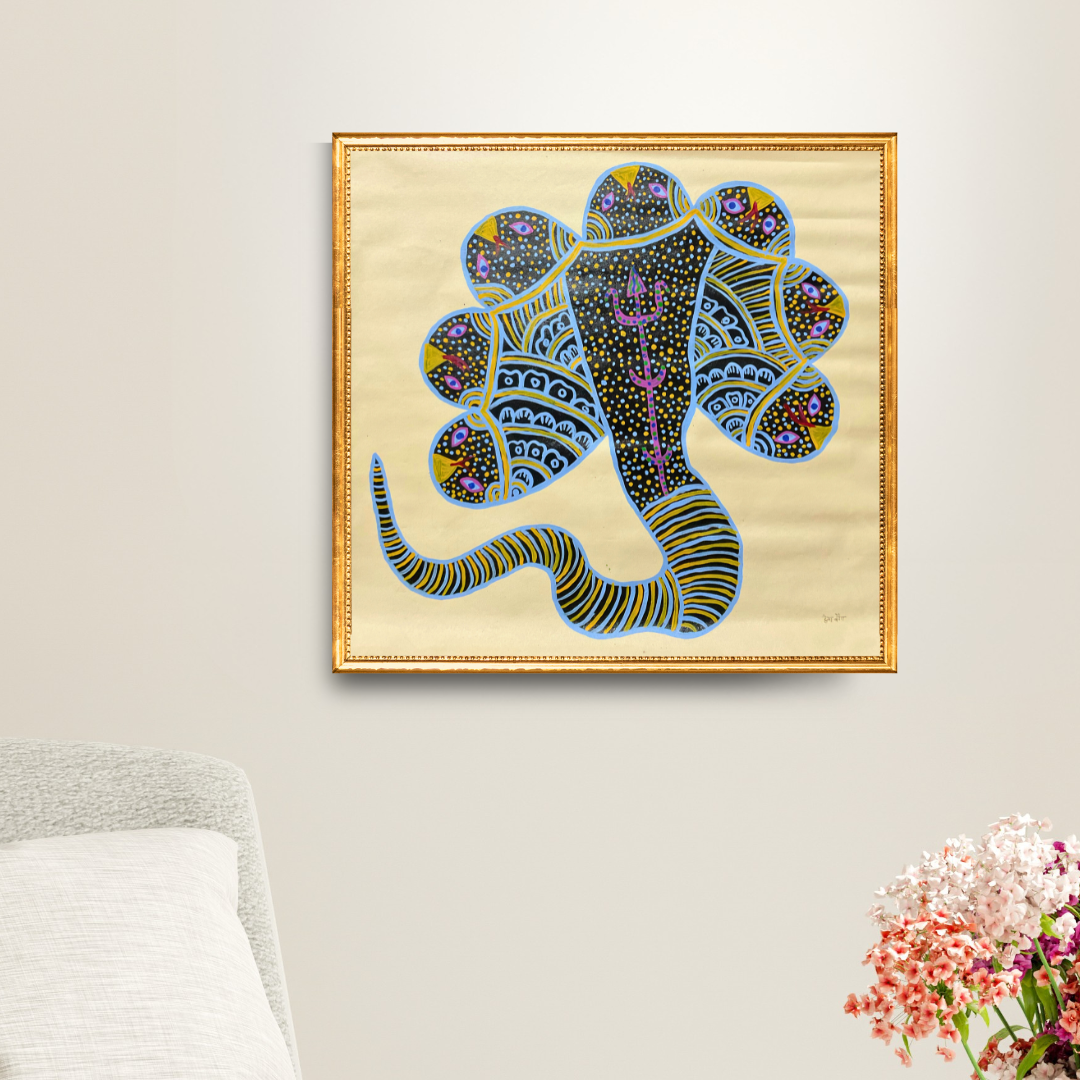
Sheshnag: The King of Serpant
Painting: Lanka Kand - Agni Pariksha

Keeper of the Skies
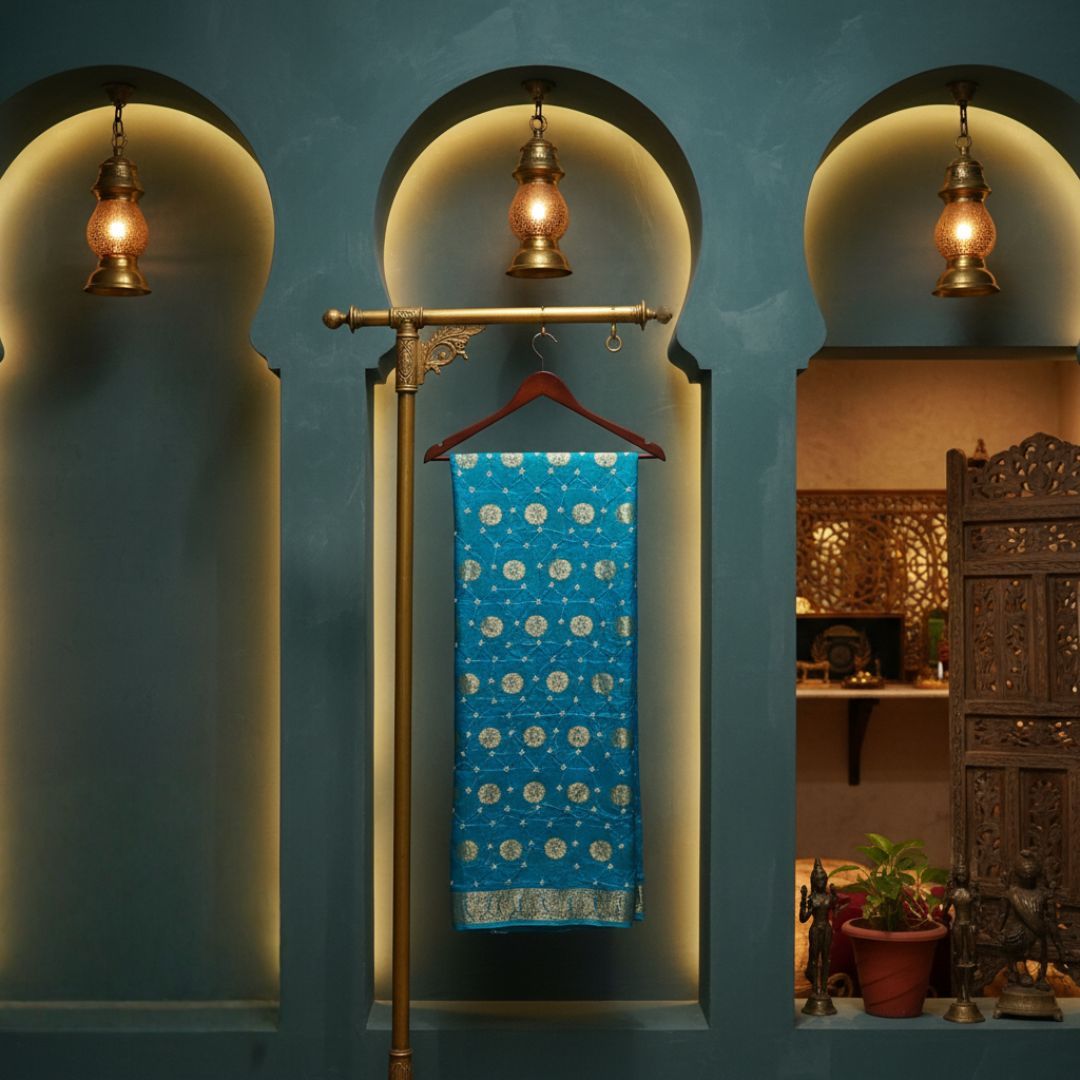
Silk Doller Silki Butta Saree with Coordinated Blouse Piece (Unstitched)
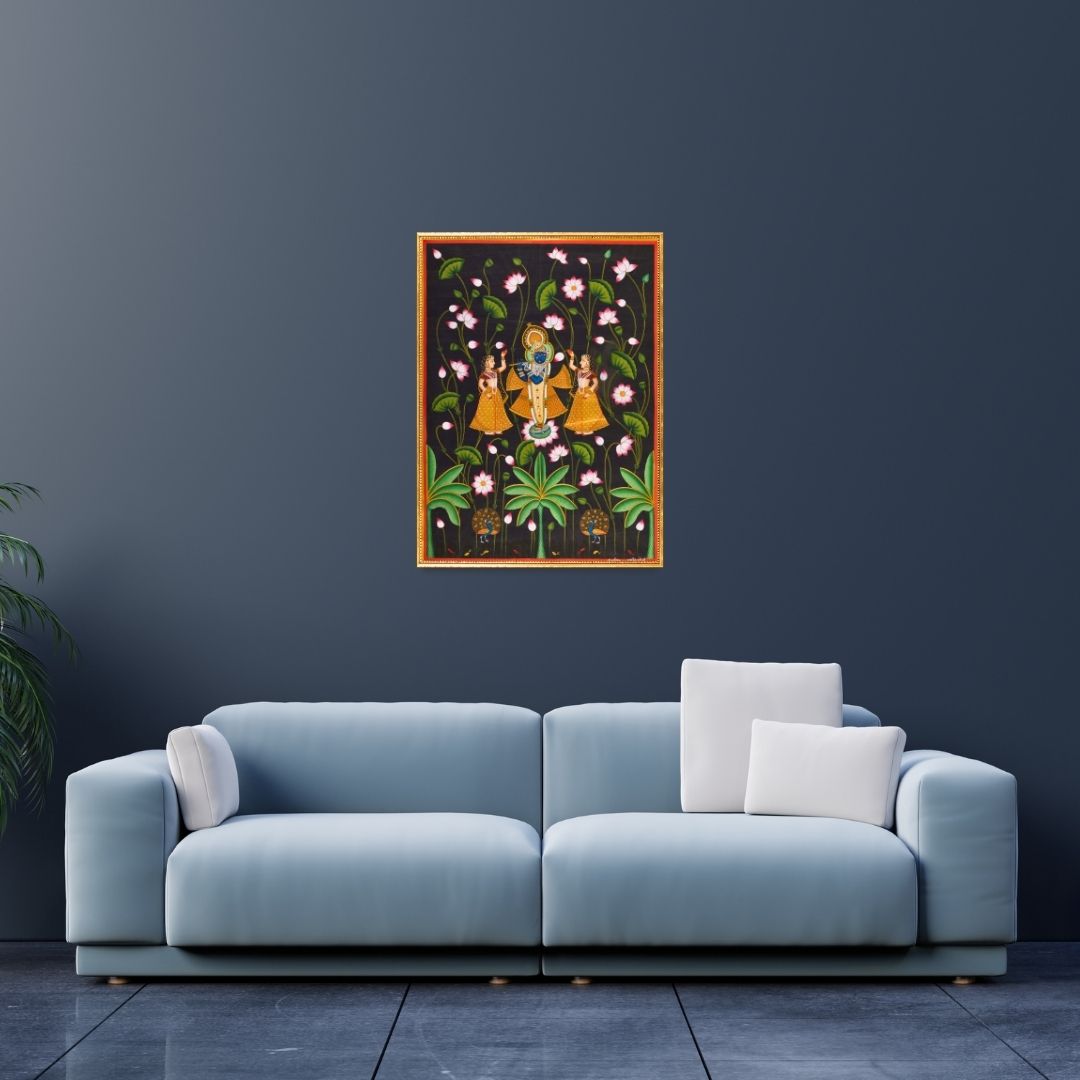
Pichwai Shreenathji in Jungle Painting
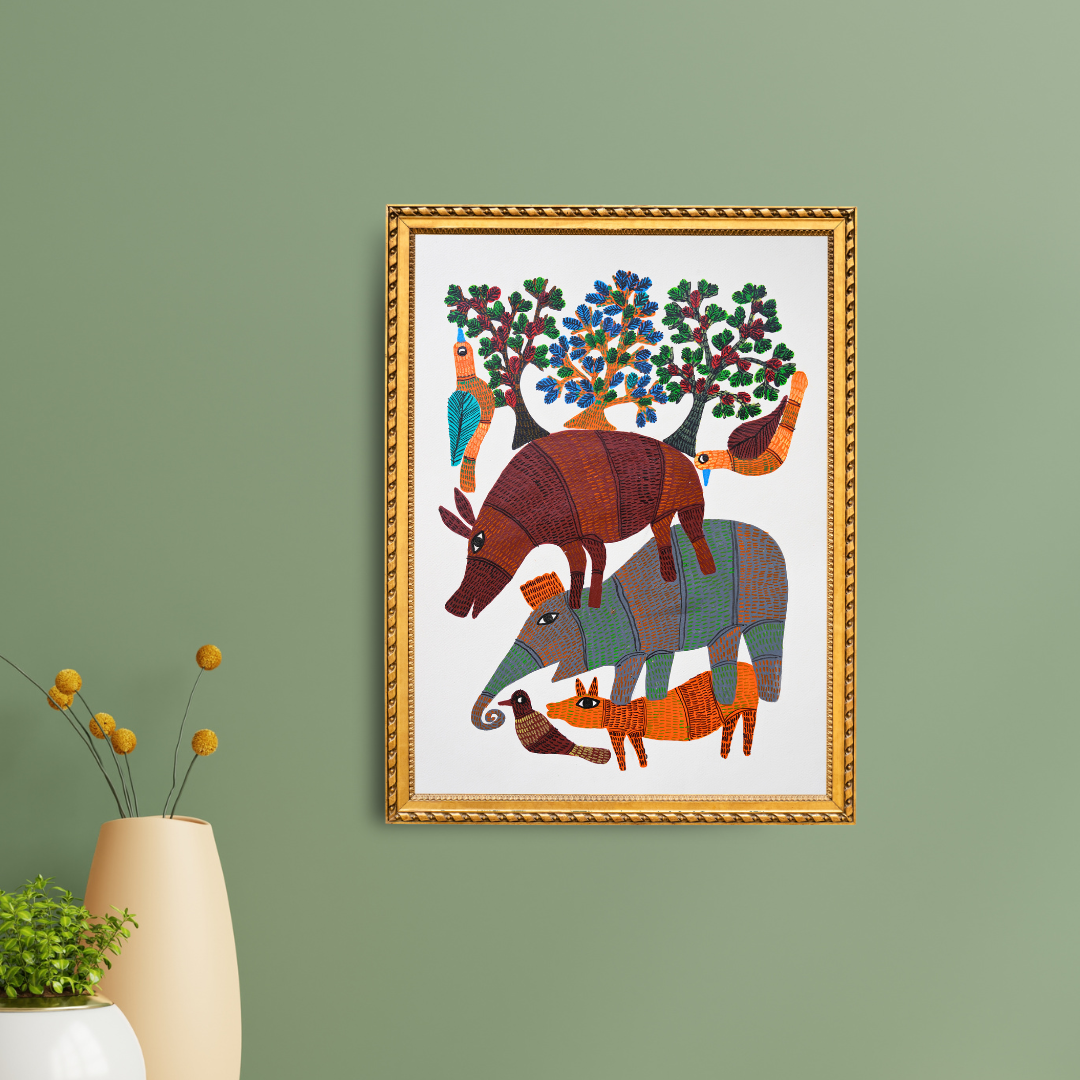
Gond Animals
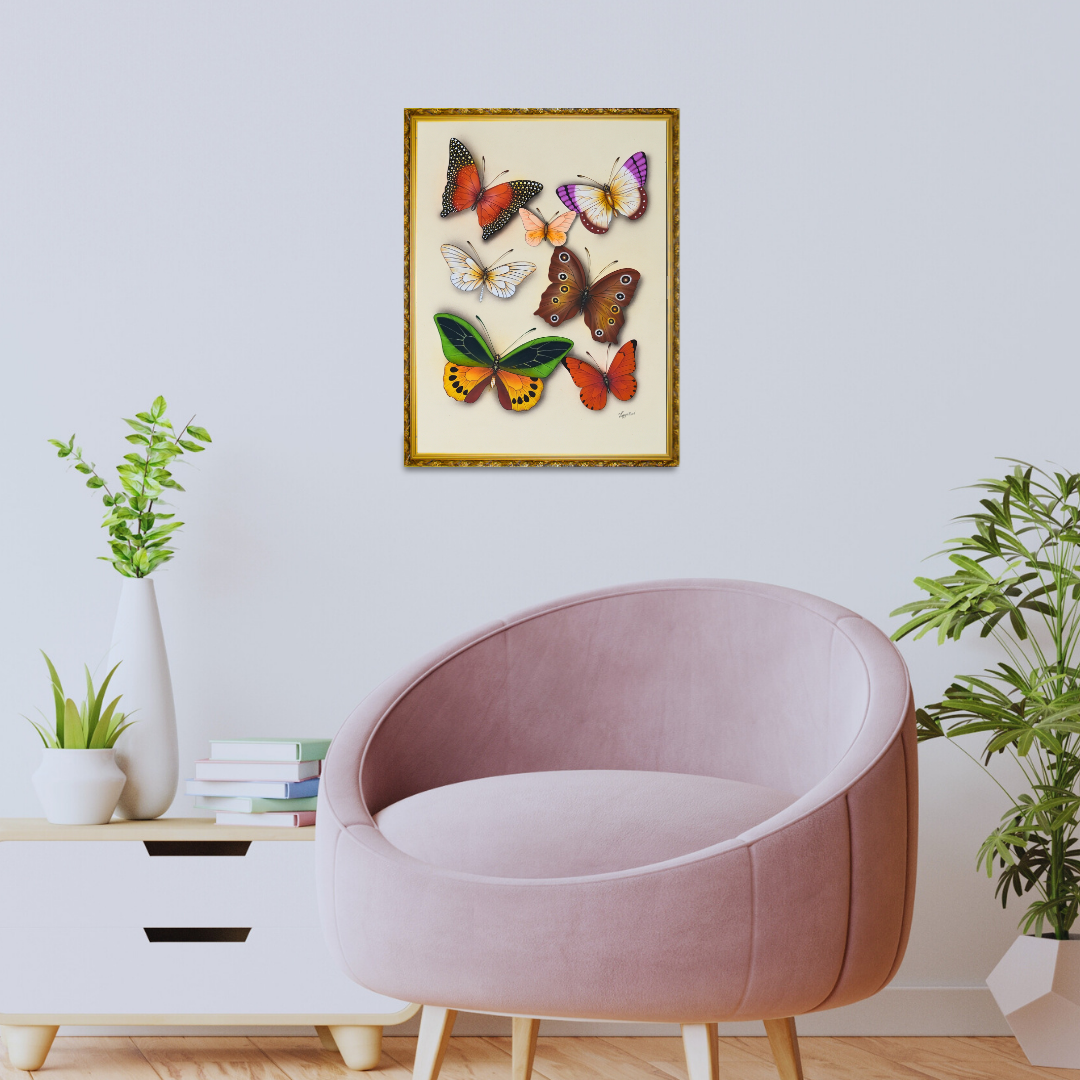
Symphony of Flight
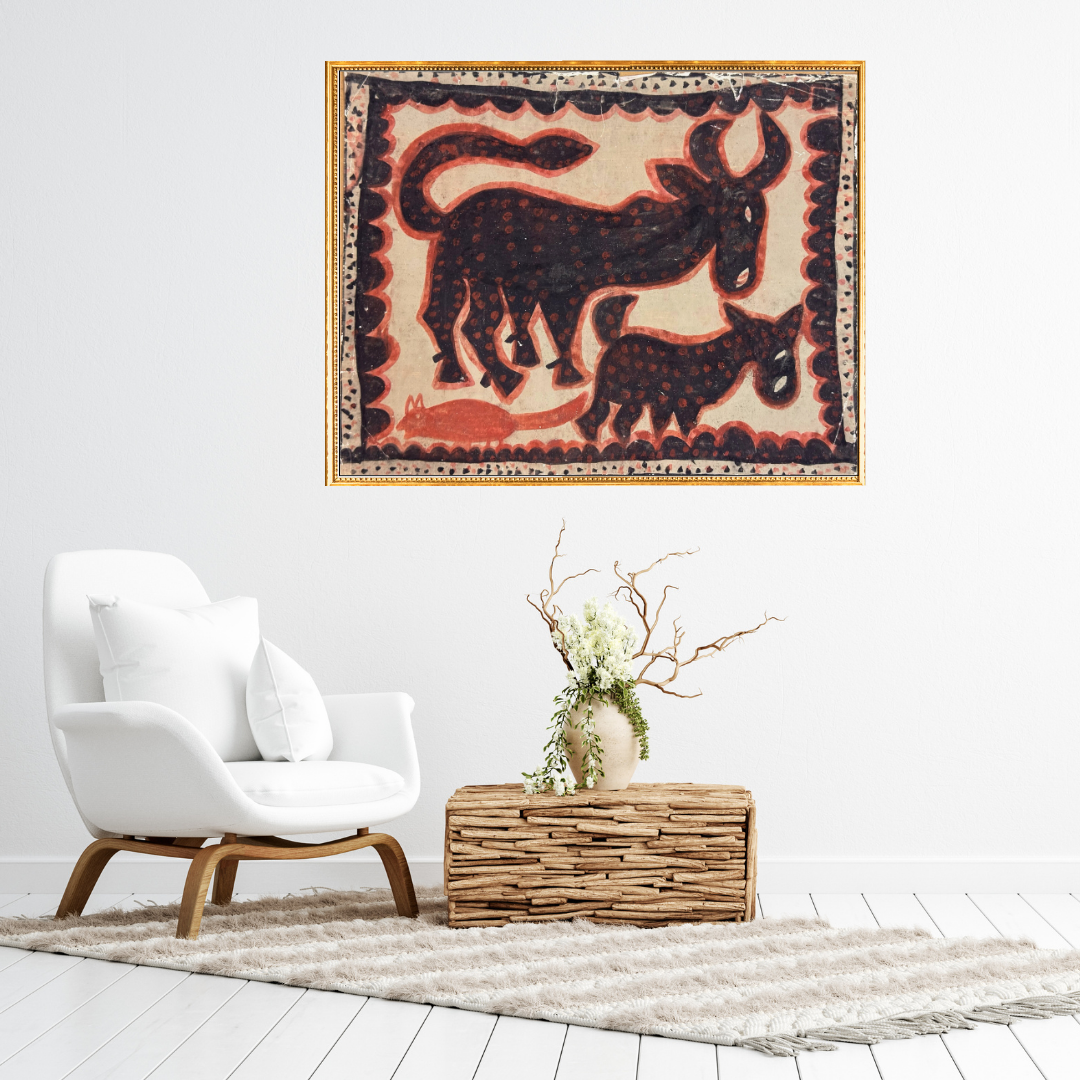
Harmony in the Wild by Sajhwa Devi
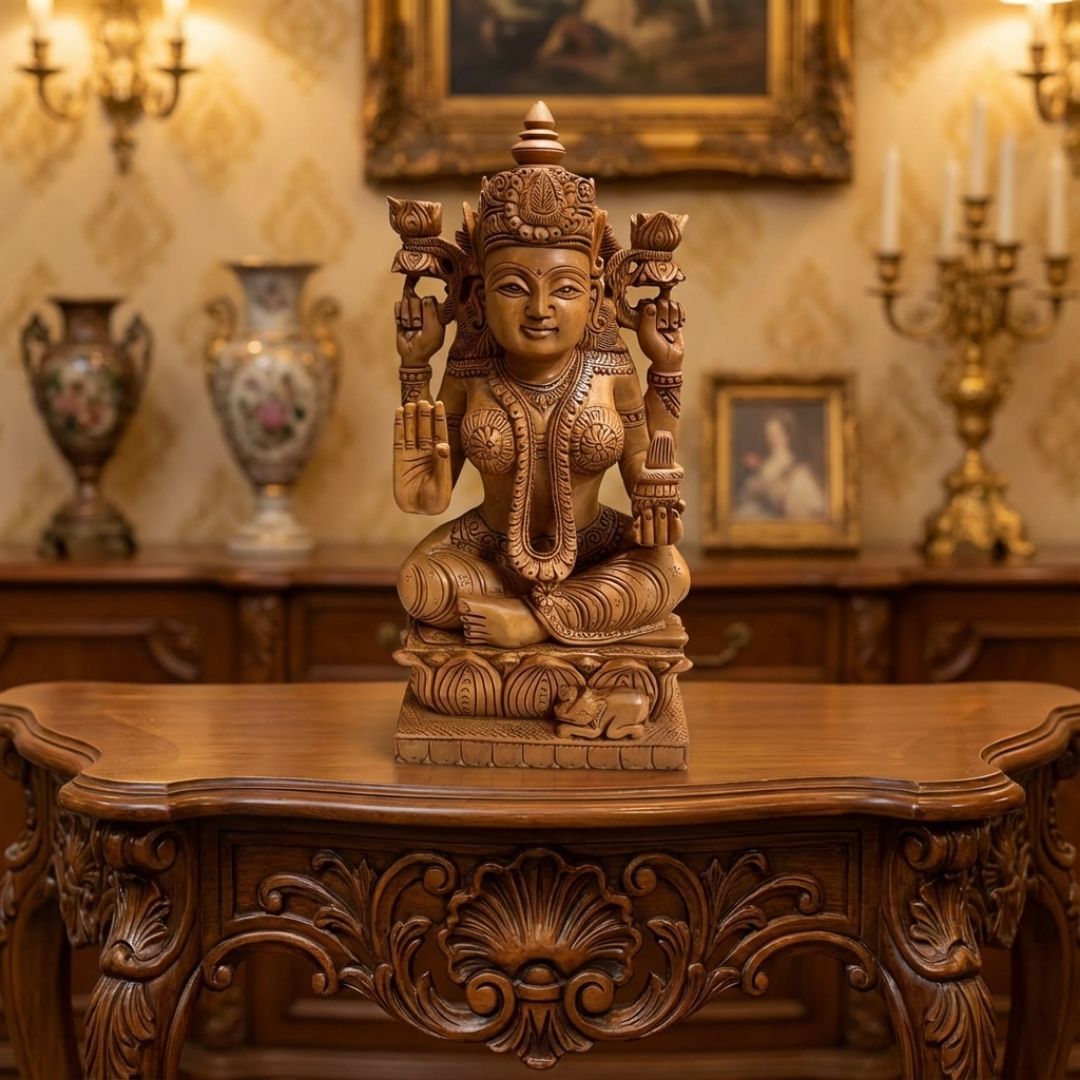
Lakshmi Mata Wooden Sculpture Sitting on Lotus with Kalash and Blessing Mudra
History
Background: The Bihar region has one of the earliest documented pottery traditions in the Indian subcontinent, with archaeological evidence from Mauryan-period sites including Nalanda and Rajgir confirming pottery production from at least the third century BCE. The potters of the Mithila region continued producing utilitarian and ritual clay objects through the medieval period and under successive dynastic regimes, including the Maithil kingdoms and the later Mughal and British periods. The Bihar government's arts and craft portal notes that Bihar has a history of pottery work from the Mauryan and Gupta periods, with potters producing utensils and tiles across many centuries.
The Madhubani painting tradition developed in parallel within the domestic and ritual context of Mithila women's lives. The tradition of painting on freshly plastered mud walls was specifically associated with ritual occasions including weddings, births, and festivals. The kohbar ghar (nuptial chamber) wall paintings are identified by the Indigo Arts gallery documentation as the central historical form of the practice. The visual language developed within this domestic wall-painting tradition, characterized by two-dimensional imagery, geometric patterning, fish-eyed human figures, and the elimination of empty space, is the visual vocabulary that was later applied to paper, canvas, and clay objects as the tradition modernized.
Culture and Societies: The Mithila region has been a centre of Maithili culture, as noted by Britannica. The district of Madhubani is identified as the historical centre of this culture, situated in the fertile North Bihar Plain between the Balan, Kanila, and Sugarwe rivers. The culture and societies of the region are characterized by significant social stratification that historically shaped the practice of Madhubani painting: in the 1960s, the Bharni and Tantrik styles were predominantly practiced by Brahmin women, while Kayastha women practiced the Katchni style, and artists from other communities incorporated elements from their own daily life and local legends, as documented in the Wikipedia article on Madhubani art. The Panji system of 1326, referenced in Indian Eagle's overview of the tradition, created formal distinctions between the social positions of Brahmin and Kayastha women that influenced the thematic range available to women of different communities in their painting. Terracotta production by the Kumbhakar community occupies a distinct social position in the same region. The Bihar Tourism portal notes that terracotta was historically considered a poor man's craft but has acquired aesthetic recognition over time. The Dolls of India documentation identifies Darbhanga terracotta as specifically associated with brightly painted clay horses, and also with clay elephants placed on rooftops to mark marriages in the household, demonstrating that the pottery tradition already had an interface with the social and ritual contexts in which Madhubani painting also operated.
Religious Significance: Both the painting and pottery components of Madhubani pottery carry documented religious significance. The Wikipedia article on Madhubani art identifies specific ritual occasions to which paintings are tied: birth, marriage, Holi, Surya Shashti, Kali Puja, Upanayana, and Durga Puja. The kohbar ghar (nuptial chamber) painting tradition is specifically associated with love, fertility, and the protection of the newlywed couple. The Ram Janaki temple in Madhubani is documented in the Google Arts and Culture Dastkari Haat Samiti documentation as having its walls hand-painted by local Madhubani painters with Ramayana scenes, establishing the tradition's connection to active religious architecture.
The pottery of the broader Bihar region carries independent religious associations. The Dolls of India terracotta documentation notes that Bihar is well known for Dhabus, which are dome-shaped terracotta structures for the spirits of the departed, and for votive terracotta figures of animals including horses, cows, elephants, and tigers placed at shrines by devotees. The clay elephants placed on rooftops to mark marriages represent another intersection between pottery production and the ritual life of the region. The specific religious significance of pottery objects painted with Madhubani motifs follows from both of these traditions and is consistent with the broader function of Madhubani imagery as ritual and protective decoration, though no specific religious protocol governing the combined Madhubani pottery form is separately documented.
Shop Paintings
View all →Akriti to Sanskriti
Indian Folk Toy
Radiant Symphony
Terracotta Jewellery Set
Pure Sandalwood Royal Lady Sculpture with Intricate Shrine Carving
Cosmic Wings
Artventures of Pichwai - Elementary
The Watchtower
Pure Sandalwood Lace-Carved Heritage Pankha with Peacock Handle
Single Double-Sided Block Printed Cotton Comforter in Yellow Floral Pattern
Two Peacocks Under a Tree
Sheshnag: The King of Serpant
Painting: Lanka Kand - Agni Pariksha
Keeper of the Skies
Silk Doller Silki Butta Saree with Coordinated Blouse Piece (Unstitched)
Pichwai Shreenathji in Jungle Painting
Gond Animals
Symphony of Flight
Harmony in the Wild by Sajhwa Devi
Lakshmi Mata Wooden Sculpture Sitting on Lotus with Kalash and Blessing Mudra
Understanding the Art
Style: The visual style of Madhubani pottery derives entirely from the Madhubani painting tradition as applied to three-dimensional clay surfaces. The characteristic features documented in Madhubani painting sources are: two-dimensional imagery; figures depicted with prominently outlined, fish-like bulging eyes and pointed noses; thin waists in human figures; geometric patterns; and no empty space left unfilled, with gaps covered by flowers, animals, birds, or geometric designs. The Wikipedia article on Madhubani art identifies these as consistent formal properties across all styles of the tradition. Border decoration with geometric and floral patterns is standard.
Five formally defined styles exist within Madhubani painting, each associated with distinct community origins, thematic content, and formal vocabulary. The Bharni style, practiced by Brahmin women, focuses on religious themes and is characterized by filled surfaces with vivid colour. The Katchni style, associated with Kayastha women, uses line work and hatching rather than filled colour blocks. The Tantrik style uses diagrammatic and sacred geometry. The Godna style, practiced by the Paswan community, is derived from traditional tattooing patterns and does not depict religious figures. The Kohbar style is the wedding chamber tradition with fertility and protective symbolism. These distinct styles are documented in the Wikipedia article on Madhubani art and the Rural Handmade overview.
When these styles are applied to pottery objects, the curved and three-dimensional surface of a clay pot provides different spatial constraints from the flat plane of paper or wall. No specific formal documentation of how the spatial conventions of Madhubani painting are adapted to the curved surface of pottery objects is available in the institutional sources reviewed.
Central Motifs and Their Significance: The motif vocabulary of Madhubani pottery is drawn directly from the Madhubani painting tradition, where it is extensively documented. The Bihar government portal and Wikipedia document the primary motifs as: Hindu deities including Krishna, Rama, Shiva, Durga, Lakshmi, and Saraswati; the sun and moon; sacred plants including Tulsi and Banyan; birds, fish, snakes, tigers, peacocks, and elephants; scenes from Hindu epics including the Ramayana and Mahabharata; wedding and court scenes; and geometric forms. The Wikipedia article on Madhubani art states that each motif carries symbolic meaning, with fish representing fertility and good fortune, snakes representing divine protection, the sun and moon representing cosmic order, and lotus representing purity. Specific ritual motifs are associated with specific occasions: the Kohbar style uses bamboo, lotus, fish, and the deity figures of Radha-Krishna as fertility and marital symbols for the nuptial chamber context. The Godna style uses non-figural tattoo-derived geometric patterns.
The Tantrik style incorporates geometric yantras associated with specific deities. These documented associations are the symbolic framework within which Madhubani pottery motifs operate when applied to clay objects for ritual or decorative use.
Process: The process of Madhubani pottery involves two sequential craft operations: the production of a terracotta clay object, and its decoration with Madhubani motifs.
The Bihar Tourism portal documents the terracotta production process for the Darbhanga-Madhubani region as follows. Artisans use a potter's wheel to form shapes using their hands. The raw materials are Ram-Ras Mitti and Gerua Mitti, which are local names for specific clay types used in the region. After forming, objects are completed and then fired in a coal-burning kiln. No additional glaze is documented for the traditional terracotta objects of the Bihar region.
The Madhubani painting component is applied to the fired or unfired clay surface using the tools and pigments documented for the painting tradition. The Wikipedia article on Madhubani art and the Bihar Tourism painting portal document the following: painting is done using fingers, twigs, brushes, nib-pens, and matchsticks depending on the detail required; natural pigments traditionally used include vermilion powder mixed with ground mustard seeds for red, cow dung mixed with lampblack for greenish-black, rice paste for white, pevdi for lemon yellow, turmeric for yellow ochre, indigo for blue, palash flower for orange, bilva leaf for green, and red clay for Indian red; an outline in black is typically established first, after which areas are filled with colour. The Laasya Art documentation notes that paper is traditionally treated with cow dung before painting to preserve the colour intensity of natural pigments, a surface preparation step that may apply to terracotta surfaces as well. The quality of Madhubani painting is judged in part by the fineness of line and the precision of hatching, particularly in the Katchni style.
Mediums Used: The primary clay materials used in terracotta pottery from the Darbhanga-Madhubani region are Ram-Ras Mitti and Gerua Mitti, as documented by the Bihar Tourism portal. Coal is used as the firing fuel. The decorative pigments applied in the Madhubani painting tradition and used on pottery objects are drawn from the natural dye vocabulary of the painting tradition: turmeric, indigo, lampblack, cow dung, rice paste, bilva leaf, palash flower, and vermilion mixed with mustard seeds are documented in the Wikipedia article on Madhubani art. Application tools include twigs, matchsticks, fingers, brushes, and nib-pens.
The potter's wheel is the primary forming tool for the clay vessel itself. No mechanical devices are used in either the pottery or the painting component of the craft.
New Outlook
Both component traditions face documented sustainability pressures. The terracotta tradition of Bihar's Darbhanga-Madhubani zone provides regular livelihoods to only 300 to 500 artisan families as documented by Bihar Tourism, a relatively small base that indicates limited commercial scale and vulnerability. The broader Madhubani painting tradition, while more economically active, faces threats from counterfeit machine-made products, as documented in the Kishalay Raj research paper (IIM Bangalore, 2025), and requires GI enforcement to protect the economic interests of genuine practitioners.
Institutional responses include the Mithila Chitrakala Sansthan in Madhubani district, which offers formal three-year degree courses in both Madhubani painting and terracotta as documented in the district administration portal. The Upendra Maharathi Shilp Anusandhan Sansthan (UMSAS) in Patna functions as the state craft research body supporting skill development and enterprise formation in Bihar craft sectors, and has documented terracotta enterprises in the state including Rang Variation Pvt Ltd., which was providing employment to 100 women in the terracotta sector as of available documentation. The Gram Vikas Parishad in Ranti and the institutions Kalakriti in Darbhanga and Vaidehi in Benipatti are identified in the Wikipedia article on Madhubani art as active centres for maintaining the painting tradition. Government certification through the Development Commissioner (Handicrafts) is documented as part of the institutional framework for supporting Bihar's painting-based craft sector.
Contemporary artisans in Bihar have documented the expansion of Madhubani art motifs to a wide range of objects beyond paper and cloth, including utensils, terracotta lamps, wooden frames, and ceramic surfaces, as documented in the UMSAS craft overview. This represents a commercialization strategy that positions the decorative vocabulary of the Madhubani painting tradition as adaptable to functional craft objects for urban domestic markets, with Madhubani pottery forming a component of this broader adaptive range.