

Lucknow Chikan Craft - The Handicraft Tradition of Uttar Pradesh
Explore Lucknow Chikankari, the handicraft tradition of Uttar Pradesh, and learn about its origins, techniques, cultural significance, and artistic heritage.
Introduction
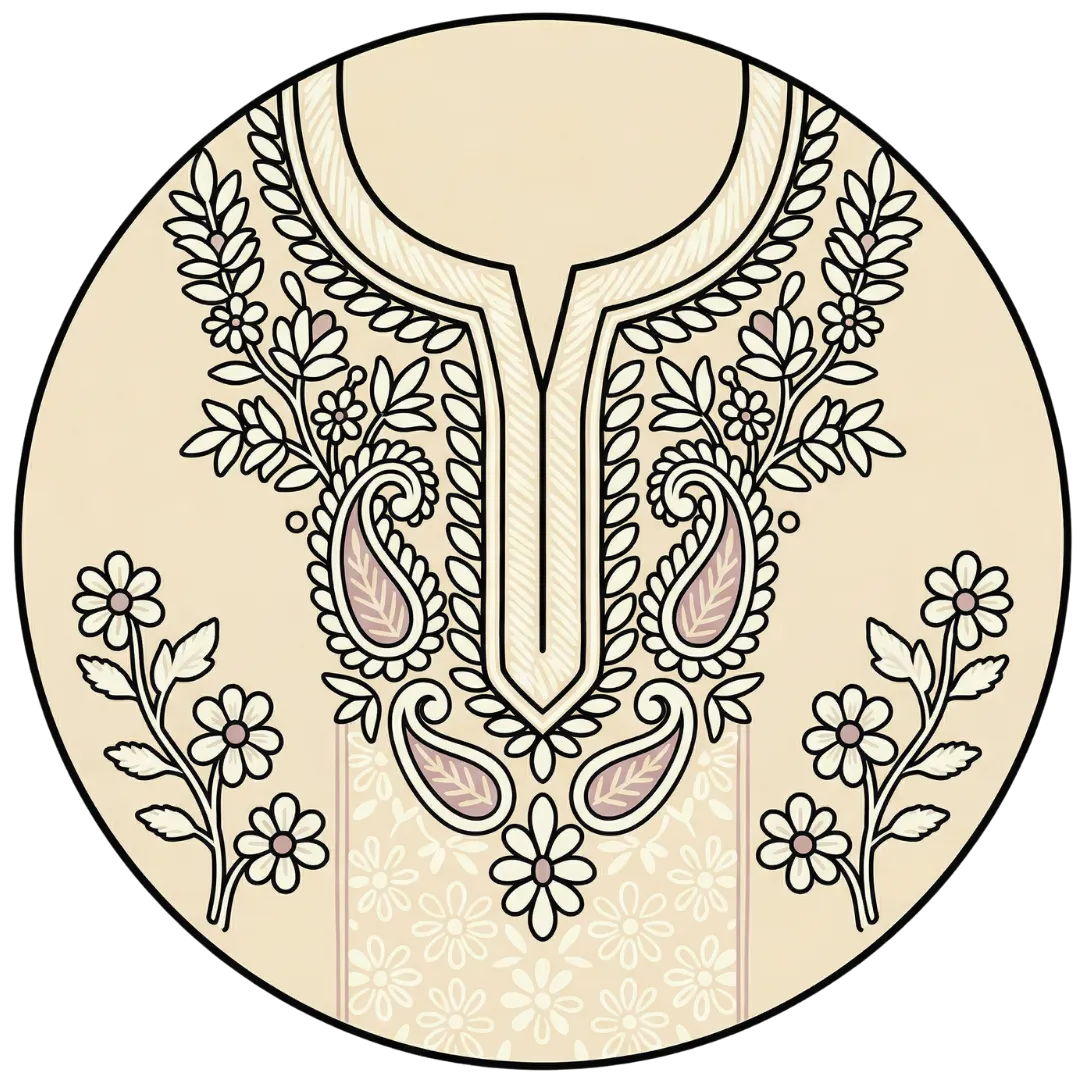
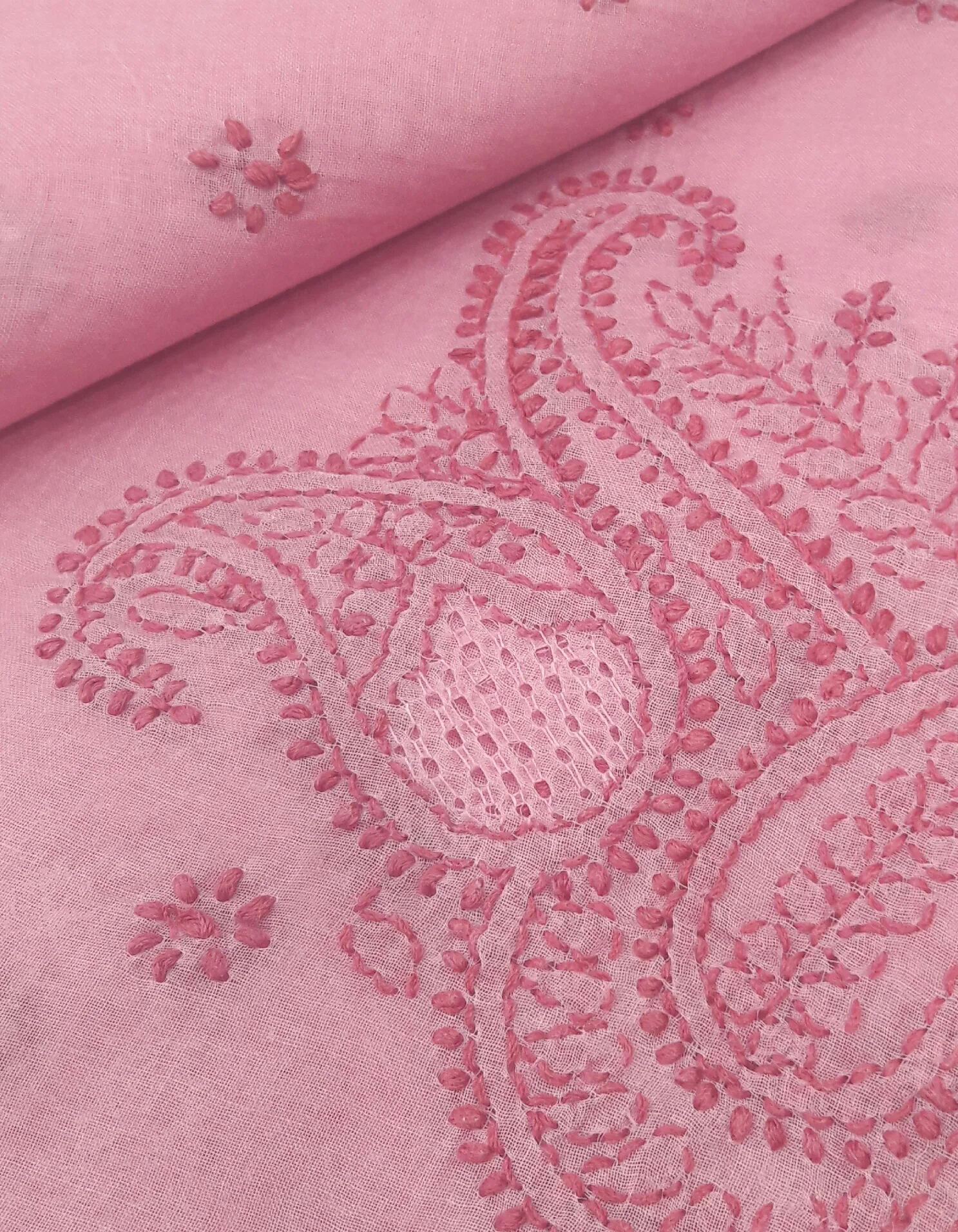
Lucknow Chikankari is a form of traditional hand embroidery associated with Lucknow, Uttar Pradesh, in which white untwisted cotton thread is worked in a repertoire of thirty-two distinct stitches on white or light-coloured muslin or cotton fabric to produce delicate floral and geometric patterns. The embroidery is characterised by three categories of stitchwork: flat stitches that merge with the fabric surface, raised and embossed stitches that create tactile texture, and jaali work, which involves the displacement and securing of warp and weft threads to produce an open mesh pattern resembling latticed screens. Originally a court craft under Mughal and Nawabi patronage, Chikankari is today a major cottage industry employing a predominantly female artisan workforce across Lucknow and its surrounding districts. The craft received Geographical Indication (GI) status in December 2008.
Etymology The origin of the word 'chikan' is contested among scholars. The MAP Academy (Impart) records two scholarly derivations: the Persian word 'chakeen,' meaning a coin with which artisans were paid, and 'chiq,' the latticed screen used to maintain purdah in Mughal and Nawabi architecture. A third derivation from the Persian 'chikaan,' meaning drapery, is also cited in craft literature. The craft historian Laila Tyabji connects chikankari to the white-on-white embroidery tradition of Shiraz that entered India through Persian noble culture at the Mughal court. The suffix 'kari' is a Persian-derived Urdu term meaning 'work' or 'craft upon.'
Origin The MAP Academy records that the historical origins of chikankari are obscure due to the absence of material evidence before the 19th century. Scholars trace origins to the rafoogars (cloth menders) of jamdani weaving, with supporting suggestions based on Mughal miniature illustrations. Among practitioners, the most widely cited attribution is to Empress Nur Jehan, wife of Mughal Emperor Jahangir, credited with introducing the embroidery from Persian court tradition to India in the early 17th century. The earliest material evidence of chikan work is from the 19th century, when production centres included Calcutta, Dacca, Peshawar, and Madras. The craft became established in Lucknow under Nawab Nazir Ud Din Haidar's patronage. The capital of Awadh shifted from Faizabad to Lucknow in 1722, bringing the craft concentration to the city.
Location Lucknow, Uttar Pradesh, and surrounding districts. The main Lucknow market for Chikankari products is Chowk. Production is concentrated in Lucknow and adjoining rural districts including Hardoi.
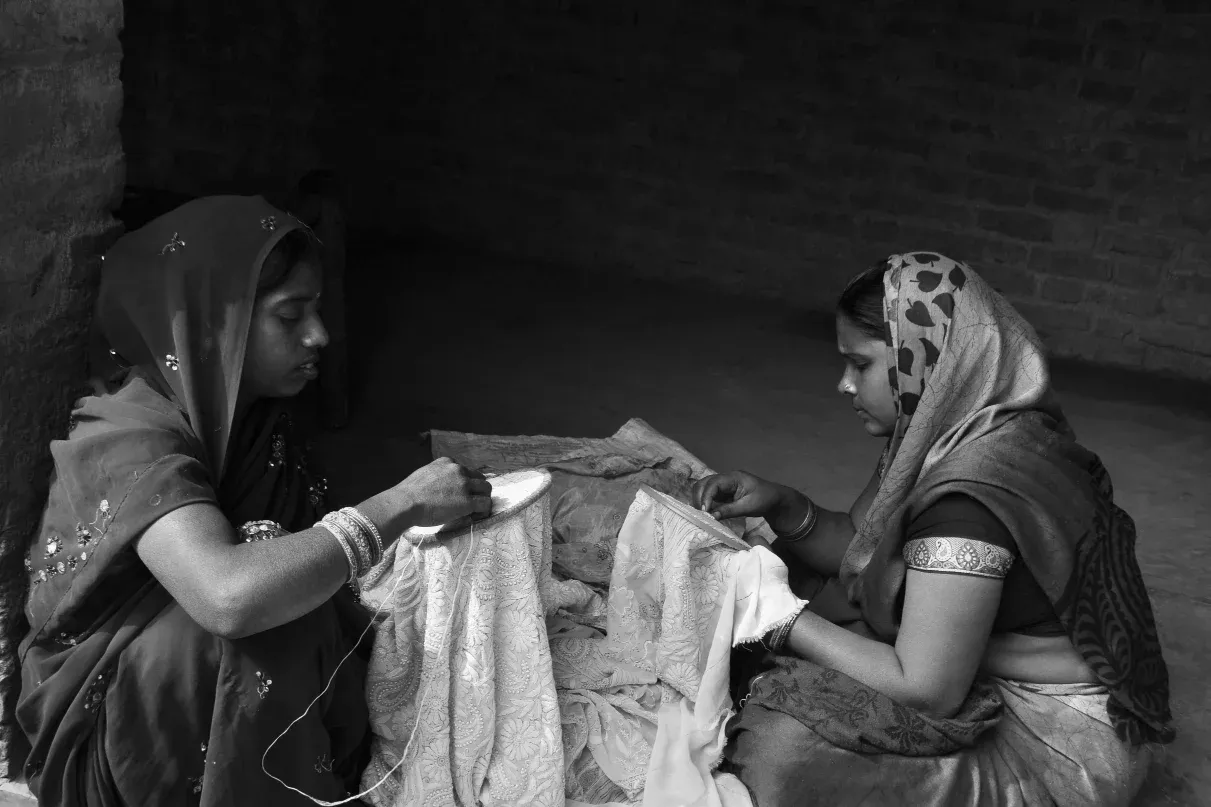
Community Chikankari work involves specialist artisan groups: Thappagars (block makers), Chhappagaris (printers), Rangrej (dyers), Darzis (tailors), Chikandoz (embroiderers), and Dhobis (washermen). The embroidery work, once predominantly male in karkhana workshops, is now performed primarily by women from rural households. More than 5,000 families are documented as engaged in the embroidery tradition.
Relevance Lucknow Chikankari is among the most widely recognised Indian textile crafts, carrying very high cultural and economic relevance. It is a major livelihood source for the female artisan population of Lucknow and its rural hinterland. The craft has been integrated into contemporary Indian and international fashion across sarees, kurtas, dupattas, suits, and home linen.
History
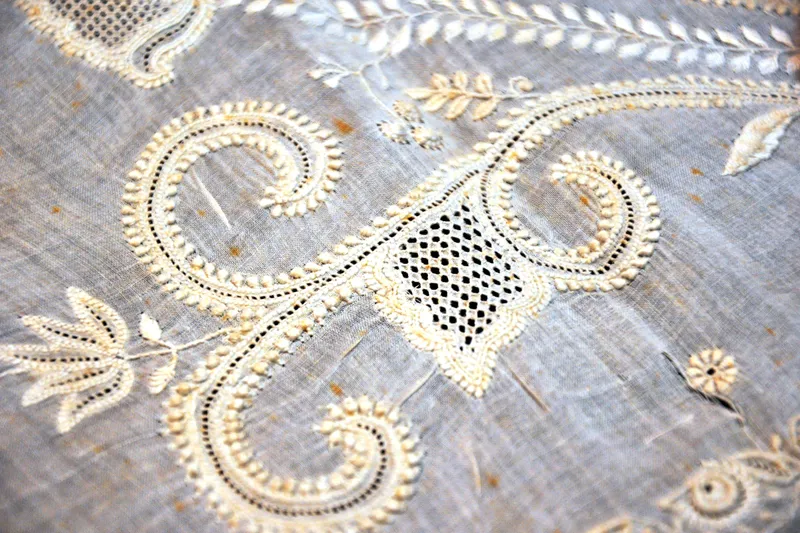
Background The Nawabs of Awadh established Lucknow as a major centre of art and refined culture from the 18th century. Under Nawab Wajid Ali Shah, who ruled until the annexation of Awadh by the British in 1856, chikankari embroidery was a prescribed requirement of court dress. Nawab Wajid Ali Shah was deported to Bengal and took artisans with him, establishing a temporary presence in Bengal and Dhaka. The craft subsequently declined outside Lucknow. The British colonial period disrupted the patronage structure. Industrialisation introduced cheaper mass-manufactured textiles. The Victoria and Albert Museum holds a chikankari sari from Lucknow dated to approximately 1880, one of the earliest verified material specimens. The Cleveland Museum of Art holds a fragment of a cap band from Lucknow dated to the late 1800s.
Culture and Societies Chikankari was historically produced in karkhanas, the workshop structures of Mughal and Nawabi craft production. These employed specialist artisans in a hierarchical model. Following the decline of the Nawabi court, production decentralised into home-based cottage industry. The 1980s saw the first deliberate revival initiative, as noted by the MAP Academy, in which chikankari was promoted among women artisans in Lucknow as a means of economic empowerment. Clare Wilkinson-Weber's ethnographic study, Embroidering Lives: Women's Work and Skill in the Lucknow Embroidery Industry (1999), documents the social organisation of the contemporary craft economy.
Religious Significance No specific religious significance is documented as intrinsic to Lucknow Chikankari as a craft tradition. The embroidery is applied to garments and household textiles used in a range of secular and ceremonial contexts. The craft's techniques, motifs, and community organisation do not carry formal religious association.
Understanding the Art
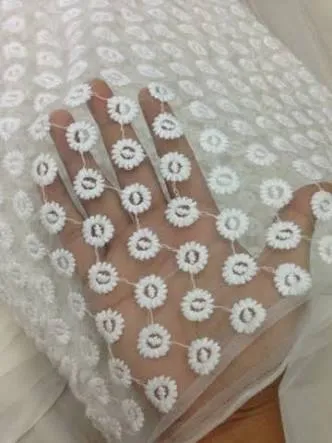
Style The traditional style of Lucknow Chikankari is white thread on white or undyed muslin cloth, known as white-on-white embroidery. This treatment exploits the translucency of fine muslin to produce a play of light and shadow through the embroidery, particularly in the bakhiya shadow-work stitch and the jaali net-work sections. The MAP Academy notes that this form is similar to European whitework embroidery but with a distinct technical vocabulary. Contemporary production now encompasses coloured threads on coloured and patterned fabrics including georgette, silk, chiffon, and synthetic blends.
Central Motifs and Their Significance Chikankari motifs are predominantly derived from the natural world as filtered through Mughal garden aesthetics. The most frequent motifs are the bel (creeper), buti (small floral unit), and keri (paisley). Flower forms including roses, lotuses, and chameli (jasmine), leaf and vine forms, grass stalks (ghaspatti), birds including peacocks and parrots, and geometrical forms complete the conventional vocabulary. Jaali sections are named after the latticed screens of Indo-Islamic architecture: documented varieties include haathkathi, bulbul chashm, makia, mandrazi, phool jaali, and sidhaul jaali.
Process Production involves three phases. The first, chapya (printing), applies patterned wooden blocks to print the design onto fabric using temporary inks historically comprising safeda (white lead oxide) and neel (indigo), both water-soluble. The second, tankha (embroidery), applies the appropriate stitches to each section of the design. Specialist embroiderers handle different stitch types; a single garment may pass through multiple artisan hands. The MAP Academy records that artisans must master four to five stitches out of thirty and train for at least fifteen years before achieving full proficiency. A single garment can take ten to fifteen days to complete. The third phase, dhulayi (washing), removes the temporary printing ink, revealing the embroidery on a clean ground.
The 32 documented stitches fall into three groups. Flat stitches include tepchi (long running stitch for outlining), bakhiya (shadow-work stitch in herringbone style from the wrong side), zanjeera (chain stitch for outlines), katao (applique), and jawaz (reverse-side katao). Raised and embossed stitches include murri (diagonal satin stitches on a tepchi base forming a grain or rice shape), phanda (a shortened murri producing a millet-shaped knot for flower centres), dhum patti (leaf pattern in cross-stitch), and ghas patti (grass leaf in graduated V-stitches). Jaali stitches displace warp and weft threads without cutting them, securing the displaced threads with minute buttonhole stitches to produce an open mesh resembling a latticed screen.
Mediums Used Muslin (Mulmul/Tanzeb): The canonical base fabric, originally sourced from Dacca, valued for its fineness and translucency. Cotton Thread: Untwisted white cotton thread is the traditional embroidery thread. Coloured Thread: Silk, cotton, and synthetic coloured threads are used in contemporary production. Wooden Printing Blocks: Carved wooden blocks apply temporary ink designs to fabric before embroidery. Temporary Inks: Water-soluble safeda and neel inks applied by block to mark the embroidery design. Contemporary Fabrics: Georgette, silk, chiffon, voile, organza, and synthetic blends are used in contemporary production.
New Outlook
Chikankari received GI status in December 2008, establishing Lucknow as the exclusive hub of the craft under the Geographical Indications of Goods (Registration and Protection) Act, 1999. The 1980s revival transformed the craft from a male-dominated karkhana model to a predominantly female home-based industry. NGOs, craft organisations, and designers have sustained market access for artisans. Contemporary Indian fashion designers have incorporated chikankari broadly. The craft faces challenges including competition from machine-produced imitation chikankari, inequitable wage structures, and the erosion of the most complex stitches including murri due to declining numbers of skilled practitioners. The 1986 film Anjuman, directed by Muzaffar Ali, provides a cultural record of the chikan worker community in Lucknow.
Learn Lucknow Chikankari
Bibliography
Sources
Agrahari, Ritu, and Kanwaljit Kaur Brar. “Traditional Potpourri of Chikankari Flat Stitches: Glory of Lucknow.” Asian Journal of Home Science, vol. 12, no. 2, Dec. 2017, pp. 489–495.
Bhushan, Jamila Brij. Indian Embroidery. Publications Division, Ministry of Information and Broadcasting, Government of India, 2006.
Manfredi, Paola. “Chikankari of Lucknow.” Asian Embroidery, edited by Jasleen Dhamija, Abhinav Publications and Crafts Council of India, 2004.
MAP Academy. “Chikankari.” MAP Academy Encyclopedia of Art, 21 Apr. 2022, https://imp-art.org/articles/chikankari/
Naik, Shailaja D. Traditional Embroideries of India. APH Publishing Corporation, 2020.
Trivedi, Madhu. Making of the Awadh Culture. Primus Books, 2014.
Wilkinson-Weber, Clare M. Embroidering Lives: Women’s Work and Skill in the Lucknow Embroidery Industry. State University of New York Press, 1999.
Image Sources
Jain, Payal. “Chikankari: History, Craftsmanship, and the Timeless Elegance of Lucknow’s Signature Embroidery.” Payal Jain, 3 Dec. 2025, https://in.payaljain.com/blogs/our-latest-blogs/chikankari-history-craftsmanship-and-the-timeless-elegance-of-lucknow-s-signature-embroidery. Accessed on May 05, 2026.
Singh, Isha Priya. “Lucknow’s Pride: Chikankari, A Shopping Guide.” Desi Drapes, 25 June 2018, https://desidrapes.wordpress.com/2018/06/25/lakhnaus-pride-chikankari-a-shopping-guide/. Accessed on May 05, 2026.