
Lezim - The Folk Dance Tradition of Maharashtra
From village festivals to public celebrations, explore the evolution and enduring cultural significance of Lezim in Maharashtra.
Introduction
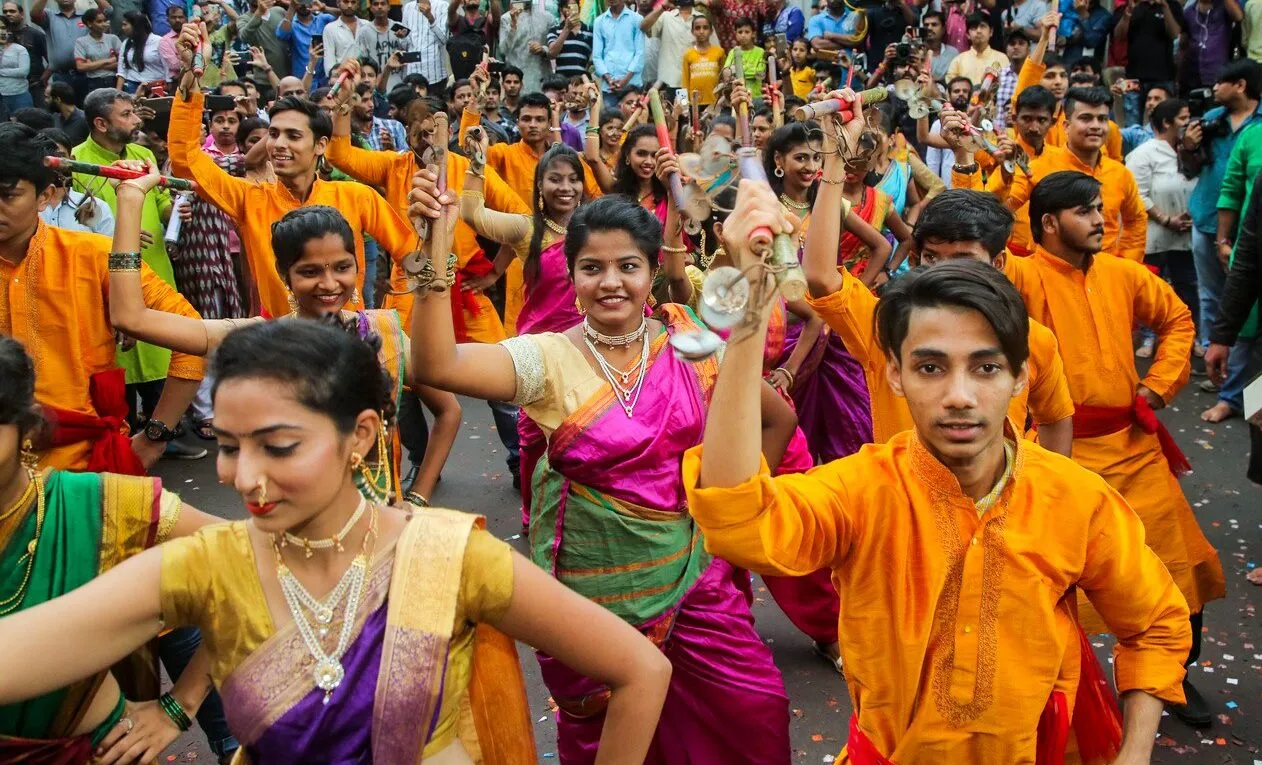
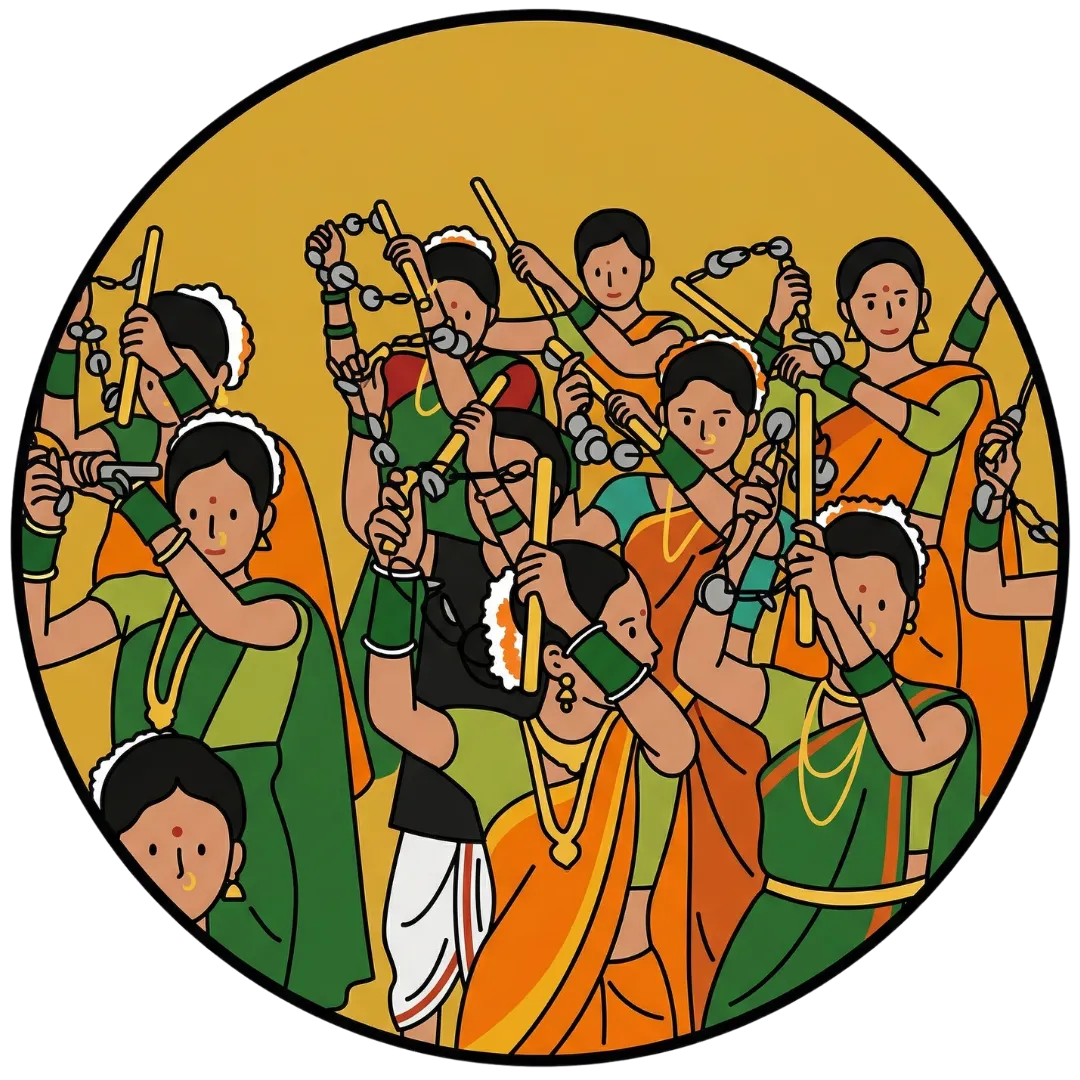
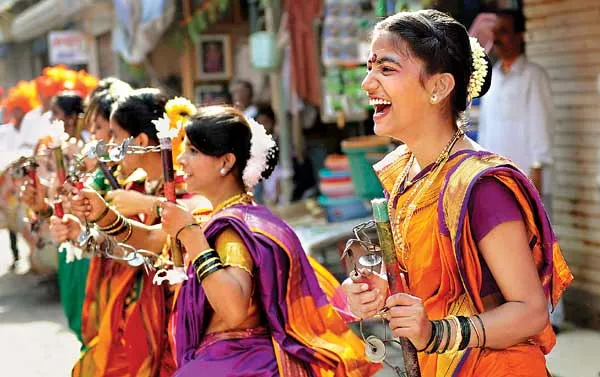
Lezim is a traditional folk performance form of Maharashtra, India, in which dancers carry a small handheld instrument of the same name, producing rhythmic sound through jingling metal discs while executing vigorous synchronized movements. The form occupies a distinctive position among Maharashtra's folk arts as a practice that functions simultaneously as performance, physical exercise, and martial discipline. It is most prominently staged during the Ganesh festival (Ganeshotsav) and is used as a fitness drill in Maharashtra's schools and physical training institutions.
Etymology
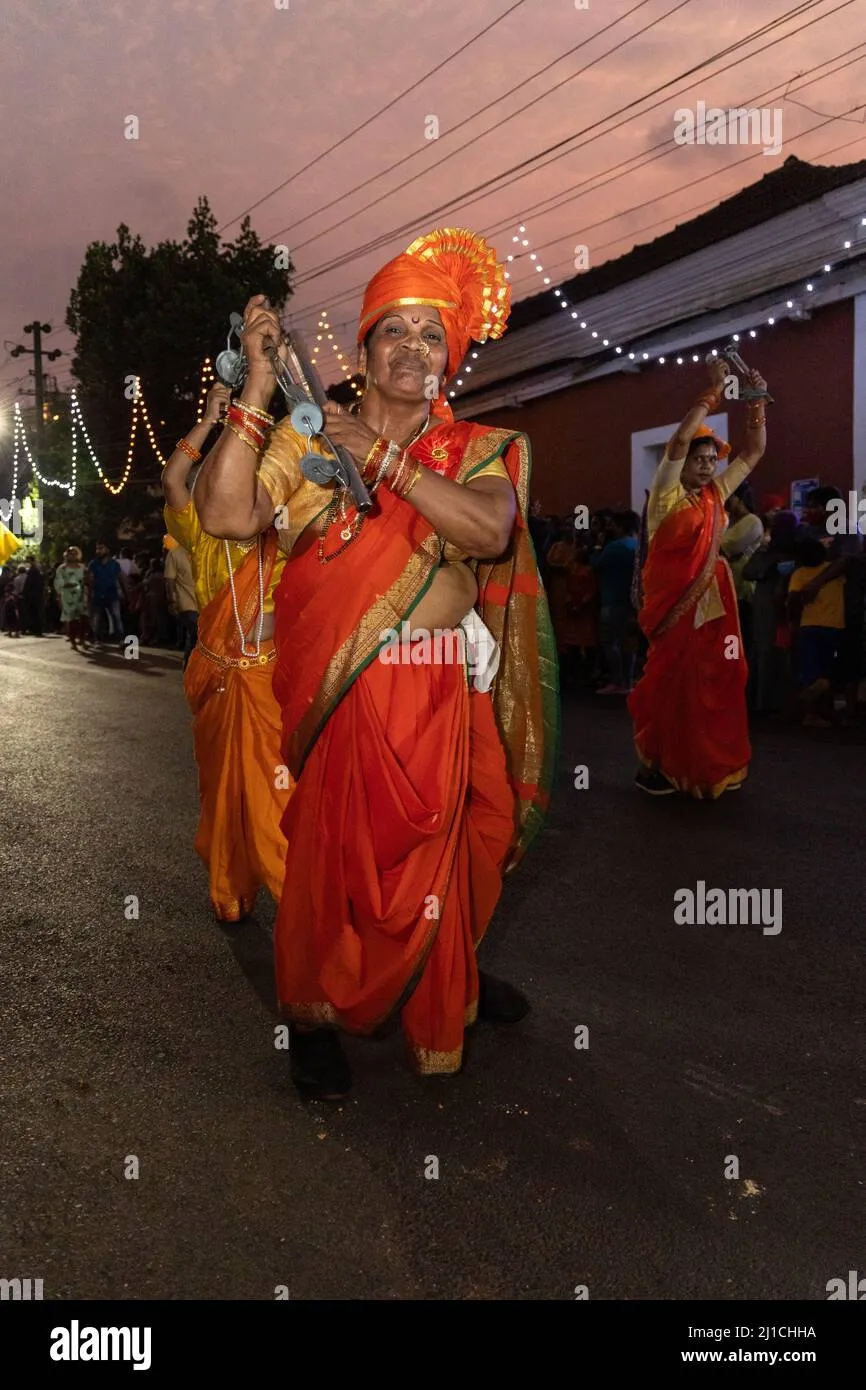
The instrument from which the dance takes its name is the Lezim, a wooden stick or pole with metallic cymbals or jingles affixed at intervals. When the stick is shaken, swung, or struck against the dancer's body, the jingles produce a characteristic rhythmic sound. The word's Etymology is not definitively established in available sources; some sources connect it to the Marathi word for a jingling or rattling sound.
Origin
Available sources attribute the origin of Lezim to the period of the Maratha Empire under Chhatrapati Shivaji Maharaj, where it is described as a form of physical conditioning and martial exercise for soldiers. The Scribd document "Lezim Dance: History and Significance" describes its origin as a military exercise under Shivaji Maharaj that was subsequently adapted as a cultural performance. Exact dating of the formalized performance tradition remains unclear in academic sources, as the transition from martial exercise to folk dance occurred gradually. Historically, variations of the Lezim instrument and practice existed in the villages of Maharashtra and parts of Gujarat, though the rural variations are now rare.
Location
Lezim is primarily associated with rural and urban Maharashtra and is especially prominent in Pune and surrounding districts, where the Ganesh festival is celebrated with great public investment. It is also practiced in parts of Gujarat. The dance is performed as part of the processions, street performances, and cultural programs that accompany Ganeshotsav and Gudi Padwa.
Community
Lezim is performed across Maharashtra's communities and does not have a single caste-specific association. Children's institutions, including schools, have been significant carriers of the tradition. The school associated with the Vasant Dada Patil Education Trust (Pandurang Vidyalaya) is documented as having been a notable early institutional performer of the dance. Lezim has also been used as a drill exercise by militias and physical culture movements.
Relevance
Lezim achieved international visibility when 400 of the best Maharashtrian Lezim performers gave a demonstration at the 9th Asian Games held in Delhi in 1982. The dance remains a regular feature of Maharashtra's cultural calendar, particularly during Ganeshotsav. Its integration into school fitness programs across Maharashtra makes it one of the most widely encountered folk forms in the state.
History
Background
The Lezim instrument's construction evolved from heavier martial versions to the lighter performance instrument used today. Historical sources document a variation using a 2.5-foot bamboo pole called the Reedh, connected by an iron chain (Dhanusyasarakhi), which was used as a resistance exercise. Another variation called the Koyande used a 15-to-18-inch wooden pole with an iron-linked chain weighing approximately one kilogram. The physical culture movement of the late 19th and early 20th centuries in Maharashtra, which drew on indigenous exercise traditions as part of nationalist cultural assertion, incorporated Lezim as one of its disciplines.
Culture and Societies
Lezim is most prominently a festive and civic performance tradition. The Ganesh festival, instituted in its public form by Bal Gangadhar Tilak in 1893 as a vehicle for community mobilization, created large-scale public performance contexts in which Lezim groups (called Trupas or performing groups) were prominent participants. The civic and community character of Lezim performance reflects the social history of Ganeshotsav as a collective public gathering.
Religious Significance
Lezim's association with the Ganesh festival gives it a religious context by virtue of the festival's sacred character. The performance is presented as an offering and celebration in honor of Lord Ganesha. No specific theological or ritual status is formally assigned to Lezim within Hinduism; its religious dimension is understood through the devotional atmosphere of the festival in which it is most prominently performed.
Understanding the Art
Style
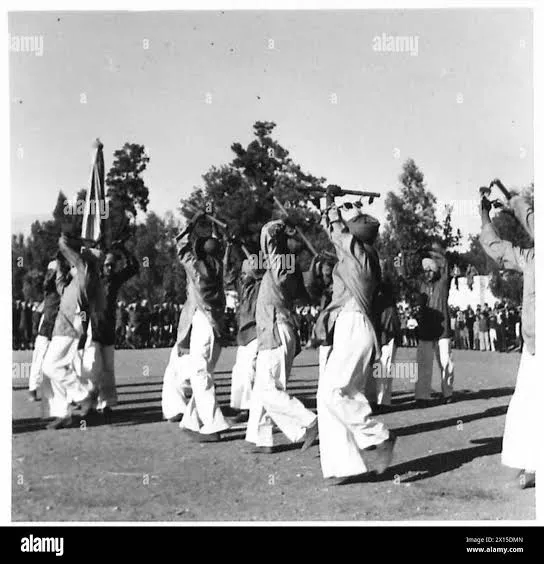
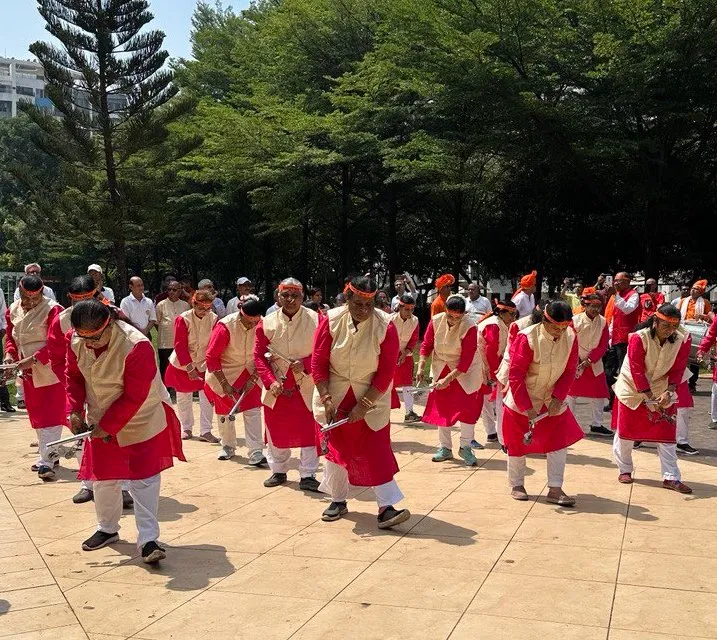
Lezim is performed in rows of two, in four rows, in single circles, or in concentric circular formations. The basic structure involves a sequence of movements, each lasting several beats, with the steps changed on a signal from a lead performer using a whistle. A five-minute performance can incorporate up to twenty-five different steps performed in unison. Movements include stepping, hopping, squatting, and bending, all synchronized with the jingling rhythm of the Lezim instruments.
Central Motifs and Their Significance
The primary motif of Lezim performance is synchronized collective strength, reflecting the martial and physical culture origins of the form. The unison of multiple performers executing difficult physical sequences carries connotations of community discipline and solidarity. There are no narrative or figurative motifs in the movement vocabulary.
Process
A Lezim performance begins with the ring leader establishing tempo using a whistle. Performers in formation execute the established sequence of steps synchronized to the Lezim's jingling rhythm, which is augmented by drums. The step sequence changes at whistle signals. The ring leader may also call out or signal new formations.
Mediums Used
The Lezim instrument is central to the performance and provides both its visual identity and its rhythmic audio contribution. A standard modern Lezim consists of a wooden handle with metallic jingles mounted along its length. Accompanying instruments include the dholki, halagi (a small frame drum), and cymbals. Performers wear traditional Maharashtrian costume: white kurta and pajama with a colorful belt and turban.
New Outlook
Lezim continues to be practiced in schools across Maharashtra as a fitness and cultural exercise, ensuring broad participation. The 1982 Asian Games demonstration established it as a nationally and internationally visible art form. Contemporary Lezim performances incorporate choreographic developments that have expanded formation variety while retaining the traditional instrumental and movement vocabulary.
Learn Lezim


Bibliography
Sources
Cashman, Richard I. The Myth of the Lokamanya: Tilak and Mass Politics in Maharashtra. University of California Press, 1975.
Maharashtra Rajya Sahitya Sanskriti Mandal. Cultural Documentation of Maharashtra's Folk Traditions.
Image Sources
“Book Lezim Dance Artists.” Black Hat Talent, https://blackhattalent.com/talent/book-lezim-dance-artists/. Accessed 4 July 2026.
“Lezim.” Lezim Group, https://lezimgroup.weebly.com/. Accessed 4 July 2026.
“Lezim.” Wikipedia, https://en.wikipedia.org/wiki/Lezim. Accessed 4 July 2026.
“Lezim Dance.” Alamy, https://www.alamy.com/stock-photo/lezim-dance.html. Accessed 4 July 2026.
“Lezim Dance.” Alamy, https://www.alamy.com/stock-photo/lezim-dance.html?pseudoid=827149B3-24AE-46B5-9B37-5C4F86174E01. Accessed 4 July 2026.