

Koli Dance - The Folk Dance Tradition of Maharashtra
Explore Koli dance, the performance tradition of Maharashtra, and learn about its origins, techniques, cultural significance, and artistic heritage.
Introduction
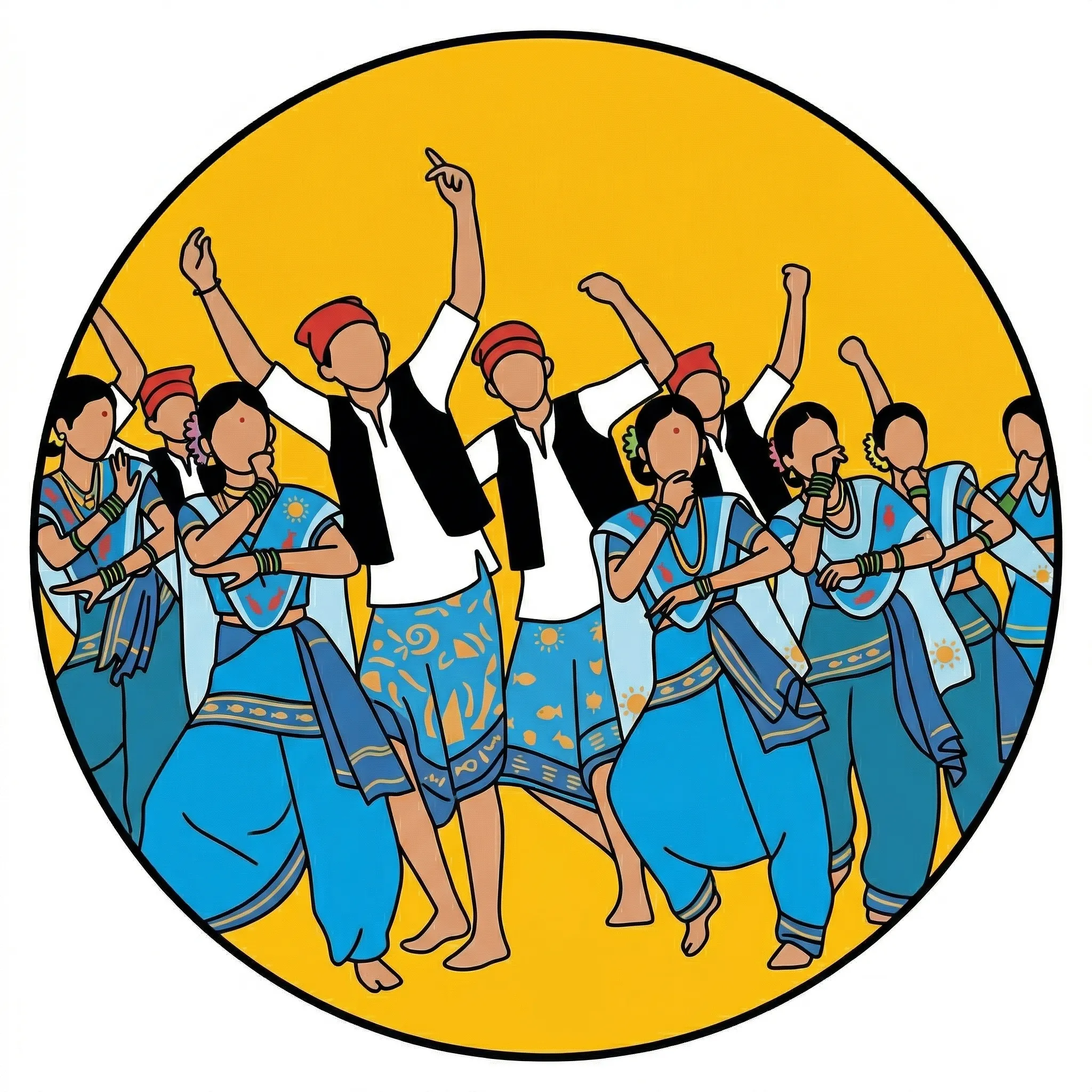
Koli Dance is a traditional folk dance form of Maharashtra, India, performed by the Koli community, one of the state's oldest and most established fishing communities. The dance is a direct artistic expression of the Koli people's occupational and cultural relationship with the sea, incorporating simulated movements of rowing, net casting, wave navigation, and communal fishing life. It is performed by both men and women, typically in separate groups that periodically converge, and is recognized as one of Maharashtra's most identifiable cultural art forms.
Etymology The word "Koli" refers to the community itself and gives the dance its name. In Marathi, the word Koli is associated with the spider (which makes and uses a net) and with fishing, both professions associated with net use, reflecting the community's identifying occupation. The dance has no separate name of its own; it is simply "the dance of the Kolis."
Origin The Koli community is identified as one of the original inhabitants of the seven islands that now form Mumbai. Their origins span the coastal regions of Maharashtra and Gujarat, with historical settlements in Rajasthan as well. The Koli dance is believed to have originated as a celebratory and devotional practice connected to the fishing cycle, expressing gratitude for the sea's bounty and marking significant community occasions including the festival of Narali Punav, which signals the start of the deep-sea fishing season. The dance does not have a single documented founding event; it represents the accumulated cultural practice of a seafaring community over many generations.
Location Koli communities are concentrated in the coastal Koliwadas (fishing settlements) of Mumbai and other coastal settlements in Maharashtra. Major Koliwadas include Worli Koliwada, Sion Koliwada, Vasai Koliwada, and Colaba Koliwada in Mumbai. The dance is associated with these settlements and is performed at the Narali Punav festival and other community celebrations.
Community The Koli community has several subcastes including Koli Kolis, Mangela Kolis, Vaity Kolis, Christian Kolis, Mahadeo Kolis, and Suryawanshi Kolis. In Maharashtra, Kolis are classified under the Scheduled Caste category in some administrative records. The community's primary deity is Mumbadevi, whose temple in Dongri gives the city of Mumbai its name. Women in the Koli community play an active role in the fishing economy and in cultural performance, with the Koli dance requiring equal participation from men and women.
Relevance Koli Dance is prominently featured at Maharashtra's major cultural showcases including the Kala Ghoda Arts Festival in Mumbai and the Elephanta Festival. It has appeared in Bollywood films and is a regular feature at Republic Day celebrations and state-level cultural events. The dance is one of the most visible folk performances associated with Mumbai's indigenous identity.
History
Background The Koli community's deep history in the Mumbai archipelago predates the city's colonial formation. The seven islands of Bombay were home to Koli settlements before Portuguese and subsequent British administration. As Mumbai grew into a major commercial port and metropolis, Koliwadas became urban enclaves within a changing city, and the Koli dance has functioned as a cultural anchor for community identity amid urbanization. The community has maintained its festivals and dance traditions while adapting to modernized fishing and coastal environments.
Culture and Societies The Koli dance encodes the occupational knowledge and social structure of the community in physical form. The separation of male and female groups in the initial formations, with men holding oars and women linking arms in an advancing row, reflects the gendered division of labor in Koli fishing culture. The convergence of the two groups in unified dance sequences reflects the community's collective identity. Songs accompanying the dance narrate community history, legends, and daily life, functioning as oral records.
Religious Significance The Koli community's primary festival, Narali Punav, carries explicit religious significance as a communal prayer to the sea god before the onset of the deep-sea fishing season. The dance performed at this festival has devotional dimensions as an offering of thanks and a request for protection. The community's reverence for the sea as a provider and potential danger is central to its cultural and religious worldview.
Understanding the Art
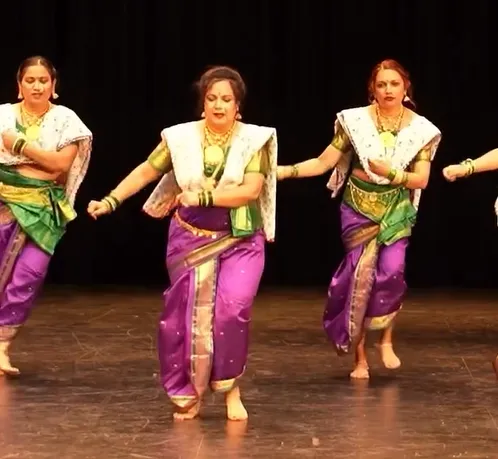
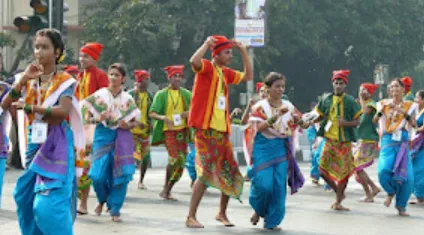
Style Men stand in rows holding oars, moving in synchronized patterns that simulate rowing. Women stand in opposing rows, arms linked, advancing toward the men in coordinated steps. The groups then merge, performing together with wave-like motions, net-casting gestures, and movements simulating the breakers and the act of fish landing. The dance is high-energy, characterized by vigorous footwork, forward-leaning postures, and dynamic group formations.
Central Motifs and Their Significance The central motifs are the sea, the boat, the net, and the fishing catch. All major movement sequences simulate some aspect of maritime work: the oar stroke, the wave, the net being cast and hauled, and the navigation between rocky outcroppings. Songs performed during the dance reference the sea directly and include popular compositions such as Aga Pori Sambhaal and Valav Re Nakva.
Process The performance begins with the two groups (male and female) in separate formations. As the music intensifies, the groups converge and merge for unified sequences. The tempo increases toward the climax. Traditional instruments used include the dhol, tasha (kettle drums), and zanjh (cymbals). In some variations, women jump between sticks held by the men in acrobatic sequences.
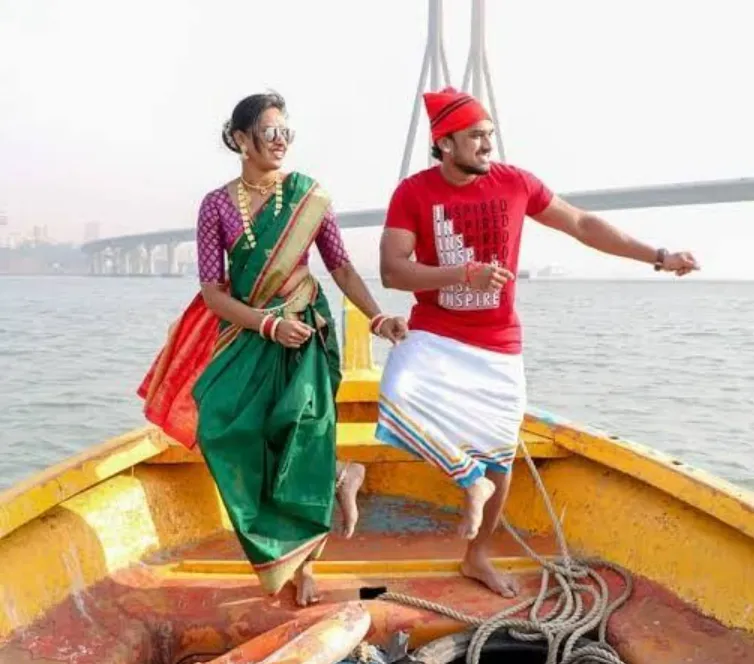
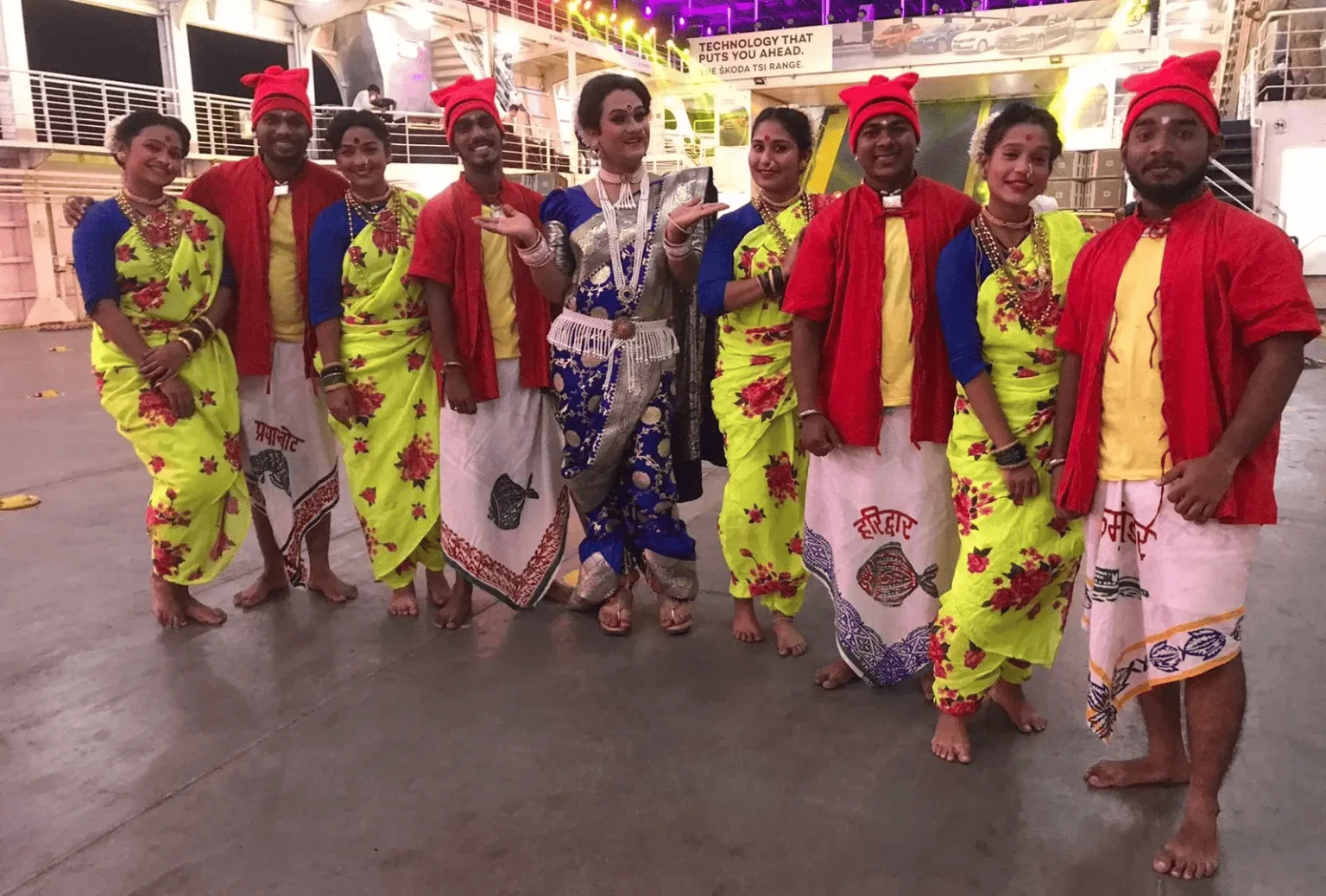
Mediums Used The core props are oars (carried by male performers). Instruments include dhol, tasha, and zanjh. Women wear knee-length green or brightly colored saris draped in a style appropriate for movement. Men wear lungis tied in a triangular form around the waist. Both wear the distinctive Koli Topi (cap).
New Outlook
Stylized and choreographed versions of the Koli dance have been developed for stage performance and international cultural presentations. These adapted versions have expanded the art form's reach beyond the Koli community while raising questions, within cultural discourse, about authenticity and appropriation. Academic research on Koliwada communities, including work documenting the cultural impact of urbanization on Koli identity, has engaged with the dance as a primary expression of community culture.
Learn Koli Dance
Bibliography
Sources
Maharashtra Tourism Development Corporation. Maharashtra Folk Dance Documentation.
The Tribes and Castes of Bombay. Government Central Press, 1922.
Image Sources
“Koli Dance.” BB Performing Arts. Accessed on May 21, 2026.
“Koli Dance Famous Folk Dance of Maharashtra.” Kolistan Blog. Accessed on May 21, 2026.
“Kaharwa Folk Dance Reel.” Instagram Reel. Accessed on May 21, 2026.
“Koli Dance.” Pinterest. Accessed on May 21, 2026.