


Kolhapuri Chappals - The Handicraft Tradition of Maharashtra
Explore Kolhapuri Chappals, the handicraft tradition of Maharashtra, and learn about its origins, techniques, cultural significance, and artistic heritage.
Introduction
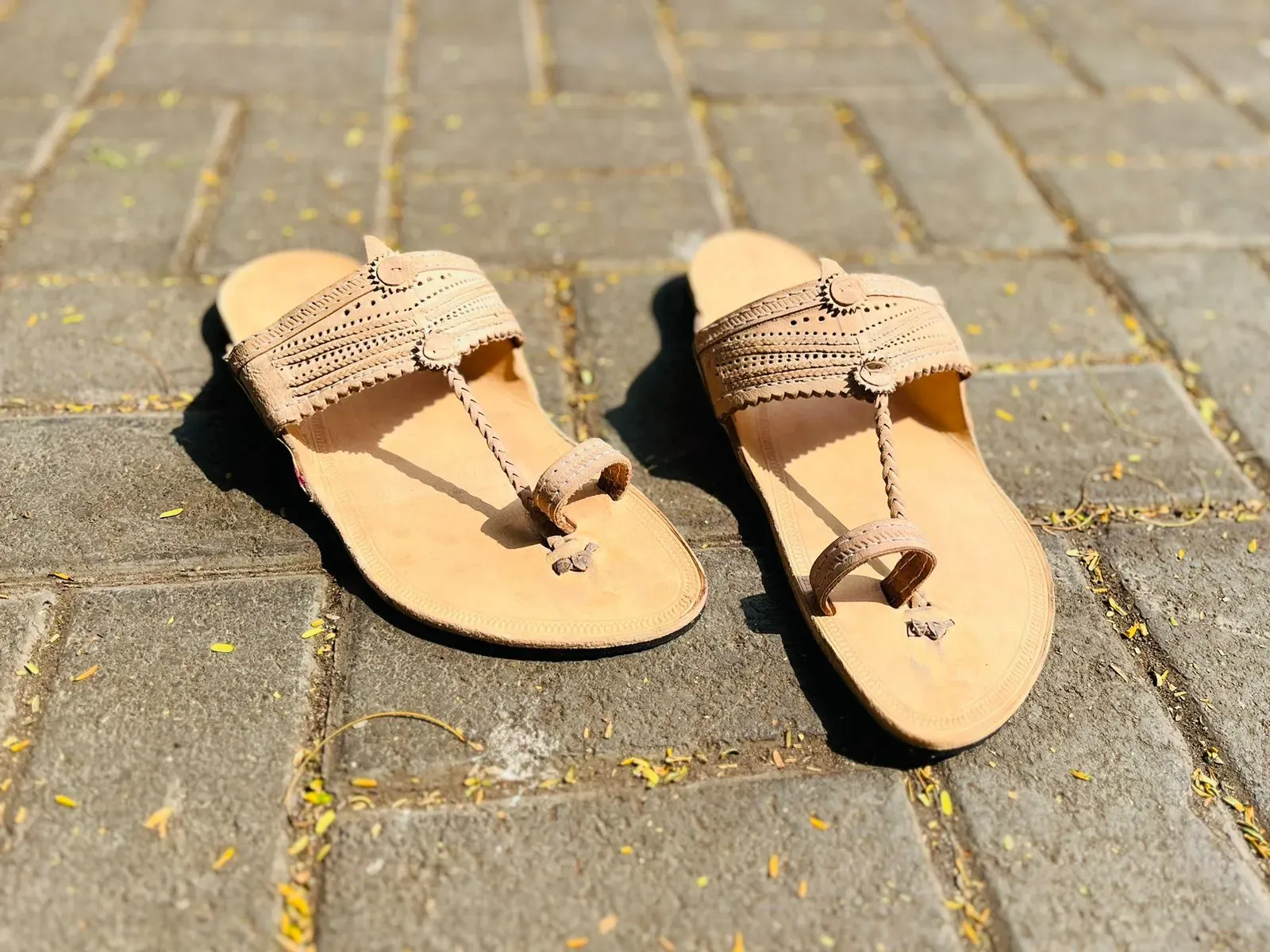
Kolhapuri Chappals are a type of open-toed leather footwear handcrafted in Kolhapur, Maharashtra. Distinguished by their flat, multi-layered leather sole and hand-stitched leather upper, the chappals are produced without the use of rubber or synthetic materials in the traditional form. The footwear holds Geographical Indication (GI) tag status recognising its specific origin in the Kolhapur region. The craft has a documented history spanning several centuries and represents a specific regional leather-working tradition.
Etymology The name Kolhapuri Chappal combines Kolhapur, the city of origin, and chappal, the Hindi/Marathi word for sandal or footwear. The term has become generic in Indian usage to refer to a specific style of open, flat leather sandal, though only those produced in the GI-protected region with traditional materials and methods carry the authentic designation.
Origin The Madras Courier's documented history of the craft places the origin of Kolhapuri footwear in the medieval period, connected to the reign of King Bijjala of the Kalachuri dynasty (12th century CE) in the Karnataka-Maharashtra Deccan region. The craft developed further under the patronage of the Kolhapur princely state. The irasoles.com documentation notes that the sandals were historically produced by artisans in the Kolhapur region for royal households and the general populace.
Location Kolhapur district, Maharashtra, is the primary production centre. The GI tag covers Kolhapur and adjacent areas in Maharashtra and the border regions of Karnataka where the craft is also produced under the same tradition. The Kolhapuri style is specifically associated with the tanning and leather-working traditions of the region.
Community The craft is produced by artisan communities historically associated with leather working, including communities of the Chambar caste who have practised tanning and cobblery in the region. The Korakari platform documents the craft traditions. The production involves multiple specialised workers: tanners, cutters, stitchers, and finishers.
Relevance Kolhapuri Chappals hold GI tag status registered with the Government of India. The footwear has a national and international market and is recognised in fashion contexts for its association with Indian artisanal craft. The craft provides livelihood to a significant number of artisan families in the Kolhapur region.
History
Background The Madras Courier's history of Kolhapuri Chappals references the connection to King Bijjala's court in the 12th century and documents the development of the craft through the Kolhapur princely state. The craft was further formalised and refined under royal patronage. During the colonial period, Kolhapuri Chappals gained wider recognition through trade. The GI tag was secured in the post-independence period as part of protecting the craft's geographic identity and preventing imitation products.
Culture and Societies Kolhapuri Chappals represent a significant part of Maharashtra's material culture and identity. The chappal is associated with both everyday use and with formal occasions, and has been adopted by fashion designers as part of Indian ethnic fashion. The craft is embedded in the social and economic life of the artisan communities of Kolhapur.
Religious Significance No specific religious significance has been formally documented for Kolhapuri Chappals as a craft tradition. The footwear is secular in its use and production.
Understanding the Art
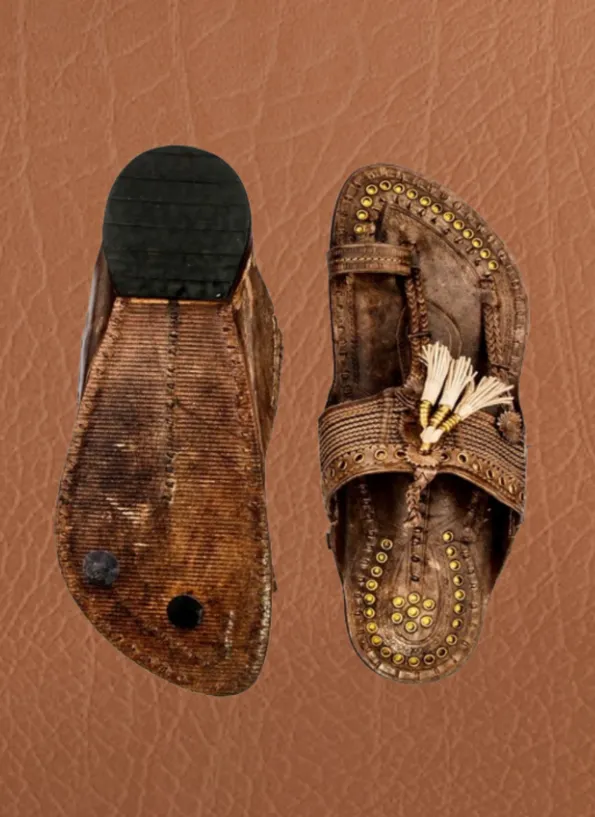
Style The Kolhapuri Chappal is characterised by its flat, multiple-layer leather sole (typically 3 to 5 layers of vegetable-tanned leather stitched together), its fully leather upper with hand-stitched straps and toe bands, and its characteristic capri-style open-toed design. The stitching is done with leather thongs rather than thread in the traditional form. The natural tan colour is the most traditional finish, though dyed versions in various colours are produced.
Central Motifs and Their Significance The decorative elements of Kolhapuri Chappals include punched or pierced floral and geometric patterns on the leather uppers, embossed designs on the toe strap, and coloured thread or leather inlay in some variants. The aesthetic is defined by the natural texture of the leather and the visible hand stitching rather than applied decoration.
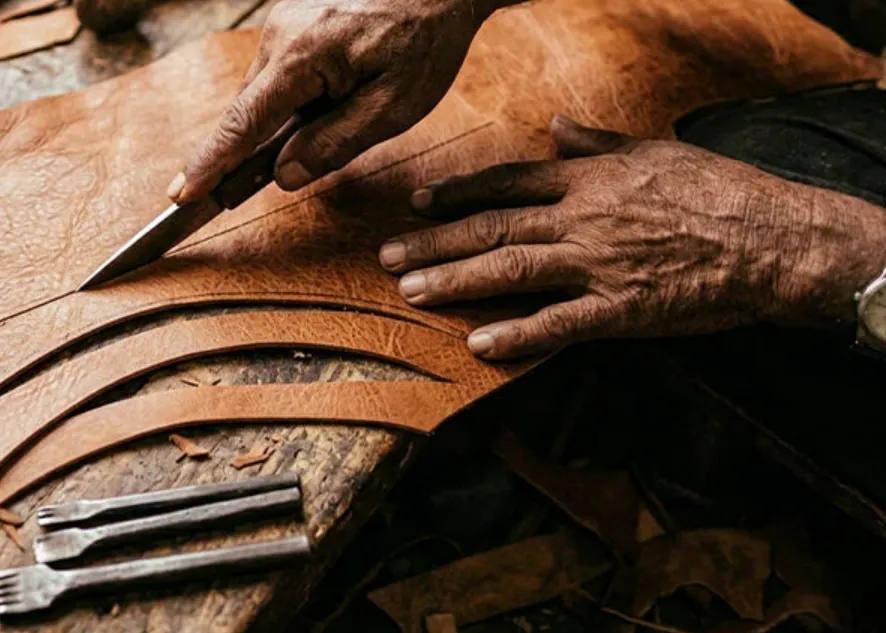
Process The production process involves: tanning raw cowhide or buffalo hide using vegetable tanning agents; cutting the sole layers; layering and stitching the sole panels together; cutting the upper leather components; hand-stitching or punching the decorative patterns on the upper; assembling the upper onto the sole using leather thongs; and finishing with polishing or dyeing. The process is entirely manual in the traditional form.
Mediums Used Primary materials are vegetable-tanned cowhide or buffalo hide for the sole and upper. The stitching is done with leather strips or strong thread. Traditional Kolhapuri Chappals do not incorporate rubber or synthetic materials.
New Outlook
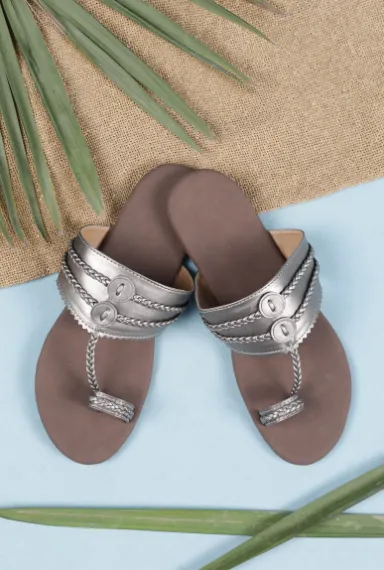
Kolhapuri Chappals have maintained strong market presence in both domestic and export markets, particularly in the fashion segment. The craft is classified as thriving. Challenges include the availability of quality vegetable-tanned leather, competition from machine-produced imitations, and sustaining artisan wages at levels that keep the craft viable. Fashion collaborations have brought the craft to new audiences.
Learn Kolhapuri Chappals

Bibliography
Sources
“From King Bijjala to GIs: The Evolution of Kolhapuri Chappals.” Madras Courier, madrascourier.com.
“Kolhapuri Chappals: The Realistic Sophistication of Hand Craftsmanship and Comfort.” Korakari, korakari.com.
Image Sources
“Behind the Scenes: How We Make Premium Kolhapuri Chappals.” Korakari, 1 Jan. 2026, https://www.korakari.com/blogs/articles/behind-the-scenes-how-we-make-premium-kolhapuri-chappals. Accessed on May 02, 2026.
“How to Style Kolhapuri Chappals with Different Outfits.” Tjori, https://www.tjori.com/blogs/news/how-to-style-kolhapuri-chappals-with-different-outfits. Accessed on May 02, 2026.
“Origin and History of Kolhapuri Chappal.” Kolhapuriwala, 3 Jan. 2025, https://kolhapuriwala.com/origin-and-history-of-kolhapuri-chappal/. Accessed on May 02, 2026.
“Story of Kolhapuri Chappals.” Kolhapuri Chappal Blog, http://kolhapurichappal.rf.gd/blog-on-story-of-kolhapuri-chappals/. Accessed on May 02, 2026.