

Kathputli - The Handicraft Tradition of Rajasthan
Explore Kathputli Puppetry, the handicraft tradition of Rajasthan, and learn about its origins, techniques, cultural significance, and artistic heritage.
Introduction
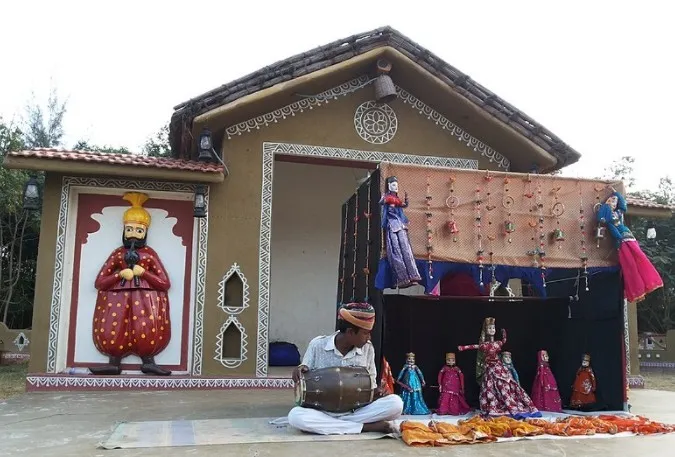
Kathputli is a form of string puppetry practised in Rajasthan, India. The puppets are carved wooden figures manipulated by strings held by a puppeteer, and the performances (known as kathputli ka khel) present anecdotal narratives drawn from legends about historical figures. The tradition belongs to the Nat Bhatt community from the districts of Nagaur, Churu, and Sikar in north-eastern Rajasthan. Kathputli is among the most visually recognised forms of puppetry in India and has been documented by the MAP Academy (Impart Encyclopedia of Art) and the World Encyclopaedia of Puppetry Arts (UNIMA).
Etymology The name Kathputli is a compound of two Hindi words: katha meaning story and putli meaning doll or puppet. The performance is called kathputli ka khel, meaning the play of the story dolls. The Etymology directly reflects the narrative function of the puppet form.
Origin The MAP Academy (Impart) documentation states that while the precise origins of Kathputli have not been clearly established, historical references suggest the form has been practised since the 17th century. The puppeteers belong to the Nat Bhatt community. The community traditionally maintained an itinerant lifestyle, travelling in family troupes to present performances before returning to their home districts in Rajasthan during the monsoon season for farming.
Location Kathputli originates in Rajasthan, with the primary community located in the districts of Nagaur, Churu, and Sikar in north-eastern Rajasthan. Over time, groups of puppeteers migrated to cities including Delhi, Mumbai, Ahmedabad, Hyderabad, and Bhopal. The Incredible India (incredibleindia.gov.in) documentation confirms Rajasthan as the craft's primary geographic identity.
Community The Nat Bhatt community are the traditional practitioners of Kathputli. The community is identified by its hereditary craft tradition. Puppetry is transmitted from master puppeteers (sutradhar) to younger family members from an early age. The female members of the family sing and narrate during performances, while the master puppeteers are traditionally male. The Gaatha.com documentation (Story of Kathputli) and the MAP Academy provide community profiles.
Relevance Kathputli is recognised as a significant intangible cultural heritage of India. Practitioners such as Naurang Bhat and Puran Bhat have received Sangeet Natak Akademi awards for their contributions to the tradition. The Aakar Puppet Theatre, established by Puran Bhat in the 1980s, brought Kathputli to social theme-based performances. In the 1980s and 1990s, Kathputli puppeteers participated in Festivals of India held in several countries. The WEPA (World Encyclopaedia of Puppetry Arts) has documented the tradition.
History
Background Historical documentation of Kathputli is limited for periods before the colonial era. The 17th century reference is the earliest documented mention of the form. The Nat Bhatt community's itinerant performance tradition sustained the art through centuries of movement across Rajasthan and neighbouring regions. The documented connections to figures including cultural revivalist Kamaladevi Chattopadhyay, who worked with Naurang Bhat, mark the modern period of the tradition's engagement with national cultural institutions.
Culture and Societies The Kathputli performance repertoire draws on historical and semi-historical legends of Rajasthan. The narratives feature figures including Amar Singh Rathore, Prithviraj Chauhan, and King Vikramaditya of Ujjain. The performances are anecdotal in structure, with episodes of courtly entertainment (horse-riding, juggling, swordsmanship, dancing by the puppet characters) often given as much or more stage time than the narrative plot. The MAP Academy notes that within a story of Amar Singh Rathore, the puppetry skill display in court scenes may exceed the plot in duration.
Religious Significance The MAP Academy documentation specifically notes that the Kathputli repertoire is not predominantly religious in character. Performances are anecdotal and draw from secular legend rather than religious narrative. No specific religious function for Kathputli has been formally documented.
Understanding the Art
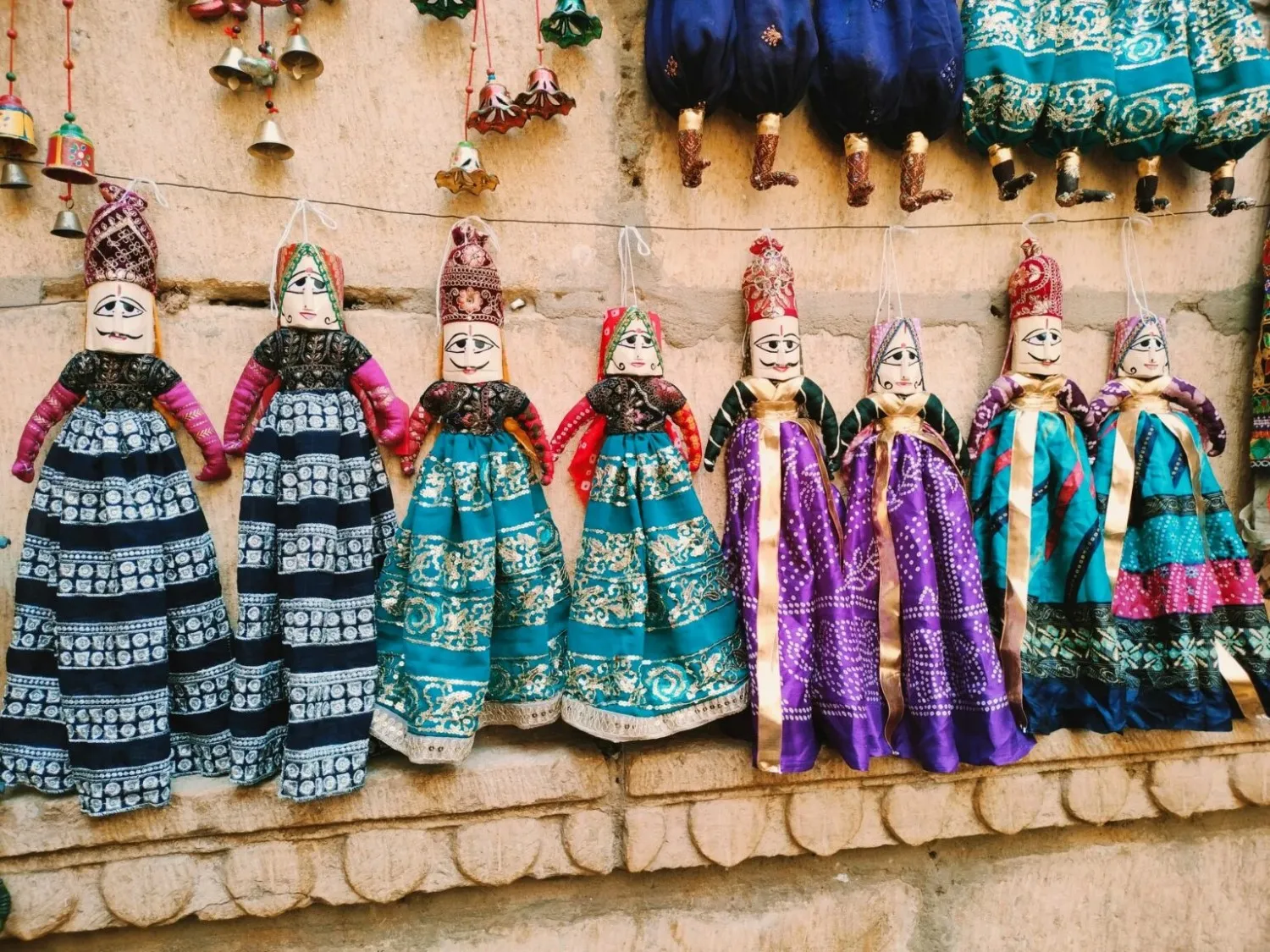
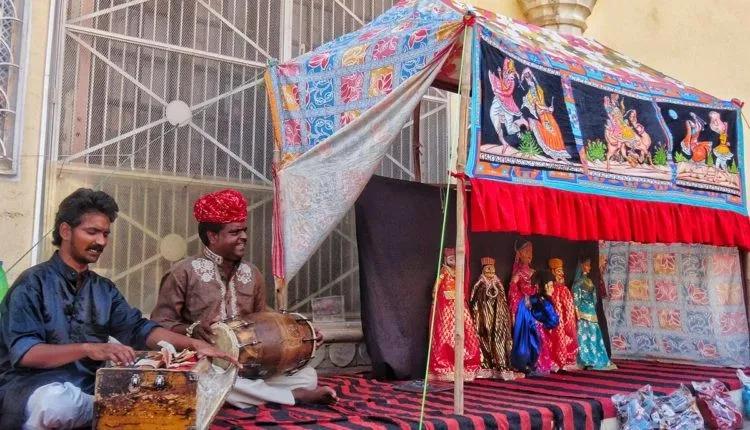
Style Traditional Kathputli puppets are between 1.5 and 2 feet in height. The head and trunk are carved from a single piece of wood. The torso, arms, and hands are made by stuffing rags into the costume. The puppets do not have legs; the lower body is draped in a long trailing skirt that mimics leg movement. A distinguishing feature is that puppeteers do not use an aeroplane (a fixed control bar); instead, strings are looped around the hand and fingers, with finger movement creating the puppet's articulation. The stage is a simple structure of two charpoys (wooden cots) stood on end and covered with dark cloth, with a painted fabric curtain arch (called Taj Mahal or tibara) forming the front.
Central Motifs and Their Significance The iconography of Kathputli puppets is defined by the character's identity: turban style and facial characteristics (beard, moustache) painted in a style reminiscent of Rajasthani miniature painting distinguish different characters. The dancer puppet (rasdhari) can have up to nine strings, the highest number for any puppet type. Props such as swords and shields are sewn directly onto the puppet. The boli, a voice modulator made from a rubber tape stretched between bamboo sticks, is held in the puppeteer's lips to produce a whistle-like sound representing the puppet's speech.
Process The production of Kathputli puppets involves: carving the head and torso from a single block of wood (typically light wood for manageability); painting facial features in a detailed style; constructing the costume from cloth stuffed with rags for the torso and arms; sewing on or attaching props; attaching strings to control points on the head, hands, and torso; and connecting the strings to the puppeteer's hands. The performance setup requires minimal time to assemble.
Mediums Used Primary materials are carved wood for the head-torso, cotton cloth and rags for the body and costume, and cotton or natural fibre strings. The boli voice modulator uses rubber tape and bamboo. The stage uses cloth and wooden charpoys. Kerosene lamps or torches traditionally provided lighting.
New Outlook
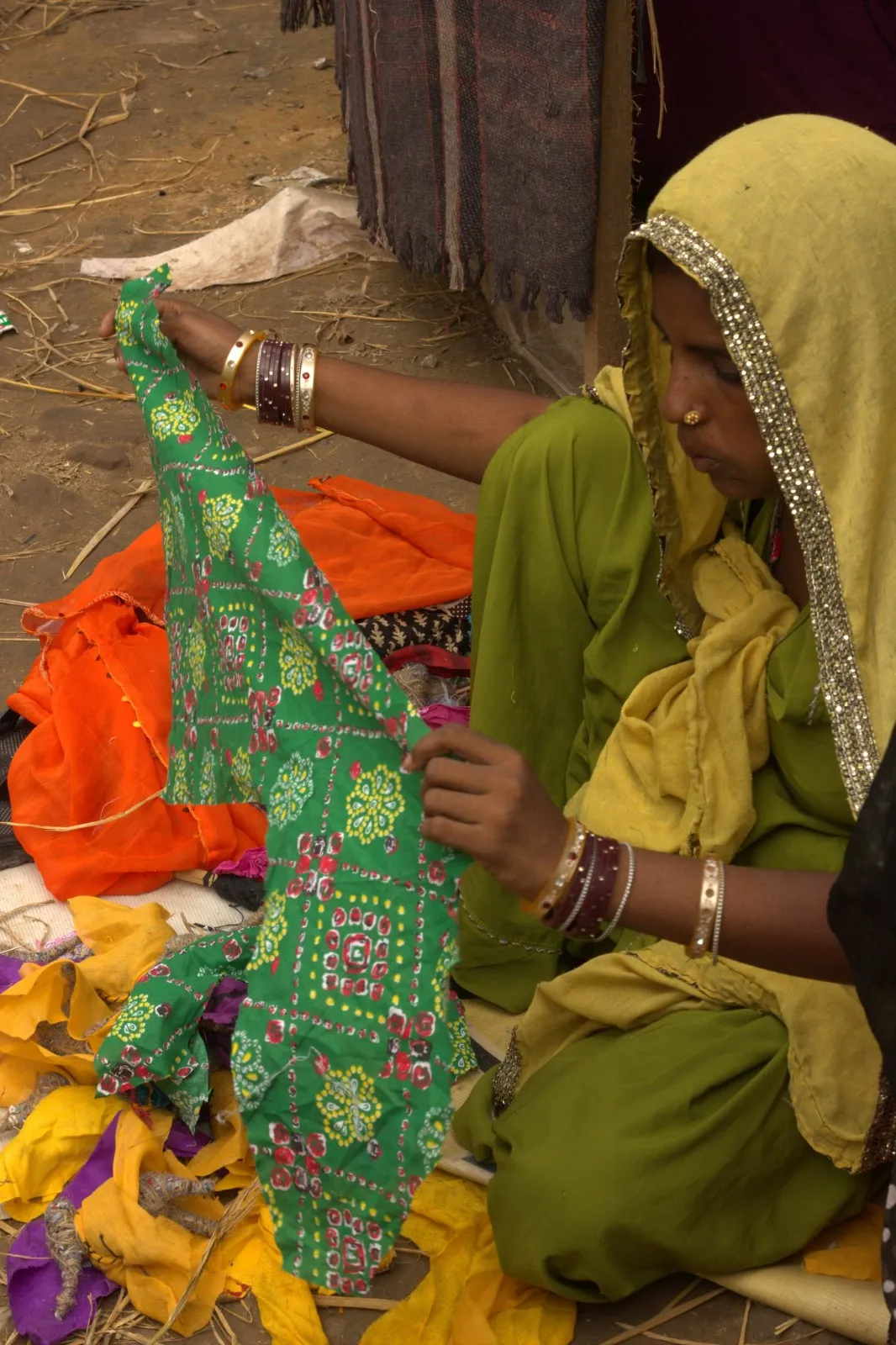
Kathputli faces documented decline: puppeteers have reduced performance duration, moved away from traditional repertoire, and some have shifted to making puppets for sale as souvenirs or to related professions as musicians. Puppet forms have changed, with contemporary puppets often being larger and featuring legs, which limits their articulation. Cultural organisations including Sangeet Natak Akademi, IGNCA, and NGOs continue to document and support the tradition. The Aakar Puppet Theatre model of applying Kathputli to social themes represents a contemporary adaptation.
Learn Kathputli Puppetry

Bibliography
Sources
Brandon, James R., editor. The Cambridge Guide to Asian Theatre. Cambridge University Press, 1993.
Grund, Françoise and Puran Bhatt. “Kathputli ka Khel.” World Encyclopaedia of Puppetry Arts, UNIMA, wepa.unima.org. Accessed 2 May 2026.
Kothari, Komal. “Keynote Address: The Kathputli of Rajasthan.” Sangeet Natak, vol. XXXVIII, no. 1, 2004.
Pani, Jiwan. Living Dolls: Story of Indian Puppets. Publications Division, 1986.
Image Sources
Chatterjee, Ritika. “Kathputli.” KIIT School of Management Blog, 11 May 2021, blog.ksom.ac.in/2021/05/kathputli/. Accessed on May 02, 2026.
“Kathputli Puppetry in Rajasthan.” Dera Mandawa, deramandawa.com/blogs/kathputli-puppetry-in-rajasthan/. Accessed on May 02, 2026.
“The Lost Magic of Kathputli Colony.” Maverickbird, maverickbird.com/india/north/delhi/the-lost-magic-of-kathputli-colony/. Accessed on May 02, 2026.
“Why Rajasthan Is Famous for Kathputli?” Rajasthan Studio, 11 Sept. 2021, rajasthanstudio.com/why-rajasthan-is-famous-for-kathputli/. Accessed on May 02, 2026.