

Kathakali Masks - The Handicraft Tradition of Kerala
Explore Kathakali Masks, the handicraft tradition of Kerala, and learn about its origins, techniques, cultural significance, and artistic heritage.
Introduction
Kathakali masks and makeup constitute the elaborate visual identity system used in the Kathakali dance drama of Kerala. Rather than conventional detachable masks, the tradition primarily employs complex face painting, applied facial attachments, headgear (chutti), and costumes to transform performers into specific categories of character. The system is among the most codified theatrical makeup traditions in the world. Kathakali dance drama originated in Kerala around the 17th century, and the visual system associated with it has been documented extensively by scholars of Indian performance traditions.
Etymology Kathakali is a Malayalam compound word: katha means story and kali means play or performance. The makeup and masking system is an integral component of the performance and is not given a separate name from the broader form. The term 'Kathakali masks' is used in art historical and craft documentation to refer to the distinctive character types defined by their visual makeup systems.
Origin Kathakali developed in Kerala around the 17th century, building on earlier performance traditions including Krishnanattam. The MAP Academy (now Impart Encyclopedia of Art) records that the earliest form of the dance used simpler character differentiation, with divine characters painted blue and demons wearing face masks. The influence of feudal chiefs of the kingdom of Tanur led to significant changes in the makeup tradition: the blue colouration for divine characters was changed to emerald green, demon masks were replaced with face paint and gilded crowns. This development established the elaborate makeup system practised today.
Location Kathakali is the performance tradition of Kerala, practised throughout the state. The production and application of Kathakali makeup and accessories involves specialised practitioners (makeup artists and performers trained in the tradition) concentrated in Kerala's cultural centres.
Community The Kathakali tradition is sustained by performers, makeup artists, musicians, and scholars associated with Kerala's classical performance institutions. Major centres of Kathakali training and performance include the Kerala Kalamandalam (an institution established by the Kerala government) and various other cultural organisations in Kerala.
Relevance Kathakali is Kerala's most internationally recognised dance drama form and a significant component of India's classical performance heritage. The makeup and visual system is a primary component of Kathakali's distinctive identity and has been studied and documented by scholars including Philip B. Zarrilli, whose academic work on Kathakali is a primary reference in the field.
History
Background The evolution of Kathakali makeup from its earlier, simpler forms to the present codified system is documented in scholarship. The MAP Academy notes that early Kathakali (deriving from Krishnanattam, a court performance tradition) used simple makeup; the shift to the codified green (paccu), knife-type (katti), red beard (cuvanna tati), and other character types occurred through the 17th to 18th centuries under the patronage of feudal chiefs. The elaboration of makeup conventions, headgear (including the development of gilded chutti headgear replacing simple palm-sheath designs), and the replacement of actual masks with face painting for most character types occurred during this period of patronage and development.
Culture and Societies Kathakali performances draw their narratives from the Ramayana, Mahabharata, and Puranas. The makeup system directly reflects the moral and cosmological character of each figure: green signifies divine virtue, orange-red signifies a different category of nobility, knife-type green with additions signifies the villainous noble, and so on. The system is thus not merely aesthetic but functions as a visual coding of moral hierarchy corresponding to the narrative content of the performances.
Religious Significance Kathakali's narrative repertoire is drawn from Hindu sacred texts, and many performances involve deities, sages, and mythological figures. The makeup system encodes religious iconography, including the mark of Vishnu applied in the paccu type and the specific colours and adornments associated with individual deities. Performances are often staged at temple festivals. However, the craft of Kathakali makeup preparation is a technical and performative skill rather than a religious practice in itself.
Understanding the Art
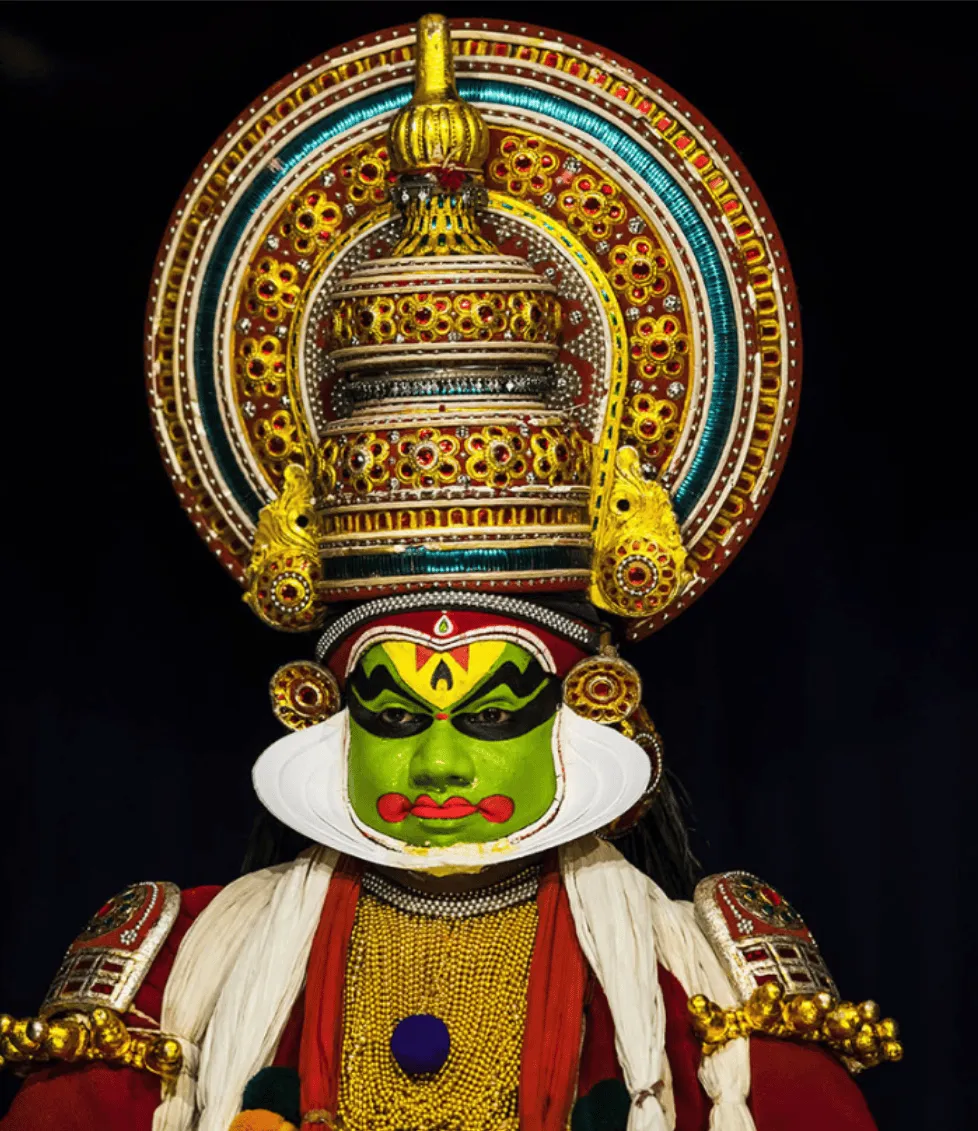
Style The makeup system is built around a set of defined character types, each identified by a specific colour combination and facial structure. The most prominent is paccu (green), used for divine and noble characters such as Krishna, Arjuna, and Rama. Key visual elements include the chutti, a white, layered paper and paste attachment applied to the lower face to extend the chin and frame the face, and the cutti, a white painted border that frames the green or other base colour of the face.
Central Motifs and Their Significance The character types and their visual codes are: paccu (green face) for divine or noble characters; payuppu (orange-red) for characters such as Balarama, Brahma, and Shiva; vella tati (white beard) for wise divine beings such as Hanuman; katti (knife) for high-born villainous characters such as Ravana, identified by an upturned red moustache on a green base; cuvanna tati (red beard) for evil or vicious characters such as Dussassana, with black lips and large bulbous facial elements; karutta tati (black beard) for evil forest characters; kari (jet black) for demonesses; and minukku (radiant) for virtuous women and brahmins, using a warm yellow-orange. Actual face masks are reserved for animal transformations; for example, Angada wears a monkey mask, and Daksha wears a goat mask after his resurrection.
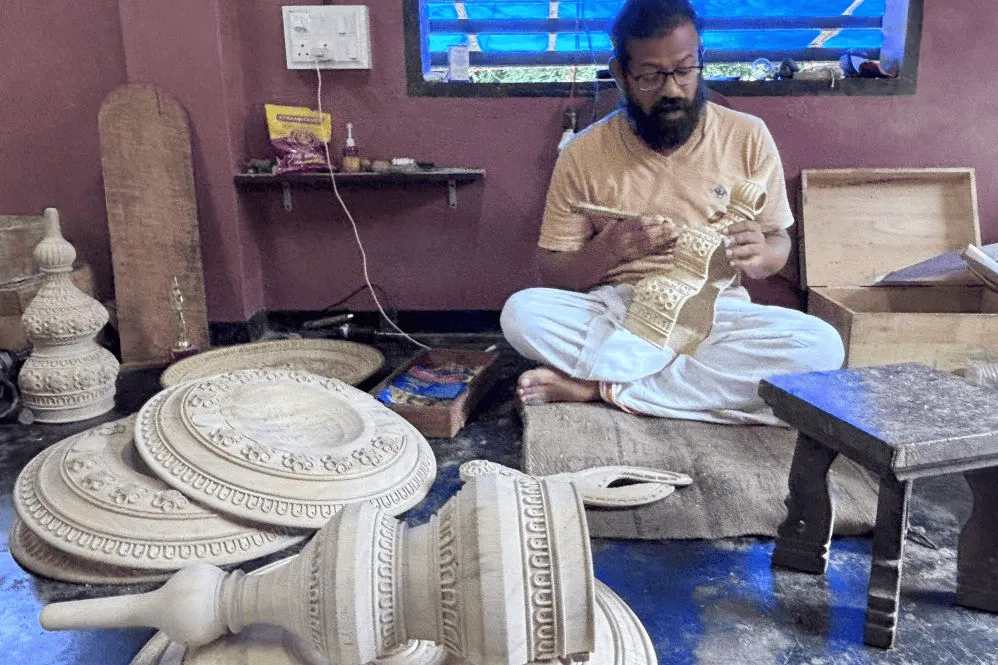
Process The application of Kathakali makeup is a lengthy process, often taking two to four hours. The chutti (facial extension) is built up from strips of paper soaked in coconut oil and applied in layers to the lower face, moulded while wet and allowed to harden. The base colours are applied using rice paste and natural pigments, followed by detailed line work in black and red using fine brushes. Eye makeup is applied with the performer manually enlarging the pupil area using specific techniques. The headgear (kireetam) is a large gilded or lacquered crown attached over the costume.
Mediums Used Traditional Kathakali makeup used natural pigments: green from a combination of pigments, red from hingula (red ochre), yellow from haritala (yellow arsenic or yellow ochre), black from soot and lampblack, white from powdered rice. The chutti facial extension is built from paper strips and coconut oil or paste. Contemporary practice may incorporate some commercial pigments while retaining the traditional application method and structure.
New Outlook
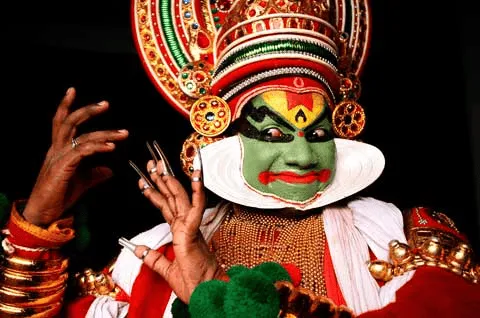
Kathakali masks and makeup have been subject to academic documentation by scholars including Zarrilli (Kathakali Dance-Drama: Where Gods and Demons Come to Play, Routledge, 2000) and Swann, Richmond, and Zarrilli (Indian Theatre: Traditions of Performance, Motilal Banarsidass, 1993). The visual system has influenced contemporary performance artists and visual designers internationally. Within Kerala, institutions such as Kerala Kalamandalam continue to train practitioners in the traditional system. Standalone crafted Kathakali masks are also produced for the souvenir and decorative art market.
Learn Kathakali Masks
Bibliography
Sources
Raina, Arjun. “The Art of Creating a Kathakali Performer’s Presence.” Theatre, Dance and Performance Training, vol. 6, no. 3, 2015.
Richmond, Farley P., et al. Indian Theatre: Traditions of Performance. University of Hawai‘i Press, 1990. Reprint, Motilal Banarsidass, 1993.
Zarrilli, Philip B. Kathakali Dance-Drama: Where Gods and Demons Come to Play. Routledge, 2000.
Image Sources
“If You’ve Ever Been to Kathakali…” Art n Light, 2009, artnlight.blogspot.com/2009/04/if-youve-ever-been-to-kathakali.html.
“Kathakali Costume Making.” Ekathra Experiences, www.ekathraexperiences.com/experience/kathakali-costume-making/
“Kathakali Dance Masks.” Smarthistory, smarthistory.org/kathakali-dance-masks/.
“Kathakali Masks.” Feel Free or Fly India, WordPress, feelfreeorflyindia.wordpress.com/tag/kathakali-masks/.