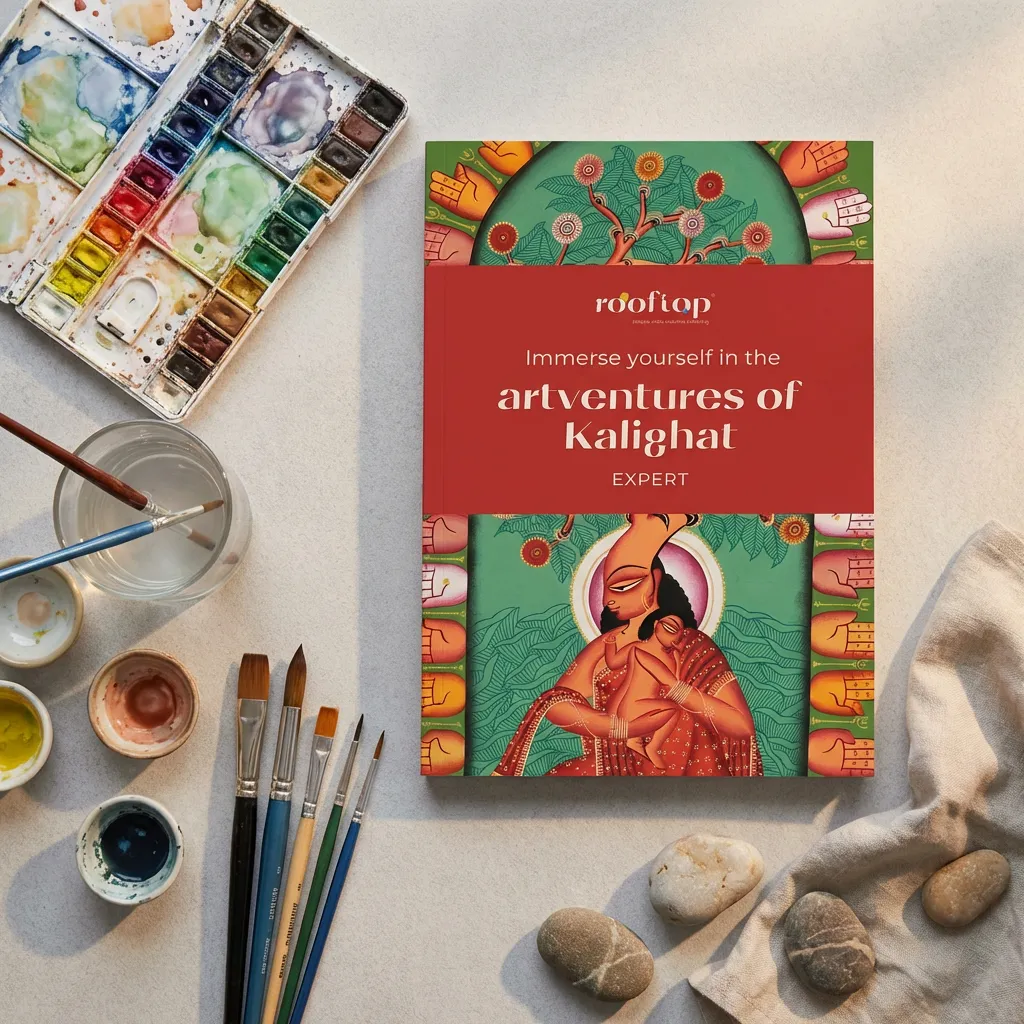
Artventures of Kalighat – Expert
$ 39


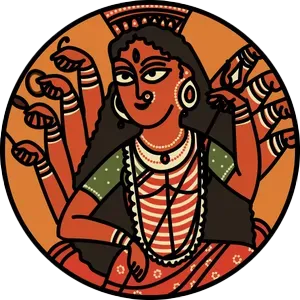
Let's learn about Kalighat paintings!
In the lanes surrounding the Kalighat Kali temple in Kolkata, a bold and striking visual language took shape in the 19th century. Kalighat painting, also called Kalighat pat in colloquial Bengali, emerged as a commodity art sold to temple pilgrims and has since grown into one of India's most recognised folk traditions. Made by artisan families known as patuas, this Bengali folk art captures Hindu deities, mythological scenes, and biting social commentary in a style that is unlike anything else in Indian art.
What Is Kalighat Painting?
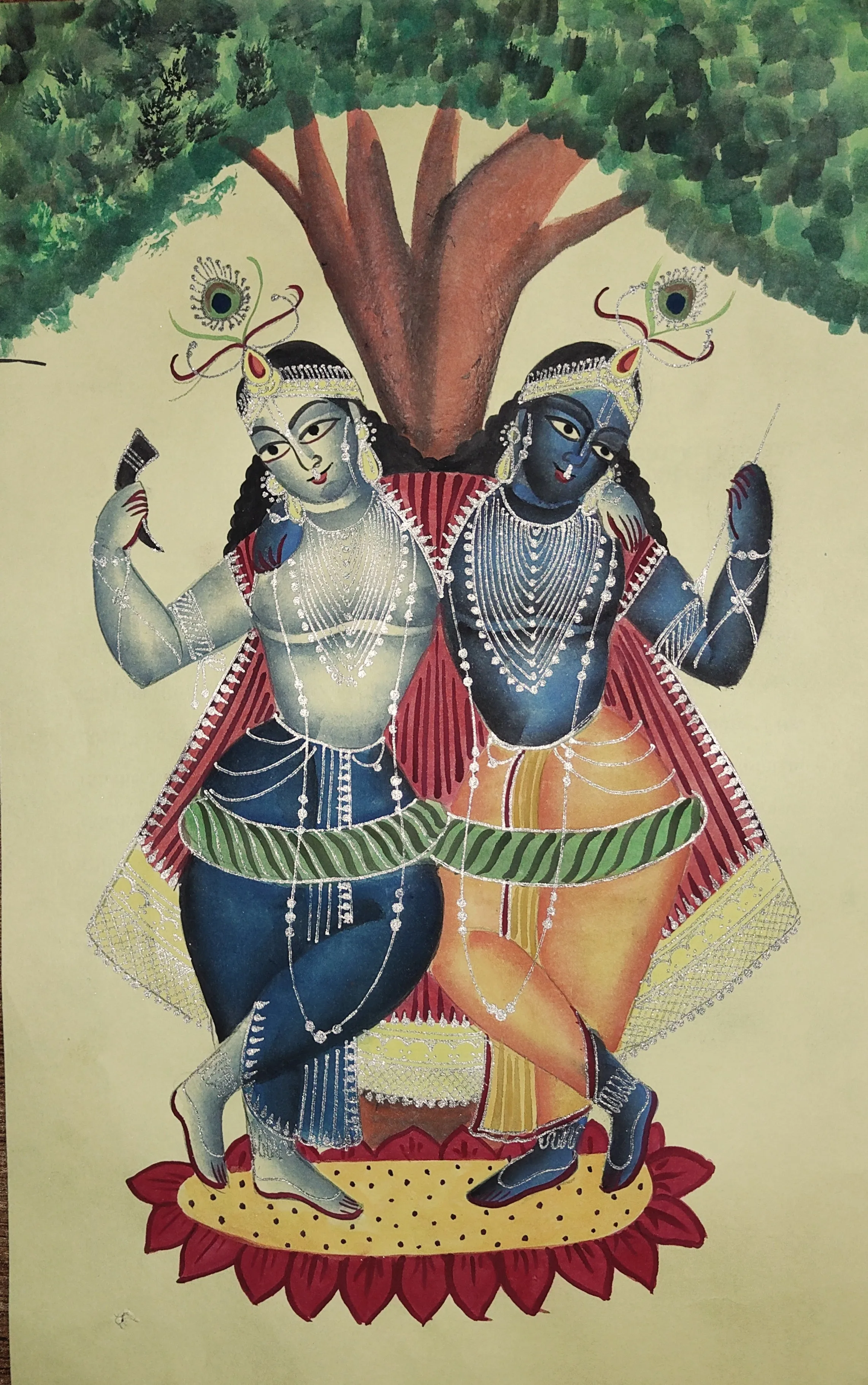
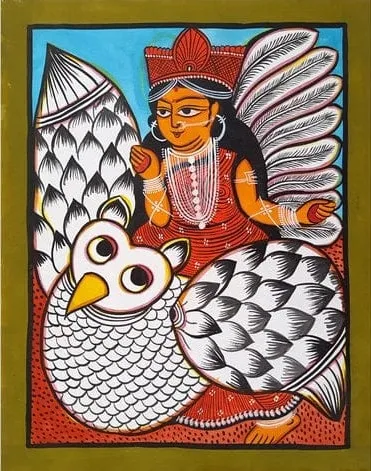
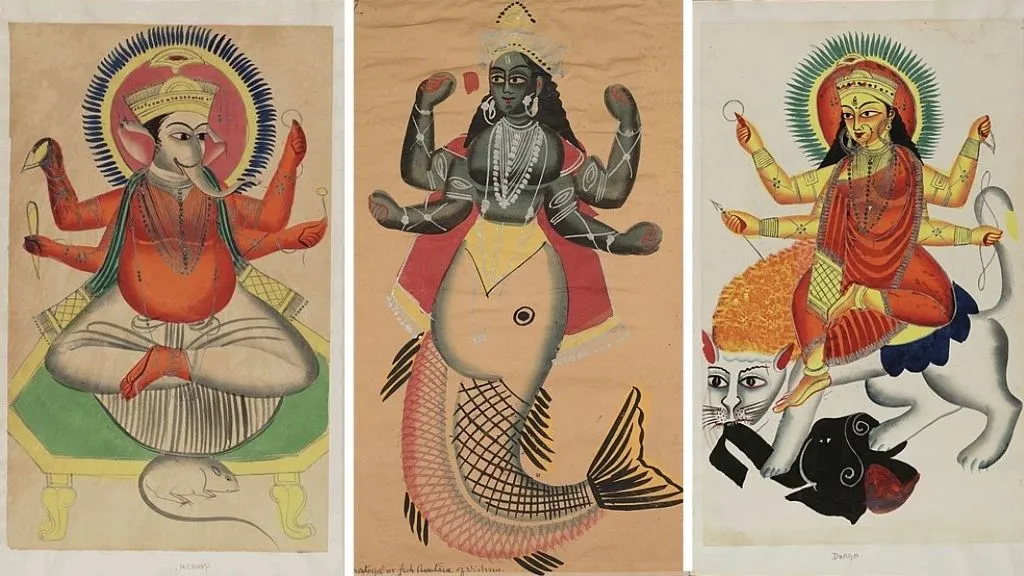
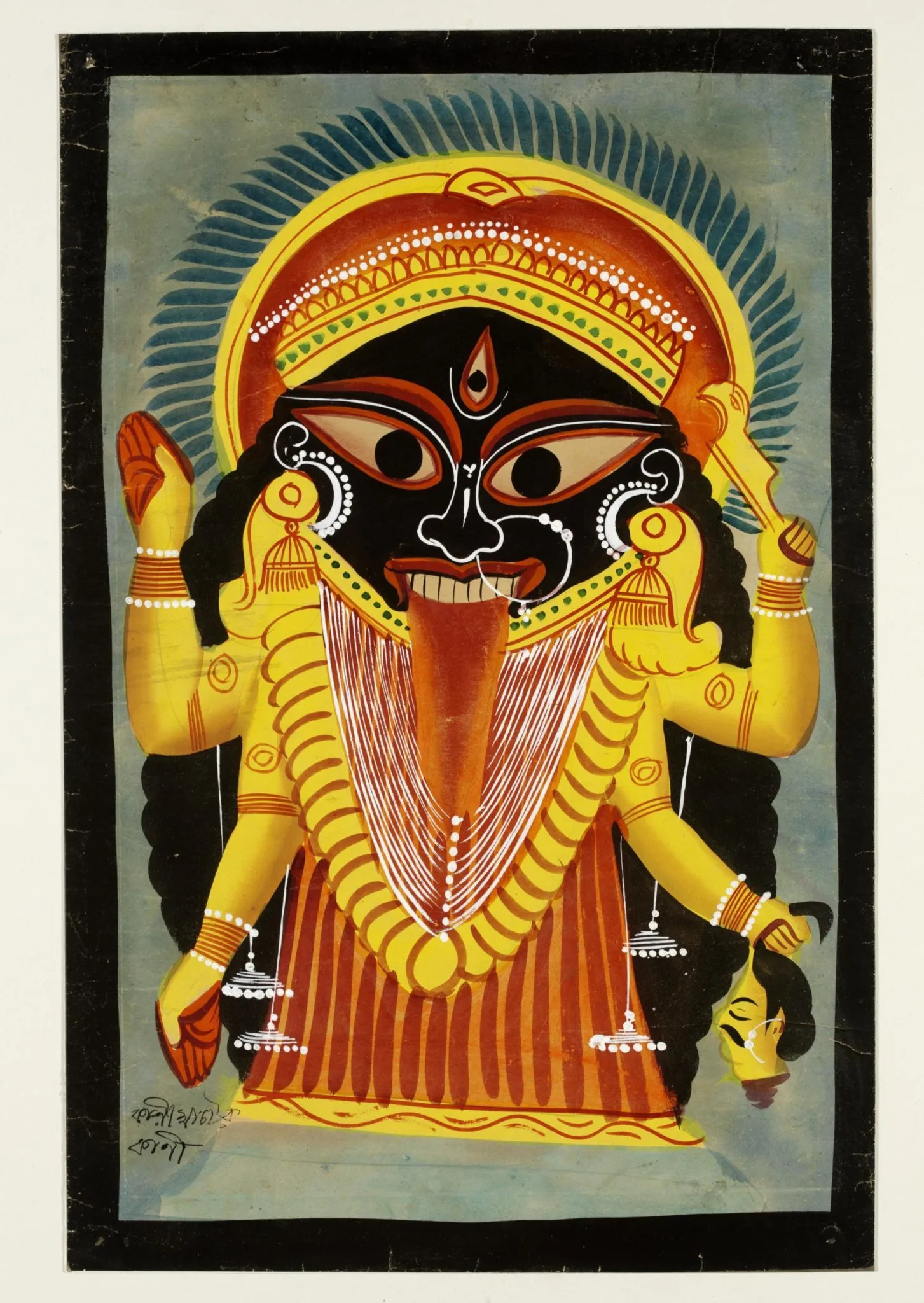
Kalighat painting, also known as Kalighat patachitra, is a style of Indian folk art that originated in the Kalighat neighbourhood of Kolkata, West Bengal, in the 19th century. The paintings are characterised by bold, sweeping outlines, flat washes of opaque colour, and figures with round faces, elongated eyes, thin eyebrows, and sharp noses. Backgrounds are deliberately minimal, often left blank, with no decorative borders.
The art form traditionally used pigments made from natural raw materials including turmeric roots, petals of the Aparajita flower, and the residue from burning lamps. Colloidal tin was used to replicate silver embellishments on jewellery. These paintings depicted Hindu goddesses such as Durga and Lakshmi, scenes from the Ramayana, and later, everyday social life in colonial Kolkata. They were sold as souvenirs outside the Kali temple in Kalighat, making them one of the earliest examples of art produced for a popular market in Bengal.
History and Origin
The tradition of Kalighat painting developed in the 19th century near the Kalighat Kali temple in Kolkata. The art form gets its name directly from that location, which also gives rise to its colloquial name, Kalighat pat. The artisans who produced these works, called patuas, were members of family-based workshops where each person took on a specific task in the production chain.
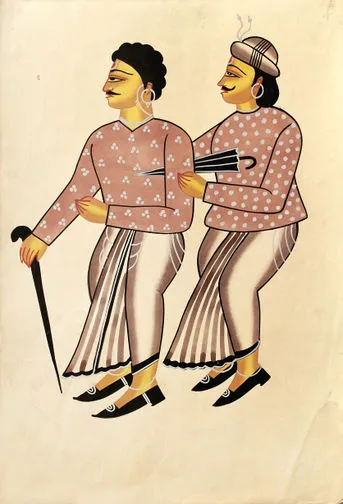
Since the art form grew near a major Hindu temple, the earliest works were devotional, depicting goddesses and scenes from sacred texts. As Kolkata changed under British influence, a social and satirical strand emerged reflecting what was called the 'Babu' culture of the time. The Occidental School of Kalighat painting portrayed contemporary social issues, crimes, patriotic themes, and freedom fighters such as Tipu Sultan and Rani Laxmibai, alongside satirical motifs such as the well-known Kalighat painting cat holding a fish in its mouth. The patronage of pilgrims visiting the Kalighat temple created such a strong market that artisans also began producing wooden carved dolls and figurines alongside the paintings.
Over time, as demand shifted toward faster and simpler pieces, the patuas moved away from long scroll formats to smaller paintings on paper, replacing handmade pigments with store-bought gouache paints. Kalighat painting also influenced modern Indian artists, most notably Jamini Roy, and today works from this tradition are held in major collections including the Victoria Memorial Museum in Kolkata and the Naprstek Museum in Prague.
Key Features and Visual Style
Kalighat painting is immediately recognisable by the economy of its line work and the directness of its imagery. Where other Indian miniature traditions favour intricate detail and layered compositions, Kalighat strips everything back to essentials. The result is an art form that feels both ancient and strikingly modern.
Bold, flowing outlines drawn with a single confident brush stroke define all figures, with no hesitation or reworking visible in completed works.
Figures have a consistent stylised form: round faces, elongated eyes, thin eyebrows, thin sharp noses, and simply rendered clothing with no decorative excess.
Colours include primary tones such as blue, red, green, and yellow alongside complex shades like indigo, silver, gold, and black, all applied as flat washes with no shading or perspective.
Backgrounds are left plain or blank, with only occasional curtains or pillars as props, setting Kalighat apart from bordered miniature traditions.
Natural pigments were historically ground from turmeric roots, Aparajita flower petals, and lamp soot, with colloidal tin used to replicate silver highlights on jewellery and embellishments.
The two schools within the tradition, the Oriental School depicting religious figures and the Occidental School depicting social and political themes, together cover a wide range of subjects from Durga and Ram-Sita to colonial-era satire and independence imagery.
Famous Artists of Kalighat Painting
The Patua community of Kolkata has sustained Kalighat painting across generations. While the earliest works were largely anonymous, produced by family workshops near the temple, several artists have gained recognition in more recent times for keeping and evolving this Bengali folk art tradition.
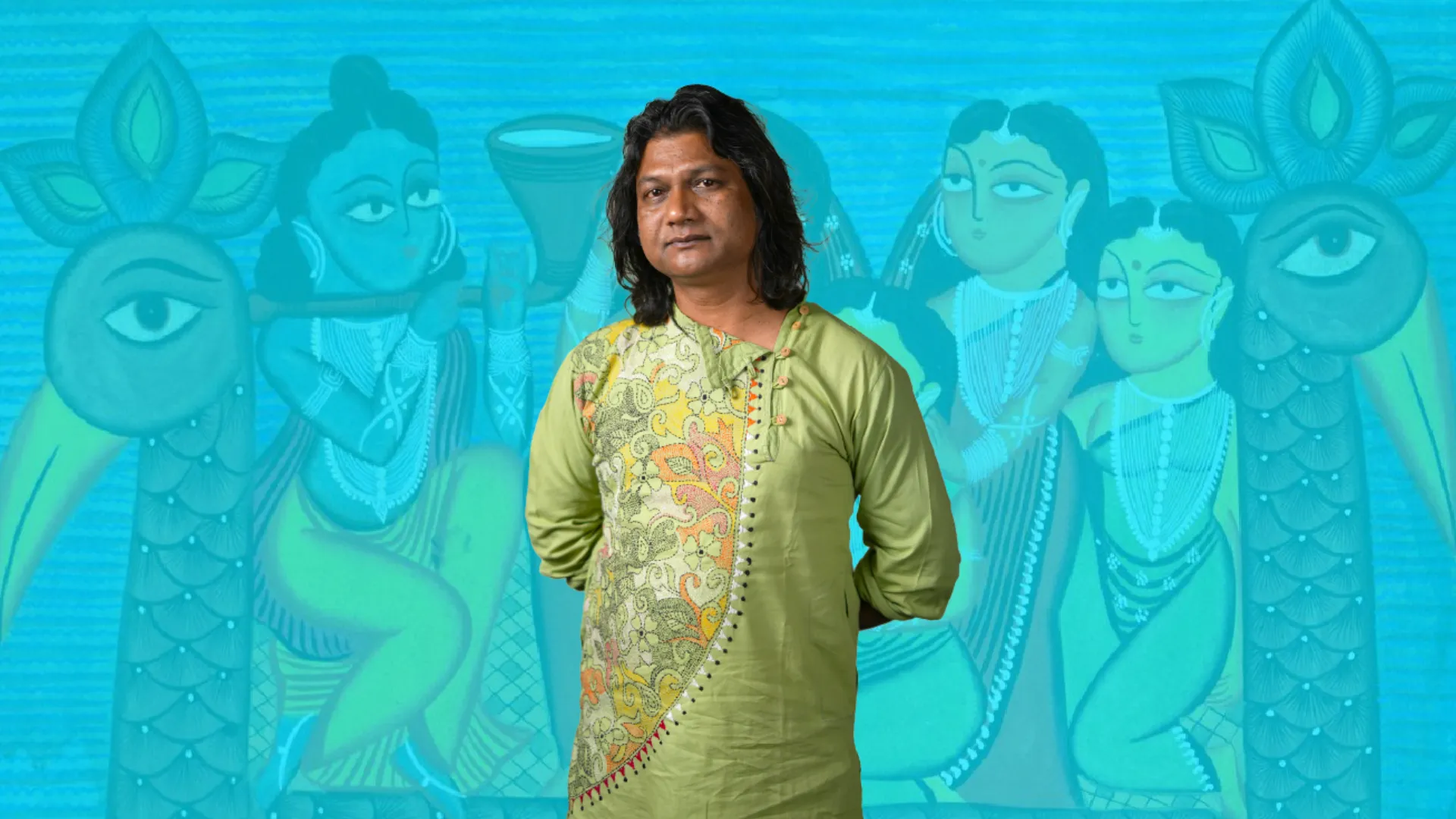
Anwar Chitrakar, based in West Bengal, is one of the most respected contemporary practitioners of Kalighat painting. He teaches the traditional techniques of the patua style and has worked to document and revive the art form for new audiences. Anwar Chitrakar also teaches a dedicated Kalighat painting course on Rooftop, making his knowledge accessible to learners across India.
Jamini Roy (1887-1972), though primarily associated with the Bengal school of modern painting, drew extensively from Kalighat conventions, borrowing its flat colour, simplified outlines, and direct figure types. His work helped introduce Kalighat's visual language to an international audience and established it as a foundational influence on Indian modern art. Chaitali Chanda, a West Bengal-based artist, has carried forward the Kalighat tradition with a focus on both traditional devotional subjects and contemporary themes, representing the continuity of the patua craft in present-day Kolkata.
If you want to learn Kalighat painting, Rooftop offers a structured online course taught by Anwar Chitrakar, one of the foremost living practitioners of this Bengali folk art. The Kalighat painting course covers the traditional techniques of the patua style, including brushwork, colour application, and figure drawing, and is accessible from anywhere in India. No prior experience is needed to begin. A kalighat art book can also be a useful companion for further reading alongside the course.
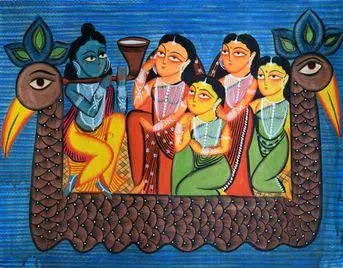
While kalighat painting images are widely shared online, nothing compares to viewing the originals in person. The best place to see original Kalighat paintings in person is the Victoria Memorial Museum in Kolkata, which holds a significant collection of 19th-century works. The Naprstek Museum in Prague also holds notable pieces from this tradition. In Kolkata itself, the Kalighat neighbourhood near the temple remains a living centre of the patua craft. To buy Kalighat painting online and explore other authentic products, visit the Rooftop shop, which carries original works by traditional Indian folk artists. You can also explore other Indian folk art traditions across the Art Wiki to discover related art forms from Bengal and beyond.
What is Kalighat painting and where does it come from?
Kalighat painting is a style of Indian folk art that originated in the 19th century in the Kalighat neighbourhood of Kolkata, West Bengal, near the famous Kalighat Kali temple. It is also known as Kalighat pat in Bengali. The art form was created and sold by artisan families called patuas, who produced these works as souvenirs for pilgrims visiting the temple.
What are the two schools of Kalighat painting?
There are two distinct schools within the Kalighat painting tradition. The Oriental School focuses on religious subjects, depicting goddesses such as Durga and Lakshmi, and scenes from sacred texts like the Ramayana. The Occidental School engages with the social and political world of colonial Kolkata, depicting everyday life, social evils, patriotic themes, and the likenesses of freedom fighters such as Tipu Sultan and Rani Laxmibai.
What materials and colours are used in Kalighat painting?
Traditional Kalighat paintings used pigments made from natural materials including turmeric roots, petals of the Aparajita flower, and soot from burning lamps. Colloidal tin was used to represent silver highlights on jewellery. The colour palette includes primary tones such as blue, red, green, and yellow, along with complex shades like indigo, silver, gold, and black. Modern practitioners often work with store-bought gouache paints on paper.
Who are the famous Kalighat painting artists?
Among the most notable figures associated with Kalighat painting is Jamini Roy, the modern Indian painter who drew heavily from the patua style to develop his own internationally recognised body of work. Among living practitioners, Anwar Chitrakar of West Bengal is one of the most recognised teachers and artists in the tradition. Chaitali Chanda is another West Bengal-based artist who continues the Kalighat tradition through both traditional and contemporary subjects.
Can I learn Kalighat painting online in India?
Yes. Rooftop offers an online Kalighat painting course taught by Anwar Chitrakar, a master practitioner of the patua tradition from West Bengal. The course is designed for beginners and covers traditional brushwork, figure drawing in the Kalighat style, and colour application. You can join from anywhere in India through the Rooftop courses page.
Where can I buy authentic Kalighat paintings in India?
Kalighat painting for sale is available through the Rooftop shop, which carries original works by traditional Indian folk artists. In Kolkata, galleries and the Kalighat neighbourhood itself are good sources for original pieces. Kalighat painting price typically depends on size, artist reputation, and materials used. The Victoria Memorial Museum holds a significant historical collection for those who want to study the art form before purchasing.
Kalighat painting holds a singular place in the story of Indian folk art. Born near one of Kolkata's most sacred sites, shaped by religious devotion and sharp social observation, and carried forward by generations of patua families, it remains a tradition with genuine depth and continuing relevance. Explore Kalighat painting courses on Rooftop and begin your journey with one of Bengal's most distinctive artistic traditions.
Sources
Panda, Chittaranjan, and Sushma Sinha. Kalighat Paintings from the Collection of the Victoria and Albert Museum, London, and Victoria Memorial Hall, Kolkata. Victoria and Albert Publications, 2011.
Sarkar, Asok Nath. Kalighat Paintings. Roli Books, 2000.
Jain, Jyotindra. Kalighat Painting: Images from a Changing World. Mapin Publishing, 1999.
Image Sources
"Kalighat Painting (26.14 × 12)." Indian Folk Art, https://indianfolkart.org/product/kalighat-painting-26-14-x-12/. Accessed 14 July 2026.
"Kalighat Painting." Mojarto, https://www.mojarto.com/artworks/folk-art/unknown-artist/kalighat-painting/MA243016. Accessed 14 July 2026.
"Kalighat Painting." Mojarto, https://www.mojarto.com/artworks/watercolour-on-paper/unknown-artist/kalighat-painting/MA228802. Accessed 14 July 2026.
"Kalighat Paintings." Caleidoscope | Indian Culture, Heritage & Arts, https://caleidoscope.in/art-culture/kalighat-paintings. Accessed 14 July 2026.
"Souvenir Art: The Divine Comedy of Calcutta's Kalighat Paintings." Sarmaya, https://sarmaya.in/spotlight/souvenir-art-the-divine-comedy-of-calcuttas-kalighat-paintings/. Accessed 14 July 2026.
"Krishna and Balram, Kalighat Painting." Wikimedia Commons, https://commons.wikimedia.org/wiki/File:Krishna_and_Balram,_Kalighat_Painting.jpg. Accessed 14 July 2026.