

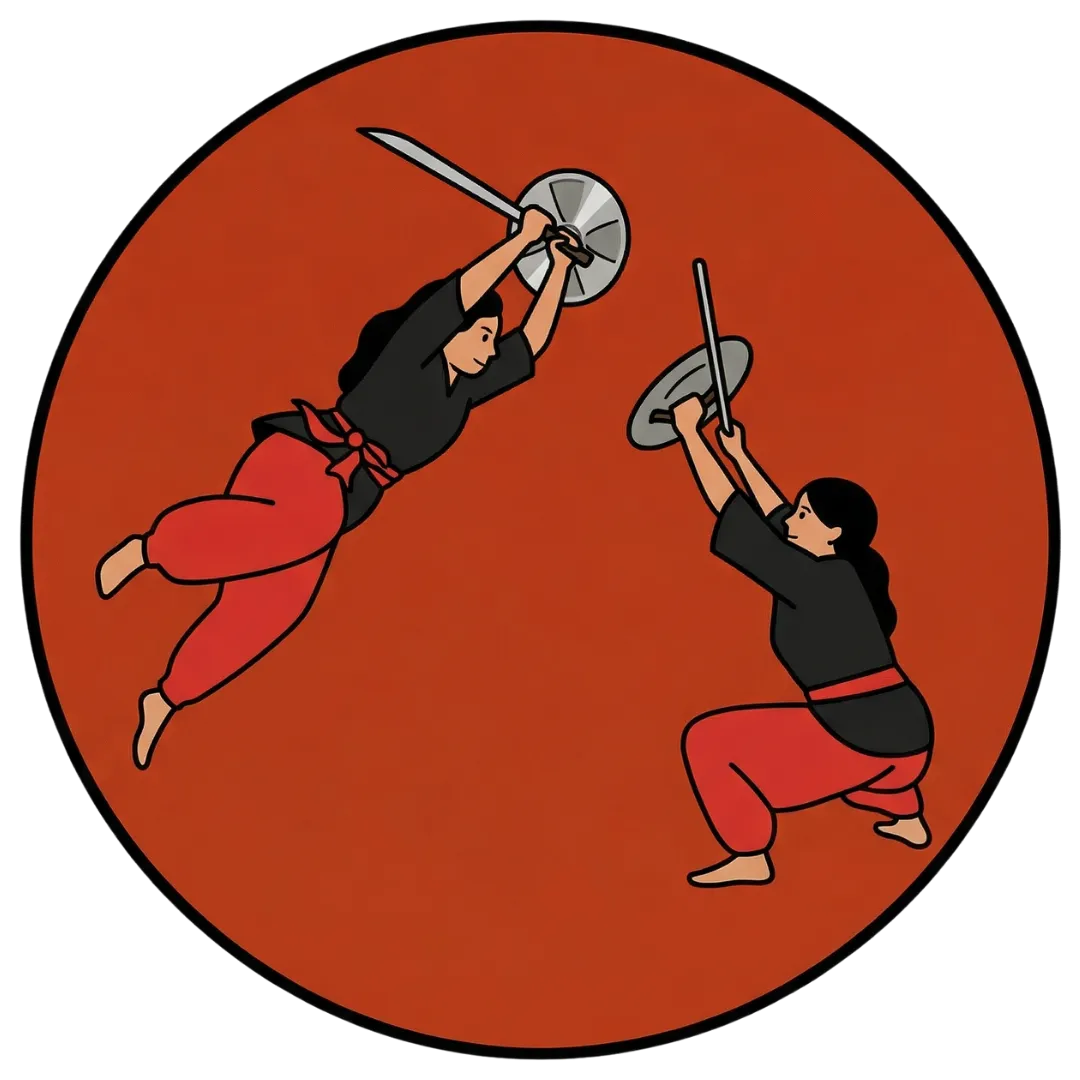
Kalaripayattu - The Folk Dance Tradition of Kerala
Explore Kalaripayattu, the martial art tradition of Kerala, and learn about its origins, techniques, cultural significance, and artistic heritage.
Introduction
Kalaripayattu is an Indian martial art indigenous to the state of Kerala, recognized widely as one of the oldest surviving martial disciplines in the world. The art form integrates combat techniques involving weapons and bare-handed fighting, body conditioning practices, healing methodologies based on knowledge of anatomical pressure points, and elements drawn from yoga. Scholarly consensus, supported by references in Sangam-era literature and historical accounts by 16th-century Portuguese observers, places its developed form within the 11th to 12th century CE, though earlier precursor practices are documented in ancient South Indian sources.
Etymology The term Kalaripayattu is formed from two Malayalam words: "kalari," meaning a training ground or battleground, and "payattu," meaning the practice or training of martial arts. A compound translation would read approximately as "practice in the arts of the battlefield." Historian A. Sreedharan Menon has noted that the word "kalari" also appears in two Sangam texts, the Purananuru and the Akananuru, though in those contexts it refers to a battlefield or combat arena rather than to the martial discipline itself. An alternate derivation connects "kalari" to the Sanskrit and Malayalam term "Khaloorika," the name of a goddess associated with Shaktism who is worshipped within Kalaripayattu traditions.
Origin Academic historians, including Elamkulam Kunjan Pillai, have located the martial art's formative period in the 11th and 12th centuries CE, during the long period of conflict between the second Chera kingdom and the Chola kingdom. During this period, military training was widespread across Kerala's social order. The Kamika Agama, a 5th-century CE South Indian text from the Shaiva Agama tradition, discusses the construction of a Khaloorika as a place for military exercise, suggesting pre-medieval antecedents. Claims of origin as early as the 3rd century BCE are cited in certain sources based on references in Sangam literature, though the specific application of those references to Kalaripayattu as a defined system remains debated among scholars.
Location Kalaripayattu originated and is most densely practiced in Kerala, where two primary regional styles evolved: Vadakkan Kalari in the Malabar region of northern Kerala, and Thekkan Kalari in the Travancore region of southern Kerala. Additional regional variations, including the Tulu Nadan Kalari found in South Karnataka and northern Kerala, and a central Kerala style, have been documented. In contemporary practice, the art is taught in centers across Kerala, as well as in Karnataka, Tamil Nadu, and internationally.
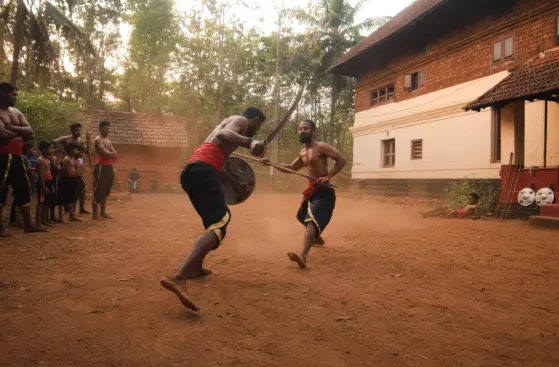
Community Kalaripayattu was historically practiced most intensively within the martial sects of Kerala's social order, particularly the Nairs, who maintained individual family training centers (kalaris). It was also practiced among Thiyyar and Ezhava communities, among others. Portuguese explorer Duarte Barbosa, writing in the 16th century, observed Nair children being sent to kalari schools at the age of seven. Female practitioners, such as the legendary warrior Unniyarcha documented in the Vadakkan Pattukal ballads, are part of the documented tradition. Contemporary practice has expanded well beyond caste and community boundaries.
Relevance Kalaripayattu has been widely cited as a precursor or foundational influence on several other Asian martial arts. The Indian Kalaripayattu Federation (IKF), established in 1995, conducts state competitions, national championships, and the National Kalaripayattu Festival. Padma Shri awardee Sri Meenakshi Amma, a 73-year-old gurukkal from Vadakara, is among the prominent practitioners recognized at the national level.
History
Background During the late medieval period, each village in Kerala maintained its own kalari, which served as both a training ground and a space with spiritual function, housing a presiding deity known as Bhagavathy or Paradevata. The tradition of ankam, a formalized duel system used to settle disputes, drew on Kalaripayattu skills and was documented in Kerala's feudal social structure. The Vadakkan Pattukal, a collection of ballads from the 17th and 18th centuries describing warrior heroes and heroines of the 16th century, preserves detailed accounts of Kalaripayattu practice and its ethical dimensions.In 1804, following the Kottayathu War, a rebellion against British rule led by Pazhassi Raja, the British colonial administration banned Kalaripayattu in Kerala. The ban came into effect after Pazhassi Raja's death on November 30, 1805. Many gurukkals continued to teach the art clandestinely. Figures such as Kottakkal Kanaran Gurukkal and Kovilkandi Kelu Kurup Gurukkal are credited with preserving the tradition during the suppression period. A public revival began in the 1920s in Thalassery as part of a broader rediscovery of traditional arts in South India.
Culture and Societies Kalaripayattu was integral to the social fabric of medieval Kerala. Historian A. Sreedharan Menon has described it as one of the most important aspects of feudal Keralite society for its role in imparting military training and discipline across social groups. The training included not only combat but also the study of Ayurvedic healing through knowledge of marma points, the body's vital anatomical locations. Kathakali performers trained in Kalaripayattu were traditionally regarded as markedly superior in their craft. The art form also influenced other performing traditions, including the Chhau dance tradition.
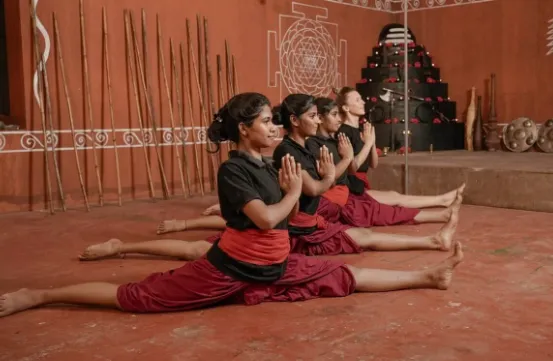
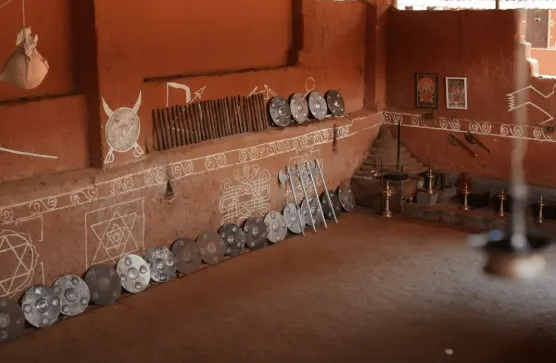
Religious Significance The kalari training ground is treated as a sacred space. It houses a puttara, an altar installed in the western corner of the kalari, before which students prostrate at the beginning of each training session. The presiding deity varies by lineage and region. The training process begins with an oil massage ritual (Kalari Uzhichil) administered by the guru, which has spiritual as well as physiological significance. Patron deities within the tradition include the goddess Bhagavathy. Some accounts associate the origins of Kalaripayattu with the sage Agastya, believed to have learned it from Lord Shiva, and with Parashurama, the sixth avatar of Vishnu, who is said in legend to have established the training centers of Kerala.
Understanding the Art
Style Kalaripayattu is divided into two broad regional styles. The northern (Vadakkan) style, associated with the Malabar region, emphasizes graceful body movement and weapons training. The southern (Thekkan) style, associated with the Travancore region, emphasizes free-armed techniques and forceful movements. Training follows a structured progression of four stages: Maithari, focusing on body conditioning exercises; Kolthari, involving wooden weapons; Ankathari, using metal weapons; and Verumkai, which covers bare-handed fighting. Many movement sequences in Kalaripayattu are derived from the observed movements of animals, including the horse, elephant, serpent, tiger, and rooster.
Central Motifs and Their Significance The core motifs of Kalaripayattu derive from Kerala's ecological and spiritual environment. Animal forms provide a physical vocabulary for combat sequences. The marma system, which identifies 107 vital anatomical points on the human body, is central to both the offensive and healing dimensions of the practice. The concept of kalari as a sacred space, the guru-disciple relationship, and the principle that knowledge of the art must serve worthy purposes and not personal aggrandizement are recurring ethical themes documented in the Vadakkan Pattukal.
Process Training conventionally begins with full body oil massage to enhance flexibility and prepare the practitioner's physiology. Students progress through the four stages in sequence, with the more advanced stages introduced only when the guru assesses readiness. Weapon sequences include exercises with the kettukari (bamboo pole), wooden sword, metallic sword, spear, dagger, and the urumi (a flexible sword). Healing techniques involving marma knowledge are taught to advanced practitioners.
Mediums Used The instruments of Kalaripayattu include the practitioner's own body, a range of traditional weapons, and the oil massage as a preparatory medium. Weapons progress from wooden to metallic as training advances. The kalari space itself is a constructed medium, typically built four feet below ground level, measuring 42 feet in length and 21 feet in width, with the puttara altar in the southwest corner.
New Outlook
Since the 1970s, Kalaripayattu has attracted international practitioners and researchers. Contemporary institutions offer training globally. Several academic studies have examined its philosophical and gender dimensions, including work by Phillip B. Zarrilli on the psychophysical dimensions of Kalaripayattu training and comparative research through institutions such as ResearchGate and the MAP Academy's Encyclopedia of Art. There is ongoing scholarly engagement with the art's relationship to Ayurveda, yoga, and South Asian performance theory.
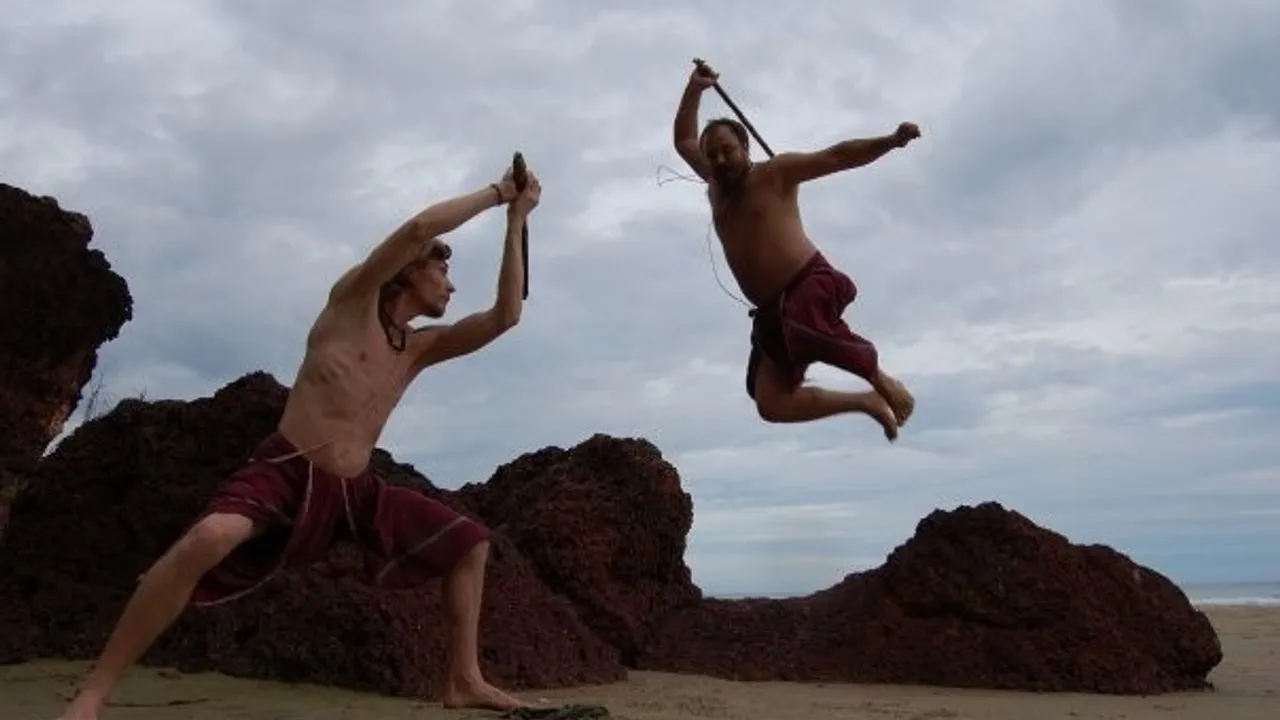
Learn Kalaripayattu
Bibliography
Sources
A. Sreedharan Menon. A Survey of Kerala History. Sahitya Pravarthaka Co-operative Society, 1967.
D. H. Luijendijk. Kalarippayat: India's Ancient Martial Art. Paladin Press, 2008.
K. Balakrishnan. Kalarippayattu: The Complete Guide to Kerala's Ancient Martial Art. Prestel, 2004.
Phillip B. Zarrilli. When the Body Becomes All Eyes: Paradigms, Discourses and Practices of Power in Kalaripayattu. Oxford University Press, 1998.
Image Sources
Athma Kalari Blogs. Accessed on May 20, 2026.
“How to Get Started in Kalaripayattu.” Kalari University. Accessed on May 20, 2026.