


Gwalior Pottery - The Handicraft Tradition of Madhya Pradesh
Explore Gwalior Pottery, the handicraft tradition of Madhya Pradesh, and learn about its origins, techniques, cultural significance, and artistic heritage.
Introduction
Gwalior Pottery is a traditional ceramic craft associated with Gwalior in Madhya Pradesh. The craft encompasses the production of terracotta and glazed pottery objects by artisan communities in the Gwalior region. Available documentation of Gwalior Pottery in formal academic sources is limited. The Indian Ceramic Arts Foundation (ICAF, icaf.org.in) provides historical documentation of ceramic traditions in the region. This entry is scoped to verified available information.
Etymology Gwalior Pottery is identified by a descriptive designation combining the city of origin (Gwalior) and the craft medium (pottery). No separate traditional name for the craft as a distinct regional tradition has been prominently identified in available sources.
Origin Gwalior has a long history of ceramic production connected to the architectural and decorative traditions of the Tomar and Mughal periods in the Gwalior Fort area. The ICAF documentation (icaf.org.in/history) provides context for ceramic traditions in the region. The Gwalior Fort is documented to have featured blue-and-yellow glazed tile work in the 15th century under the Tomar rulers, representing an early example of glazed ceramic decoration in the region.
Location Gwalior, Madhya Pradesh. Pottery production is associated with communities in and around Gwalior city.
Community Pottery is produced by Kumhar (potter) communities in the Gwalior region, following the broader pattern of pottery production communities across Madhya Pradesh and north India. Detailed documentation specific to Gwalior pottery communities is limited.
Relevance The craft has low documented relevance in current formal documentation relative to other Madhya Pradesh crafts. It is classified as Vulnerable. The ICAF provides historical documentation. Limited formal recognition or GI protection documentation is available for Gwalior Pottery specifically.
History
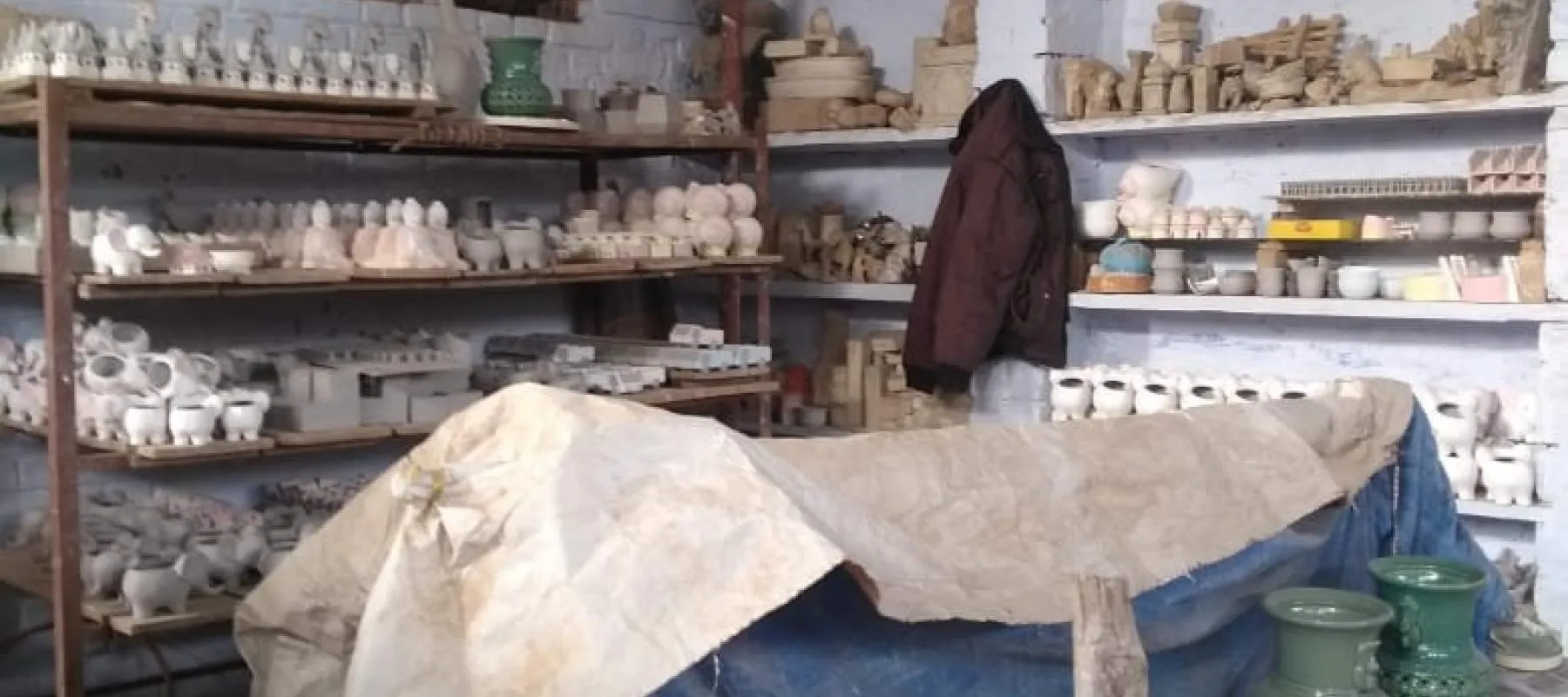
Background The historical context of pottery in Gwalior includes the architectural ceramic tradition visible in the Gwalior Fort, where Man Singh Tomar's palace (late 15th century) features extensive blue and yellow glazed tile work. This architectural ceramic tradition demonstrates the historical presence of skilled ceramic work in the region. Craft-level pottery for domestic use has also historically been produced by the Kumhar community. The relationship between the architectural ceramic tradition and the contemporary craft tradition is not formally documented in available sources.
Culture and Societies Pottery is a foundational craft in Indian agricultural communities, serving domestic, ceremonial, and ritual purposes. The Gwalior region's pottery traditions reflect the broader material culture of Madhya Pradesh. Specific cultural documentation of Gwalior pottery traditions is limited in available sources.
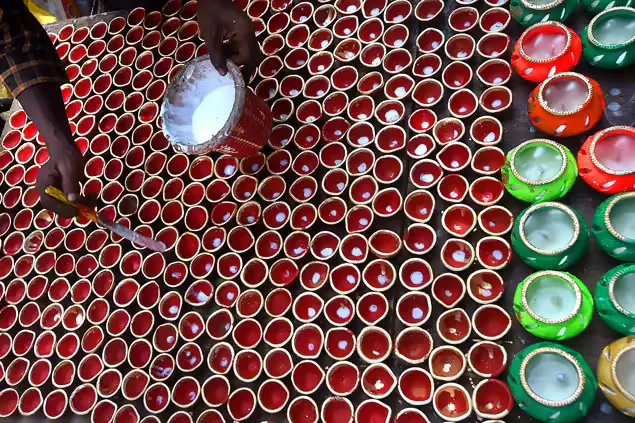
Religious Significance Pottery produced by the Kumhar community in north India typically includes ritual objects such as diyas (lamps) and water vessels used in Hindu ceremonies. Specific documentation of ritual pottery in the Gwalior context is not available in current sources.
Understanding the Art
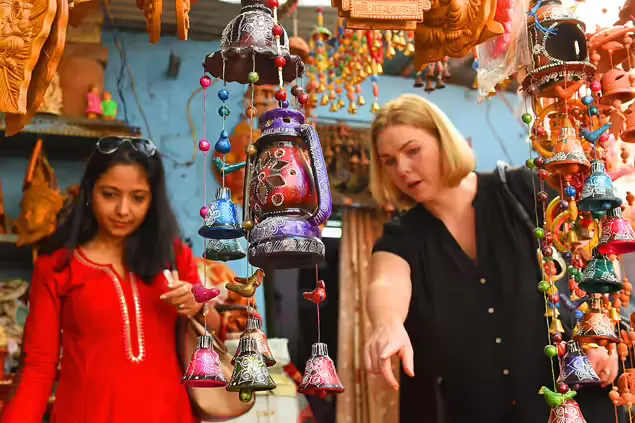
Style Limited descriptive documentation specific to Gwalior pottery style is available in current sources. Madhya Pradesh pottery traditions generally include terracotta work, simple utility pottery, and decorative pottery.
Central Motifs and Their Significance Specific motif documentation for Gwalior pottery is not available in current published sources.
Process General pottery process applies: clay preparation, wheel throwing or hand-shaping, drying, firing in a kiln. Glazed work involves additional glaze application and second firing. Specific process documentation for Gwalior pottery is not available.
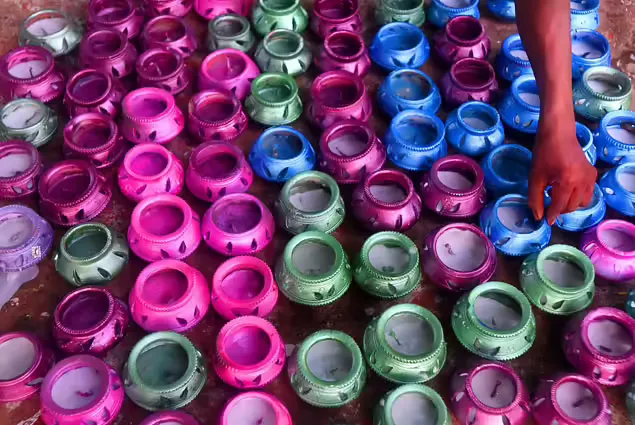
Mediums Used Local clay is the primary medium. Some glazed work may use mineral-based glazes.
New Outlook
Limited formal documentation available. The craft is classified as Vulnerable. Further formal research and documentation would support more comprehensive assessment.
Learn Gwalior Pottery

Bibliography
Sources
“History.” Indian Ceramic Arts Foundation, icaf.org.in/history.
Image Sources
“Scindia Pottery Starts Make in India Diwali Campaign.” The Times of India, https://timesofindia.indiatimes.com/blogs/no-filter/scindia-pottery-starts-make-in-india-diwali-campaign/. Accessed on May 02, 2026.
“Walk: Understand the Beauty of Gwalior Potteries.” Sahapedia Experiences, https://www.sahapediaexperiences.org/walk-understand-beauty-gwalior-potteries. Accessed on May 02, 2026.