
Gotipua - The Folk Dance Tradition of Odisha
Uncover the rich heritage of Gotipua through its graceful movements and centuries-old devotional traditions.
Introduction
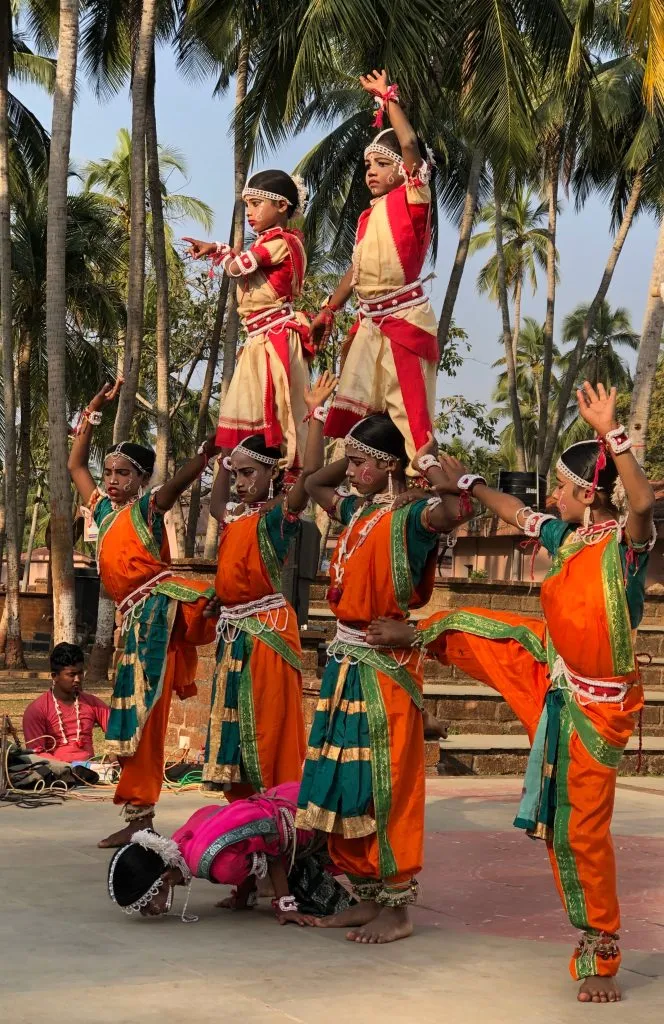
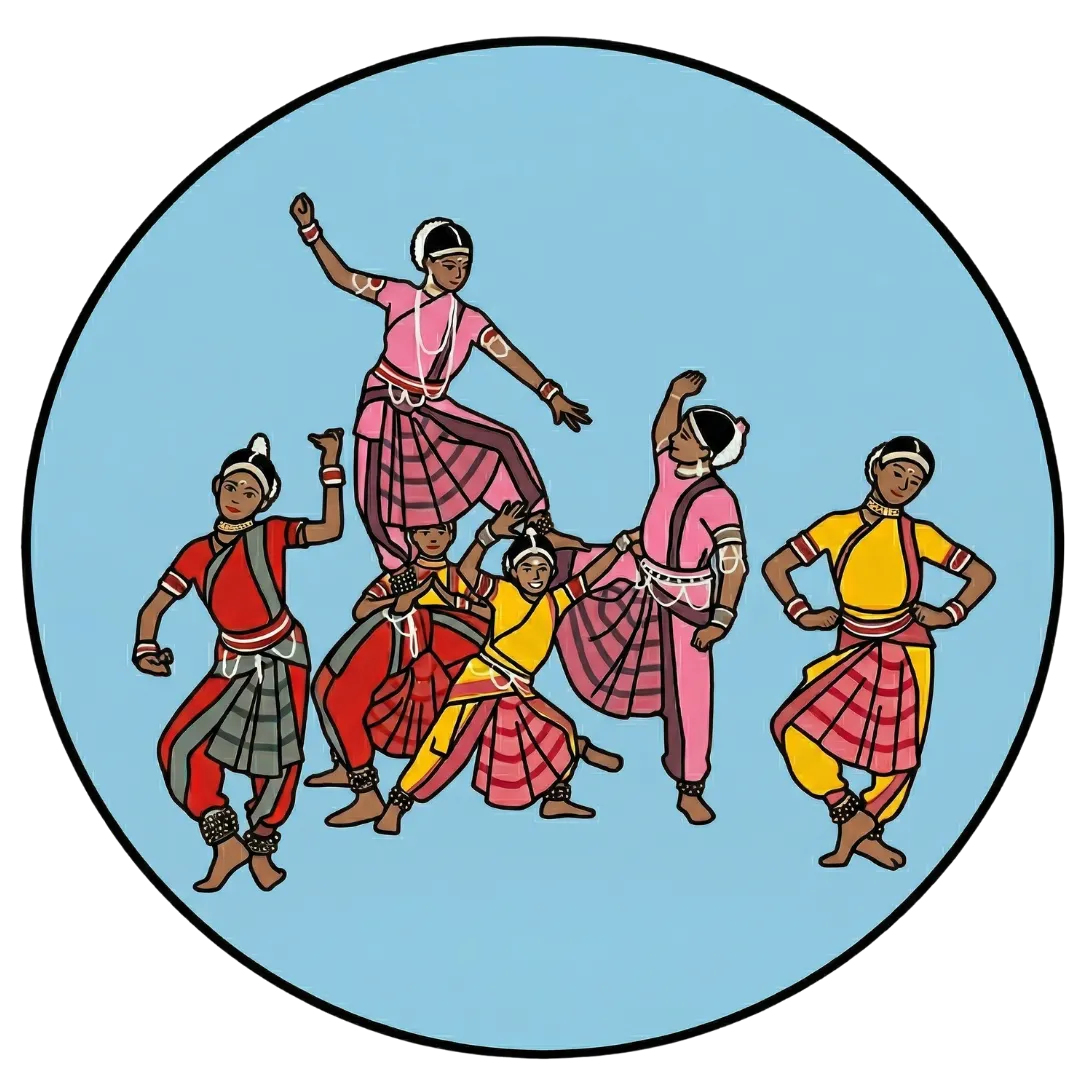
Gotipua is a traditional folk dance form of Odisha, India, in which young boys dress as women and perform devotional dance compositions praising Lord Jagannath and Lord Krishna. The term Gotipua derives from the Odia words goti (single) and pua (boy), meaning a single boy or solo boy performer. The form is recognized as the direct precursor to the classical Odissi dance tradition, and several masters of Odissi including Guru Kelucharan Mohapatra and Guru Pankaj Charan Das were trained as Gotipua dancers. The dance integrates acrobatic postures called Bandha Nritya, expressive mime called Abhinaya, and devotional invocations. Raghurajpur, a heritage craft village near Puri, is the most significant active center of the Gotipua tradition today.
Etymology
In the Odia language, Goti means single or one, and Pua means boy. The compound Gotipua thus designates the single-boy performer who undertakes both the male and female roles in devotional dance. The tradition is also called Bhakti dance or Vaishnava dance in some contexts, referencing its devotional orientation toward Krishna. The philosophy of the Gotipua tradition is embedded in the Sakhibhava culture, in which devotees consider themselves to be female companions (Sakhis) of Lord Krishna, irrespective of the physical sex of the devotee.
Origin
Location: Odisha, India; historically centered in Puri and its surrounding villages; currently most active in Raghurajpur village, Puri district Community: Boys from families associated with the Jagannath temple tradition; historically from low-income rural families trained in village gurukuls called Akharas Relevance: Recognized as the foundational precursor to classical Odissi dance; documented by UNESCO and scholarly institutions as a significant intangible cultural tradition
History
Background
The historical origins of Gotipua are associated with the decline of the Mahari or Devadasi tradition in Odisha. The Mahari dancers were female temple servants dedicated to the service of Lord Jagannath at the Puri temple from the Keshari dynasty period (sixth century CE onward). The system began to deteriorate from the fourteenth century as a result of Mughal invasions, social disruption, and the influence of anti-nautch sentiment. Scholar accounts preserved in Exotic India Art's monograph on Gotipua document that during the reign of Prataprudra Deva (1497 to 1540 CE), the Vaishnavite minister Ramananda Ray introduced the practice of training young boys in devotional dance in the Gopi Bhava tradition. The Vaishnava saint Chaitanya Mahaprabhu, who visited Puri during this period, is associated in some accounts with the encouragement of male-performer devotional dance, though scholarly debate exists on the precise degree of his involvement.
During the reign of Rama Chandra Dev, founder of the Bhoi dynasty in the sixteenth century, boys were formally trained in the Gotipua tradition as the Mahari system declined. The Bhakti revival of the seventeenth century consolidated and institutionalized the tradition. By the mid-nineteenth century, the early nineteenth century saw the decline of zamindar patronage following British changes to the land settlement system, which adversely affected Gotipua. The form survived through community gurukuls called Akharas in Puri's streets. In the twentieth century, Guru Kelucharan Mohapatra and Guru Pankaj Charan Das, both trained Gotipua dancers, were central figures in the revival and formalization of Odissi classical dance in the 1940s and 1950s, drawing heavily on the Gotipua repertoire and technique. The Guru Kelucharan Mohapatra Odissi Research Centre organizes an annual Gotipua Dance Festival in Bhubaneswar.
Culture and Societies
Gotipua training follows a gurukul model. Boys are enrolled at the age of five or six, often from families with limited economic resources who dedicate their sons to the Lord following a ritual vow at a temple. The boys do not cut their hair, which is styled into an elaborate knot woven with flower garlands for performance. They live and train in the Akhara under a guru who transmits technique through daily practice. Boys perform until adolescence, when their androgynous physical appearance changes. The most skilled Gotipua dancers transition into careers as Odissi classical dancers. The tradition is documented as having been exclusively associated with the Jagannath faith and philosophy, and the performers are understood as embodying the divine feminine in their relationship to Lord Krishna.
Religious Significance
Gotipua is intrinsically devotional in character. The dance is dedicated to Lord Jagannath and Lord Krishna, and each performance begins with a Vandana, a three-step salutation directed first toward God, then toward the guru, and finally toward the audience. The repertoire is structured around devotional compositions based on the Gita Govinda of the twelfth-century poet Jayadeva, Sanskrit stutis, and Odia Abhinaya compositions on the Radha-Krishna theme. The Sakhibhava philosophy that underpins the tradition positions the dancer as a female companion of the divine male, Krishna, making the performance an act of devotional self-offering. The tradition was performed at temple festivals including Dol Utsav, Chandan Yatra, and Jhulan Yatra, all associated with the Jagannath temple calendar.
Understanding the Art
Style
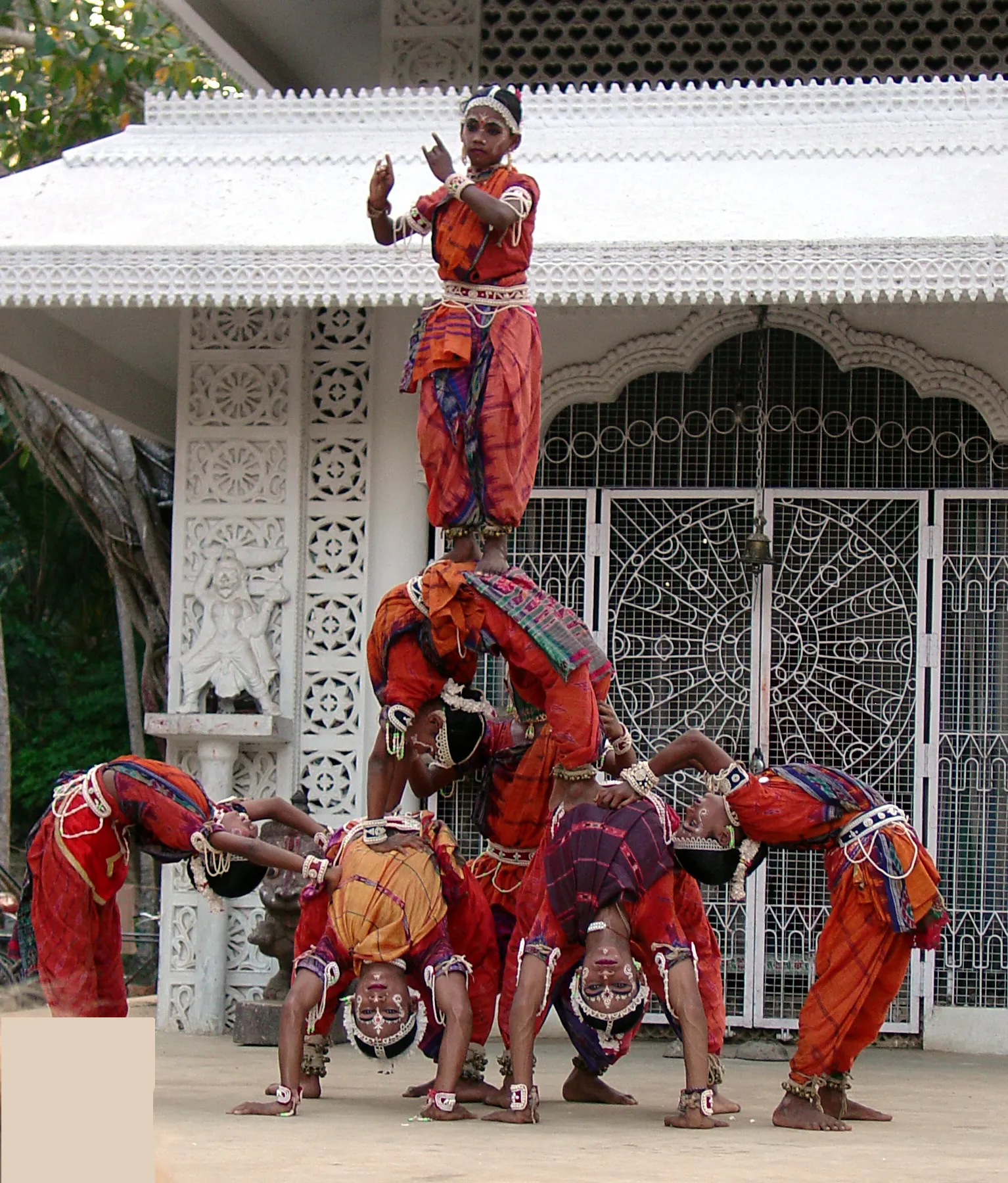
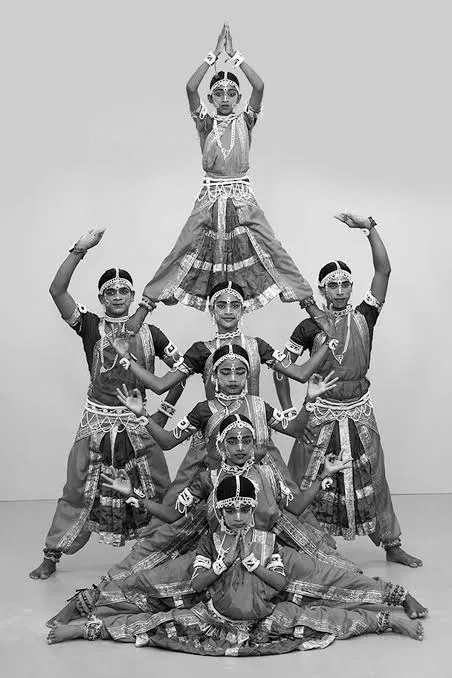
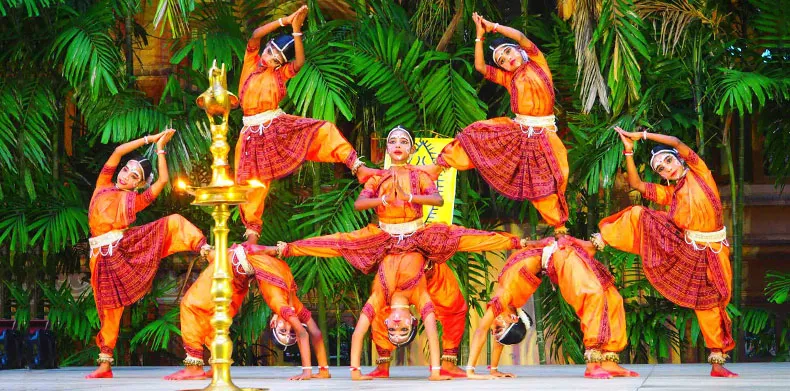
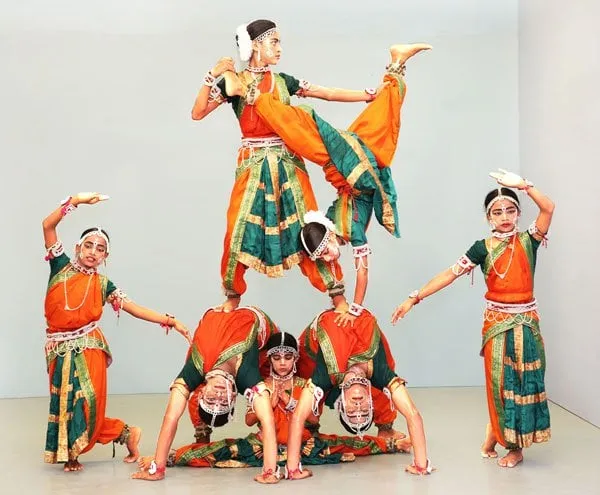
Gotipua performance is structured in a standard sequence. The Vandana is the opening invocation. The Sarigama celebrates beauty and technique and is depicted in carved temple walls. The Abhinaya is the expressive enactment of a song and interpretation of poetry. The Bandha Nritya is the acrobatic segment, in which performers compose themselves into difficult yogic postures and human formations representing mythological scenes from the lives of Radha and Krishna. The bandhas require exceptional physical flexibility and are generally performed during adolescence when the body is at its most supple. Dancers climb over each other in human pyramids, balance inverted, and execute complex acrobatic sequences. The technique requires thorough training in Angashuddhi (body purification), drishti bheda (eye movements), shira bheda (head movements), bhangis (body postures), and hasta mudras (hand gestures).
Central Motifs and Their Significance
The central motifs of Gotipua are the devotional narratives of Radha and Krishna drawn from the Gita Govinda and related Vaishnava poetry. The Bandha postures visually represent scenes from mythological narratives and serve simultaneously as demonstrations of physical discipline and acts of spiritual devotion. The Abhinaya Chandrika, a fifteenth-century Odissi dance text by Maheshwara Mahapatra, documents more than twenty-five varieties of Bandha postures. The Sangita Darpana (seventeenth century) provides the complete repertory and performance framework for the style.
Process
Boys are enrolled at approximately age five to six and undergo continuous training in the Akhara until puberty. The guru recites bols (rhythmic syllables called ukutas) while dancers sing the devotional compositions themselves, maintaining the practice of bachika abhinaya (expressive singing while dancing). Face painting uses white and red powders mixed together, applied with kajal outlines around the eyes. A bindi is applied on the forehead with surrounding white patterns. Necklaces, bracelets, armbands, and ear ornaments complete the costume of blouse and apron tied at the waist.
Mediums Used
The Mardala (a two-headed pakhawaj drum) is the primary percussion instrument. Gini (small cymbals), harmonium, violin, and bansuri (flute) complete the instrumental ensemble. One or two vocalists provide the devotional songs. The guru recites the rhythmic syllables guiding the dancer's footwork. Instruments follow the Odissi music tradition.
New Outlook
Gotipua faces preservation challenges arising from the physically demanding nature of the form, the limited performance window of adolescence, and the uncertain economic prospects for Gotipua dancers who do not transition to Odissi classical careers. The Odisha government has extended recognition to Gotipua groups. The Guru Kelucharan Mohapatra Odissi Research Centre's annual Gotipua Dance Festival in Bhubaneswar provides a formal platform. UNESCO and BBC have documented the tradition as an intangible cultural heritage of significance. Documentation by scholars and photographers including Dietmar Temps has contributed to international awareness. The tradition's survival is currently concentrated in Raghurajpur and a handful of other centers near Puri.
Learn Gotipua
Bibliography
Sources
Mahapatra, Maheshwara. Abhinaya Chandrika. 15th century.
Mohanty, P. “Gotipua Dance: An Analysis of Performance and Social Significance.” Odisha Anthropological Journal, vol. 5, no. 3.
Odisha State Department of Culture. Odisha Folk Arts: Documentation and Preservation Strategies. Government of Odisha Press, 2021.
Pattnaik, Sanjukta. Gotipua: The Boy Dancers of Odisha. Aryan Books International.
Sangita Darpana. 17th century.
Image Sources
“Gotipua.” Wikipedia, https://en.wikipedia.org/wiki/Gotipua. Accessed 4 July 2026.
“Gotipua Dance.” Current Affairs – Khan Global Studies, https://currentaffairs.khanglobalstudies.com/gotipua-dance/. Accessed 4 July 2026.
“Gotipua Dance Performance at Amritapuri Campus.” Amrita Vishwa Vidyapeetham, https://www.amrita.edu/news/gotipua-dance-performance-at-amritapuri-campus/. Accessed 4 July 2026.
“Gotipua: The Sacred Dancers of Lord Krishna.” Sanatan.org, https://www.sanatan.org/en/a/100596.html. Accessed 4 July 2026.
“INDIA: Gotipua Folk Dance Tradition from Odisha.” Earthstoriez, https://earthstoriez.com/india-gotipua-folk-dance-tradition-from-odisha. Accessed 4 July 2026.