

Duffmuttu - The Folk Dance Tradition of Kerala
Explore Duffmuttu dance, the performance tradition of Kerala, and learn about its origins, techniques, cultural significance, and artistic heritage.
Introduction
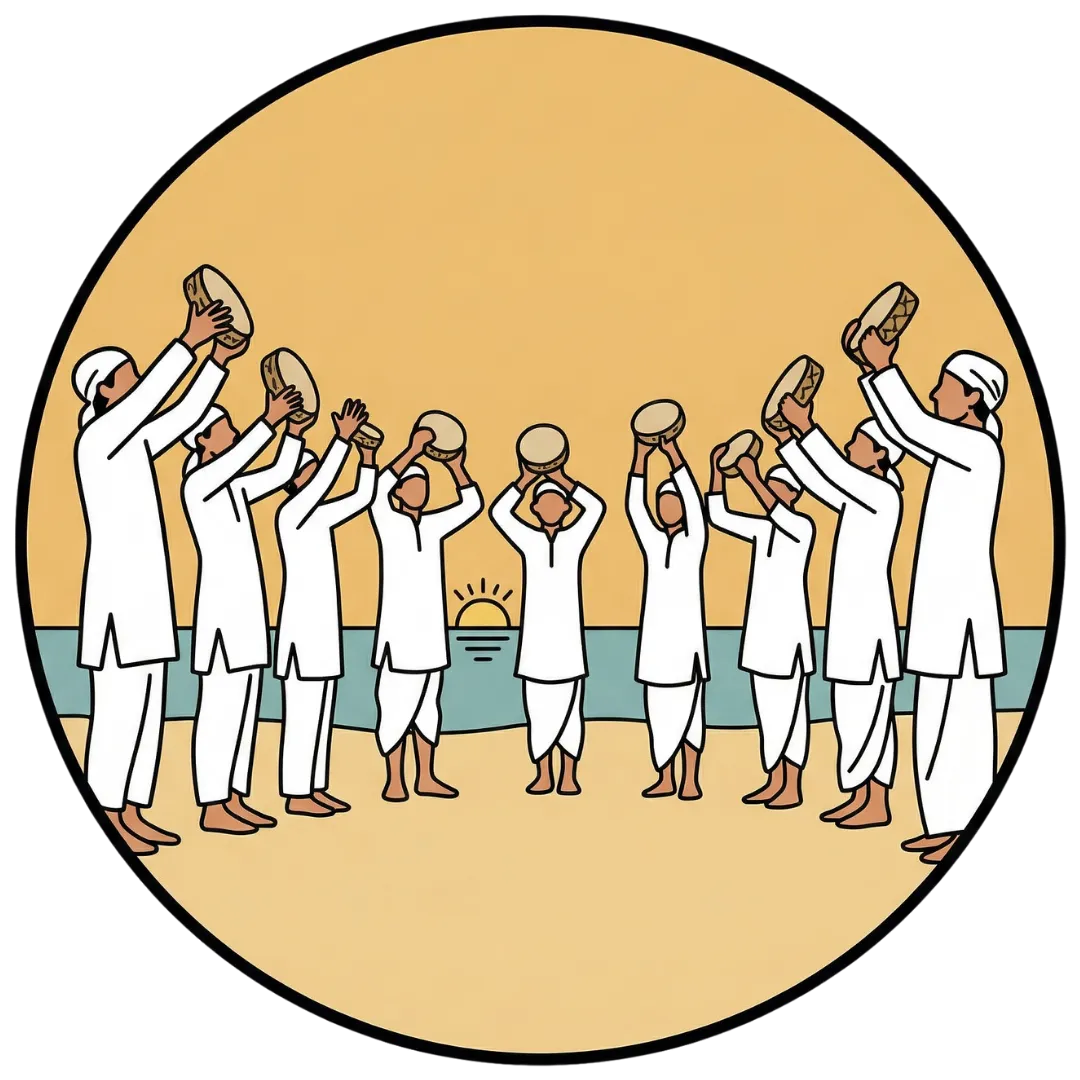
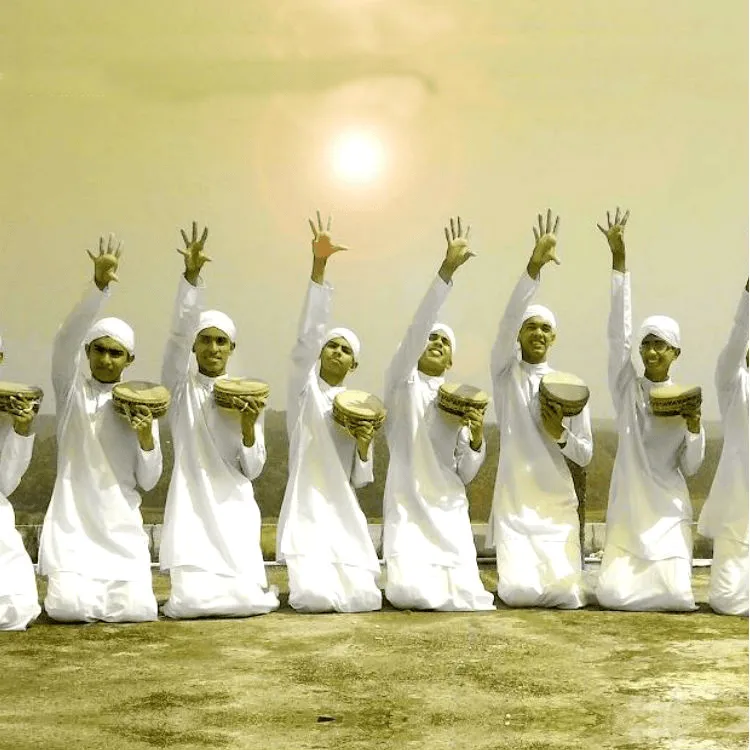
Duffmuttu is a traditional group performance art form originating from the Malabar region of Kerala, India. It is practiced predominantly by the Muslim community and centers on rhythmic percussive music, synchronized body movements, and devotional singing. Performances involve a group of six to ten male artists who beat the duff, a shallow round frame drum made of wood with animal skin stretched over one face, while singing songs that praise Islamic heroes, martyrs, and saints. The art form is also known by the alternate names Duff Kali, Dubhmuttu, Aravanmuttu, and Arbanamuttu.
Etymology The word "duffmuttu" is a compound. "Duff" is of Arabic origin, referring to a specific type of frame drum. The instrument is also called a thappitta in local usage. "Muttu" in Malayalam indicates striking or beating. The name thus directly describes the central action of the performance: the rhythmic striking of the duff.
Origin Documented sources trace the origins of Duffmuttu to the Arabian Peninsula, specifically to practices associated with Medina, where frame drums were used in celebrations and to receive dignitaries. The art form reached the Indian subcontinent through Arab traders and through Sufi influence transmitted via the Lakshadweep islands. It gained documented prominence in the Malabar region of north Kerala approximately 200 years ago, when a Yemeni-origin family known as Alassam Veettil Tharavadu settled in Kappad, near Kozhikode, and played a central role in establishing the performance tradition locally.
Location Duffmuttu is practiced throughout the Malabar region of northern Kerala, with its strongest base in Kozhikode district. A gurukulam established at Kappad, believed to date from around 1885, serves as one of the primary centers for instruction in the art form. The art form also extends into parts of coastal Karnataka where Muslim communities of Malabar origin settled.
Community The art form is performed exclusively by the Mappila Muslim community of Malabar. The performers are traditionally male, and participation occurs across generations within families and communities in coastal and semi-urban settlements of north Kerala. The performance is led by a gurukkal or head practitioner who also serves as the lead singer.
Relevance Duffmuttu continues to be performed at weddings, mosque-associated festivals (known as uroos), and community social occasions. It was included in the annual Kerala School Kalolsavam competition circuit, which expanded youth participation significantly. Koya Kappad, identified as the fourth guru in the lineage at Kappad, has received recognition from the Kerala Folklore Academy and was appointed its Vice Chairman in 2022.
History
Background Duffmuttu arrived in the Malabar region through sustained contact between Arab traders and the coastal communities of Kerala. Islamic cultural practices, including musical and devotional forms, traveled along the same routes as commerce. The art form absorbed local adaptations as it became part of the Mappila community's ritual and social life. Over approximately two centuries, the gurukulam system maintained transmission of performance technique and repertoire within the community.
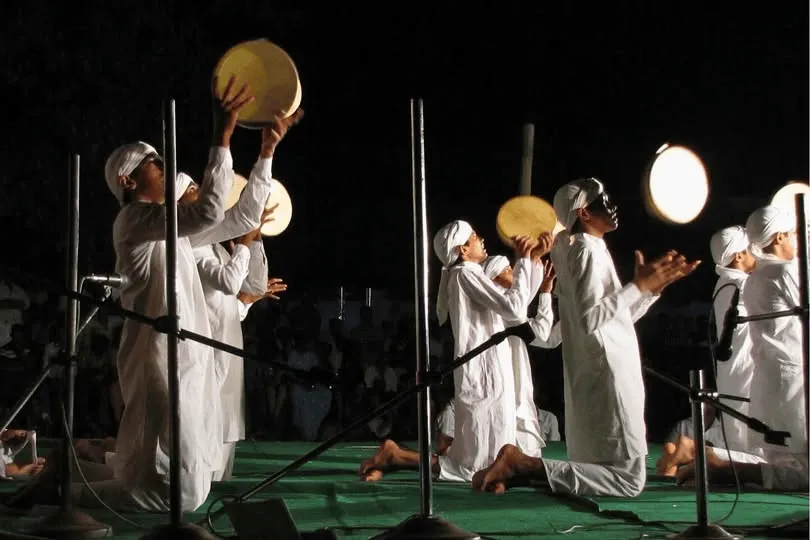
Culture and Societies Duffmuttu serves a dual function as social entertainment and as a marker of Muslim cultural identity in Kerala. It is staged at socially significant occasions including nuptial ceremonies, mosque festivals, and community gatherings. The performance involves two inwardly facing rows of artists who imitate each other's movements in synchronized patterns, with the lead singer setting the theme and the group providing a rhythmic chorus. At certain points in a performance, acrobatic elements including somersaults are incorporated.
Religious Significance Duffmuttu carries substantive Islamic devotional content. The songs are tributes to Islamic heroes and martyrs, and some include verses in Arabic that trace back to early Islamic practice. Oral accounts cited in available sources suggest that a precursor form of duff-based singing existed prior to the time of the Prophet Muhammad and was used to welcome dignitaries. The art form also commemorates Sufi saints and is performed at uroos, which are festivals associated with mosque shrines. However, no formal designation of the art form as religious scripture or canonical Islamic practice has been documented.
Understanding the Art
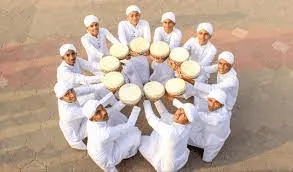
Style The performance formation is typically a U-shape or two facing rows of six to ten male performers. The group moves in synchronized patterns, including swaying of the body, rising and lowering of feet, and circular formations. A lead singer intones verses while the group provides chorus responses. Performers occasionally toss the duff overhead while executing rhythmic steps. The overall aesthetic is one of collective precision and devotional energy rather than individual virtuosity.
Central Motifs and Their Significance The primary symbolic content of Duffmuttu is martial and devotional, expressed through the lyrical content of the songs. The lyrics center on the lives and sacrifices of Islamic heroes and martyrs, with some compositions tracing stories of early Muslim warriors and saints. The act of singing in unison while keeping percussion collectively is itself symbolic of community solidarity within Islamic devotional culture.
Process A Duffmuttu performance begins with the lead singer establishing the rhythm and thematic content of the song. The remaining performers take up the chorus while simultaneously beating the duff with their fingers or palms. Body movements are synchronized with the percussion, and the pace can escalate or slow depending on the song's requirements. Some compositions include acrobatic interludes. Performances can occur at any time of day.
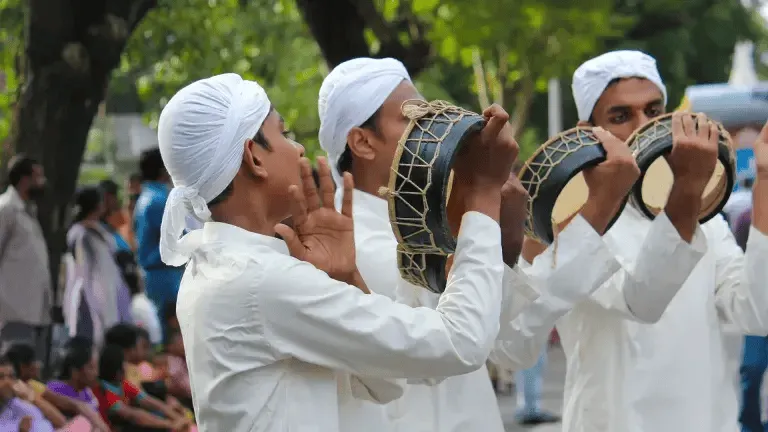
Mediums Used The central instrument is the duff, a round frame drum constructed from a wooden ring with ox skin or other animal hide stretched across one face. No additional instruments are specified in standard accounts of the art form. The voice, both solo and in chorus, provides the melodic and lyrical dimension of the performance.
New Outlook
In recent decades, Duffmuttu has been incorporated into the Kerala School Kalolsavam, the state's largest youth arts competition, which has expanded the number of young practitioners and extended awareness of the form beyond the traditional Muslim community. The Kerala Folklore Academy has been active in documenting and providing institutional support to practitioners. Digital recordings and online platforms have made performances more accessible to dispersed Malayali audiences.
Learn Duffmuttu
Bibliography
Sources
Gangadharan, M., editor. Folklore Studies in Kerala. Kerala Folklore Academy.
Kerala Folklore Academy. Documentation of Performing Arts of Kerala. Various years.
Kurup, K. K. N. Modern Kerala: Studies in Social and Agrarian Relations. Mittal Publications. 1988.
Internet Sources
“Duffmuttu.” Kerala Tourism Guide. Accessed on May 20, 2026.
“Duffmuttu.” Kerala Tourism, Department of Tourism, Government of Kerala. Accessed on May 20, 2026.
Khalid, Uwais. “Kerala Kalolsavam.” Uwais Khalid. Accessed on May 20, 2026.
Sahapedia. “Duff Muttu Is an Art Form Popular among the Muslim Community of Malabar...” Facebook, 28 Sept. 2016, Facebook. Accessed on May 20, 2026.