
Dalkhai - The Folk Dance Tradition of Odisha
From harvest festivals to community gatherings, explore the evolution and enduring significance of Dalkhai in Odisha's folk traditions.
Introduction
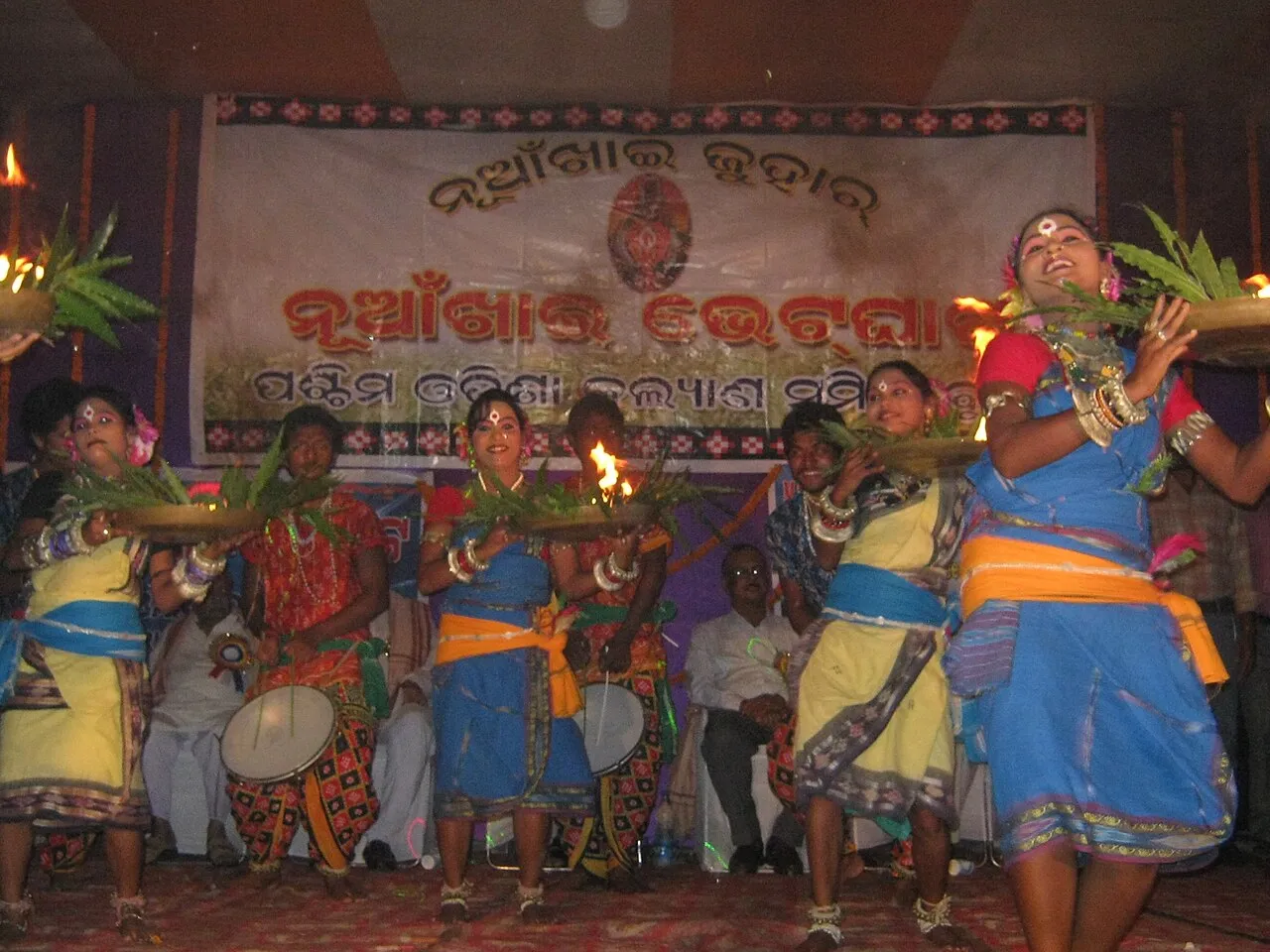
Dalkhai is a socio-religious folk dance of the tribal and agrarian communities of western Odisha, India. It is performed primarily by young unmarried women of tribal communities including the Binjhal, Mirdha, Kuda, Gond, and Kondh, and has also been adopted by non-tribal communities in the region. The dance is deeply linked to the worship of Dalkhai Devi, a folk goddess identified as a manifestation of Goddess Durga, and is performed during specific festivals tied to the agricultural and ritual calendar of western Odisha, particularly the Bhai Jiuntia, Dussehra, and Nuakhai festivals. The form has limited formal academic documentation relative to its cultural significance, with scholarship in the field increasing primarily since the early 2000s.
Etymology
The name Dalkhai is derived from two sources. The primary derivation connects the word to the ritual refrain 'Dalkhai Bo!' which the dancers shout at the beginning and end of each stanza of the accompanying song. The refrain functions as an address to a girlfriend or female companion. A secondary derivation connects the name to the word daal, the Odia term for tree branches, which are worshipped as symbolic offerings to the goddess during the Navaratri period. Branches and leaves of trees including mango, peepal, aanla, bela, and mandar are decorated and offered to the deity as part of the ritual in which Dalkhai dance participates.
Origin
Location: Western Odisha; districts of Bargarh, Sambalpur, Jharsuguda, Deogarh, Bolangir, Sonepur, Kalahandi, Nuapada, and Boudh Community: Binjhal, Mirdha, Kuda, Gond, Kondh tribes; also practiced by non-tribal communities including Kulta, Mali, and Gouda Relevance: A central expression of Sambalpuri folk culture; documented by scholars as a ritual form on the boundary between tribal and mainstream Hindu practice
History
Background
The origins of Dalkhai dance lack formal written documentation, as the tradition has been transmitted through oral practice and communal ritual observation. Scholarly accounts note that Dalkhai is among the oldest folk dance traditions of western Odisha and is rooted in the agrarian and ritual life of the region's tribal communities. The dance is structurally connected to the worship of Dalkhai Devi, whose housing is called the Dalkhai Kuthi or Sulha Kuthi, a painted structure on the outer wall of the village head's home. The ritual performance of Dalkhai begins on the eve of Mahashtami (the eighth day of Navaratri) and continues through Dussehra. The performance takes place at a fixed riverside location, where an idol of Goddess Durga is crafted from riverbank sand, placed under a tree, and ritually worshipped. The dance was traditionally restricted to this ritual context. Over time, Dalkhai has been adopted into a wider range of social occasions including weddings and secular cultural programs.
Culture and Societies
Dalkhai is primarily a communal act of female solidarity and devotion. Young unmarried women of tribal communities fast throughout the day of performance and pray to the Dalkhai Devi in the evening for the wellbeing of their brothers, creating a gendered ritual parallel to the Bhai Jiuntia festival's emphasis on brother-sister bonds. Male members of the community participate as drummers and musicians, but the dance itself is performed by women. Non-tribal communities in western Odisha participate in Dalkhai alongside tribal groups, reflecting a documented pattern of tribal and non-tribal cultural interaction across the Koshal region. Research by scholars Nibedita Nath and Supritee Mishra (2023) documents the dance's transition from exclusively ritual to widely performed cultural identity marker at state, national, and international levels.
Religious Significance
Dalkhai has documented and substantive religious significance. The dance is performed as an act of devotion to Dalkhai Devi, who is identified as a manifestation of Goddess Durga and is also described as the Goddess of Fertility. The ritual context of the dance encompasses a complete worship sequence: fasting, riverside gathering, creation of a sand idol, and performance as offering. The dance is also performed during Nuakhai, the harvest festival of western Odisha dedicated to Maa Samaleswari, the presiding goddess of Sambalpur. Scholarly documentation by R. Naik (2020) in the Journal of Humanities and Social Sciences Studies confirms the religion-based character of the traditional form.
Understanding the Art
Style
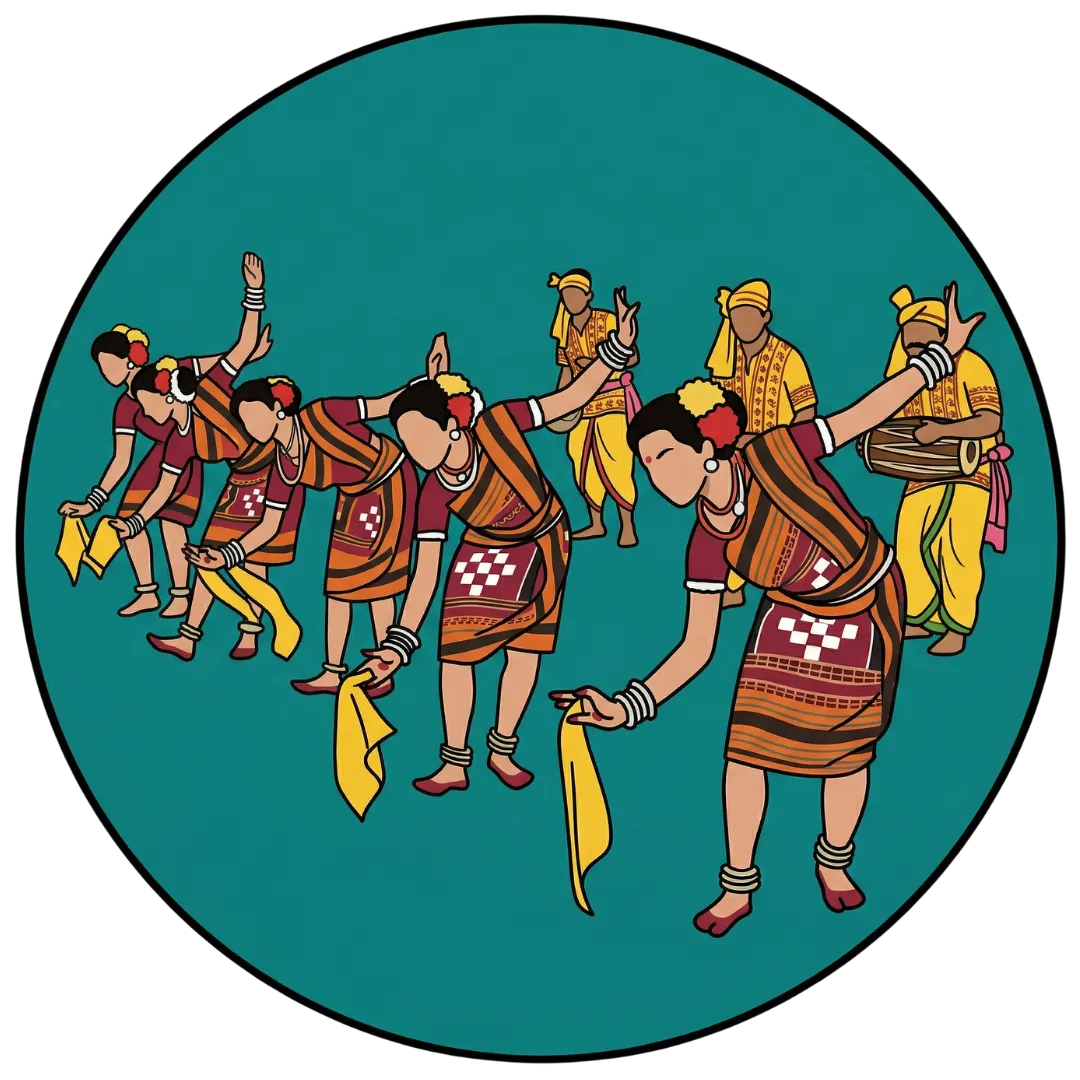
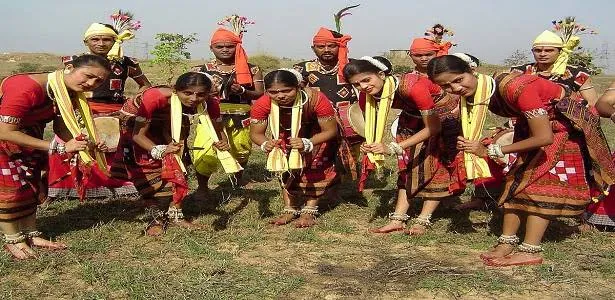
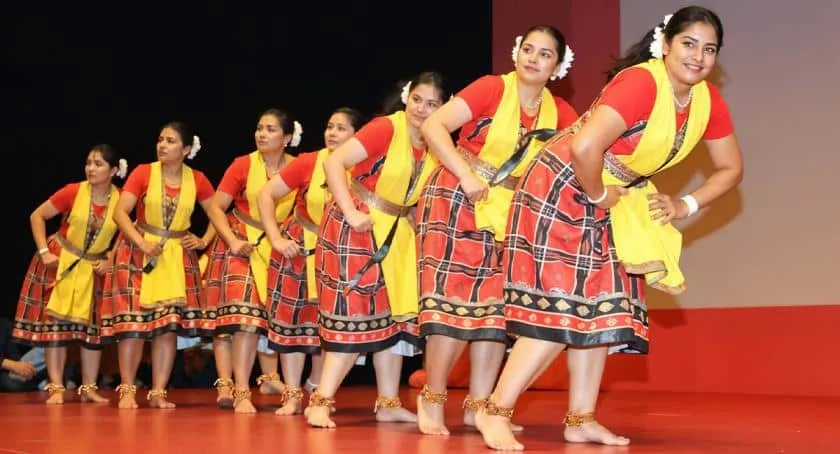
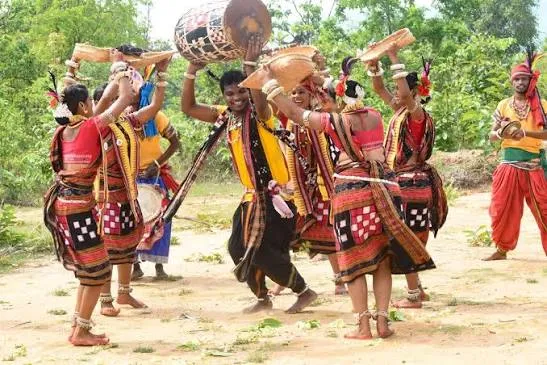
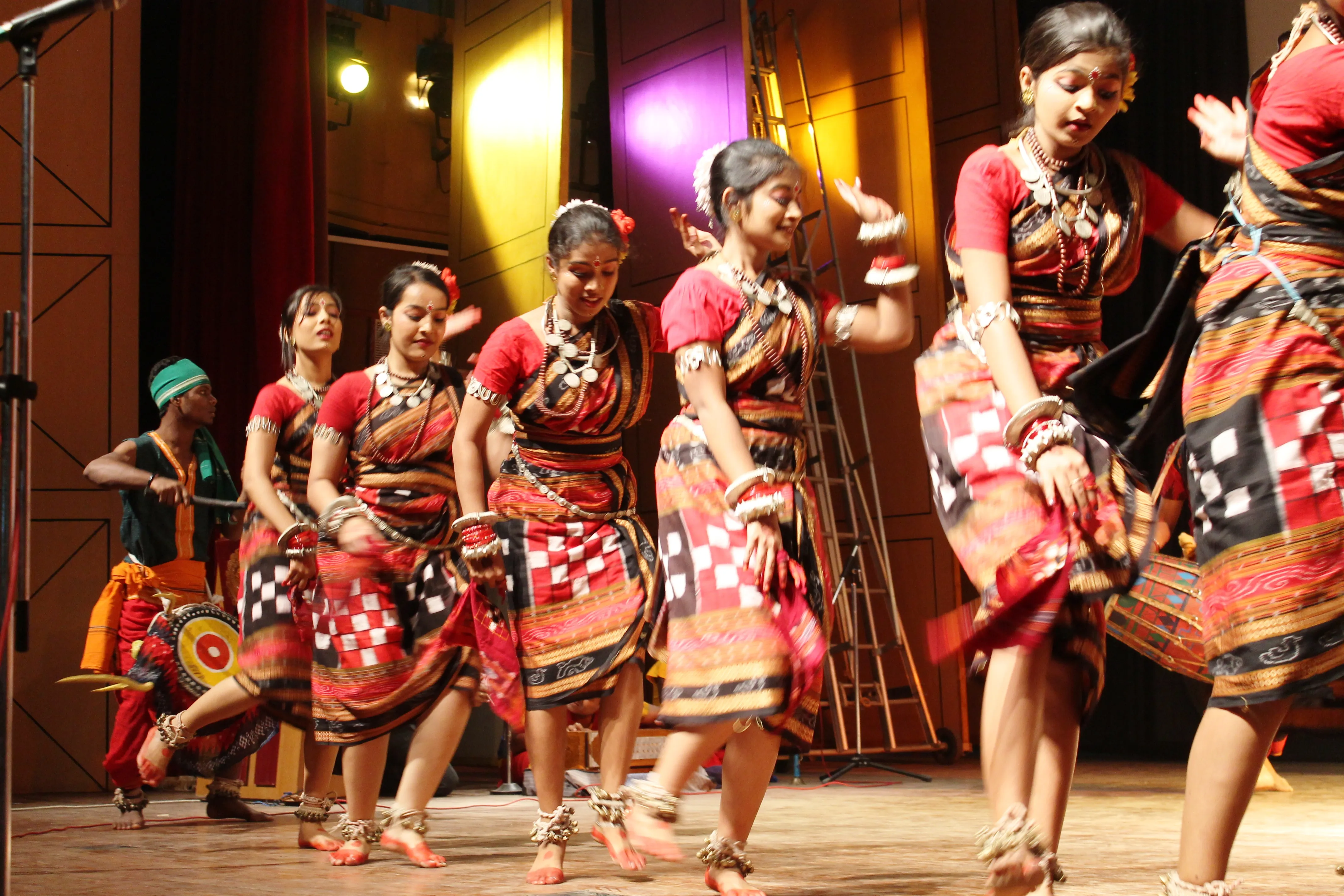
Dalkhai is a group dance performed by women who stand in a line or semi-circular formation. The dancers place their legs close together and kneel rhythmically, move back and forth in a half-sitting position, and form clockwise and counter-clockwise circular patterns. Hand movements and the handling of a colour scarf are integral to the visual presentation. Male dancers join as drummers and musicians, moving in front of the female performers while playing. The songs accompanying the dance use the refrain 'Dalkhai Bo!' at the beginning and end of each stanza and address themes of the love story of Radha and Krishna, episodes from the Ramayana and Mahabharata, and descriptions of natural scenery and village life.
Central Motifs and Their Significance
The central motif of Dalkhai is the sister-brother bond expressed through devotion to a goddess who ensures the brother's wellbeing. This motif connects to the Bhai Jiuntia festival, which is directly analogous in its thematic content. The songs include themes of romance, feminine grace, agricultural celebration, and seasonal festivity. The use of Sambalpuri folk instruments creates an acoustic environment that is distinctive within the broader Odisha folk performance landscape. The dhol player traditionally controls the tempo of the performance while dancing in front of the female performers, creating a dynamic relationship between percussion and movement.
Process
The traditional form of Dalkhai lasts thirty-six hours, beginning on Saptami (the seventh night of Navaratri) and concluding with Dussehra. Performers gather at the riverside, construct the idol, and maintain continuous performance through the night. The songs sung during Dalkhai are called Dalkhai Geet, the dance is called Dalkhai Nacha, and the musical accompaniment is called Dalkhai Baja. The overall performance is called the Dalkhai Usa. In contemporary practice, the duration and ritual intensity of performances vary. Dalkhai is also performed at weddings, Nuakhai, Phagunia Puni, and secular cultural festivals.
Mediums Used
The primary instruments are the Dhol (a large double-sided drum that controls tempo), the Nishan (a giant iron-cased drum), the Tamki (a small single-sided drum approximately six inches in diameter played with two sticks), the Tasa (a single-sided drum), and the Mahuri (a double-reed wind instrument similar to a shehnai). The dhol player leads the ensemble. Costume for female dancers consists of the Sambalpuri saree in ikat patterns, silver jewelry including bangles and anklets, katriya and bandriya (traditional ornaments), a nose tude, and a color scarf held during performance.
New Outlook
Dalkhai faces pressures from modernization and urbanization, with the traditional thirty-six-hour ritual form diminishing in practice. Scholars and cultural institutions have noted that changes in costuming and rhythmic style are occurring due to contemporary influence. However, Dalkhai has also gained national and international visibility as a representation of Sambalpuri identity, and is now performed at state-level and national-level cultural events. Documentation efforts by Kalahandi University's Department of Anthropology and publications through the Journal of Humanities and Social Sciences Studies have contributed to formal academic recognition of the form.
Learn Dalkhai
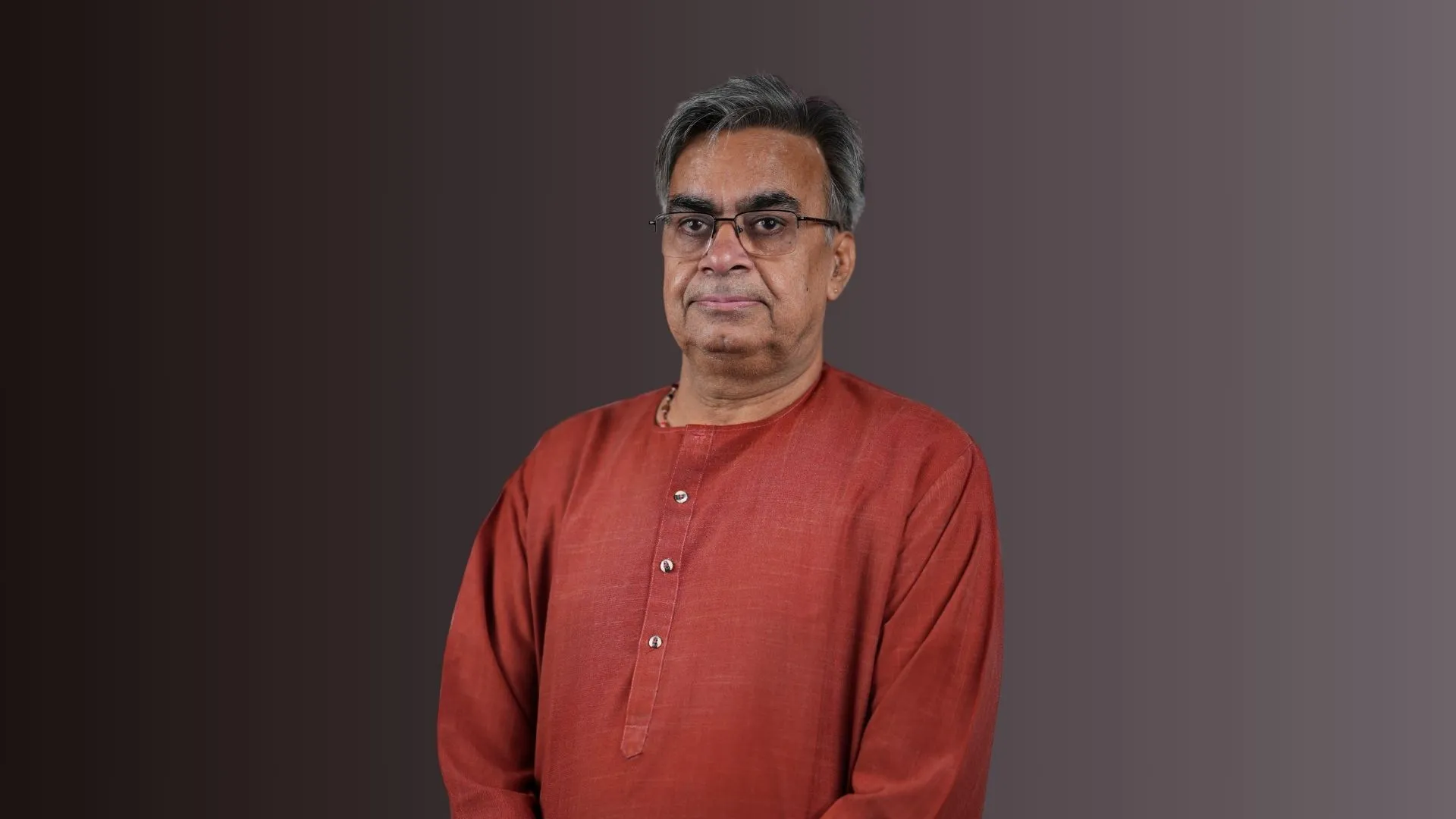
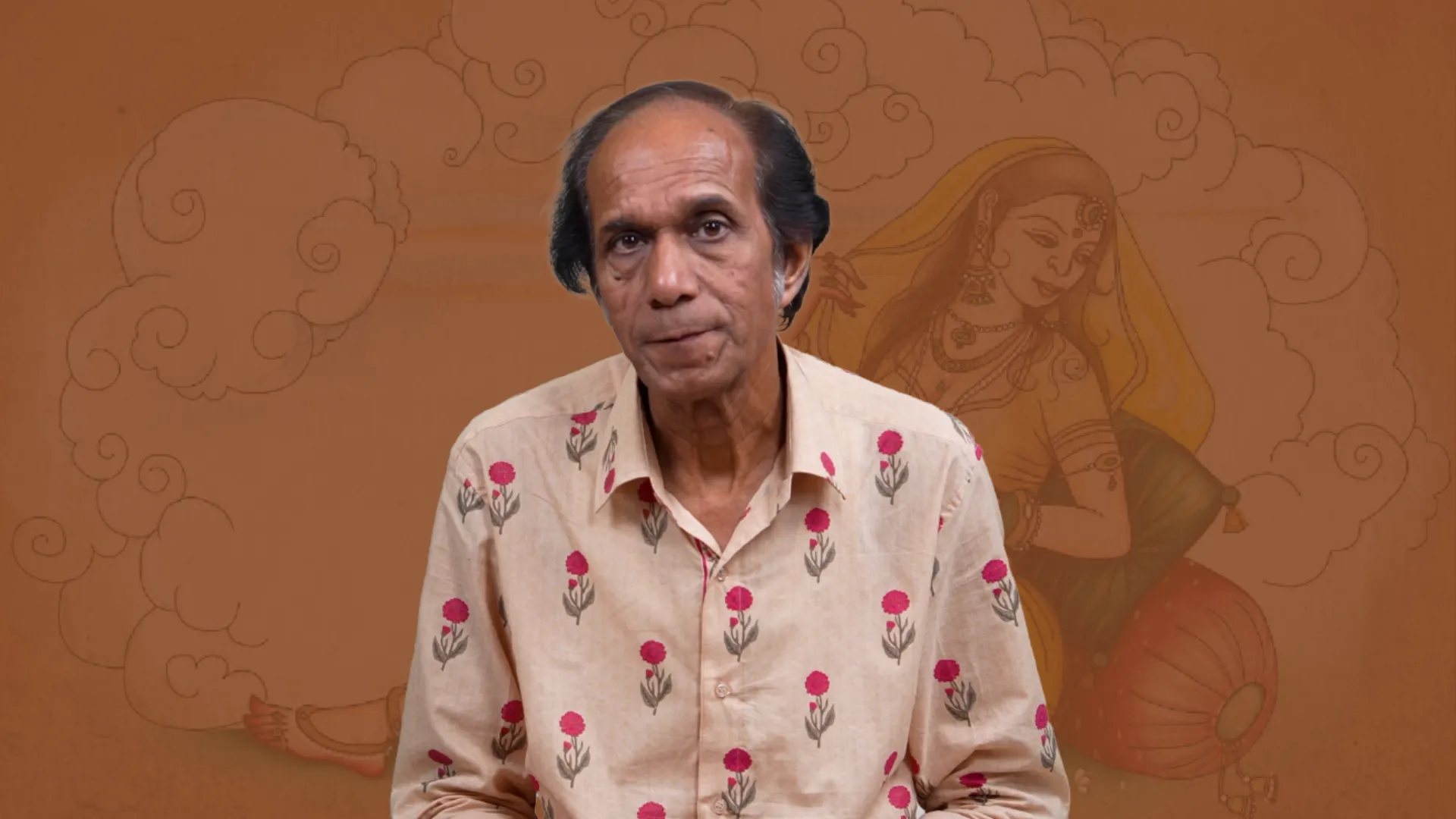
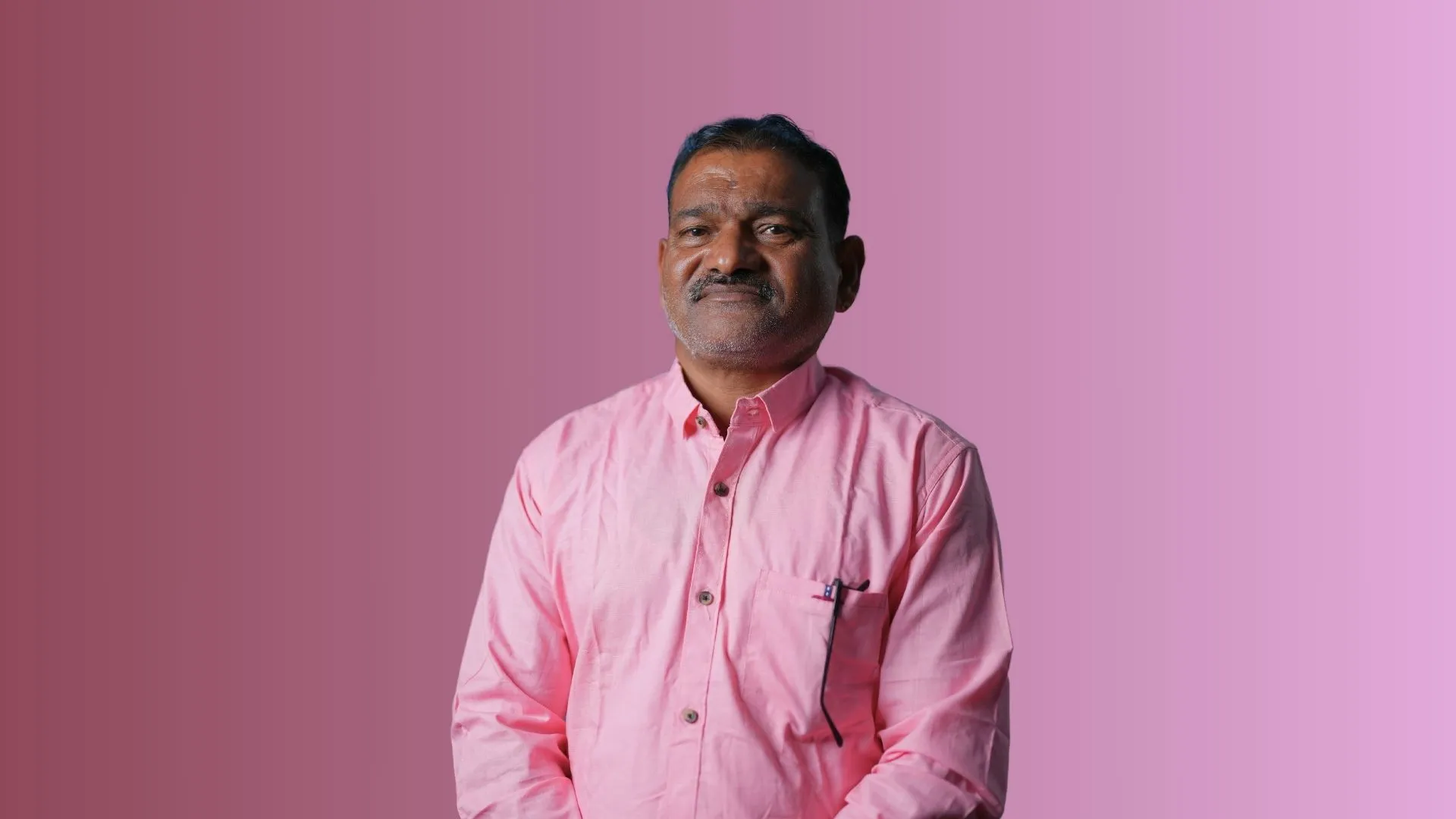
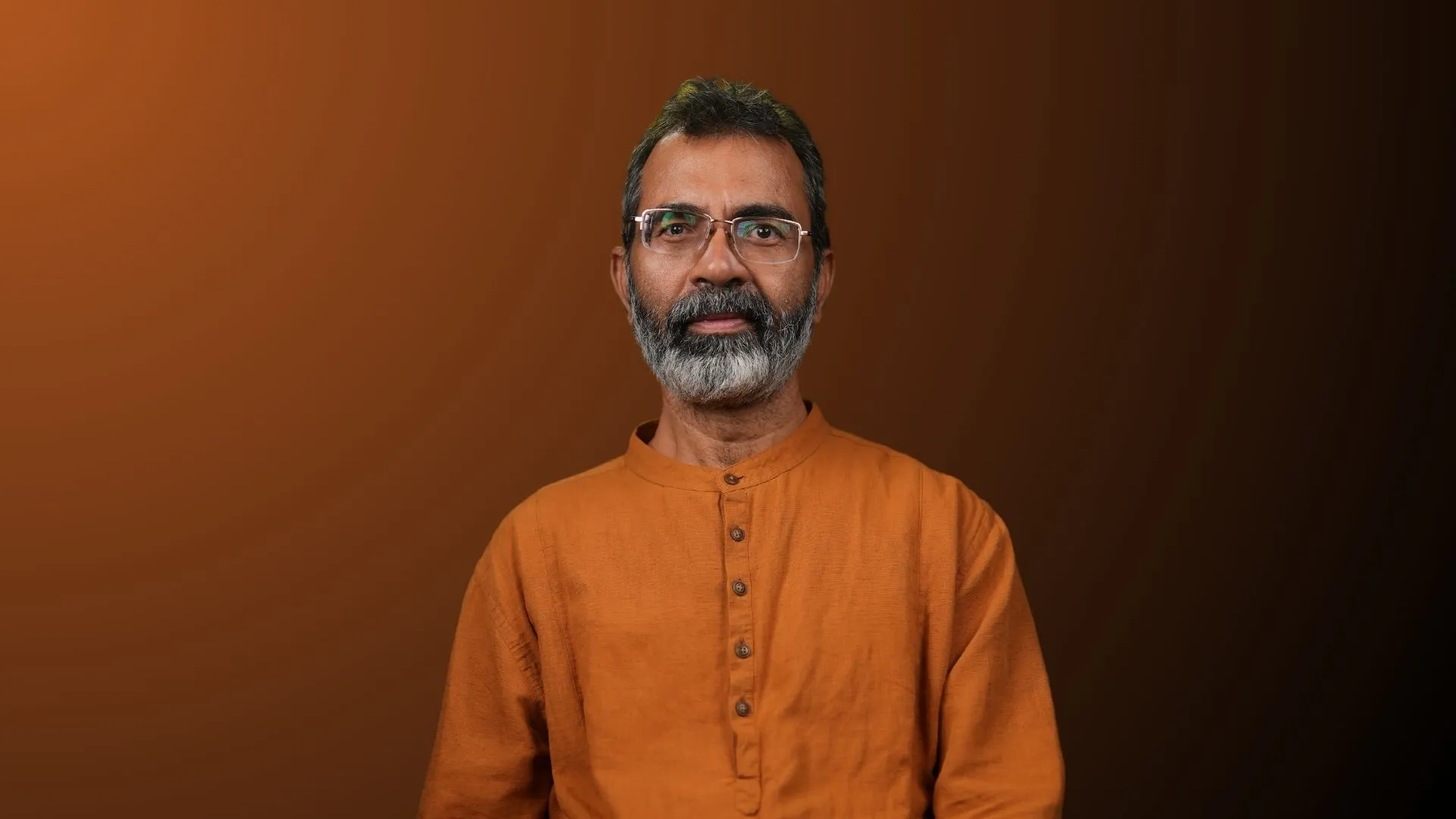
Bibliography
Sources
Guzy, Lidia. Marginalised Music: Music, Religion and Politics from Western Odisha, India. Vol. 8, LIT Verlag Münster, 2013.
Naik, R. “Dalkhai: A Popular Folk Dance of Western Odisha.” Journal of Humanities and Social Sciences Studies, vol. 2, no. 4, 2020, pp. 48–55. Al-Kindi Center for Research and Development.
Nath, Nibedita, and Supritee Mishra. “Dalkhai: The Journey from Ritualistic to Popular Folk Dance.” ResearchGate, 2023.
Nepak, B. “Dalkhai: Folk Dance of Orissa.” Odisha Review, vol. 49, no. 7, 1993, pp. 29–32.
Pasayat, Chitrasen. Glimpses of Tribal and Folk Culture. Anmol Publisher, 2003.
Image Sources
“Artists Performing 'Bhaijiuntia' – Dalkhai in the Nuakhai Bhetghat Occasion at Burla.” Wikimedia Commons, https://commons.wikimedia.org/wiki/File:Artists_Performing_%27Bhaijiuntia%27-_Dalkhai_in_the_NUAKHAI_BHETGHAT_occasion_at_Burla.jpg. Accessed 4 July 2026.
“Dalkhai Dance.” Bunkar Valley, https://www.bunkarvalley.com/dalkhai-dance/. Accessed 4 July 2026.
“Dalkhai.” Hindi Wikipedia, https://hi.wikipedia.org/wiki/%E0%A4%A1%E0%A4%BE%E0%A4%B2%E0%A4%96%E0%A4%BE%E0%A4%88. Accessed 4 July 2026.
“Dalkhai Dance.” My Sambalpur, https://www.mysambalpur.in/2010/12/dalkhai-dance/. Accessed 4 July 2026.
“The Dulduli and Dalkhai Artists of Sambalpur.” People's Archive of Rural India (PARI), https://ruralindiaonline.org/article/the-dulduli-and-dalkhai-artists-of-sambalpur. Accessed 4 July 2026.