

Bihu Dance - The Folk Dance Tradition of Assam
Discover the history, symbolism, performance traditions, and artistic beauty of **Bihu Dance**, one of India's most cherished folk dances
Introduction
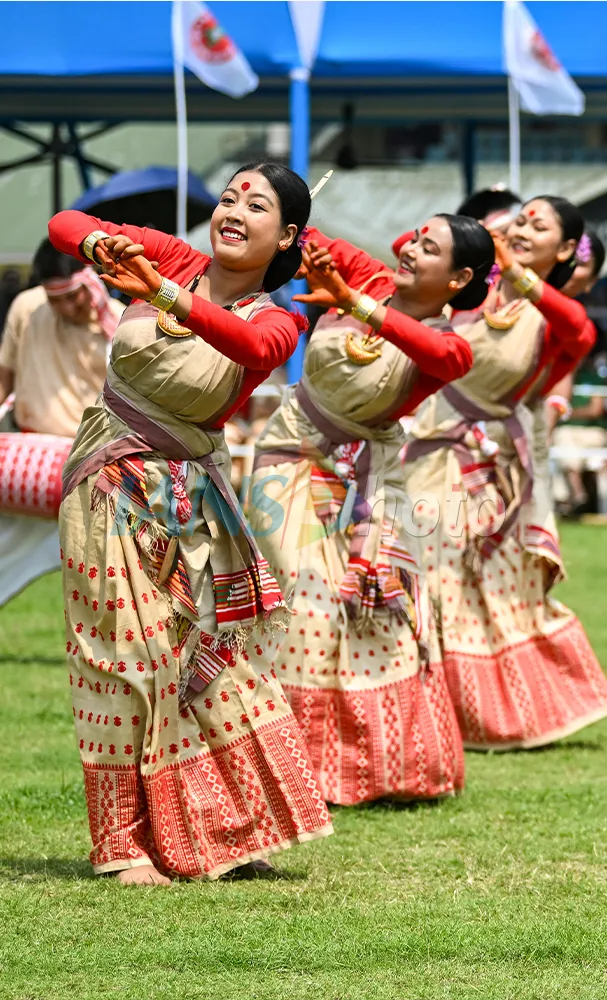
Bihu dance is the principal folk dance of Assam, performed in connection with the Bihu festival, particularly the Rongali Bihu (also called Bohag Bihu), which celebrates the Assamese New Year and the onset of spring in mid-April. The dance is characterised by rapid hip movements, brisk footwork, quick arm and wrist gestures, and group formations involving both men and women. It is closely connected to agricultural cycles, expressing themes of fertility, youth, love, and communal celebration.
The Sangeet Natak Akademi has supported the documentation and promotion of Bihu dance as one of India's major folk performance traditions. The dance achieved a milestone in 2023 when 11,298 performers set a Guinness World Record for the largest Bihu dance at the Indira Gandhi Athletic Stadium in Guwahati on April 13, 2023.
Etymology
The word Bihu is generally held to derive from the Deori-Boro language word Bisu, meaning excessive joy. The Deori people, an indigenous tribe associated with the historical Kingdom of Sadiya in Upper Assam, are considered among the original observers of the festival. Different communities in northeast India use related terms for their corresponding spring festivals: the Bodo call it Baisagu; the Dimasa, Tiwa, and Rabha call it Bushu, Pisu, and Dumsi respectively. The term Bihu encompasses both the festival and the associated dance (Bihu Naas) and songs (Bihu Geet).
Origin
The origins of the Bihu dance tradition are not definitively documented in textual sources, as stated in the Wikipedia entry on Bihu dance. The earliest archaeological evidence is in 9th-century sculptures found in the Tezpur and Darrang districts of Assam. A copper-plate inscription of the Chutia king Lakshminarayan, dated approximately 1401 CE and discovered in the Ghilamara area of Lakhimpur district, mentions the Bihu festival as an occasion for granting land, making it one of the earliest epigraphic records of the festival. The first official record of Bihu dance performance in a royal context is the invitation by the Ahom king Rudra Singha to Bihu dancers to perform at the Rang Ghar fields around 1694 during the Rongali Bihu.
Scholars attribute the dance's origins to ancient fertility cults associated with both agricultural and human fertility, connected to the seasonal agricultural cycle of the Brahmaputra Valley, as noted by Wikipedia's entry on Bihu dance. The dance tradition is identified with multiple ethnic communities of Assam including the Deoris, Sonowal Kacharis, Chutias, Boros, Misings, Rabhas, Moran, and Borahis, reflecting the multicommunity character of the festival's ancient practice.
Location
Bihu dance is practised throughout Assam, both in rural settings (traditionally in open fields, groves, forests, and on the banks of rivers, particularly under the fig tree) and in urban settings. The first urban staged performance of Bihu dance took place at Lataxil field in Guwahati in 1962, organised by the Guwahati Bihu Sanmilani. Since then, performances at dedicated Bihutoli (raised outdoor stages) have become a major feature of urban Rongali Bihu celebrations. The dance is also performed by the Assamese diaspora internationally, and has been presented at the 2012 London Olympics.
Community
Bihu dance is performed by young men and women of all communities in Assam, transcending ethnic, caste, and religious lines in contemporary practice. While each ethnic community (Deori, Moran, Mising, and others) maintains a distinct variation of the Bihu dance, the mainstream Bihu dance associated with the Rongali Bihu has become a pan-Assamese identity marker. The Bihu has been described as a unifying festival that brings together Assamese people regardless of background. The role of populariser and cultural icon in the modern form of Bihu is associated with Khagen Mahanta, known as the Bihu Samrat (king) of Assam.
Relevance
Bihu dance is one of the most widely recognised folk dances of northeast India and functions as the primary cultural symbol of Assamese identity. Its association with the Assamese New Year gives it a significance that extends beyond entertainment to mark the community's relationship with time, agriculture, and collective identity. The form has achieved state-level symbolic significance, appearing in government cultural initiatives, tourism promotion, and major national events. A Guinness World Record for the largest Bihu dance (11,298 performers) was set in 2023, and the Sangeet Natak Akademi facilitated a performance by 1,545 dancers in Guwahati in March 2024.
History
Background
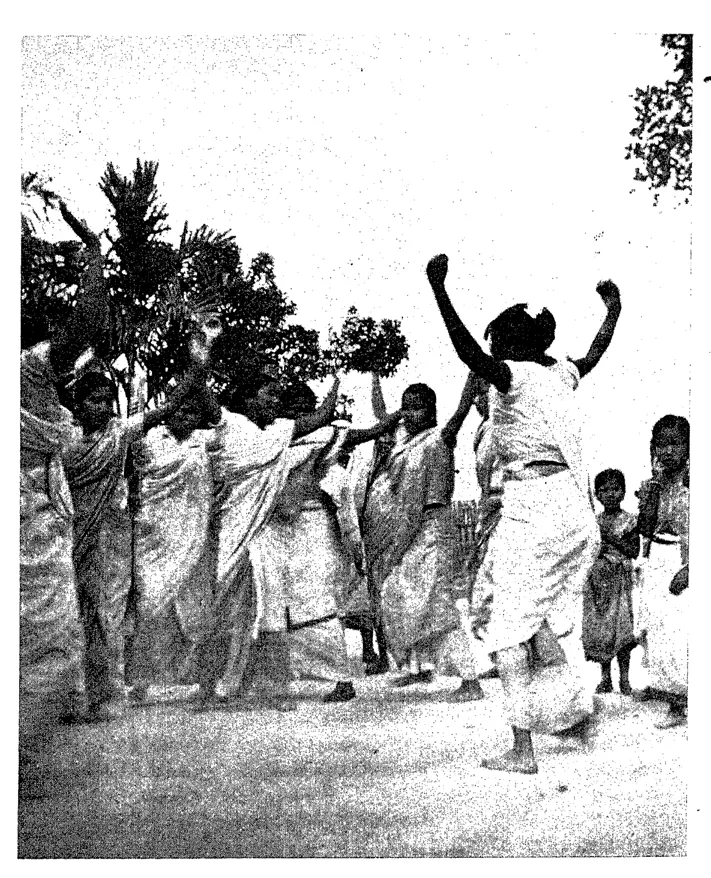
The historical connection of Bihu to the agricultural calendar is documented through the three distinct Bihu festivals: Rongali (or Bohag) Bihu in April, marking the sowing season and the Assamese New Year; Kongali (or Kati) Bihu in October, a solemn festival associated with crop protection; and Bhogali (or Magh) Bihu in January, a harvest festival. Of these three, only Rongali Bihu involves dance and music. The Ahom kings, who ruled Assam from the 13th to the 19th century, incorporated Bihu into royal and communal spring rituals, as documented in Ahom-era chronicles. The reference in the Deodhai Buranji to the Chutia capital Sadiya being attacked by Ahom forces on the first day of Bihu (Bisu) in the early Ahom period indicates the festival's presence before Ahom rule.
Culture and Societies
The folk dance tradition in Assam encompasses multiple ethnic group variations. The Deori Bihu, Moran Bihu (in which young people build a Bihu-Ghar bamboo house), Mishing Bihu (associated with the Ali-Ai-Ligang festival and including the Gumrag dance), and Jeng Bihu (performed only by women on a moonlit night at a distance from inhabited areas, a form from Upper Assam) represent distinct community-specific dance practices within the broader Bihu tradition. The mainstream Bihu dance associated with urban stage performances draws on a synthesis of these community traditions. The transition from rural open-field performance to urban staged Bihutoli format has introduced significant changes in costume, choreography, and audience relationship.
Religious Significance
The religious dimensions of Bihu are connected to the pre-Vaishnavite and animistic traditions of the Brahmaputra Valley. The festival has its roots in fertility cults, and the erotic dimension of the dance (which has attracted criticism in some periods, including colonial times) reflects this original fertility-worship context. The use of instruments such as drums and the hornpipe (pepa) is believed to replicate the sound of rain and thunder in order to invoke rainfall, as noted in Wikipedia's entry on Bihu dance. The festival's seven-day structure during Rongali Bihu includes Goru Bihu (cow worship on the first day), Gosai Bihu (deity worship on the third day), and other rituals that reflect a synthesis of animistic, agricultural, and later Vaishnavite-influenced practices.
Understanding the Art
Style
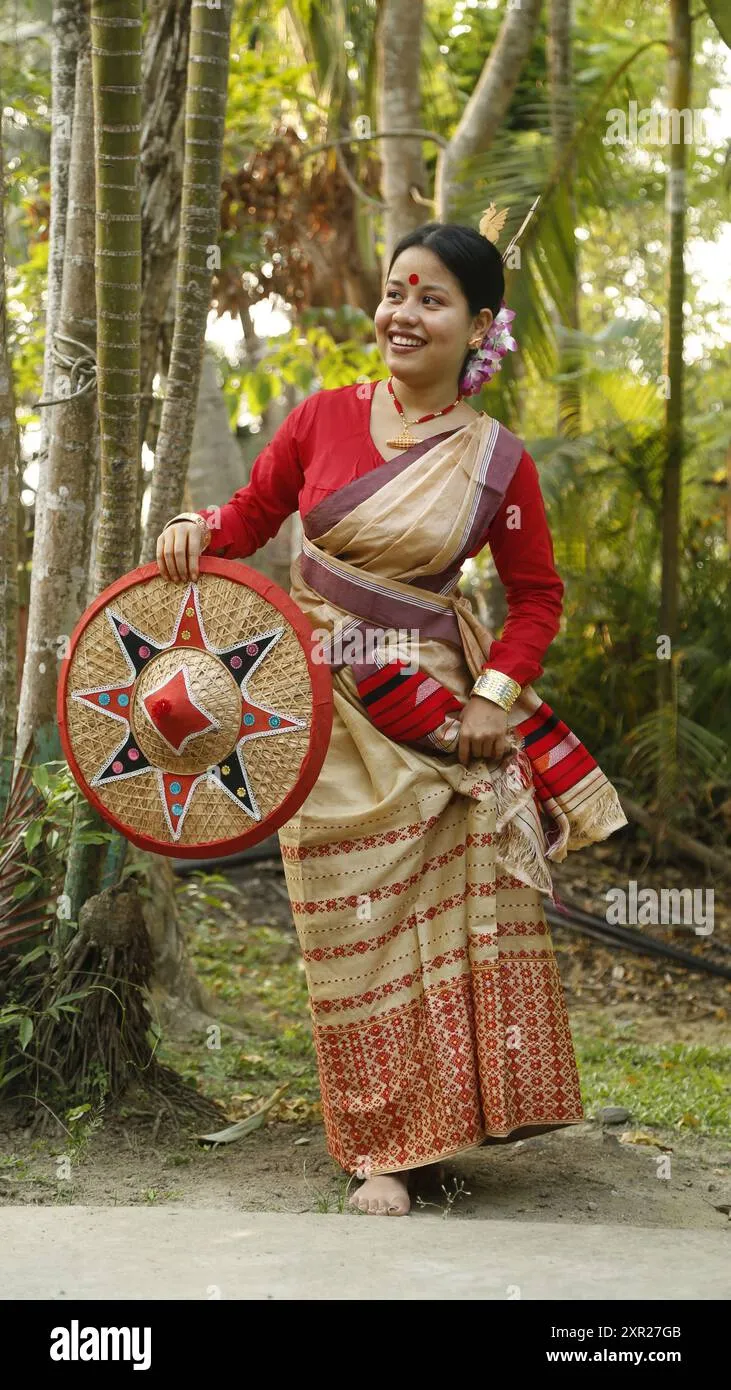
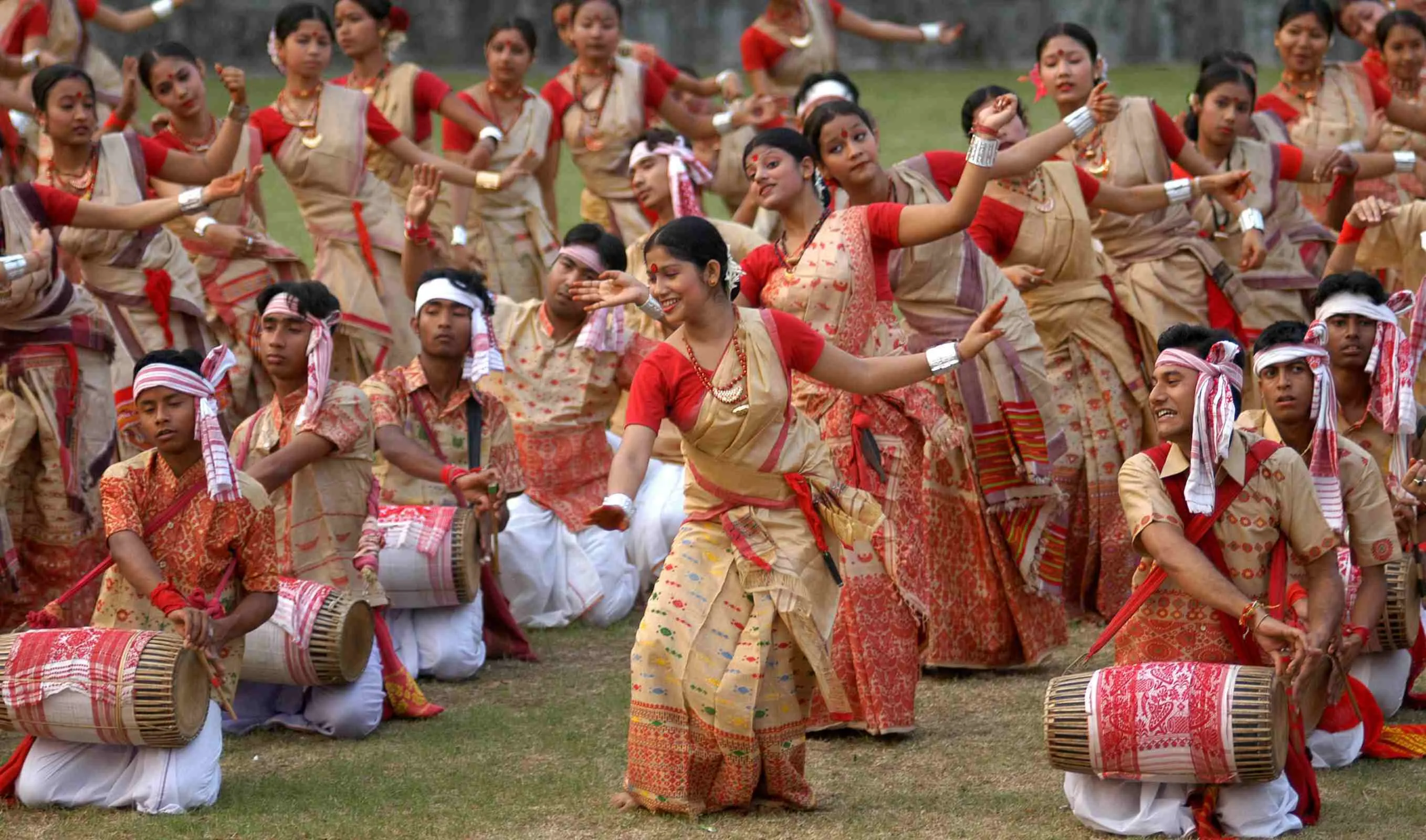
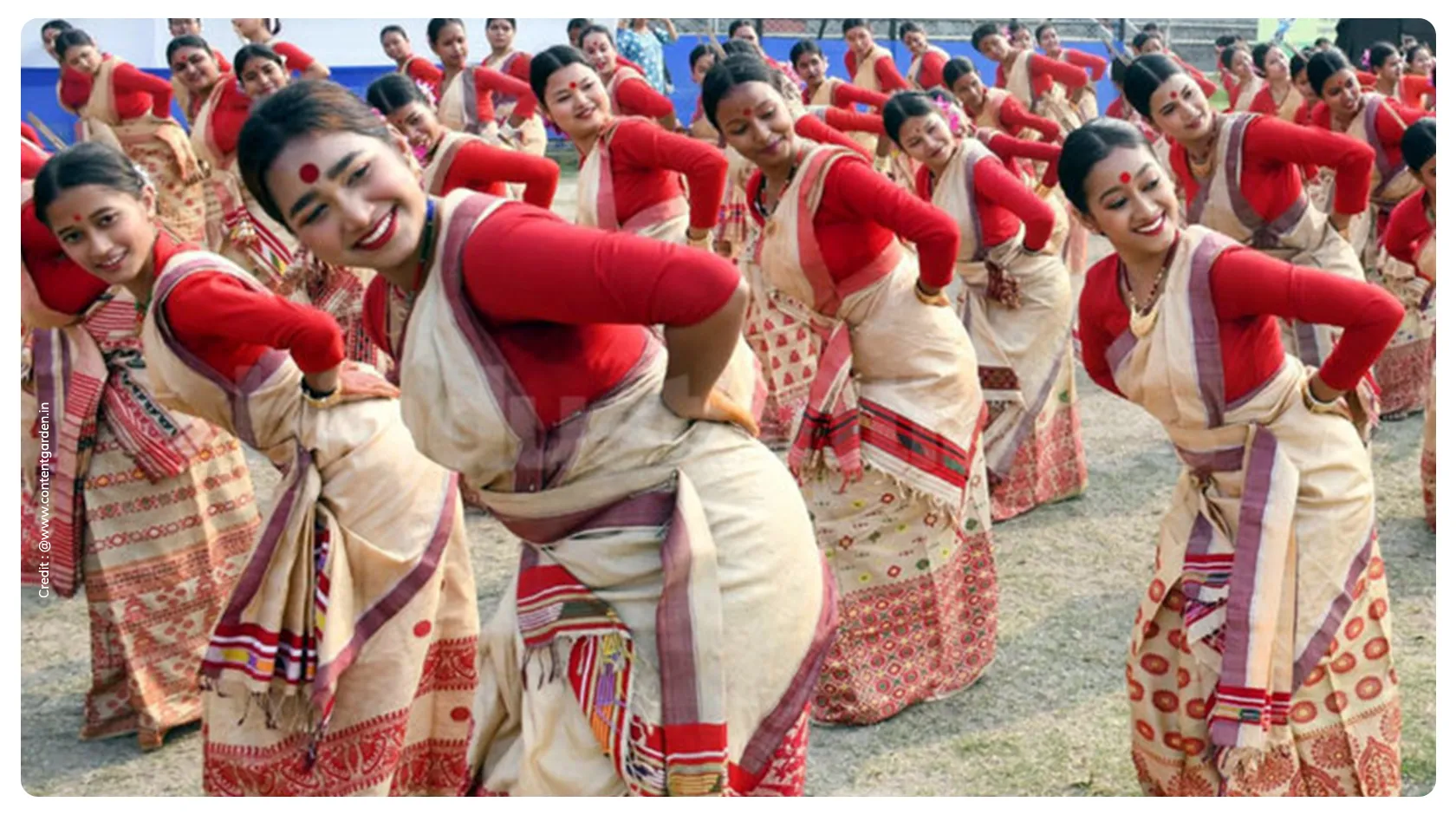
Bihu dance is characterised by rapid hand and wrist movements, brisk footwork, hip swaying, and quick circular formations. Women adopt a posture with hands placed above the hips with palms facing outwards, moving the body with a forward bend from the waist and then gradually increasing the vigour of the movement. Men enter the performance space first as musicians and later break their formations to mingle with the women, who maintain stricter circular or linear formations. The rhythmic compositions that structure the dance are called seus, and these are traditionally formal compositions played by the drummers. The primary dance movement classifications include freehand (the standard form), movements with a rhythmic pepa, movements with a kahi (traditional metal plate), and movements with a jaapi (Assamese conical woven hat), the last three representing specific female Bihu dance variations.
Central Motifs and Their Significance
Bihu songs (Bihu Geet) cover a range of subjects: welcoming the Assamese new year; the life of a farmer; love and romantic courtship; history and satire; the joys of spring and the seasons; and expressions of erotic sentiment (adi-rasa). The erotic and romantic themes are understood within the agricultural fertility context of the dance's origin. Seasonal themes are central: the Basanta Ras (spring celebration) and its metaphors of blooming nature, the kopon flower (the Assamese orchid, also called kopou phul), and the monsoon rain are recurring imagery in Bihu songs. The Bordoisila myth (the story of a daughter of the Earth who rushes home to her mother during Bihu, causing storms) is embedded in the festival's cultural mythology.
Process
Bihu dance is transmitted informally through community participation, particularly through annual festival performances in which young people learn by watching and joining their elders. The first staged format introduced in 1962 in Guwahati created an institutional performance framework that has led to more structured community training for urban Bihutoli performances. Competition formats for Bihu dance and music have been established in Assam, providing incentives for performance excellence. The Assam Association Delhi and similar diaspora organisations maintain Bihu performance programmes outside the state.
Mediums Used
The primary instruments of Bihu dance are the dhol (double-headed drum, the foundational percussion instrument), pepa (hornpipe made from buffalo horn, the most distinctive melodic instrument of Bihu), toka (bamboo clapper), taal (cymbals), baanhi (bamboo flute), gogona (a bamboo jaw harp), and xutuli (a clay whistle). The mohor xingor pepa (made from the horn of a water buffalo) plays the opening motif that establishes the mood of the performance. Traditional Bihu costumes are centred on the red colour theme: women wear mekhela chador (a two-piece Assamese garment) with red and white patterns; men wear dhoti and gamusa (a traditional handwoven cloth that is a key marker of Assamese cultural identity). Dancers do not traditionally wear ankle bells (ghungroo) as used in classical dance forms.
New Outlook
Bihu dance has expanded its reach significantly in the 21st century through large-scale staged performances, cultural tourism integration, and digital media. Airport welcome performances of Bihu at Guwahati's Lokpriya Gopinath Bordoloi International Airport during the Rongali Bihu season have been implemented as part of cultural tourism promotion. The dance's inclusion in international cultural events and the diaspora's Bihu celebrations in North America, Europe, and Southeast Asia demonstrate its reach beyond regional boundaries. The transition from open-field communal performance to staged production has prompted cultural debates about authenticity, but has also ensured the form's continued visibility and the engagement of younger generations in performance.
Learn Bihu Dance



Bibliography
Sources
Baruah, Sashi Bhusan. A Comprehensive History of Assam. Munshiram Manoharlal, 1985.
Blackburn, Stuart, and A. K. Ramanujan, editors. Another Harmony: New Essays on the Folklore of India. University of California Press, 1986.
Kothari, Sunil. Folk Dances of India. Marg Publications, 1990.
Image Sources
"Bihu in India's Big Cities." AZA Fashions, https://www.azafashions.com/blog/bihu-in-indias-big-cities/?srsltid=AfmBOoq9G8mCRJEUASC6Q_xbRo7VoFwtidR3R8LEgdh7C4PlfXdquJBH. Accessed 3 July 2026.
"Bihu Dance in Assam, Assamese Girl in Bihu Dress with Japi in Her Hand." Alamy, https://www.alamy.com/bihu-dance-in-assam-assamese-girl-bihu-dress-with-japi-in-her-hand-image616549819.html. Accessed 3 July 2026.
"Rongali Bihu Celebrations." IANS Live, https://ianslive.in/webstories/rongali-bihu-celebrations. Accessed 3 July 2026.
"Rongali Bihu: The Assamese New Year." Kaziranga National Park Assam, https://kaziranganationalparkassam.in/rongali-bihu-the-assamese-new-year-guwahati-assam-india/. Accessed 3 July 2026.
"Rongali Bihu: The Cultural Facet of Assamese Community." Abhijna eMuseum, https://www.abhijna-emuseum.com/articles/rongali-bihu-the-cultural-facet-of-assamese-community/. Accessed 3 July 2026.