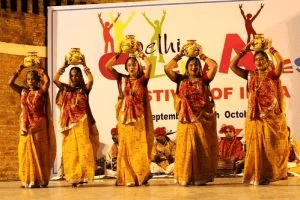

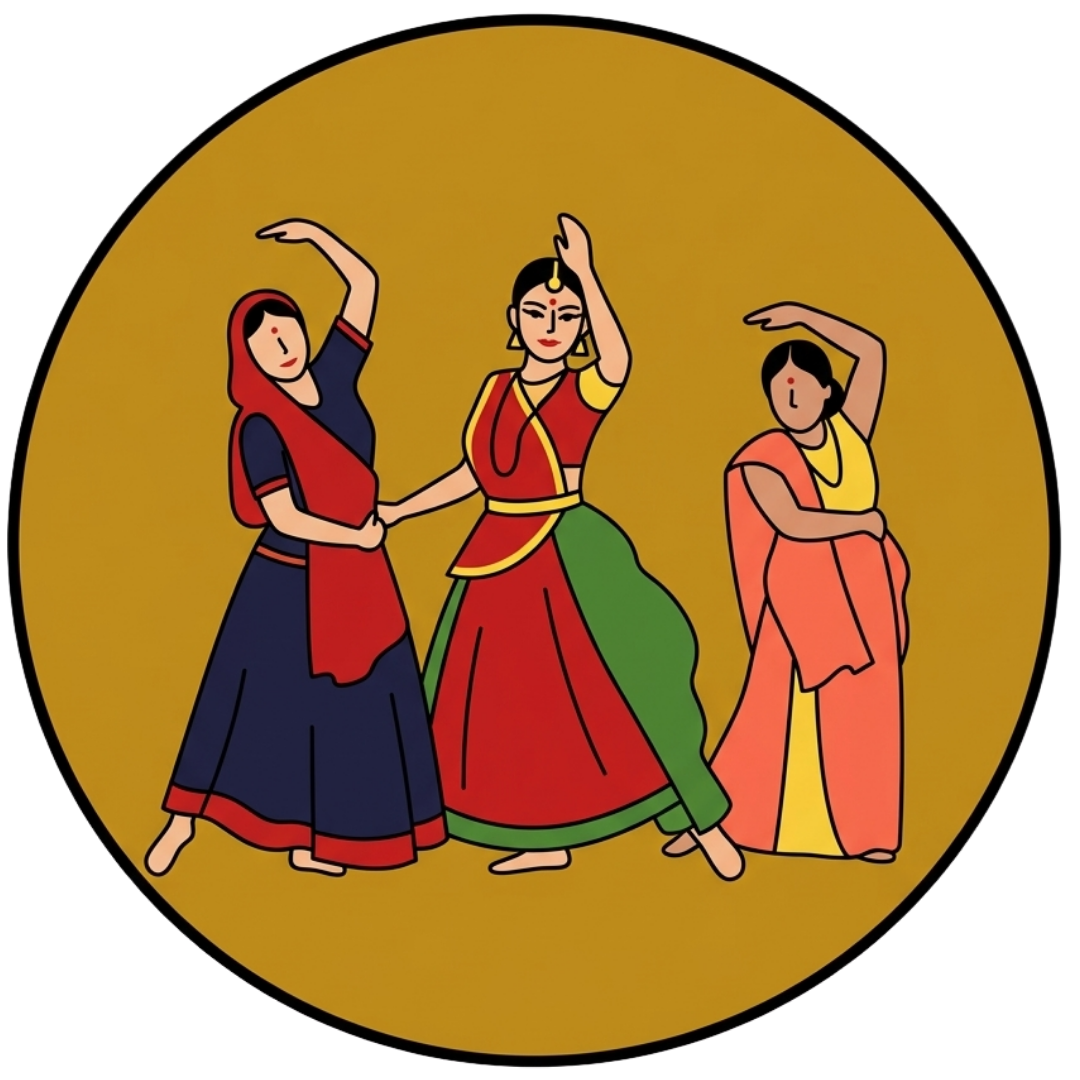
Bidesia - The Folk Dance Tradition of Bihar
Explore Bidesia, the performance tradition of Bihar and learn about its origins, techniques, cultural significance, and artistic heritage.
Introduction
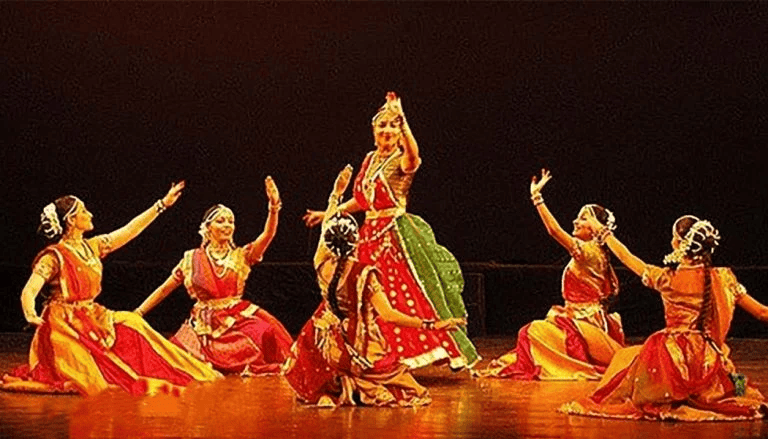
Bidesia is a folk theatrical dance-drama form originating in the Bhojpuri-speaking regions of Bihar, India. It was created in the early twentieth century by Bhikhari Thakur (1887 to 1971), a barber by profession who became the most significant playwright and performer in Bhojpuri folk theatre. The form combines dance, dramatic narrative, song, and social commentary, and was performed primarily by itinerant troupes across the Gangetic plains of northern and eastern Bihar. Bidesia is recognized as one of the most politically and socially aware folk theatre traditions in India, addressing themes of labor migration, marital abandonment, and class inequality.
Etymology The word 'Bidesia' derives from the Bhojpuri term 'bides' or 'bidesha,' meaning a foreign land or distant place. In Bhojpuri usage, 'Bidesia' refers to a person who has gone to work in a faraway location, leaving family behind. The title of Bhikhari Thakur's foundational play, also called 'Bidesiya' or 'Bahara Bahar,' directly encodes this meaning: it tells the story of a man (the 'Bidesia') who migrates to the city, takes a second wife, and abandons his village wife. The form as a whole came to be named after this central social archetype.
Origin Bidesia originated in the Bhojpuri belt of Bihar, primarily in the districts of Patna, Vaishali, Nalanda, Saran, and Champaran, during the first two decades of the twentieth century. Bhikhari Thakur, born in Kutubpur village in Saran district in 1887, developed the form through his own composition, performance, and training of troupes. While itinerant theatrical traditions existed in the region before Thakur, the specific aesthetic and social character of Bidesia as a genre is attributed to his innovations. The form drew from earlier Bhojpuri oral and performative traditions, including folk songs, nautanki, and devotional singing.
Location Bidesia is concentrated in the Bhojpuri-speaking districts of Bihar, including Patna, Vaishali, Nalanda, Saran, Chapra, Arrah, and Buxar, and extends into neighboring regions of eastern Uttar Pradesh and Jharkhand where Bhojpuri is spoken. Fieldwork conducted between 2009 and 2011 documented over two hundred troupes active in these districts. The form has also been performed among migrant Bhojpuri communities in Kolkata and Mumbai, following the same migration patterns that the art form itself depicts.
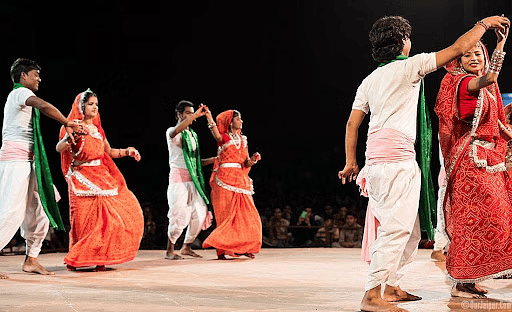
Community Bidesia troupes were historically composed of men from lower castes and economically marginal communities. Bhikhari Thakur himself belonged to the barber (naai) caste. Performers were recruited from agricultural laborers and artisan communities. The tradition of male actors playing female roles, known as Launda Naach, was central to early Bidesia performances, reflecting both the social restrictions on women's participation in public performance and the theatrical conventions of the region.
Relevance Bidesia represents one of the earliest folk traditions in India to systematically address the social consequences of labor migration. Bhikhari Thakur's plays engaged with caste discrimination, the exploitation of women, and the disruption of rural families caused by male migration to industrial centers such as Calcutta and Bombay. His work preceded by decades the academic study of these themes in South Asian sociology. Scholar Brahma Prakash, writing in Asian Theatre Journal in 2016, examined Bidesia as a form of subaltern performance that operated outside both colonial and nationalist cultural frameworks.
Shop Bidesia Products
View all →
Prana Pratishtha Set

A School of Fish

Power of Resilience

St. John’s Wort Cluster Study
Artventures of Phad - Essentials

The Divine Ganesha
Handcrafted Gurjan Wood Block with Tree of Life Motif for Textile Printing
Baba Amarnath Miniature

Painting: Lanka Kand - Ravan Vadh

The Fragile Pause
Hanuman Chalisa

Handmade Abstract Tree Canvas Painting

Shree Ganpati

The Jungle Harmony

Monsters of Midnight

Porcupine

Horns and Wings by Philomina Tirkey

Labradorite Carved Ganesh Idol in Natural Gemstone

Single-Sided Hand Block Printed Mal Cotton Fabric – Yellow Lattice Floral | Sold Per Meter

Emerald Dreamscape
History
Background The historical context of Bidesia's emergence is the mass labor migration from Bihar to Bengal and other industrial regions that accelerated under British colonial rule in the late nineteenth and early twentieth centuries. Bhojpuri-speaking men were recruited in large numbers to work in jute mills, coal mines, and sugarcane plantations. Bhikhari Thakur began composing plays in the first decade of the twentieth century, drawing on his experiences and those of his community. His twelve documented plays include 'Bidesiya,' 'Betia Bechwa,' 'Vidhwa Vilap,' 'Puti Bahu,' and 'Gabar Ghichor.' He is described by scholars as the 'Shakespeare of Bhojpuri' for the scope and quality of his dramatic output.
Culture and Societies Bidesia troupes were organized as semi-professional groups that traveled between villages, performing at fairs, wedding celebrations, and festivals. The troupes typically numbered between fifteen and thirty performers and musicians. The Launda Naach tradition within Bidesia, in which young male performers dressed and acted as women, was a socially complex practice that allowed the representation of women's perspectives and experiences within a male-dominated performance space. Bhikhari Thakur's plays gave voice to the suffering of abandoned wives, widows, and women marginalized by caste and poverty, and did so with the explicit aim of social reform.
Religious Significance Bidesia does not have a primary religious function. It was conceived as a social and artistic form rather than a devotional practice. However, performances were frequently staged at festivals associated with Hindu calendrical events, including Chhath Puja and Holi, placing the form within the broader ecology of communal celebration. Some of Bhikhari Thakur's compositions engaged with themes of bhakti, but the dominant register of Bidesia is secular and social rather than devotional.
Shop Paintings
View all →Prana Pratishtha Set
A School of Fish
Power of Resilience
St. John’s Wort Cluster Study
Artventures of Phad - Essentials
The Divine Ganesha
Handcrafted Gurjan Wood Block with Tree of Life Motif for Textile Printing
Baba Amarnath Miniature
Painting: Lanka Kand - Ravan Vadh
The Fragile Pause
Hanuman Chalisa
Handmade Abstract Tree Canvas Painting
Shree Ganpati
The Jungle Harmony
Monsters of Midnight
Porcupine
Horns and Wings by Philomina Tirkey
Labradorite Carved Ganesh Idol in Natural Gemstone
Single-Sided Hand Block Printed Mal Cotton Fabric – Yellow Lattice Floral | Sold Per Meter
Emerald Dreamscape
Understanding the Art
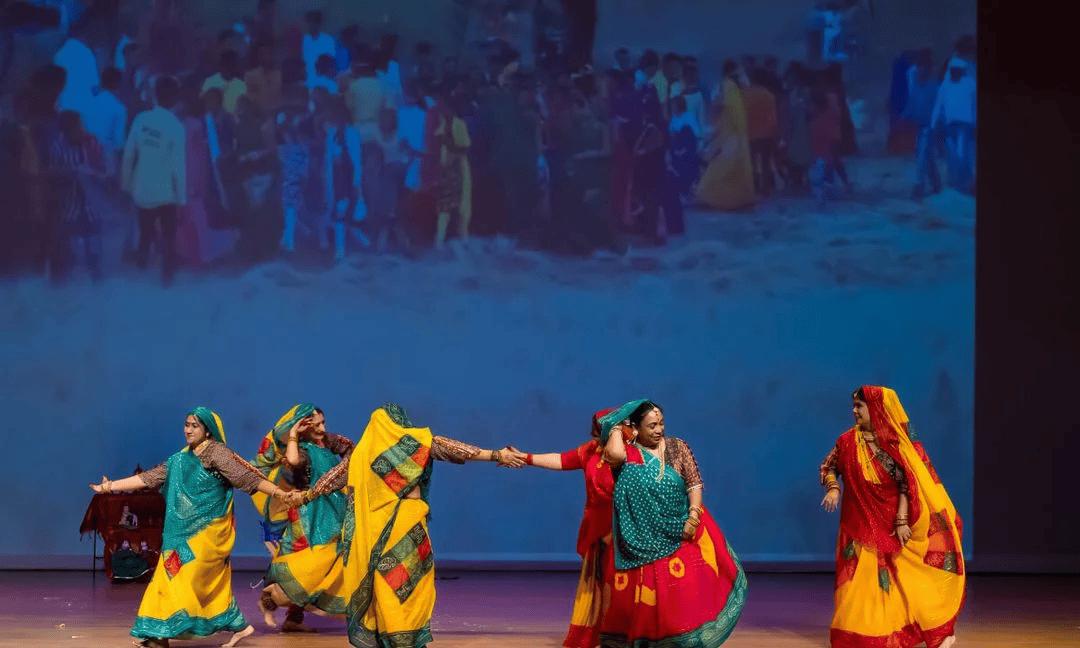
Style Bidesia performances combine extended narrative song, spoken dialogue, and choreographed movement. The dramatic structure follows loosely from classical Sanskrit theatrical conventions but is deeply inflected by Bhojpuri folk idioms, including the use of doha couplets, chaupai verses, and folk song structures such as sohar, kajri, and birha. The Launda Naach sequences feature stylized feminine movement vocabulary that is distinctive to the tradition. The proscenium is typically an open outdoor space or a temporary stage, and performances often last through the night.
Central Motifs and Their Significance The central motifs of Bidesia are migration, marital desertion, the suffering of women, caste injustice, and the contrast between rural and urban life. The figure of the 'Bidesia' migrant man, caught between two lives and two identities, is the narrative and emotional core of the tradition. The village wife (known as the 'sutin') and the city wife are recurring characters whose conflict dramatizes the social costs of migration. Bhikhari Thakur's plays also include comic and satirical sequences that address corruption, social hierarchy, and the exploitation of the poor by the wealthy.
Process Bidesia performances are organized around a lead singer-actor who carries the narrative, supported by a chorus (ranga) and instrumental musicians. The sequence of a performance typically opens with invocatory songs, proceeds through narrative dramatic sections, and includes comic interludes. Performers learn the form through the guru-shishya (master-disciple) system, with training beginning in childhood for those who enter troupes early. The repertoire is oral, and while Bhikhari Thakur's plays were later transcribed in publications such as 'Bhikhari Thakur Granthawali,' most performers historically learned through observation and mentorship.
Mediums Used The primary instruments accompanying Bidesia are the dhol (double-headed barrel drum), nagara (large kettledrum), surnai (a wooden wind instrument with a flared bell), and manjira (small paired cymbals). The harmonium was incorporated into the tradition in the twentieth century. Costumes include women's dress for Launda Naach performers and standard male folk attire for other roles. Simple painted backdrops and cloth props are used in staged presentations, though village performances are typically minimally staged.
New Outlook
Bidesia is classified as an endangered art form. Fieldwork by scholars including Brahma Prakash and research conducted through institutions such as the Sangeet Natak Akademi have documented the decline in active troupes and the aging of practitioners. Causes include the migration of younger generations away from performance, the lack of formal institutional support, competition from recorded media and cinema, and the social stigma historically attached to the Launda Naach tradition. Limited documentation projects have been undertaken, and some academic interest has been generated through research publications, but no sustained revival program had been established as of the early 2020s. Bhikhari Thakur's work is taught in some Bhojpuri literature curricula in Bihar universities, but the living performance tradition remains fragile.
Learn Bidesia




Bibliography
Sources
Hansen, Kathryn. Grounds for Play: The Nautanki Theatre of North India. University of California Press, 1992.
Jha, Sushil Kumar. Lok Natya Ki Parampara aur Bhikhari Thakur. Bihar Hindi Granth Akademi.
Prakash, Brahma. “Folk Theatre, Postcoloniality, and the Queer Body: Reading Bhikhari Thakur’s Bidesia.” Asian Theatre Journal, vol. 33, no. 1, 2016.
Richmond, Farley, Darius Swann, and Phillip Zarrilli, editors. Indian Theatre: Traditions of Performance. University of Hawaii Press, 1990.
Thakur, Bhikhari. Bhikhari Thakur Granthawali. Compiled and edited by various scholars, Bihar Rajbhasha Parishad. 1979.
Image Sources
Folk Dance World. “Bidesiya Folk Dance – Indian.” Folk Dance World, 9 Aug. 2023, https://folkdanceworld.com/2023/08/09/bidesiya-folk-dance-indian.html. Accessed 19 May 2026.
Nruthya Shakti. “Bidesia.” Nruthya Shakti, https://www.nruthyashakti.com/folk/bidesia.html. Accessed 19 May 2026.
Orchids The International School. “Folk Dance of Bihar.” Orchids The International School, https://www.orchidsinternationalschool.com/blog/folk-dance-of-bihar. Accessed 19 May 2026.