
Bhortal - The Folk Dance Tradition of Assam
An exploration of the origins, artistic features, and enduring cultural significance of **Bhortal Nritya**, Assam's celebrated cymbal dance
Introduction
Bhortal (also written Bhortal Nritya) is a folk dance form from the Barpeta district of Assam, performed with large cymbals called bhortals. It is rooted in the Sankari (Vaishnavite) tradition established by the 15th-century saint Srimanta Sankaradeva and developed from the Thiyo Naam practice of the Barpeta Sattra (a Vaishnavite monastery). The dance was formally developed and systematised by Narahari Burha Bhakat, a Sattriya artist of the Barpeta Sattra. It is performed by groups of six to ten dancers in fast-paced circular formations accompanied by Vaishnavite devotional songs.
Etymology
The name Bhortal derives from the Assamese word bhortal, which refers to the large cymbals used as the primary prop and percussion instrument in the dance. These cymbals are held in the hands of each dancer and struck rhythmically throughout the performance, producing the dominant auditory character of the form. The dance is named after its defining instrument, as is common in several Assamese performance traditions.
Origin
Bhortal Nritya is documented as having evolved from the Thiyo Naam practice of the Barpeta Sattra, which was established by Madhabadeva (principal disciple of Srimanta Sankaradeva) in 1583. Thiyo Naam (thiyo meaning standing position, naam meaning devotional music) is a form in which devotees move in a circular pattern while standing upright and singing Vaishnavite bhakti compositions. The Sattra tradition as a whole was established by Srimanta Sankaradeva (approximately 1449 to 1568) as part of the neo-Vaishnavite Ekasarana Dharma movement in Assam. The innovation of Bhortal Nritya as a distinct dance form within this tradition is attributed to two artists: Mahananda Das Sutradhar, who introduced the dance format by combining cymbal playing with movement, and Narahari Burha Bhakat, who refined and expanded the form and performed it outside the Sattras in order to disseminate it more widely, as documented by the nezine.com cultural publication.
Location
Bhortal Nritya is practised primarily in the Barpeta district of Assam, the location of the Barpeta Sattra. It is performed at cultural festivals in Barpeta and Guwahati, and has been presented at national and international venues. The Assam State Portal confirms that the dance can be observed at festive occasions in and around Barpeta and Guwahati. As a representative of the Sankari cultural tradition, the form has been presented in cultural exchange programmes involving the Sattriya performing arts community.
Community
Bhortal Nritya is practised by male performers trained within the Sattriya tradition, primarily from the Barpeta Sattra community and related practitioners in Barpeta district. The Sattriya tradition as a whole involves celibate male monks (bhokots) of the monasteries, though contemporary performance of Bhortal Nritya extends to non-monastic practitioners who receive training in the form. The transmission is through the guru-shishya system within the Sattra educational tradition.
Relevance
Bhortal Nritya is significant as a performance form rooted in the Sankari or Vaishnavite cultural tradition of Assam that developed within the Sattra system but is performed outside the Sattra context at community and cultural events. It represents the popular folk dimension of the more formally codified Sattriya classical dance tradition, drawing on the same devotional and musical heritage but in a more accessible and energetic community format. As a form Vulnerable in status, it faces challenges related to the declining number of Sattra-trained practitioners willing to maintain the form in its traditional context.
History
Background
The Barpeta Sattra, established by Madhabadeva in 1583, was one of the most important centres of Sankari culture in Assam. Madhabadeva himself composed six Jhumura plays (one-act devotional dramas) and extended the musical and performance vocabulary of the tradition established by Sankaradeva. The Rangiyal Griha (cultural hall within the Sattra) served as the primary space for rehearsal and performance of Ankiya Naat (Vaishnavite plays), Sattriya dance, Bargeets (devotional songs), and Thiyo Naam. The transition from Thiyo Naam to the more elaborated dance form of Bhortal Nritya represents an internal development within this tradition.
Narahari Burha Bhakat's role in expanding Bhortal Nritya beyond the Sattra into community performance venues was significant for the form's dissemination. By performing at sites outside the monastery, he created a public audience for a practice that had previously been primarily confined to the Sattra's religious context.
Culture and Societies
Bhortal Nritya is closely associated with the Sankari culture of the Barpeta region, which encompasses Vaishnavite devotional practice, music, dance, and the institutional life of the Sattra system. The performance of the dance at cultural festivals and national cultural events has positioned it as a representative art of Assam's Vaishnavite heritage. The influence of the Barpeta Sattra on regional culture extends to music, literature, and visual arts, all of which contribute context to the Bhortal Nritya tradition.
Religious Significance
Bhortal Nritya is explicitly rooted in the Vaishnavite bhakti tradition of the Ekasarana Dharma established by Srimanta Sankaradeva. The dance is accompanied by Vaishnavite bhakti songs (Bargeets composed by Sankaradeva and Madhabadeva, and related devotional compositions), making it a form of communal worship through music and movement. The cymbal (bhortal) itself has ritual significance within the Sattriya tradition, where the taal (cymbal) is considered a sacred instrument used in devotional performance. The performance is understood as an act of devotion to Vishnu-Krishna, consistent with the broader Ekasarana Dharma theological framework.
Understanding the Art
Style
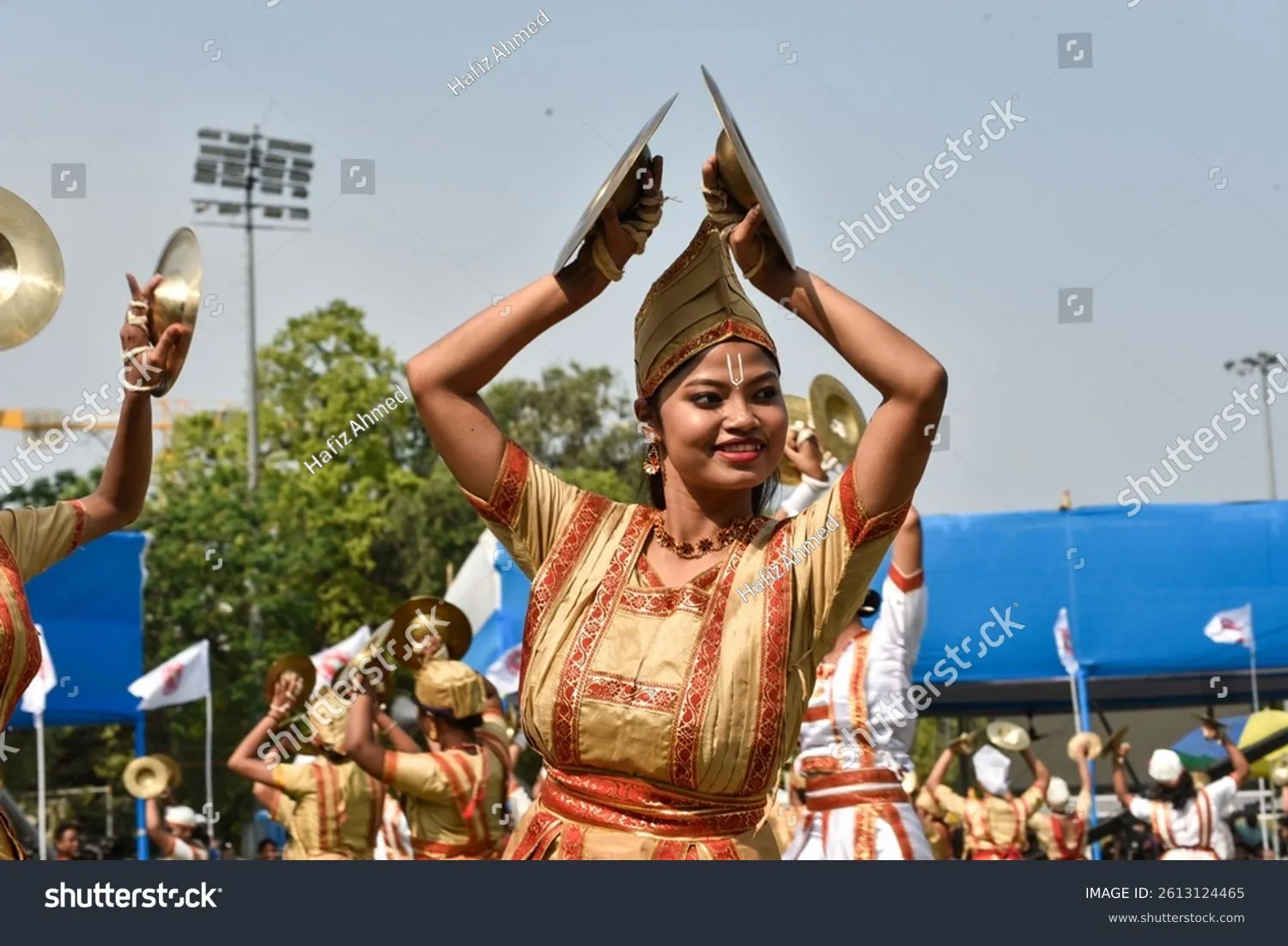
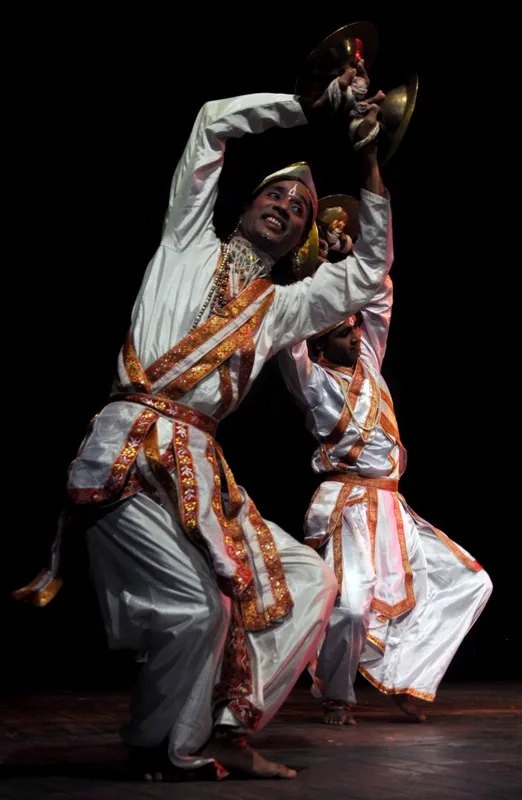
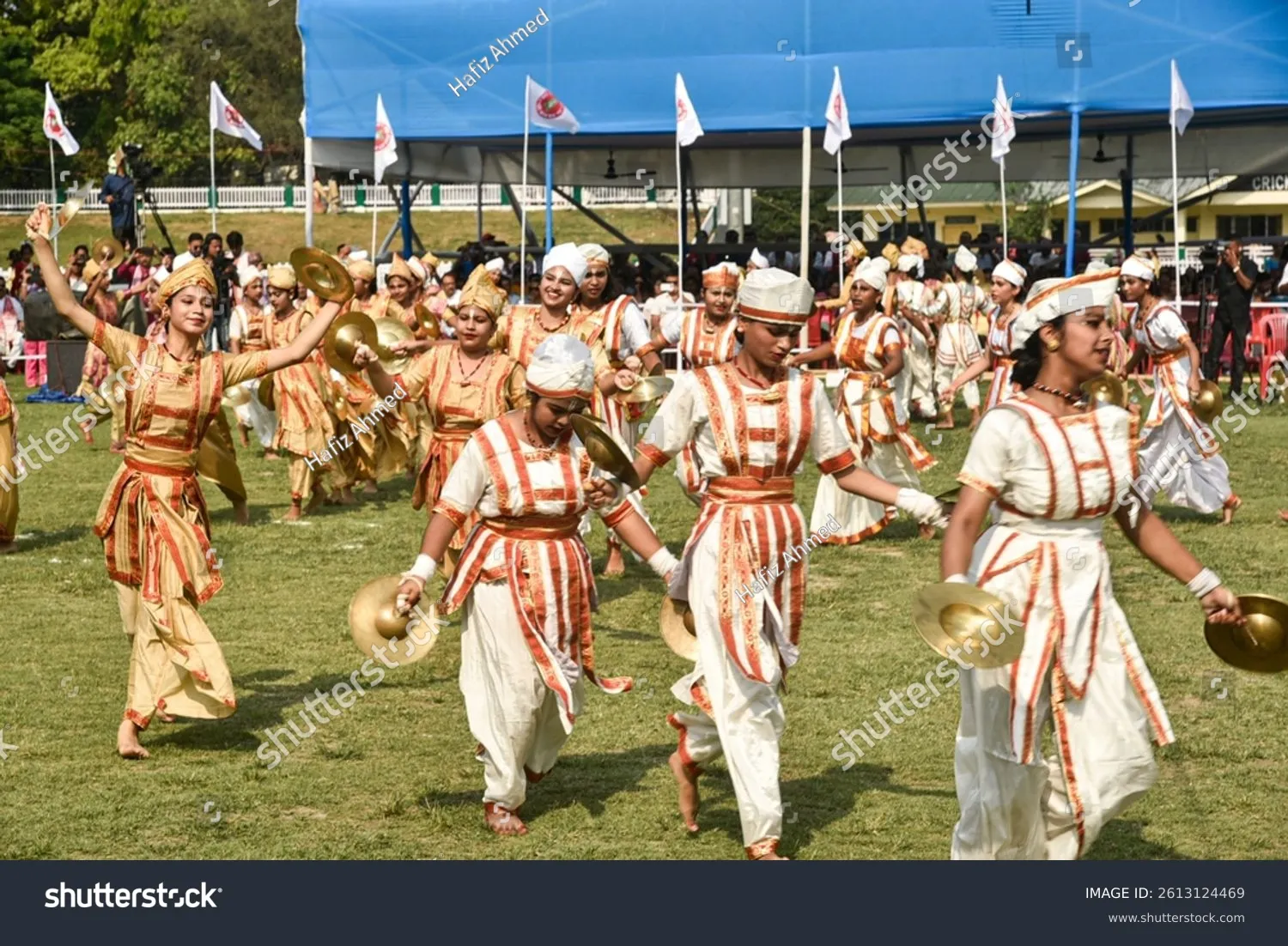
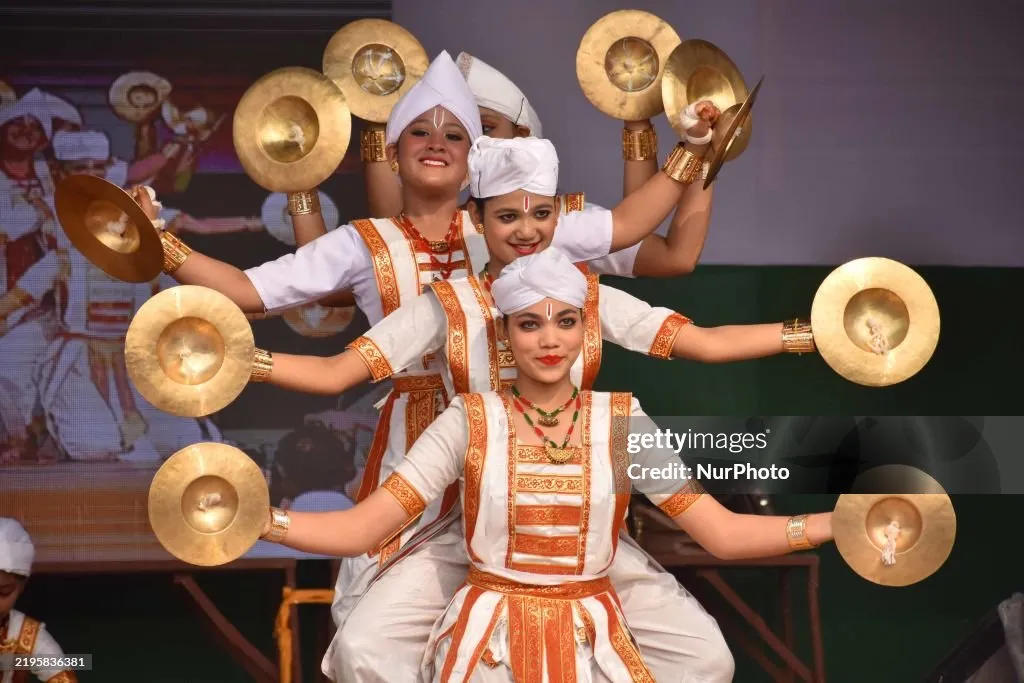
Bhortal Nritya is performed at a fast pace to a rhythm pattern known as Zhiya Nom. Dancers hold large cymbals (bhortals) in both hands and move in circular formations, striking the cymbals in synchrony with the fast beat and with each other. The dance involves 6 to 10 performers (or larger groups), who produce geometrically complex and visually dynamic patterns through their coordinated movement. The Wikipedia entry on Folk Dances of Assam notes that the dance is derived from the Thiyo Naam tradition and has been popular both within Assam and internationally.
Central Motifs and Their Significance
The primary content of the accompanying songs is Vaishnavite devotion, drawing on Bargeet compositions and other devotional texts of the Sankari tradition. The dance movements and cymbal patterns reflect the qualities of vigour and enthusiasm appropriate to congregational worship (Sankirtana). The Sattriya tradition emphasises that all performance arts within the Sattra context, including Bhortal Nritya, are oriented toward the worship of God and the cultivation of bhakti (devotion).
Process
Training in Bhortal Nritya follows the guru-shishya system within the Sattriya performance tradition. Performers must develop precision in cymbal technique (timing, striking patterns, formation changes) and coordination with the group. The fast tempo and complex formation changes require sustained practice. Formal training opportunities exist at Sattra-affiliated institutions in Barpeta and at cultural academies in Guwahati that teach Sattriya arts.
Mediums Used
The primary performance medium is the bhortal (large brass cymbals), which serves both as the dominant percussion instrument and as the visual focus of the dance. Additional musical accompaniment includes devotional song singing by the performers themselves. Male performers typically wear traditional Assamese attire consistent with the Sattriya performance tradition: dhoti, chadar (shawl), and paguri (head covering), which vary in style according to the specific Sattra tradition.
New Outlook
Bhortal Nritya has been presented at national cultural events and international Sattriya arts festivals, contributing to awareness of the form beyond Assam. Its Vulnerable status reflects the small size of the practitioner community and the dependence of the form on the declining institutional structure of the traditional Sattra system in Barpeta. Government cultural bodies including the Sangeet Natak Akademi have included Bhortal Nritya in documentation and promotion activities within the framework of Sattriya performing arts support.
Learn Bhortal Nritya
Bibliography
Sources
Barpujari, H. K., editor. The Comprehensive History of Assam. Publication Board of Assam, 1990.
Goswami, Priyada Prasad. Sattriya Nritvar Byakaran. 2015.
"From Chali Nach to Bhortal Nritya: The Colorful Mosaic of Barpeta Sattra." Nezine, https://www.nezine.com/info/bHZ4NXBIZlZET3FmQTNxb0Z5bUdSZz09/from-chali-nach-to-bhortal-nritya--:-the-colorful-mosaic--of-barpeta-sattra.html.
Image Sources
"Bhortal Nritya: The Rhythmic Soul of Assamese Folk Culture." Assam Info, https://www.assaminfo.com/culture/bhortal-nritya-the-rhythmic-soul-of-assamese-folk-culture. Accessed 3 July 2026.
"From Chali Nach to Bhortal Nritya: The Colorful Mosaic of Barpeta Sattra." Nezine, https://www.nezine.com/info/bHZ4NXBIZlZET3FmQTNxb0Z5bUdSZz09/from-chali-nach-to-bhortal-nritya--:-the-colorful-mosaic--of-barpeta-sattra.html. Accessed 3 July 2026.
"Assamese Sattriya Dancers Perform Bhortal Nritya during a Performance." Getty Images, https://www.gettyimages.com/detail/news-photo/assamese-satriya-dancers-perform-bhortal-nritya-during-a-news-photo/2195836381. Accessed 3 July 2026.
"Guwahati, Assam, India—April 14: Youth Perform Traditional Bhortal..." Shutterstock, https://www.shutterstock.com/image-photo/guwahatiassamindiaapril-14-youth-perform-traditional-bhortal-2613124465. Accessed 3 July 2026.
"Guwahati, Assam, India—April 14: Youth Perform Traditional Bhortal..." Shutterstock, https://www.shutterstock.com/image-photo/guwahatiassamindiaapril-14-youth-perform-traditional-bhortal-2613124469. Accessed 3 July 2026.