

Balasore Stone Carving - The Handicraft Tradition of Odisha
Explore Balasore Stone Carving, the handicraft tradition of Odisha, and learn about its origins, techniques, cultural significance, and artistic heritage.
Introduction
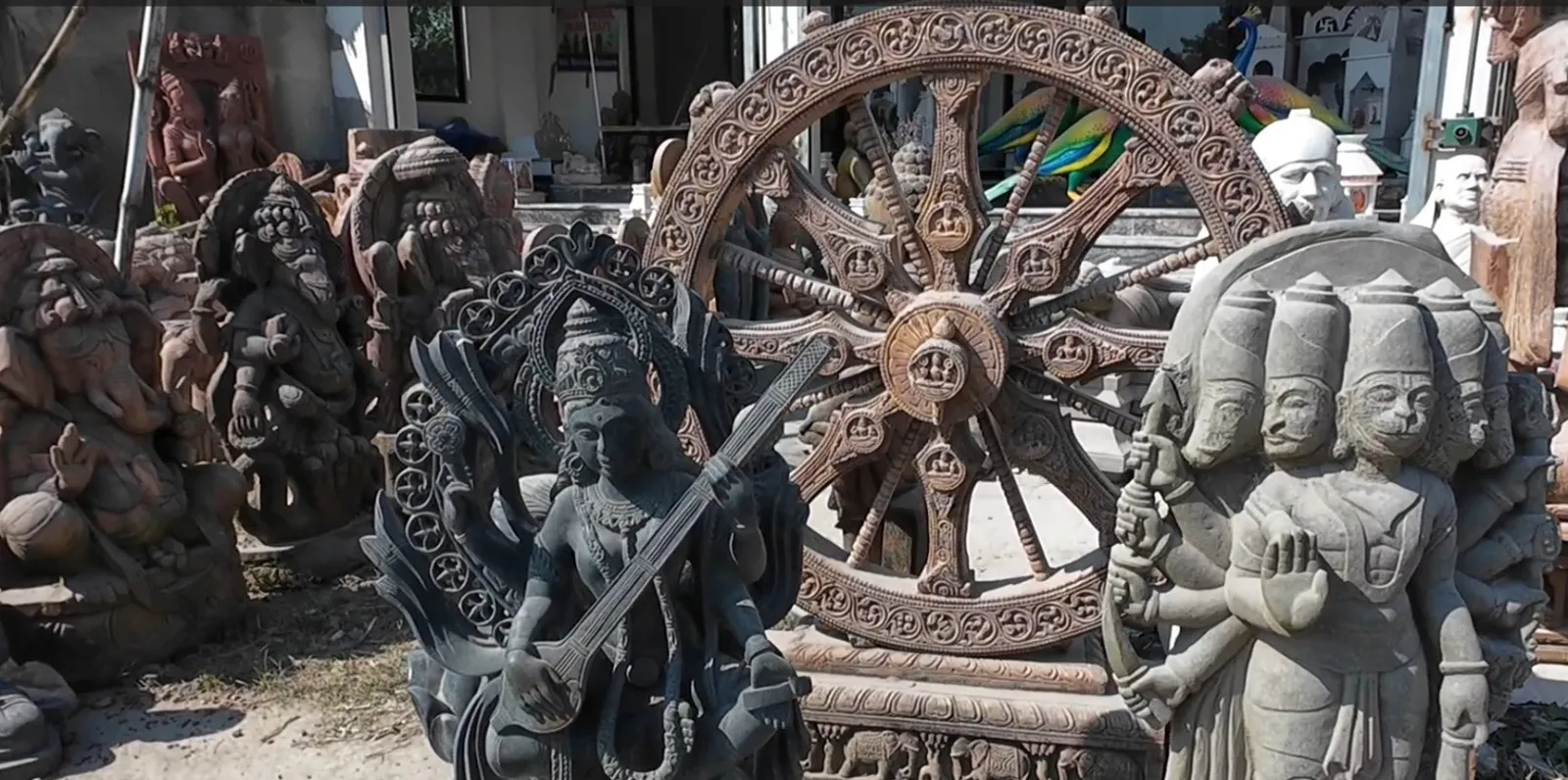
Balasore Stone Carving is a traditional stone craft associated with Balasore (Baleswar) district in Odisha. The craft involves carving local stone, including black stone and soapstone, into decorative panels, architectural elements, religious icons, and decorative objects. Documentation of Balasore Stone Carving in formal academic sources is limited; the craft is documented primarily through government craft portals and ORMAS (Odisha Rural Development and Marketing Society) catalogues. This entry is scoped to verified available information.
Etymology The designation Balasore Stone Carving identifies the craft by its primary location (Balasore district) and technique. No traditional regional language term for the craft as a distinct tradition has been prominently identified in available English-language sources.
Origin Stone carving as a craft tradition in Odisha is ancient, connected to the state's rich architectural heritage including the temples of Puri, Bhubaneswar, and Konark. The Balasore district tradition draws on this broader Orissan stone-carving heritage. The India.gov.in portal for ODOP (One District One Product) lists stone craft as the identified product of Balasore district.
Location Balasore (Baleswar) district, Odisha, in the northern coastal region of the state. The ORMAS Balasore Product Catalogue documents the crafts of the district.
Community Stone carving is produced by artisan communities (shilpakar or shilpi communities) in Balasore district. Detailed community profiles specific to Balasore stone carving are limited in available published sources. The tradition is connected to the broader community of stone carvers (patharia or shilpi) found across Odisha.
Relevance Balasore stone craft is the identified ODOP product for Balasore district under the Government of India's One District One Product scheme, which provides market and production support. The Crafts Odisha portal (craftsodisha.org) documents stone carving as a significant craft of the state.
History
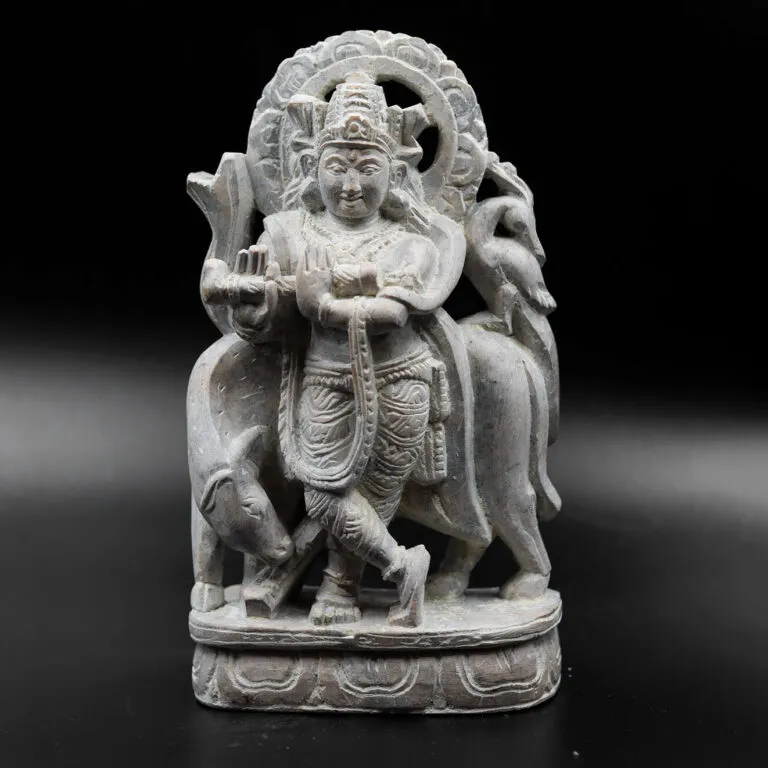
Background The stone-carving tradition of Odisha is historically rooted in the state's temple-building culture, which reached its peak between the 11th and 15th centuries CE as documented in the historical literature on Orissan architecture. The craftsmen who produced temple carvings at Puri, Bhubaneswar, and Konark represented a tradition of high sculptural skill. The Balasore district tradition represents a continuation and regional expression of this broader Orissan stone-carving heritage in a coastal, non-temple-city context. Specific historical documentation for Balasore's stone-carving tradition is limited.
Culture and Societies Stone carving in Odisha is connected to the traditions of religious icon production, architectural ornamentation, and decorative craft. The craft provides religious objects, decorative panels for households, and architectural elements. Specific cultural documentation of the Balasore community tradition is limited in available sources.
Religious Significance Stone carving in Odisha traditionally produces religious icons (including images of Jagannath, Durga, Ganesh, and other deities), temple architectural elements, and ritual objects. The carving of religious icons carries documented significance in the context of their use in home shrines and small temples. The broader Orissan stone-carving tradition is deeply connected to Hindu religious architecture and iconography.
Understanding the Art
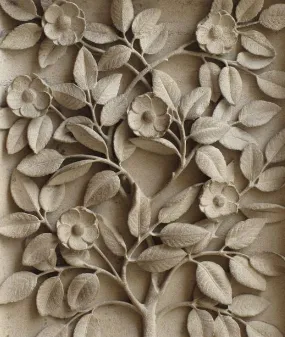
Style Limited descriptive documentation specific to the Balasore style is available. Orissan stone carving in general employs both high-relief and in-the-round sculpting, with traditional Orissan iconographic conventions for religious figures.
Central Motifs and Their Significance Common stone carving motifs in Odisha include the Jagannath Trinity, other Hindu deities, floral and geometric border patterns, and architectural naga (serpent) and elephant motifs. Specific motif documentation for Balasore carving is not detailed in available sources.
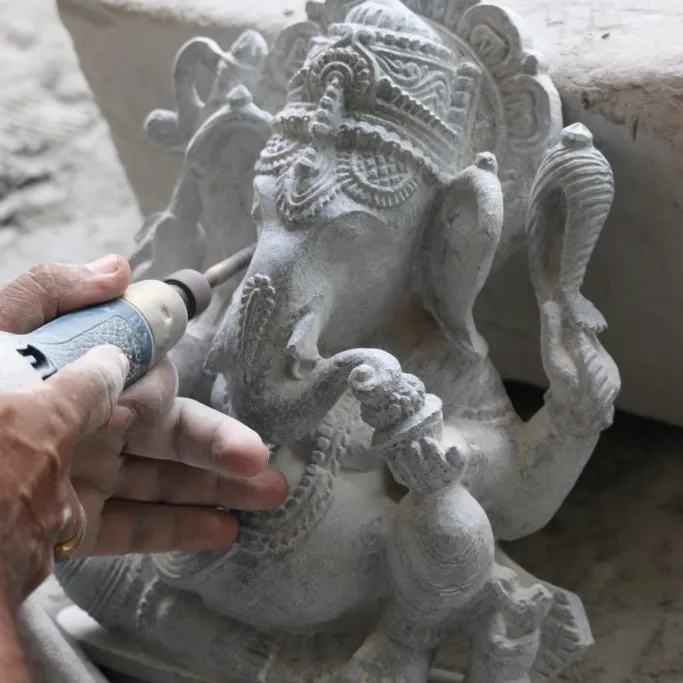
Process General stone carving process: selection and procurement of stone; rough shaping with large chisels; progressive refinement using increasingly fine chisels and gouges; final detailing and surface finishing. The IOSR Journal article documents aspects of Orissan stone crafts.
Mediums Used Local stone types including black stone (khondalite), soapstone (soap stone), and grey stone are used. Specific stone documentation for Balasore is limited.
New Outlook
The craft is classified as Vulnerable. Limited formal documentation limits precise assessment. The ODOP designation provides government marketing support. Development of the craft's documentation and artisan support infrastructure would benefit from further formal research.
Learn Balasore Stone Carving
Bibliography
Sources
“Orissan Stone Crafts.” IOSR Journal of Humanities and Social Science, vol. 22, no. 8, issue 8, version 9.
Note: Further documentation is available through ORMAS Balasore Product Catalogue, the Crafts Odisha portal, and the India.gov.in ODOP documentation.
Image Sources
Bhalla, Siddhi. “Stone Carving in Odisha: Unlocking B2B Opportunities.” Rural Handmade, 2 Dec. 2024, https://ruralhandmade.com/blog/stone-carving-in-odisha-unlocking-b2b-opportunities-in. Accessed on May 02, 2026.
“Carving against Time: Odisha Sculptors Who Refuse to Let Stones Remain Stones.” ETV Bharat, https://www.etvbharat.com/en/offbeat/carving-against-time-odisha-sculptors-who-refuse-to-let-stones-remain-stones-give-them-second-life-enn25112101217. Accessed on May 02, 2026.
“Stone Carving.” Crafts Odisha, https://www.craftsodisha.org/stone-carving/. Accessed on May 02, 2026.