
Bagurumba - The Folk Dance Tradition of Assam
A journey into the traditions, symbolism, and timeless beauty of the Bodo people's most cherished dance.
Introduction
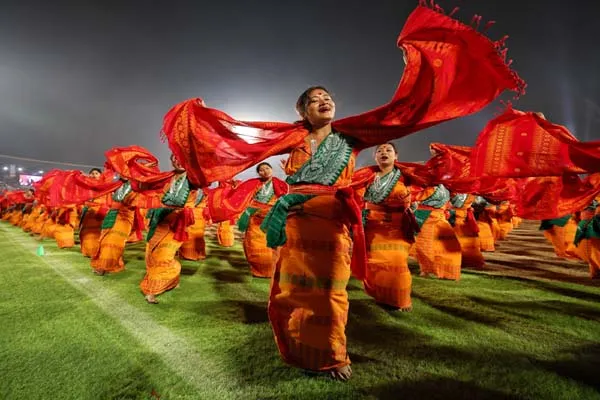
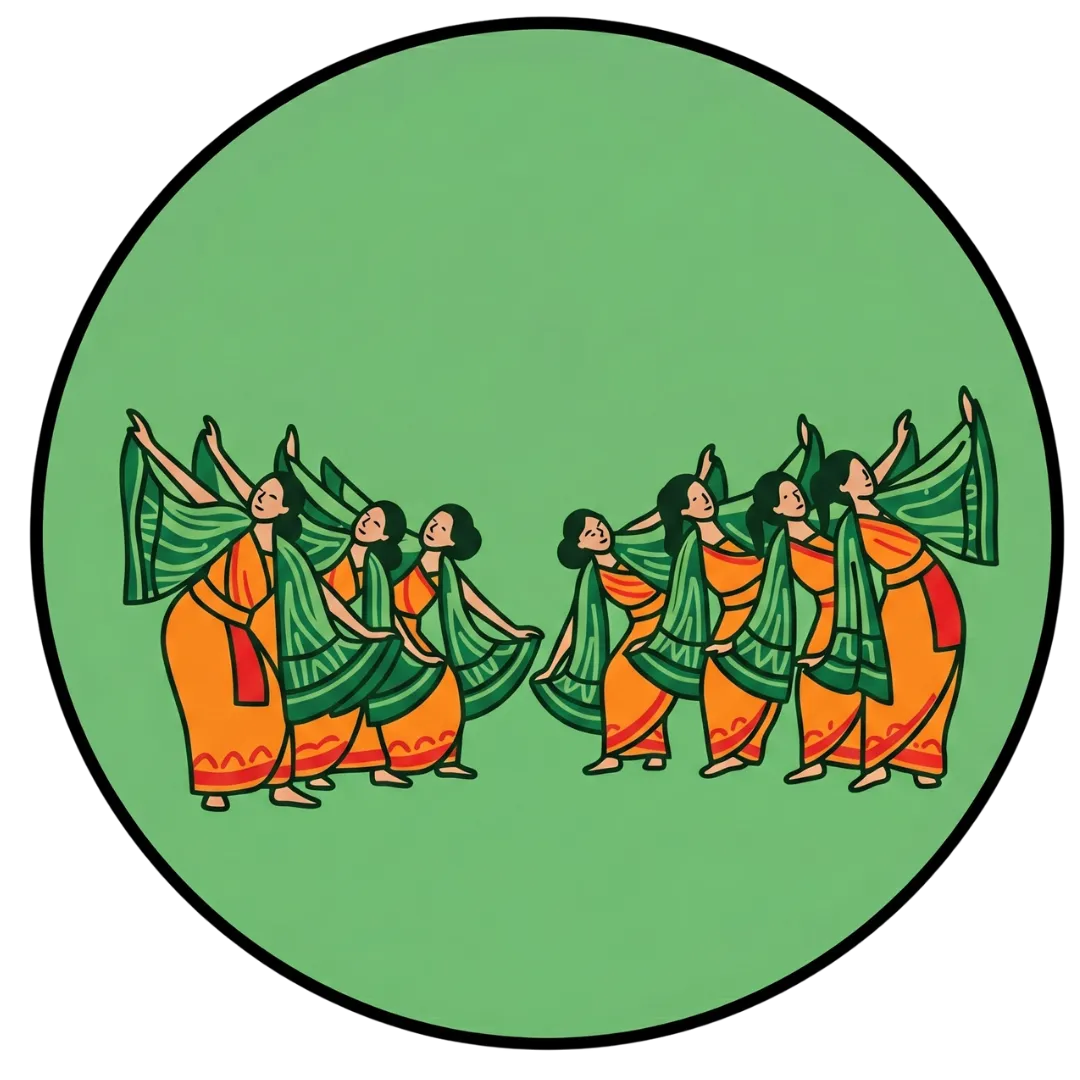
Bagurumba is a traditional folk dance of the Bodo (also written Boro) community, an indigenous Tibeto-Burman ethnic group primarily residing in the Brahmaputra Valley of Assam and other parts of northeast India. The dance is performed by Bodo women during the Bwisagu (also written Bwishagu) festival, the Bodo New Year celebration held during the Vishuba Sankranti (mid-April). Bagurumba is widely known as the Butterfly Dance because its movements are designed to imitate the flutter of butterflies and the flight of birds in nature.
Etymology
The precise etymology of the word Bagurumba is not documented in available academic sources, and the name appears to derive from the Bodo language without a clearly documented standard etymology in published literature. The dance is also known as the Bardwisikhla dance, referring to Bardwisikhla, the Bodo goddess of wind and rain. This alternative name connects the dance to the Bodo animistic religious tradition of Bathouism. The term Butterfly Dance is an informal descriptive name derived from the movement vocabulary of the performance.
Origin
The Bodo people are historically described as one of the earliest settlers of the Brahmaputra Valley, belonging to the Tibeto-Burman linguistic family. They are identified as one of the 18 sub-ethnic groups within the broader Kachari group of northeast India and are racially classified as belonging to the Mongoloid stock of Indo-Mongoloids. The Bodo tribe is credited with introducing rice cultivation, tea plantation, pig and poultry farming, and silkworm rearing in northeast India. The origin of Bagurumba as a dance form remains undocumented in textual sources, as stated in Wikipedia's entry on the dance. Available sources note that the dance tradition, along with the associated Bwisagu songs, is thought to have existed for thousands of years as an oral tradition passed down through generations within the Bodo community. The folk tale of Damchikpa and Braima is cited in some community accounts as the mythological inspiration for the dance's origins.
Location
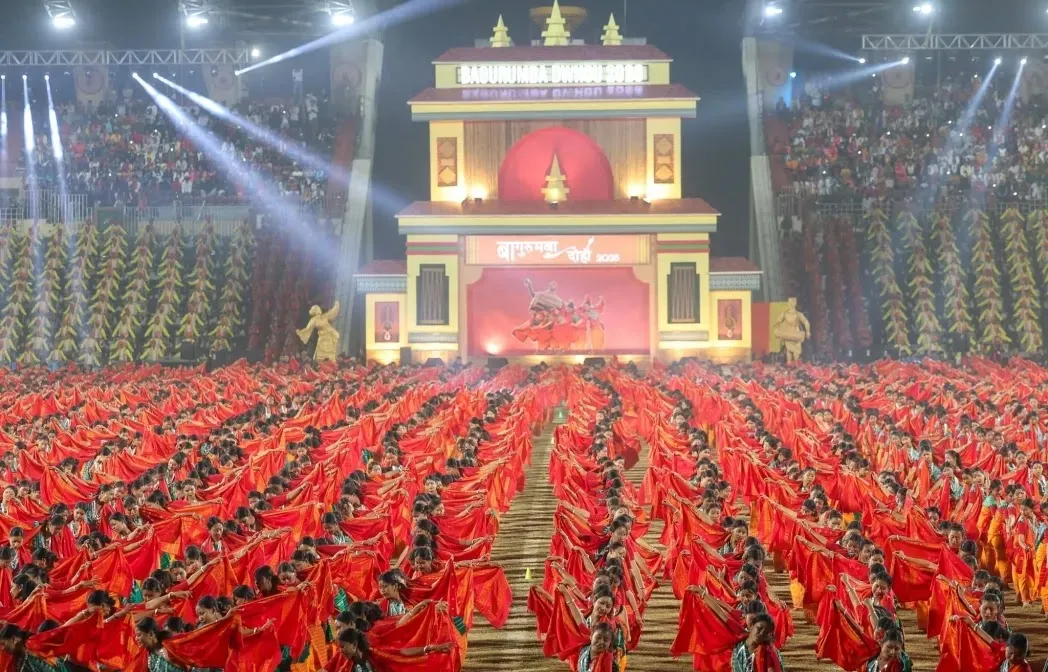
Bagurumba is practised in Bodo-inhabited districts of Assam including Udalguri, Kokrajhar, Baksa, Chirang (now part of Bodoland Territorial Region), Bongaigaon, Nalbari, Darrang, and Sonitpur. The dance is also performed in schools and colleges in these districts, particularly those with a significant Bodo student population. On January 17, 2026, over 10,000 Bodo dancers performed Bagurumba at Sarusajai Stadium in Guwahati, demonstrating the dance's contemporary scale and community mobilisation capacity.
Community
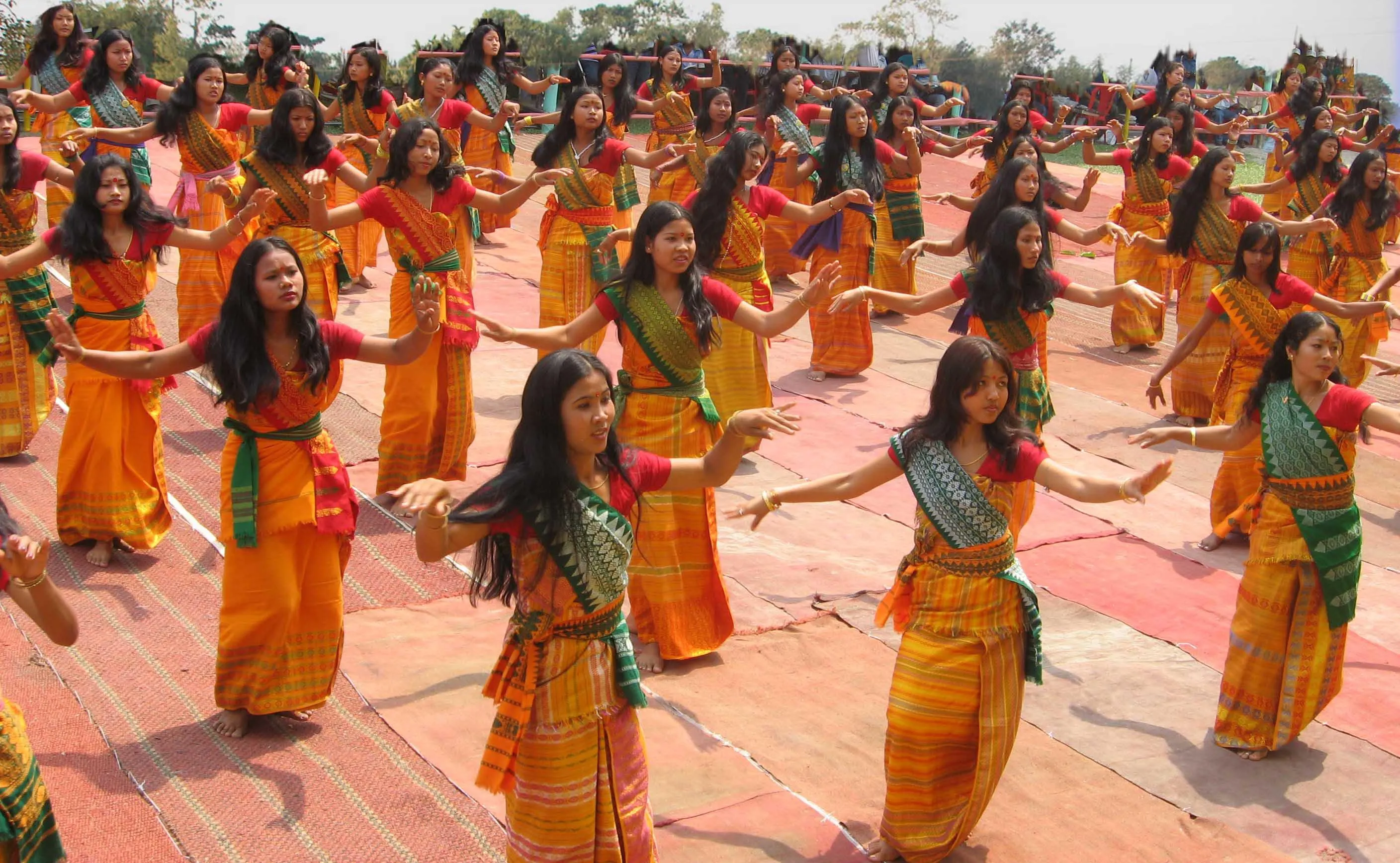
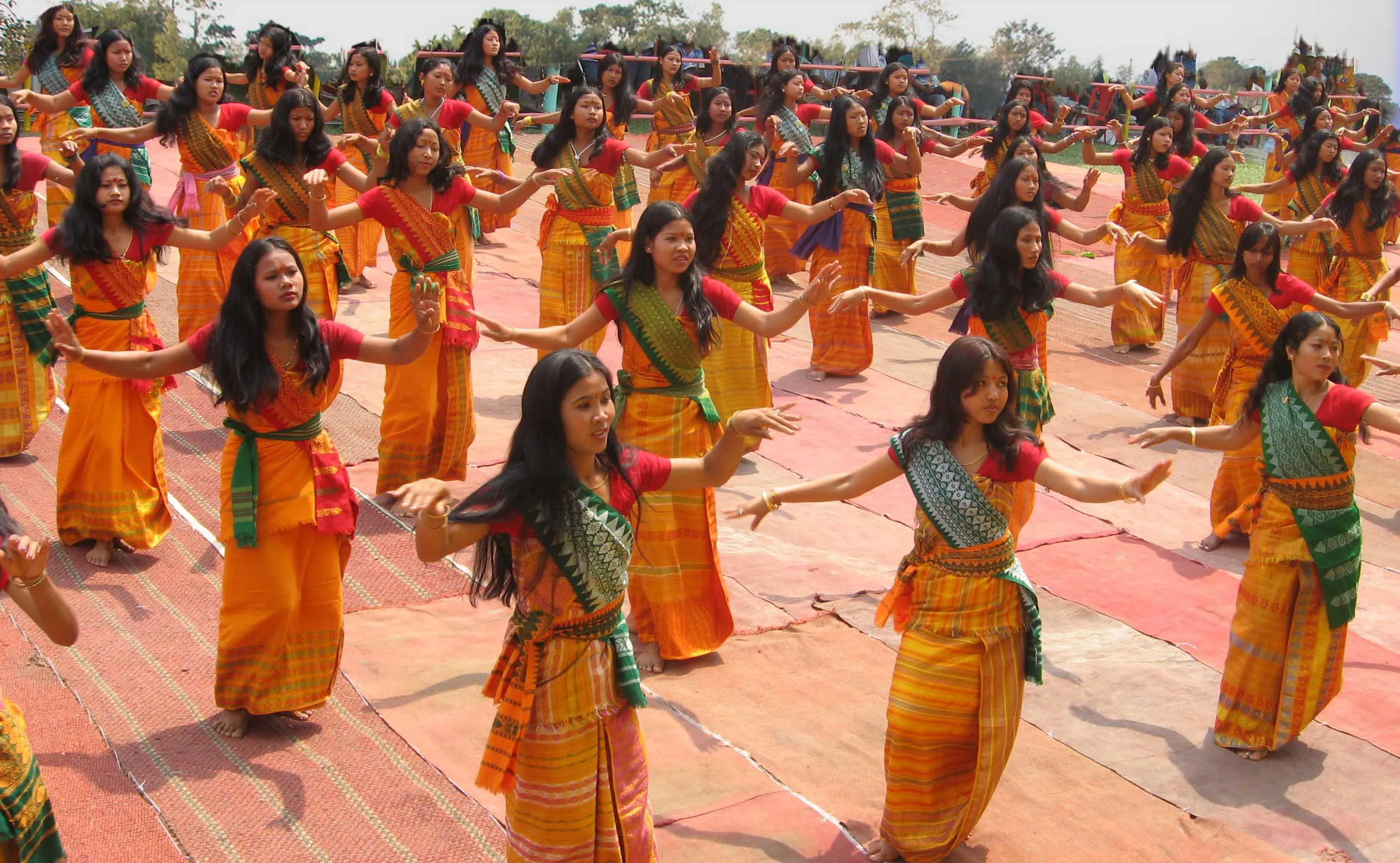
Bagurumba is performed exclusively by Bodo women, who wear the community's traditional handwoven attire during the performance. The Bodo community's religious tradition, Bathouism, venerates natural forces including earth, water, air, fire, and ether, and recognises specific natural phenomena such as butterflies, flowers, birds, rivers, and wind as sacred manifestations. The dance's movement vocabulary directly references these natural elements. Community organisations including the All Bodo Students' Union (ABSU), Bodo Sahitya Sabha (BSS), and Dularai Boro Harimu Afad (DBHA) have conducted preservation workshops, including a multi-day 2023 event in Kajalgaon, Chirang district.
Relevance
Bagurumba is the principal folk dance representing the Bodo community in Assam's cultural landscape and serves as a primary marker of Bodo ethnic identity. The Bodo community forms a significant portion of Assam's population, and the dance's prominence at national cultural events reflects the community's demographic and political significance. The dance's Vulnerable designation in this database reflects concerns about intergenerational transmission and the erosion of traditional practice in an urbanising context.
History
Background
The historical record of Bagurumba is limited to oral tradition and community memory, as noted in available sources. The Bodo people maintained the dance as part of the Bwisagu festival cycle, which marks the agricultural new year and the onset of spring. The festival involves ritual cow worship (reflecting the community's agrarian heritage), respectful bowing by young people to parents and elders, and worship of the deity Bathow Bwrai (considered analogous to Shiva in the Bodo pantheon) with offerings of chicken and zou (rice beer). The Bagurumba dance follows these rituals as a communal celebration. Two variants of the dance exist: Natural Bagurumba, performed with instrumental music only, and Royal Bagurumba, which incorporates songs and vocal music.
Culture and Societies
Bodo culture places significant value on weaving, and the women's attire worn during Bagurumba represents this tradition. The dokhona (a wrap-around dress typically in yellow or red with embroidery), jwmgra (fasra, a lower garment), and aronai (a scarf) are all handwoven Bodo garments, and the quality and pattern of the weave are markers of cultural knowledge and skill. The dance therefore integrates textile arts and performance arts as complementary expressions of Bodo identity. The government of India's Ministry of Culture included Bagurumba in its Cultural Mapping of India project as a tribal dance form of national heritage significance.
Religious Significance
Bagurumba is rooted in the animistic religious tradition of Bathouism, which is the indigenous Bodo religion. The dance's movements, imitating butterflies and birds, are not merely aesthetic choices but reflect a religious understanding of these natural beings as sacred manifestations of divine energy within the Bathouite cosmology. The dance is performed following the worship of Bathow Bwrai, the supreme deity in Bodo tradition, and is understood as a continuation of the ritual offerings made during the festival. The Bardwisikhla (wind and rain goddess) is also associated with the dance through its alternative name, connecting the performance to Bodo nature-deity veneration.
Understanding the Art
Style
Bagurumba is characterised by graceful, slow, and undulating movements that imitate the motion of butterflies and birds. The arms are outstretched and moved in flowing patterns suggesting wings; the footwork is soft and precise; the overall quality of the movement is gentle and synchronised across the group of performers. The Wikipedia entry on Bagurumba states that the dance is a formation dance performed with slow steps and outstretched hands, distinguished from the vigorous character of Bihu dance. The dance is performed in groups, and the synchronisation of the ensemble is a key aesthetic quality.
Central Motifs and Their Significance
The central motifs of Bagurumba are drawn from nature: butterflies as symbols of transformation and rebirth, birds in flight, the movement of wind through leaves, and the flow of rivers. These motifs are not merely decorative but reflect the Bodo animistic cosmology in which natural phenomena are understood as manifestations of divine energy. The performance of these movements during the Bwisagu festival connects the community's agricultural renewal (the new year, the onset of spring) with the natural cycles that the dance embodies.
Process
Bagurumba is transmitted through community practice, observation, and participation from childhood. Preservation workshops organised by community organisations (ABSU, BSS, DBHA) have introduced more structured teaching frameworks, particularly in response to concerns about intergenerational continuity. The Nativers' Institute of Bodology maintains a digital archiving project for Bodo cultural heritage that includes Bagurumba documentation.
Mediums Used
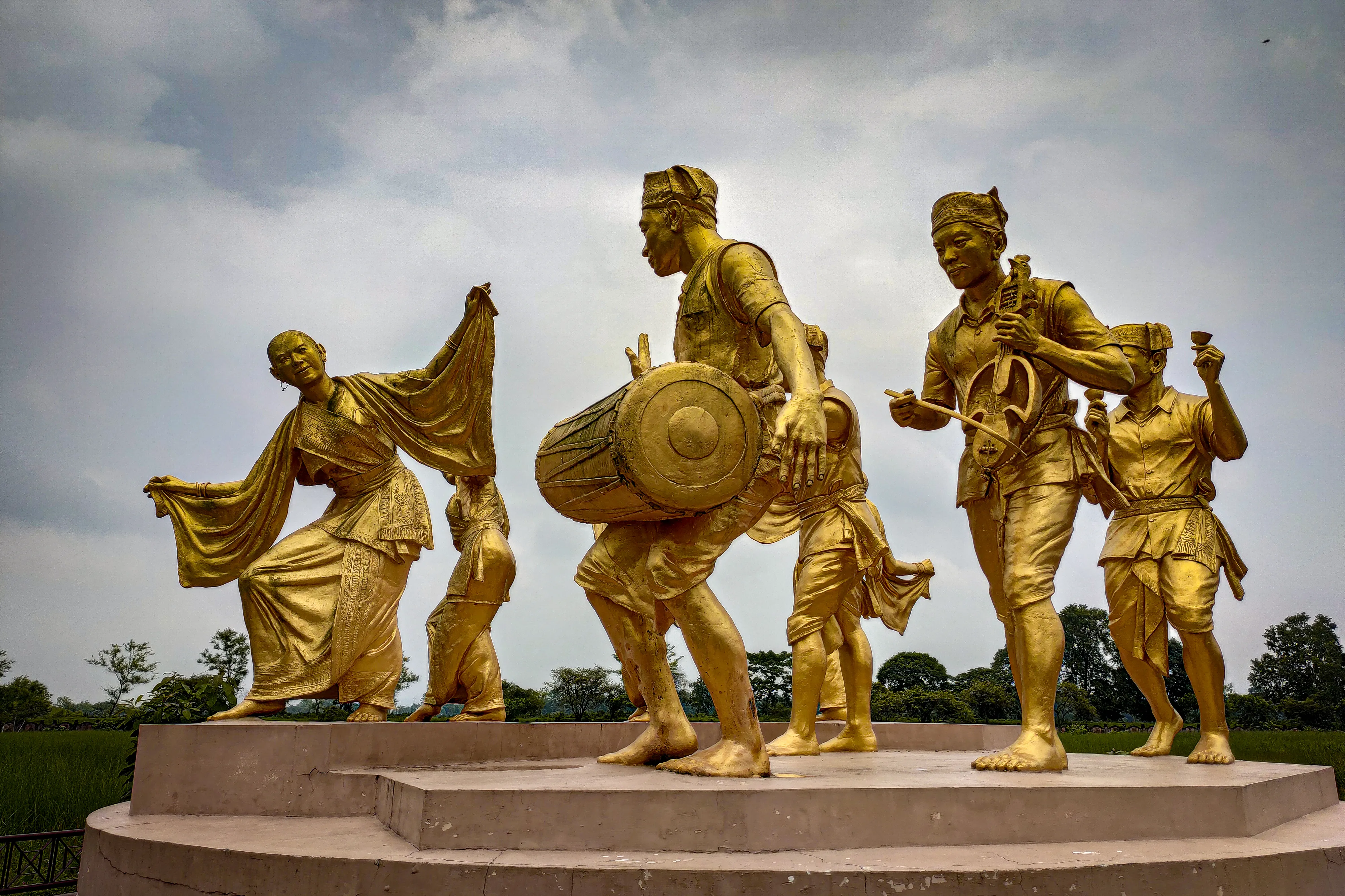
The instruments accompanying Bagurumba are traditional Bodo instruments: kham (a long cylindrical drum made of wood and goatskin), sifung (a five-hole bamboo flute), jota (an iron instrument), serja (a bowed string instrument resembling a violin, with a circular body), gongwna (made of bamboo, a horn-shaped instrument), and tharkha (a percussion instrument made of split bamboo). Together, these instruments produce the rhythmic and melodic framework for the dance. The kham provides the primary rhythmic foundation; the sifung and serja provide melody. Performers carry rege-regang (colourful sticks or props) in some performance contexts. The traditional Bodo attire worn during the performance is as described above.
New Outlook
Bagurumba has received institutional recognition and large-scale public visibility through events such as the 10,000-dancer performance at Sarusajai Stadium in January 2026 and through inclusion in the Ministry of Culture's cultural mapping project. These events support the dance's continuity and visibility. However, the erosion of the Bodo language and the migration of young Bodo women to urban employment present long-term challenges to the community-based transmission of the dance. Digital archiving and school-based programmes in Bodo-dominated districts are the primary tools being used to address these challenges.
Learn Bagurumba
Bibliography
Sources
Barpujari, H. K., editor. The Comprehensive History of Assam. Publication Board of Assam, 1990.
Brahma, Bisweswar. Folksongs of the Bodo. Bodo Sahitya Sabha, 1996.
Image Sources
"Bagurumba." Bodo Dimasa Archive, https://www.bododimasaarchive.org/digital-heritage/bagurumba-%E0%A4%AC%E0%A4%BE%E0%A4%97%E0%A5%81%E0%A4%B0%E0%A5%81%E0%A4%AE%E0%A4%AC%E0%A4%BE. Accessed 3 July 2026.
"Bagurumba." Wikipedia, https://en.wikipedia.org/wiki/Bagurumba. Accessed 3 July 2026.
"Bagurumba: A Symbol of Bodo Culture." The Pioneer, https://dailypioneer.com/news/bagurumba-a-symbol-of-bodo-culture-himanta. Accessed 3 July 2026.
"Depiction of the Bagurumba Dance at Bodofa Cultural Complex, Kokrajhar, Assam." Wikimedia Commons, https://commons.wikimedia.org/wiki/File:Depiction_of_the_Bagurumba_dance_at_Bodofa_cultural_complex,_Kokrajhar,_Assam.jpg. Accessed 3 July 2026.
"PM in Bagurumba DWHOU 2026." Jan Sansad News, https://jansansadnews.in/2026/01/18/pm-in-bagurumba-dwhou-2026/. Accessed 3 July 2026.
"Bagurumba Dance Gains Global Spotlight." The Northeast Post, https://www.thenortheastpost.com/2026/01/bagurumba-dance-gains-global-spotlight.html. Accessed 3 July 2026.