
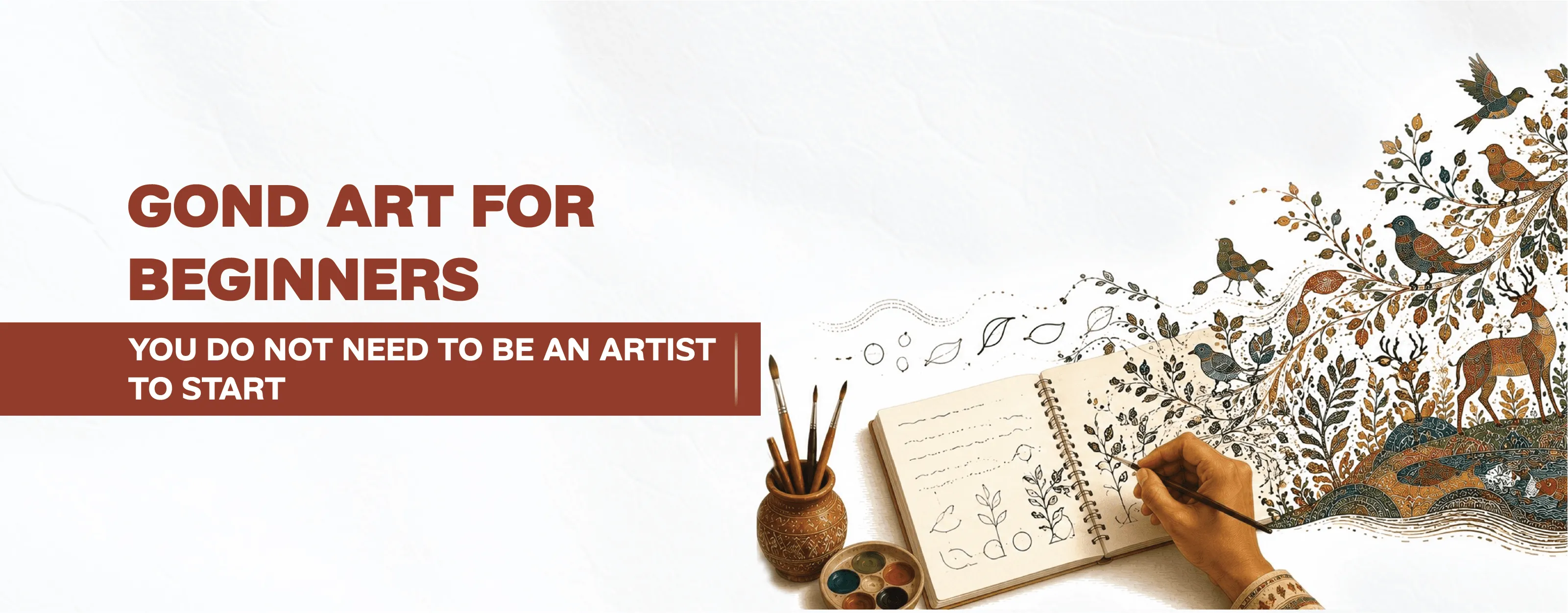
Gond Art for Beginners
Gond Art for Beginners: You Do Not Need to Be an Artist to Start
Learn Gond art for beginners with simple patterns, basic techniques, and practical tips to help you understand and start painting in the Gond tradition.

Rooftop
Author
Gond art has captivated art lovers across the world with its intricate patterns, vivid colours, and distinctive way of bringing stories from nature and folklore to life. Naturally, many people who admire the art form eventually wonder if they can learn to create it themselves. However, there is a common misconception that Gond painting is something you can only attempt after becoming an experienced artist. That feeling is understandable. Look closely at a finished Gond painting and you will find an extraordinary amount of detail packed into every figure. Animals, birds, trees, and other forms are often filled with countless dots, dashes, lines, and carefully repeated patterns.
At first glance, the sheer density of these details can make the canvas look almost impossible to recreate. For someone picking up a brush for the first time, it is easy to assume that this level of precision requires years of formal training. In reality, Gond art can be approached one element at a time. Those intricate compositions are built from patterns and techniques that can be learned gradually through observation and practice. You do not need to consider yourself an artist before you begin. With the right guidance, even a complete beginner can learn the basic patterns, understand how Gond motifs are constructed, and slowly develop the confidence to create their own work.
The Myth of the Steady Hand
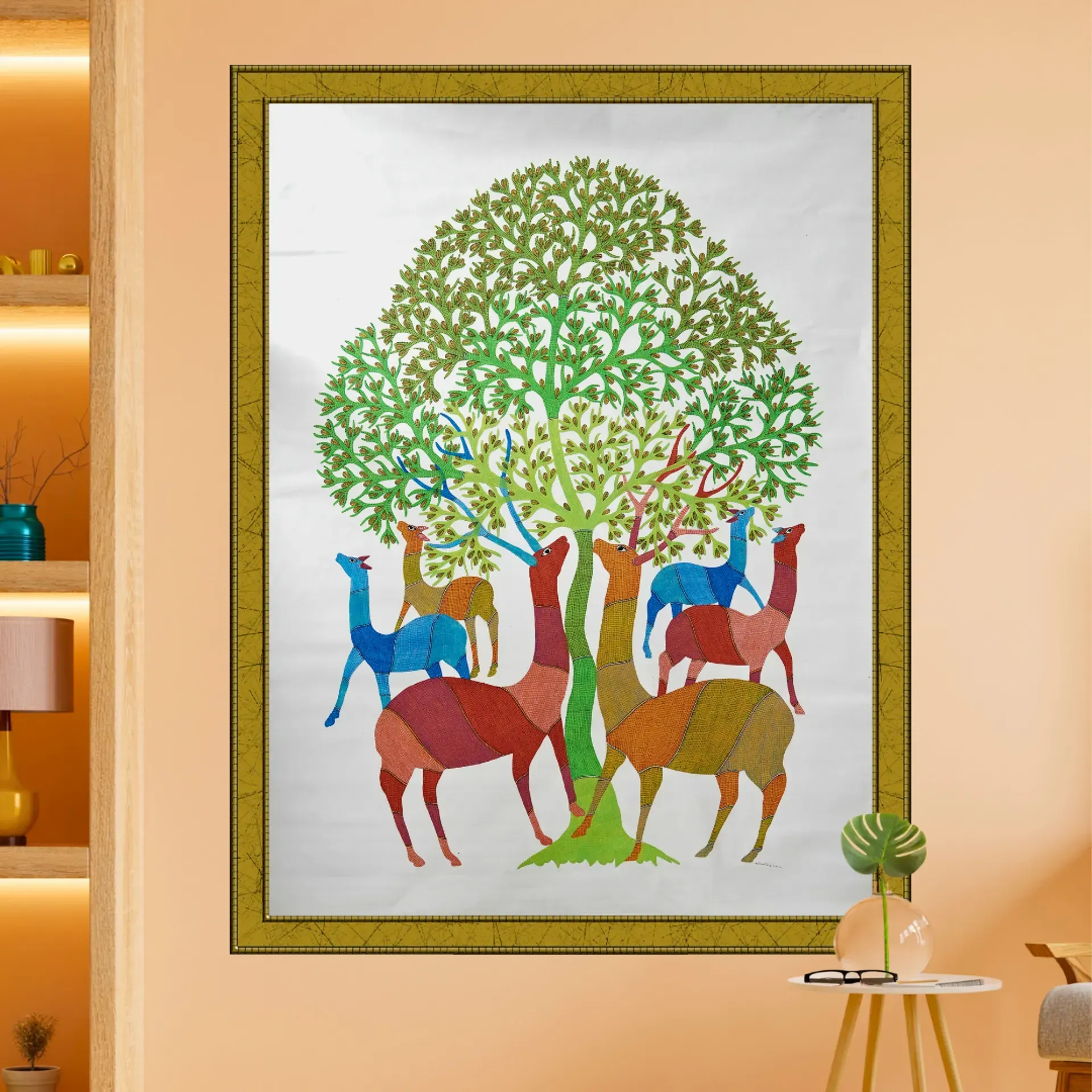
How a Create Gond Art
In reality, Gond painting is less a test of rigid precision and more an exercise in patience. Its intricate visual texture is built from simple, repeatable marks such as dots, lines, curves, and dashes. These elements can be learned and practised individually before being gradually brought together to create more complex patterns and compositions.
For a beginner, it is also important to understand that slight irregularities are not necessarily mistakes. Small variations in the lines, natural differences in how paint settles, and even the subtle movement of the hand are part of what gives a handmade painting its character. Rather than making the artwork look imperfect, these details add depth, movement, and a sense of life to the surface.
This is also where a handmade Gond painting differs from a mechanically produced print. A digital reproduction can replicate the overall image, but it cannot reproduce the small variations created by an artist's hand. Those individual marks are what give each original its distinct character, making the process of creating Gond art as much about developing patience and a feel for the patterns as it is about achieving precision.
What You Actually Learn in the First Session?
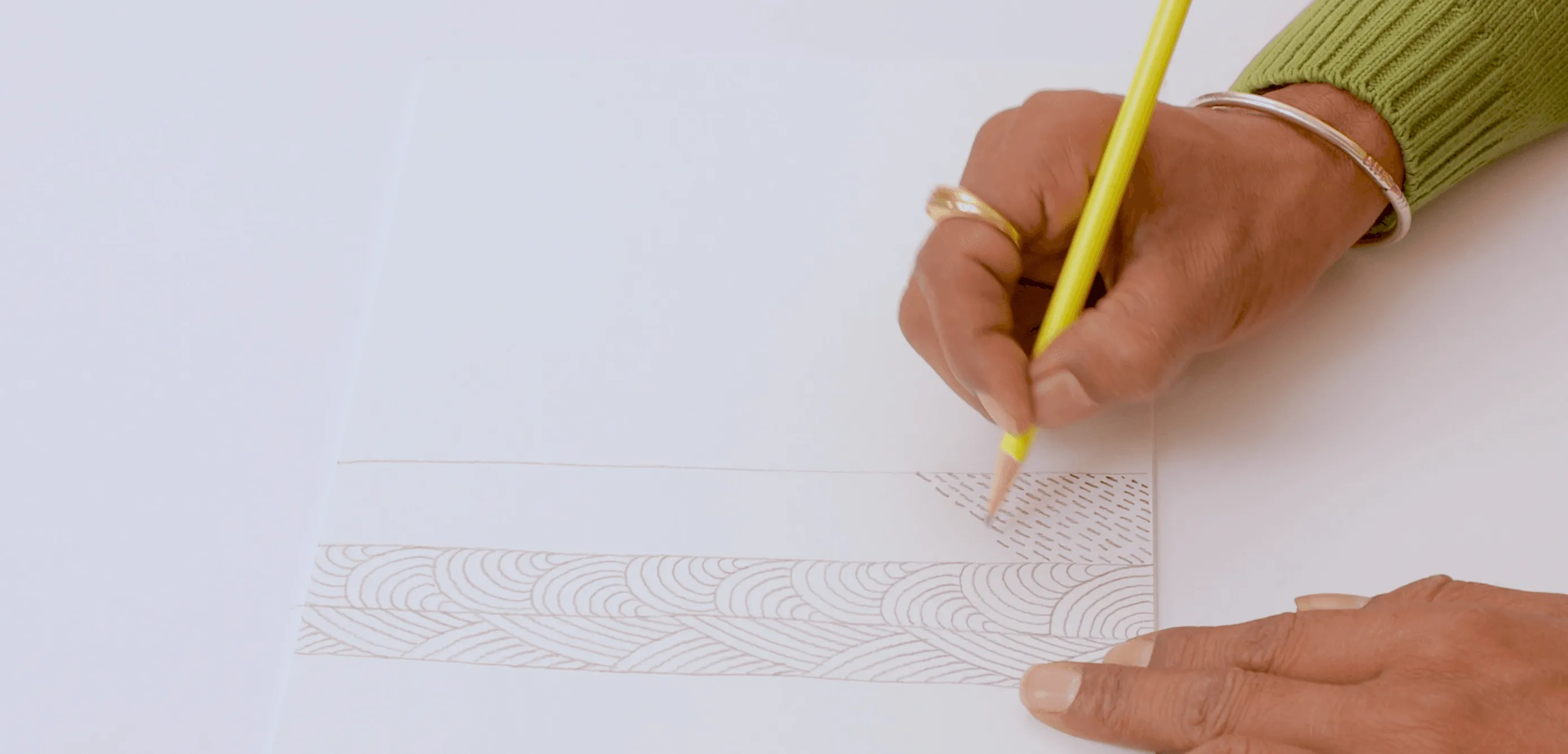
Gond Art First Session
A structured introduction can make a complex Gond painting feel far more approachable by breaking the process into a few simple, manageable steps. Instead of looking at the finished artwork as one overwhelming composition, beginners learn to build it gradually, starting with the basic elements and adding detail one section at a time.
The Contour Outline
The first step is usually to create a simple pencil outline of the main subject. This could be a tree, an animal, a bird, or another familiar Gond motif. The outline establishes the basic shape and gives you a clear structure to work within as you begin adding patterns.
Pattern Practice in Isolation
Before working on the main painting, you can practise individual patterns on a separate sheet of paper. Repeating simple dots, lines, curves, or other motifs helps you become comfortable with the movement of the brush or pen. It also makes the patterns feel much less intimidating when you eventually bring them into the artwork.
Sectional Application
Once you are comfortable with a pattern, you apply it to one small section of the outlined figure at a time. Rather than worrying about completing the entire composition in one go, you focus on filling each enclosed area carefully before moving to the next. This step-by-step approach keeps the process organised and allows the painting to gradually take shape without overwhelming a beginner.
The Four Fills Every Beginner Starts With
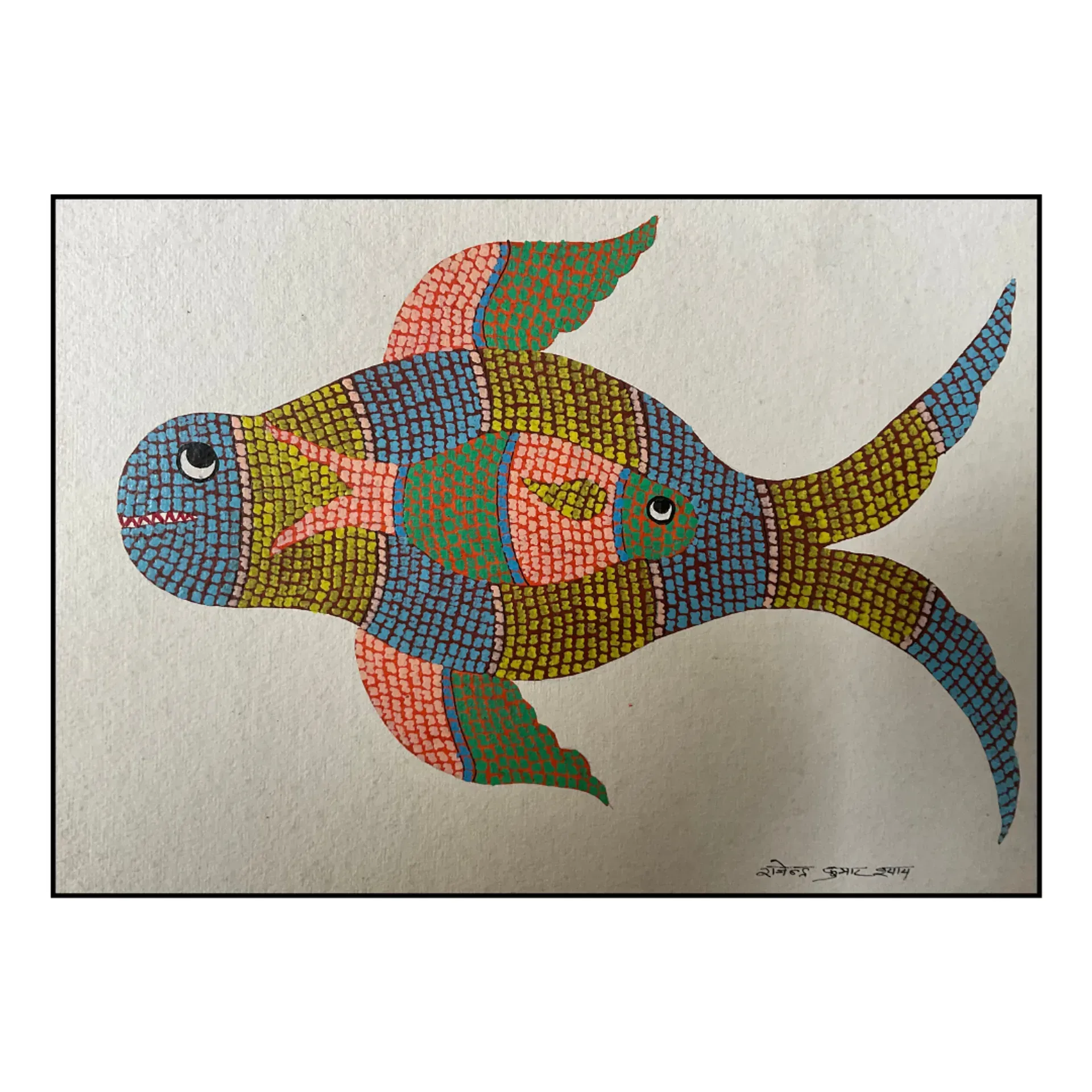
Components of a Gond Art
Gond art has a visual language built from simple, repeating patterns. Once you understand a few of these basic fills, the intricate details of a finished painting become much easier to approach. Four patterns, in particular, offer a good starting point for beginners.
- The Scale Fill: Made up of repeating semi-circular curves that resemble fish scales, this is one of the more forgiving patterns to practise. Each curve follows the one before it, so small differences in size or spacing naturally become part of the overall pattern.
- The Vertical Dash: This pattern uses short, parallel vertical lines arranged in rows or columns. It is a simple exercise in keeping your spacing reasonably consistent while getting comfortable with the movement and pressure of your brush or pen.
- The Concentric Curve: Here, curved lines are placed one inside another, following the shape of the figure they fill. When used along a tree trunk, animal body, or another organic form, the pattern can help create a sense of movement and volume within the figure.
- The Dot Cluster: Groups of small dots are arranged together to create a textured, rhythmic fill. The pattern helps beginners practise controlling the tip of their brush or pen while adding a delicate texture to larger shapes.
What makes these patterns approachable is their repetition. Once your hand becomes familiar with the movement of each one, you can begin combining them in different sections of a composition. With some focused practice, the patterns that initially look intricate start to feel surprisingly intuitive.
What Beginners Consistently Get Wrong?
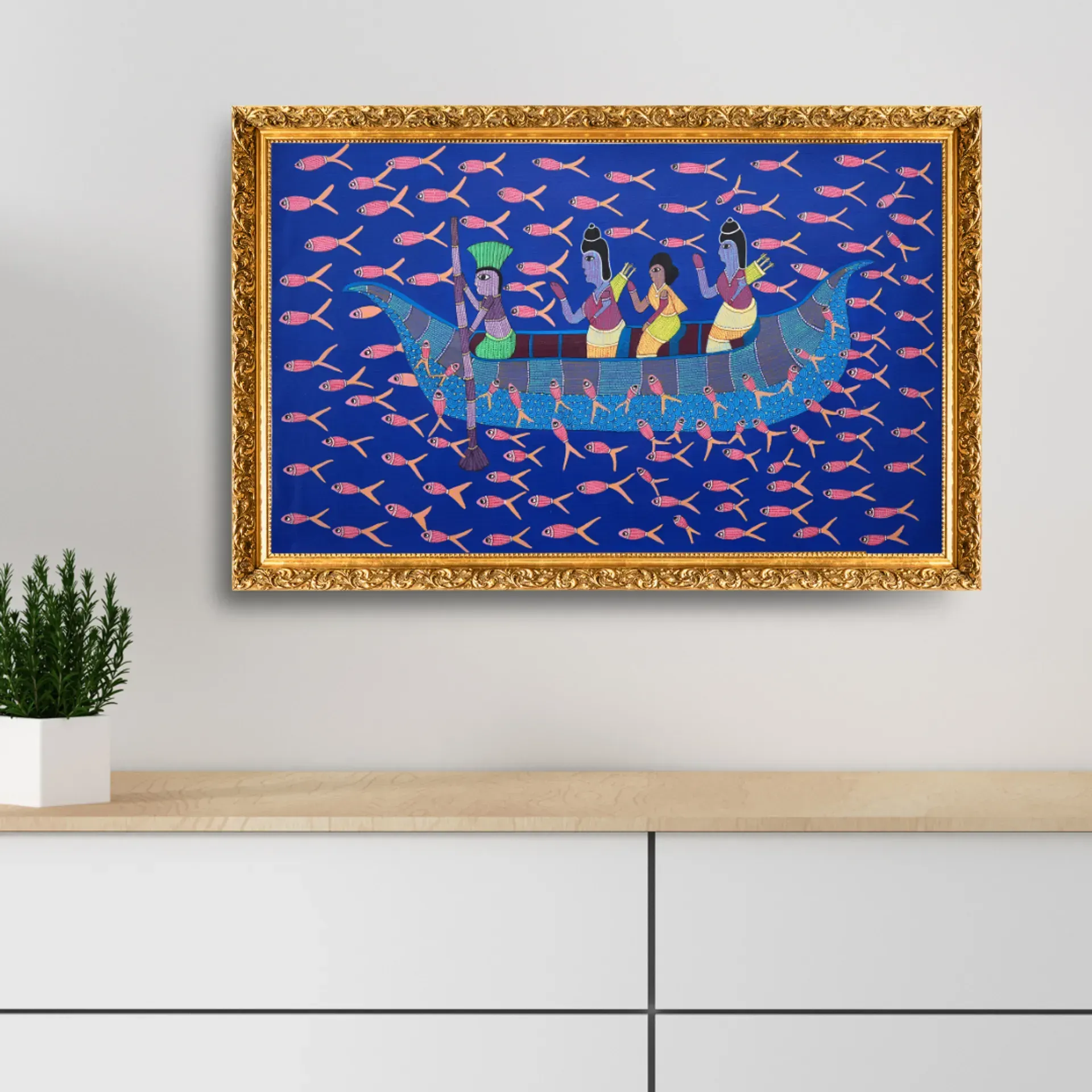
Tips for Beginners
Even with a clear roadmap, beginners can run into a few common problems that make Gond painting feel more difficult than it actually is. Two of the most frequent ones have less to do with artistic ability and more to do with pace and brush control.
The Rush to Fill
It is tempting to start filling the entire outline as quickly as possible, especially once you have learned a few patterns. However, Gond painting relies heavily on repetition and patience. When patterns are applied too quickly, spacing can become uneven, lines may lose their consistency, and details can start to look hurried. Taking your time allows the hand to settle into a steady rhythm and helps the different patterns work together as part of a cohesive composition.
The Flat Brush Mistake
Another common issue is holding the brush too flat against the paper and using the side of the bristles rather than the tip. This can make the paint spread unevenly and produce thicker marks than intended. Keeping the brush more upright and working with its finer tip gives you greater control over the size and direction of each mark, making it easier to create the clean lines and delicate details characteristic of Gond painting.
Neither of these mistakes means that a beginner lacks the skill to create Gond art. Both are simply part of learning how to control the tools and develop a comfortable rhythm. With practice, the movements become more natural and the process begins to feel far less intimidating.
What Progress Looks Like After Three Sessions?
Session 1
The initial hesitation starts to fade as the hand becomes familiar with drawing simple outlines and working with basic patterns. The focus is less on creating a finished painting and more on getting comfortable with the tools and movements involved.
Session 2
With the basic movements becoming more natural, the focus can shift towards controlling line thickness, working with different colours, and understanding how detailed sections interact with areas of open space. The student begins to see how individual patterns contribute to the overall composition.
Session 3
When you reach this stage, the marks tend to become more consistent and the composition begins to feel more cohesive. Instead of simply copying a pattern, the beginner starts developing an instinct for spacing, balance, and placement. They can also begin experimenting with variations of the patterns they have practised, giving their work a more personal character.
The goal of these early sessions is not to master Gond painting overnight. It is to reach the point where the intricate details no longer feel intimidating and the beginner can look at a Gond composition and understand how it is built, one pattern at a time.
Learn Gond Art from a Master Artist
Learn Gond with Rooftop
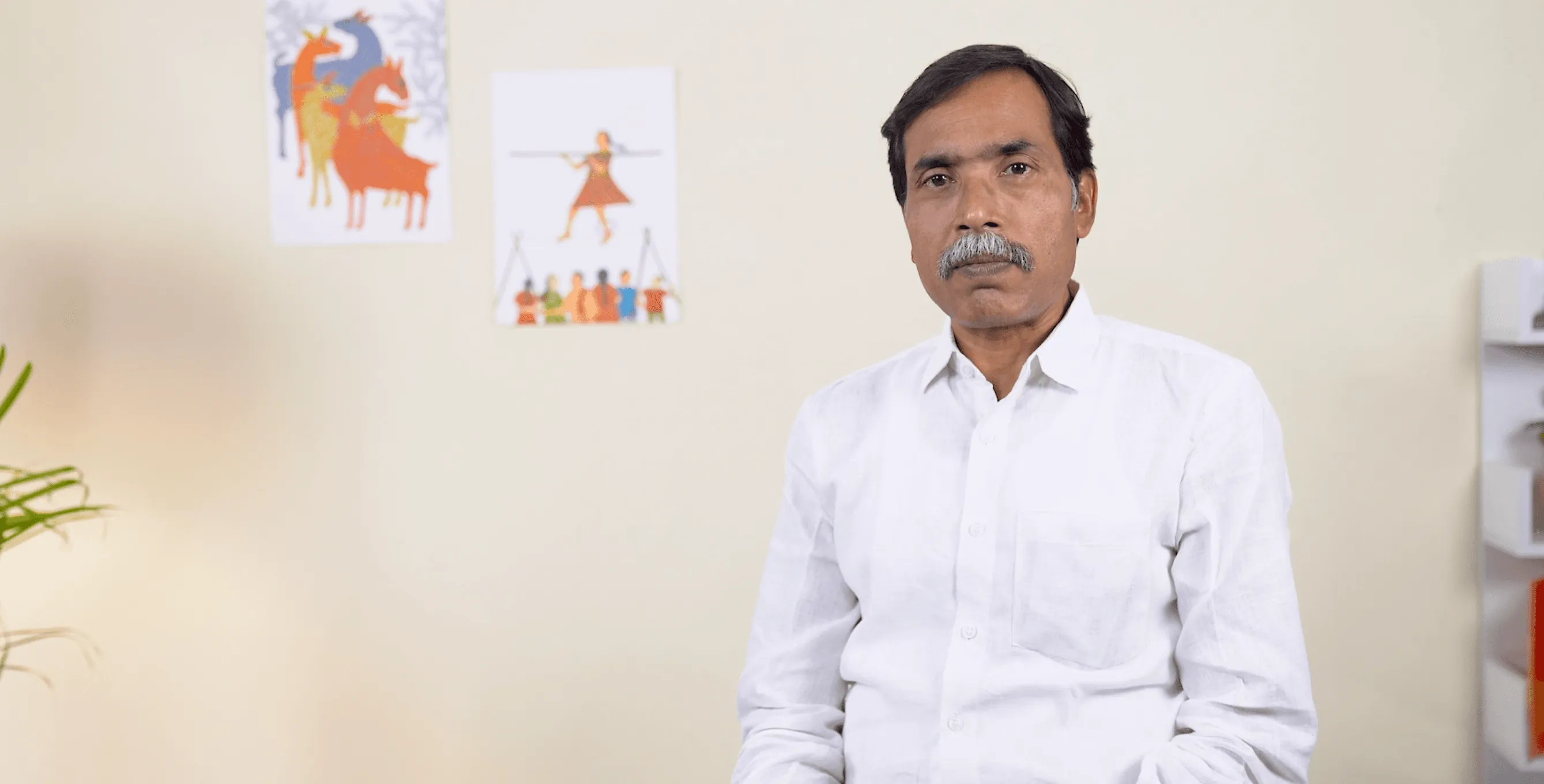
Knowing that Gond painting can be learned step by step is one thing. Having someone experienced guide you through those steps is what can make the process much easier. Rooftop’s Gond Art Course with Venkat Raman Singh Shyam is designed to take learners through the art form from its cultural foundations to its techniques, patterns, materials, and creative process.
The course features 6 hours of learning across 4 chapters and 28 lessons, giving beginners enough room to understand both the tradition behind Gond art and the practical techniques involved in creating it. The early lessons introduce Gond painting, its history and origins, and the significance of its patterns. As you progress, the course moves into more practical aspects, including the brushes used in Gond painting, the colours traditionally derived from nature, and the creative process behind a Gond composition.
At the centre of the course is Venkat Raman Singh Shyam, a second-generation Pardhan Gond artist from Madhya Pradesh. He began learning the art at the age of 13 under the guidance of his uncle, Jangarh Singh Shyam, and has spent more than four decades developing his practice. His own work brings together traditional Gond influences with experimentation across themes, compositions, and mediums, giving learners an opportunity to understand the art form through the perspective of an artist who has lived and worked within its tradition.
The course also gives particular attention to the role of dots, lines, and patterns, helping learners understand why these seemingly simple marks are so important to Gond painting. With lessons progressing from the basics through intermediate and advanced techniques, the course offers a structured way to move from simply admiring a finished Gond painting to understanding how one is created.
You do not need years of artistic experience to begin. All you need are a couple of brushes, poster colours, a palette, and the willingness to practise. With guidance from a master artist and a step-by-step learning process, Gond painting becomes something you can approach with curiosity rather than intimidation.