
How to buy Gond art
How to Buy Authentic Gond Paintings: The Printed Copy Problem Nobody Warns You About
Learn how to identify authentic Gond art, understand its cultural context, spot reproductions, and buy original Gond paintings with confidence.

Rooftop
Author
One of the most common and costly mistakes art buyers can make is paying the price of an original Gond painting for a mass-produced digital print. The problem becomes harder to spot when sellers use vague terms such as “inspired by,” “in the style of,” “artisanal,” or “traditional” without clearly explaining how the artwork was actually produced. A canvas may look textured and convincingly handmade in photographs, while the artwork underneath is simply a mechanical reproduction and nothing more. It is like getting a diet soft drink when you want the full flavorful soft drink.
Terms such as “hand-finished” or “printed on canvas with hand detailing” can make matters even more confusing. In practice, this may mean that a digital print has been given a few brushstrokes, painted details, or a surface glaze to create the appearance of an original. For anyone looking to buy authentic Gond art, knowing how to spot these differences is essential before making a purchase.
Why Is the Market Confusing Right Now?
Authentic Gond Painting
The growing global interest in Gond and Indian folk art has created a market with two very different kinds of products competing for the same buyer. On one side are original works made by artists who have spent years practising the tradition. On the other are reproductions and commercially produced pieces that borrow heavily from the same visual language. With both appearing across online marketplaces, the difference can become surprisingly difficult to understand at first glance.
Genuine Handmade Originals
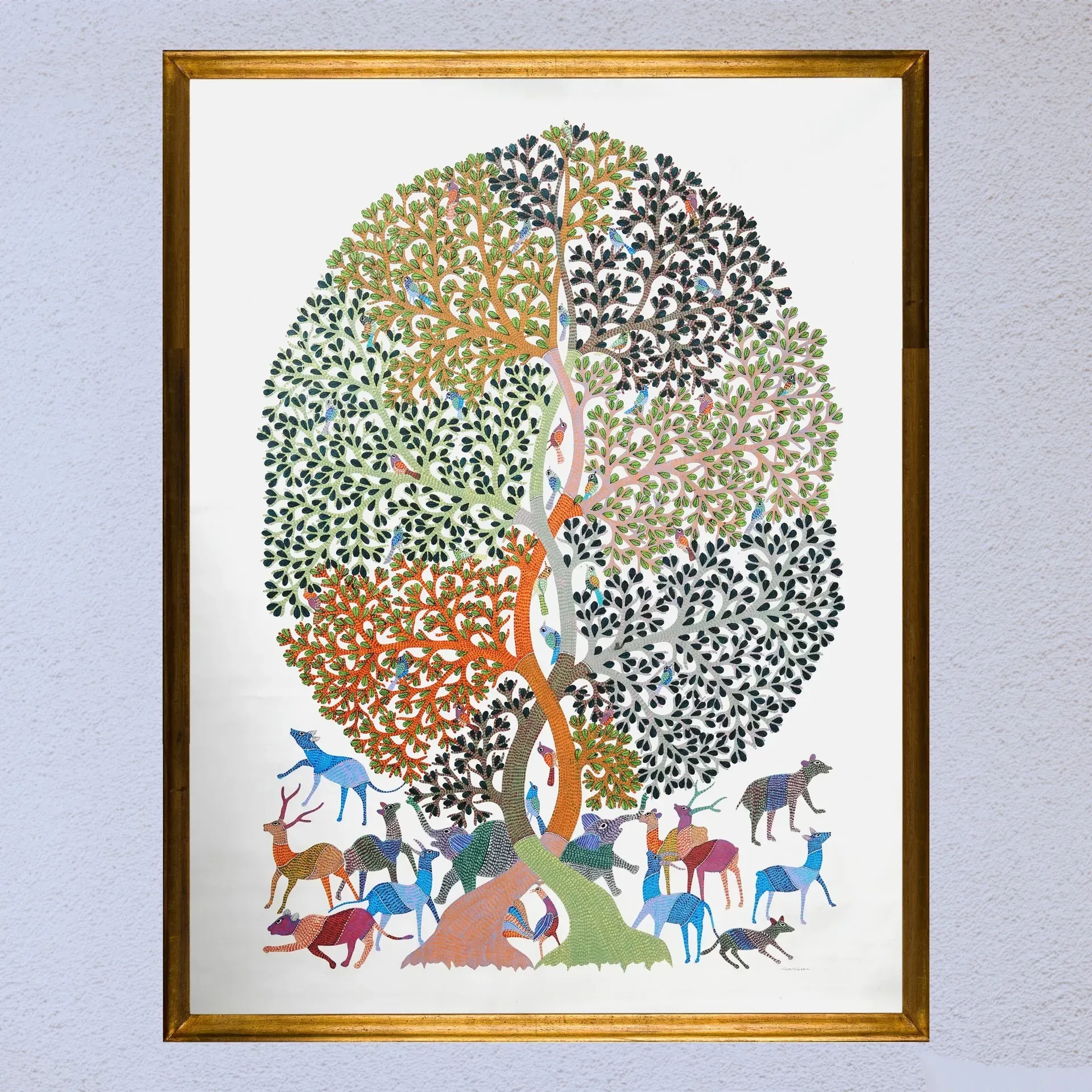
An original Gond painting is the result of a slow, hands-on process shaped by the individual artist. Every line, dot, pattern, colour, and motif is created as part of the composition rather than reproduced from an existing image. The artist’s training and personal style also play an important role, which means two paintings depicting similar subjects can still look distinctly different. For collectors, details such as the artist’s identity, the materials used, and the work’s provenance help establish its value and connect the painting to the person and tradition behind it.
Commercially Printed Reproductions & Mass-Produced Copies
The other side of the market consists of digital prints, factory-produced copies, and other commercially made interpretations of Gond imagery. Modern printing technology allows intricate designs to be reproduced across thousands of canvases, papers, and other surfaces with remarkable consistency. Some products may then be given a small amount of hand-finishing to add texture or make the surface feel more artisanal. These pieces can be perfectly legitimate decorative products when they are sold transparently as reproductions. The concern arises when their presentation makes it difficult for buyers to understand that they are purchasing a reproduction rather than an original.
The scale of this market has also changed the way people encounter Indian art. Online marketplaces have made traditional art more accessible to buyers around the world, but they have also placed works with very different levels of craftsmanship and authenticity next to each other. A buyer who has never collected Gond art before may therefore have little basis for judging why one painting costs considerably more than another, even when the two appear visually similar.
That confusion has consequences for artists as well. When a mass-produced reproduction occupies the same price bracket as a handmade work, the years of practice, labour, and cultural knowledge behind an original become harder to recognise. For living traditions such as Gond art, this distinction matters because the market ultimately influences which artists can continue practising, developing, and passing the tradition forward.
For buyers, the answer is not to avoid reproductions altogether. It is to know exactly what they are buying. Once the difference between an original, a reproduction, and a hand-finished print is clear, it becomes much easier to judge whether the price, craftsmanship, and story behind a piece match what is being offered.
What an Original Gond Painting Actually Looks Like Up Close
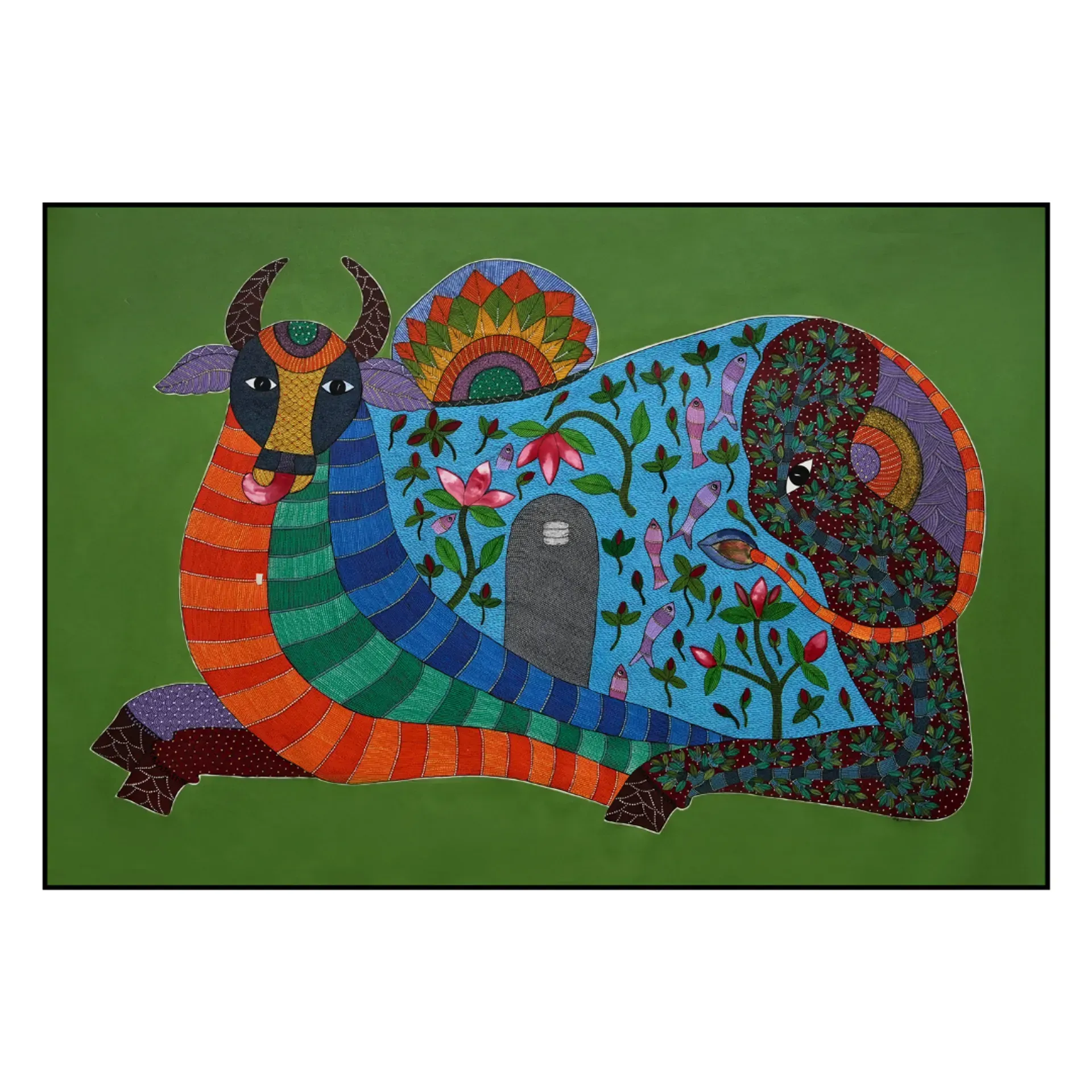
A Gond painting can look convincing in an online photograph, which is why examining the physical artwork becomes important when you are buying an original. Instead of focusing only on the overall image, take a closer look at the surface, the lines, and the way the paint behaves on the material. These small details can reveal much more about how the artwork was made.
Three-Dimensional Texture
One of the easiest things to look for is the physical texture of the paint. In a hand-painted work, the medium sits on the surface of the canvas, wood, or paper and can create subtle variations in thickness. Brushstrokes may leave raised areas, overlapping layers, or changes in texture that become more noticeable when light falls across the painting from different angles. A printed image, even when reproduced on textured canvas, generally lacks these variations because the artwork is transferred onto the surface rather than built up through layers of paint.
Irregular Line Weight & Edges
Look closely at the fine patterns and the edges between different colours. Hand-painted Gond art will naturally contain small variations in line thickness, spacing, curves, and colour application. You may notice a line becoming slightly heavier in one section, a tiny overlap between two colours, or an occasional variation in the pattern. These details are part of the character of a handmade work. A digital reproduction, on the other hand, reproduces the same image with consistent lines and repeated details, since every part of the design comes from the original digital file.
The Reverse of the Artwork
The back of a canvas can sometimes provide another useful clue. When paint has been applied directly to a woven canvas, traces of the medium may be visible within or around the weave on the reverse. This can be particularly noticeable with heavier applications of paint. However, this should be treated as one indicator rather than a definitive test, since the appearance of the reverse can vary depending on the material, paint, and preparation of the artwork.
Inspect the Details Under Magnification
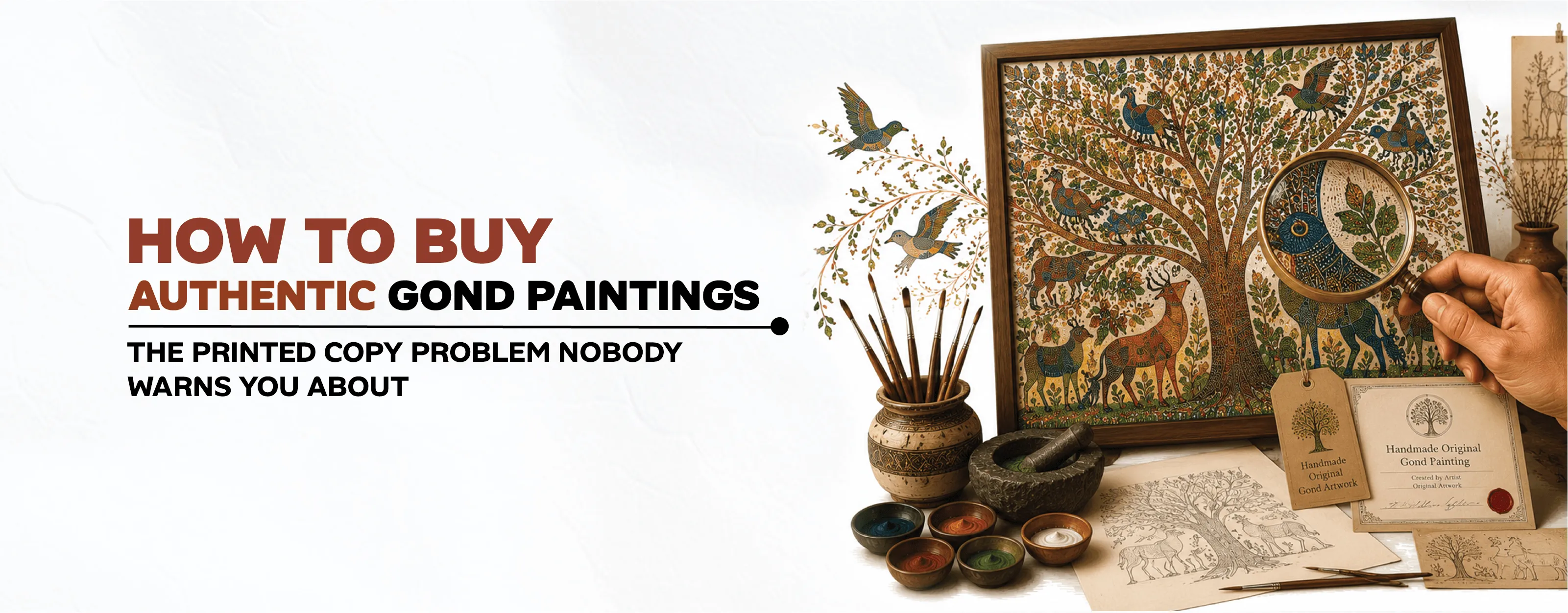
A magnifying glass or jeweller’s loupe can also help when you are examining a suspected reproduction. Printed images may reveal a regular pattern of tiny ink or colour dots when viewed closely, depending on the printing method used. A hand-painted work will instead show the physical marks left by the artist, with variations in pigment, brush movement, and paint application. Looking at a small section of the artwork under magnification can therefore help you distinguish between an image that has been printed and one that has been created by hand.
None of these checks should be treated as a standalone guarantee of authenticity. When buying a valuable Gond painting, the artist’s identity, provenance, material details, and documentation are equally important. All in all, these details give you a much clearer picture of what you are actually purchasing.
Questions to Ask Before You Buy
When buying Gond art online or from a gallery, do not hesitate to ask questions about the work before making a purchase. A reliable seller should be able to explain where the painting comes from, who created it, and how it was made. If basic information is unavailable, unclear, or repeatedly avoided, consider it a reason to pause before paying.
- “Who is the artist, and what is their background?” Ask for the artist’s name, where they are from, and some information about their artistic practice. Genuine Gond art should have a connection to an identifiable artist rather than being presented simply as anonymous “tribal” decor. Knowing who created the work also gives you an opportunity to learn about their style and experience.
- “Which specific painting tradition does this belong to?” Indian folk and tribal art encompasses many different traditions, each with its own history, techniques, and visual language. A seller should be able to tell you whether the work is Gond and, where relevant, provide more context about the particular tradition or community associated with it.
- “Is this entirely hand-painted from scratch, or is it a print with hand-finishing?” This is one of the most important questions to ask. Do not assume that terms such as “hand-finished” or “hand-detailed” mean the entire artwork was painted by hand. Ask specifically whether the image was created directly on a blank surface or whether a printed reproduction forms the base.
- “What materials were used?” Ask about the paint, pigments, canvas or paper, and any preparation applied to the surface. The answer can tell you more about the way the work was produced and whether it matches the description in the listing.
- “Does the artwork come with a Certificate of Authenticity or an artist statement?” Documentation can provide useful information about the work and its creator. A COA is particularly helpful when it clearly identifies the artist, artwork, medium, and other relevant details. However, treat documentation as supporting evidence rather than the only proof of authenticity.
- “Can you show me the artist’s portfolio or biography?” A legitimate artist should have some traceable body of work, whether through a personal portfolio, gallery profile, exhibition history, or another credible source. Being able to see other works can also help you understand the artist’s style and establish whether the painting you are considering fits within their practice.
Taking a few minutes to ask these questions can save you from an expensive mistake. More importantly, it shifts the focus from simply buying something that looks like Gond art to understanding the artist, process, and tradition behind the piece.
Platforms and What They Tell You
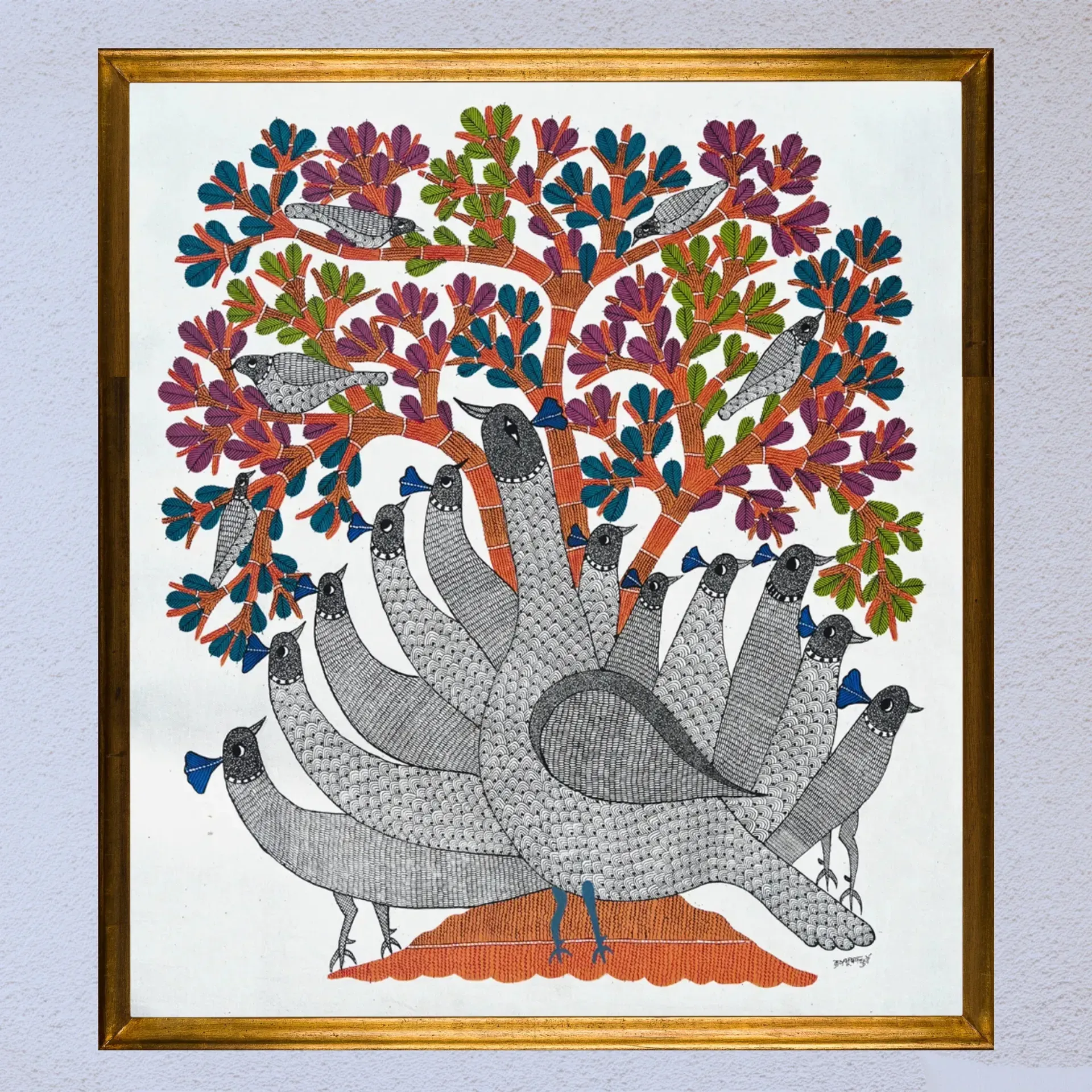
Unique Gond Painting
The platform you buy from can tell you almost as much about an artwork as the artwork itself. A trustworthy seller should make it easy to understand what you are buying, who created it, and how it was made. The more transparent the platform is about these details, the easier it becomes to make an informed decision.
The Trustworthy Platform
A credible art platform will name the individual artist rather than hiding behind broad labels such as “tribal art” or “traditional Indian decor.” You should be able to find basic information about the artist, including their background, community, artistic practice, and, where available, their exhibition or professional history. The product listing should also clearly mention the medium, dimensions, surface, and method of creation.
Good product photography matters too. Close-up images can help you examine the linework and surface, while photographs taken in natural light can give you a better sense of the artwork’s actual texture and colours. If the seller can provide a video of the work from different angles, that can be even more useful for understanding how the surface responds to light.
The Warning Signs
Be more cautious when a listing gives you very little information beyond generic descriptions such as “canvas art,” “wall decor,” or “traditional painting.” An artwork that has no identifiable artist, unclear materials, and no explanation of how it was created deserves closer scrutiny. The same applies when a platform offers large numbers of near-identical works without explaining whether they are originals or reproductions.
Before making an expensive purchase, check the seller’s return and refund policy as well, particularly in cases where the artwork turns out to differ materially from its description. Documentation such as a Certificate of Authenticity can also be useful, especially when it clearly identifies the artist and the specific artwork. If a seller cannot provide basic information about an expensive piece or repeatedly avoids straightforward questions about its origin and production, it is better to step back and reconsider the purchase.
Overall, transparency is one of the simplest ways to judge whether a platform takes the artwork and its buyers seriously. When the artist, process, materials, and provenance are clearly presented, you have the information needed to decide what the work is worth to you.
What Determines Price in Gond Art?
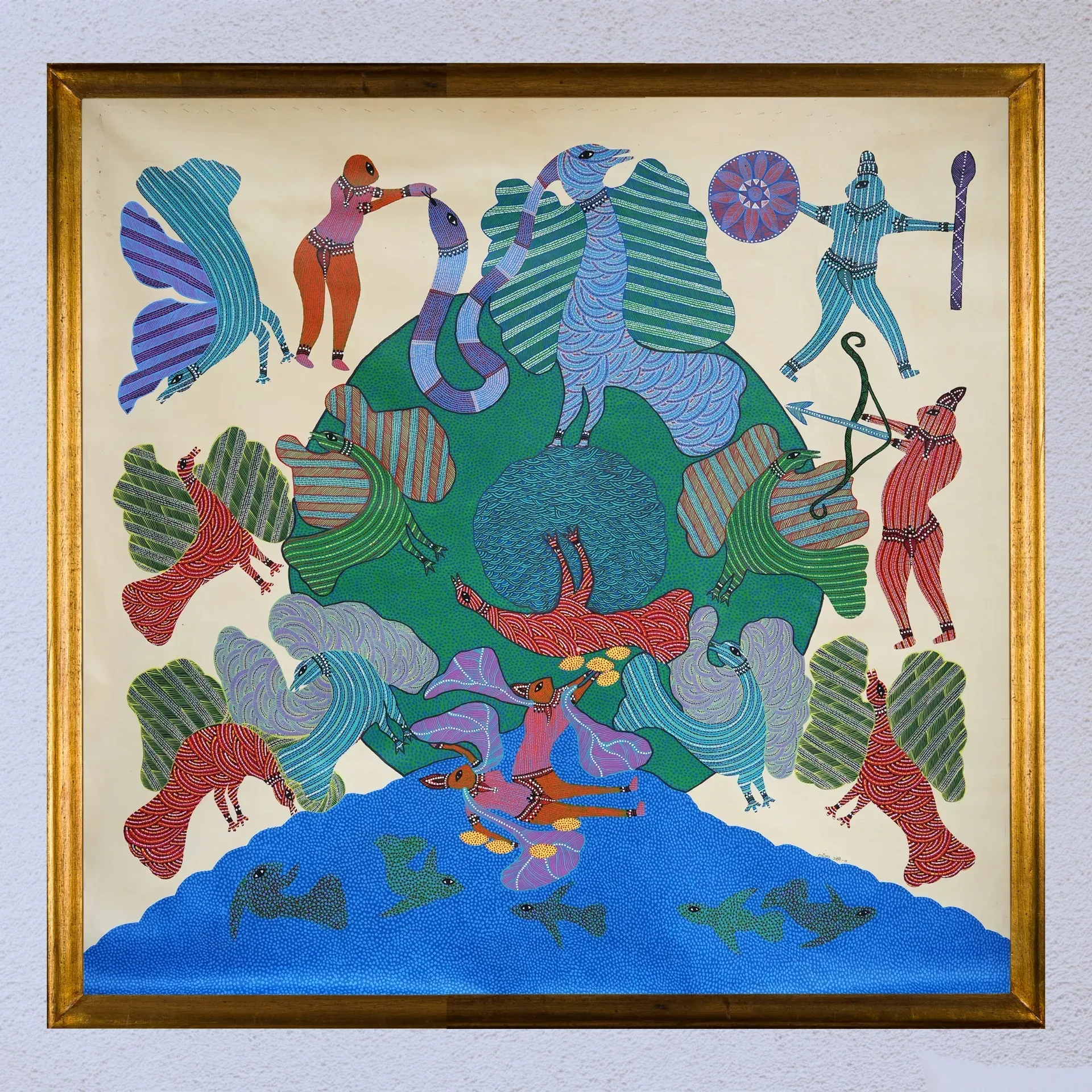
Expensive Gond Art
The price of a Gond painting depends on several factors, and the difference between an original and a reproduction is only the starting point. An original work can vary considerably in price depending on the artist, the complexity of the composition, the materials used, and whether the work is a unique piece or part of an edition. Understanding these factors makes it easier to judge why two paintings that look similar at first glance can have very different price tags.
Complexity and Detail
Intricate patterning is one of the defining features of Gond painting and can have a significant impact on the time required to complete a work. Artists use dots, dashes, lines, curves, and other repeated patterns to build the surfaces of animals, trees, birds, and other figures. A densely detailed composition can require many hours of careful, repetitive work, with the artist maintaining consistency while also giving the patterns their own rhythm. More elaborate works therefore tend to command higher prices than pieces with simpler compositions or less detailed patterning.
Seniority and Artist Recognition
The person behind the painting is another important part of its value. Works by established and widely recognised Gond artists generally command higher prices because collectors are also buying into the artist’s body of work, reputation, and place within the tradition. Exhibition history, awards, institutional recognition, and provenance can all contribute to this. Over time, a well-documented work by a respected artist can also become more significant to collectors because its connection to a particular artist and period is easier to establish.
Materials and Craftsmanship
The materials used can influence both the character of a painting and the amount of preparation involved. Traditional Gond practices have used locally sourced pigments and natural materials, although contemporary artists also work extensively with mediums such as acrylic paint on canvas and paper. Modern materials do not make a painting less authentic by themselves. What matters is understanding how the work was made and what materials the artist actually used. A hand-prepared surface and traditional pigments may involve considerably more preparation, while commercially prepared canvas and acrylics can offer artists greater flexibility and durability.
Unique Originals vs. Editions
A one-of-a-kind painting created directly by the artist will generally occupy a different price category from a reproduction or print. Limited-edition prints sit somewhere in between. When properly produced, they should be clearly identified as editions and numbered according to their run, such as 4/50, indicating that the work is the fourth print in an edition of 50. Because multiple copies exist, these works are usually more accessible than unique originals while still allowing collectors to own a reproduction authorised by the artist.
To put it in simpler terms, the price of Gond art reflects a combination of the artist, the labour involved, the materials, the complexity of the work, and its provenance. A higher price alone does not guarantee that a painting is better or more authentic, which is why buyers should look at the complete picture before deciding whether a particular work is worth the investment.
Go Beyond Buying with Good Platforms
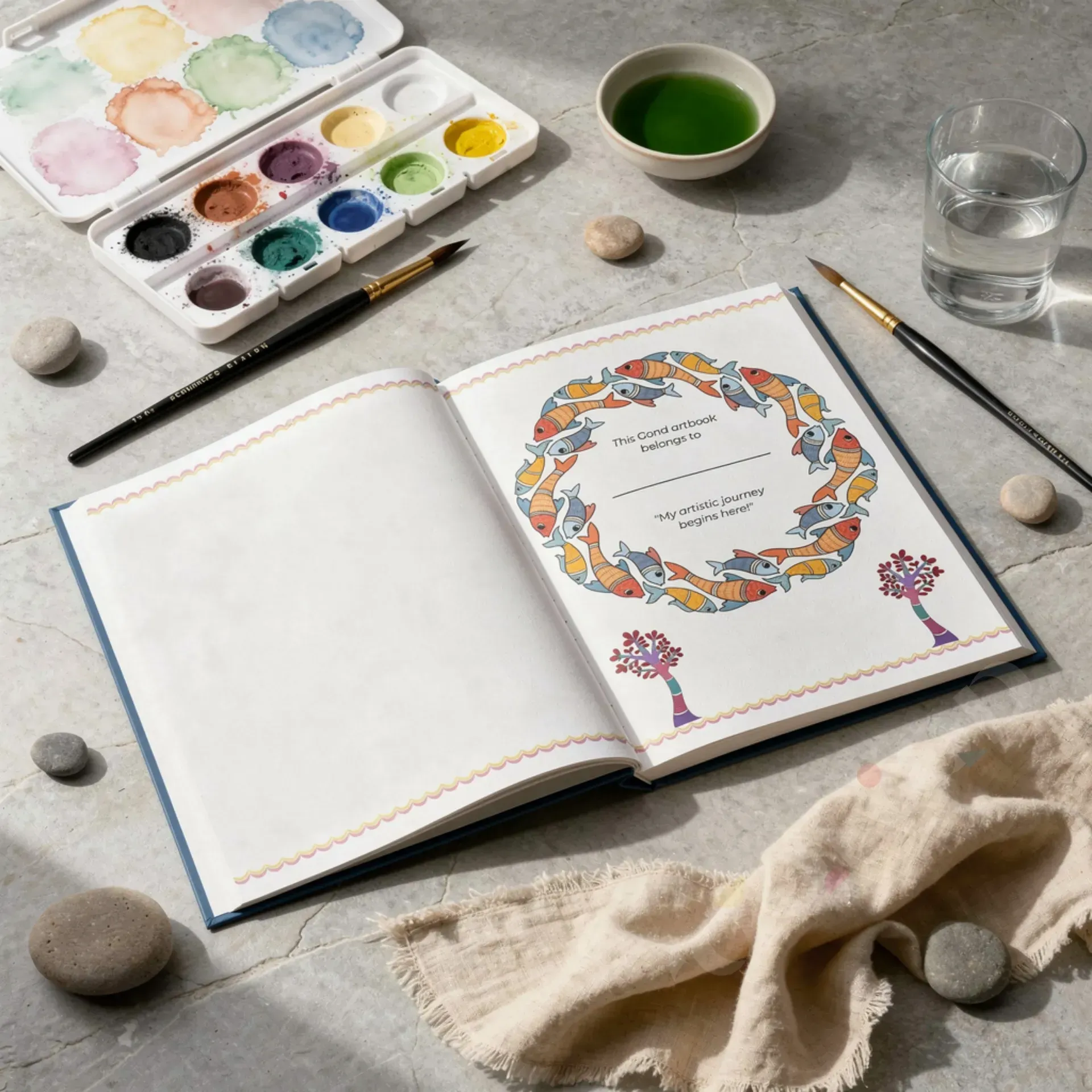
Gond Art Rooftop
Understanding what makes an original Gond painting valuable can change the way you look at the art form. Once you start recognising the patterns, techniques, materials, and traditions behind a painting, it becomes easier to appreciate the amount of knowledge and craftsmanship that goes into every original. If you want to take that understanding further, Rooftop offers ways to learn Gond art directly through its artists and learning resources.
The Gond Art Course with Venkat Raman Singh Shyam offers an opportunity to learn from an artist who has spent more than four decades practising the tradition. Across six hours, four chapters, and 28 lessons, the course takes learners through Gond painting with clear, step-by-step instruction. Venkat Raman Singh Shyam brings years of experience and an understanding of the techniques and visual language behind the art form, making the course useful for anyone who wants to understand Gond painting from the perspective of a practising master artist.
For those who prefer learning at their own pace, Artventures of Gond offers a series of books designed to introduce and develop Gond art skills. The Essentials edition takes readers through the origins and evolution of Gond art, its connection with Gond communities, storytelling, nature, and everyday life before moving into practical exercises. It introduces eight patterns and includes step-by-step guidance for drawing motifs inspired by birds, aquatic animals, and other elements of the natural world. The series also includes Elementary and Expert levels, allowing readers to choose a starting point based on their familiarity with the art form.
These resources offer a different way to engage with Gond art. Instead of looking at an original only as an object to collect or a reproduction simply as something to decorate a wall with, learning about the techniques and traditions behind the work gives you a better understanding of what you are seeing. And when you know how much skill and patience goes into creating those seemingly simple dots, lines, and patterns, the value of an original Gond painting becomes much easier to recognise.