
gond art for home decore
Gond Art for Home Decor: Why Design-Forward Collectors Are Choosing It Over Abstract Prints
Discover how Gond art can bring colour, character, and cultural depth to your home. Explore original Gond paintings and thoughtful décor ideas for every space.

Rooftop
Author
It goes without saying that art lovers are rarely satisfied with mediocrity. For years, collectors have filled their walls with generic abstract prints, often chosen because they were easy to find and fit neatly into contemporary interiors. However, over time the sameness has become hard to ignore. Today, many of those flat, mass-produced prints are making way for Gond paintings as statement pieces.
Originally created as sacred, ephemeral paintings on the mud walls of homes in central India, Gond art has gradually found its way into high-end residences, hotels, offices, and commercial spaces. Its intricate hand-painted lines, vivid colours, and organic forms bring warmth and character to otherwise polished interiors. More importantly, each painting carries the visual language, stories, and traditions of the Gond community, giving modern spaces a deeper cultural identity and a sense of place.
Who Is Buying Gond Art Right Now?
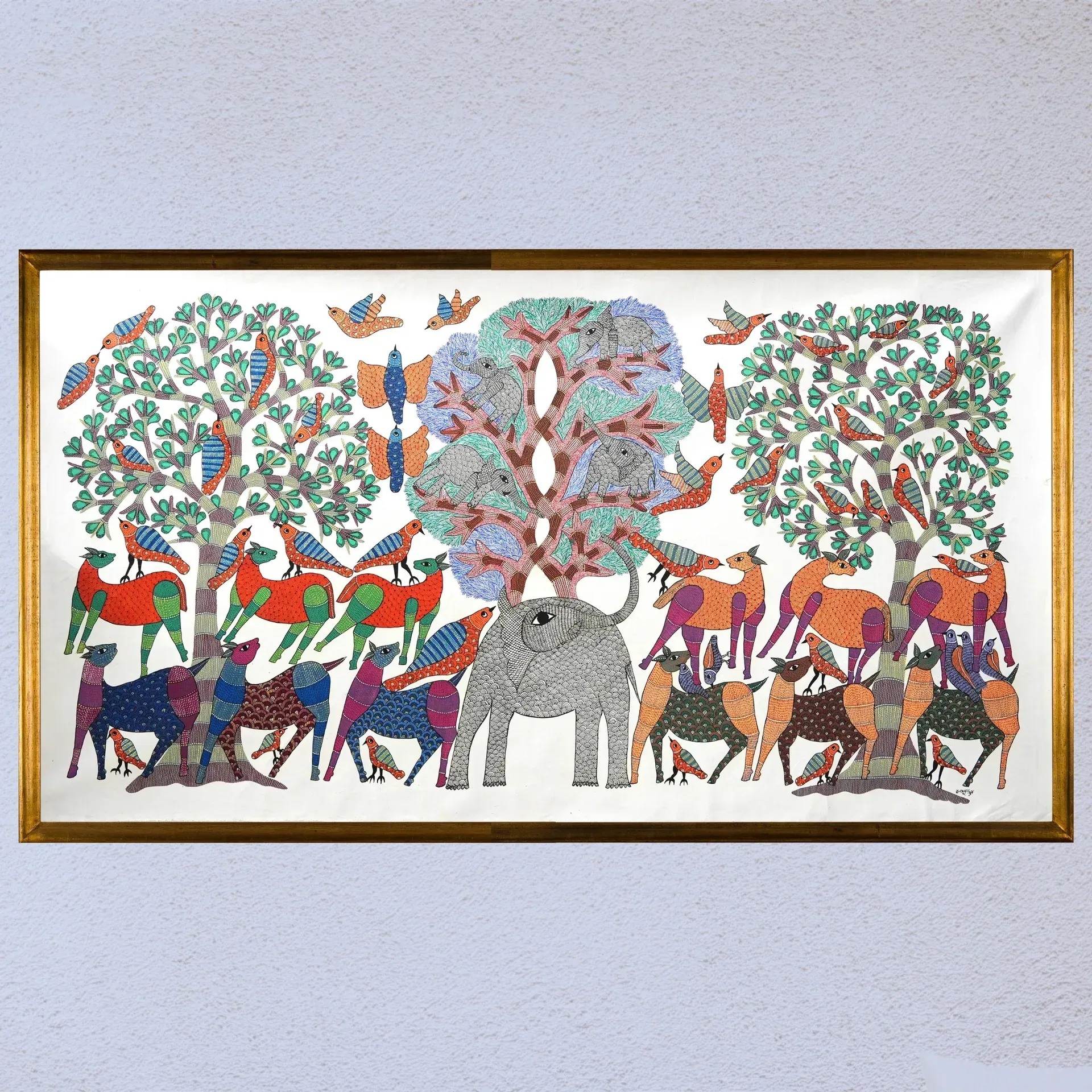
Jungle Gond Art
This shift towards Gond art is being shaped by a growing group of buyers who care deeply about what they put into their spaces. Architects, collectors, and NRI families are all playing a role in bringing the art form into contemporary homes and commercial interiors.
Architects & Design Studios
Architects and interior designers are increasingly turning to large-scale Gond murals and canvases to create striking focal points. In luxury hotel lobbies, boutique restaurants, offices, and public spaces, these works add colour and character to otherwise contemporary settings. Gond art has even found a place in major public spaces such as Mumbai’s T2 terminal and Bhopal’s Raja Bhoj Airport, showing how comfortably the art form can sit within modern architecture.
The NRI Diaspora
For many NRI families, traditional Indian art offers a meaningful way to stay connected to their cultural roots while living abroad. As a result, authentic folk and tribal art is finding its way into homes across the US, Europe, and the Middle East. One interesting example is the celebrated House of Gond in Pune, designed by architect Sanchit Arora for NRI fashion designer Monica Gaur after her return from the US. Spread across 3,000 sq. ft., the home draws from the material language of coastal Kerala architecture, while bespoke Gond art installations are woven into the interiors.
Collectors Who Care About Provenance
As interest in Indian folk art grows, serious collectors are becoming more careful about where their artwork comes from. Mass-produced pieces labelled as “tribal-style” decor hold little appeal for buyers looking for something with a genuine story behind it. Instead, they seek original works by identifiable artists, with a clear record of provenance. Buying directly from established and award-winning artists also gives collectors the satisfaction of knowing that their purchase contributes to the livelihoods of the artisans who continue to keep these traditions alive.
What Gond Does to a Room That a Print Cannot?
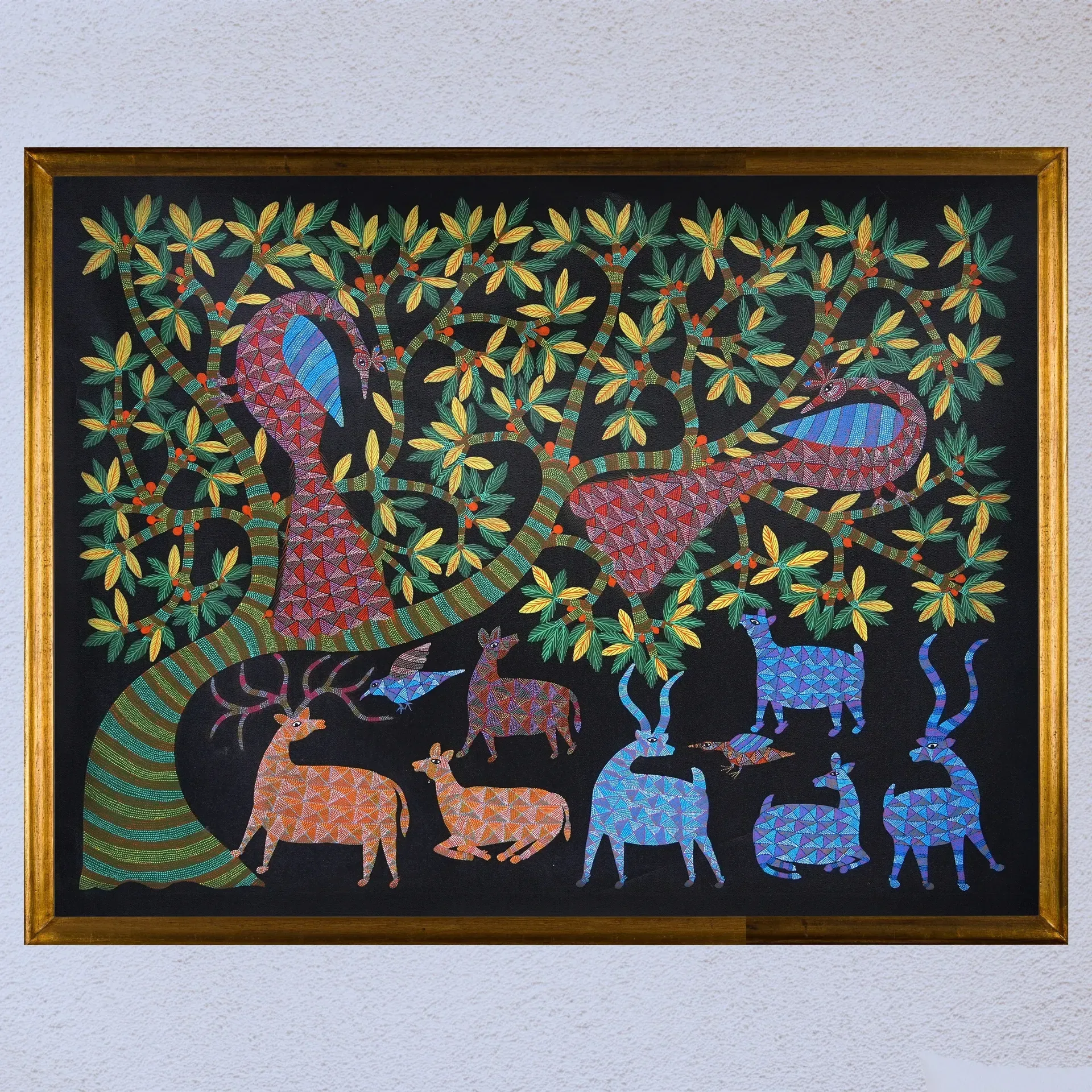
Aesthetic Gond Art
A digital print may fill an empty wall, but an original Gond painting can change the way the entire room feels. Its intricate patterns, flowing lines, and distinctive colours give the artwork a visual presence that becomes part of the space itself.
Rhythmic Visual Texture
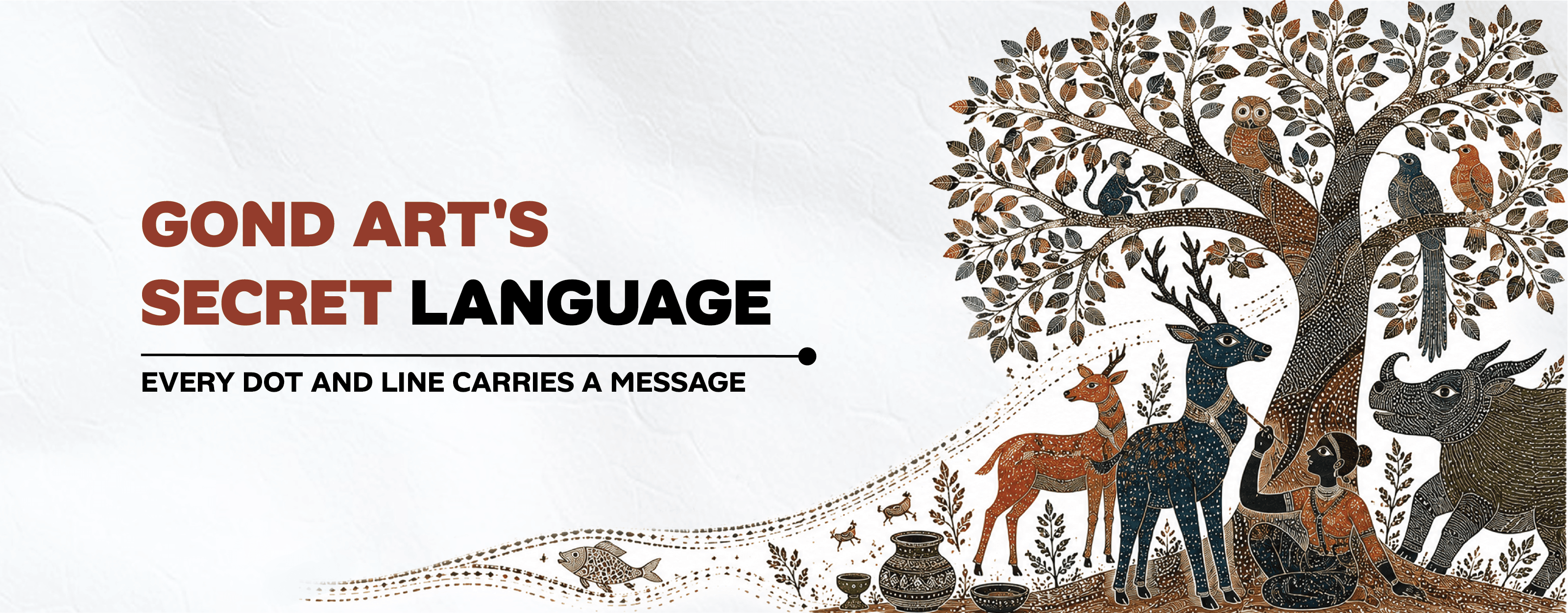
One of the most recognisable features of Gond art is the intricate patterns used to fill its forms. Fine dots, dashes, curves, and repeated marks build up a rich surface that catches the light in interesting ways. From across the room, the painting appears bold and balanced; move closer, and you begin to notice the countless details created by the artist’s hand. That contrast makes Gond paintings engaging from both a distance and up close.
A Natural Sense of Movement
Gond paintings rarely feel rigid or overly structured. Their flowing lines and organic forms allow the eye to move naturally across the composition. This quality works particularly well in contemporary interiors, where a Gond painting can soften the clean lines of modern furniture and architecture. The result is a room that feels more relaxed and connected rather than overly designed.
An Earthy Yet Vibrant Palette
Gond art is known for its expressive use of colour. Traditional works often draw from earthy shades such as ochre, deep red, black, and white, while contemporary artists frequently experiment with brighter colours and acrylic paints. This versatility makes Gond paintings easy to incorporate into different interiors, whether the room calls for something warm and understated or a more striking burst of colour.
The Pieces That Work Best and Where
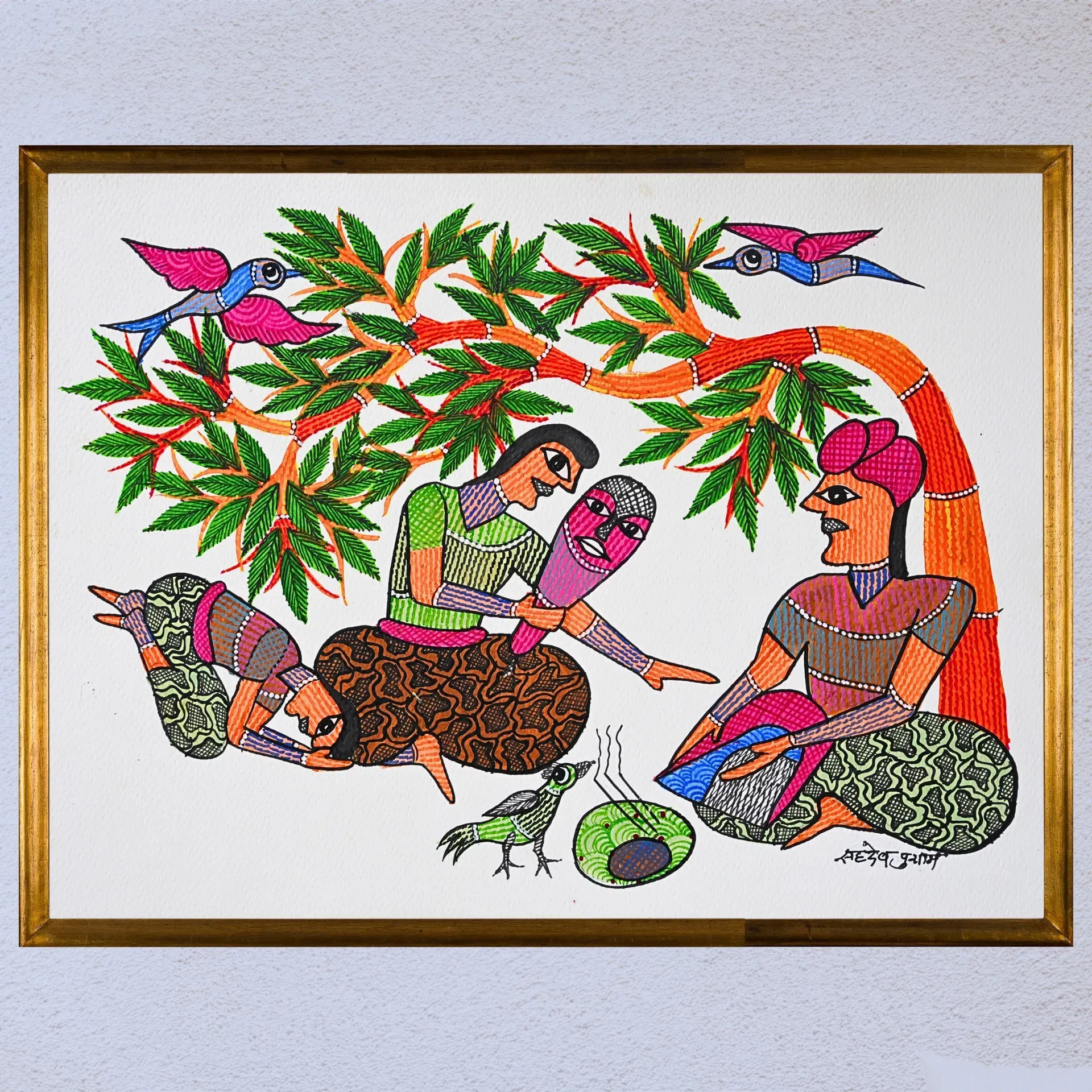
Gond Art at Home
Integrating Gond art into a home is largely about finding the right balance between the artwork, its size, and the character of the room. A large painting can command attention in a spacious living area, while a smaller work may be better suited to a quiet corner where its finer details can be appreciated. Choosing the right scale also ensures that the artwork complements the room instead of overwhelming it.
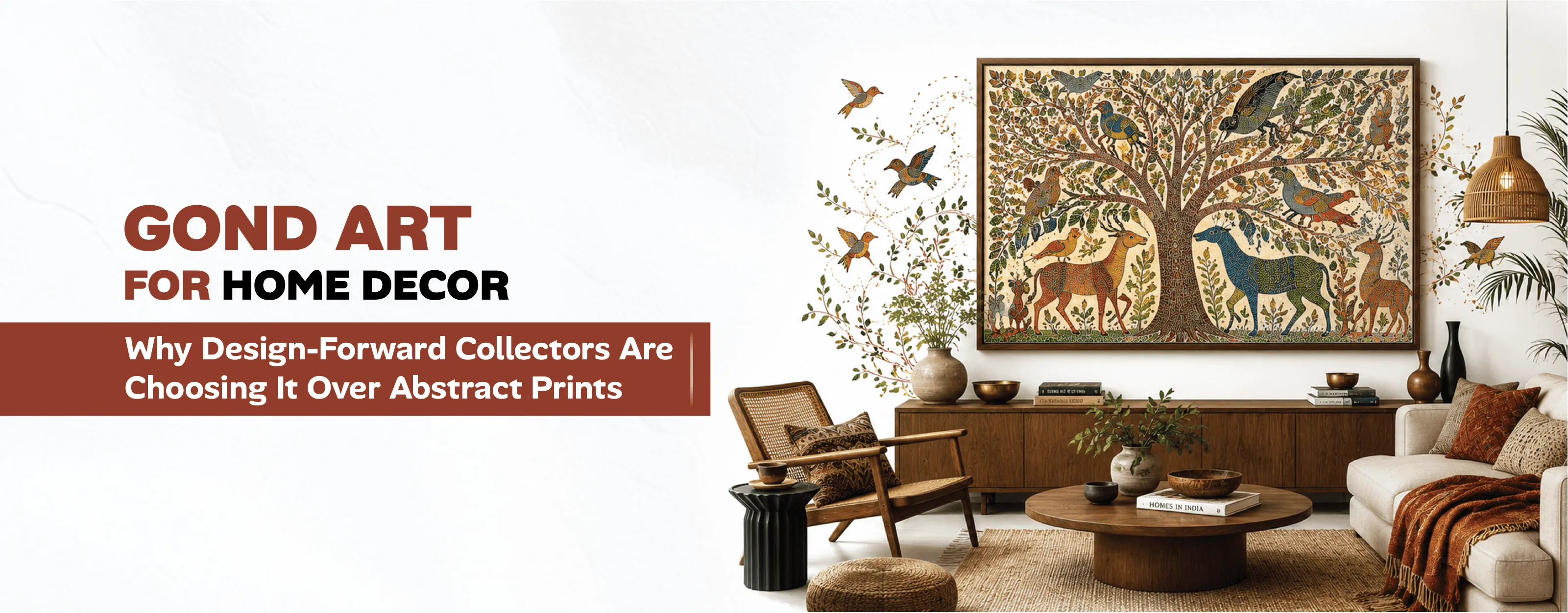
For living rooms and dining areas, large-format Gond paintings make particularly striking centrepieces. Expansive compositions featuring the Tree of Life, flowing rivers, birds, or forest animals can work as visual anchors when placed behind a sofa or on a prominent dining-room wall. These larger works have enough presence to hold their own against substantial furniture and open spaces, while their intricate patterns give guests plenty to discover over time. They can also become natural conversation starters, especially when the story or symbolism behind the artwork is part of the experience.
Medium-sized Gond works offer a little more flexibility and can be introduced throughout the home without taking over the room. Paintings featuring pairs of birds, auspicious motifs, or familiar elements from Gond storytelling work beautifully in entryways, bedroom alcoves, corridors, and smaller living spaces. An artwork placed near an entrance, for instance, can set the tone for the rest of the home, while a quieter composition in a bedroom can add colour and character without making the space feel busy.
Smaller Gond artworks are ideal for the overlooked corners of a home. Detailed ink drawings, individual animal motifs, or hand-painted wooden plates can bring interest to a reading nook, home office, bookshelf, or narrow hallway. These pieces work especially well when grouped thoughtfully, allowing their finer details to reward anyone who takes a closer look. Used this way, Gond art becomes part of the home's visual rhythm, appearing in unexpected places rather than being limited to a single statement wall.
How to Pair Gond Art with Contemporary Interiors?
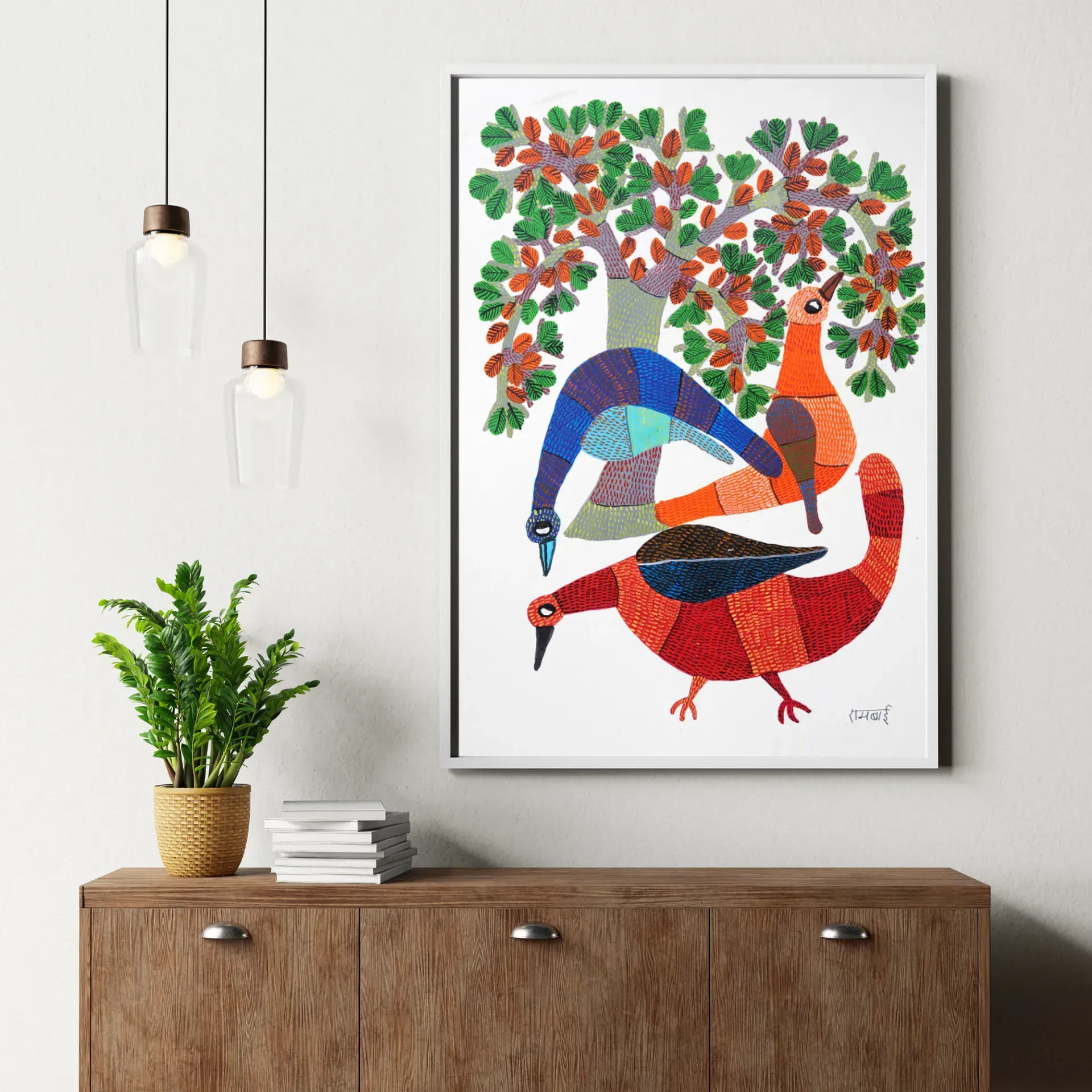
Gond Art for your interiors
Gond art works particularly well in contemporary homes because its organic forms can soften the clean lines of modern interiors without feeling out of place. The flowing shapes, stylised animals, and intricate patterns have enough character to stand on their own, while the artwork’s natural visual language makes it surprisingly easy to pair with different materials and design styles.
One particularly natural pairing is mid-century modern furniture. The sweeping curves of Gond trees, birds, and animals complement the warm wood tones and rounded profiles often found in teak and rosewood furniture. A Gond painting above a wooden sideboard, beside a classic lounge chair, or across from a vintage cabinet can bring a more handcrafted feel to an otherwise carefully structured interior. The combination works because both styles place value on organic shapes, craftsmanship, and the beauty of natural materials.
Gond paintings also make a strong impression when placed against raw, textured surfaces. A finely detailed work framed against limewash, exposed brick, raw plaster, or concrete creates an interesting contrast between the roughness of the wall and the precision of the artwork. This is especially effective in contemporary spaces where the architecture is intentionally pared back. Against such a simple backdrop, the dense patterns and hand-drawn lines of Gond art become even more noticeable without making the room feel cluttered.
The artwork can also be brought into the wider room through other artisanal elements. Terracotta pottery, jute and rattan furnishings, woven textiles, wooden objects, and handcrafted brassware all sit comfortably alongside Gond paintings. Rather than trying to make every element match, combining these materials creates a layered interior where different forms of Indian craftsmanship can coexist. The result is a space that feels warm and collected, allowing the storytelling quality of Gond art to sit naturally within a modern home.
What Owning an Original Gond Painting Signals?
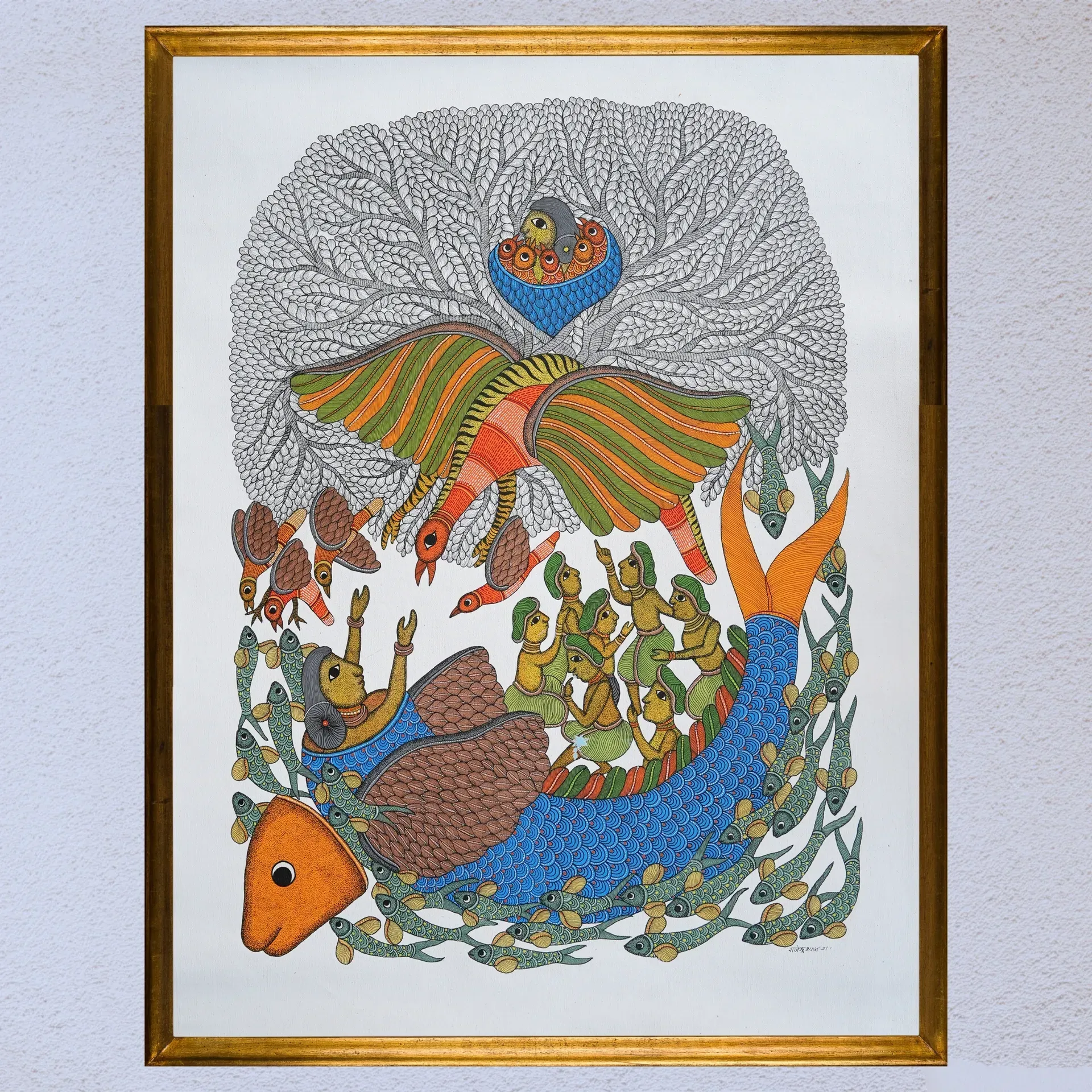
What Makes Gond Art Unique
Choosing to hang an original Gond painting in a contemporary home can say a great deal about how a person thinks about art and culture. It reflects an appreciation for work that carries the mark of the artist’s hand, rather than something mass-produced simply to fill an empty wall. The intricate details, individual style, and time involved in creating each painting give it a sense of craftsmanship that a digital reproduction cannot quite replicate.
It can also represent a more active relationship with Indian heritage. Rather than treating traditional art as something confined to museums, festivals, or nostalgic displays, homeowners are bringing these living traditions into the spaces where they spend their everyday lives. Gond art, with its distinctive visual language and deep connection to Gondi stories and traditions, can therefore become part of a contemporary home without losing its cultural character.
There is also a growing interest in knowing who made a piece and where it came from. Buying an original work by an established Gond artist such as Venkat Raman Singh Shyam, Rambai, or Santu Tekam gives collectors a direct connection to the person behind the artwork. In that sense, collecting Gond art can go beyond interior decoration; it can also support artists and encourage the continued practice of a living tradition.
Much of this contemporary recognition can be traced back to the influence of Jangarh Singh Shyam, whose work played a defining role in bringing Gond painting to wider audiences and the contemporary art world. Today, collecting and displaying original Gond art helps ensure that the visual traditions associated with the Gondi community continue to evolve, reach new audiences, and remain relevant within modern artistic spaces.
Gond Art Is Still Thriving
If Gond art has found a place on your walls, you may eventually find yourself wanting to understand what goes into creating it. After all, the patterns, animals, stories, and intricate lines that make a Gond painting so distinctive have evolved from a rich artistic tradition. Rooftop offers a way to explore that tradition beyond simply collecting the finished artwork.
Gond Art at Rooftop
For those who want to learn directly from an accomplished artist, the Gond Art Course with Venkat Raman Singh Shyam offers a detailed introduction to the art form through six hours of lessons spread across four chapters and 28 lessons. Venkat Raman Singh Shyam has practised Gond art for more than four decades, bringing years of experience and an intimate understanding of its techniques to the course. Through step-by-step lessons, learners can explore how Gond paintings are built while gaining a better understanding of the visual language behind them.
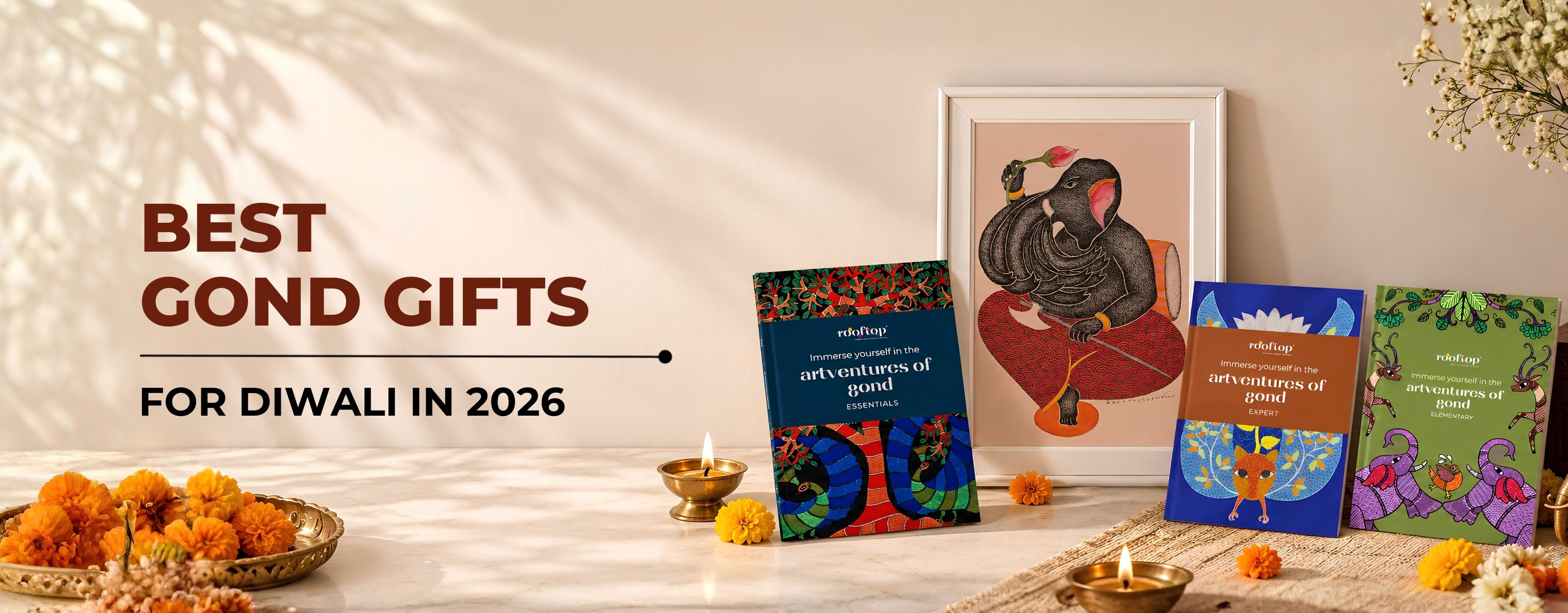
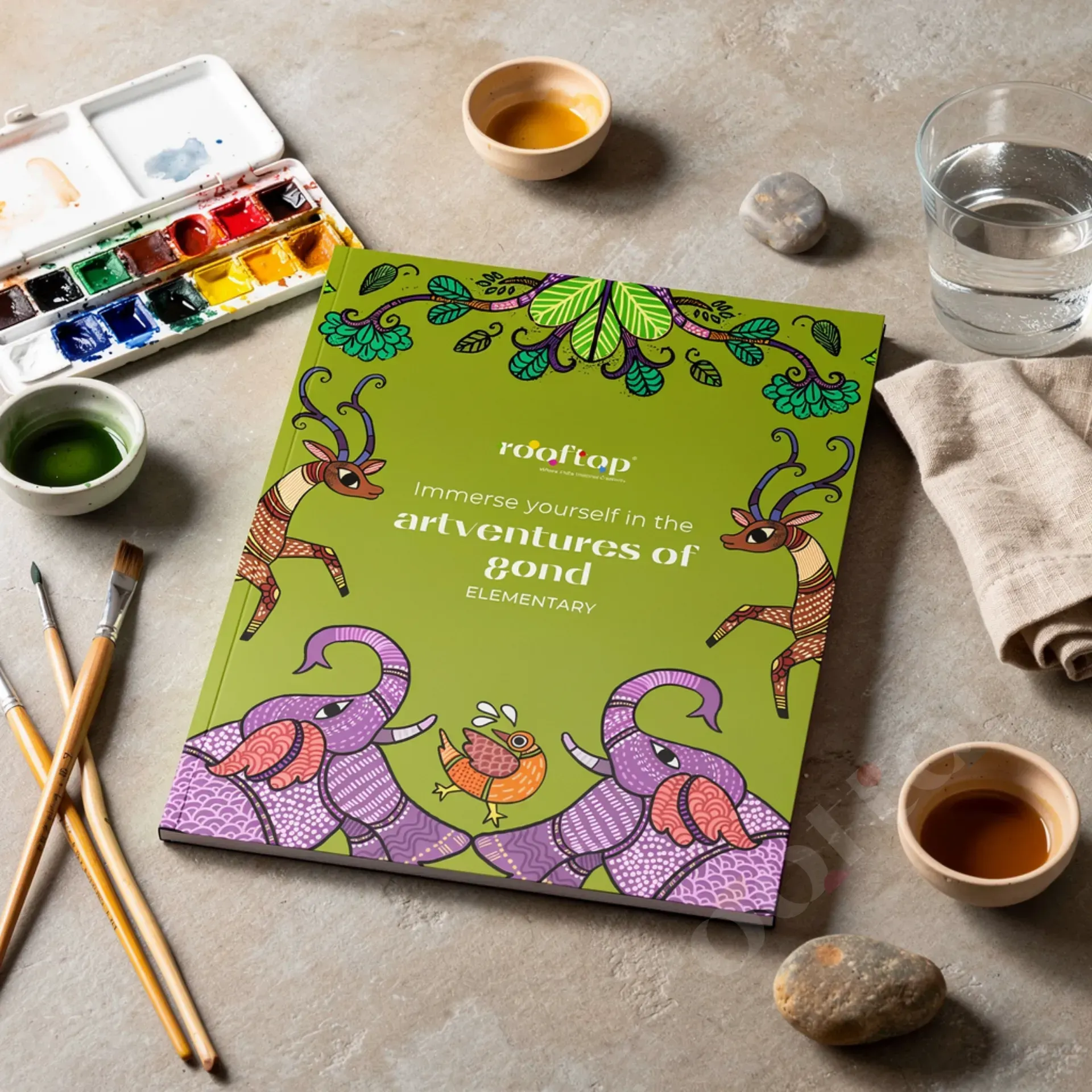
For a more hands-on introduction, Artventures of Gond – Essentials takes learners through the fundamentals of Gond art in a structured way. The book covers the origins and evolution of the tradition, its connection with Gond communities, storytelling, nature, and everyday life, before moving into practical exercises. Readers can learn eight distinctive patterns and practise drawing motifs inspired by aquatic animals, birds, and other elements of the natural world. There is also room to experiment, allowing beginners to take the traditional techniques they have learned and develop their own Gond-inspired artwork.
The Artventures of Gond series is available at different levels, including Elementary, Essential, and Expert, making it easier to choose a starting point based on your familiarity with the art form. Whether you are discovering Gond art for the first time, looking to develop your drawing skills, or hoping to deepen your understanding of the tradition, these resources offer a more engaging way to connect with the art beyond its decorative appeal.
After all, collecting Gond art is one way of appreciating the tradition. Learning how it is made, where it comes from, and what its visual language represents can make that appreciation considerably richer.