
Rogan Art: Gujarat's Extraordinarily Rare Folk Art Tradition
Let's learn about Rogan art!
Introduction
Of all the Indian folk art forms that have survived through centuries of change, Rogan stands apart as one of the rarest. Practised today by a single family in Nirona village in the Kutch district of Gujarat, this extraordinary cloth-painting tradition involves applying oil-based pigment to fabric using a metal rod that never once touches the surface. The word rogan comes from the Persian for 'oil-based', and this art form carries its Persian roots all the way into modern Gujarat - still alive, still breathtaking, and urgently worth knowing.
What Is Rogan Art?
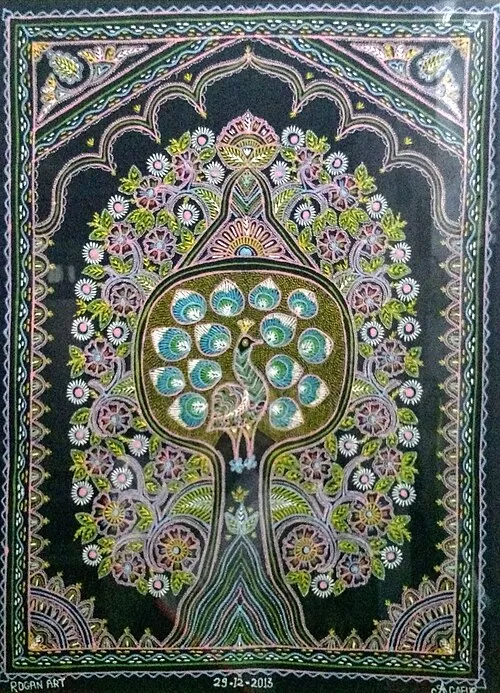
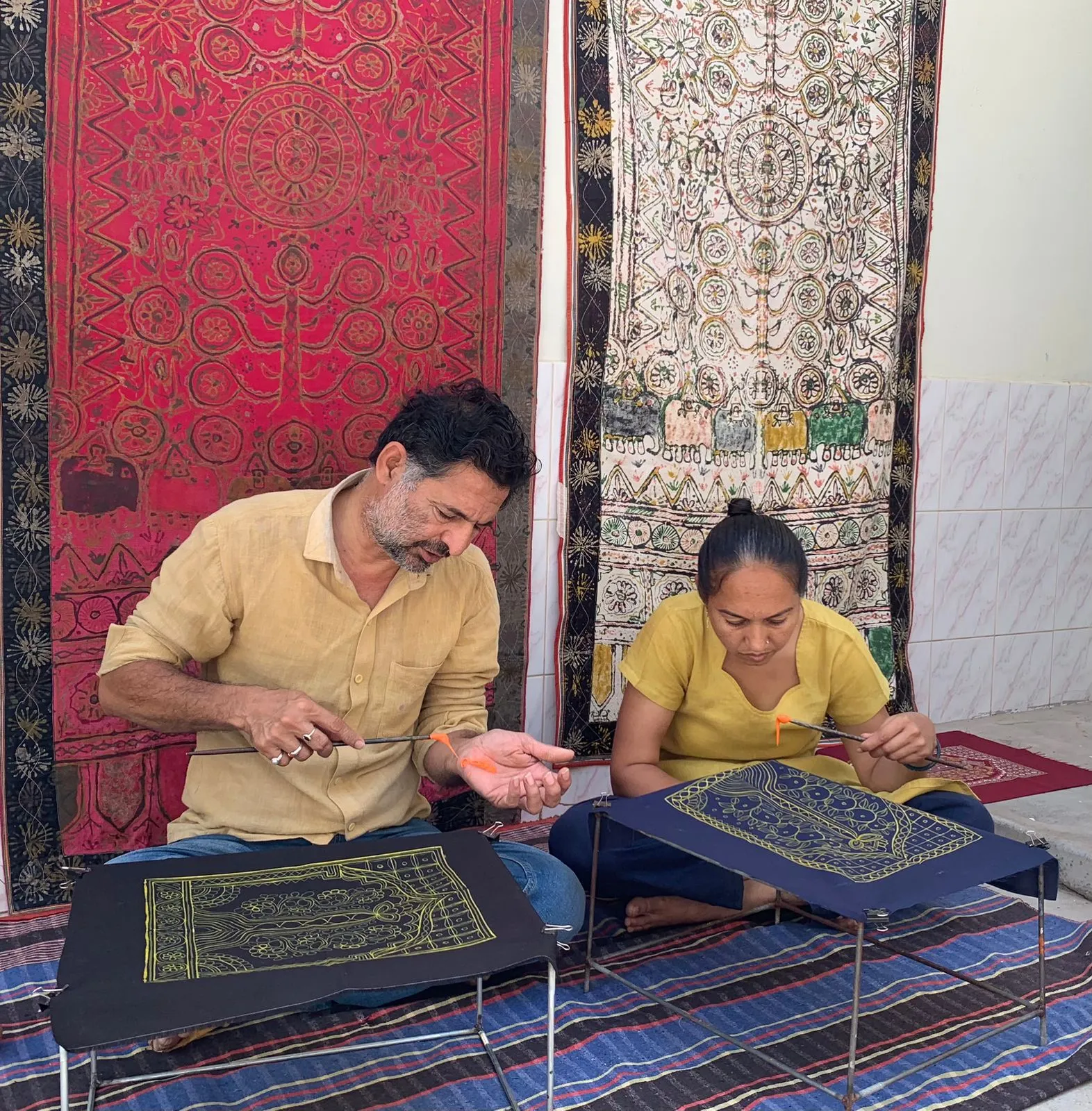
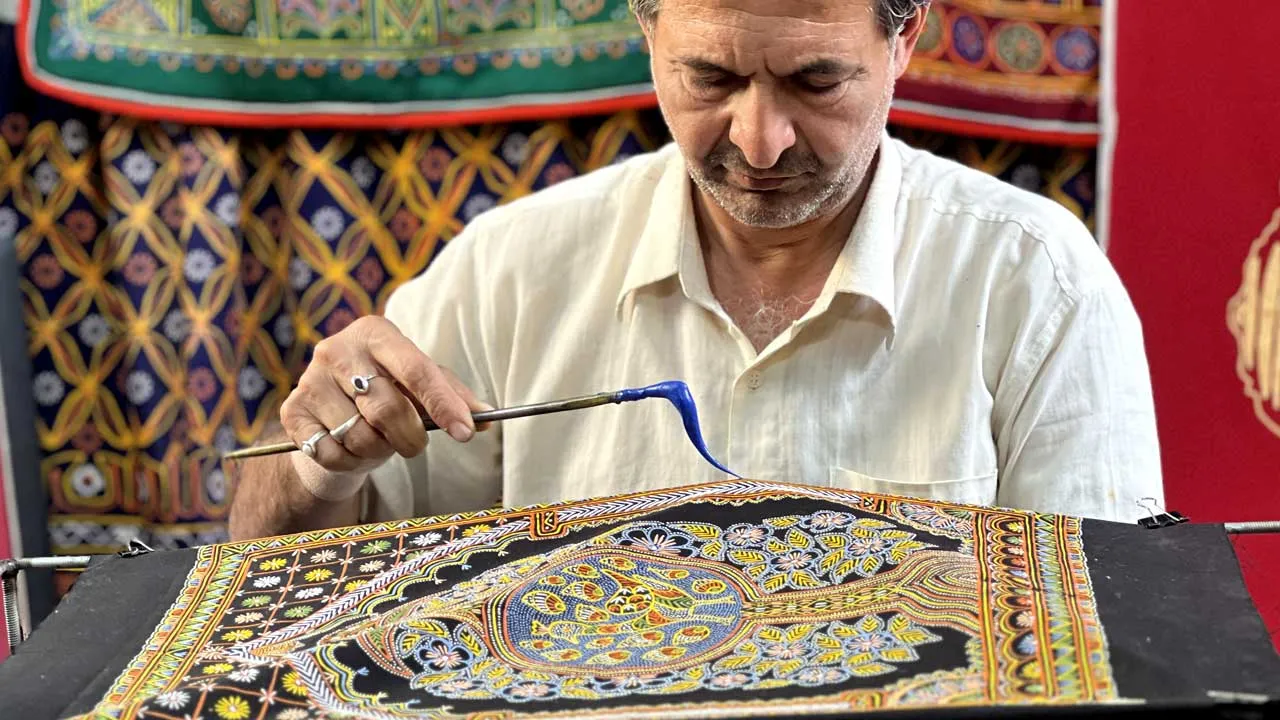
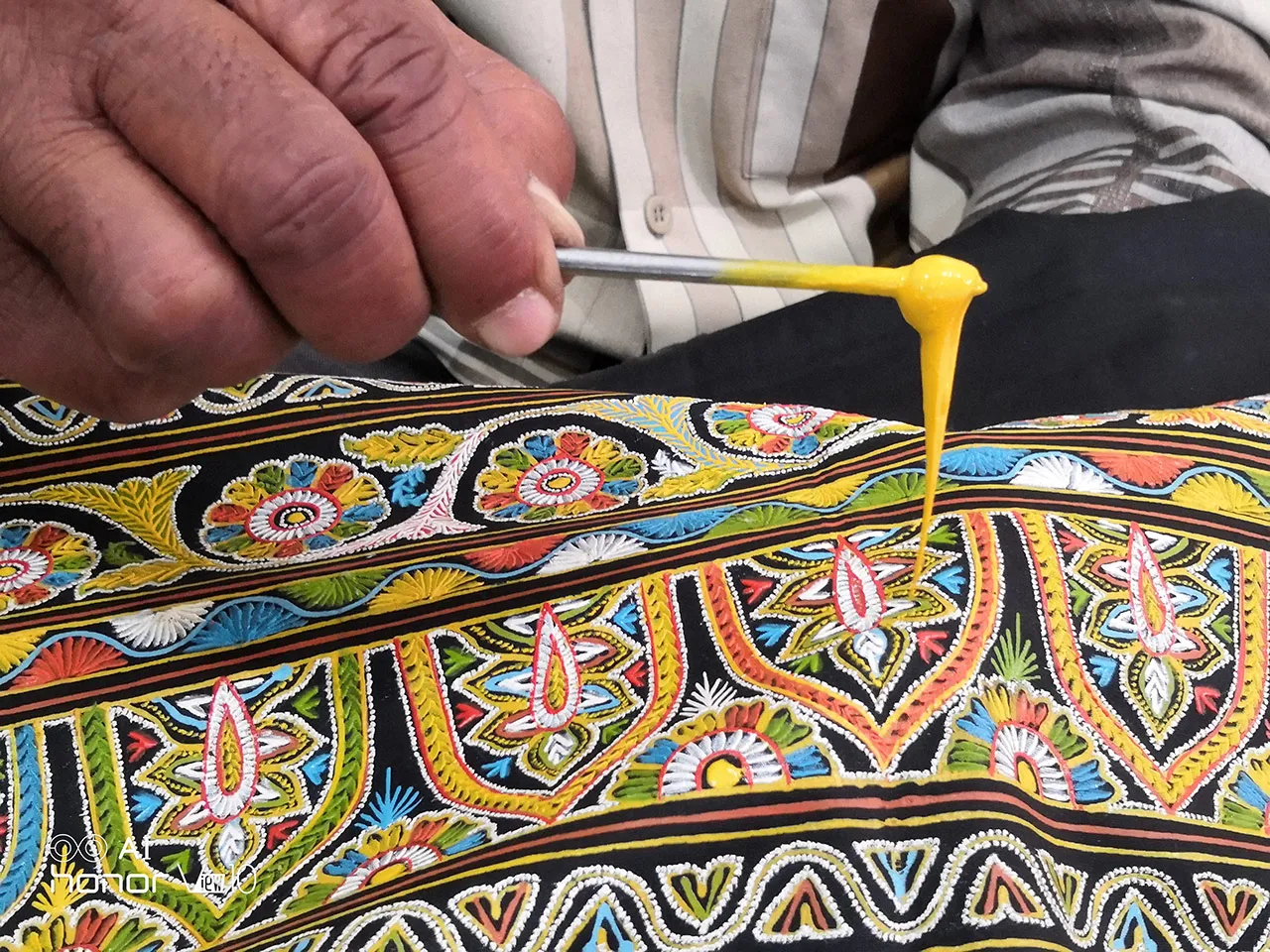
Rogan art is a rare traditional craft from Kutch, Gujarat, in which thick pigment mixed with castor oil is applied to cloth using a metal stylus called a suya. The artist holds a dollop of the glutinous oil-pigment mixture on one palm and dips the stylus into it, then stretches the pigment into thread-like filaments that are guided and twisted across the fabric - without the rod ever making contact with the cloth. Designs are painted against a black or dark background, which makes the highly pigmented colours stand out dramatically. The Rogan Art Gujarat tradition is practised exclusively in Nirona village by the Khatri community of Kutch. Once the painting is complete, the cloth is folded to create a perfect mirror image of the design, which is the final signature step of the process. The finished work is seasonal in nature and has traditionally been used to decorate bridal trousseau garments.
History and Origin
Rogan art has its origins in Persia, from where it travelled to the Indian subcontinent roughly 400 years ago, settling in Nirona village in the Kutch district of Gujarat. A local legend also traces its migration from Syria to India through the Afridi settlers, though the Persian connection is the more widely accepted account. When the art arrived in India, its technique remained intact but its themes shifted - the calligraphic holy verses that were common in Persia gradually gave way to ornamental geometric and floral motifs better suited to the local environment and cultural context.
Historically, Rogan painting India was produced on bridal trousseau items including ghagra, odhana, chabla, and dharajo, as well as dowry goods such as bedsheets, pillowcases, and quilts. The art was once more widely practised - it thrived across Baroda, Patna, Chowbari, Khavada, and Nashik - but today it is confined to the Kutch and Ahmedabad districts of Gujarat. The introduction of sewing machines in the modern era changed the means of production and contributed to the decline of the traditional method of creating Rogan textiles.
The knowledge of this art form was traditionally passed down through women in the family: it is believed that a woman, on marriage, would carry the knowledge of Rogan art into her husband's family. The Khatri community of Kutch and the Hindu Khatris of Ahmedabad have been the primary custodians of this knowledge across generations.
Key Features and Famous Artists
Key Features and Visual Style
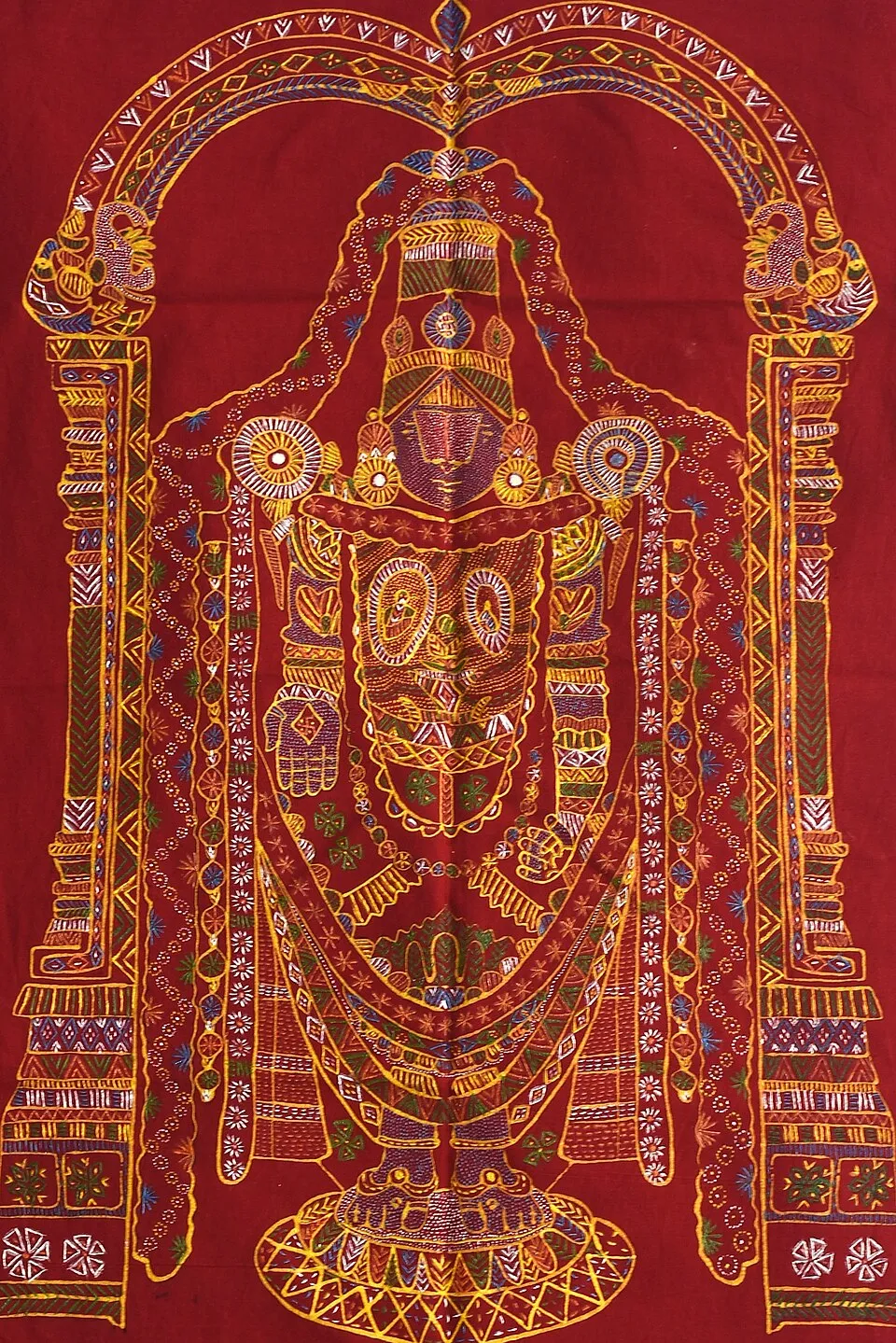
What makes Rogan immediately recognisable is the raised, thread-like quality of its lines - a result of pigment being stretched into fine filaments by a metal stylus rather than brushed onto the surface. The designs have a sculptural, almost embroidered look that gives the impression of woven ornamentation on fabric.
Colours are made by pounding castor seeds by hand to extract the oil, boiling it for two days, then mixing it with ground vegetable dyes and mineral dyes that have been diluted with water; the prepared colours are stored separately in earthen pots to prevent drying.
White chalk powder and mineral-based dyes are ground together using a tool called a kharal, which produces the dense, pigment-rich mixture essential to the Rogan technique.
Dominant colours include yellow, white, red, blue, and green, applied against a black or very dark background that gives Rogan compositions their striking visual contrast.
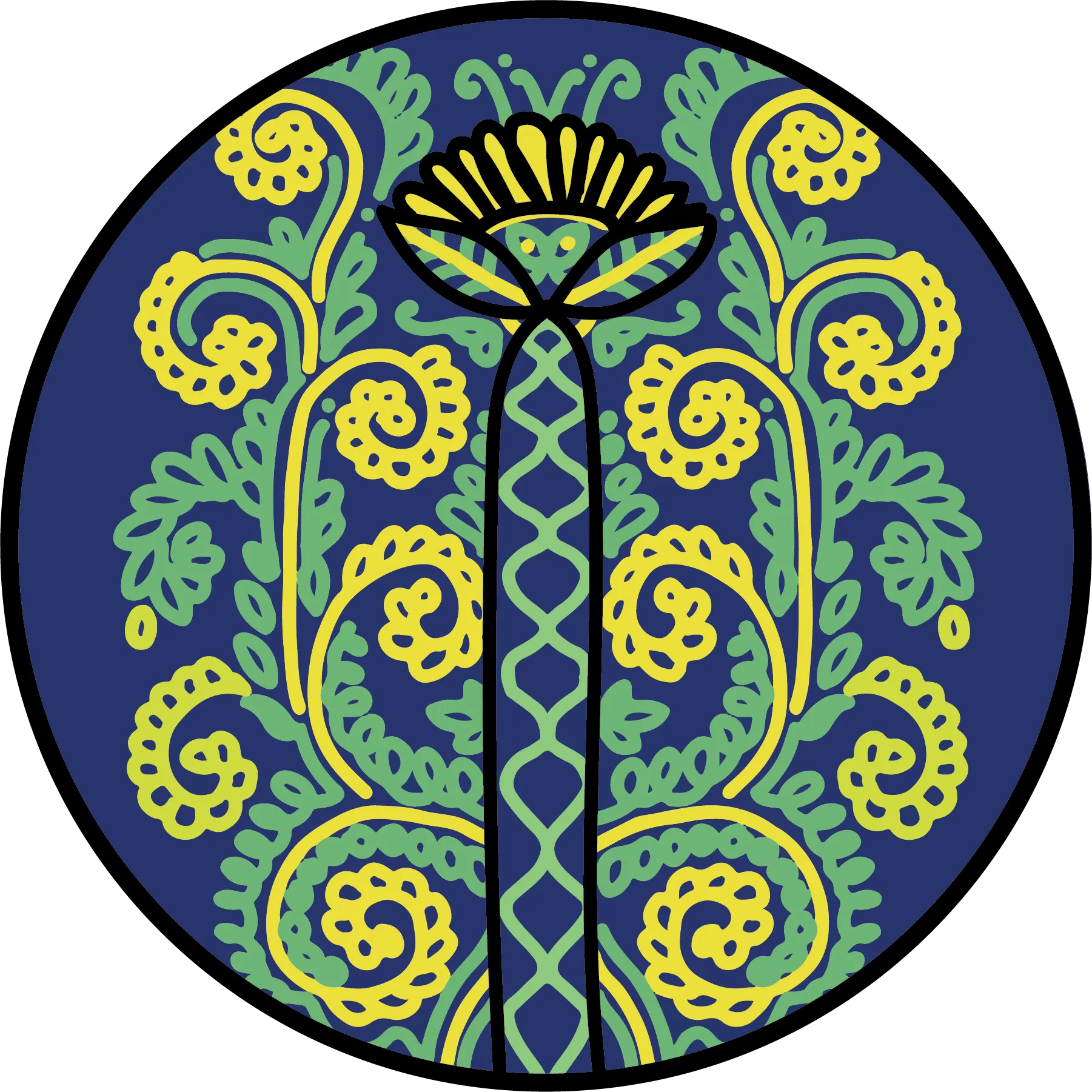
The most frequent and celebrated motif in Rogan art is the Tree of Life, while geometric and floral patterns also feature prominently; the Khatri community of Kutch tends toward floral and geometric designs, while the Hindu Khatri community of Ahmedabad favours floral patterns and bird motifs.
The final step of folding the painted cloth to create a mirror image is a defining characteristic of the process - it produces a symmetrical composition and marks the completion of the work.
Famous Artists of Rogan Art
Rogan art is today almost entirely sustained by the Khatri family of Nirona, Kutch. Abdul Gafur Khatri, from Nirona village in the Kutch district of Gujarat, is the most celebrated name in this tradition. A Padmashree awardee, he is an eighth-generation artisan dedicated to preserving this 400-year-old craft. His life's work has been instrumental in bringing Rogan art to national and international attention.
Sumar Khatri, also from Nirona, Kutch, is known for his mastery of floral compositions and has worked to develop new applications for Rogan art beyond traditional textiles into wall hangings and home decor products. Juber Khatri, another member of the family, is particularly recognised for his Tree of Life compositions, which have become the most recognisable symbol of the Rogan tradition. Idris Khatri represents the continuing next generation of the Khatri family in Nirona and is actively working to keep the craft alive and visible.
How to Learn Rogan Art
If you are wondering how to learn Rogan art, the most direct way is to explore courses taught by master artists on Rooftop. Rooftop connects learners directly with traditional artists from across India who teach their craft in its authentic form. Alongside Rogan, the platform offers traditional Indian art courses in related textile traditions such as Mata ni Pachedi and Warli, giving learners a broader understanding of India's folk art landscape.
Where to See and Buy Rogan Art
The living heart of Rogan art is Nirona village in the Kutch district of Gujarat, where the Khatri family still practises the craft. Visitors to Kutch - particularly during the famous Rann Utsav - can witness Rogan work being made in person. The craft is also exhibited at major craft fairs and folk art festivals across India, including the Dilli Haat in New Delhi and the Surajkund Mela. For those looking to buy authenticated pieces, Rooftop's shop carries original works by Indian folk artists, giving buyers direct access to authentic art with verified provenance. Rogan-decorated textiles and painted panels are also available through government-run craft emporiums such as Gujari in Ahmedabad.
Learn Rogan
Frequently Asked Questions
What is Rogan art and where does it come from?
Rogan art is a rare cloth-painting tradition from Kutch, Gujarat, in which oil-based pigment is applied to fabric using a metal rod that never touches the surface. The name comes from the Persian word for 'oil-based', and the art form originated in Persia before arriving in Nirona village in the Kutch district around 400 years ago. Today it is practised almost exclusively by the Khatri family of Nirona.
Which community in India practises Rogan art?
Rogan art is practised by the Khatri community of Kutch and the Hindu Khatri community of Ahmedabad in Gujarat. The Kutch Khatris work with floral and geometric designs, while the Ahmedabad Khatris typically create floral patterns and bird motifs. Of the two, only the Kutch Khatri family in Nirona village continues the tradition in a meaningful way today.
Who are the most famous Rogan art artists in India?
The most celebrated Rogan artist is Abdul Gafur Khatri of Nirona, Kutch, a Padmashree awardee and eighth-generation practitioner who has spent his life preserving this craft. Other notable members of the Khatri family include Sumar Khatri, known for his floral compositions, and Juber Khatri, whose Tree of Life works are widely recognised as the defining image of Rogan art.
What materials and colours are used in Rogan painting?
The core material in Rogan art is castor oil, which is extracted by pounding castor seeds by hand and then boiling the oil for two days. Vegetable dyes and mineral dyes are ground with white chalk powder using a tool called a kharal and mixed into the oil to create the pigment. The common colours in Rogan paintings are yellow, white, red, blue, and green, and they are applied against a dark or black background that intensifies their visual impact.
Can I learn Rogan art or Indian folk art online in India?
Yes, Rooftop offers online courses in Indian folk art traditions taught by master artists. While a dedicated Rogan course depends on current availability, the platform regularly features related traditions from Gujarat and across India. Exploring courses from similar textile-based folk art traditions is a good way to begin building the skills and cultural understanding that connect to Rogan art.
Rogan art is more than a painting technique - it is a living testimony to centuries of craft knowledge kept alive by a single family in a small village in Gujarat. Whether you want to learn about India's most endangered traditional Indian art forms or bring a piece of this heritage into your home, Rooftop is the place to start. Explore India's folk art traditions on Rooftop and connect with the artists who carry them forward.
Bibliography
Sources
- Sharma, S.(2019) Rogan art craft documentation. Gandhinagar: National Institute of Fashion and Technology.
Image Sources
"Ashish Shantilal Kansara Rogan Art 2." Wikimedia Commons, https://commons.wikimedia.org/wiki/File:Ashish_shantilal_kansara_rogan_art_2.jpg. Accessed 16 July 2026.
"Rogan Art." Caleidoscope, https://caleidoscope.in/art-culture/rogan-art. Accessed 16 July 2026.
"Rogan Art by Ashish Kansara from Madhapar." Wikimedia Commons, https://commons.wikimedia.org/wiki/File:Rogan_art_by_ashish_kansara_from_Madhapar.jpg. Accessed 16 July 2026.
"Rogan Painting." Wikipedia, Wikimedia Foundation, https://en.wikipedia.org/wiki/Rogan_painting. Accessed 16 July 2026.
"Rogan Painting." Wikipedia, Wikimedia Foundation, https://en.wikipedia.org/wiki/Rogan_painting. Accessed 16 July 2026.
"Rogan Art: Rogan Painting History, Technique and Living Tradition." Rogan Art, https://roganart.com/rogan-art-rogan-painting-history-technique-and-living-tradition/. Accessed 16 July 2026.