
Pattachitra: Odisha's Sacred Scroll Painting Tradition
Let's explore the art form from eastern India - the Pattachitra paintings!
Introduction and Origin
Pattachitra is one of India's most visually stunning folk art traditions, originating from the eastern state of Odisha and practised for at least 300 years. The name comes from the Sanskrit words patta (cloth) and chitra (picture or painting), meaning literally a painting on cloth. Rooted in the devotional life of the Jagannath temple at Puri, this traditional Indian art form captures mythological stories, epic narratives, and sacred imagery in richly detailed, bold compositions. Today, Pattachitra painting has found new audiences around the world while remaining a living tradition in the hands of its master artists. Pattachitra art continues to attract collectors and cultural enthusiasts across India and beyond.
What Is Pattachitra?
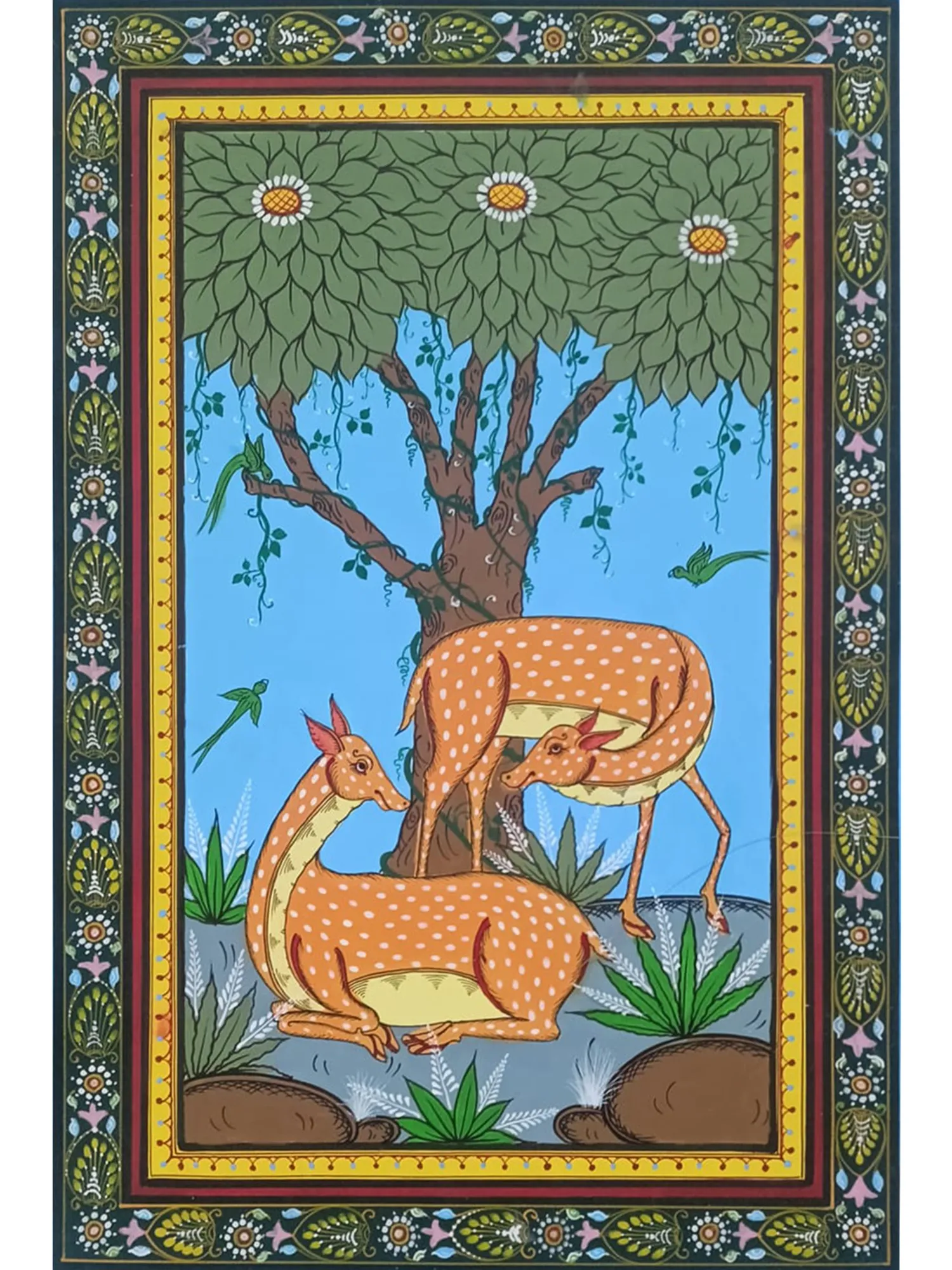
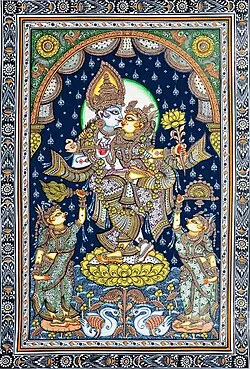
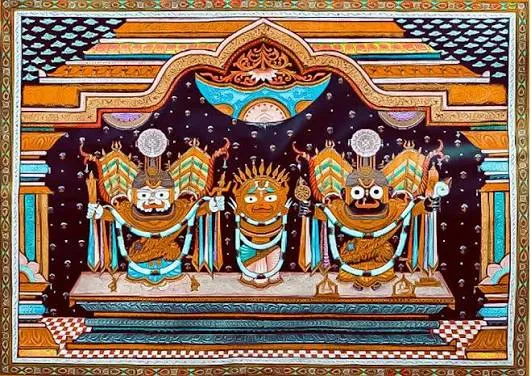
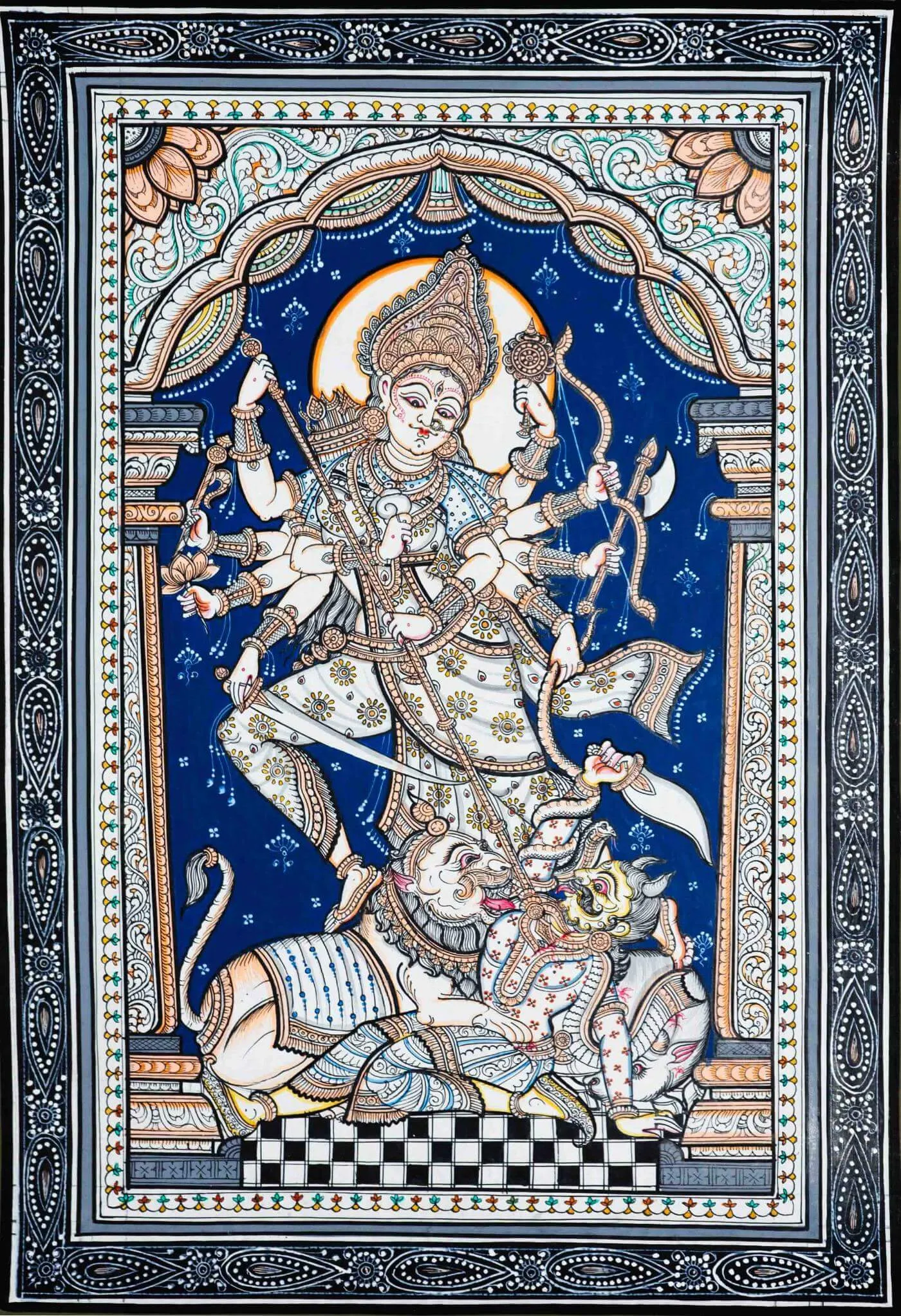
Pattachitra is a cloth-based scroll painting tradition from Odisha and West Bengal in India. At its core, Pattachitra painting is made on a piece of cloth that has been specially treated and stiffened, using natural pigments sourced from minerals, plants, and shells. The finished works are characterised by strong outlines, flat figures, intricate floral borders, and mythological subjects drawn from the Hindu epics and Vaishnava devotional tradition. In Odisha, Pattachitra is closely connected to the Jagannath temple of Puri, with the triad of Lord Jagannath, Subhadra, and Balabhadra forming the most recurring motif. West Bengal has its own Pattachitra tradition centred in Naya village in the Midnapur district, where the art depicts a wider range of Hindu deities and associated myths. Both traditions are practised by hereditary artist communities and have served ritual and devotional purposes for generations.
History and Origin
The roots of Pattachitra lie in the ancient eastern school of painting that flourished under the Palas, Senas, and Vermas dynasties before gradually disappearing, creating a space for the Pattachitra tradition to develop in its place. The art form is believed to be at least 300 years old, though many scholars argue its origins are considerably older. The connection to the Jagannath temple at Puri gave the art its earliest purpose: when the idols of the three deities were removed for repainting during the annual Anasara ritual, devotees could not see them, so Patta paintings served as substitute icons for worship. These paintings were also called Jatri Patti, used by pilgrims from distant places who could not visit Puri regularly and would instead worship the painted image. According to local legend, a Chaitanya devotee from Bengal settled in what was then the jungle of Raghurajpur, painted a representation of Lord Jagannath in coal (which is why Jagannath is depicted with a black face), and became the village's first artist. Over time, this village became a dedicated art community where every household was home to a painter, dancer, or craftsperson. By the 1980s, Pattachitra had evolved from purely sacred depictions to popular tourist souvenirs and collectibles.
Key Features and Famous Artists
Key Features and Visual Style
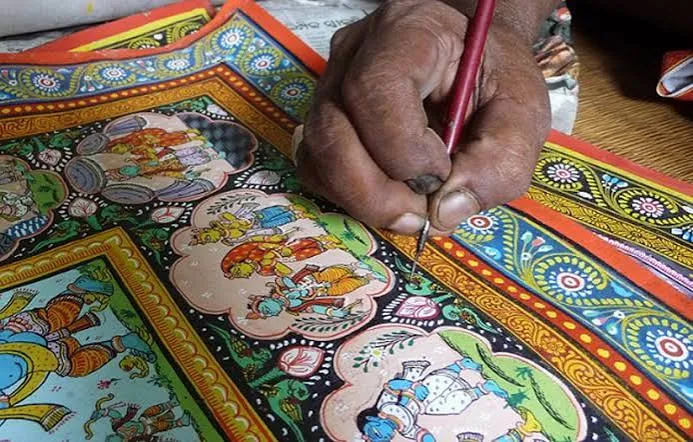
Pattachitra painting is immediately recognisable by its bold outlines, flat stylised figures, and densely decorated floral or creeper borders that frame every composition. The preparation of the canvas itself is a time-consuming process that begins with cloth treated with tamarind seed gum and finally polished with smooth stones until the surface resembles paper. The colours are entirely natural, derived from minerals and organic matter, giving the paintings a distinctive warm palette that cannot be fully replicated with synthetic pigments.
Canvas preparation: cloth is soaked in tamarind seed gum, layered, dried, and polished first with a rough stone, then with a smooth pebble before any painting begins.
Natural pigments: colours come from minerals and organic matter including haritali (yellow stone), hingula (red ochre), ramaraja or ghanila (indigo stone), and shankha gunda (conch shell powder) for white.
Traditional brushes: fine-tipped brushes were traditionally made from mongoose or mouse hair fixed over a bamboo or wooden handle, though modern chitrakaras may also use market brushes.
Compositional order: painting begins with the deities, then fills in attendants, and ends with the definition of hair, eyes, and floral border motifs, before the entire work is outlined in black and lacquered.
Talapattachitra variant: a related tradition from Odisha called Talapattachitra uses palm leaf as the base instead of cloth, with motifs carved using an iron stylus rather than painted with pigment. This craft is also referred to as Tala Pattachitra in some regions.
Border rule: a floral or creeper border is a compulsory element of every Pattachitra composition; it frames and contains the narrative and is considered an essential formal feature of the style.
Famous Artists of Pattachitra
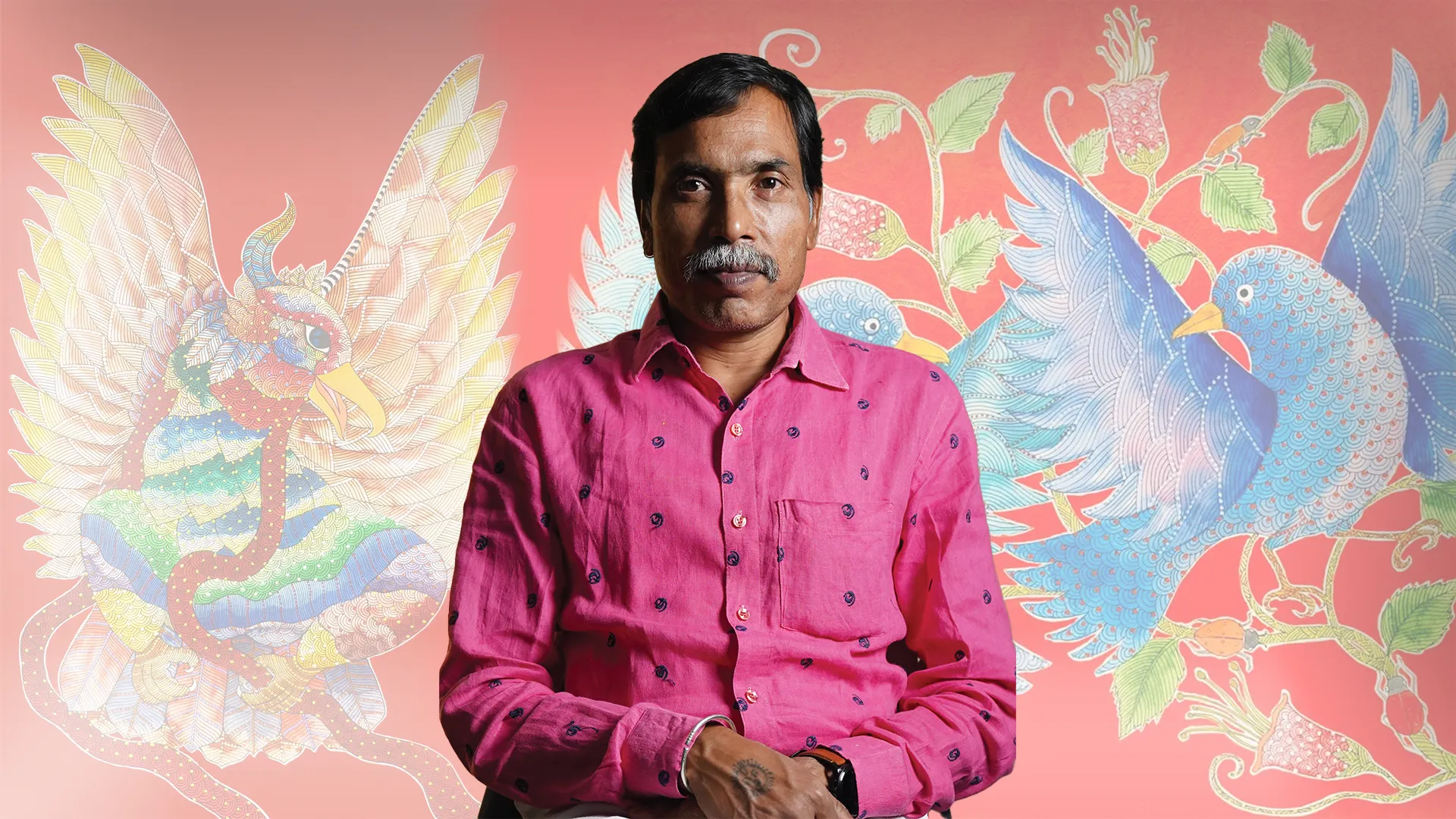
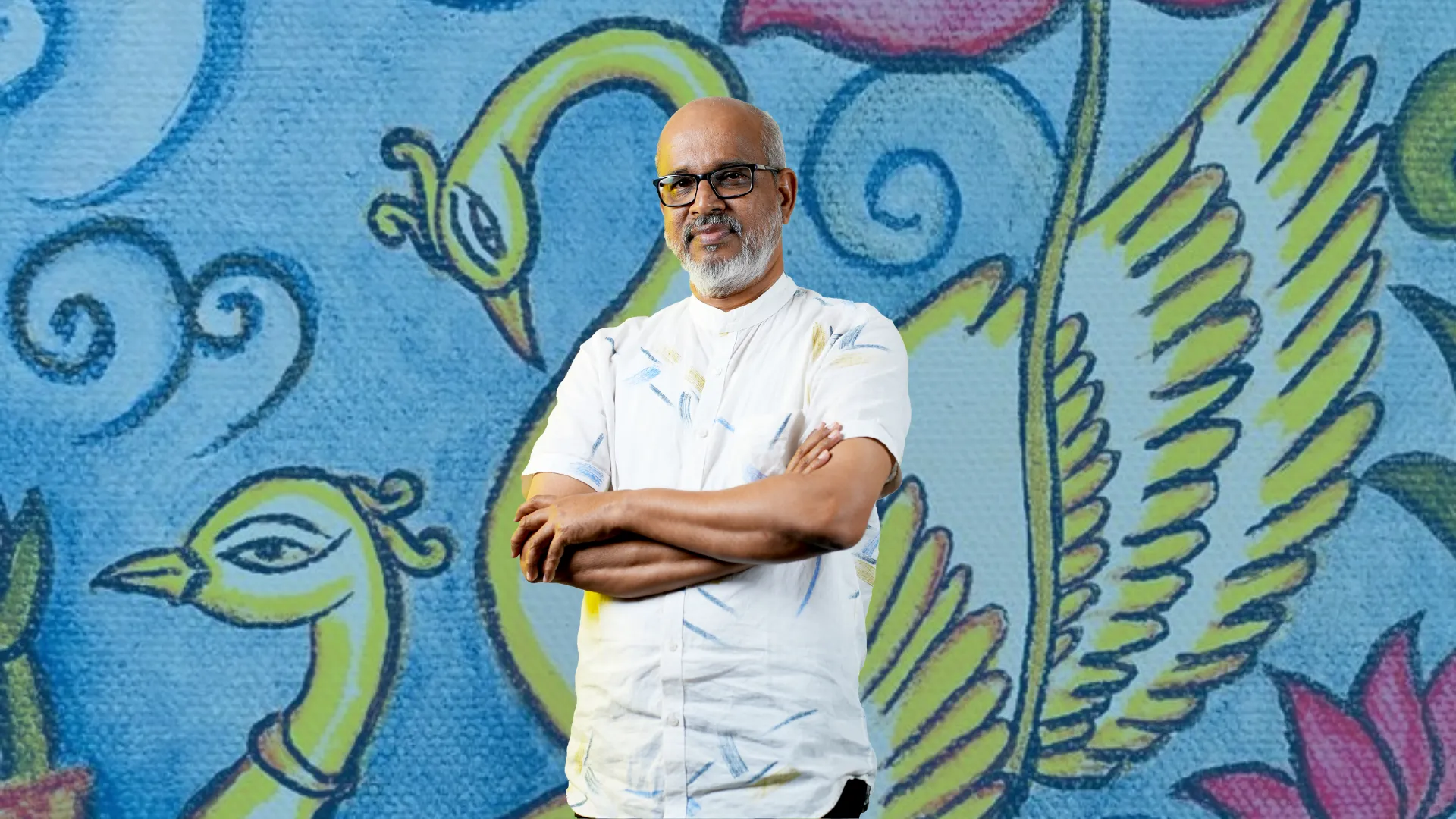
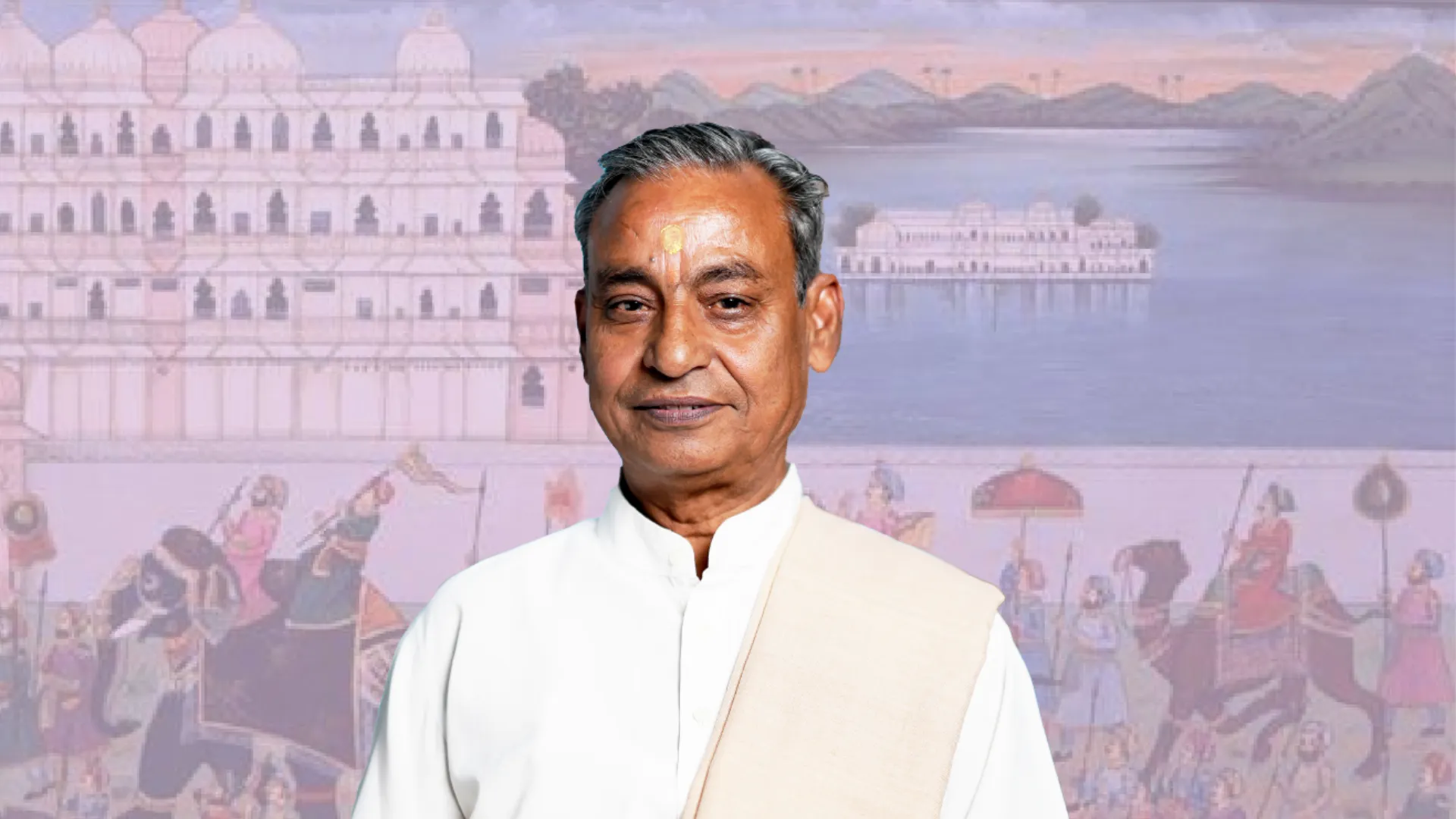
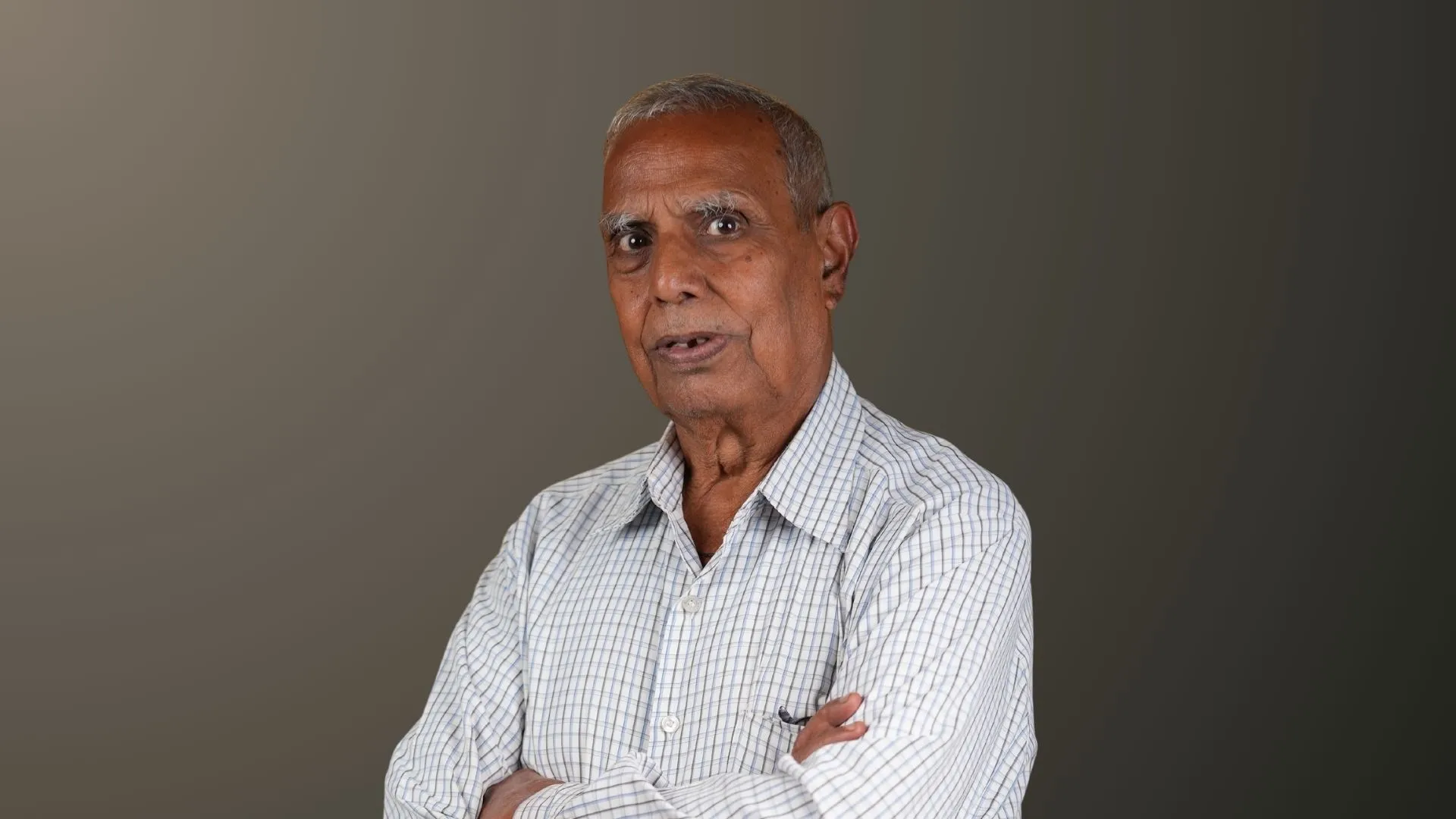
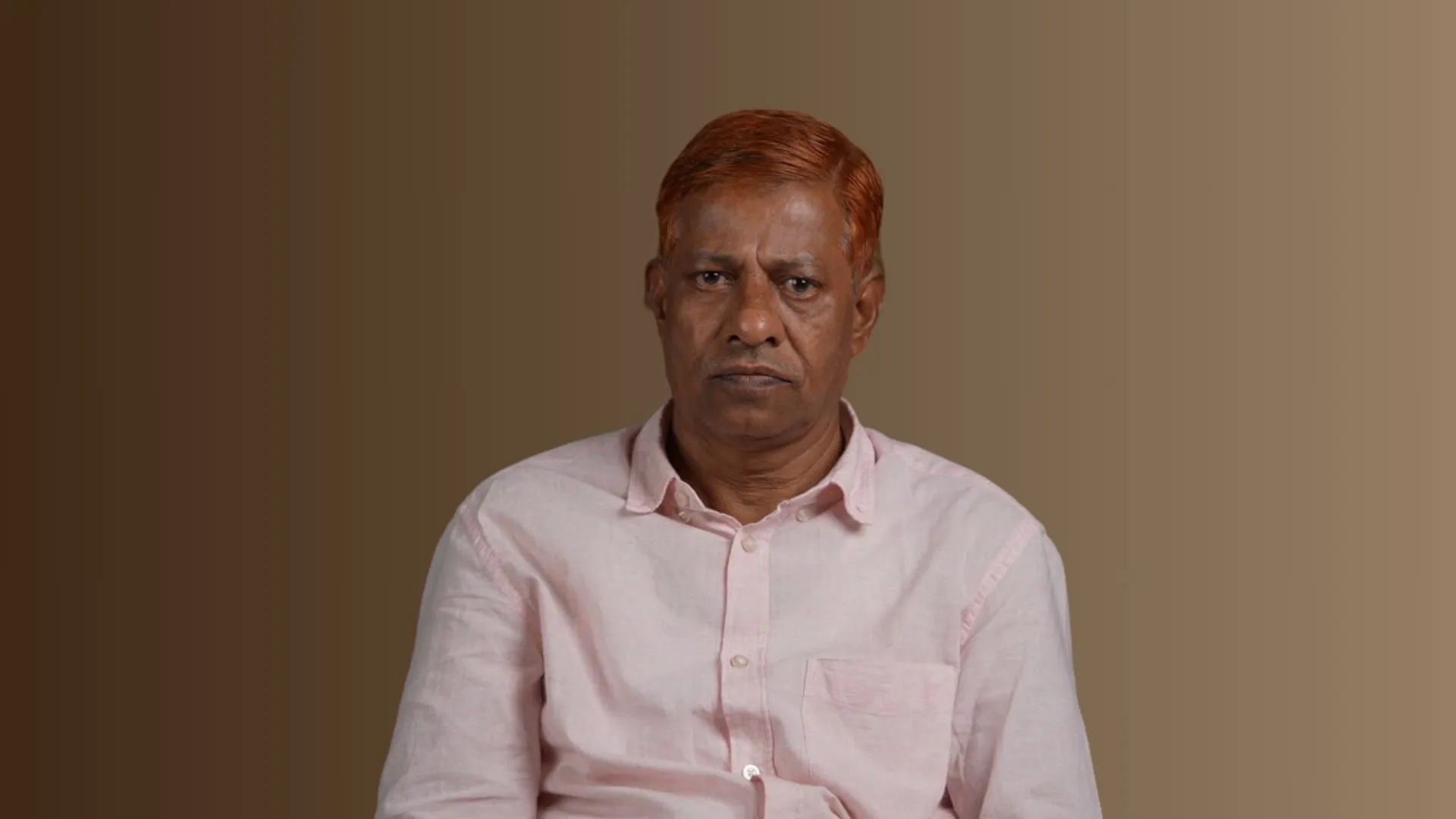
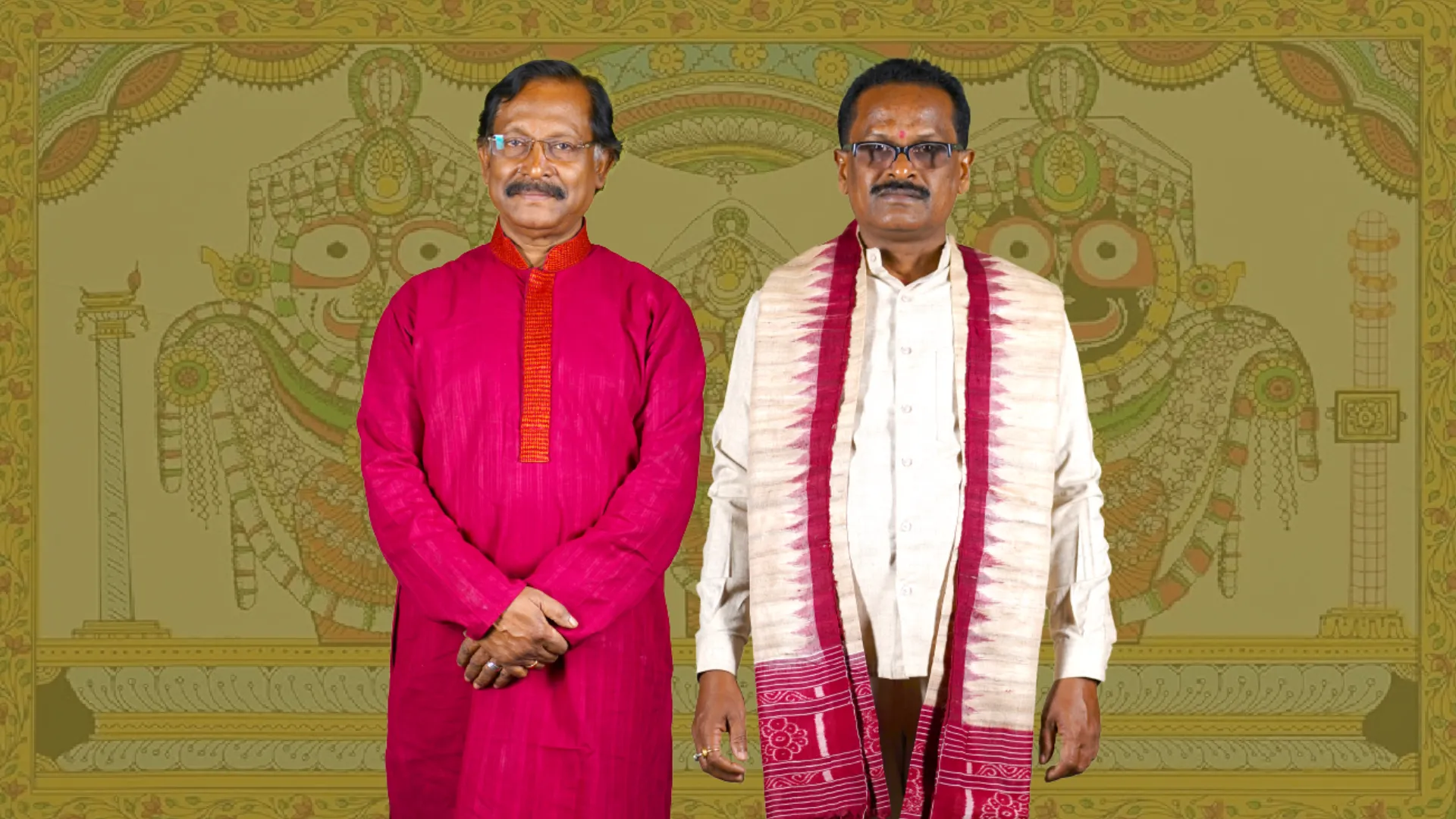
The heartland of Odisha Pattachitra is Raghurajpur village near Puri, where entire families have practised the art for generations. Generations of pattachitra artists in this village have passed down their skills through apprenticeship within the family. Bijay Kumar Behera, from Raghurajpur, Odisha, is one of the most respected Pattachitra practitioners working today and teaches the Pattachitra course on Rooftop alongside fellow master artist Rabindra Behera, also from Raghurajpur, who brings decades of hereditary practice to his teaching. Mangu Maharana of Raghurajpur is a National Award-winning artist known for his refined line work and complex multi-panel compositions. In West Bengal, the Chitrakar community - often referred to as Patuas - has produced celebrated artists including Anwar Chitrakar of the Midnapur region, who is known for both traditional scroll paintings and contemporary social commentary works. Collectively, these artists have kept the tradition alive through decades of change, adapting formats for modern audiences while preserving the core techniques.
How to Learn Pattachitra
If you want to learn Pattachitra painting online in India, Rooftop offers a dedicated course taught by master artists Bijay Kumar Behera and Rabindra Behera from Raghurajpur, Odisha. The Pattachitra course on Rooftop takes you through canvas preparation, natural pigment use, compositional rules, and the step-by-step process of creating an authentic Pattachitra work. You can also explore the full range of Indian folk art courses on Rooftop to find the right starting point for your practice.
Where to See and Buy Pattachitra
The best place to encounter living Pattachitra in India is Raghurajpur village in Puri district, Odisha, where the art is made and sold in artists' homes. While pattachitra painting images are widely shared online, nothing compares to seeing the original brushwork and natural pigments up close in person. The Odisha State Museum in Bhubaneswar and the Crafts Museum in New Delhi also hold significant Pattachitra collections. West Bengal's Naya village in Midnapur is another important centre for the Bengal tradition. For authentic works online, the Rooftop shop carries original Pattachitra pieces from verified master artists. Beyond original paintings, Pattachitra motifs have also found their way onto textiles such as the pattachitra saree, extending the tradition into everyday wear. You can also explore the Rooftop Art Wiki to discover related traditions such as Kalighat painting from Bengal and Gond art from central India.
Learn Pattachitra
Frequently Asked Questions
What is Pattachitra and where does it come from?
Pattachitra is a traditional Indian art form of cloth-based painting that comes primarily from Odisha, with a related tradition in West Bengal. The name combines the Sanskrit words for cloth (patta) and picture (chitra). It is one of India's oldest surviving folk painting traditions, with documented practice spanning at least 300 years, and has its deepest roots in the ritual life of the Jagannath temple at Puri.
Which communities in India practise Pattachitra?
In Odisha, Pattachitra is created by hereditary artist communities known as Chitrakaras, who are often of the Sutradharas caste and are concentrated in Raghurajpur village near Puri and surrounding areas. In West Bengal, the art is practised by a community also called Chitrakaras, though their artists are more commonly referred to as Patuas. According to some researchers, the Santhals were among the original creators of Patashilpa, an early form of this art tradition.
What materials and natural colours are used in Pattachitra painting?
The canvas for Pattachitra is made from layered cloth treated with tamarind seed gum and lac, then polished to a smooth surface. Colours are sourced entirely from natural materials: haritali (yellow stone) for yellow, hingula (red ochre) for red, ramaraja or ghanila (indigo stone) for blue-black, and shankha gunda (ground conch shell) for white. Brushes were traditionally made from mongoose or mouse hair. The completed painting is outlined in black and lacquered for preservation.
What themes and subjects appear in Pattachitra paintings?
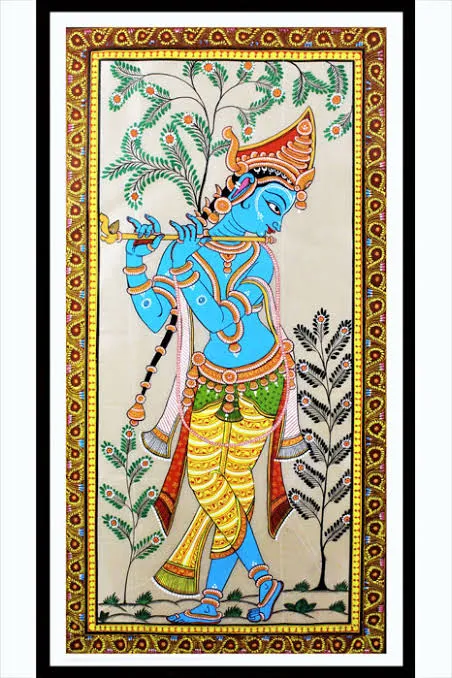
The primary theme of Odisha Pattachitra is the Jagannath cult, depicting Lord Jagannath, Subhadra, and Balabhadra as the central triad, along with stories from the Ramayana, the Mahabharata, and Vaishnava devotional literature. Popular subjects include the various veshas (attires or costumes) of Lord Jagannath and episodes involving Lord Krishna. Bengal Pattachitra draws from a wider range of Hindu deities and associated mythological narratives. Both traditions feature intricate floral borders as a compulsory framing element.
Can I learn Pattachitra painting online in India?
Yes, you can learn Pattachitra painting online through Rooftop's dedicated course taught by Bijay Kumar Behera and Rabindra Behera, both master artists from Raghurajpur, Odisha. The course covers canvas preparation using traditional methods, natural pigment preparation and application, compositional rules specific to Pattachitra, and the step-by-step painting process from base sketching through to final lacquering. No prior experience is required to begin the course.
Pattachitra is more than a painting style - it is a complete world of sacred imagery, community practice, and artistic discipline passed down through generations of dedicated families in Odisha and West Bengal. As both a devotional tradition and a living craft, it deserves to be known, studied, and supported. Explore Pattachitra courses on Rooftop and begin your journey into one of India's most distinctive and enduring traditional art forms.
Bibliography
Sources
Jain, Ritu, R. K. Chishti, and M. Singh. Handcrafted Indian Textiles: Tradition and Beyond. Lustre Press, 2000.
Saraf, D. N. Indian Crafts: Development & Potential. Vikas Publications, 1982.
Image Sources
"Mahishasuramardini – Goddess Durga Orissa Pattachitra Painting." Tallenge Store, https://www.tallengestore.com/products/mahishasuramardini-goddess-durga-orissa-pattachitra-painting-indian-folk-art-large-art-prints. Accessed 16 July 2026.
"Pair of Deer under Tree – Pattachitra Painting (Natural Color on Handmade Canvas)." Exotic India Art, https://www.exoticindiaart.com/product/paintings/pair-of-deer-under-tree-pattachitra-painting-natural-color-on-handmade-canvas-by-sushant-maharana-ddh256/. Accessed 16 July 2026.
"Pattachitra." Wikipedia, Wikimedia Foundation, https://en.wikipedia.org/wiki/Pattachitra. Accessed 16 July 2026.
"Pattachitra Art: An Expression of Mythology and Folklore." Cottage9, https://www.cottage9.com/blog/pattachitra-art-an-expression-of-mythology-and-folklore/. Accessed 16 July 2026.
"Pattachitra Story – Odisha." Gaatha, https://gaatha.com/pattachitra-story-orissa/. Accessed 16 July 2026.
"Pattachitra Painting – Odisha." Gitagged, https://www.gitagged.com/product/buy-odisha-pattachitra-painting-online/. Accessed 16 July 2026.