15% OFF
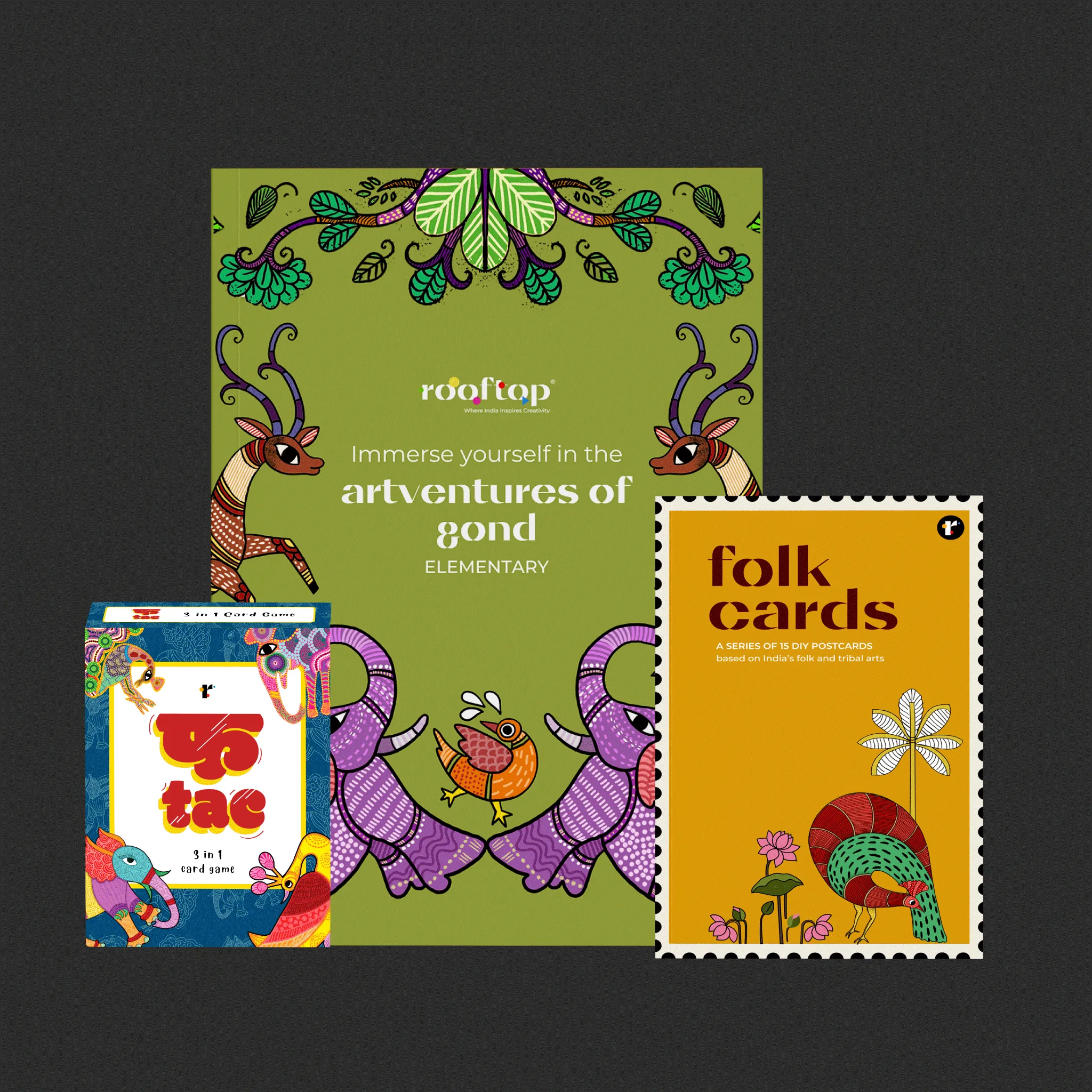
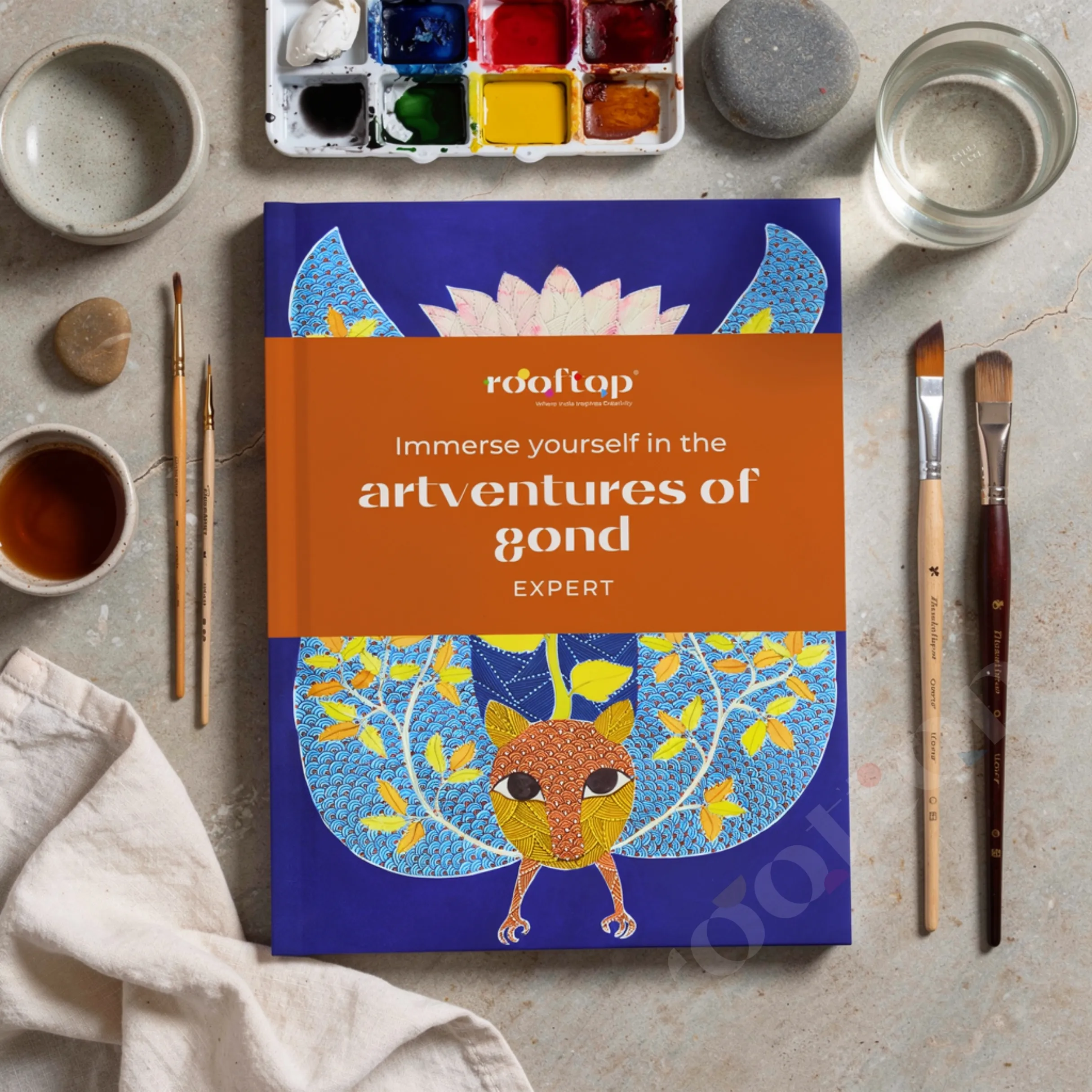
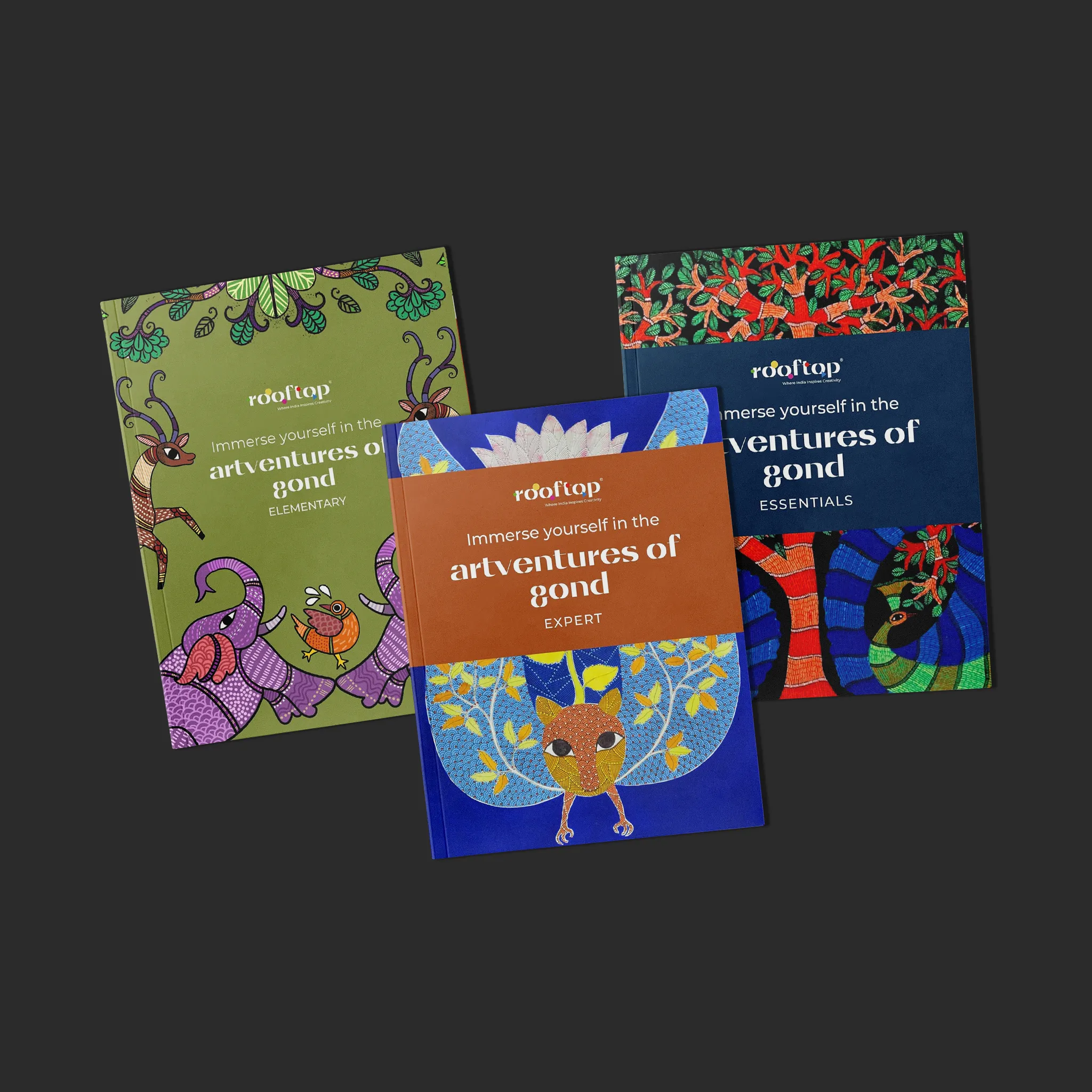
Artventures of Gond – Indian Tribal Coloring & Activity Book (Set of 3)
$ 69$ 79


Let's explore the art of Indian tribes - Gond Art
Gond art is one of India's most visually arresting folk traditions - rooted deep in the forests of Madhya Pradesh and carried forward by a tribal community that sees every living thing as sacred. Practised by the Gond tribe across the Vindhyas, Satpura, and Mandla regions of the Narmada river basin, this painting style transforms walls, floors, and canvases into vivid narratives of nature, mythology, and daily life. Today, Gond art is not merely a regional craft - it is a living, evolving art form that has found its way into international galleries, graphic novels, and contemporary homes.
What Is Gond Art?
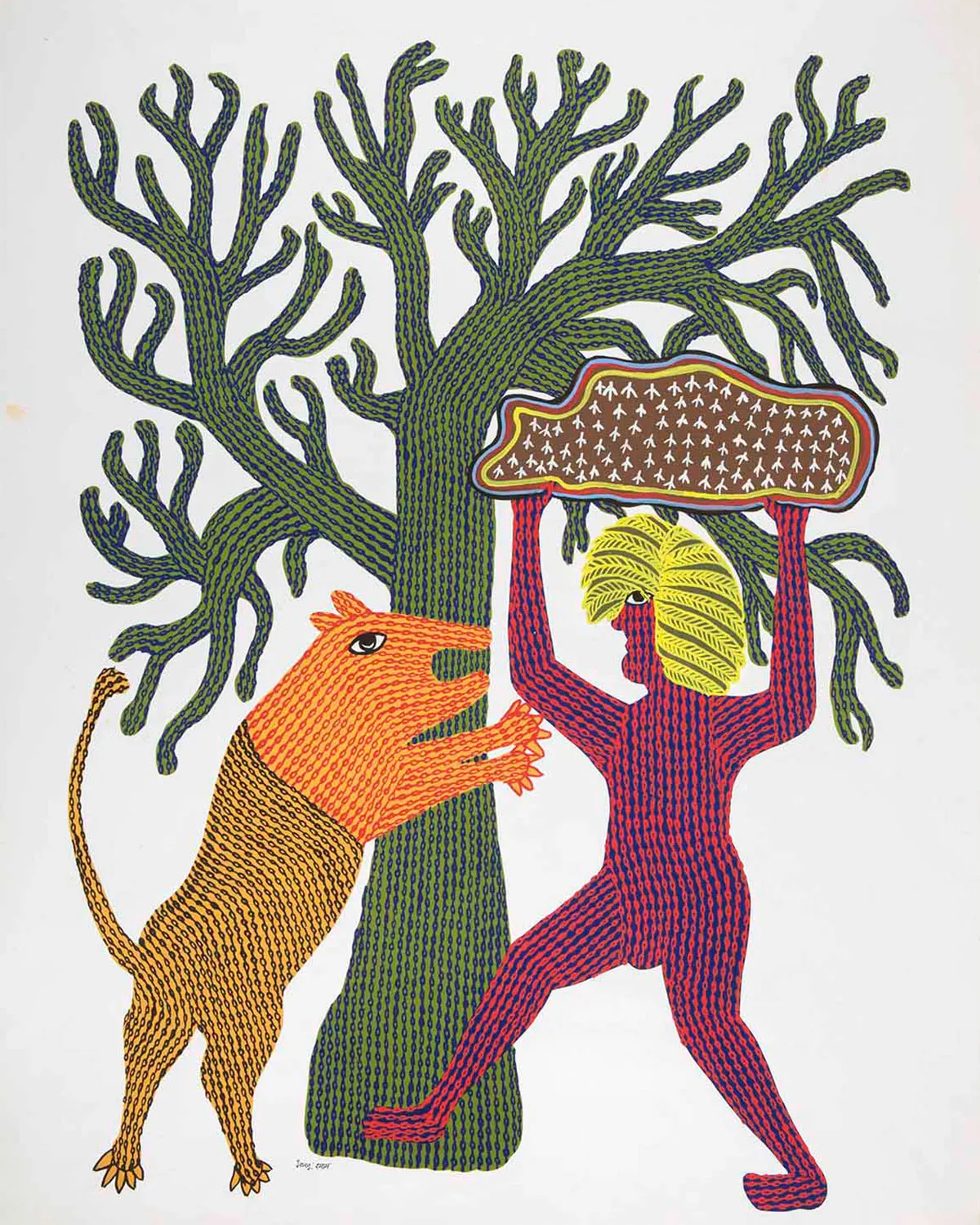
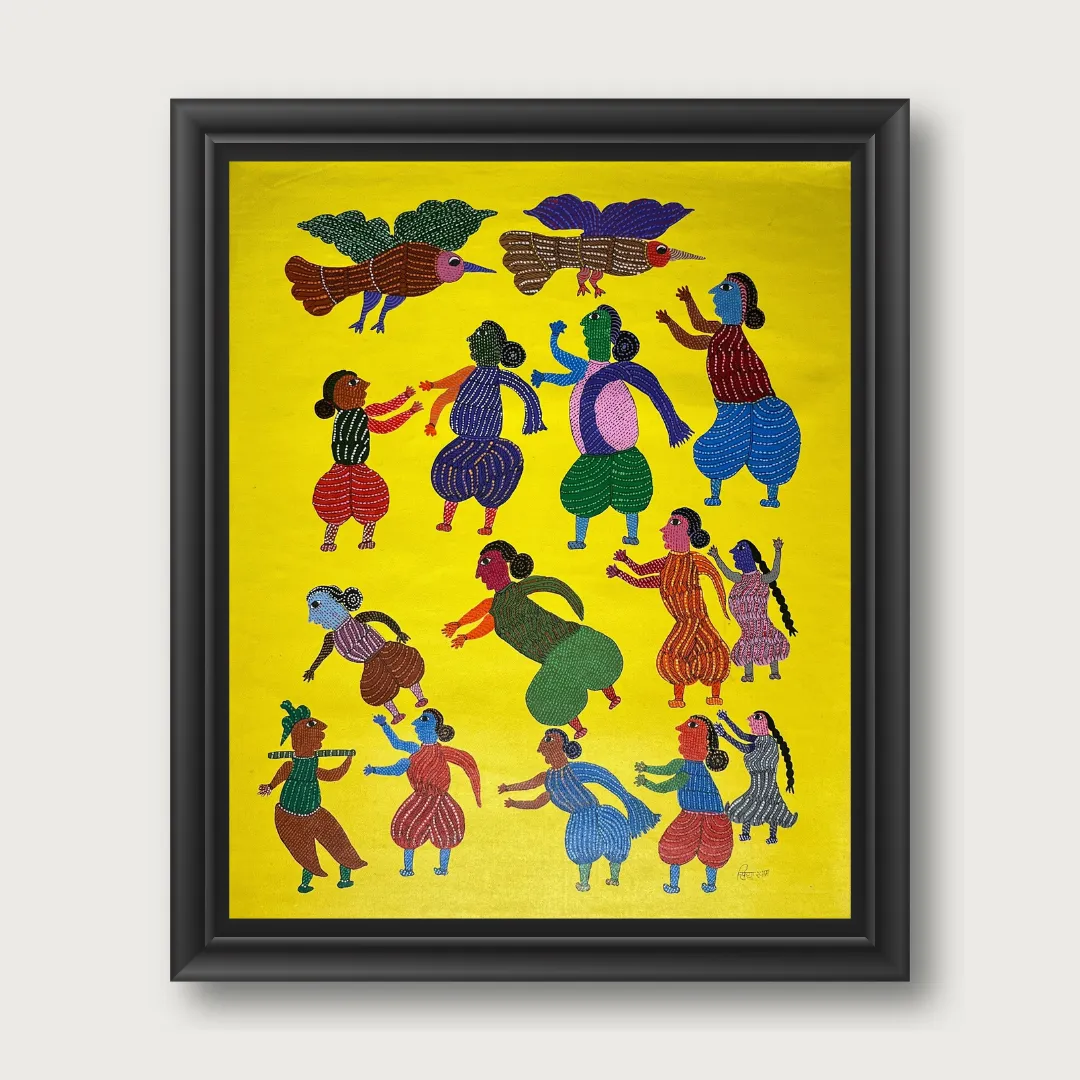
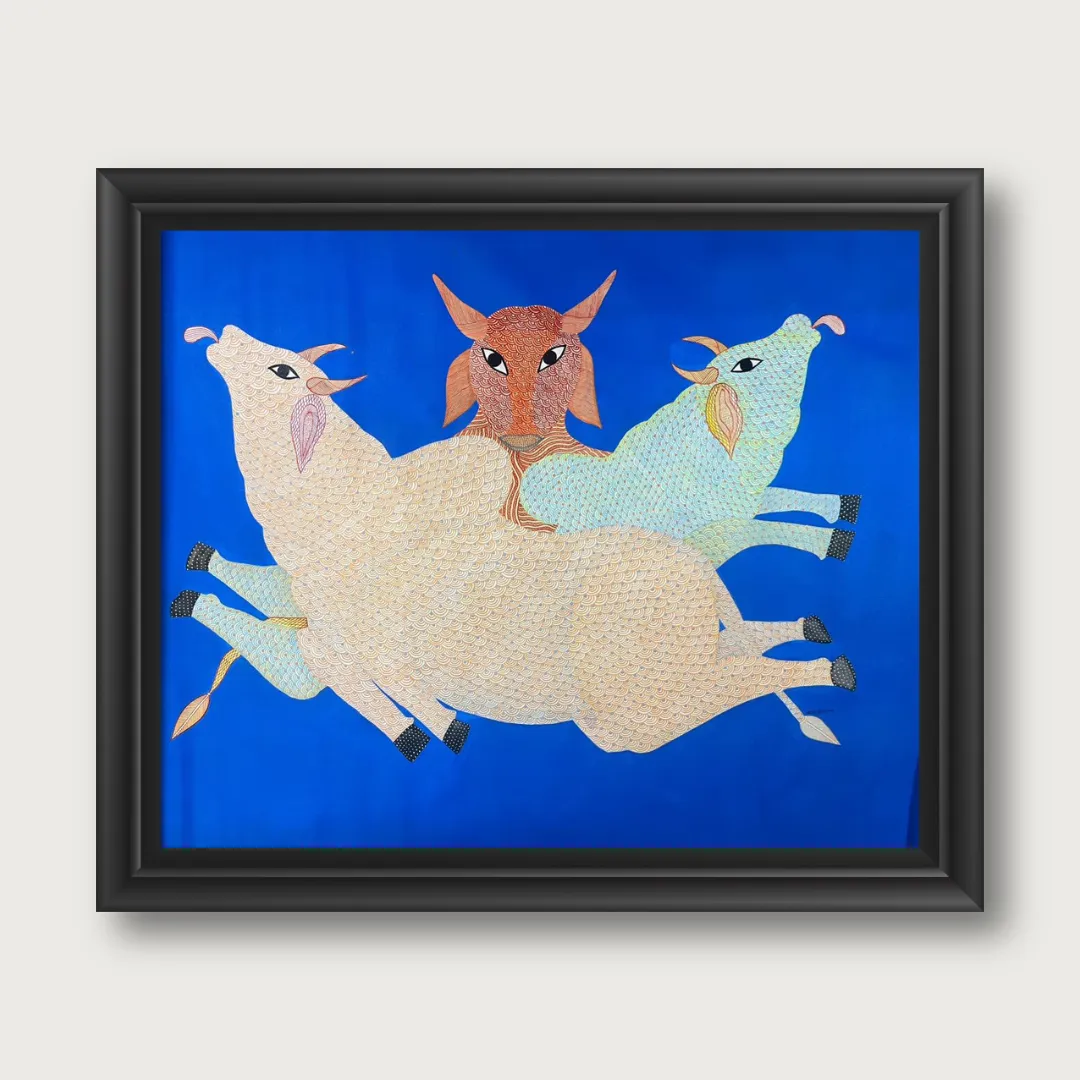
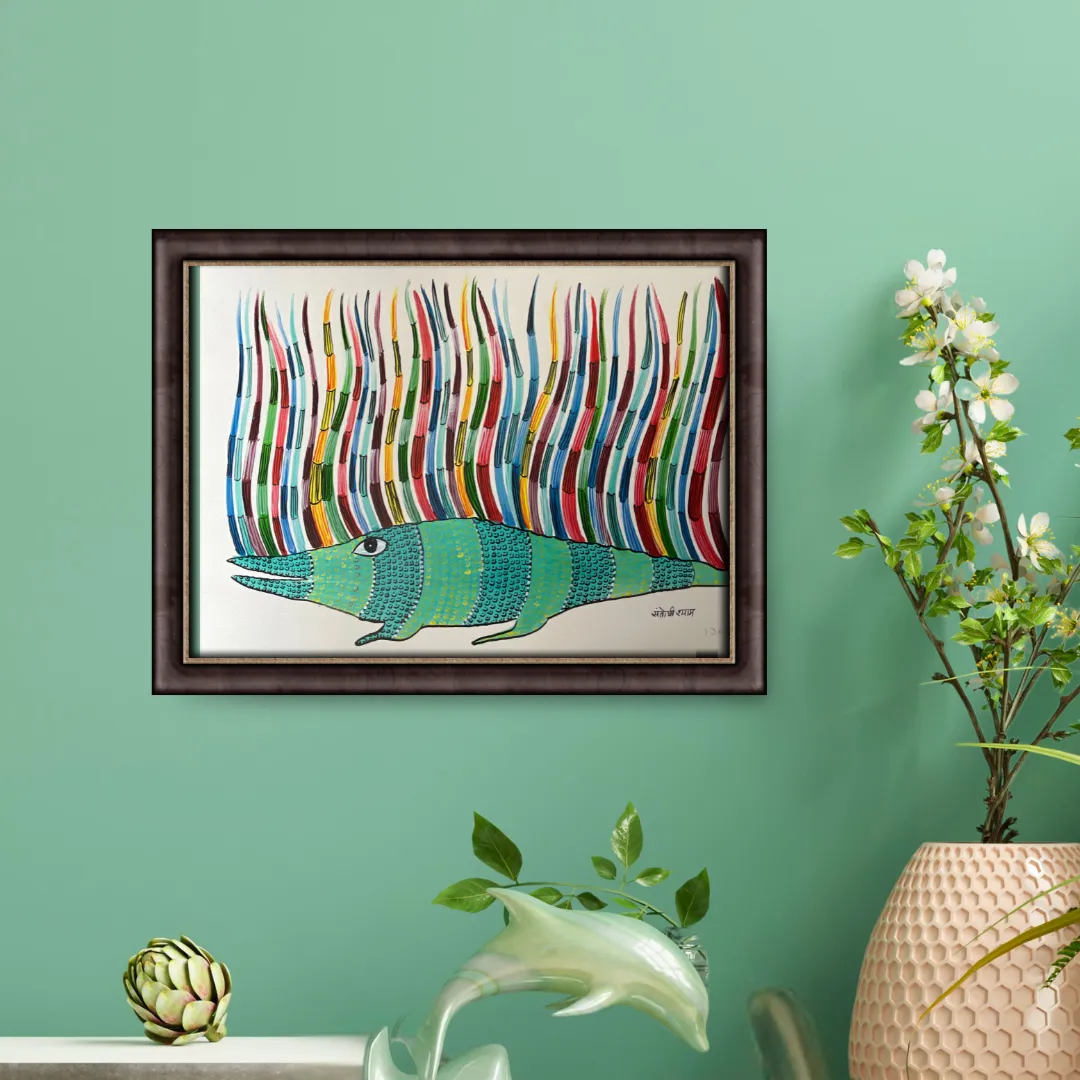
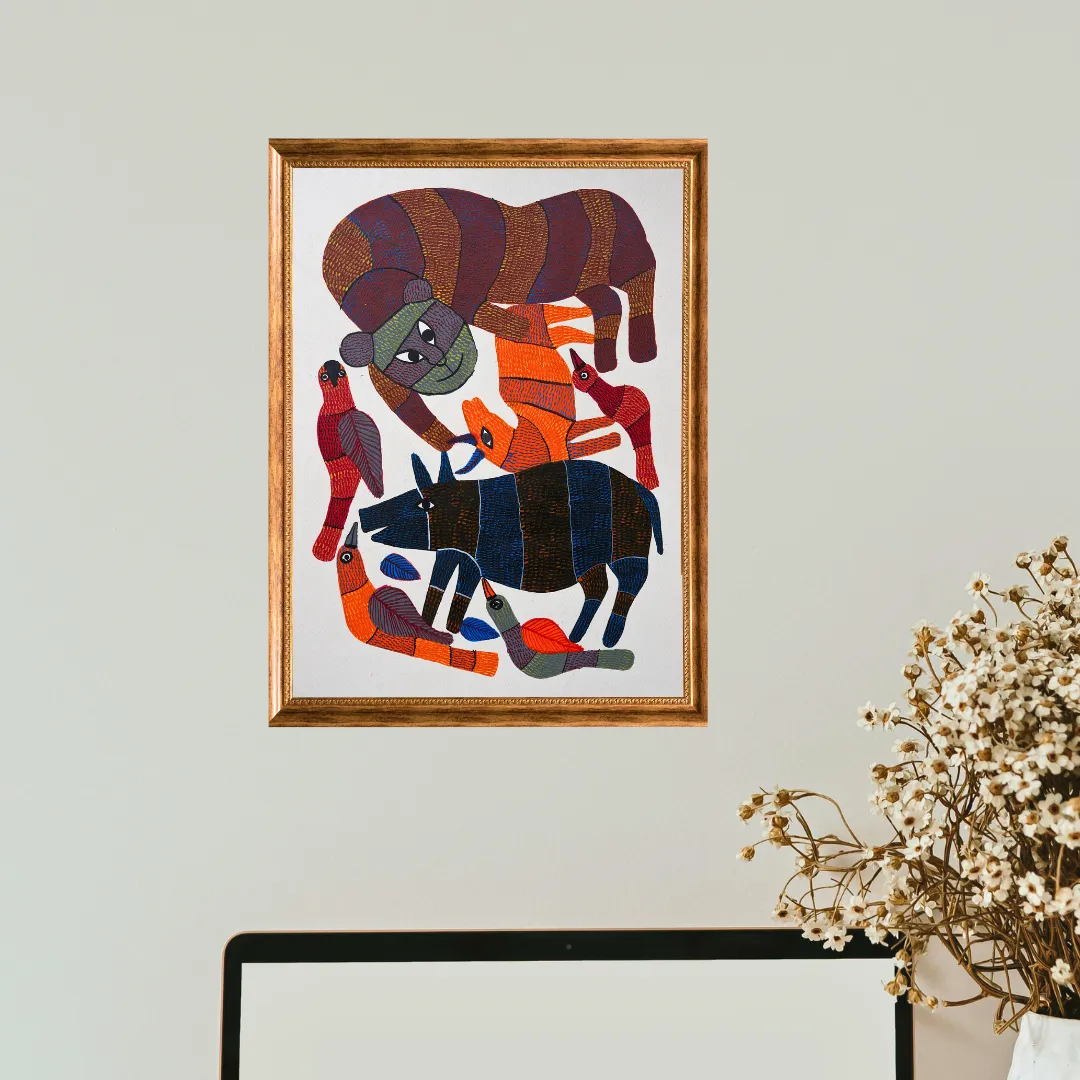
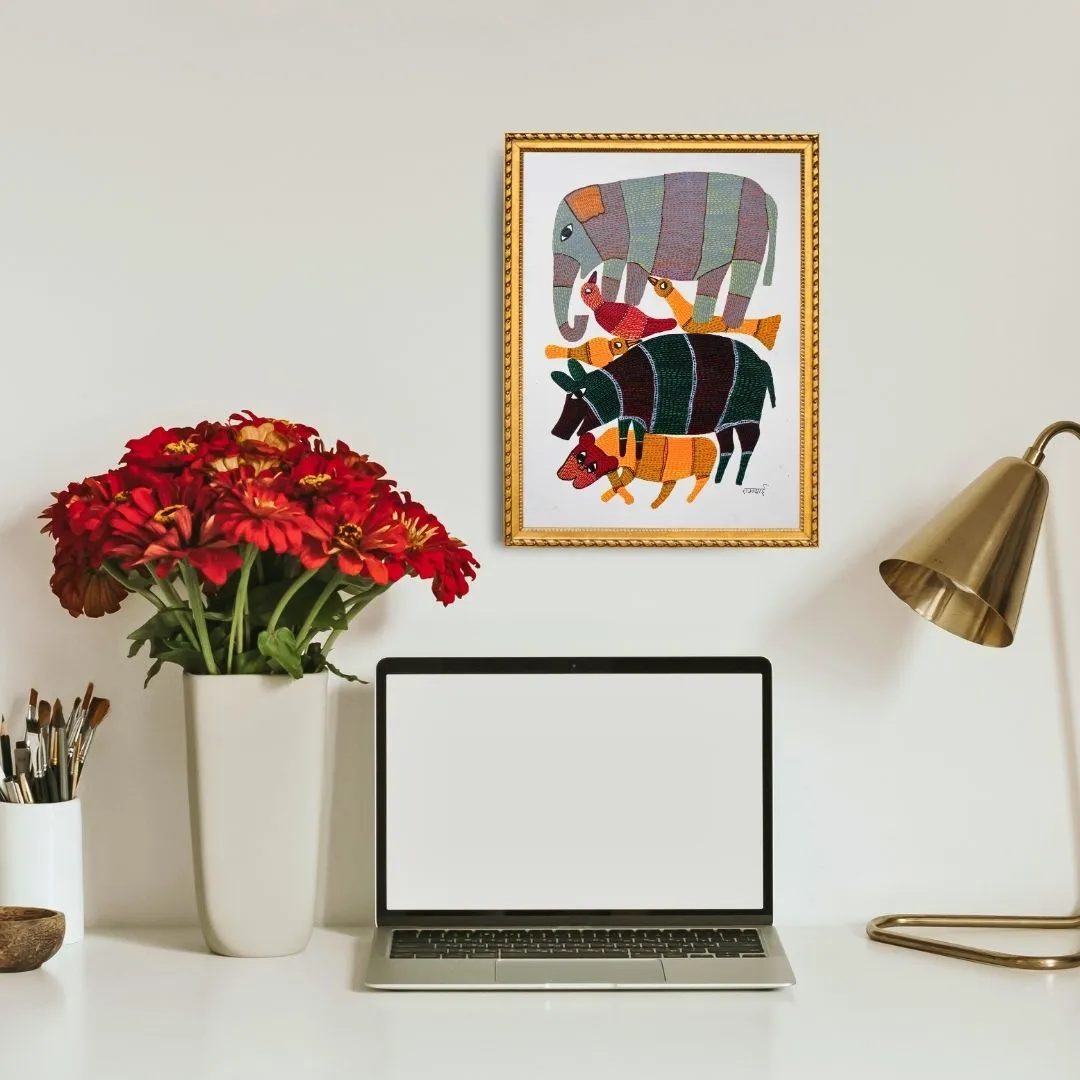
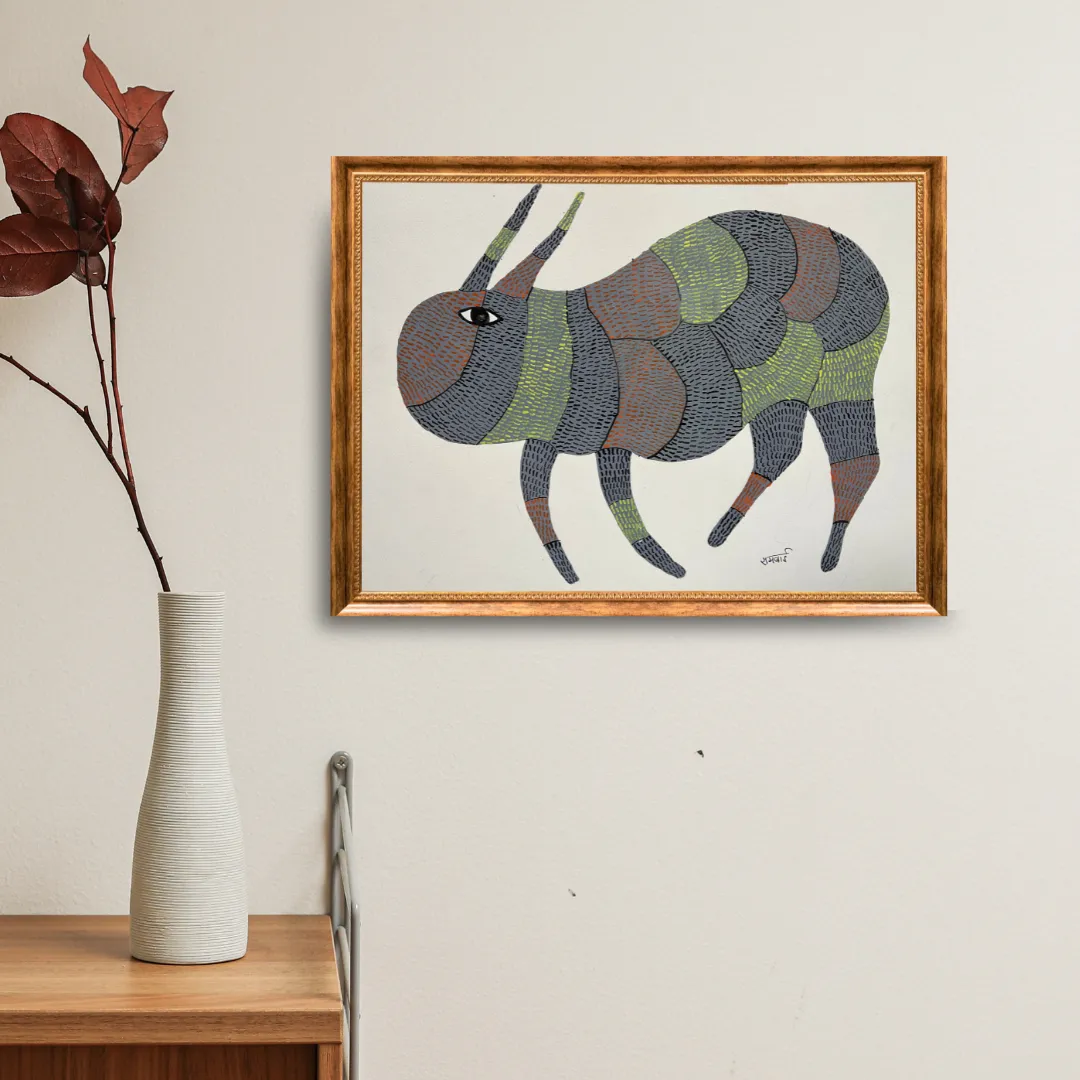
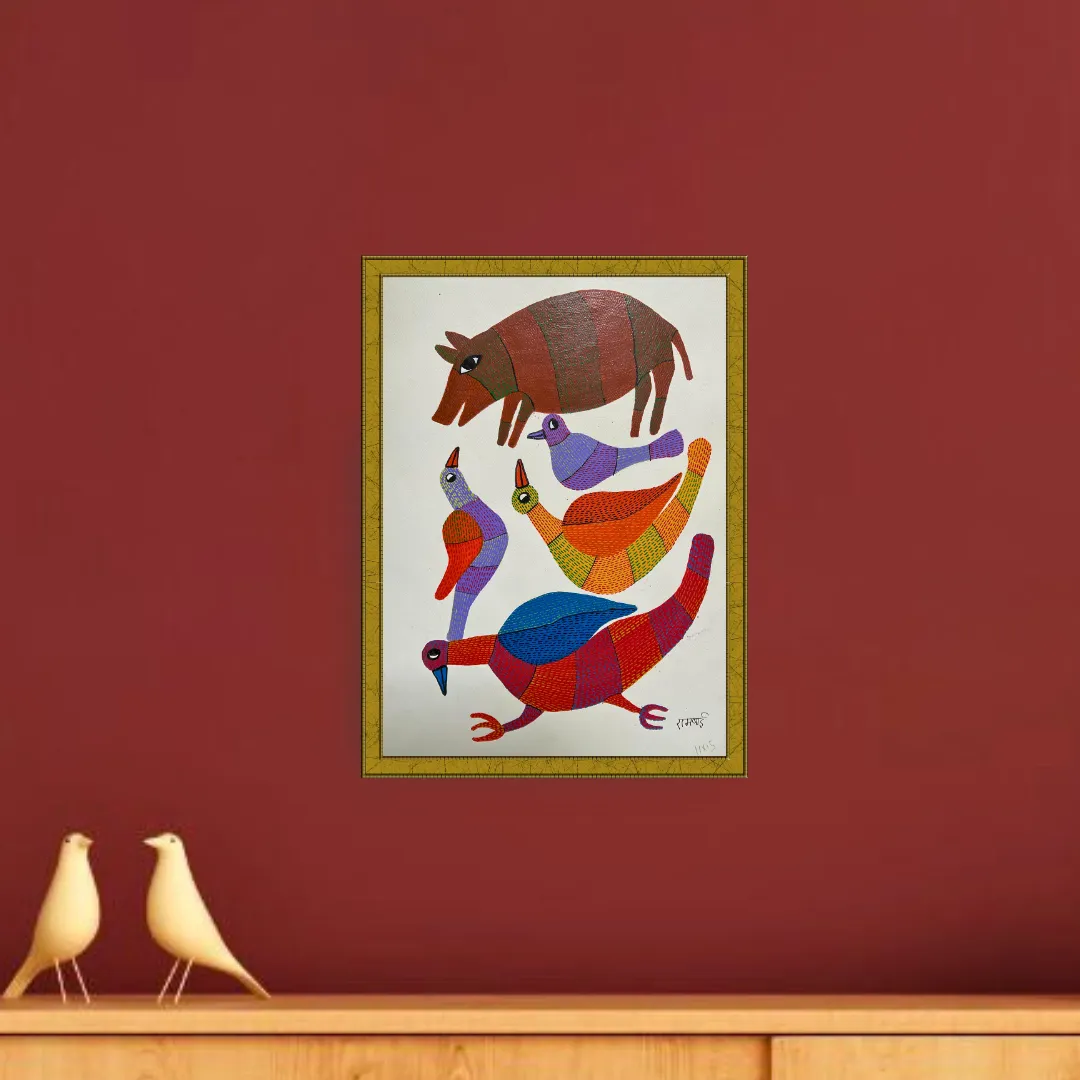
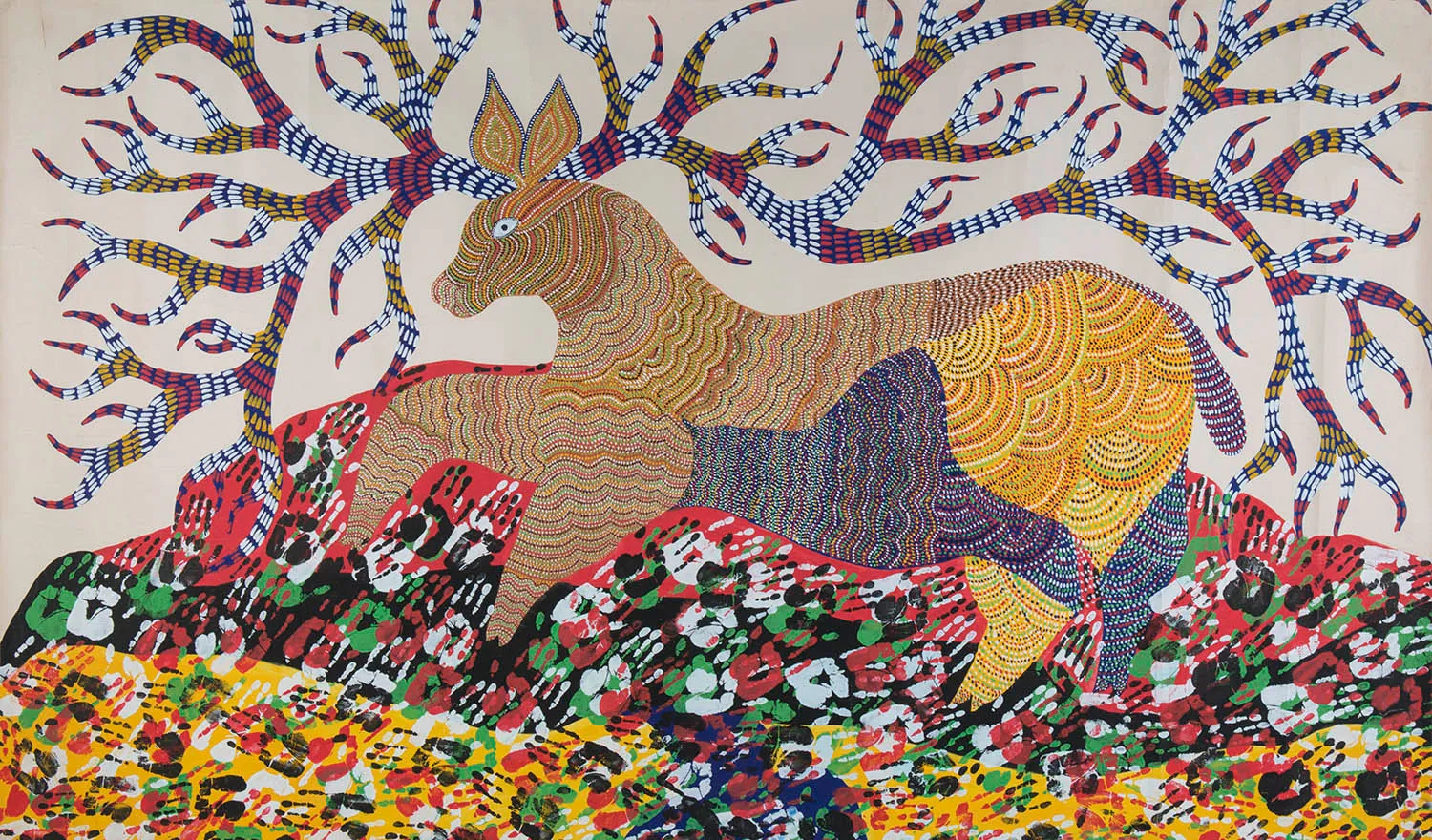
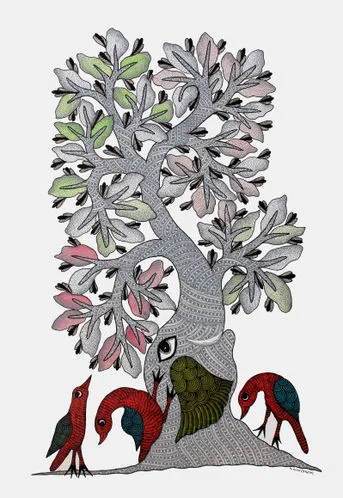
Gond art is the traditional visual art of the Gond tribe, one of India's largest Adivasi communities, whose ancestral home lies in the dense forests of Madhya Pradesh and extends into parts of Andhra Pradesh, Odisha, Maharashtra, and Chhattisgarh. The word 'Gond' itself derives from the Dravidian word 'Kond', meaning green mountains - a name that speaks to the deep bond this community holds with their forest landscape. Visually, Gond art is defined by its intricate patterns of dots, dashes, lines, fish scales, seed shapes, and geometric forms that are layered to fill animals, trees, and mythological figures with a vibrating inner energy. The art was traditionally painted on mud walls and floors during festivals and auspicious occasions - geometric motifs called digna were drawn to bring good luck, while wall paintings of flora and fauna called Bhittichitra honoured the natural world. On paper and canvas, the style retains this density and movement, using vivid base colours with contrasting pattern work on top.
History and Origin
The roots of Gond art stretch back many centuries, tied to an animist worldview that holds everything in nature - plants, animals, birds, earth, and mountains - to be alive with spirit and sacred energy. The Gond communities, particularly the Pradhan Gonds, were renowned keepers of oral tradition: their songs and stories about gods, legends, and the natural world were the cultural archive of the community, and painting was the visual expression of that same tradition. Historically, Gond artists painted on the walls and floors of their homes using materials gathered from their forest surroundings. Yellow pigment came from ramraj soil found near the Narmada River, black from coal, white from limestone or Chui soil, earthy red from geru dust, and light green from cow dung. Natural brushes called Koochi were made from beaten bark fibres.
In the 1980s, Gond art underwent a decisive transformation when artist Jangarh Singh Shyam moved from his village of Patangarh in Mandla district to Bhopal, where he was discovered by the contemporary artist Jagdish Swaminathan. Under Swaminathan's mentorship, Jangarh developed a new visual language that moved beyond the traditional dotting technique to incorporate folklore, sentient beings, and contemporary social themes using modern mediums including acrylics, Rotring pens, and ink. This shift - from ancestral walls to paper and canvas - allowed Gond art to travel far beyond its forest origins.
Key Features and Visual Style
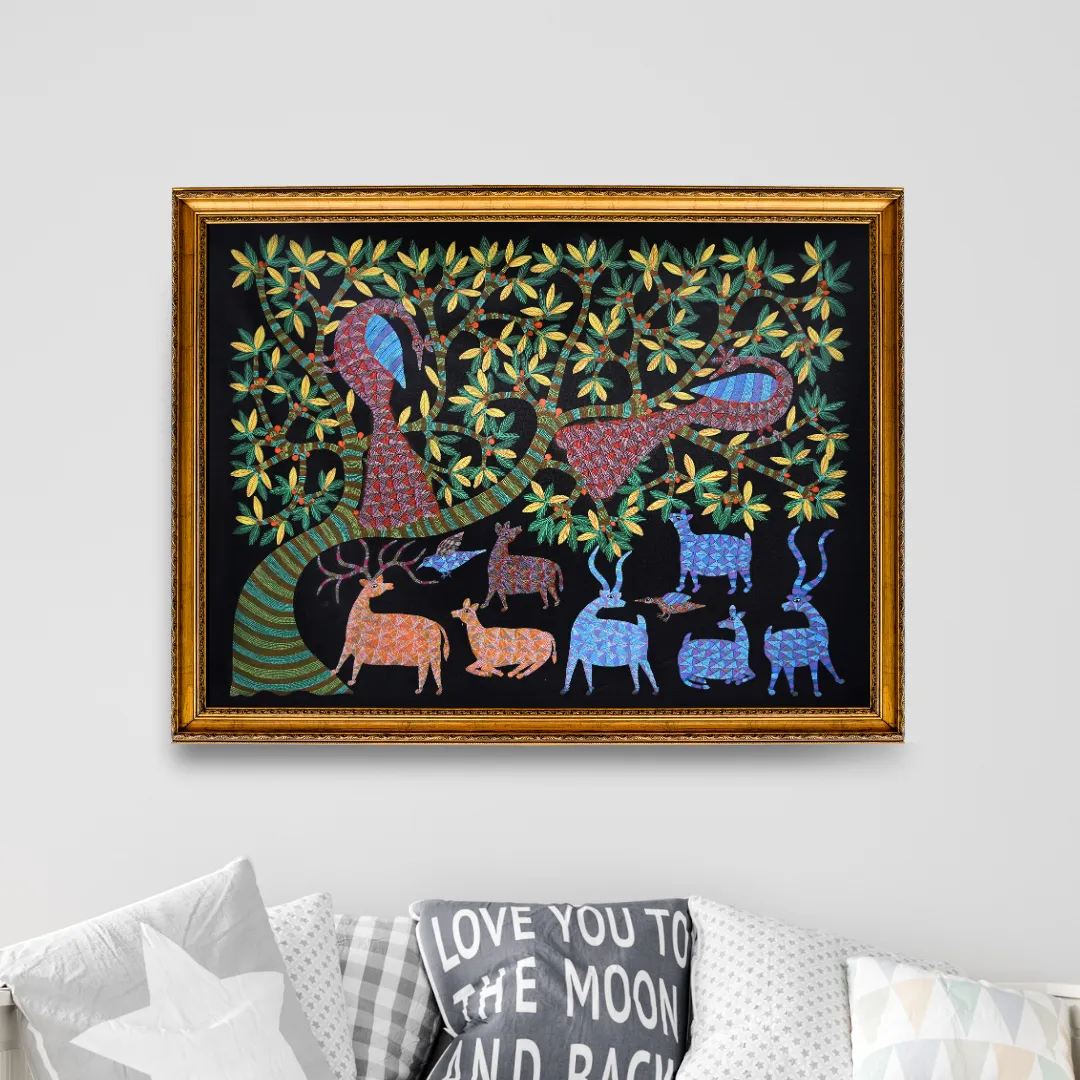
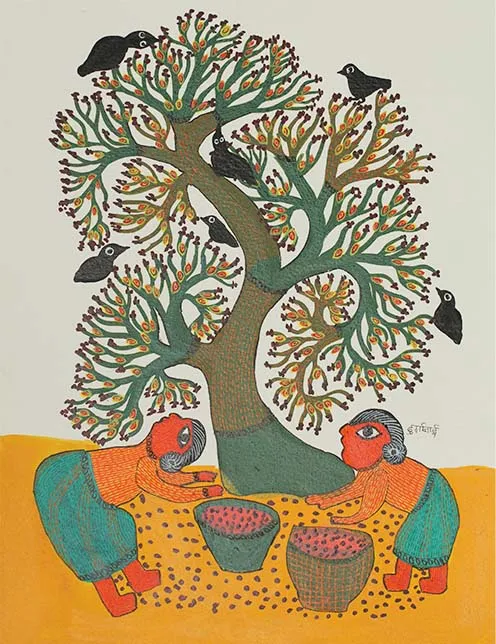
What makes Gond art immediately recognisable is its treatment of form as a surface to fill, rather than simply outline. Every figure - human, animal, or tree - becomes a container for intricate patterning, giving the work a sense of pulsing inner life. The colour palette is vivid and deliberate: warm base tones are set against bright contrasting patterns, creating compositions that seem to move when you look at them closely.
Dot-and-dash patterning: Lines, dots, dashes, fish scales, and water drops are used to fill every form, creating dense, tactile surfaces that give Gond paintings their characteristic rhythm and movement.
Natural pigments and materials: Traditional Gond art uses yellow from ramraj soil near the Narmada River, black from coal, white from limestone or Chui soil, red from geru dust, and green from cow dung, with Koochi bark-fibre brushes.
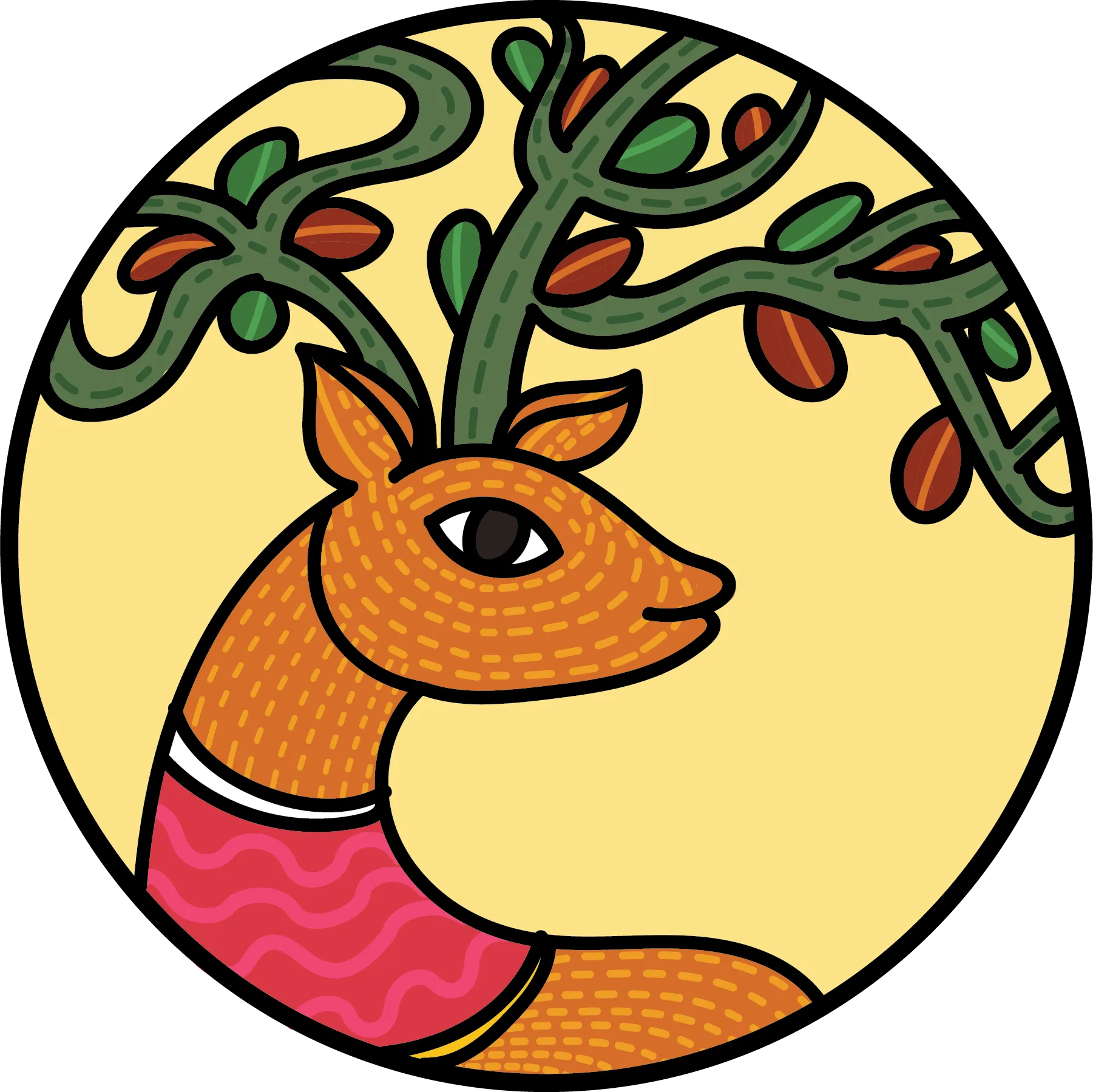
Nature and mythology as subject matter: Motifs include the Mahua tree (worshipped as the 'Tree of Life'), peacocks, snakes, tigers, deer, elephants, fish, and mythological creatures, alongside Hindu deities referenced as Bada Dev in Gondi tradition.
Wall preparation process: Traditionally, walls are cleaned, layered with cow dung, then coated with white soil called pidor - a process that creates a smooth ground before pigment and geometric patterns called laal mitti and kaali mitti are applied.
Vivid base with bright pattern overlay: A key stylistic feature of Gond paintings is that vivid, strong colours form the base layer, with brighter contrasting patterns drawn on top - reversing the convention of dark-on-light found in many other folk traditions.
Oral tradition embedded in images: Gond paintings carry specific legends and myths - including stories of Jhitku Mitki, Gondwani (Gond king legends), Ramyani (Ram Katha), and Pandvani (Pandava Katha) - making each work a visual retelling of community oral literature.
Famous Artists of Gond Art
The most celebrated figure in modern Gond art is Jangarh Singh Shyam (Patangarh, Mandla district, Madhya Pradesh), who is widely credited with transforming Gond painting from a community wall art practice into a recognised contemporary art form. Discovered by Jagdish Swaminathan in the 1980s, Jangarh developed a distinctive visual language that brought Gond mythology and nature imagery to international audiences using acrylic and ink on paper and canvas.
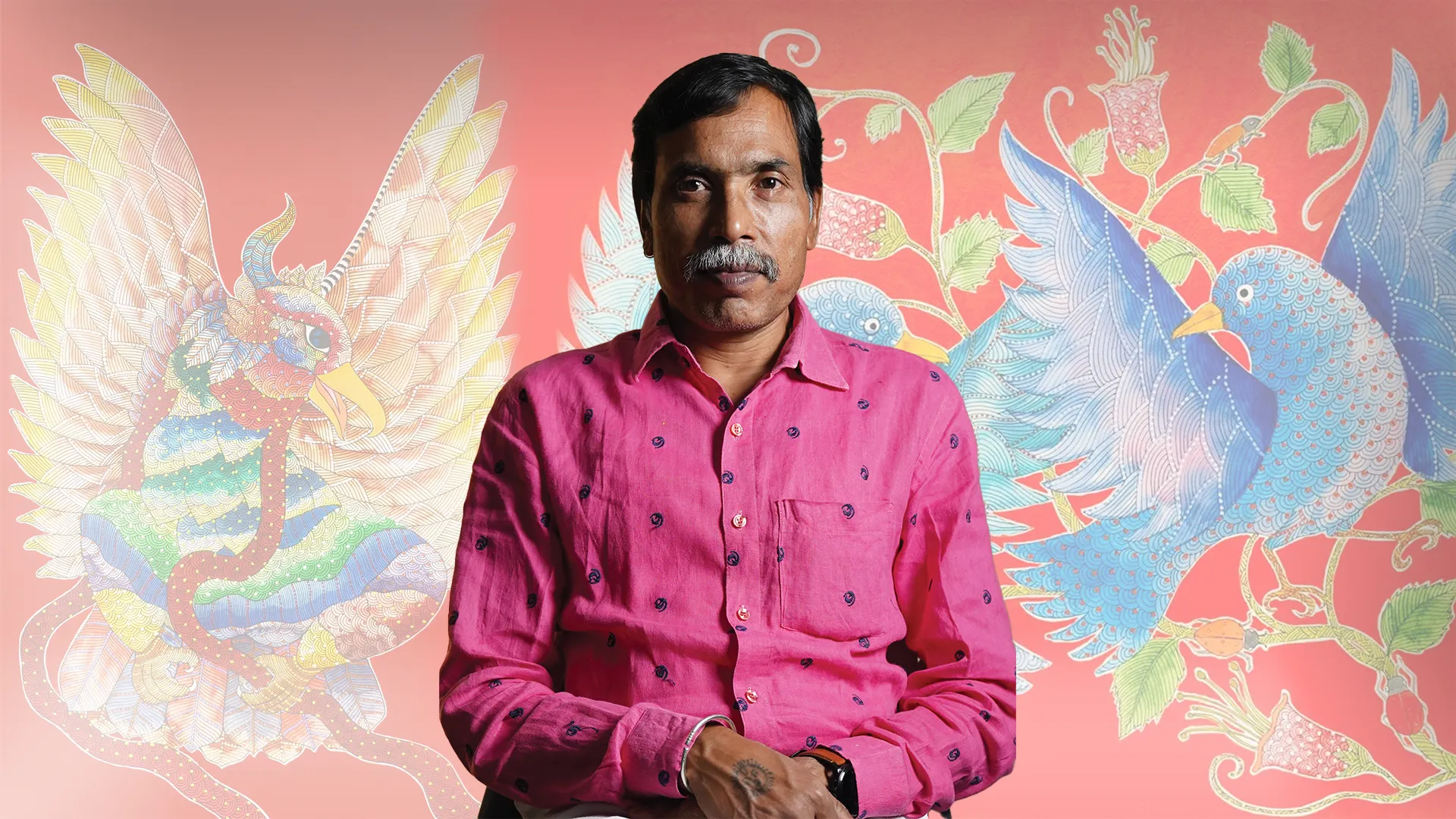
Venkat Raman Singh Shyam, a nephew of Jangarh and based in Bhopal, Madhya Pradesh, is one of the most active contemporary Gond artists working today. He is known for bringing socio-political commentary into his work - including a series on the 2008 Mumbai terrorist attack called the 'Mumbai Series' - and for co-authoring Ganja-Mahua Chronicles, which illustrates an inter-caste love story as a critique of contemporary India. Rooftop features a Gond art course taught by Venkat Raman Singh Shyam. Rajendra Kumar Shyam (Madhya Pradesh) is another significant practitioner who carries forward the Patangarh village tradition, creating works that balance traditional Gond symbolism with a refined contemporary aesthetic. Ram Singh Urveti (Madhya Pradesh) is recognised for his bold compositional style and his work in expanding Gond imagery to contemporary formats. Santoshi Shyam (Madhya Pradesh) represents a younger generation of Gond artists keeping the tradition alive through both painting and community documentation.
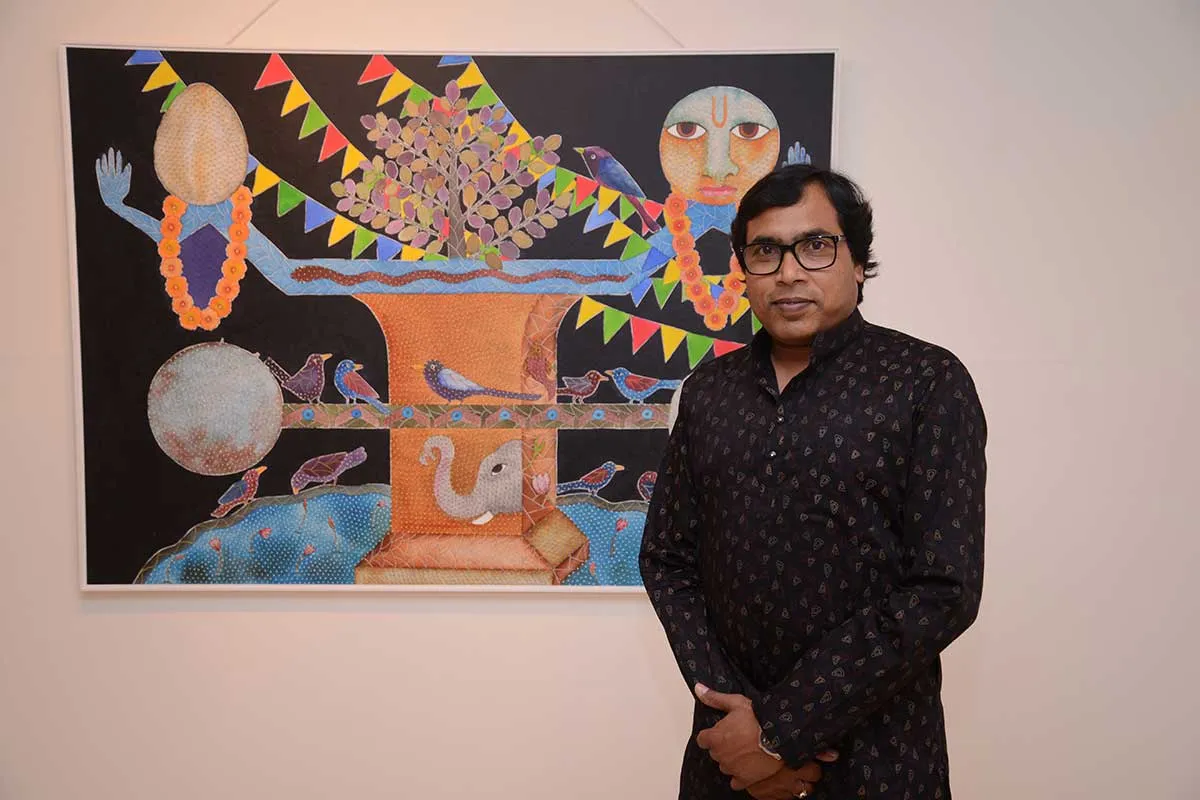
If you want to learn Gond art, the most direct way is to study under a practising Gond artist. Rooftop offers an online Gond art course by Venkat Raman Singh Shyam, a master of the tradition from Madhya Pradesh, which covers the core techniques of dotting, pattern filling, and compositional storytelling used in Gond painting. This allows learners anywhere in India to study an authentic Indian folk art directly from a carrier of the tradition, at their own pace. For those who want to explore related central Indian art forms, Rooftop's art courses page covers a wide range of traditions from across the country.
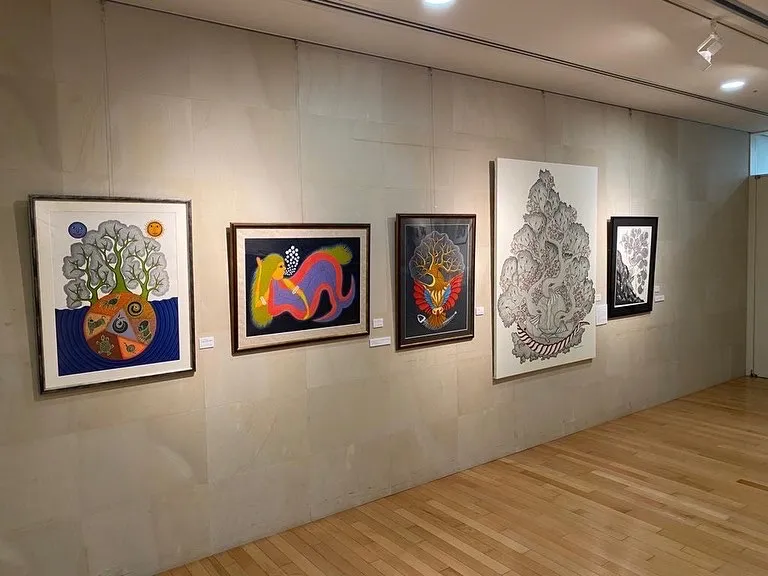
Authentic Gond art painting India can be found in specialist tribal art galleries in Bhopal, the Indira Gandhi Rashtriya Manav Sangrahalaya (National Museum of Mankind), and at events like the Lokrang festival in Madhya Pradesh. Village art centres around Patangarh in Mandla district remain the most direct source of original work. If you want to buy Gond paintings online, Rooftop's shop carries original works by verified Gond artists, allowing collectors and learners to support artists directly and acquire pieces with a clear provenance. The Rooftop shop also features works from related Indian folk art traditions. While gond painting images are widely shared online, nothing compares to viewing an original piece in person.
What is Gond art and where does it come from?
Gond art is the traditional painting tradition of the Gond tribe, one of India's largest Adivasi communities, originating from the forests of Madhya Pradesh in central India. The word 'Gond' comes from the Dravidian word 'Kond', meaning green mountains. The art was historically painted on the walls and floors of homes during festivals and auspicious occasions, using natural pigments and organic brushes made from bark fibres. Today it is practised on paper and canvas and is recognised internationally as a significant contemporary folk art form.
Which state and community in India practises Gond art?
Gond art originates from Madhya Pradesh, particularly the Vindhyas, Satpura, and Mandla regions along the Narmada river basin. While Madhya Pradesh is the primary home of this tradition, Gond communities also live in parts of Andhra Pradesh, Odisha, Maharashtra, and Chhattisgarh, and artists from these regions also practice the form. Within the Gond community, the Pradhan Gonds are especially known for preserving and carrying forward the painting tradition alongside their role as community storytellers and musicians.
Who are the most famous Gond art artists in India?
Jangarh Singh Shyam of Patangarh, Mandla district, is considered the pioneer of modern Gond art on paper and canvas. Other major artists include Venkat Raman Singh Shyam, known for his socio-political work including the 'Mumbai Series' and the book Ganja-Mahua Chronicles; Bhajju Shyam, who co-authored books on Gond mythology drawing parallels with the modern world; and Rajendra Kumar Shyam and Ram Singh Urveti, both active contemporary practitioners from Madhya Pradesh.
What materials and colours are used in Gond art painting?
Traditional Gond paintings use pigments gathered entirely from natural sources: yellow from ramraj soil found near the Narmada River, black from coal, white from limestone or Chui soil, earthy red from geru dust, and light green from cow dung. Brushes called Koochi were made from the fibre of beaten bark. Contemporary Gond artists working on paper and canvas often use acrylic paints, Rotring pens, and ink, a shift that began with Jangarh Singh Shyam's move into modern mediums in the 1980s.
What are the central motifs and symbols in Gond art?
The Mahua tree holds the most sacred place in Gond imagery, worshipped by the community as the 'Tree of Life' and appearing frequently in paintings. Other important motifs include peacocks, snakes, tigers, deer, fish, wild boars, elephants, and mythological creatures drawn from the community's oral legends. Hindu deities including Lord Ganesha, Lord Krishna, and Lord Shiva are depicted in Gond works as Bada Dev. Minor deities such as Marahi Devi, Phulvari Devi, Jalharin Devi, and Goddess Kali Phulvari also appear regularly.
Can I learn Gond art online in India?
Yes. Rooftop offers an online Gond art course by Venkat Raman Singh Shyam, a respected Gond master from Madhya Pradesh who carries forward the Patangarh village tradition. The course covers core techniques including the characteristic dot-and-dash patterning, natural motif rendering, and the colour-layering method used in Gond paintings. Learners anywhere in India can join, making this one of the most accessible ways to study this central Indian folk art form with an authentic practitioner. Gond art reminds us that every tree, animal, and story holds meaning - and that a community's deepest knowledge can be carried forward in colour and form across generations. Whether you are exploring this tradition for the first time or looking to deepen your understanding, Rooftop connects you directly with the artists who live and breathe this practice. Explore Gond art courses on Rooftop and begin your journey with one of central India's most powerful living folk art traditions.
Sources
Nair, Sunita. Indigenous Artists India. Sunita Nair, 2018.
Shyam, Venkat Raman Singh, and S. Anand. Ganja-Mahua Chronicles. Navayana Publishing Pvt. Ltd., 2016.
Deogaonkar, Shashishekhar Gopal. The Gonds of Vidarbha. Concept Publishing Company, 2007.
Image Sources
“Gond Art.” Mojarto, https://www.mojarto.com/artworks/folk-art/manoj-kumar-tekam/gond-art/MA346740. Accessed 15 July 2026.
“Gond Painting.” IMP Art, https://imp-art.org/articles/gond-painting/. Accessed 15 July 2026.
“Gond Painting.” Art Alive Gallery, https://artalivegallery.com/imagegallery/gallery/image/id/31/. Accessed 15 July 2026.
“File: 2015.2.24 Durga Bai Gond.jpg.” Wikimedia Commons, https://commons.wikimedia.org/wiki/File:2015.2.24_Durga_Bai_Gond.jpg. Accessed 15 July 2026.
“Gond Art India.” Gond Art India, https://gondart-india.com/en/5348/. Accessed 15 July 2026.
“Gond Painting.” IMP Art, https://imp-art.org/articles/gond-painting/. Accessed 15 July 2026.