

Lepakshi Art: Andhra Pradesh's Vijayanagara Mural Tradition
Let's know about Lepakshi art from south India!
Introduction and Origin
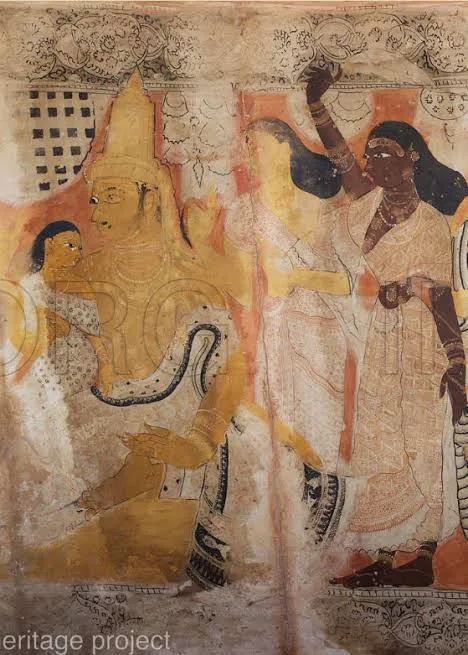
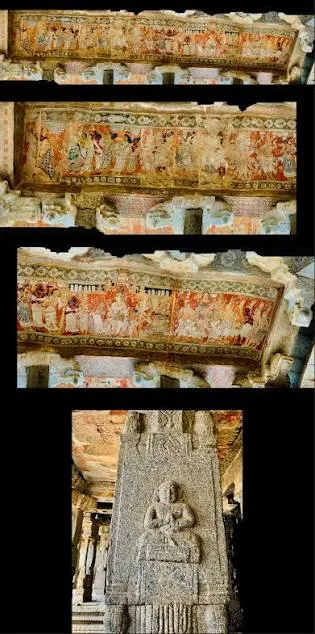
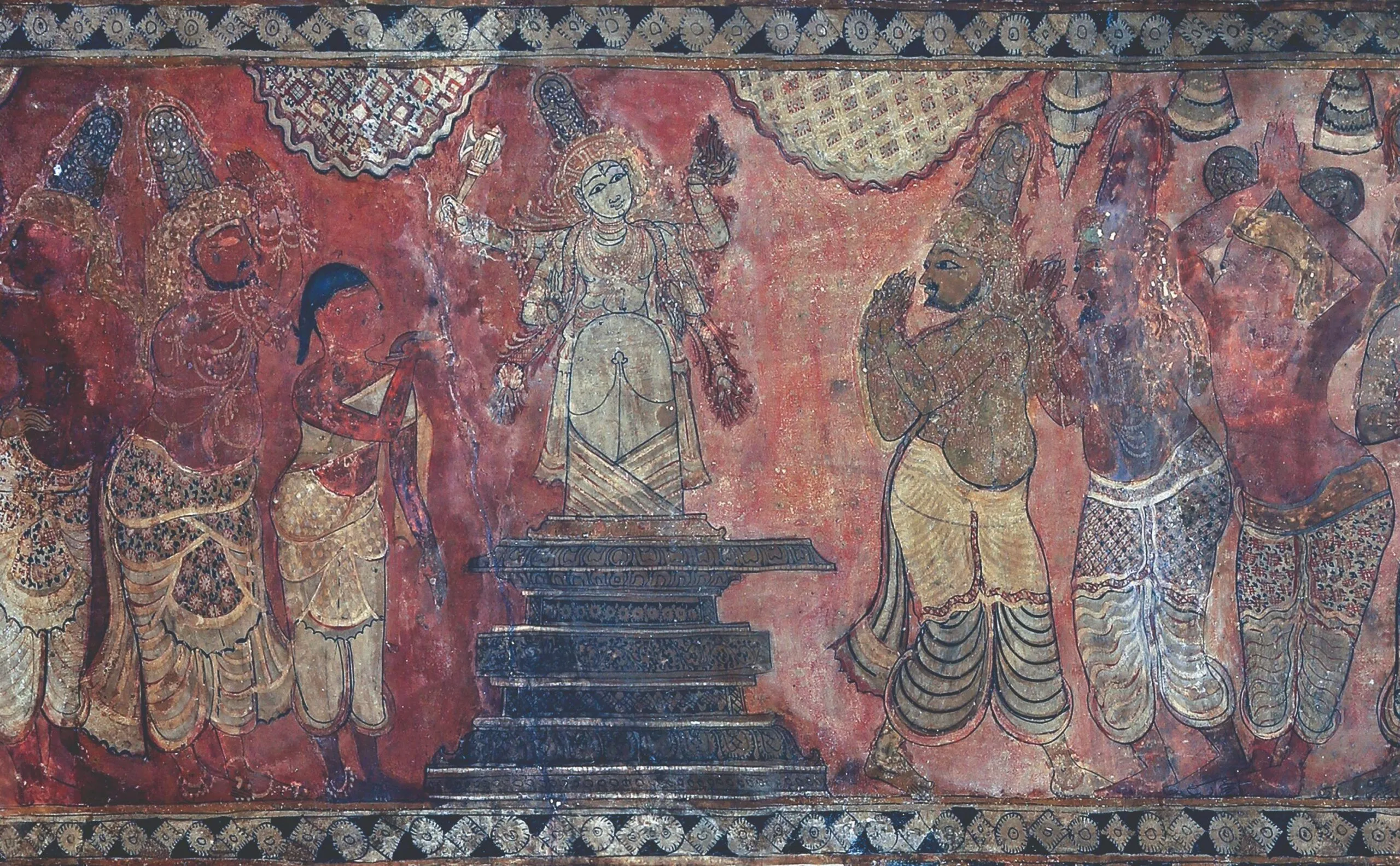
High on a rocky hill called Kurmasailam — meaning 'Tortoise Hill' in Telugu — in the Lepakshi village of Anantapur district, Andhra Pradesh, stands a temple whose walls have carried stories for over four centuries. Lepakshi art refers to the extraordinary murals and sculptures created during the Vijayanagara period inside the Virabhadra temple. These paintings capture Hindu epics, divine figures, and royal courtly life in a visual language that is at once bold, precise, and deeply spiritual. Today, these works are regarded as among the finest surviving examples of Andhra Pradesh mural art anywhere in India.
What Is Lepakshi Art?
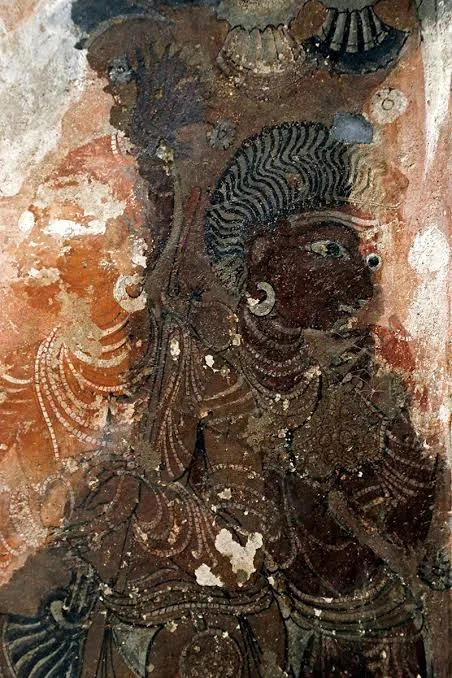
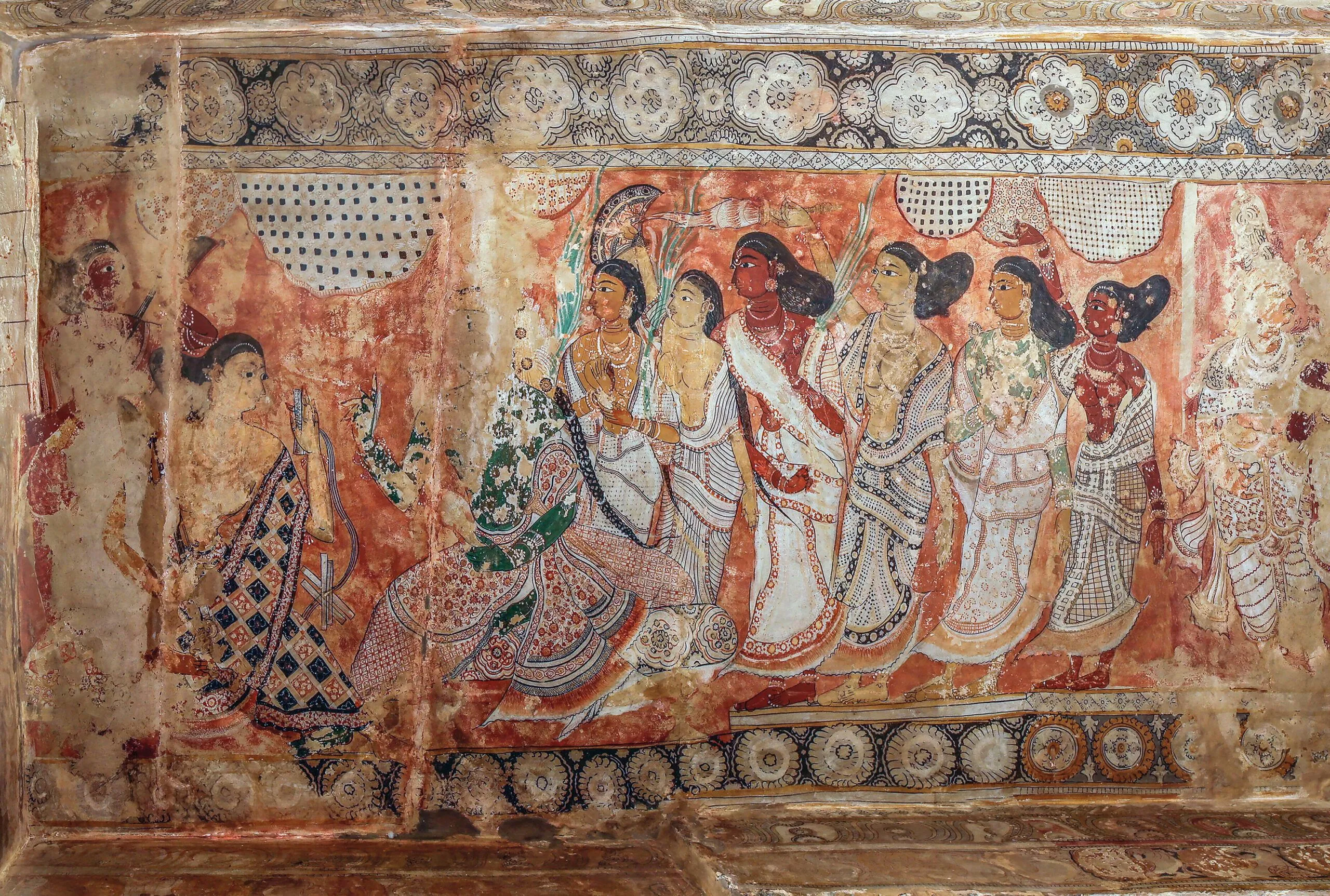
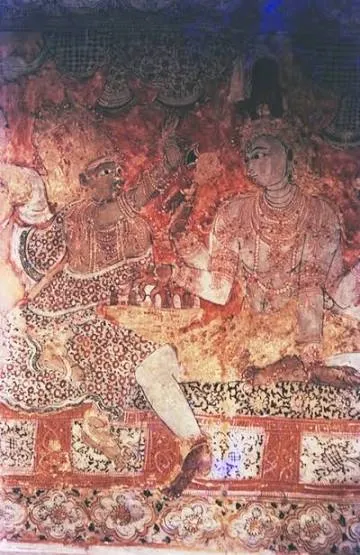
Lepakshi art refers to the mural paintings and sculptural traditions produced at the Virabhadra temple in Lepakshi, a village in the Anantapur district of Andhra Pradesh, during the 16th century under Vijayanagara patronage. These are wall paintings applied on granite surfaces and rendered in earthy pigments made from vegetables, red mud, and perishable minerals including limestone. The figures are slender, elegant, and meticulously detailed, with careful attention given to clothing, hairstyles, headgear, and jewellery. Faces follow a refined aesthetic with elongated almond-shaped eyes, full round faces, and well-structured noses. The background tone is a distinctive reddish-orange, and the colour palette draws from earthy black, red, yellow-ochre, green, white, and grey. The temple's name is linked to a moment from the Ramayana — when Rama arrived at this spot and said 'Le, Pakshi', meaning 'Rise, bird' in Telugu, to the dying eagle Jatayu.
History and Origin
The Virabhadra temple at Lepakshi was constructed during the 16th century under the Vijayanagara Empire, one of the most powerful Hindu kingdoms of medieval South India. Local legend holds that the temple was built by Pandit Agastya to calm Veerabhadra, the fierce offspring of Lord Shiva. The murals preserved here were created primarily in the 16th century and reflect both the Vijayanagara painting style and the influence of the Chola dynasty that preceded it. From the Chola tradition comes the colour scheme, while the intricate line work and meticulous detailing of figures is characteristic of the Vijayanagara approach. Over centuries, environmental factors including cobwebs, moss, dirt, insect cocoons, and the soot from nearby aartis have caused erosion. Today, the illustrative tradition lives on through Kalamkari paintings, where motifs from Lepakshi have been adapted for sarees, home decor, woodcut block prints, and canvases.
Key Features and Famous Artists
Key Features and Visual Style
The murals at Lepakshi are immediately recognisable by their refined figural style, earthy palette, and narrative density. Every surface is filled with scenes drawn from Hindu epics, rendered with remarkable precision and a sense of ceremonial gravity.
Colours drawn from natural pigments: earthy black, red, yellow-ochre, green, white, and grey — all sourced from vegetables, mud, and perishable minerals including limestone.
Figures are slender and elegant, with fine detailing on dhotis, sarees, and tunics, and a focus on elongated almond-shaped eyes, full faces, and structured noses.
Central motifs include scenes from the Ramayana, marriages of Lord Shiva and Parvati, Arjuna winning Draupadi's hand, and Shiva and Parvati playing dice.
Borders filled with abstract floral patterns, stylised plant forms, and rounded geometric shapes; intricate floral prints also appear on figures' clothing.
Plaster surface preparation involves sandy clay, red mud, and limestone powder bound with honey or liquid molasses and levelled to three millimetres before painting.
Sketches drawn in red ochre powder first, then filled in with pigment — a multi-step process that has remained consistent with Vijayanagara fresco methods.
Famous Artists of Lepakshi Art
The Lepakshi murals were created anonymously by court painters working under Vijayanagara patronage, and individual names from that period are largely unrecorded. However, contemporary artists working in the connected tradition of Kalamkari — which carries the visual vocabulary of Lepakshi forward — include several notable names.
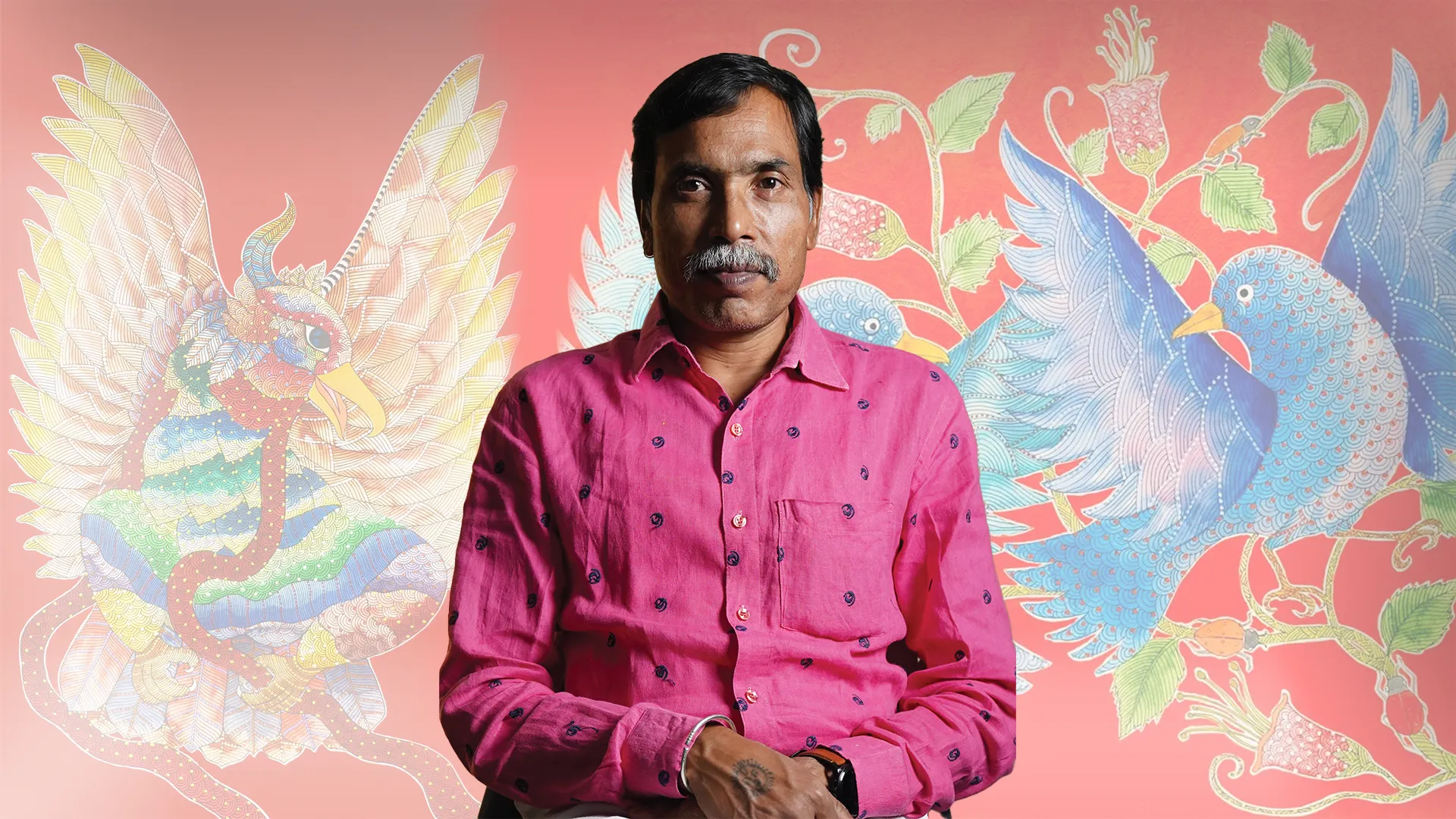
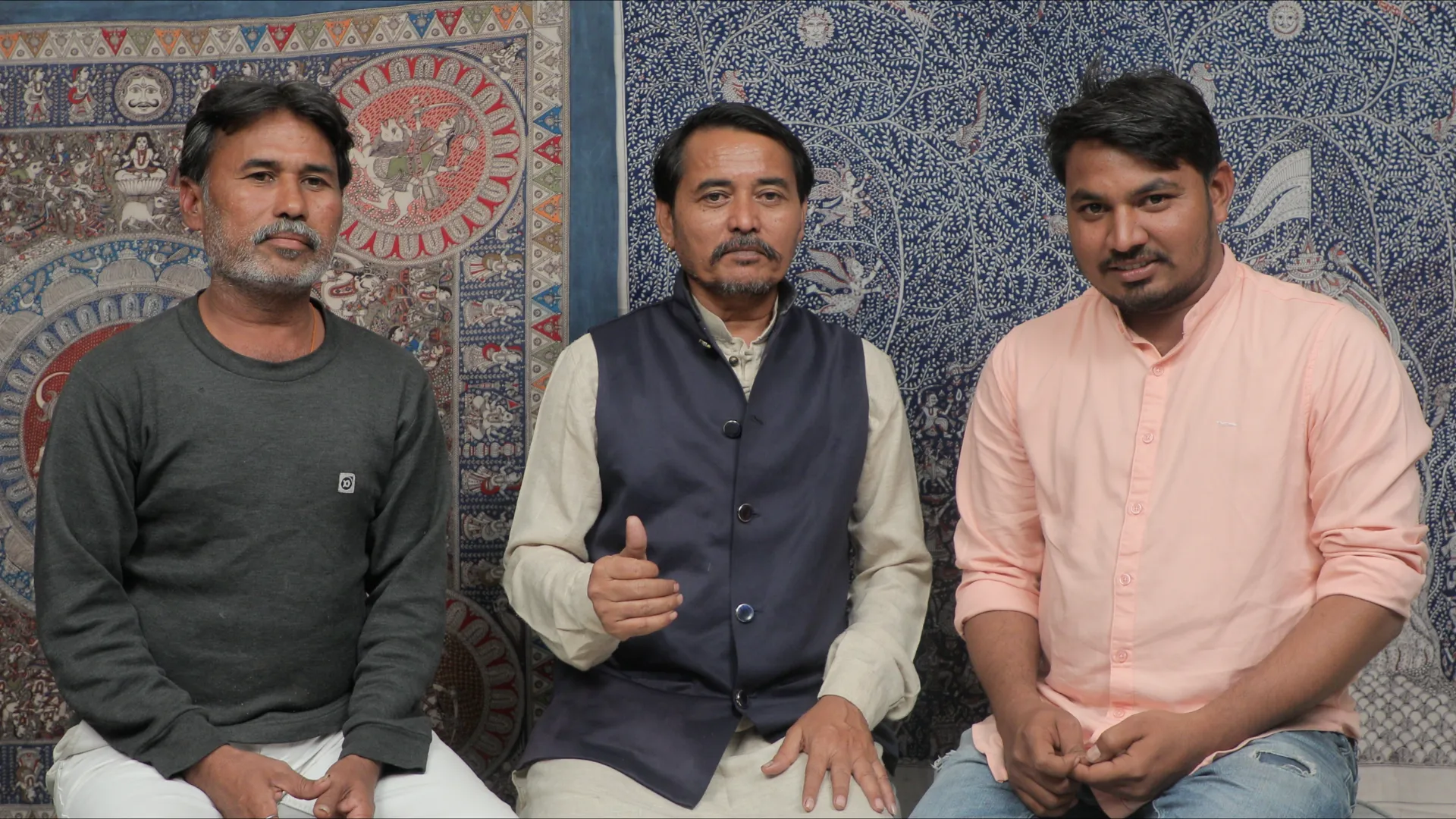
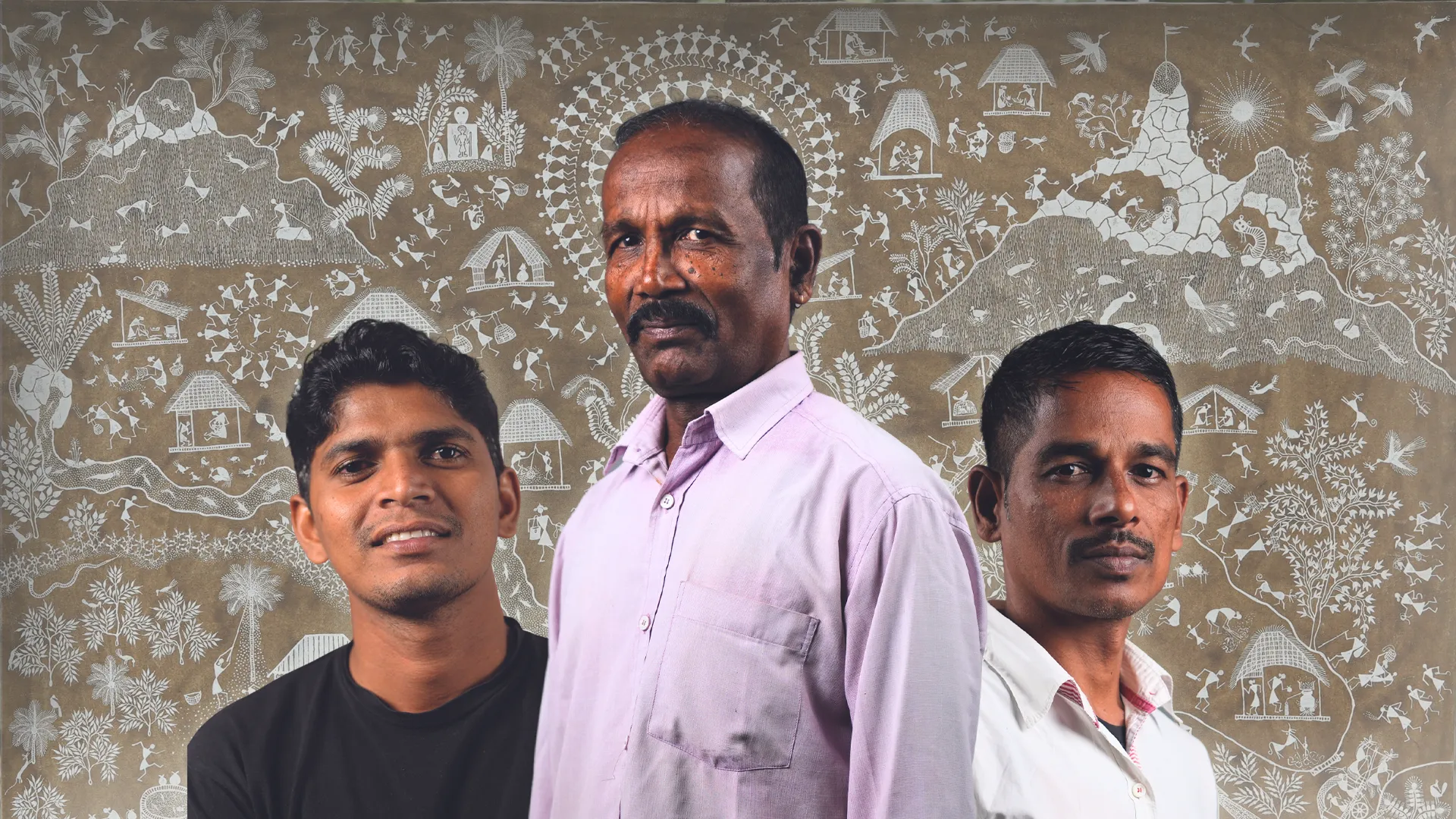
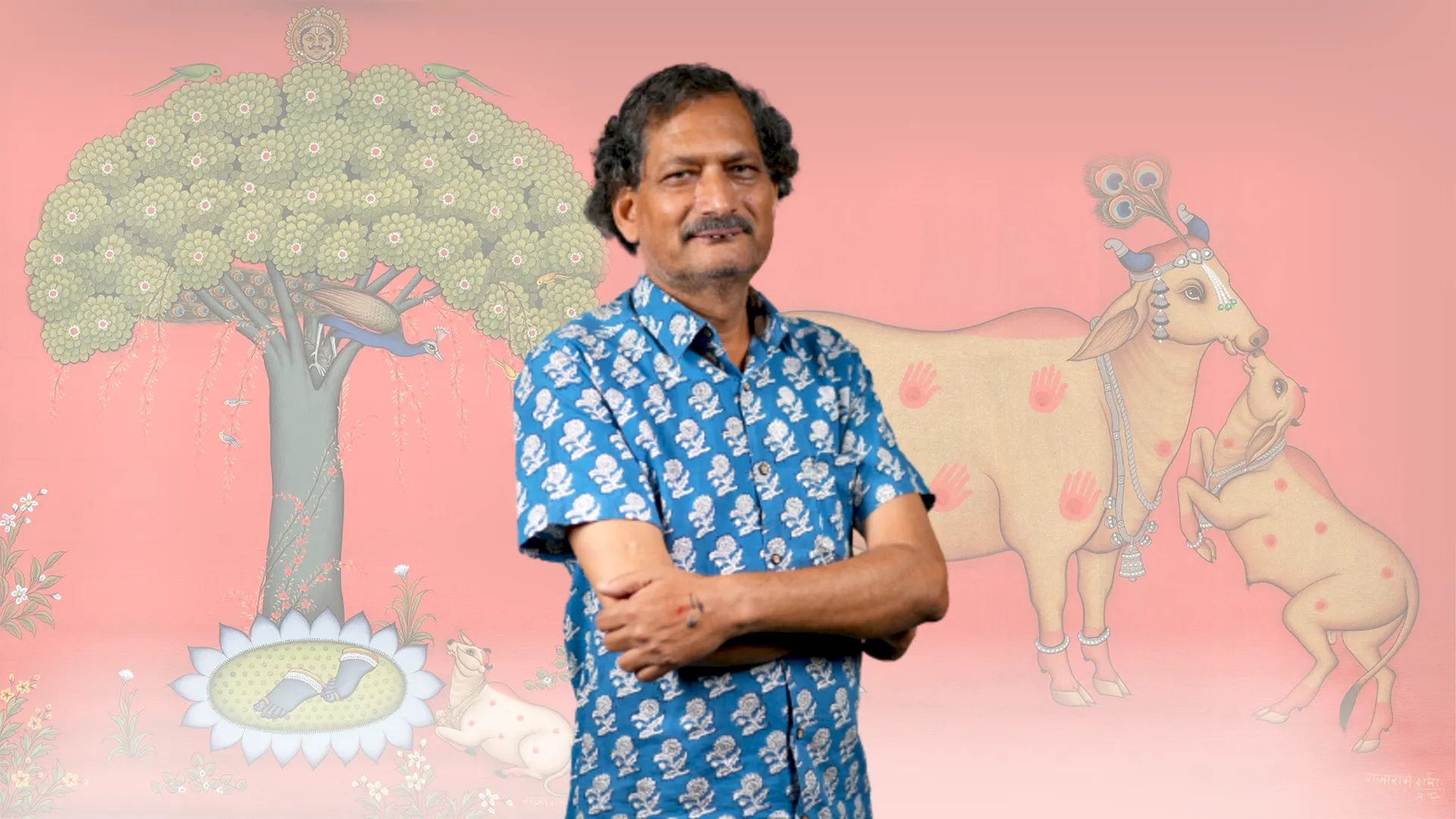
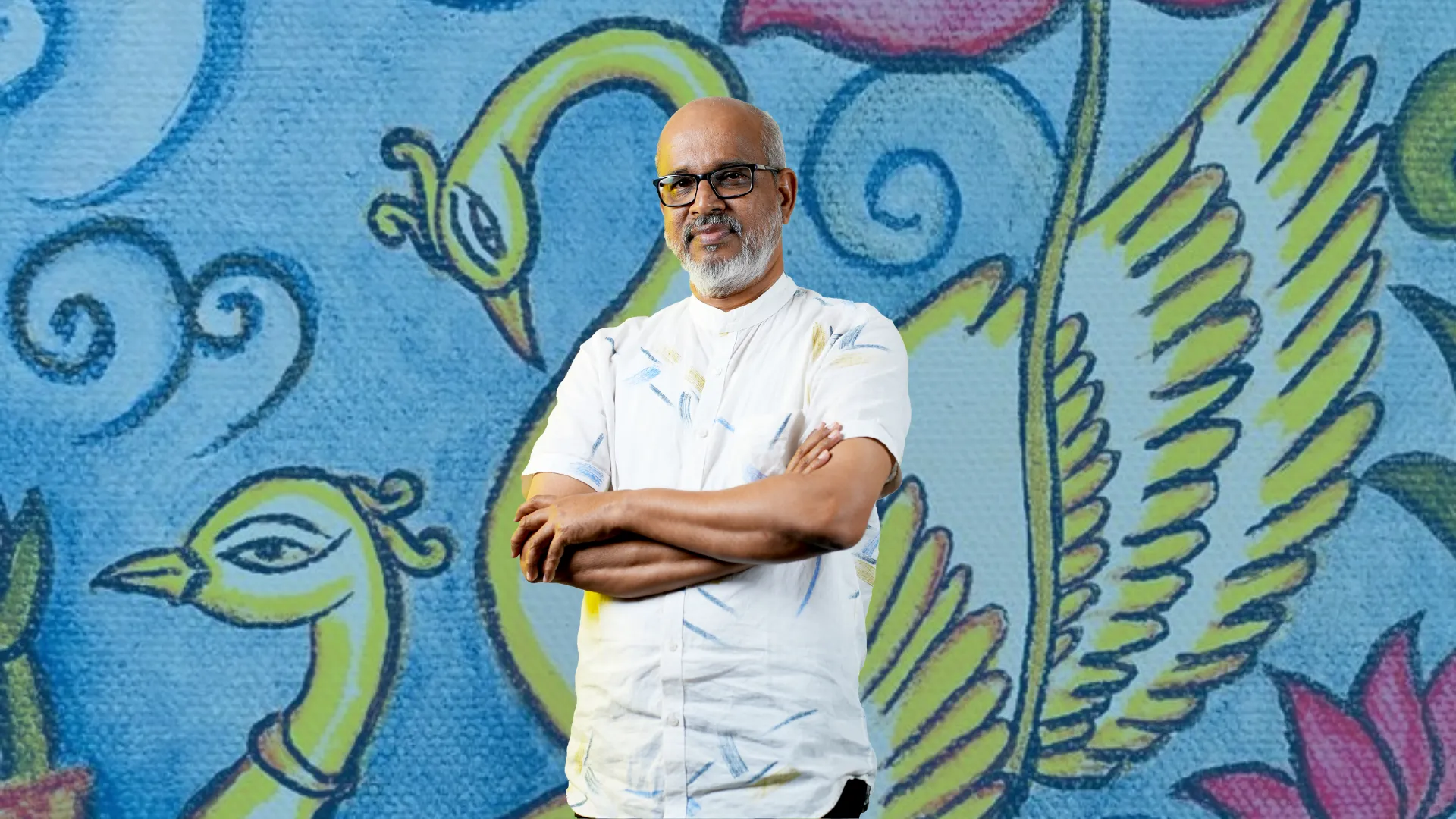
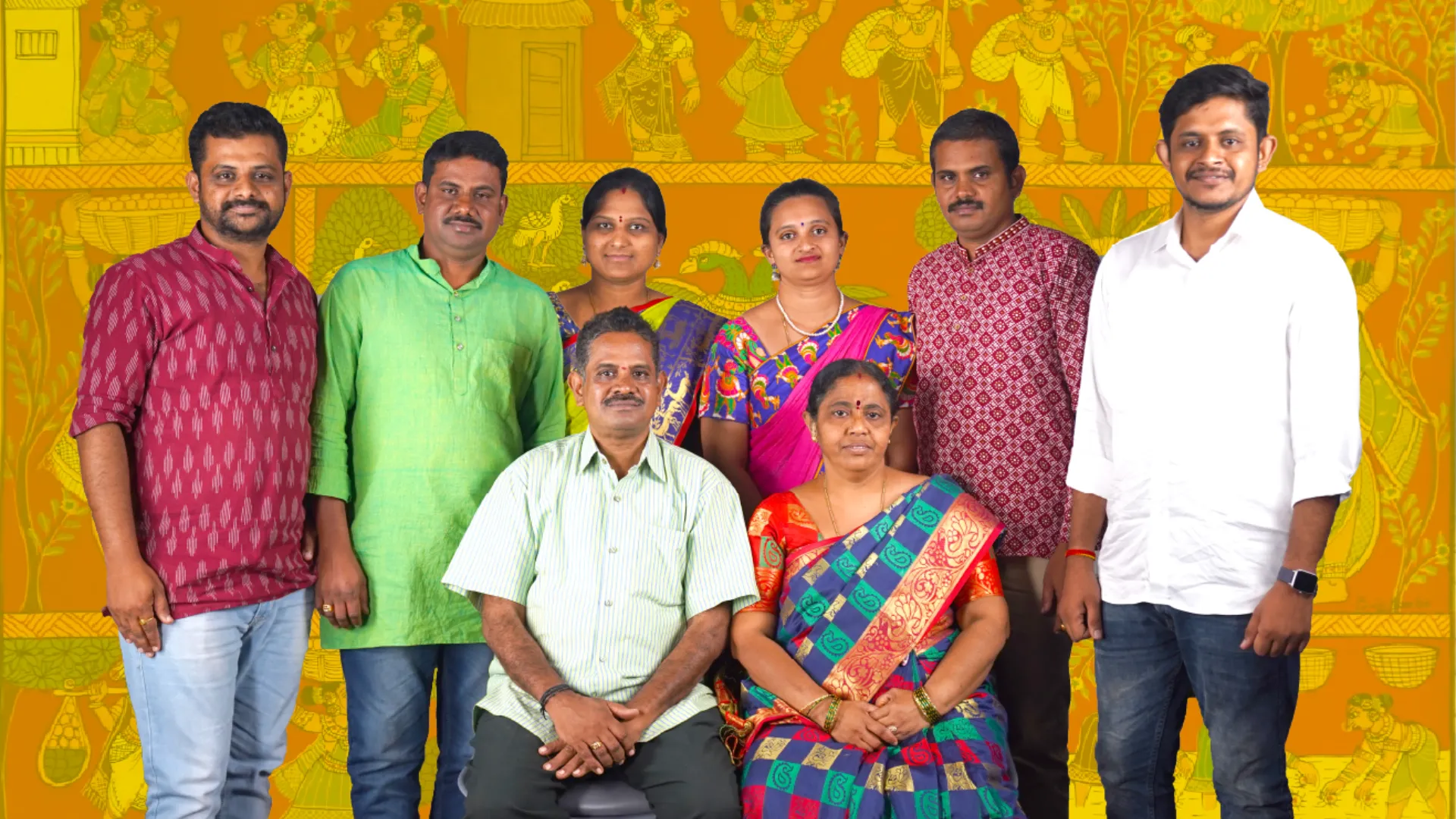
Nirmal Chitrakars from Andhra Pradesh have sustained the tradition of temple-influenced mural painting in the region, working with natural pigments in ways that echo the Lepakshi approach. The Dhanalakota family from Telangana are master practitioners of the closely related Cheriyal painting tradition, which shares iconographic and stylistic roots with Lepakshi. Artist P.K. Sadanandan from Kerala, celebrated for his Kerala mural work, represents the broader South Indian mural tradition of which Lepakshi is a principal expression. Artists who teach fresco techniques on Rooftop include practitioners featured in the fresco painting experience.
How to Learn Lepakshi Art
If you want to learn the techniques behind traditional Indian temple murals and the painting conventions that define Lepakshi art, Rooftop offers courses and experiences taught by practising artists from this tradition. The fresco painting course on Rooftop covers plaster preparation, natural pigment use, and the figural drawing conventions closely related to the Lepakshi style. You can also explore the Kerala mural course by P.K. Sadanandan for a deep understanding of the South Indian mural tradition. Browse all available courses on Rooftop to find the right starting point for you.
Where to See and Buy Lepakshi Art
The original murals can be seen at the Virabhadra temple in Lepakshi village, Anantapur district, Andhra Pradesh — a site reachable from Bangalore and Hyderabad. The temple is maintained as a protected monument and draws scholars, devotees, and art travellers year-round. For those who want to own works inspired by this tradition, the visual language of Lepakshi art lives on in Kalamkari textiles, prints, and paintings available through traditional craft markets in Andhra Pradesh. You can also explore related traditional Indian art on the Rooftop shop, which carries original works by master artists from across India.
Learn Lepakshi

Frequently Asked Questions
What is Lepakshi art and where does it come from?
Lepakshi art refers to the mural paintings and sculptural tradition created at the Virabhadra temple in Lepakshi village, Anantapur district, Andhra Pradesh, during the 16th century. The murals were produced under the patronage of the Vijayanagara Empire and depict scenes from Hindu epics including the Ramayana. They are considered among the finest surviving examples of Andhra Pradesh mural art in India. The temple itself sits on the rocky Kurmasailam hills and its name is linked to a moment from the Ramayana involving Jatayu and Rama.
Which state does Lepakshi art belong to?
Lepakshi art belongs to Andhra Pradesh in southern India. The Virabhadra temple where these murals are housed is located in Lepakshi village in the Anantapur district of the state. The painting style reflects both the Vijayanagara dynasty's artistic conventions and the influence of the earlier Chola tradition from the same region.
What materials and colours are used in Lepakshi murals?
The Lepakshi murals were created on granite surfaces coated with a plaster of sandy clay, red mud, and limestone powder, bound together with honey or liquid molasses. Pigments were made from natural materials including vegetables, mud, and perishable minerals. The colour palette includes earthy black, red, yellow-ochre, green, white, and grey, with a characteristic reddish-orange background tone. Preliminary sketches were drawn in red ochre powder before pigment was applied.
What themes and subjects appear in Lepakshi paintings?
The murals depict scenes exclusively from Hindu epics and Puranas, particularly the Ramayana. Specific scenes include the marriage of Lord Shiva and Parvati, Arjuna winning Draupadi's hand, and Shiva and Parvati playing the game of dice. The priests at the temple would recite religious hymns and perform aartis every morning and evening, making these paintings an active part of ritual life rather than purely decorative works.
How is Lepakshi art connected to Kalamkari?
The illustrative tradition of Lepakshi murals has directly influenced Kalamkari, the hand-painted and block-printed textile art of Andhra Pradesh. Motifs originally depicted in the Lepakshi temple walls now appear as prints on Kalamkari sarees, home decor items, woodcut block prints, and canvases. This makes Kalamkari one of the most accessible living forms through which the visual language of the Lepakshi tradition continues today.
Can I learn traditional Indian temple mural painting online?
Yes. Rooftop offers courses that cover the techniques and traditions connected to South Indian temple mural painting, including fresco preparation, natural pigment use, and the figural drawing styles associated with the Lepakshi tradition. The fresco course by Bhawani Shankar Sharma and the Kerala mural course by P.K. Sadanandan are strong entry points. You can browse all available options at rooftopapp.com/courses.
The Lepakshi murals have survived erosion, centuries of ritual smoke, and the passage of empires — and they remain one of the most detailed windows into medieval South Indian devotional art. Whether you are a history enthusiast, an art student, or someone who simply loves the depth of traditional Indian art, Lepakshi repays every moment of attention. Explore South Indian mural traditions and related courses on Rooftop and discover where this ancient visual language lives today.
Bibliography
Sources
Dallapiccola, Anna L., Brigitte Khan Majlis, George Michell, and John M. Fritz. Lepakshi: Architecture, Sculpture, Painting. Niyogi Books, 2019.
Michell, George. Architecture and Art of Southern India: Vijayanagara and the Successor States, 1350–1750. Cambridge University Press, 1995.
Image Sources
"16th Century Virabhadra Temple, Lepakshi, Vijayanagara Era Murals." Wikimedia Commons, https://commons.wikimedia.org/wiki/File:16th_century_Virabhadra_temple,_Lepakshi,_Vijayanagara_era_Murals.jpg. Accessed 16 July 2026.
"Murals at Virabhadra Temple, Lepakshi." Impart Encyclopedia of Art, 21 Apr. 2022, https://imp-art.org/articles/murals-at-virabhadra-temple-lepakshi/. Accessed 16 July 2026. ([Impart][1])
"The Magnificence of Lepakshi – Part 3." MatriWords, 1 June 2020, https://matriwords.com/2020/06/01/the-magnificence-of-lepakshi-part-3/. Accessed 16 July 2026.
"The Painted Wonders of Lepakshi." Live History India, 1 July 2019, https://www.livehistoryindia.com/story/amazing-india/the-painted-wonders-of-lepakshi. Accessed 16 July 2026.
"The Painted Wonders of Lepakshi." Live History India, 1 July 2019, https://www.livehistoryindia.com/story/amazing-india/the-painted-wonders-of-lepakshi. Accessed 16 July 2026.
"Virupaksha Temple, Lepakshi." Kamat's Potpourri, https://kamat.com/kalranga/deccan/lepaxi/23233.htm. Accessed 16 July 2026.