12% OFF
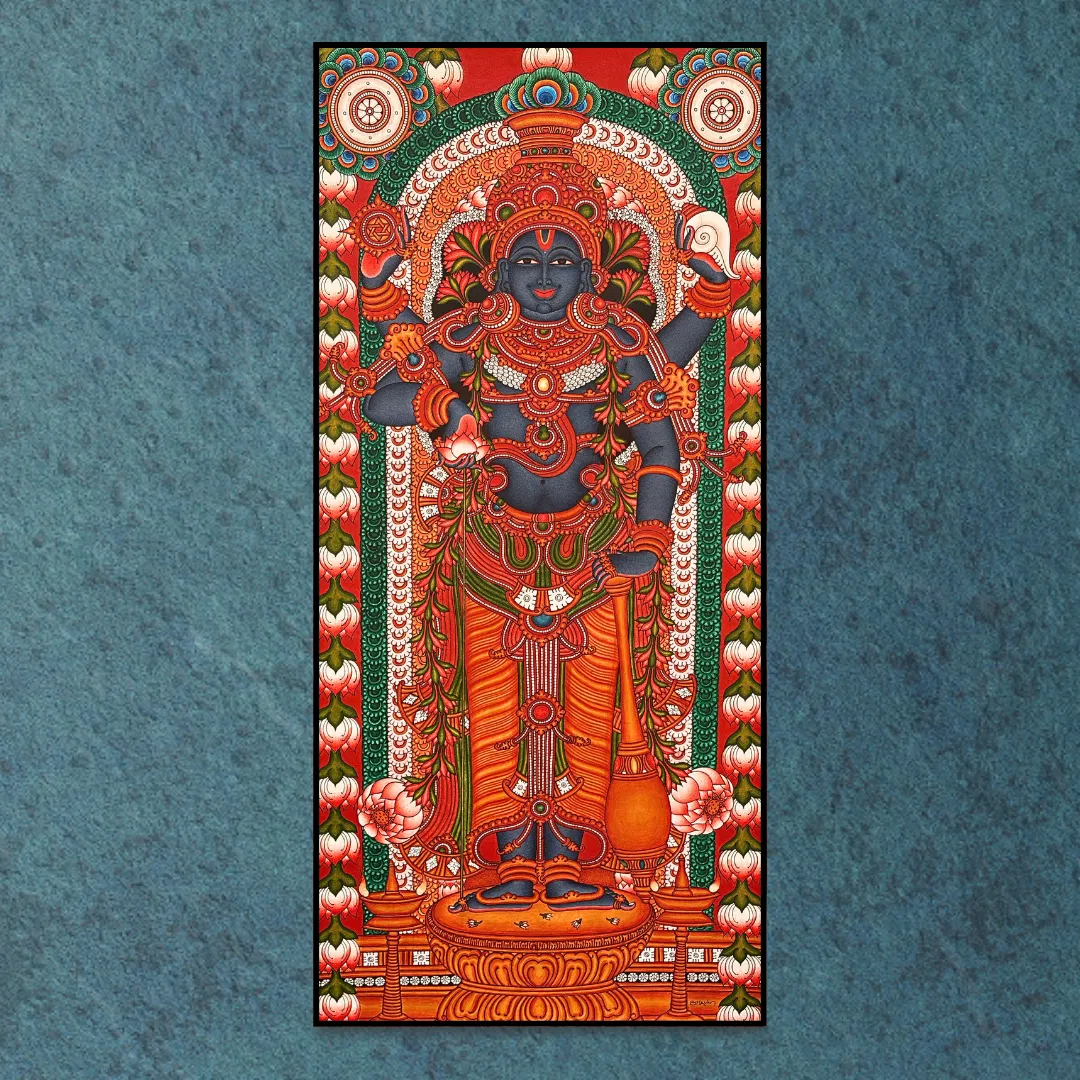
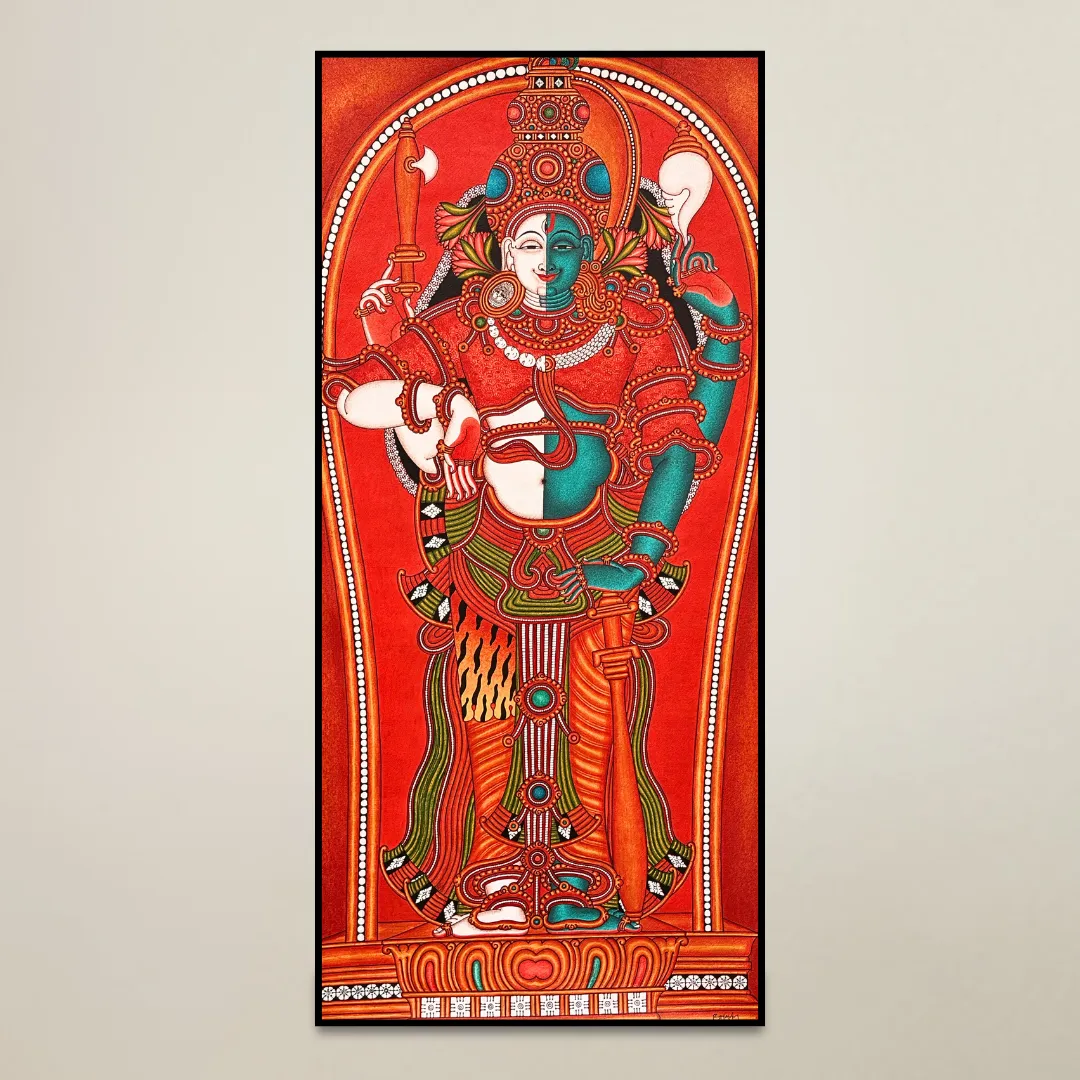
Harihara – Kerala Mural Painting
$ 2,289$ 2,589


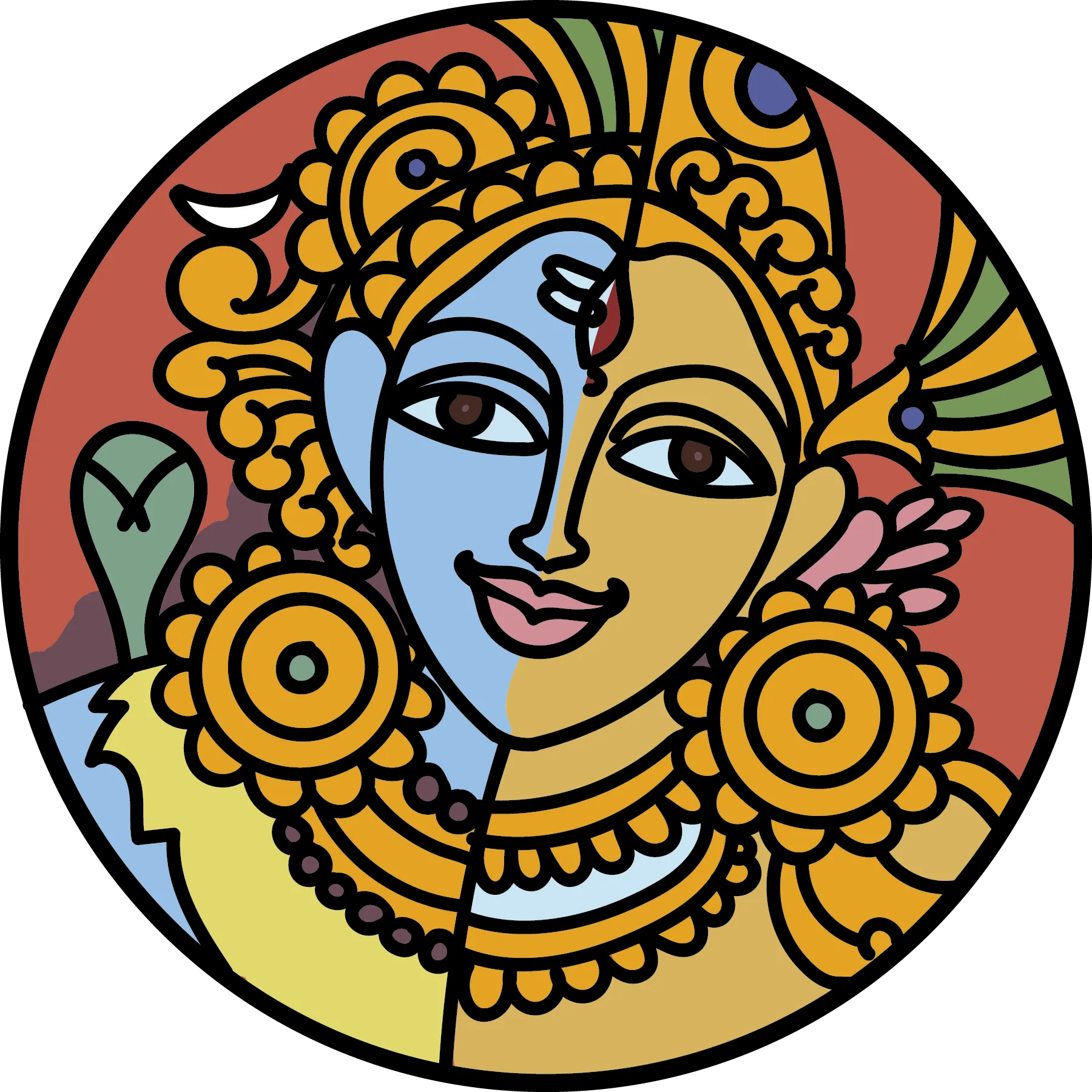
Let's explore the Kerala Mural Paintings!
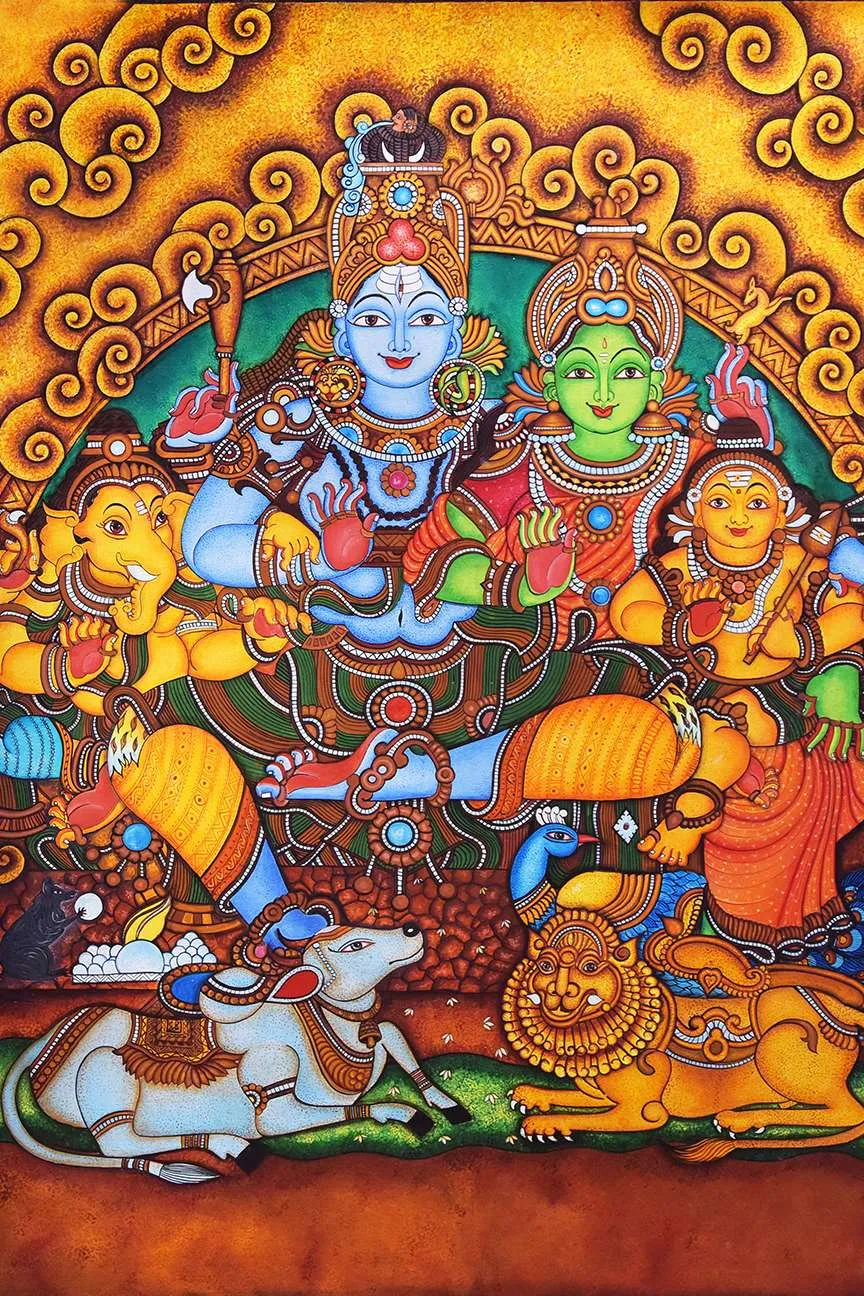
Among the great Kerala mural painting traditions of India, few carry the weight of centuries the way Kerala's temple frescoes do. Painted on the walls of shrines, palaces, and churches across God's own country, these murals bring Hindu mythology to life through a distinctive five-colour palette and a style of figuration found nowhere else in Indian art. Today, Kerala mural painting is recognised as one of the most sophisticated expressions of traditional Indian art to have survived into the modern era.
What Is Kerala Mural Painting?
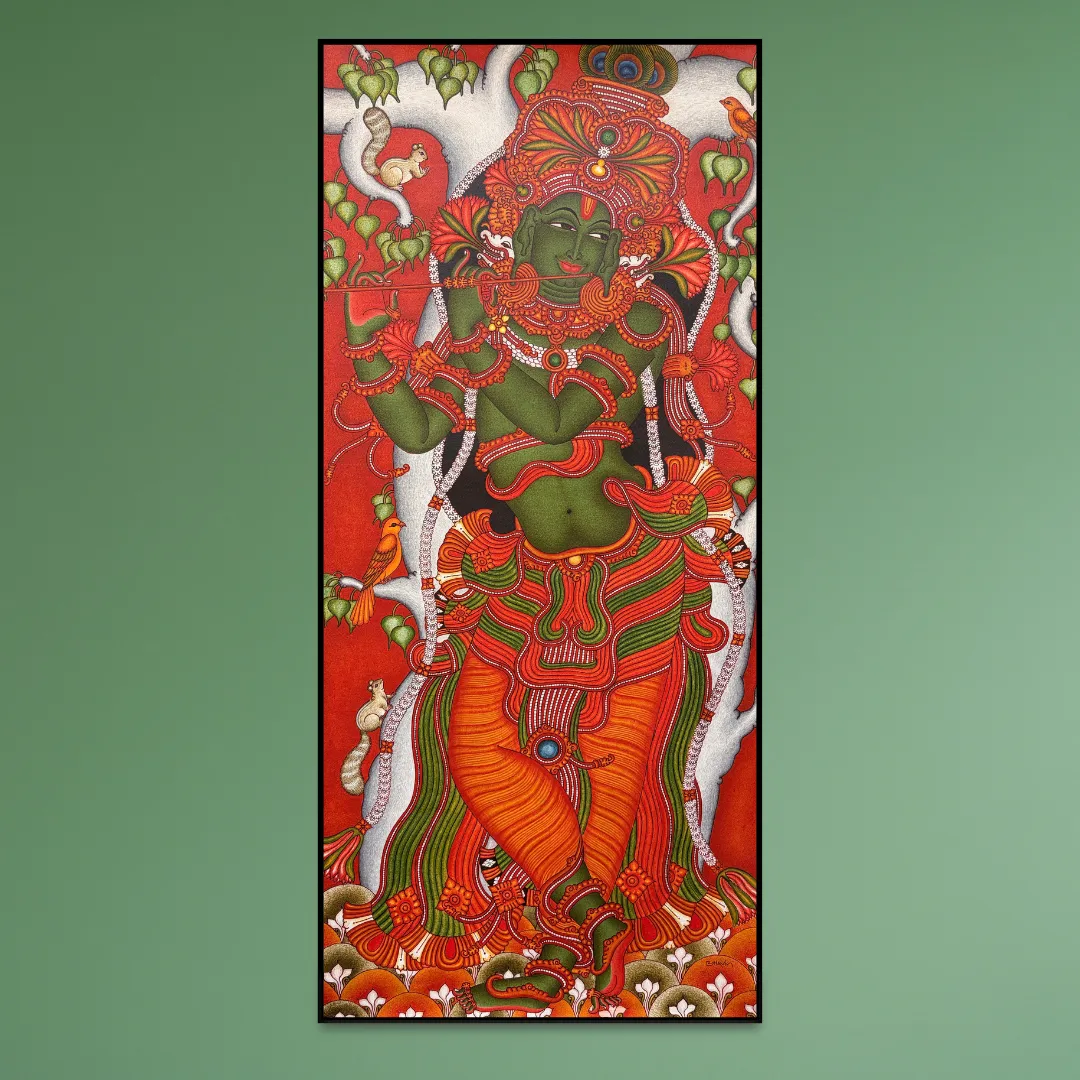
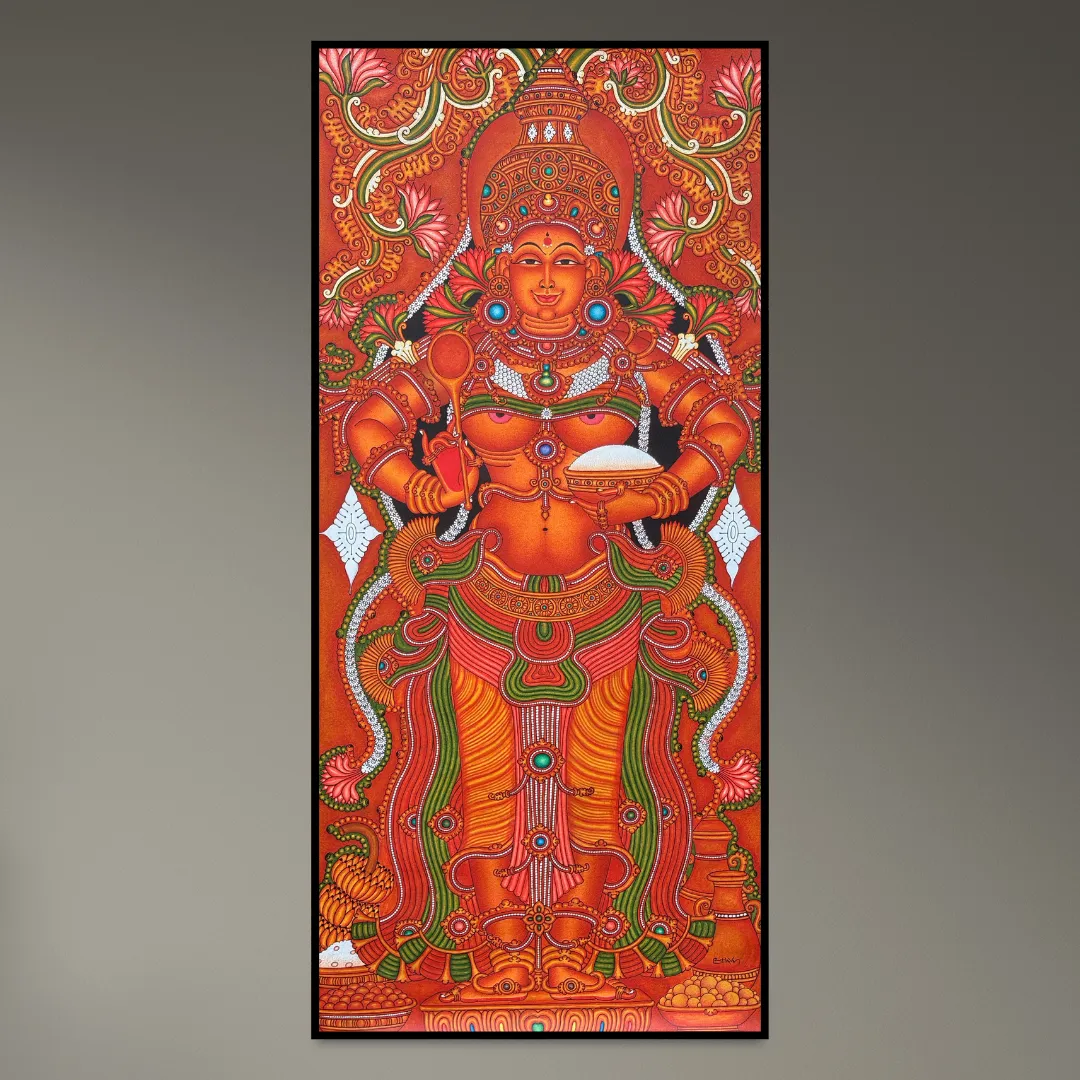
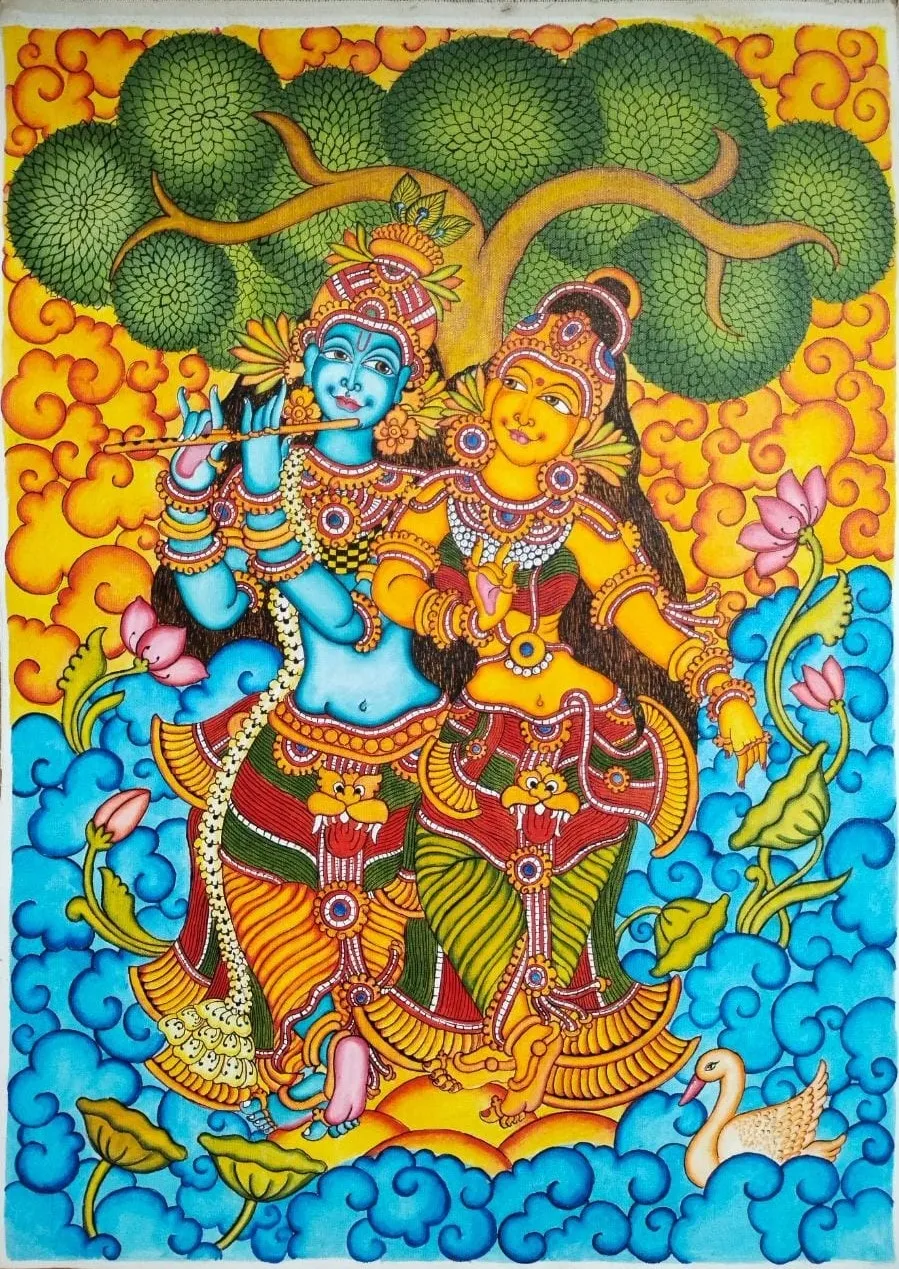
Kerala mural painting, also known as kerala mural art, is a classical fresco tradition practised on the walls, ceilings, and pillars of temples, palaces, and churches across the state of Kerala in South India. The word mural itself comes from the Latin murus, meaning wall, and these large-scale works are painted directly onto plastered surfaces prepared with great care. The paintings use only five colours, known in Sanskrit as panchavarnam: red, yellow, green, black, and white. All pigments are sourced naturally from minerals and plants. The tradition was primarily practised by temple communities, who used murals to depict gods, goddesses, local deities, and stories from the Puranas. The imagery expresses the nine emotions, or navarasas, and fills entire shrine walls with devotional scenes that serve as both sacred art and visual theology.
History and Origin
The origin of mural paintings in India can be traced back to the 2nd century BCE caves of Ajanta, Bagh, and Sithanavasal. The earliest known Kerala mural was discovered at a shrine in Thirunandikkara, located in the present Kanyakumari district of Tamil Nadu, dating to the 8th century BCE. In Kerala itself, wall engraving and painting date to the 7th and 8th centuries CE, and the state holds the second-largest number of archaeologically significant mural sites in India. Over 150 temples across Kerala contain historical murals, with a large number dating to the 14th century. Notably, the 'Mattancheri Palace' in Cochin contains Ramayana illustrations, and earlier versions of this style appear at Tirunandikara, Kanthalloor, Padmanabhaswamy, and Tiruvampady. The conservative social structure of the time meant that only those with sufficient wall space and social status could commission murals, while the folk art form of Kalamezhuthu evolved for the broader community. Kerala's murals later spread to church walls as Christian missionaries arrived and sections of the local community adopted the new faith.
A Portuguese explorer named Castaneda, who followed Vasco da Gama on his voyage to India in 1498, landed at Kappad near Kozhikode. He and his companions entered a Hindu temple while documenting their travels, mistaking it for a local church. The 'monstrous-looking images' painted on the walls deeply unsettled them. It is believed they may have visited a Bhagavati temple located between Kappad and Kozhikode, an account that gives us one of the earliest foreign descriptions of this painting tradition in Kerala Mural Painting India.
Key Features and Visual Style
The visual language of Kerala mural painting is immediately recognisable and unlike any other art form of Kerala. Its strict use of natural materials, structured technique, and devotional iconography make it one of the most codified painting traditions in India.
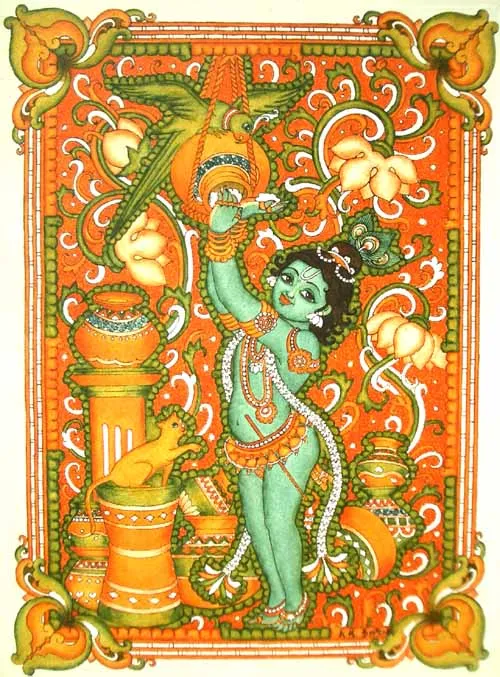
Every panchavarna Kerala mural follows a disciplined colour scheme. Colours are restricted to the five panchavarnam pigments: red, yellow, green, black, and white, all obtained from mineral or plant sources. Green comes from the extract of neelamari (Indian indigo) leaves, while coconut water, neem tree oil, and tree gum extracts serve as binding agents.
Traditional brushes were made from elephant grass (kuntalipullu), ketaki roots, and rare animal hair, with palettes made from wood used for mixing colours.
Wall preparation is an elaborate process: earlier, kadukkai (Indian hog plum) juice, lime, sand, and palm sugar (jaggery) were applied, followed by a smooth plaster layer including ground cotton. Over ten days, 25 to 30 coats of quicklime mixed with coconut water were applied to reach a thickness of 0.5 inches.
The painting process follows six named stages: Lekhya karma (sketching outlines in light yellow), Rekha karma (precise outline drawing), Varna karma (colour filling), Vartana karma (shading), Lekha karma (final outlines), and Devika karma (drawing the eyes of the deities last). A final coat of resin preserves and adds lustre.
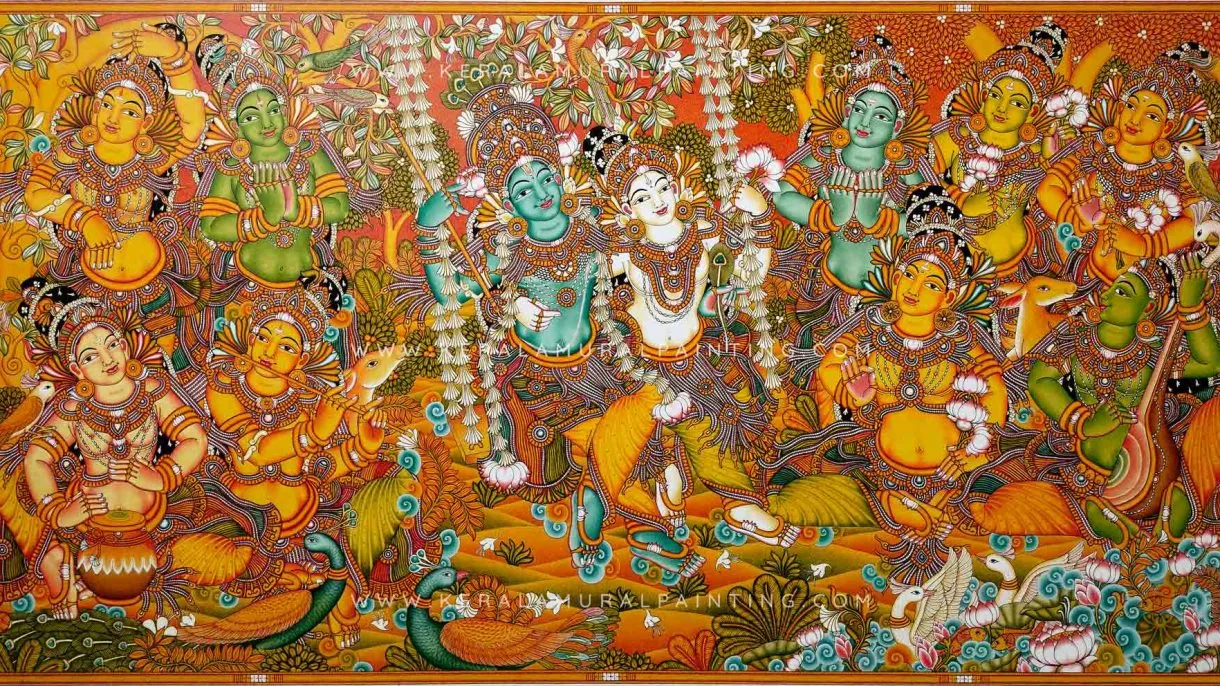
Figures are rendered in a distinctive linear style with carefully designed expressions. Lips are painted using the noticeable stippling technique, and bodies and hands are adorned with rich ornamentation and precise mudras (hand gestures).
Motifs cover Hindu gods and goddesses, local deities, epics from the Puranas, and scenes expressing the nine navarasas (emotions). Remaining wall spaces are filled with flora and fauna, while church murals introduced Christian themes after Western contact.
Famous Artists of Kerala Mural Painting
Raja Ravi Varma (1848-1906), born in Kilimanoor, Travancore (present-day Kerala), is one of the most celebrated names associated with Kerala's painting legacy. He is known for drawing on the Kerala mural painting tradition and converging its visual grammar with Western academic techniques, bringing Hindu mythological imagery to a wider public through oleographs and canvas paintings.
K.K. Maheswaran Namboodiri, from Thrissur district in Kerala, is one of the most respected practitioners of classical Kerala murals in the modern era. He has worked on temple walls across Kerala and is known for strict adherence to the traditional six-stage painting process and the panchavarnam colour palette.
Suresh Muthukulam, a Kerala-based muralist, is credited with bringing Kerala mural painting to urban and commercial spaces. His most prominent work, created with his students, can be seen at the Mumbai International Airport, where the mural retains all the recognisable features of the traditional style while occupying a thoroughly contemporary setting.
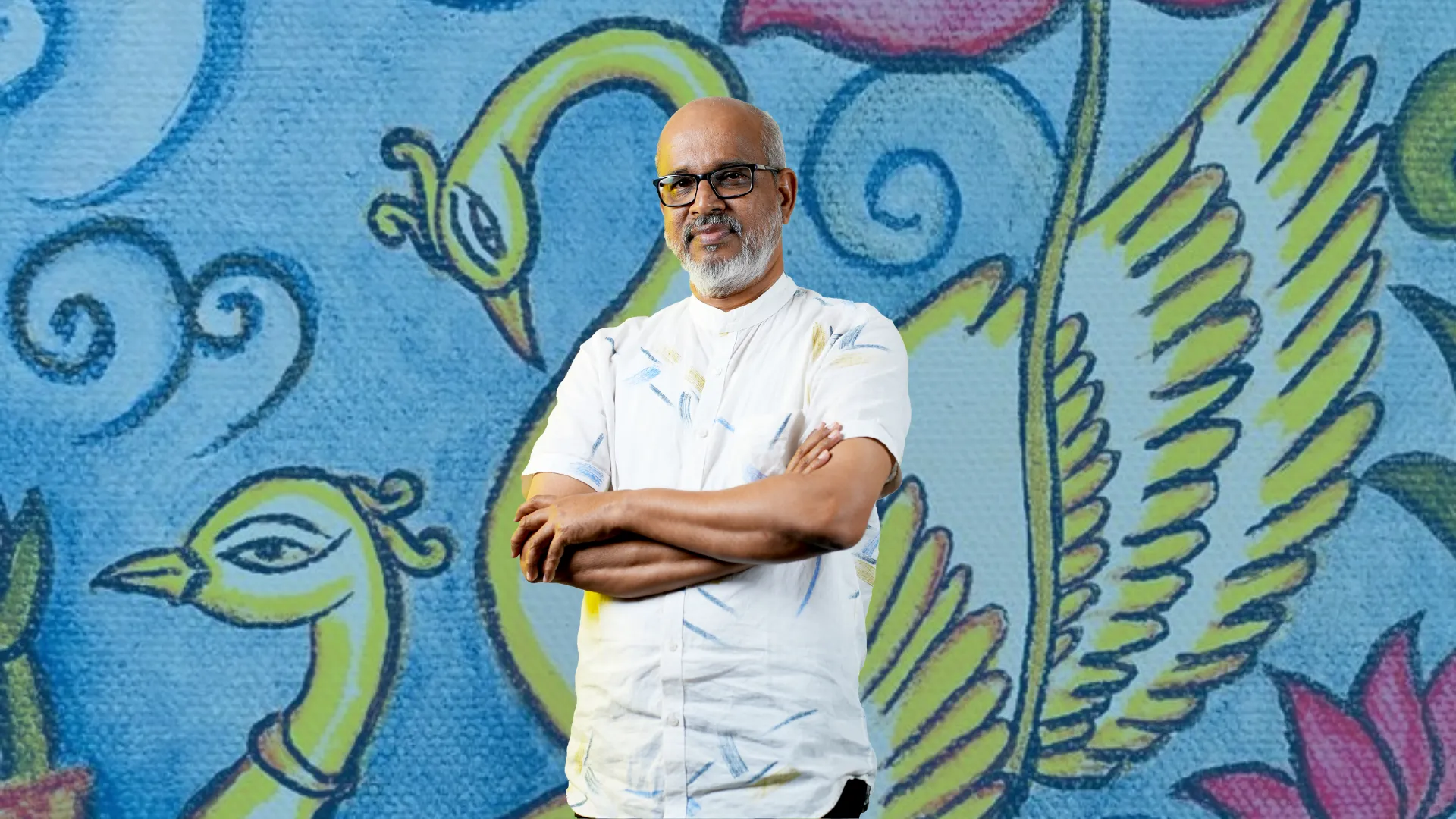
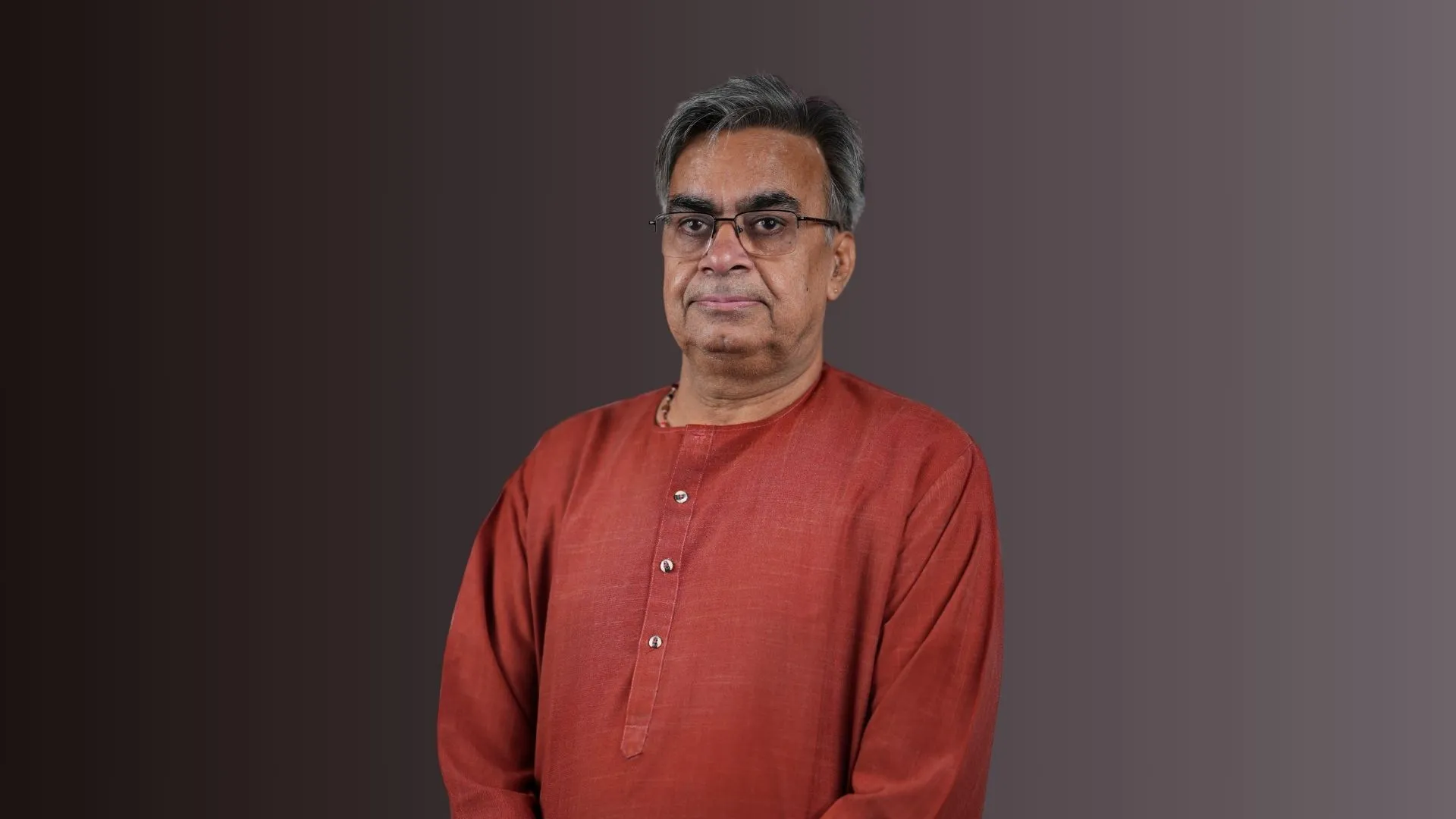
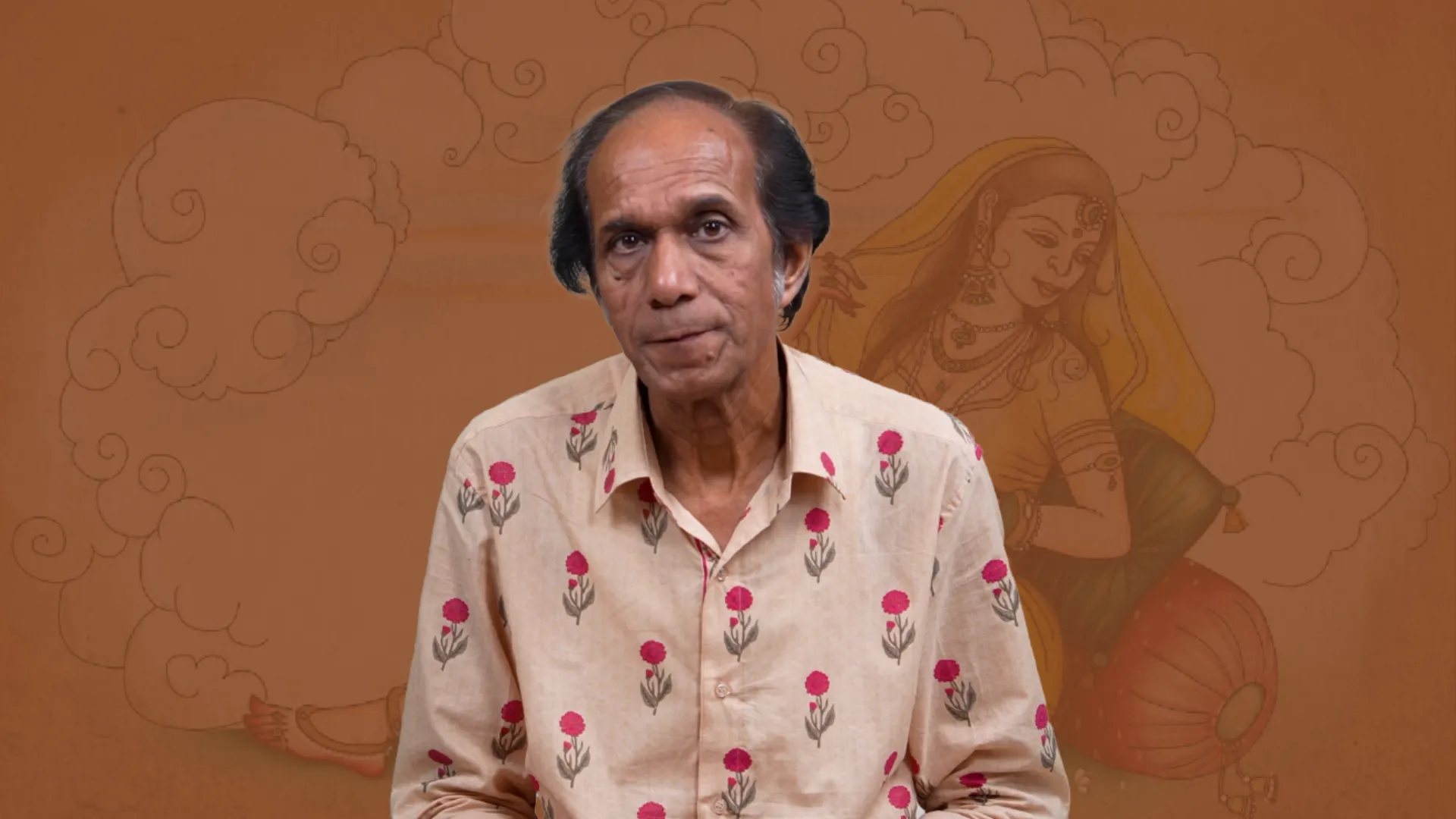
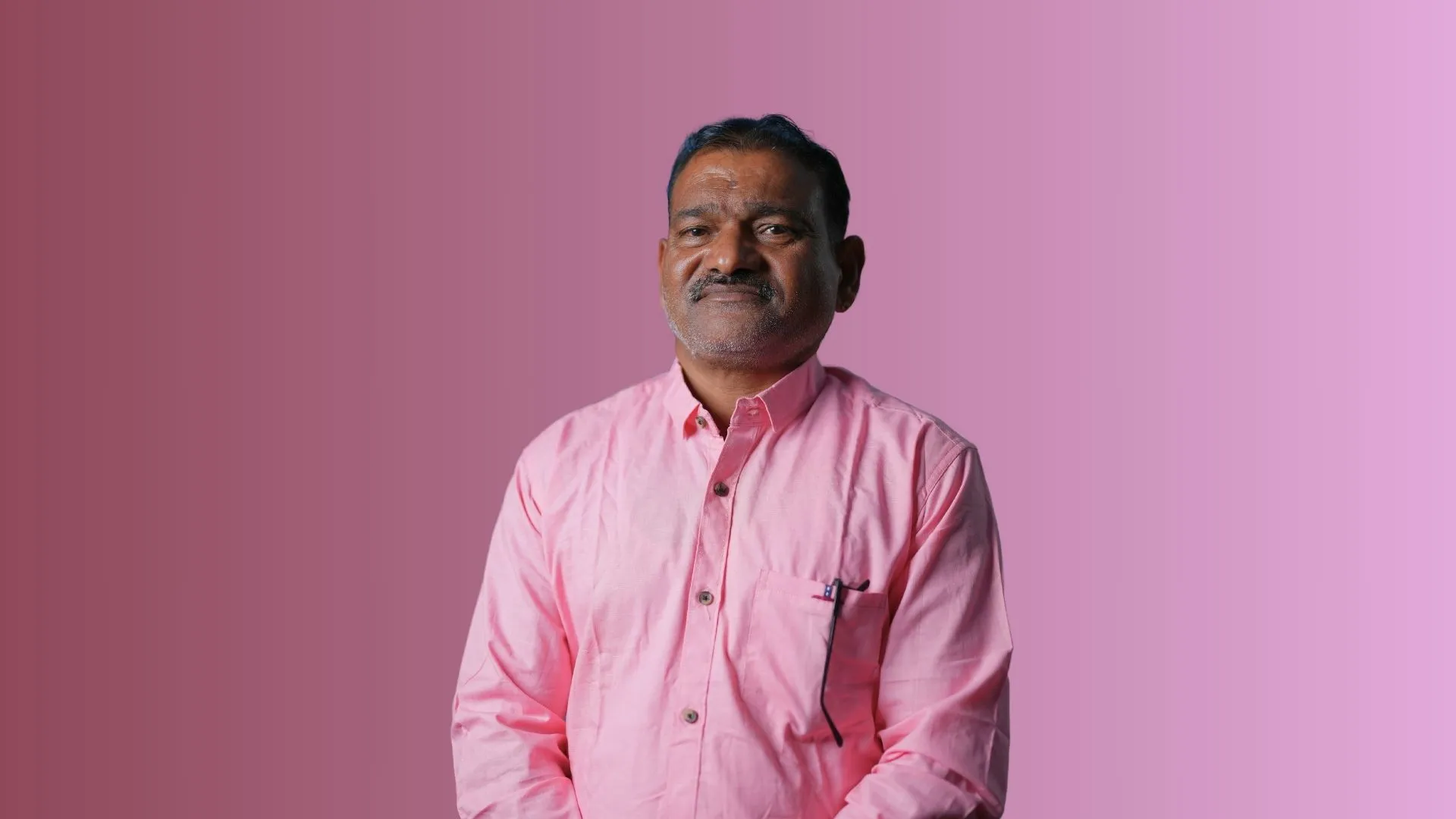
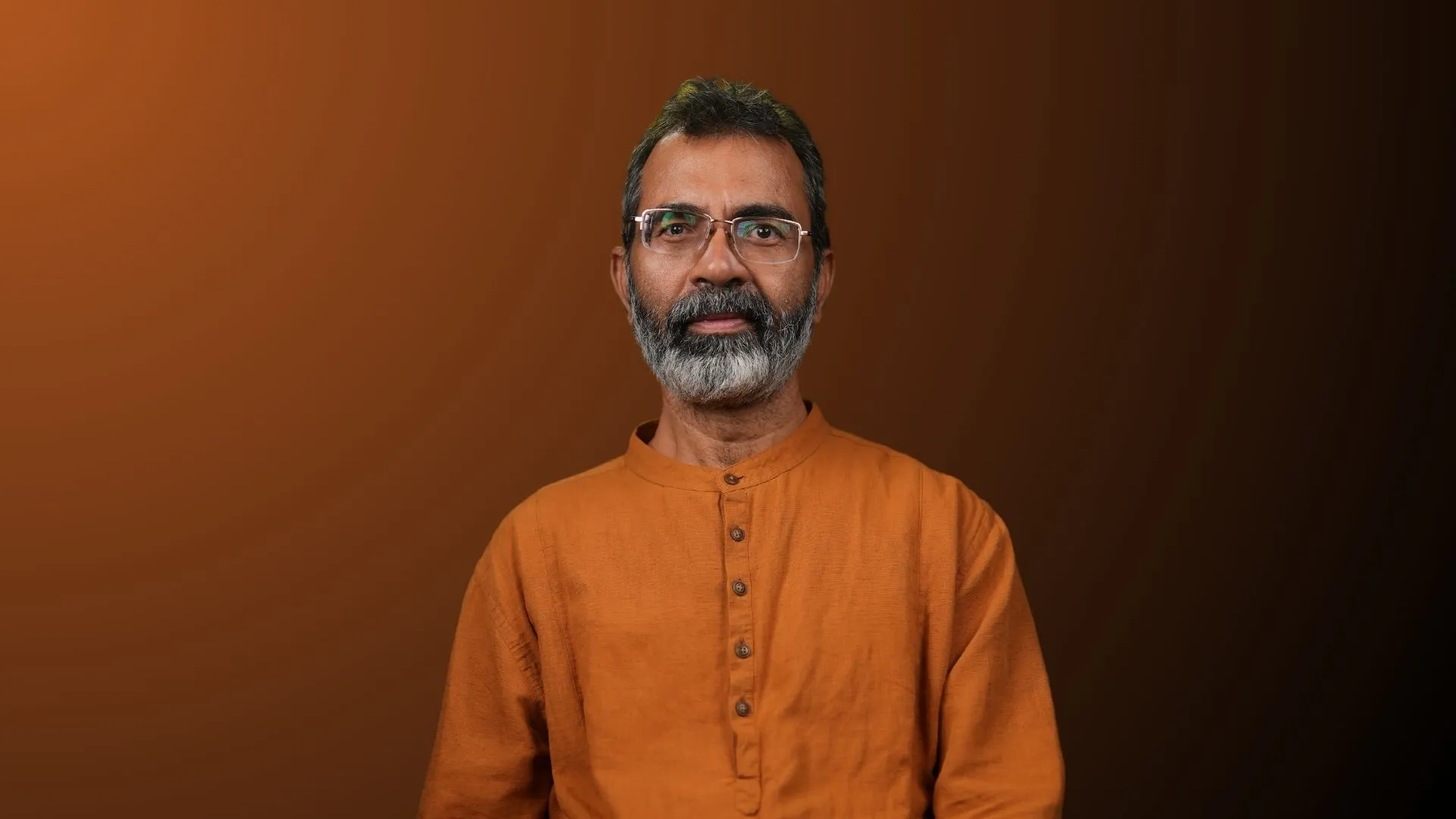
P.K. Sadanandan, a master muralist from Kerala, teaches the tradition through Rooftop's Kerala mural painting course. His approach combines classical technique with accessible instruction, making this demanding tradition learnable for students without a formal art school background.
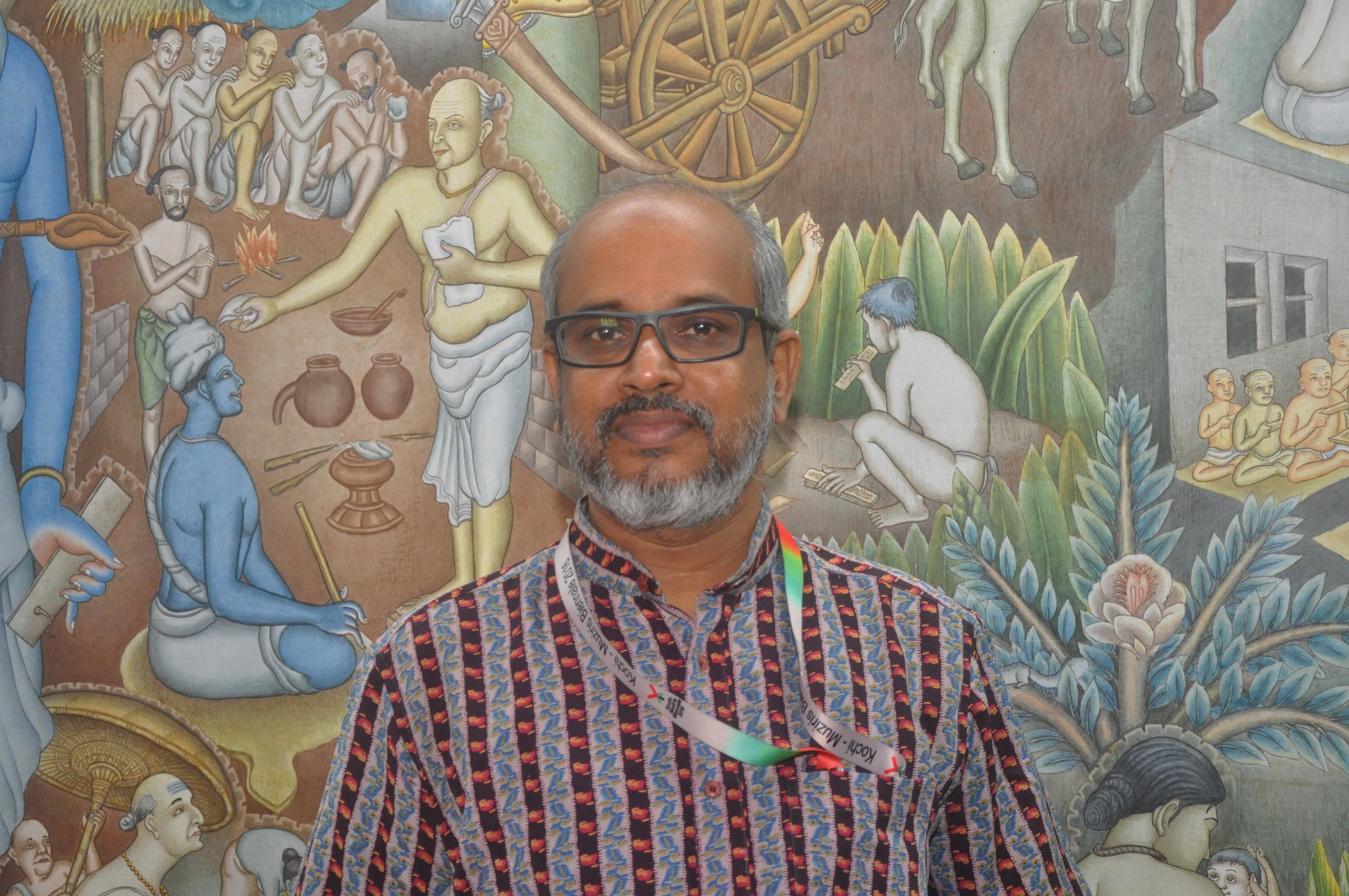
If you want to learn Kerala mural painting, Rooftop offers a dedicated Kerala mural painting course taught by P.K. Sadanandan, a practising master of this tradition. The course covers the foundational techniques, the traditional colour palette, and the step-by-step painting process used in classical Kerala temple art. You can also browse all Indian folk art courses on Rooftop to find other traditional Indian art forms taught by working artists.
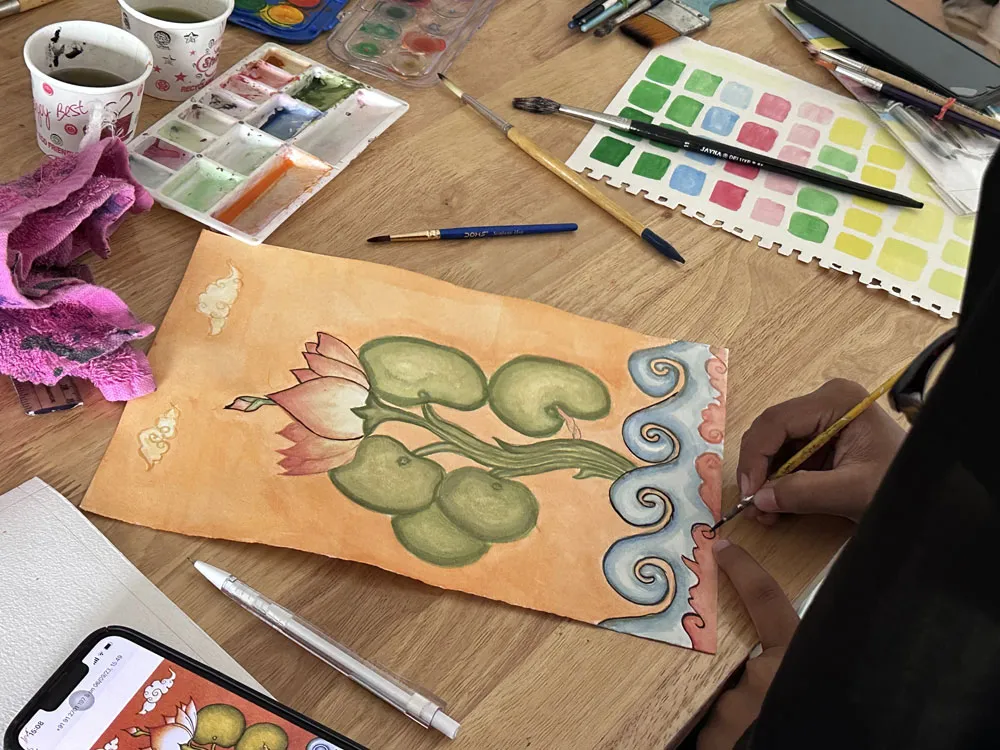
While kerala mural painting images are widely shared online, nothing compares to seeing these murals in person. In Kerala, the most significant examples of classical Kerala mural painting can be seen at Mattancheri Palace in Kochi, the Padmanabhaswamy Temple in Thiruvananthapuram, and at Tirunandikara, Kanthalloor, and Tiruvampady. Rock art connected to this tradition is also found in the Anjanad valley in Idukki and in the Edkkal and Wayanad caves. For contemporary work, murals by Suresh Muthukulam and his students are visible at the Mumbai International Airport. Kerala mural painting price varies depending on size, detail, and the artist's experience. A kerala mural painting saree is another popular way to bring this artistic tradition into everyday wear. To buy authentic Kerala mural paintings or related works, visit Rooftop's shop for original pieces by traditional artists.
What is Kerala mural painting and where does it come from?
Kerala mural painting is a classical fresco tradition from the state of Kerala in South India. It involves painting large-scale devotional images on the plastered walls of temples, palaces, and churches using only five natural pigments known as panchavarnam. The earliest known example dates to the 8th century BCE at a shrine in Thirunandikkara in the present Kanyakumari district. The tradition flourished particularly between the 7th and 14th centuries CE, producing some of India's most significant temple art.
Which community practises Kerala mural painting?
Historically, the temple community of Kerala was the primary practitioner of this art form. Temple priests and trained muralists used the large walls of shrines as their canvas to depict deities and mythological narratives. Over time, the style extended to church walls as well, reflecting the cultural shifts that followed the arrival of Christian missionaries in Kerala. Today, artists from various backgrounds practise and teach this tradition.
What are the five colours used in Kerala mural painting?
The five colours are red, yellow, green, black, and white, collectively called panchavarnam in Sanskrit. Each colour is derived from natural sources: green comes from the extract of neelamari (Indian indigo) leaves, while other pigments are sourced from minerals and plant matter. Coconut water, neem tree oil, and tree gum extracts act as binding agents to fix the pigments to the plastered surface.
Who are the most notable Kerala mural painting artists?
Raja Ravi Varma is the most historically celebrated artist connected to the Kerala painting tradition, known for blending its visual grammar with Western academic styles. Among contemporary artists, K.K. Maheswaran Namboodiri is widely respected for his strictly classical temple murals in Thrissur district. Suresh Muthukulam brought the tradition to wider public spaces through his work at the Mumbai International Airport. P.K. Sadanandan is a practising master who now teaches through Rooftop's Kerala mural course.
Can I learn Kerala mural painting online?
Yes. Rooftop offers a structured online Kerala mural painting course taught by P.K. Sadanandan, a master of this tradition. The course is designed for learners who have no prior experience with this style and covers the complete process from wall preparation principles to the six stages of painting. You can start at your own pace and learn from a working artist who continues to practise the classical form.
Kerala mural painting carries within it the full depth of South India's devotional imagination, refined over more than a thousand years of practice on temple walls and palace corridors. The tradition's strict colour discipline, elaborate wall preparation, and deeply expressive figuration place it among the most technically demanding of all Indian folk art forms. Explore the Kerala mural painting course on Rooftop and begin your own connection with one of India's most enduring artistic traditions.
Sources
Ramachandran, A. (2005) Painted Abode of Gods Mural Traditions of Kerala. New Delhi: Indira Gandhi National Center for the Arts.
Nambirajan, Dr.M., Suresh, Dr.S. (2015) Kerala Murals. New Delhi: Archaeological Survey Of India.
Image Sources
"ചുമർചിത്രകല." Malayalam Wikipedia, Wikimedia Foundation, https://ml.wikipedia.org/wiki/%E0%B4%9A%E0%B5%81%E0%B4%AE%E0%B5%BC%E0%B4%9A%E0%B4%BF%E0%B4%A4%E0%B5%8D%E0%B4%B0%E0%B4%95%E0%B4%B2. Accessed 16 July 2026.
"P. K. Sadanandan." Wikipedia, Wikimedia Foundation, https://en.wikipedia.org/wiki/P._K._Sadanandan. Accessed 16 July 2026.
"Radha Krishna #2 – Kerala Mural Painting (30 × 22 in.)." International Indian Folk Art Gallery, https://indianfolkart.org/product/radha-krishna-2-kerala-mural-painting-30-x-22/. Accessed 16 July 2026.
"Third Semester Communication Design Students Learning Kerala Mural Painting in Their Illustration Techniques Course." Saintgits College of Engineering, https://saintgits.org/sds_photos/third-semester-communication-design-students-learning-kerala-mural-painting-in-their-illustration-techniques-course/. Accessed 16 July 2026.
"Traditional Mural Painting of Kerala." Kerala Mural Painting, https://keralamuralpainting.com/traditional-mural-painting-of-kerala/. Accessed 16 July 2026.
"Traditional Kerala Mural Painting." Bhavageetham, https://bhavageetham.com/shop/bgm-323/. Accessed 16 July 2026.