
Garhwal Painting: Uttarakhand's Pahari Miniature Tradition
Let's learn about the miniature paintings from Garhwal!
Introduction and Origin
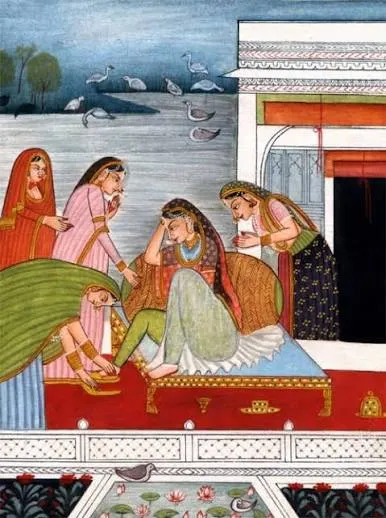
Garhwal painting is one of India's most graceful miniature traditions, emerging from the Himalayan foothills of what is today Uttarakhand. Born from a meeting of Mughal sophistication and Rajput sensibility, this school is celebrated for its tender portrayals of feminine beauty, serene landscapes, and devotional themes drawn from the Radha-Krishna story. As a living strand of Indian folk art that flourished for nearly two centuries, Garhwal painting remains a window into the cultural and artistic life of the Pahari courts of northern India.
What Is Garhwal Painting?
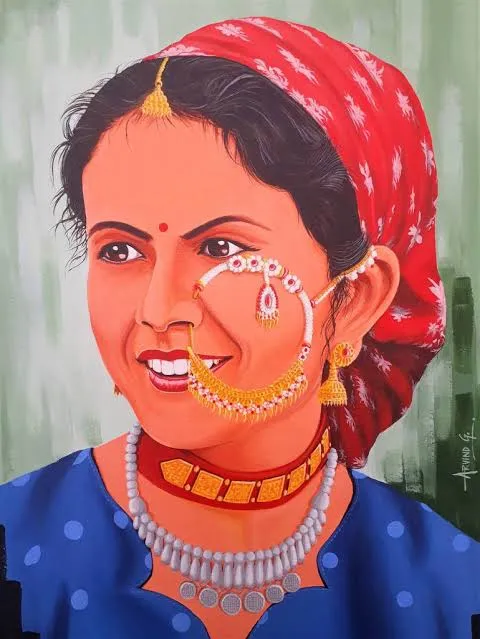
Garhwal painting is a school of Pahari miniature painting that developed in the Garhwal district of present-day Uttarakhand in the late 17th century. The name comes directly from its place of origin - the Garhwal region of the Himalayas, which was earlier part of Uttar Pradesh before becoming part of the state of Uttarakhand (meaning 'northern region' in Hindi). The paintings are executed on handmade paper prepared with a smooth, burnished surface, using natural colours derived from minerals, vegetables, and other organic materials. Pigments are bound with natural adhesives known locally as gond or khadiya, and brushes are made from animal hair. Compositions are characterised by calm, romanticised depictions of slim and graceful heroines - known as nayikas - often set against lush mountain scenery, a chandan tikka (sandalwood mark) marking the forehead as a signature detail.
History and Origin
The origins of Garhwal painting trace to 1658, during the reign of the Mughal emperor Aurangzeb. When the refugee Mughal prince Suleman Shikoh came to the Garhwal region, two pioneer artists of the Mughal court, Sham Das and Har Das, travelled with him. These artists had trained under Shahjahan's renowned Mughal painting school. They were detained at the court of the Raja of Garhwal in Srinagar after Suleman Shikoh surrendered to Aurangzeb, and it was here that they began blending their Mughal training with the local Pahari sensibility to create the distinct Garhwal style.
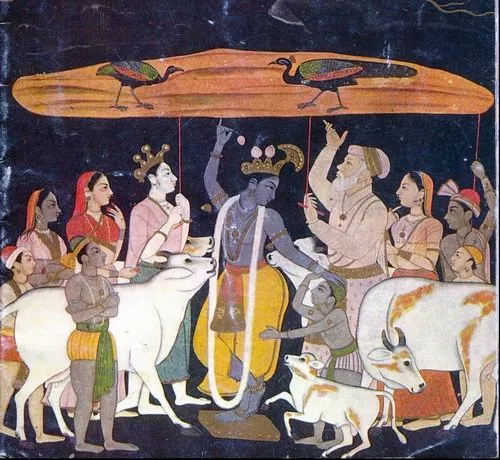
For 200 years this style flourished, most prominently during the lifetime of the great artist Mola Ram (1743-1833). The Garhwal Painting India tradition also absorbed influences from the Kangra court. According to historical accounts, two sisters of Raja Anirudh of Kangra who married the Raja of Garhwal brought paintings as dowry from Raja Sansar Chand's collection, drawing many Kangra artists to the region. The art form remained relatively obscure until the 1968 publication of Mukandi Lal's book Garhwal Chitrakala, which brought widespread recognition to this school. The renowned historian and philosopher Ananda Coomaraswamy identified a connection to the Ajanta tradition in the way the school depicted feminine elegance.
Key Features and Famous Artists
Key Features and Visual Style
What distinguishes Garhwal painting from other Pahari schools - including the Basohli and Kangra traditions - is its particular combination of Mughal refinement and Pahari warmth. There is notably less focus on the depiction of dense vegetation compared to Kangra painting, with a preference instead for clean compositions that foreground the human figure.
Natural colours are prepared from minerals, vegetables, plant extracts, and charcoal, then mixed with gond or khadiya (natural adhesives) before application.
Sea shells are traditionally used as colour palettes, and brushes are made from animal hair to fill in outlines and lay down pigment with precision.
The base is handmade paper, burnished with a polished stone after drying to create the smooth surface required for the fine lines of the miniature style.
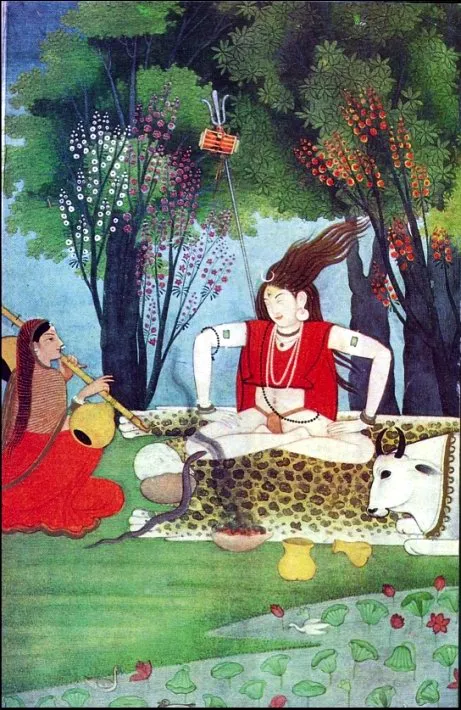
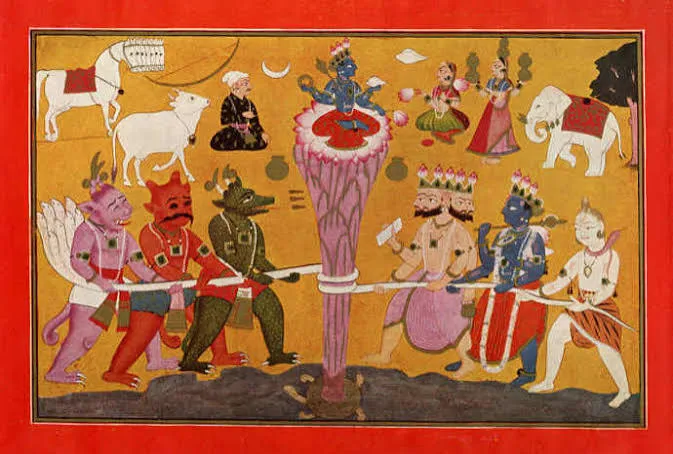
Motifs include Radha-Krishna and Rukmini mangal scenes, scenic Himalayan hills and mountains, ornate decorative borders, and figures marked with the signature chandan tikka (sandalwood forehead mark).
Poems and literary inscriptions are frequently incorporated alongside the pictorial content, reflecting the close relationship between Pahari painting and classical Indian poetry.
The style blends Mughal, Rajput, and Pahari painting conventions, producing a calm and romanticised visual language centred on graceful nayikas (heroines) in lyrical natural settings.
Famous Artists of Garhwal Painting
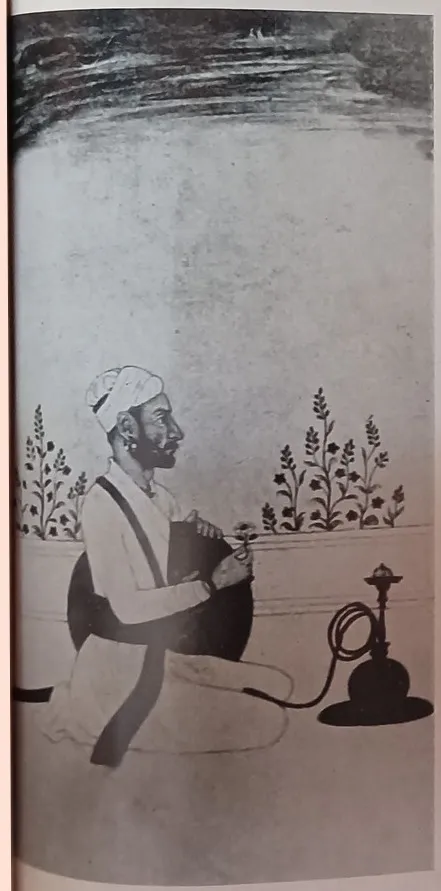
Mola Ram (1743-1833, Garhwal) is the most celebrated figure of the Garhwal school and the artist around whose lifetime the tradition truly reached its height. He was a poet and painter whose works defined the aesthetic standards of the school for generations. Sham Das and Har Das, both from Shahjahan's Mughal court, are considered the founding pioneers of the style, having brought Mughal techniques to Garhwal in 1658 and developed a new hybrid approach that distinguished the school from both its Mughal and Rajput sources.
Scholars who have shaped the understanding and recognition of this tradition include Mukandi Lal, whose 1968 monograph Garhwal Chitrakala - Garhwal Painting (New Delhi: Publications Division of Ministry of Information and Broadcasting) gave the school its first major academic treatment, and Ananda Coomaraswamy, the late 19th-century historian and philosopher who linked the tradition's treatment of feminine beauty to the classical Ajanta tradition. Explore other Pahari miniature schools on Rooftop to understand how the Garhwal style fits within the broader northern Indian miniature tradition.
How to Learn Garhwal Painting
If you are wondering how to learn Garhwal painting online, Rooftop brings you courses taught by traditional Indian artists who carry these miniature traditions forward. Rooftop's platform connects students across India with master practitioners of traditional Indian art, offering structured, accessible learning in art forms that were once passed down only within specific communities and courts. Exploring the Rooftop Art Wiki alongside a course is a good way to build both visual literacy and technical understanding of the Garhwal style.
Where to See and Buy Garhwal Painting
Collections of Garhwal paintings are held in several major institutions. The University Museum in Srinagar (Garhwal, Uttarakhand) holds a significant collection of these works alongside sculptures and artefacts from archaeological excavations in the region. Paintings can also be found in national museums in New Delhi and in collections abroad. For those looking to buy authentic pieces of Uttarakhand folk art, the Rooftop shop offers original works and products rooted in Indian folk and traditional art. Regional craft fairs and cultural festivals in Uttarakhand remain another avenue for encountering this tradition in its home landscape.
Learn Garhwal Miniature
Frequently Asked Questions
What is Garhwal painting and where does it come from?
Garhwal painting is a school of Pahari miniature art that developed in the Garhwal district of present-day Uttarakhand in the late 17th century. It blends Mughal, Rajput, and local Pahari influences into a distinctive style known for graceful feminine figures, devotional themes, and Himalayan landscapes. The name comes from the Garhwal region in the Himalayas, earlier part of Uttar Pradesh and now part of the state of Uttarakhand.
Which state or community in India practises Garhwal painting?
Garhwal painting originates in the Garhwal district of Uttarakhand in northern India, a region historically located at the junction of the Himalayan hills and the Gangetic plains. It was practised by court artists who settled in the region, many of whom came originally from the Mughal court tradition before developing their own distinct Pahari style. The art form is considered a part of the broader Uttarakhand folk art and craft heritage.
Who are the most important artists of Garhwal painting?
Mola Ram (1743-1833) is the most celebrated artist of the Garhwal school, a poet-painter whose long career shaped the tradition's highest achievements. The founding pioneers are considered to be Sham Das and Har Das, two artists from Shahjahan's Mughal court who arrived in Garhwal in 1658 and developed the distinctive hybrid style of the school. Their work established the visual vocabulary that later artists, including those who came from Kangra, continued to refine.
What materials and colours are used in Garhwal painting?
Garhwal paintings are made on handmade paper that is dried and then burnished with a polished stone to achieve a smooth surface. Natural colours are derived from minerals, vegetables, plant extracts, and charcoal, then mixed with natural adhesives - gond or khadiya - before being applied. Sea shells serve as colour palettes, and brushes are made from animal hair. The process closely follows the broader Pahari miniature tradition in its preparation of both ground and pigment.
Where can I see Garhwal paintings in person?
The University Museum in Srinagar, Uttarakhand is the most prominent public collection of Garhwal paintings in the art form's home region, also housing sculptures and artefacts from local archaeological excavations. National museums in New Delhi hold further examples, and collections exist in institutions abroad. Regional craft exhibitions and cultural events in Uttarakhand periodically feature this tradition as part of the broader landscape of Pahari and folk art from the Himalayan belt. Garhwal painting carries the memory of a sophisticated Himalayan court culture in every carefully burnished line. Whether you are drawn to its lyrical nayikas, its Radha-Krishna devotion, or its quiet mountain light, the tradition repays close attention. Explore traditional Indian art courses on Rooftop and begin your journey into one of northern India's most quietly beautiful painting schools.
Bibliography
Sources
- Lal, M. (1968) Garhwal Chitrakala - Garhwal Painting. New Delhi: Publications Division Of Ministry Of Information And Broadcasting.
Image Sources
"A Painting in the Garhwal Style by Mola Ram." Wikimedia Commons, https://commons.wikimedia.org/wiki/File:Garhwal-mola-ram.jpg. Accessed 16 July 2026.
"Garhwal Lady." Saatchi Art, https://www.saatchiart.com/print/Painting-Garhwali-Lady/645346/7903949/view. Accessed 16 July 2026.
"Garhwal Paintings: Painting Art of Garhwal School." Art of Legend India, https://artoflegendindia.blogspot.com/2010/12/garhwal-paintings-painting-art-of.html. Accessed 16 July 2026.
"Mola Ram." Wikipedia, Wikimedia Foundation, https://en.wikipedia.org/wiki/Mola_Ram. Accessed 16 July 2026.
"Mola Ram, Garhwal Paintings and Garhwal School of Painting." Srinagar Garhwal, http://www.srinagargarhwal.com/srinagar-art-molaram.php. Accessed 16 July 2026.
"The Miniature Paintings of Garhwal: A Window into Culture and Heritage." Oaklores, 22 Jan. 2025, https://oaklores.com/2025/01/22/the-miniature-paintings-of-garhwal-a-window-into-culture-and-heritage/. Accessed 16 July 2026.