

Basohli Painting: The Pioneer of Pahari Miniature Art
Let's learn about the miniature paintings from Basohli!
Introduction and Origin
Of all the schools that shaped Basohli painting stands apart as the boldest and most original. Born in the small hill town of Basohli along the banks of the river Ravi in Jammu, this style of Pahari miniature art broke away from the elegant refinement of Mughal court painting and chose instead a world of intense colour, angular faces, and raw devotional power. Dating back to at least the mid-17th century, Basohli miniatures were the earliest and most distinctive voice in the Pahari tradition, and their influence reached far beyond the Jammu hills into Chamba, Nurpur, Kullu, Mandi, and beyond.
What Is Basohli Painting?
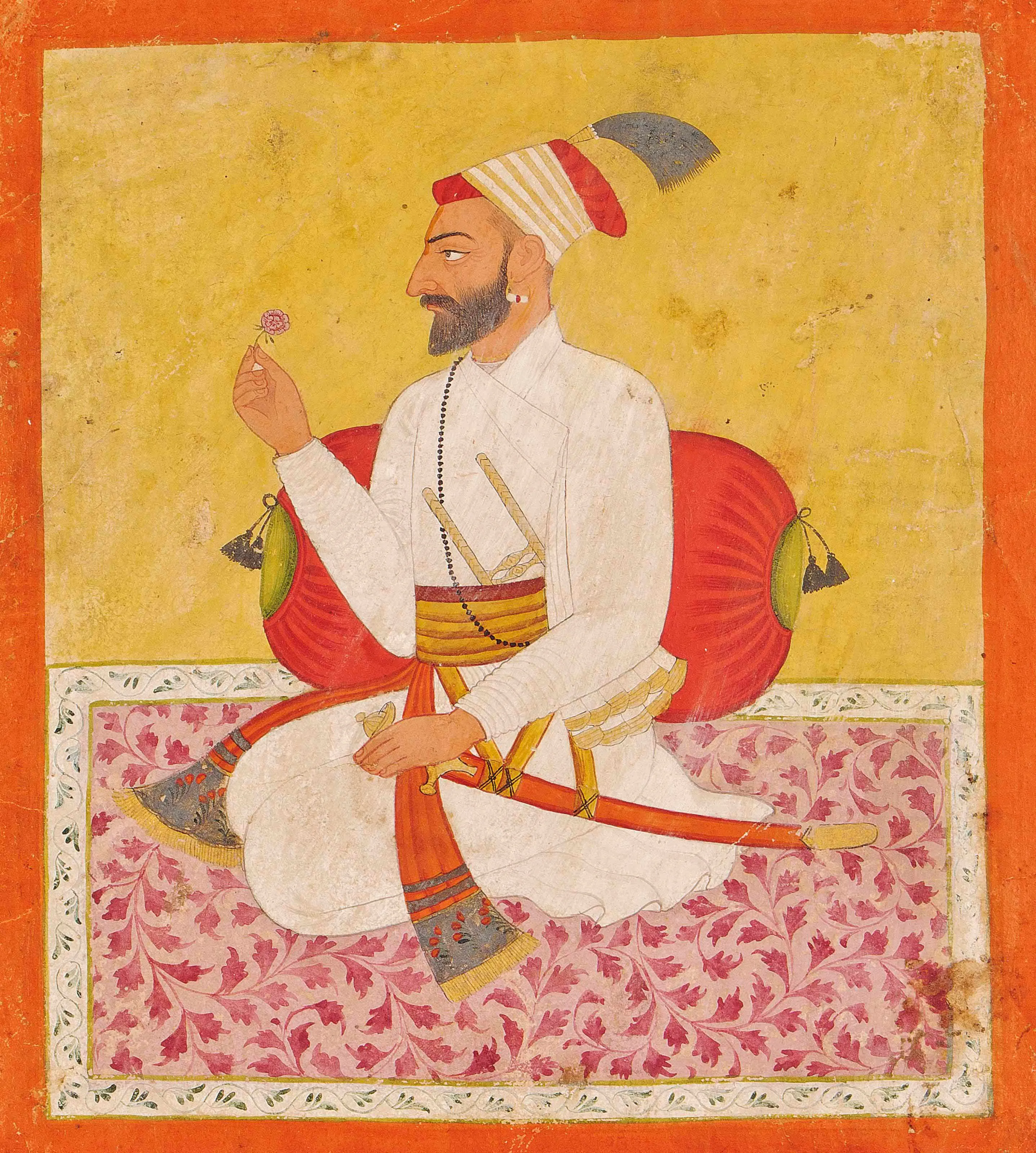
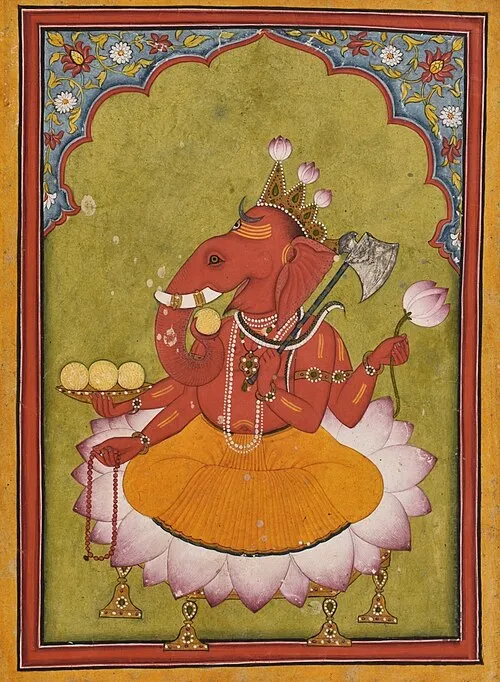
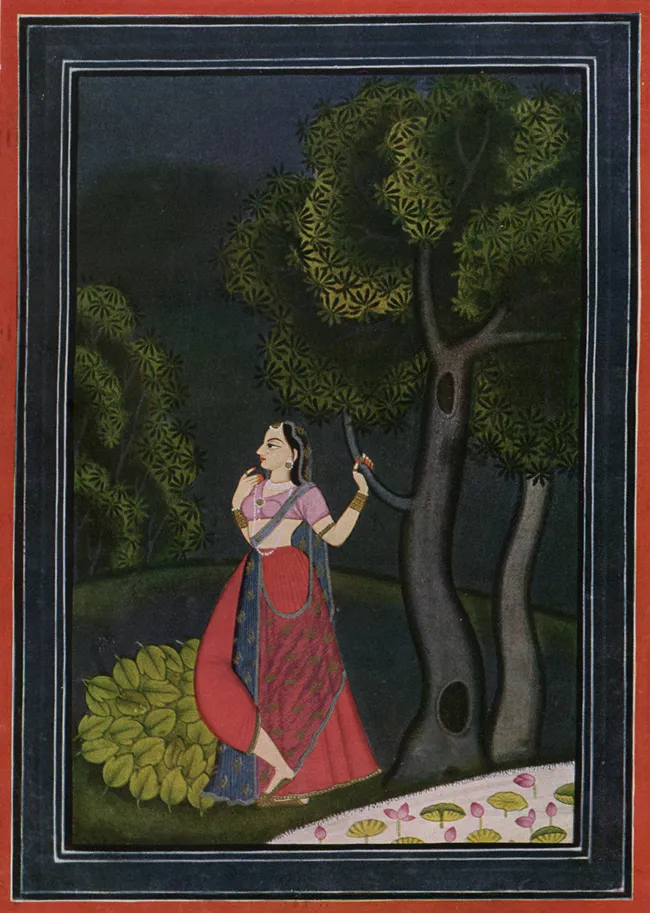
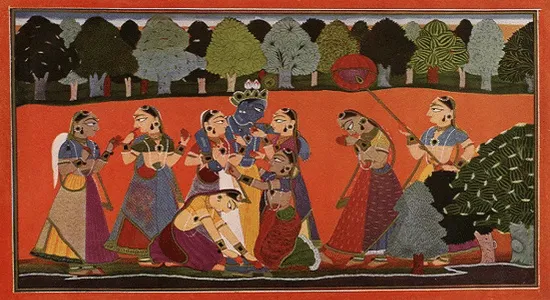
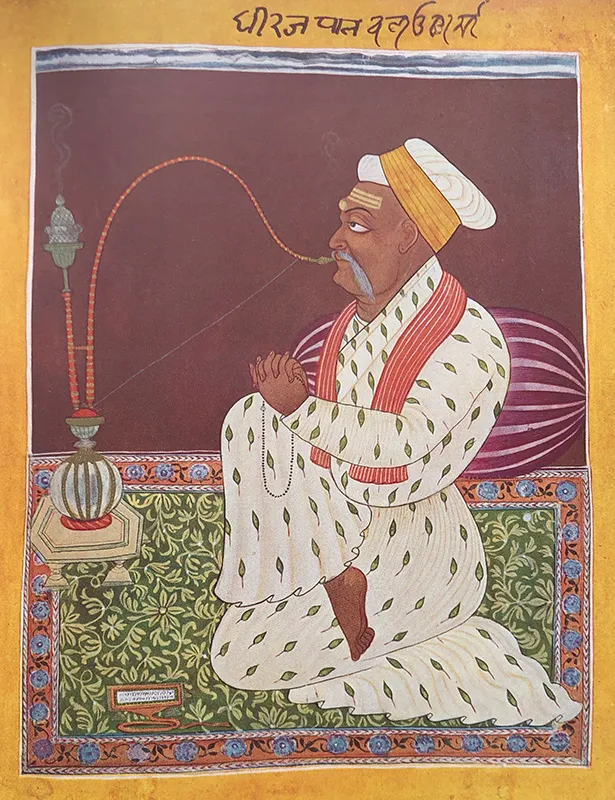
Basohli painting is a style of miniature painting that originated in the hill town of Basohli in the Jammu region of northern India. Also known as Basohli kalam, the style takes its name directly from the place of its origin. It is one of the oldest surviving schools of Pahari painting, and it is immediately recognisable by its bold, flat areas of colour - especially deep reds, yellows, and blues - combined with figures that have wide foreheads, elongated lotus-shaped half-closed eyes, and strong angular features. Human figures wear richly detailed costumes and are often shown in profile or three-quarter poses against stylised backgrounds of rounded trees and architectural forms.
The paintings were executed on a base of hard paper called Wasli or on ivory sheets, using pigments made from natural sources including dried leaves, flowers, beetle wings, and khadiya earth. One of the most striking features of Basohli work is the use of actual iridescent beetle wings - the emerald-green wing cases of the Sternocera beetle - embedded into the paintings to create the jewellery and ornamental details of figures, giving the work a luminous, almost three-dimensional quality that no other Indian school replicates.
History and Origin
The roots of Basohli painting reach back to the rule of Raja Kripal Pal of Basohli, who ruled in the mid-17th century and is credited with establishing the school as a distinct artistic tradition. The town of Basohli, situated on the river Ravi in Jammu, served as the epicentre of a creative movement that fused Hindu mythology, Mughal miniature techniques, and local folk sensibilities into something entirely its own. Basohli-influenced painting traditions spread to Mankot, Jasrota, Chamba, Nurpur, Bilaspur, Kullu, and Mandi, making the region a fertile ground for Pahari art.
The earliest and most celebrated series of Basohli paintings is the Rasamanjari, based on a Sanskrit poem of the same name composed by the poet Bhanudatta. Three artists from a single family in Himachal Pradesh - Kripal, Devidasa, and Golu - created a celebrated series of paintings based on these poems shortly after they were composed, with Devidasa of the Tarkhan community being among the most well-documented artists of the tradition. The 1730 Gita Govinda is also believed to have Basohli origins. The Bhagavata Purana, Sursagar, Rasikpriya, Bihari-Satsai, Nayika-Bheda, and Rag-Ragini texts all served as sources for Basohli compositions. The Ramayana was illustrated in both Basohli and Kangra styles.
Key Features and Famous Artists
Key Features and Visual Style
What makes Basohli painting immediately identifiable is its rejection of the soft, idealised aesthetic of later Pahari schools. Where Kangra painting is delicate and lyrical, Basohli is bold, almost confrontational in its use of colour and line. The figures are angular and intense, the colour palette saturated, and the decorative treatment of surfaces extravagant.
Colours are flat, saturated, and non-gradated - reds, deep yellows, bright blues, and stark blacks dominate the palette, applied with a directness that reads as intentional strength rather than refinement.
Figures have wide foreheads, receding hairlines, elongated lotus-shaped half-closed eyes, angular noses, and slim features - a visual language quite distinct from the rounded, softer faces of Mughal or later Pahari work.
Beetle wings from the Sternocera species are physically embedded into the paintings to represent the emerald jewellery of figures, creating a luminous texture that cannot be reproduced in print.
Backgrounds are stylised landscapes featuring rounded trees, architecturally composed courtyards, and bold flat washes of colour rather than the naturalistic settings seen in Mughal work.
Paintings were made on Wasli paper or ivory sheets using natural pigments derived from crushed stones mixed with water, dried flowers, khadiya earth, and 24-carat gold and silver for borders, figures, and highlights.
Brushes were made from squirrel hair and feathers of the Kalmunha bird, and the borders of paintings were often finished in Takri script with liquid gold, giving each piece a manuscript-like formality.
Famous Artists of Basohli Painting
The history of Basohli painting is inseparable from the families and communities that practised it. The Tarkhan community of craftsmen produced several generations of painters who shaped the school.
Devidasa of Basohli, from the Tarkhan community of Basohli in Jammu, is the most documented artist associated with the early Rasamanjari series. His illustrations of Bhanudatta's Sanskrit poems are considered foundational works of the style, combining emotional intensity with the school's characteristic bold colour and angular figuration.
Kripal and Golu, Devidasa's relatives from the same family in Himachal Pradesh, also contributed paintings to the Rasamanjari series. Their works, made in close collaboration with the textual tradition, helped establish the devotional character that defines Basohli miniatures.
Manaku of Guler, from the Guler region of Himachal Pradesh, is known for his later Basohli-influenced work and is often cited as a bridge figure between the bold Basohli style and the softer naturalism that would later emerge in Kangra painting. His work shows how the Basohli tradition seeded subsequent Pahari schools.
How to Learn Basohli Painting
If you want to learn Basohli painting, the most direct path is through a structured course taught by a practitioner of the Pahari tradition. Rooftop offers a Pahari painting experience taught by artists rooted in this tradition, giving you hands-on access to the techniques, materials, and visual vocabulary of this school. You can also explore the broader world of Indian folk art courses on Rooftop to build a foundation in miniature techniques before specialising in the Basohli style.
Where to See and Buy Basohli Painting
Authentic Basohli paintings are held in major museum collections including the National Museum in New Delhi, the Victoria and Albert Museum in London, and the Prince of Wales Museum in Mumbai. The Dogra Art Museum in Jammu is the most significant regional collection and holds some of the finest examples of early Basohli work. In terms of buying original or contemporary works in this tradition, Rooftop's art shop carries works by traditional Indian artists, and the Art Wiki is a good starting point for understanding what to look for in an authentic piece.
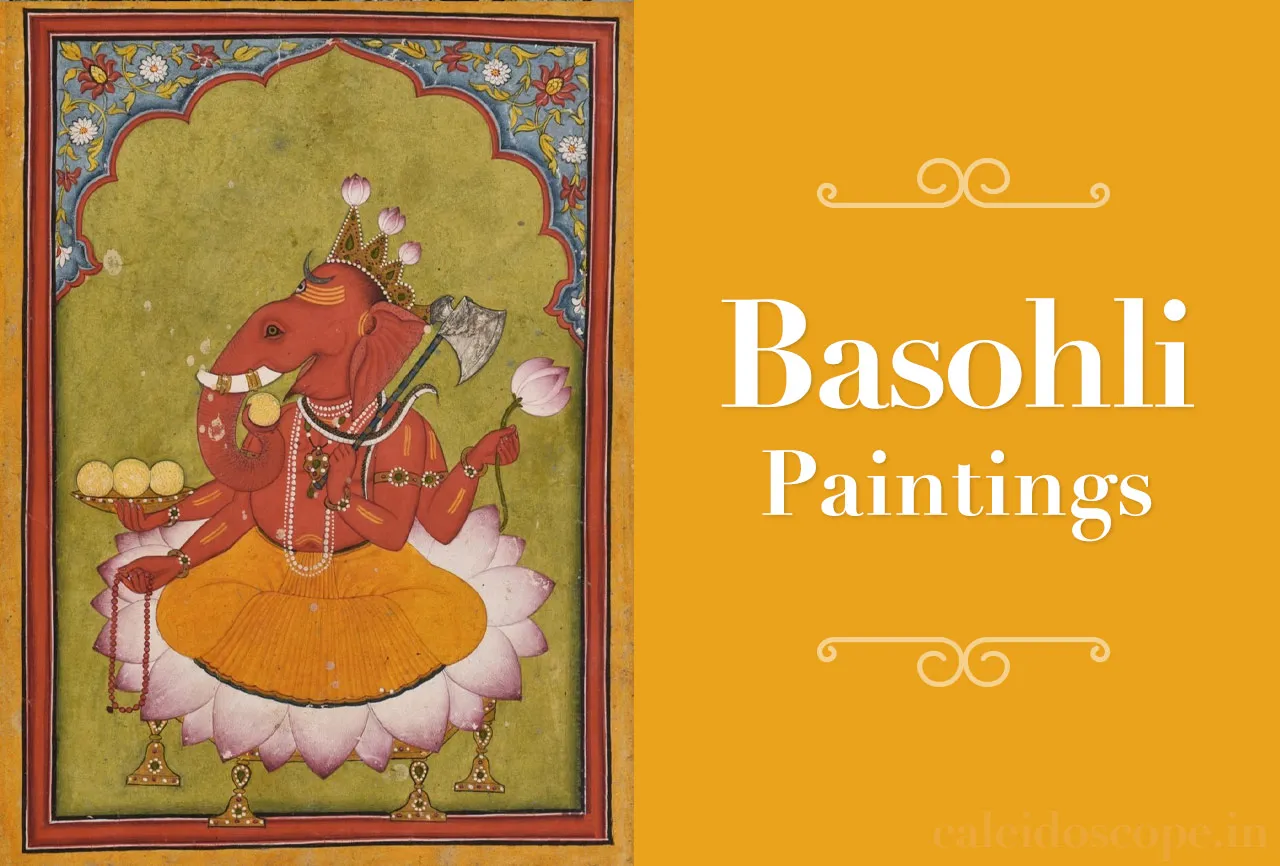
Learn Basohli Miniature

Frequently Asked Questions
What is Basohli painting and where does it come from?
Basohli painting is a style of miniature painting from the town of Basohli in the Jammu region of northern India. It is one of the oldest schools within the Pahari painting tradition, dating to at least the mid-17th century. The style is named after its place of origin and is known for its bold colour, angular figures, and the distinctive use of beetle wings to represent emerald jewellery in paintings.
Which state or community practises Basohli painting in India?
Basohli painting originated in the Jammu region and was primarily practised by artists from hill communities including the Tarkhan community of craftsmen. The tradition spread across what is now Himachal Pradesh and Jammu and Kashmir, with related schools developing in towns like Chamba, Nurpur, Mankot, Jasrota, Kullu, Bilaspur, and Mandi. The broader Pahari tradition to which Basohli belongs spans the foothills of the Himalayas across several present-day northern Indian states.
What materials and colours are used in Basohli painting?
Basohli paintings are made on Wasli paper or ivory sheets using pigments derived from natural sources such as crushed stones mixed with water, dried leaves, flowers, beetle wings, and khadiya earth. The palette is dominated by deep reds, saturated yellows, bright blues, and stark blacks applied in flat, non-gradated areas. Actual iridescent beetle wings from the Sternocera species are embedded into the surface to represent emerald jewellery. Twenty-four-carat gold and silver are used for borders and highlights, and brushes are made from squirrel hair and Kalmunha bird feathers.
Who are the most famous artists of Basohli painting?
The most documented artist of the Basohli tradition is Devidasa, from the Tarkhan community of Basohli in Jammu, who illustrated the Rasamanjari series based on the Sanskrit poems of Bhanudatta. His relatives Kripal and Golu from Himachal Pradesh also painted in this series. Manaku of Guler is another significant figure who worked in the Basohli style and whose work represents the bridge between the early Basohli tradition and the later Kangra school.
Can I learn Basohli painting or Pahari miniature art online in India?
Yes, Rooftop offers structured learning experiences in the Pahari miniature tradition, including a hands-on Pahari painting experience taught by practitioners rooted in this school. The platform connects learners directly with traditional artists, making it possible to understand the specific materials, brushwork, and compositional vocabulary of the Basohli and broader Pahari tradition. You can also explore the full range of courses on Rooftop to find the right entry point for your level.
How does Basohli painting differ from Kangra painting?
Basohli painting and Kangra painting are both part of the Pahari tradition, but they are visually very different from each other. Basohli work is characterised by bold, flat colour, angular and intense figures, and a coarseness of treatment that conveys raw devotional energy. Kangra painting, which developed later in the 18th century under the patronage of Raja Sansar Chand, is softer, more lyrical, and uses delicate naturalistic settings. The Ramayana was illustrated in both styles, and the contrast between the two captures how the Pahari tradition evolved over time.
Basohli painting is where the Pahari tradition found its first and most fearless voice. Explore India's traditional Indian art through Rooftop's Art Wiki, or begin your journey with a Pahari painting experience taught by an artist who carries this tradition forward today.
Bibliography
Sources
Randhawa, M. S., and S. D. Bhambri. Basohli Paintings of the Rasamanjari. Abhinav Publications, 1981.
Simha, C. Centres of Pahari Painting. Abhinav Publications, 1982.
Image Sources
Ghosh, Soma. “Basohli Paintings – Bold and Beautiful Expressions in Pahari Style.” Caleidoscope, 14 July 2022, https://caleidoscope.in/art-culture/basohli-paintings. Accessed 15 July 2026.
“Basholi Paintings.” Vajiram & Ravi, https://vajiramandravi.com/current-affairs/basholi-paintings/. Accessed 15 July 2026.
“Fourteen Basohli Paintings.” 50 Watts, https://50watts.com/Fourteen-Basohli-Paintings. Accessed 15 July 2026.
“File: Ganesha Basohli Miniature circa 1730 Dubost p73.jpg.” Wikimedia Commons, https://commons.wikimedia.org/wiki/File:Ganesha_Basohli_miniature_circa_1730_Dubost_p73.jpg. Accessed 15 July 2026.
“File: Raja Dhiraj Pal of Basohli State, ca. 1720–25.jpg.” Wikimedia Commons, https://commons.wikimedia.org/wiki/File:Raja_Dhiraj_Pal_of_Basohli_State,_ca.1720%E2%80%9325.jpg. Accessed 15 July 2026.
“File: Painting of a Pahari Raja Holding a Flower, Likely Raja Hari Dev of Jammu State, Basohli, ca. 1700.jpg.” Wikimedia Commons, https://commons.wikimedia.org/wiki/File:Painting_of_a_Pahari_raja_holding_a_flower,_likely_Raja_Hari_Dev_of_Jammu_State,_Basohli,_ca.1700.jpg. Accessed 15 July 2026.