
Kangra Painting: Himachal Pradesh's Lyrical Pahari Art
Explore Pahadi miniature Schools- Kangra miniature
Introduction and Origin
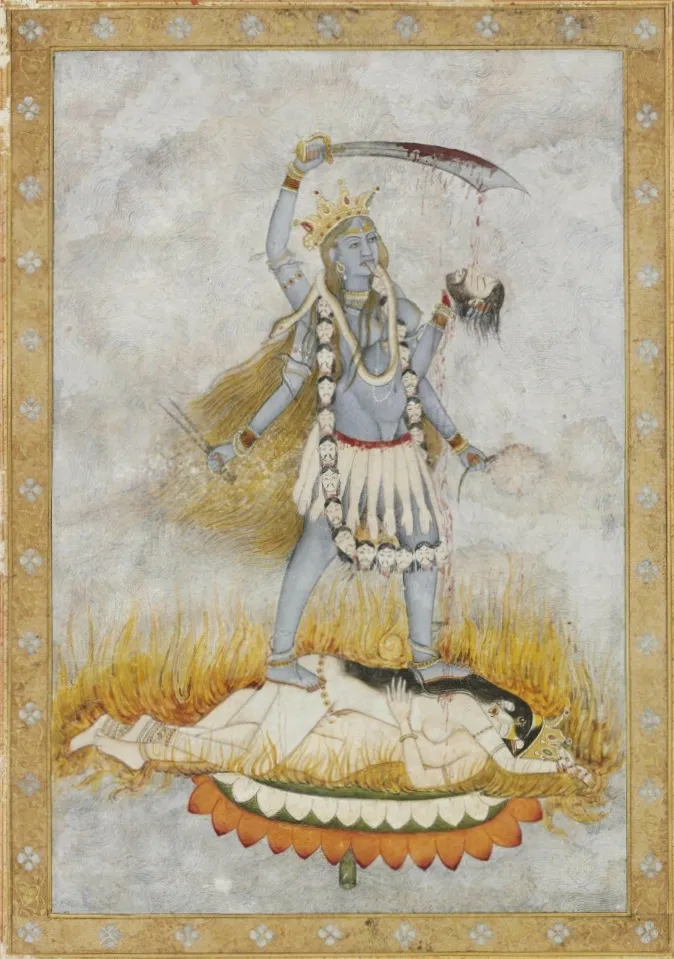
In the foothills of the Himalayas, where pine forests meet terraced valleys and mountain streams run cold, a style of painting took shape that is unlike anything else in Indian art. Kangra painting is a school of Pahari miniature art that developed in the Kangra valley of Himachal Pradesh during the early eighteenth century. Named after the hilly region of Kangra, these miniatures are celebrated for their delicate line work, soft colour palette, lush natural settings, and deeply lyrical depictions of Krishna and Radha. Today, Kangra painting stands as one of the most refined expressions of love, devotion, and nature in all of Indian folk art.
What Is Kangra Painting?
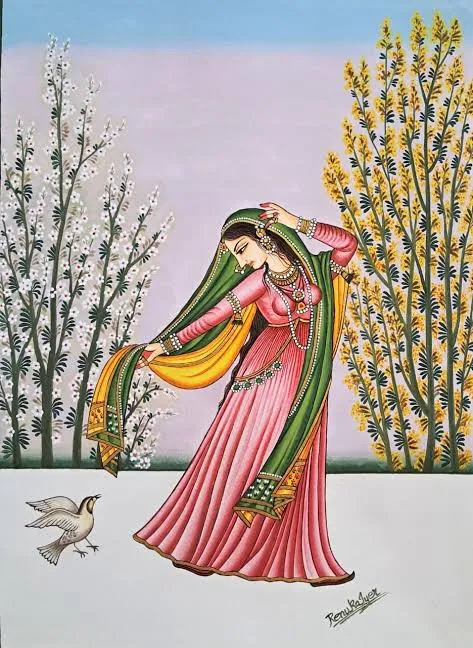
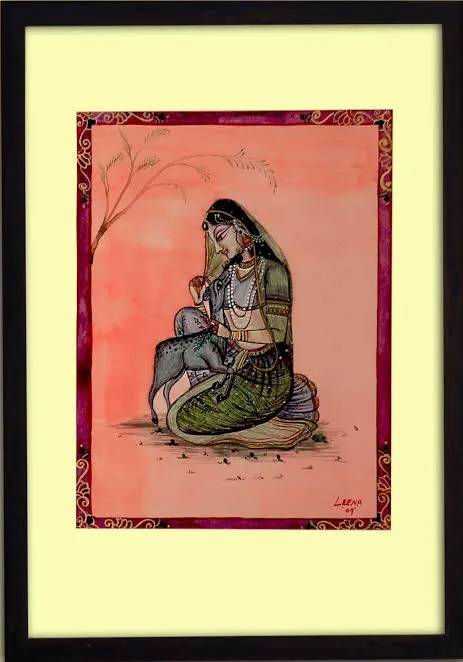
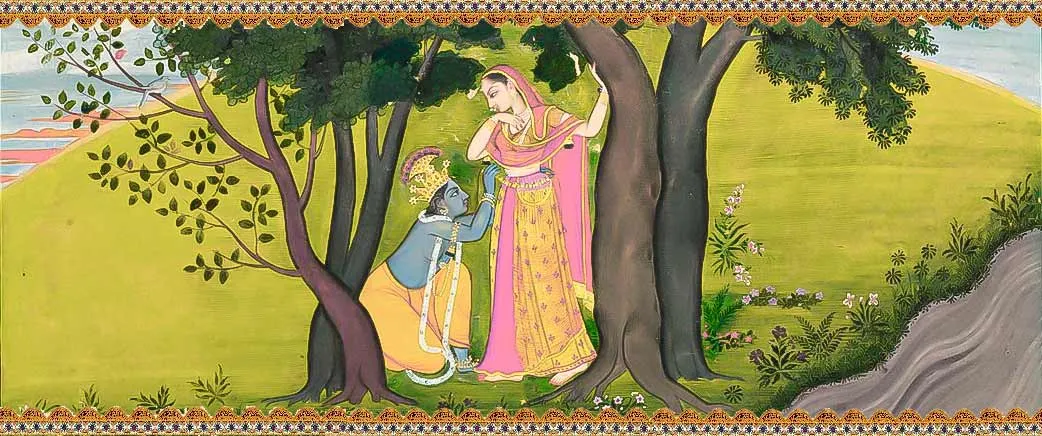
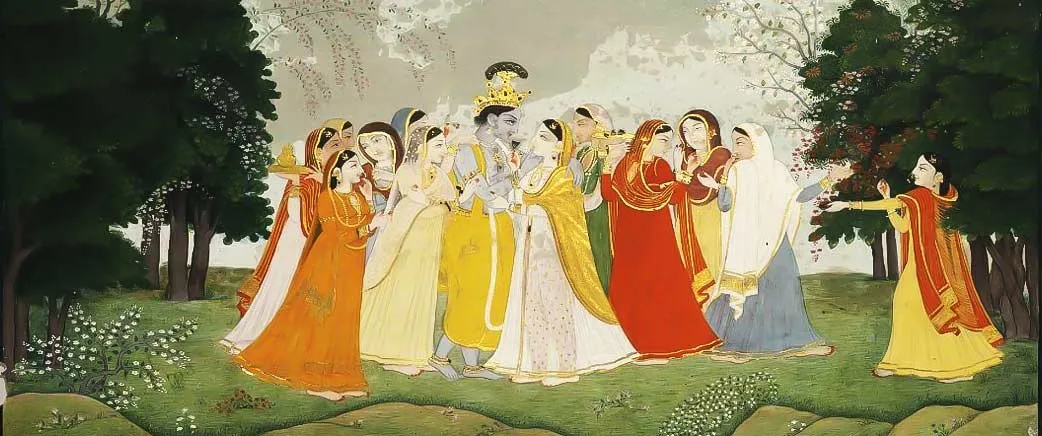
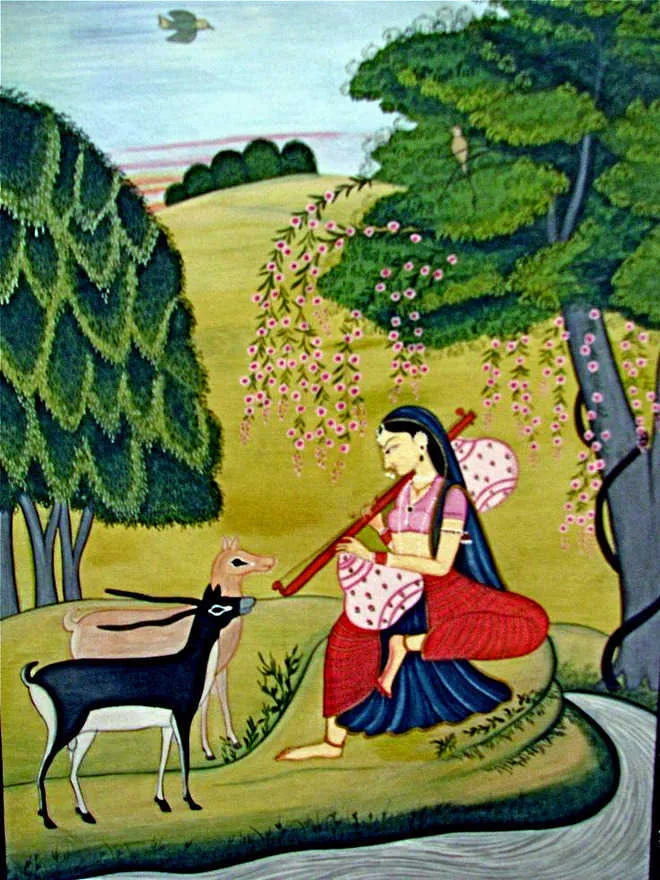
Kangra painting is a school of Pahari miniature painting that originated in the Kangra valley of Himachal Pradesh in the early 1700s. The name comes directly from the region of Kangra, which gave the art its identity and setting. These are small, finely detailed paintings made on hand-made paper called Wasli or on ivory sheets, with decorative borders in a technique known as Takri. The colour palette favours cool, naturalistic tones - soft greens, blues, and whites - that reflect the mountain landscape of the region. Colours were historically prepared from stones, flowers, and vegetables, giving works an enamel-like surface quality. Brushes were made from the hair of turtles, doves, and migratory birds, as well as squirrel-hair brushes for fine, precise work. The central theme of Kangra miniatures is Shringara rasa - the emotion of love - expressed most often through scenes of Radha and Krishna set against the lush Himalayan landscape.
History and Origin
The origins of Kangra painting lie in the pre-colonial hill state of Guler, a small principality in the Lower Himalayas. Artists who migrated from the Mughal empire to these quieter hill states in search of a more stable environment brought refined Mughal techniques with them, blending them with the religious and cultural preoccupations of the Hindu Rajas who were their new patrons. The style began to take its distinct form as the Basohli school of painting faded in the mid-eighteenth century. Its defining period came under Maharaja Sansar Chand of the Katoch dynasty, who ruled between the late seventeenth century and the mid-eighteenth century. After the Kangra Fort was captured by Ghamman Chand, and later consolidated by his son Sansar Chand Katoch, the Kangra school entered its most brilliant phase. The Vaishanvite cult, which had emerged strongly from the eleventh century onward, and the Bhakti movement both shaped the themes of these paintings deeply. The text of Jayadev's Gita Govinda was a particular inspiration, and its imagery of Radha and Krishna runs through many of the finest extant Kangra manuscripts.
The Bhagavad Purana and the Ain-i-Akbari also provided narrative material. Popular literary sources included Keshavdas's Rasikapriya and Baramasa, the stories of Nala and Damayanti, and romances such as Sassi-Punno, Heer-Ranjha, and Sohni Mahiwal. At the height of the school, Kangra paintings depicted outdoor scenes centred on nature, with lush vegetation and flowing water as constant features. Over time the themes shifted toward nocturnal settings, with storms and lightning playing a dramatic role, and eventually toward town scenes with architectural elements appearing in the background. The Kangra Arts Promotion Society (KAPS), an NGO, has worked for over a decade to sustain and promote this tradition, and works inspired by Kangra's landscape can be seen adorning the gallery walls in McLeodganj.
Key Features and Famous Artists
Key Features and Visual Style
Kangra miniatures are instantly recognisable for their quiet elegance and their ability to evoke feeling through the subtlest of brushstrokes. The paintings draw as much from the natural world around them as from devotional literature, making nature and love nearly inseparable in the visual language of the style.
Colours derived from natural minerals, stones, flowers, and vegetables, giving the painted surface an enamel-like smoothness and depth.
Paper support made from pine needles (Wasli), with borders worked in the Takri decorative style and highlights applied using liquid gold.
Brushes crafted from the hair of turtles, doves, migratory birds, and squirrels, used to achieve minute, intricate line work.
A cool, naturalistic colour scheme dominated by soft greens, blues, and whites that captures the lush vegetation and light of the Himalayan foothills.
Central themes of Shringara rasa (the emotion of love) expressed through Radha-Krishna imagery, the Nayika-Nayaka couple, and scenes from Ragmala, all framed by carefully painted floral borders.
Influence of the Mughal style adapted toward greater naturalism, a focus on the human form depicted with grace and delicacy, and attention to the natural world rather than architecture.
Famous Artists of Kangra Painting
Several artists have shaped the history and contemporary practice of the Kangra school of painting, carrying this tradition from its courtly origins into the present day.
Nainsukh of Guler (Guler, Himachal Pradesh) is widely regarded as one of the founding masters of the broader Pahari school. Working in the mid-eighteenth century, he was known for his extraordinarily sensitive portraiture and his ability to bring warmth and psychological depth to small-scale miniature work. His paintings helped bridge the Guler and Kangra styles. Purkhu of Kangra (Kangra, Himachal Pradesh) was among the most accomplished court artists working under the patronage of Sansar Chand Katoch. He is associated with the finest examples of the Kangra style at its peak, particularly devotional compositions featuring Radha and Krishna drawn from the Gita Govinda.
Kushala and his family lineage (Kangra, Himachal Pradesh) represented the family workshop tradition that sustained Kangra painting across generations. Their collective output across the late eighteenth and early nineteenth centuries constitutes a significant part of what survives from the Sansar Chand era.
Vijay Sharma is a contemporary Kangra artist from Himachal Pradesh who has been active in reviving traditional techniques and materials, working on hand-made Wasli paper with natural mineral colours to maintain the quality standards of the classical period.
How to Learn Kangra Painting
If you want to learn Kangra painting, the most direct route is to study with a practitioner who works within the living tradition of Pahari miniature art. Rooftop offers online courses taught by master artists from across India's miniature painting traditions, bringing the same level of craft and technique into a format accessible from anywhere. Whether you are a complete beginner or already familiar with miniature painting, learning the fundamentals of Kangra's line work, colour preparation, and compositional language will give you an entirely new appreciation for this Pahari tradition.
Where to See and Buy Kangra Painting
Authentic Kangra paintings are held in major museum collections including the National Museum in New Delhi and the Bhuri Singh Museum in Chamba, Himachal Pradesh, which houses one of the finest documented collections of Pahari miniatures. The Kangra valley itself, particularly the towns of Dharamshala and Palampur, has local galleries and artist workshops where you can see the work being made. Craft fairs and cultural festivals in Himachal Pradesh also bring Kangra artists together. For those looking to buy original Kangra-style works or explore related miniature paintings, Rooftop's shop carries original artworks by traditional artists from across India.
Learn Kangra Miniature

Frequently Asked Questions
What is Kangra painting and where does it come from?
Kangra painting is a school of Pahari miniature art that originated in the Kangra valley of Himachal Pradesh, India, in the early eighteenth century. It developed from artists who migrated from the Mughal empire to the hill states of the Lower Himalayas, where they found new patrons among the Hindu Rajas. The style is named after the Kangra region and is best known for its lyrical depictions of Radha and Krishna, delicate line work, and cool naturalistic colour palette.
Which state is Kangra painting associated with?
Kangra painting is associated with Himachal Pradesh in northern India, specifically the Kangra valley and the surrounding hill states of Guler, Basohli, Chamba, Nurpur, Bilaspur, and Mandi. The tradition later spread to Suket, Kullu, Arki, Nalagarh, and Tehri Garhwal. The style is sometimes grouped under the broader category of Pahari (hill) painting, which covers miniature traditions from across the Punjab hill states.
Who are the most famous Kangra painting artists?
The most celebrated artists of the classical Kangra school include Nainsukh of Guler, known for his sensitive portraiture, and Purkhu of Kangra, who produced devotional compositions under the patronage of Maharaja Sansar Chand Katoch. The Kushala family workshop also produced significant works during the eighteenth and nineteenth centuries. Contemporary artists working in this tradition continue to practise the style using traditional materials including natural mineral pigments and Wasli paper.
What materials and colours are used in Kangra painting?
Traditional Kangra painting uses colours made from natural stones, minerals, flowers, and vegetables, which give the painted surface its characteristic enamel-like quality. The support is typically Wasli paper made from pine needles, or ivory sheets for finer work. Borders are decorated in the Takri style and liquid gold is used for highlights. Brushes are made from the hair of turtles, doves, migratory birds, and squirrels, allowing artists to achieve the very fine line work that defines the Kangra style.
Can I learn Kangra painting online in India?
Yes, you can learn Kangra painting and related Pahari miniature techniques online. Rooftop offers structured courses in Indian miniature painting taught by master artists, covering foundational skills in brush handling, natural colour preparation, and traditional compositional methods. These courses are accessible from anywhere in India and are suitable for learners at all levels.
Where can I buy authentic Kangra paintings?
Authentic Kangra-style paintings can be purchased from galleries and artist studios in the Kangra valley, Dharamshala, and Palampur in Himachal Pradesh, as well as at major craft exhibitions and Dastkar fairs. The National Crafts Museum in New Delhi also maintains a reference collection. Online, Rooftop's shop carries original works by traditional Indian artists. When buying, it is worth confirming that the artist uses hand-made paper and natural pigments to distinguish genuine traditional work from mass-produced prints.
Kangra painting carries within it the devotion, craftsmanship, and love of beauty that defined the hill courts of eighteenth-century Himachal Pradesh. It is a tradition that rewards patient attention - the more closely you look, the more you discover. Explore Indian miniature painting courses on Rooftop and begin your journey into one of India's most lyrical and technically refined Pahari art traditions.
Bibliography
Sources
Kumar, N. Driem, J. Stoban, P. (2020)* Himalayan Bridge*. New York: Routledge.
Vijay, S. (2020).* Painting in the Kangra Valley*. Niyogi Books.
Image Sources
"Art of Kangra Paintings Dying a Slow Death." The Tribune, https://www.tribuneindia.com/news/archive/community/art-of-kangra-paintings-dying-a-slow-death-175309/. Accessed 21 July 2026.
"Kali Kangra Painting." Wikimedia Commons, https://commons.wikimedia.org/wiki/File:Kali_Kangra_Painting.jpg. Accessed 21 July 2026.
"Radha with a Deer – Kangra Painting (30 cm × 40 cm)." Indian Folk Art, https://indianfolkart.org/product/radha-with-a-deer-kangra-painting-30cms-x-40cms-including-frame/. Accessed 21 July 2026.
"Shringar Ras Kangra Miniature Painting (21 cm × 30 cm)." Indian Folk Art, https://indianfolkart.org/product/shringar-ras-kangra-miniature-painting-21-cms-x-30-cms/. Accessed 21 July 2026.
"The Art of Making Kangra Paintings." Cottage9, https://www.cottage9.com/art-technique/the-art-of-making-kangra-paintings/. Accessed 21 July 2026.