

Why a 40 Day Painting Still Matters in an AI World
Why a 40 Day Painting Still Matters in an AI World
Discover why a 40-day painting still matters in an AI-driven world, exploring the patience, skill, and cultural heritage behind traditional Indian art and the artists who keep it alive.

Rooftop
Author
The presence of AI is hard to escape these days. It has found its way into our work, our studies, and even the smallest parts of everyday life. Images can now be generated in seconds, entire visual worlds can be created from a few lines of text, and the possibilities seem endless. But when everything becomes so easy to produce, what happens to the value of something that takes weeks to make?
Art has always asked something of the person creating it. There is the time spent learning a technique, the patience required to get it right, and the willingness to begin again when something goes wrong. AI can generate an image in moments, but a painting made by hand over 40 days carries the weight of all the hours that went into it. In an increasingly automated world, that difference matters.
A 40-day painting reminds us that some things are worth making slowly, even when the world around us has learned to move faster. Its value lies not only in the finished image but also in the skill, patience, and thought that went into creating it. As AI-generated imagery becomes more common, understanding what makes handmade art special becomes all the more important. Traditional painting offers a way to appreciate creativity as a process rather than simply an outcome.
What Does It Take to Make a Painting Over 40 Days?
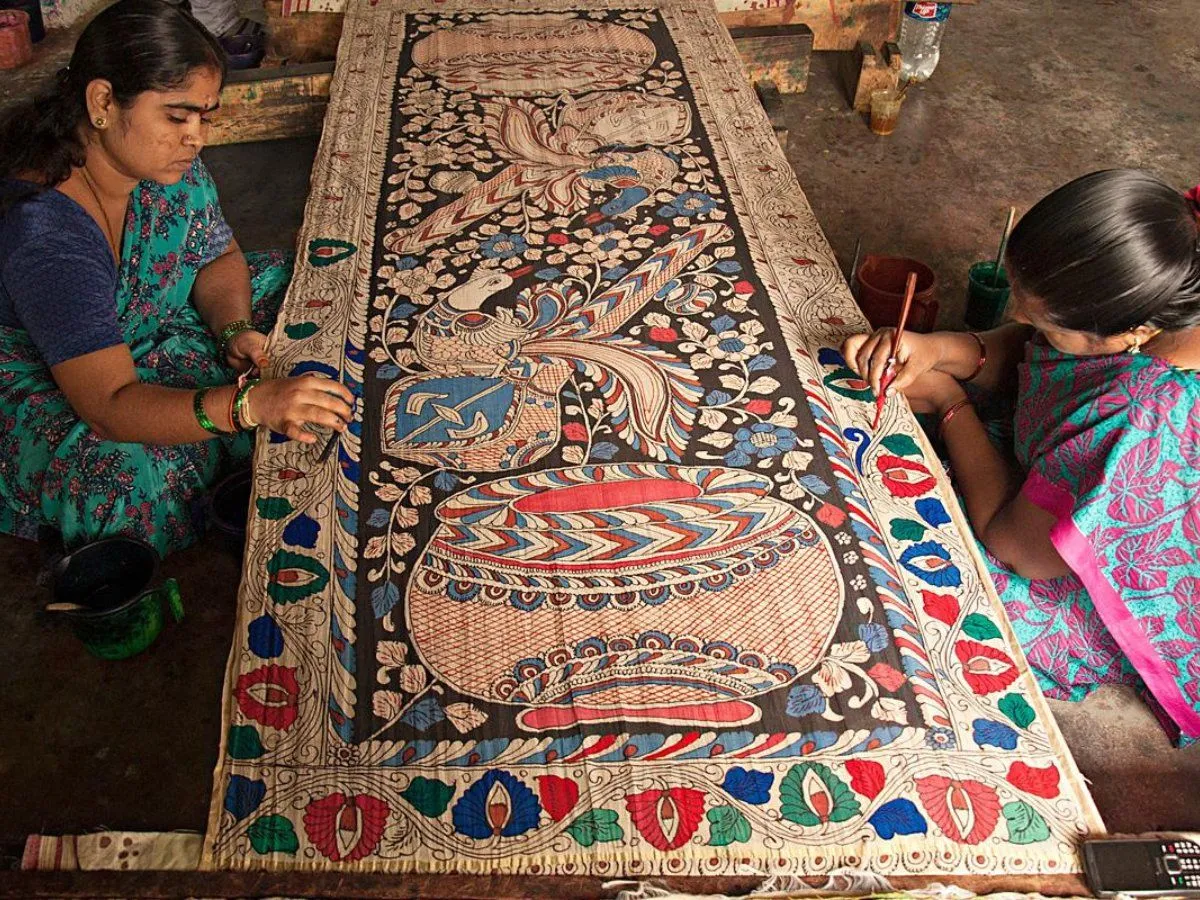
Artists take 40 days to make this painting. Source - Mosaic
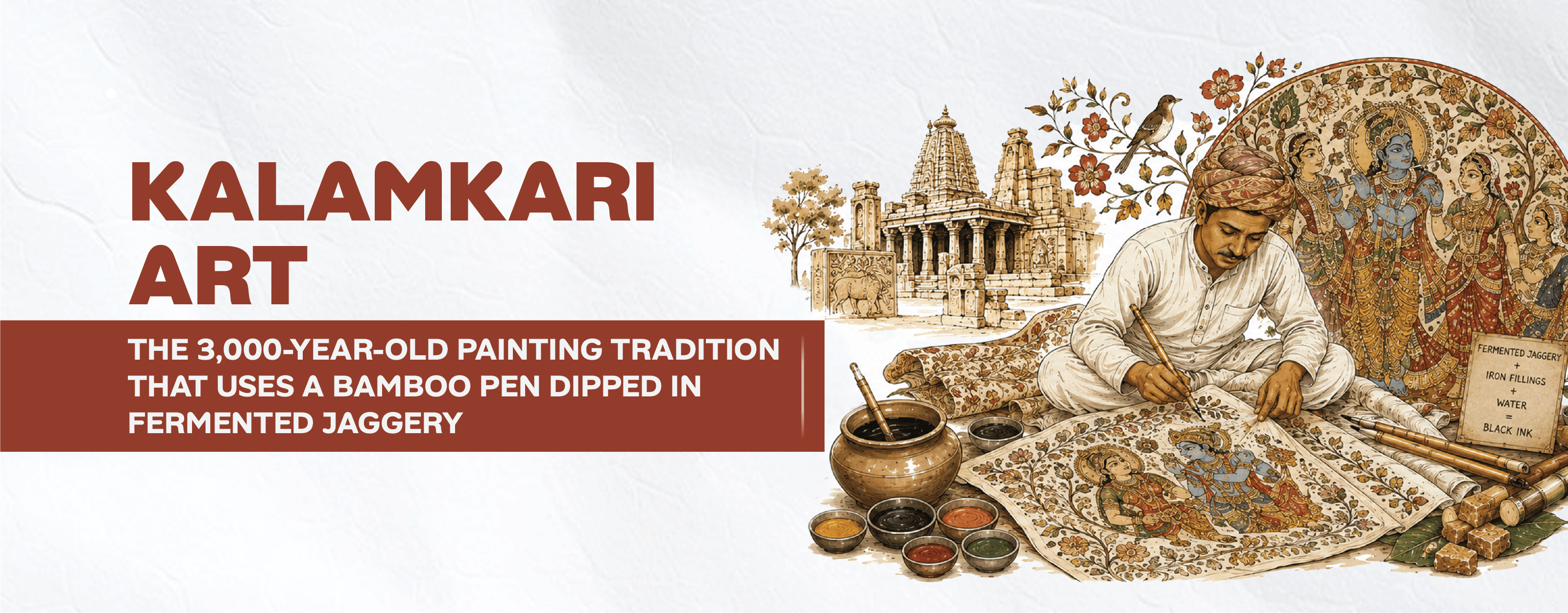
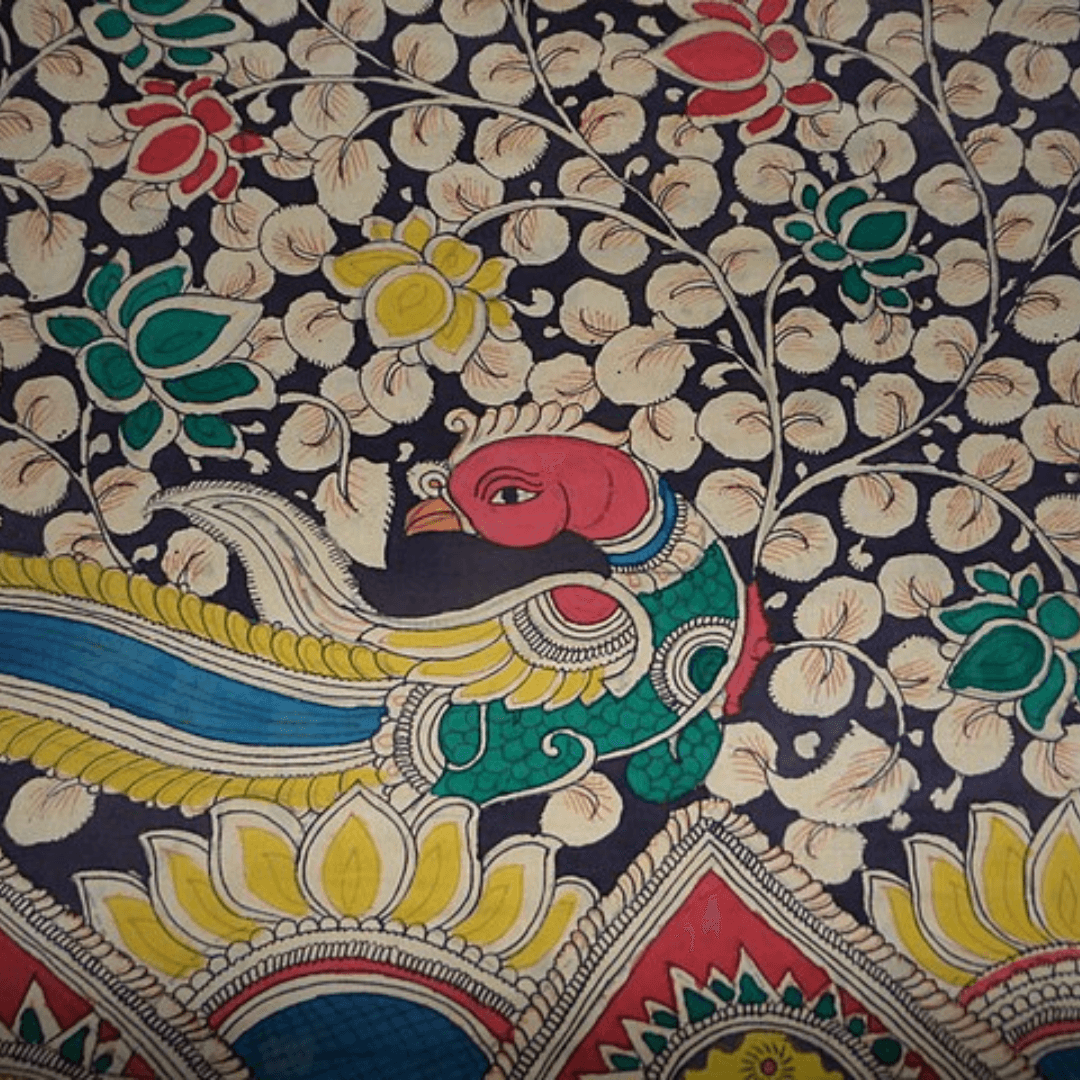
Kalamkari, a traditional Indian art form practised in Andhra Pradesh, offers a glimpse into what patient, hands-on creation looks like. The name comes from kalam, meaning pen, and kari, referring to craftsmanship. In the Srikalahasti tradition, artists use a pen-like instrument to draw and paint intricate compositions, often depicting stories from Hindu mythology. The result is an artwork shaped by both technical skill and generations of artistic knowledge.
The process is far more involved than sitting down with a brush and filling a canvas. The design must first be worked out, the fabric prepared, and the colours and other materials made ready. Traditional Kalamkari also involves several stages of treatment and careful application, with the final result depending on the artist's control over every step. A detailed painting can take around 40 days to complete, although the time varies with the design and working conditions.
Think about what that means in a world where an image can appear on a screen almost instantly. The artist must work through each stage, paying attention to details that may seem small individually but contribute to the finished composition. The process cannot always be rushed simply because the artist wants to finish sooner. The time invested becomes part of the story behind the painting.
AI Can Make Images Faster, But What About the Making?
There is no denying that AI can produce striking images. It can combine visual styles, interpret prompts, and generate compositions that would once have required considerable time and technical skill to execute. Dismissing everything it produces would be missing the point. The more interesting question is what we value when we look at art.
A generated image can give us a finished result, but a handmade painting carries evidence of the decisions that brought it into being. Every line, colour, and detail reflects the choices of a person working with their hands and materials. There is room for hesitation, correction, discovery, and the occasional happy accident. With traditional painting, the process is inseparable from the outcome.
The artist does not simply describe what they want and receive a finished composition. They have to work through the physical act of making it, responding to the materials and adjusting their approach along the way. Art is often valued for more than what it looks like, after all. We care about who made it, how they made it, and what went into bringing it to life.
The Value of Time Is Often Hidden in the Details
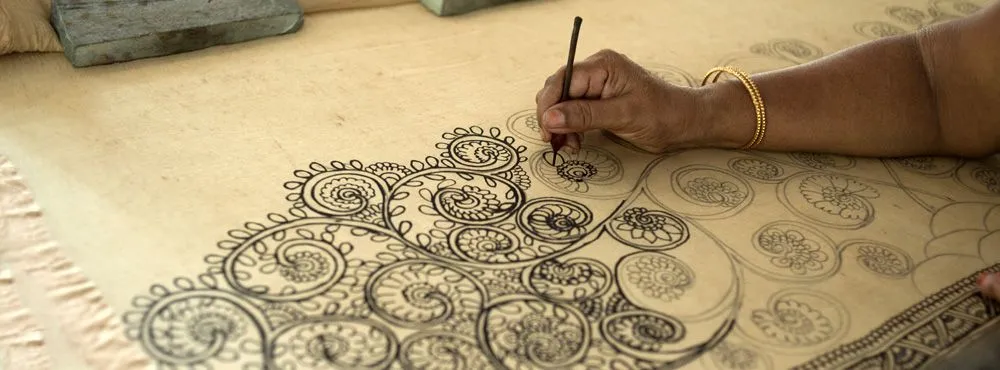
Hidden Details in Kalamkari. Source - https://basskf.edu.in/
Spend a little longer looking at a detailed traditional painting, and the experience begins to change. What first appears to be a beautiful arrangement of colours and patterns starts to reveal the smaller decisions behind it. The precision of a line, the repetition of a motif, or the way a complex composition comes together becomes easier to appreciate. Looking closely allows us to notice the work that might otherwise go unseen.
In Kalamkari, these details are shaped by a tradition of drawing, storytelling, and material knowledge passed down through generations. The artist's skill is not limited to reproducing a familiar pattern. It involves understanding the technique, knowing how materials respond, and bringing the composition together through practice. Much of this knowledge develops over years rather than days.
This is also why the time invested in a painting matters to the person who eventually owns it. Knowing that an artwork took weeks of careful work can change the way it is seen and appreciated. The painting becomes more than a finished image because its details offer a glimpse into the decisions and skills behind it. The hours spent creating it become part of what makes the artwork meaningful.
A 40-day painting is not automatically better than a work made in less time. Nor does the number of hours alone determine artistic value. But when a long process reflects genuine skill, knowledge, and care, those qualities become part of what makes the artwork worth experiencing. Time matters because of what the artist brings to it.
Traditional Art Carries Knowledge That Cannot Be Reduced to a Pattern
Traditional art forms do not emerge in isolation. They develop through generations of practice, experimentation, teaching, and adaptation. Techniques are learned by observing experienced artists, working alongside them, making mistakes, and gradually understanding the nuances that are difficult to explain in words alone. Each generation inherits this knowledge while finding ways to carry it forward.
Kalamkari, for instance, has distinct traditions, including the narrative-driven Srikalahasti style and the block-printed Machilipatnam style. Each has its own methods and visual language. Understanding these differences means understanding more than an image; it means recognising the histories and skills that have shaped the art form. The artwork becomes a way of encountering the people and practices behind it.
AI can imitate visual characteristics, but reproducing a style is not the same as sustaining the practice that gave rise to it. The continued existence of a traditional art form depends on artists being able to practise their craft, earn a living, teach others, and pass their knowledge on. Without that support, the techniques and traditions behind the images risk losing the people who keep them alive.
Why Handmade Paintings May Matter Even More in the Future
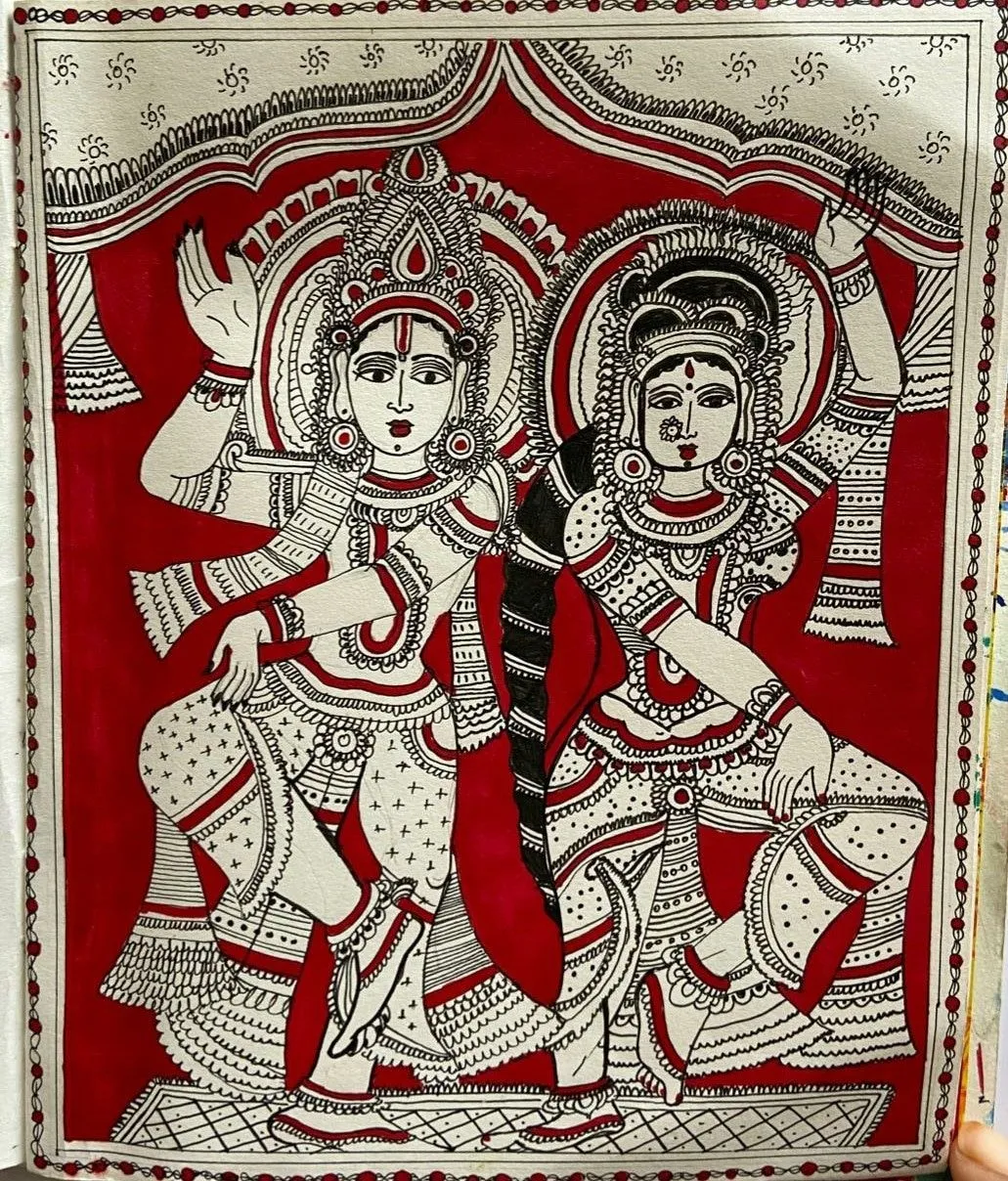
Kalamkari Painting After it is Finally Made. Source - International Indian Art Gallery
As AI-generated imagery becomes more common, our relationship with handmade objects may change. When an endless stream of images is available at the click of a button, a work that has taken weeks of concentrated effort can offer a different kind of satisfaction. It gives us a reason to slow down, look more closely, and appreciate what goes into making something by hand. The experience is different because the process matters as much as the result.
This does not mean handmade art and AI have to exist on opposite sides of a battle. Technology can help artists document their work, reach new audiences, and share knowledge about their practice. The real concern is what happens when speed and convenience become the only measures of value, leaving the labour and skill behind traditional art out of the picture. There is room for new tools without losing sight of the people who make art by hand.
A painting that takes 40 days to complete asks us to consider a different measure of worth. Not how quickly something can be made, but what goes into making it, what it carries, and why it deserves to endure. In a world increasingly shaped by instant results, the patience behind a handmade painting offers a welcome reminder that not everything meaningful needs to happen quickly.
Giving the Artist the Recognition They Deserve
Appreciating traditional art also means recognising the people behind it. The time spent on a painting has little meaning for the artist if their skill goes unacknowledged or their work is treated as interchangeable decor. Preserving an art form requires more than admiring its visual appeal. It requires giving artists the recognition, opportunities, and fair compensation that allow them to continue practising their craft.
The way we discover and buy art matters, too. Learning about the artist, understanding the tradition, and choosing an original work from a credible source can help build a more meaningful connection between the person making the art and the person bringing it home. It also encourages us to look beyond the finished product and value the knowledge and labour behind it. Supporting traditional artists helps ensure that their skills can be passed on to future generations.
At Rooftop, traditional Indian art is brought closer to people through original artworks and opportunities to learn from practising artists. Exploring a handmade painting becomes a chance to discover the person and the tradition behind it, rather than simply finding something beautiful to put on a wall. That connection between art and artist is essential to keeping traditional practices visible and valued.
In the end, the significance of a 40-day painting is not that AI can never create something visually impressive. It is that speed cannot be the only thing we value in art. A painting made over weeks carries the artist's time, skill, and knowledge in every detail. As the world grows increasingly accustomed to instant results, there is something worth holding on to in a work that asks us to slow down and appreciate how it came to be.