
Madhubani Symbolism
Madhubani Symbolism: The Fish, the Lotus, and the Cosmic Order Hidden in Every Painting
Explore the meaning behind Madhubani painting motifs, from fish and lotuses to the Sun, Moon, and Kohbar designs, and discover the stories and traditions of Mithila.

Rooftop
Author
Walk into a craft store, a boutique, or a hotel lobby, and you might recognise the familiar patterns of Madhubani painting. Fish swimming in pairs, lotuses in bloom, smiling suns, and bamboo trees appear on everything from textiles to wall art. The more we see these motifs, the easier it becomes to admire them for their colours and patterns alone, without stopping to wonder why they were painted in the first place.
But for the artists of Mithila, these images have long carried meanings that go beyond their appearance. A fish can represent fertility and prosperity, a lotus can symbolise purity, and the sun can stand for life and renewal. These meanings are rooted in local beliefs, rituals, and ways of understanding the world, passed down through generations of artists. Madhubani painting is not simply about filling a surface with beautiful patterns. It is also a way of expressing hopes for a family, marking important moments in life, and keeping cultural stories alive. To understand these paintings, we need to look a little closer at the motifs and the people who have given them meaning.
Why the Fish Is Never Just a Fish
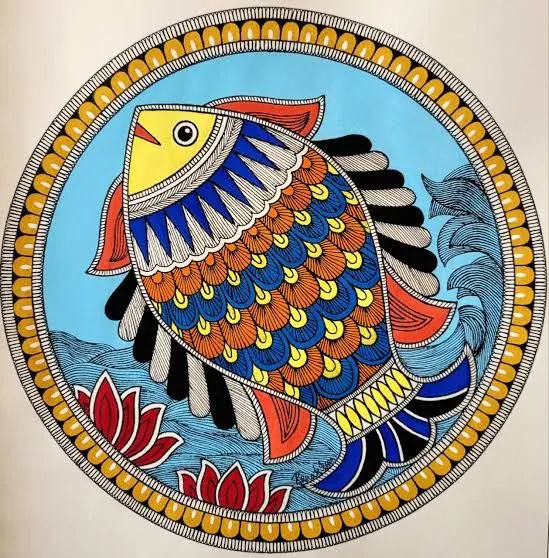
Madhubani Painting Fish Credits - International Indian Folk Art Gallery
The fishes in Madhubani paintings hold a deeper meaning. Look closely and you'll find them swimming in pairs, filling empty spaces, or appearing alongside other auspicious motifs. It's easy to see them as another beautiful pattern, but for the artists of Mithila, the fish can carry hopes that are much closer to home. It can speak of fertility, prosperity, and the wish for a family to grow and flourish. In wedding paintings, a pair of fish may express a blessing for the couple as they begin their life together. What looks like a simple image can hold the hopes of an entire family.
These meanings are also connected to the landscape of Mithila itself. The region has long been shaped by rivers, ponds, wetlands, and seasonal monsoon waters. Fish are part of this environment and, for many communities, have also been connected to food and livelihoods. Their presence in a painting therefore brings together the world people live in and the blessings they wish for. The fish in the water sustains life, while the fish on the wall can become a wish for that life to continue in abundance.
The fish also has a place in Hindu mythology. Matsya, the fish incarnation of Lord Vishnu, is remembered for protecting the sacred Vedas during a great flood. In some Tantric interpretations of Madhubani, fish may also be associated with the movement of life-giving energy. These layers of meaning remind us that the same motif can carry different stories depending on the tradition, the artist, and the occasion.
You may also come across fish in Aripan, the ritual floor paintings made during festivals and auspicious occasions. Placed among other sacred motifs, they can form part of a welcome for good fortune and prosperity into the home. Imagine a woman carefully drawing these patterns before a family celebration, carrying forward something she may have seen her mother or grandmother do before her. The painting becomes part of preparing the home, marking an important moment, and expressing a hope for what lies ahead.
Perhaps that is what makes the fish such a meaningful part of Madhubani painting. It connects the natural world with family life, faith, and the hopes people hold for the future. And when an artist paints those two little fish, the meaning may reach far beyond the lines on the wall. It may be a blessing for a marriage, a wish for abundance, or simply a way of keeping an old tradition close to home.
The Lotus in Madhubani Painting and the Promise of New Beginnings
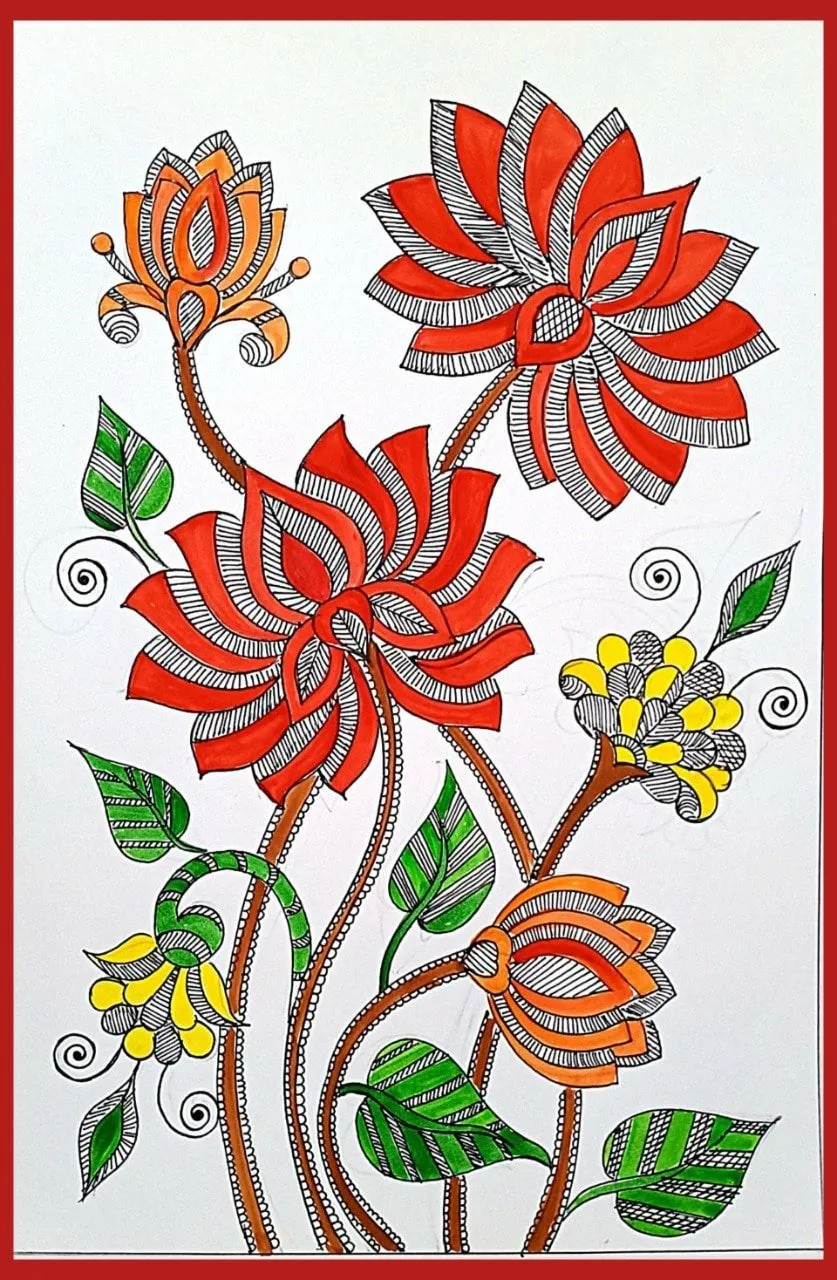
Lotus Madhubani Painting Credits - International Indian Folk Art Gallery
If the fish in Madhubani painting speaks of life and abundance, the lotus carries another deeply personal meaning. Known as Kamal or Puren in the Mithila region, it is associated with creation, fertility, and the beginnings of new life. Its place in Madhubani painting becomes especially meaningful in Kohbar art, created for the room where a newly married couple begins their life together. Here, the lotus is more than a flower painted on a wall. It can express the hope that a marriage will bring happiness, growth, and a future filled with possibilities.
Look at a traditional Kohbar composition and you may find a lotus placed at its centre, surrounded by rings, petals, and other intricate patterns. The arrangement draws the eye outward, as though the world of the painting is unfolding from that single flower. For the couple entering this new chapter of life, the imagery carries wishes that families have held for generations. The hope is for love to grow, for the family to flourish, and for life to bring its share of abundance. Through the lotus, these hopes find a place on the walls of the home.
There is also something moving about the flower itself. Its roots grow in muddy water, yet its petals open above the surface to meet the light. That image has made the lotus a powerful symbol across Indian religious and artistic traditions. In Madhubani painting, it can remind us that life is always taking shape, that new beginnings can emerge from uncertain circumstances, and that beauty often grows out of places we might overlook. The flower's journey from the water to the light gives the motif a meaning that people can connect with even without knowing its full cultural history.
For the artists of Mithila, painting a lotus means drawing on a visual language that has been shaped over generations. Its petals may be repeated in careful patterns, but the hopes behind the flower are deeply human. A marriage, a new household, the wish for children, or simply the desire for a prosperous life all belong to the world of beginnings. And perhaps that is why the lotus continues to find its place in Madhubani painting. It gives shape to a hope shared by so many people: that what begins today will have the chance to grow into something beautiful.
The Kohbar Ghar and the Blessings Painted on Its Walls
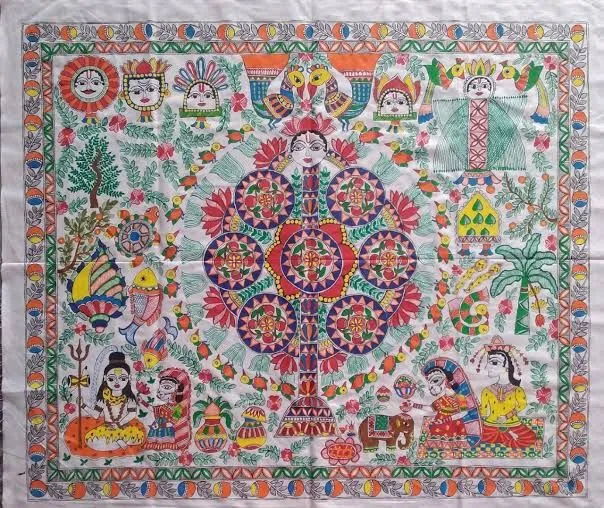
Kobhar Ghar Madhubani Painting Credits - International Indian Folk Art Gallery
To understand the deeper meaning of Madhubani painting, it helps to look at the Kohbar Ghar, the traditional bridal chamber in a Mithila household. In many communities, preparing this room for a newly married couple involves painting its walls with motifs that express hopes for their life together. Bamboo, banana trees, lotuses, fish, and other auspicious figures come together in these compositions, each carrying associations with growth, fertility, prosperity, or protection. The walls become part of the wedding itself, holding the wishes a family has for the couple as they begin a new chapter.
Bamboo, known as bans, often appears as a prominent motif in Kohbar paintings. Its tall stalks and ability to grow in clusters have made it a symbol associated with strength, continuity, and the growth of a family. The banana tree, or kadali, is also associated with abundance and fruitfulness in many ritual contexts. Together, these plants bring the natural world into the bridal chamber, expressing a hope that the couple's life will grow strong and be filled with happiness. These are not simply plants added to make the painting look fuller. They draw on a world familiar to the artists and their communities, where nature has long shaped the language of auspicious occasions.
Other motifs offer their own forms of protection and blessing. The tortoise, or kachhua, can be associated with stability and longevity, while the serpent, or nag, carries sacred associations in Hindu traditions. In some Mithila wedding paintings, the figure of Naina-Jogin appears as a protective presence, believed to guard the couple against the evil eye. Such figures remind us that a wedding is not only a celebration of two people coming together. It is also a moment when families express their hopes for safety, well-being, and a future free from harm.
Think about the person painting these walls. Alongside the skill required to bring the intricate composition together, there is an understanding of what the occasion means to the family. Each motif becomes a way to express a wish that might otherwise be difficult to put into words. A marriage brings excitement, uncertainty, and the hope of building a life together. The Kohbar painting gives those feelings a place in the home, turning the walls into a blessing that surrounds the couple as they begin their life together.
The Sun and Moon in Madhubani Painting and the Wish for a Lasting Blessing
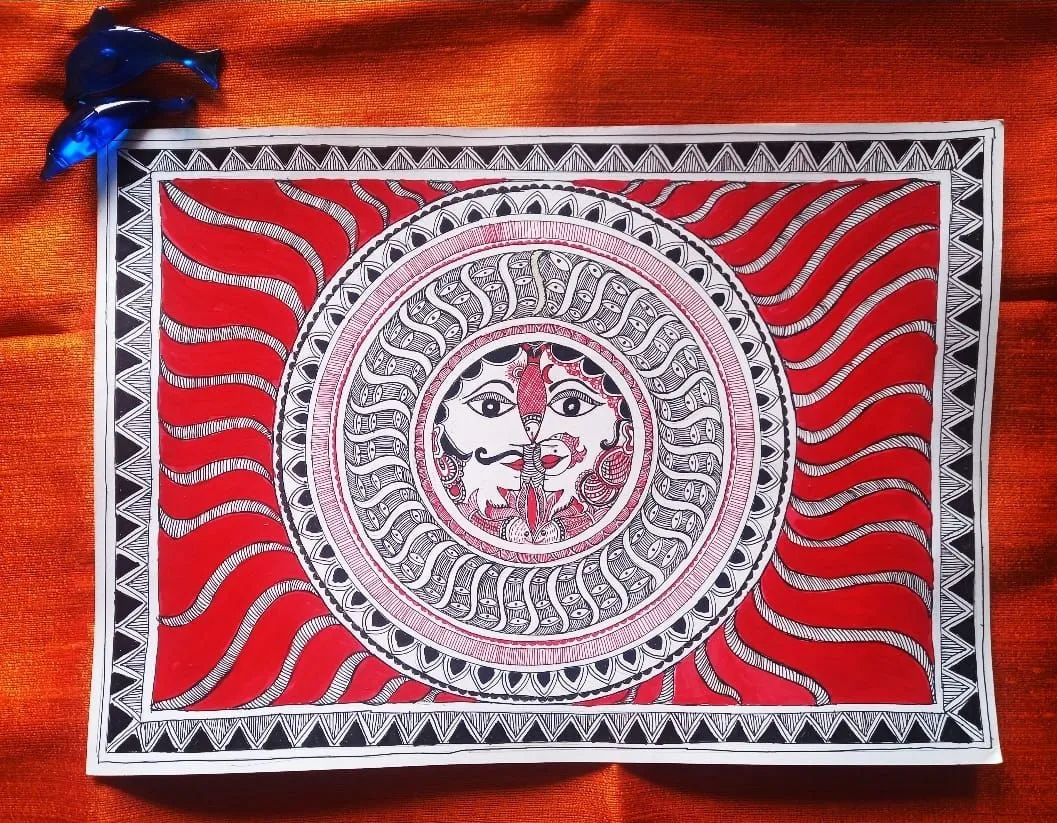
Sun and Moon in Madhubani Painting Credits - International Indian Folk Art Gallery
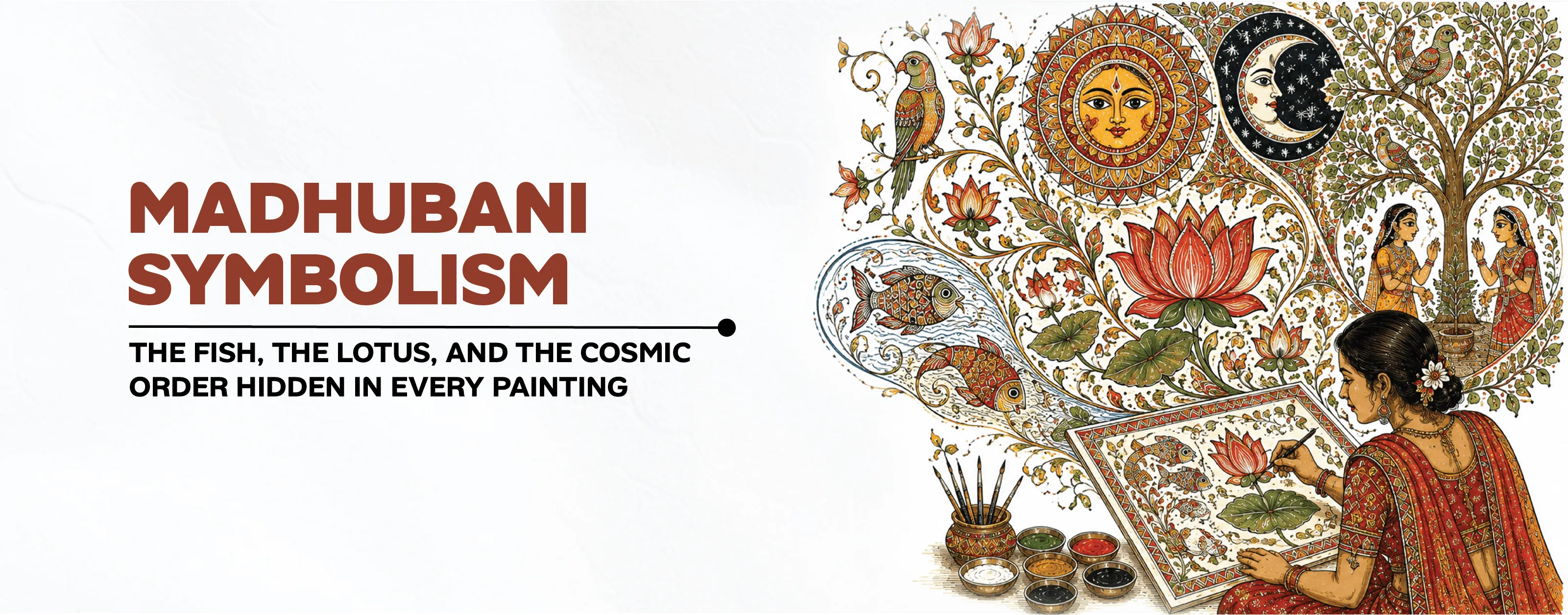
Look closely at many Madhubani paintings and you may find the Sun (Surya) and Moon (Chandra) watching over the scene from above. They might appear alongside wedding motifs, sacred figures, or images drawn from everyday life. At first, they can seem like small details added to complete the composition. But their presence can carry a deeper meaning, connecting the lives of people on the ground with the larger world that surrounds them.
The Sun has long held an important place in the beliefs and rituals of Mithila. Associated with light, vitality, and the sustaining power of life, it reminds us of the force that makes growth and renewal possible. The Moon, with its changing phases and quiet presence in the night sky, is often associated with calm and the rhythms of time. Together, they can suggest continuity, balance, and the enduring presence of the natural world in human life.
Think of a Madhubani painting made for a wedding or another important family occasion. The people gathered in the scene will grow older, the celebration will eventually end, and the house itself may change with time. Yet the Sun and Moon remain part of the painting, looking on as they have looked on across generations. Their presence can turn a moment that matters deeply to one family into something that feels connected to a much longer story.
For the artists of Mithila, these celestial motifs belong to a visual tradition shaped by faith, ritual, and the world around them. Their meaning may differ from one painting or occasion to another, but they invite us to look beyond the immediate scene. The Sun and Moon remind us that our lives are lived within something larger than ourselves, and that the hopes we hold for love, family, and a better future are often the very things we wish could last forever.
The Stories That Madhubani Paintings Continue to Tell
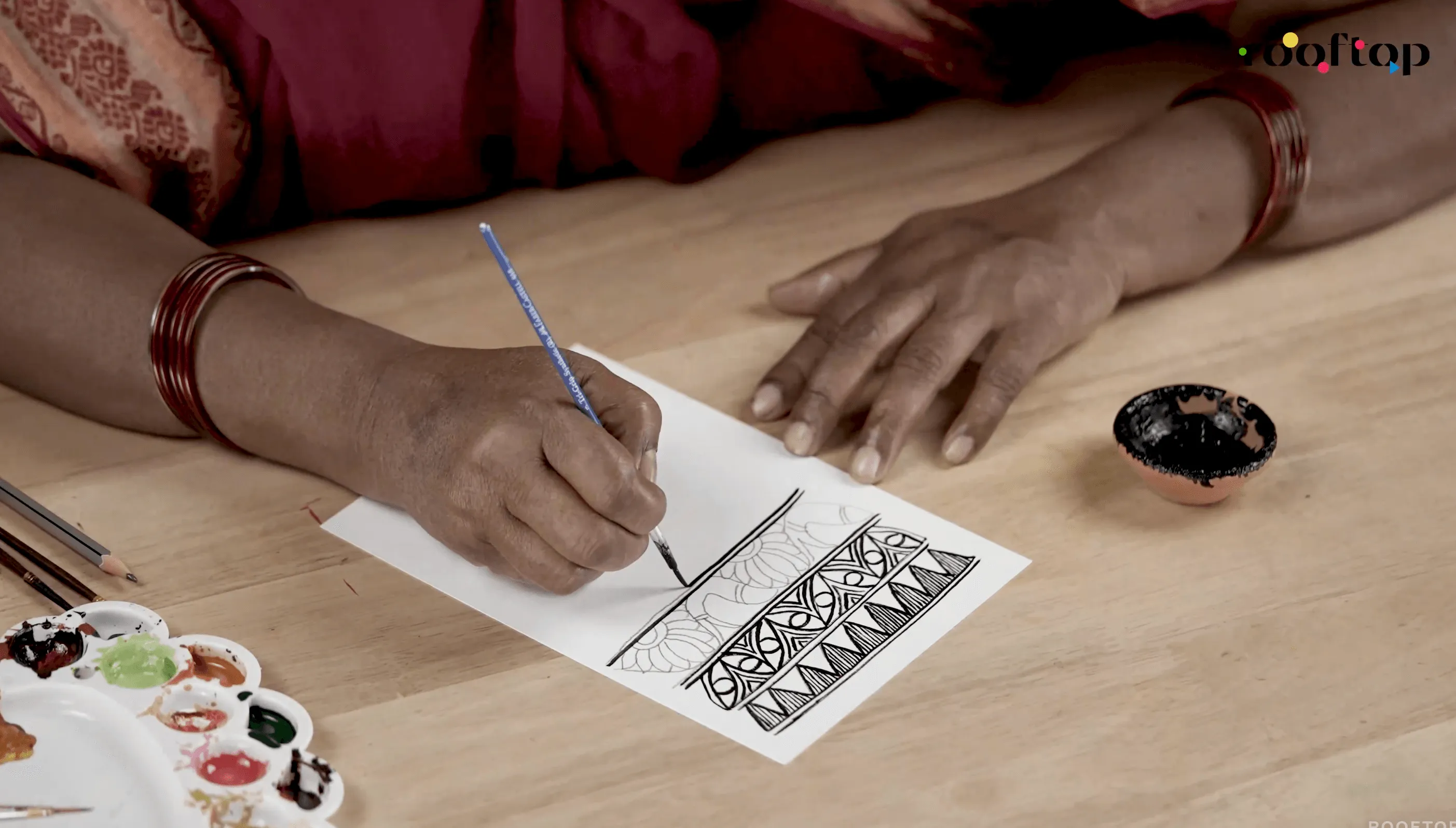
Learn Madhubani Painting
The fish, lotus, bamboo, Sun, and Moon are only a few of the motifs that make Madhubani painting so fascinating. Behind each one lies a story shaped by the beliefs, rituals, and everyday lives of the people of Mithila. Understanding these stories gives us a different way of looking at the art. The patterns begin to feel less like designs on a wall and more like expressions of the hopes, prayers, and memories that artists have carried forward through generations.
If this art form has sparked your curiosity, learning it from someone who has dedicated her life to it can make the experience even more meaningful. Rooftop's Madhubani Painting Course with Padma Shri Dulari Devi offers an opportunity to learn from an artist whose own journey reflects the perseverance and dedication behind this tradition. Dulari Devi began learning Madhubani painting while working as domestic help in the home of artist Mahasundari Devi. Through years of practice, she went on to earn national recognition for her contribution to the art form.
The course includes 8 chapters and 55 lessons across 10 hours, covering Madhubani painting and the experiences of the artist behind it. You can explore her early years, the challenges she faced while learning, and the role this art has played in her life, alongside lessons that help you begin developing your own artistic skills.
Madhubani painting has survived because artists have continued to practise it, teach it, and share what they know. Learning from Dulari Devi is one way to get closer to that tradition, understand the thought behind its motifs, and discover what goes into creating a painting of your own.