
Madhubani Art is thriving but the artists are struggling
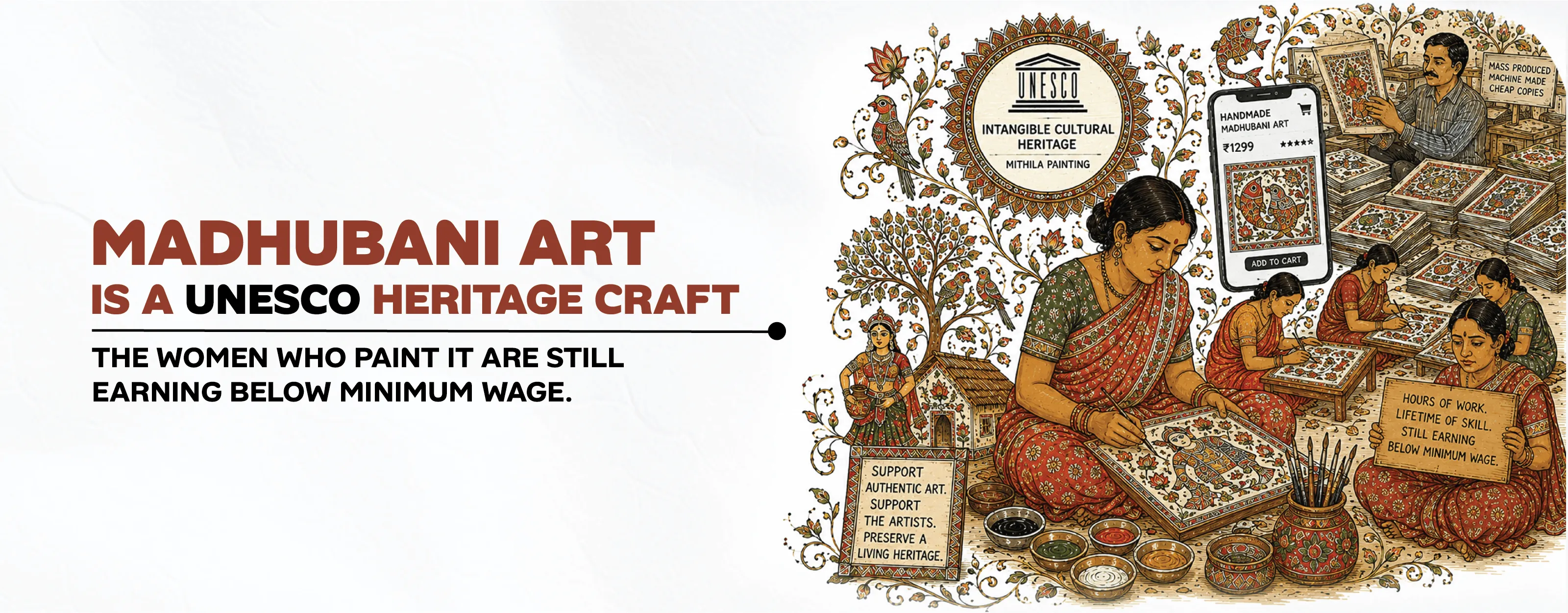
Madhubani Art is a UNESCO Heritage Craft. The Women Who Paint It Are Still Earning Below Minimum Wage.
Explore the struggles of Madhubani artists in Mithila, the fight for fair recognition, and how preserving this traditional art begins with valuing its creators.

Rooftop
Author
Madhubani painting has travelled far beyond the villages of Mithila where the tradition took root. Recognised with a Geographical Indication (GI) tag, it has found its way into tourism campaigns, public spaces, fashion, home décor, and everyday products. Its distinctive patterns and vivid colours have become familiar to audiences across India and beyond.
However, the growing visibility of Madhubani does not always translate into better livelihoods for the women who practise it. Many artists in rural Bihar continue to face challenges in earning a steady income from their work, even as the art form finds new commercial uses. The contrast raises an important question: who benefits when a traditional art form becomes widely popular, and how much of that value reaches the artists whose skill keeps it alive?
How a Sacred Tradition Became a Commodity
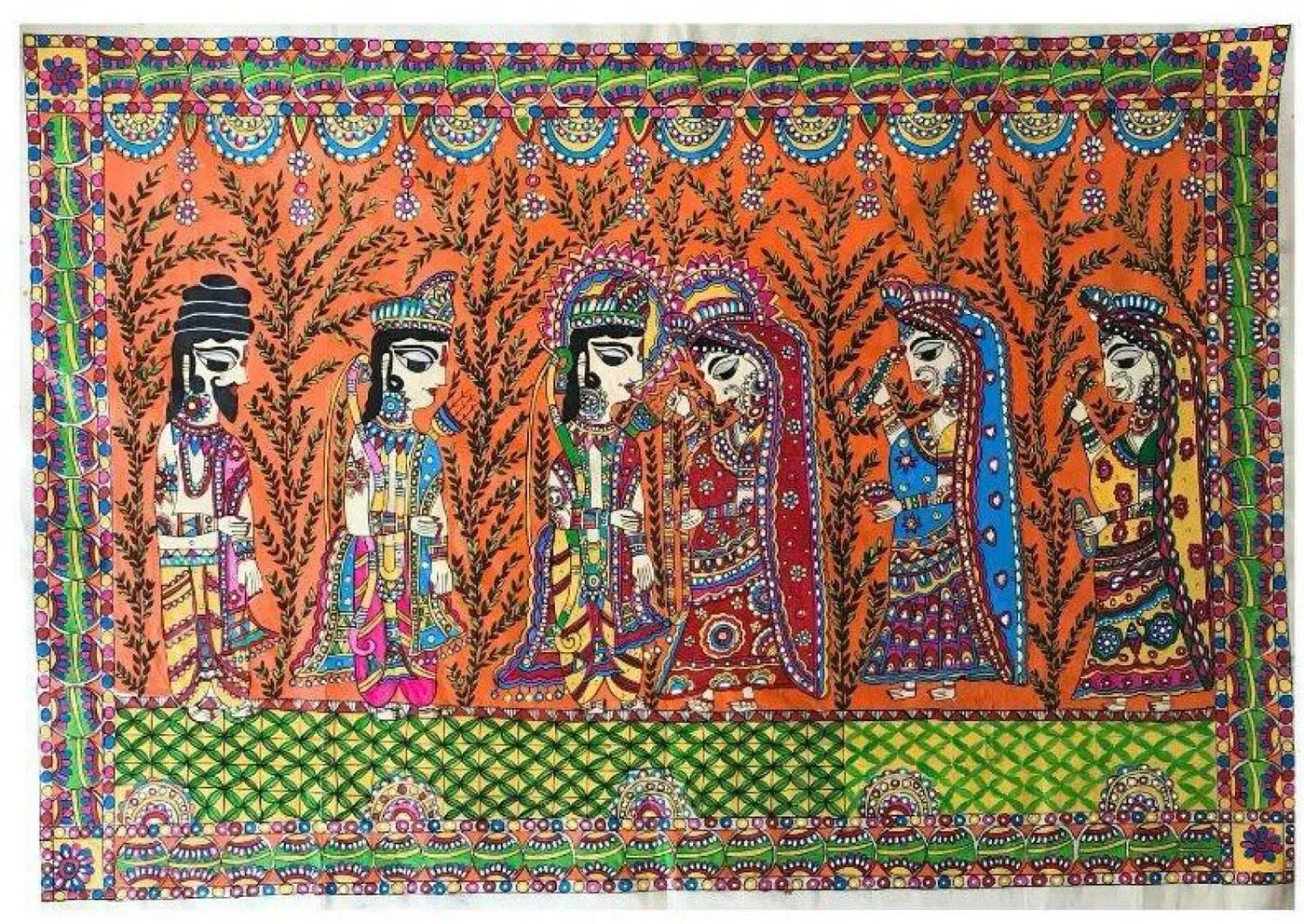
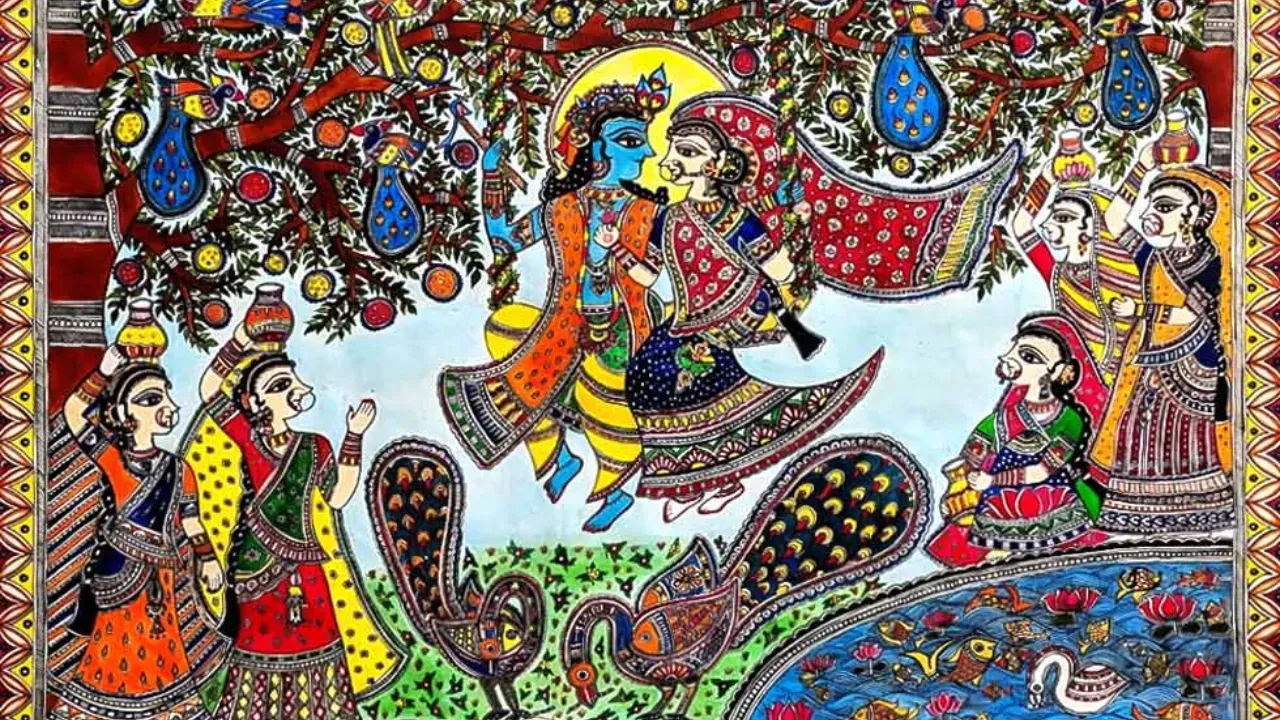
Traditional Madhubani Art Credits - Medium
For generations, Madhubani painting was woven into the lives of women in Mithila. They painted the walls of their homes with images of gods, plants, animals, and symbols of prosperity, bringing colour to weddings, births, and seasonal celebrations. Known as Bhitti Chitra, these murals belonged to the life of the community. The women who created them were preserving customs, expressing their beliefs, and marking moments that mattered to their families. Their paintings were part of a shared tradition long before they became something to sell.
That relationship began to change during the Bihar drought of 1966 - 1968, when severe hardship pushed communities to seek new sources of income. The All India Handicrafts Board encouraged women in Mithila to transfer their wall paintings onto handmade paper, making the art easier to carry and sell beyond their villages. For women facing difficult circumstances, this offered a way to earn money through a skill they already possessed. Their paintings could now travel to markets far beyond the homes where the tradition had taken shape.
But as Madhubani grew in popularity, a difficult question emerged. The women had learned to turn their knowledge and creativity into work that people were willing to buy, yet access to buyers and fair payment did not always follow. Traders and larger businesses could take the art to wider markets, while individual artists often had limited control over how their work was priced, reproduced, or sold. The paintings travelled further than ever, but the benefits did not necessarily travel back to the women who made them.
The GI Tag That Protected the Name, Not the Artists
GI Tag on Madhubani Painting Credits - Local Samosa
When Madhubani painting received its Geographical Indication (GI) tag in 2007, it gained formal recognition as an art form associated with Bihar. The recognition mattered. It acknowledged that Madhubani was not simply a collection of colourful patterns that anyone could reproduce and sell under the same name, but a tradition shaped by the knowledge, techniques, and cultural history of the Mithila region.
For the women who had spent years learning to paint, however, recognition on paper could not solve every problem they faced. A GI tag can help protect the name and regional identity of an art form, but it cannot, by itself, guarantee that an artist receives a fair price, finds buyers without relying on intermediaries, or earns enough to support her family. The gap between protecting a tradition and improving the lives of its practitioners remains an important part of Madhubani's story.
Recognition Does Not Always Mean Fair Payment
Imagine spending days working on a painting, carefully filling its spaces with fine lines, intricate patterns, and colours that follow a tradition you may have learnt from your mother or grandmother. Once the work is finished, you still have to find someone willing to buy it. If that buyer offers less than the painting is worth, refusing may mean waiting weeks or months for another opportunity.
This is one of the difficulties that formal recognition cannot resolve on its own. Madhubani artists may have considerable skill and experience, yet their ability to negotiate prices depends on access to buyers, information about the market, and the freedom to sell independently. When an artist relies on a trader to purchase her work, she may have little knowledge of the price at which it will eventually reach a shop or customer.
The concern is not that every intermediary exploits artists. Traders, cooperatives, and other sellers can help connect rural artisans with markets they might otherwise struggle to reach. The problem arises when artists have little bargaining power or few alternatives. An art form can become commercially successful without ensuring that the people producing it receive a proportionate share of that success.
When Speed and Low Prices Become the Priority
Madhubani painting demands time, concentration, and a familiarity with its many visual traditions. Fine linework, densely filled compositions, and carefully arranged motifs require a different kind of labour from producing a design through a printing machine. Yet when buyers are primarily looking for inexpensive products in large quantities, the market can favour speed over the time invested in handmade work.
Artists who spend hours completing a painting may find themselves competing with cheaper reproductions or simplified designs. Synthetic colours, inexpensive paper, and mass-production techniques can make it possible to sell products at prices that a hand-painted original cannot match. These alternatives are not necessarily without value, and contemporary artists have every reason to experiment with new materials and formats. The difficulty is that machine-made reproductions can be misleading when they are presented as handmade paintings.
For an artist, the consequences can be deeply personal. Years spent developing a steady hand and learning traditional patterns do not automatically translate into higher earnings. When customers cannot distinguish an original from a printed imitation, or when price becomes the main consideration, the skill behind the painting risks becoming invisible.
The Problem of Knowing What Is Authentic
Buying Madhubani art has become more complicated as its imagery has spread across clothing, stationery, furnishings, accessories, and online marketplaces. Some products are original paintings, while others adapt traditional motifs through printing or digital design. Both may draw on Madhubani's visual language, but they are not the same kind of work.
The distinction matters when a buyer believes they are paying for a handmade painting but receives a machine-produced reproduction instead. A GI tag offers a framework for protecting the regional identity of Madhubani, but it does not automatically ensure that every product listed online is accurately described or that every misuse is detected and challenged. Enforcement requires awareness, monitoring, and the ability to take action when the protected name is misused.
For artists, this creates another difficult imbalance. They may have to spend their time making and selling their work while also navigating the unfamiliar language of registration, certification, and legal protection. Taking action against a larger seller can be daunting, particularly when the artist has limited resources or does not know where to seek help.
The GI tag remains an important form of recognition, but it cannot carry the responsibility of protecting Madhubani on its own. Artists also need transparent pricing, reliable routes to market, accurate product descriptions, and support when their rights are violated. Above all, they need a system in which the value of their work is not measured solely by how cheaply or quickly it can be sold.
Preserving Madhubani means more than keeping its name attached to Mithila. It means making sure that the women who have carried the tradition across generations can continue to practise it with dignity, creative freedom, and a fair chance of earning a living from their skill.
Who Is Actually Profiting
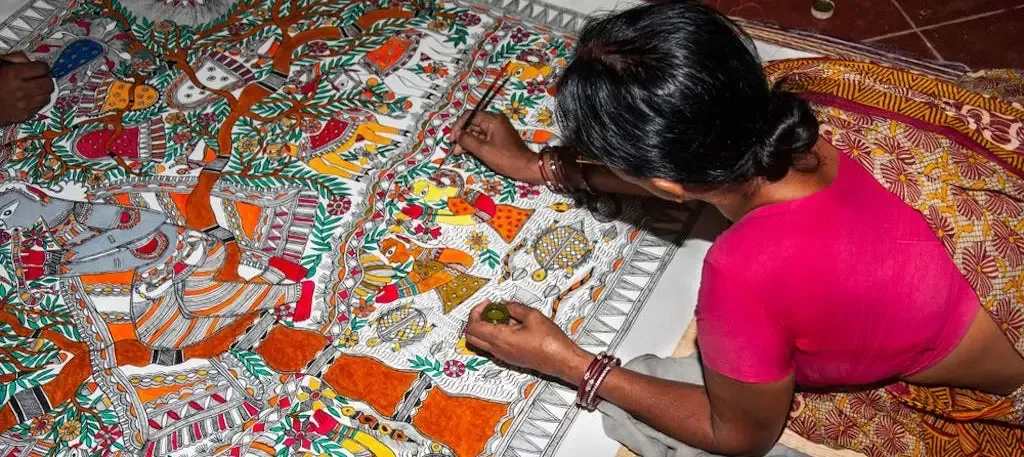
Unfair Profit Distribution for Madhubani Art Credits - iTokri
As Madhubani painting finds its way into fashion, home décor, and online shopping, its visual language has become commercially valuable far beyond Mithila. But the women who create these paintings do not necessarily benefit every time their art inspires a new product. Between the artist and the final customer, there may be manufacturers, wholesalers, retailers, online sellers, and design teams, each playing a role in bringing a product to market. The concern is how little of that commercial value may reach the original artists, particularly when their work is reproduced without their involvement.
The Appeal of Mass-Produced Imitations
A hand-painted Madhubani work takes time. The artist must plan the composition, build up its intricate patterns, and pay attention to the details that distinguish one painting from another. A factory can reproduce similar-looking motifs across hundreds of sarees, bedsheets, cushion covers, or wall hangings in a fraction of that time using screen printing or digital printing.
Manufacturers outside Bihar can draw on Madhubani-inspired designs to serve a large market for affordable ethnic products. These products may introduce the art's visual style to new audiences, but they also compete for attention with handmade work. When both are marketed using similar language or imagery, buyers may struggle to understand why one costs considerably more than the other.
For a Madhubani artist, the challenge is not simply competing with a cheaper product. It is competing in a market where the hours of labour behind an original painting can be difficult to see. A printed design can borrow the appearance of hand-drawn patterns without requiring the same time, training, or individual effort. Unless the difference is made clear to customers, the artist's work can become harder to value on its own terms.
The Distance Between Online Buyers and Artists
Online marketplaces have made it easier for customers to discover traditional Indian art, including work from regions they may never have visited. They can also help individual artists reach buyers beyond their local networks. Yet the same marketplaces can place authentic hand-painted works beside factory-made products, sometimes with descriptions that do not clearly distinguish between the two.
For someone shopping online, a photograph of a densely patterned Madhubani painting may offer few clues about how it was made. Terms such as traditional, ethnic, and handcrafted can further blur the distinction if the listing does not explain the production method. Buyers may believe they are supporting an artisan when they are actually purchasing a printed reproduction.
There is another layer to the problem. Artists who sell through intermediaries or third-party platforms may have limited control over product descriptions, pricing, and how their work is presented. Platforms and sellers may earn revenue from transactions, while the artist receives payment only if her original work is actually commissioned or purchased. The issue is not that online commerce cannot benefit artisans, but that greater visibility does not automatically translate into a fairer share of the earnings.
When Traditional Art Becomes a Design Trend
Madhubani's intricate lines, densely filled compositions, and recognisable motifs have obvious appeal for fashion and home décor. Designers can adapt elements of the tradition for garments, accessories, furnishings, and contemporary products, bringing its visual influence into spaces far removed from the villages of Mithila.
Such collaborations can create valuable opportunities when artists are commissioned, credited, and paid for their contributions. The concern arises when brands draw on a traditional visual language without involving the people who have sustained it, or when consumers are given no way to know whose knowledge inspired a design. The result can be a product that gains cultural appeal and commercial value while the artists behind the tradition remain largely unseen.
This also raises a difficult question about recognition. A brand may promote a collection through the beauty of Indian folk art, but the individual women who developed and practised that art over generations may receive neither a commission nor public credit. Their work becomes a source of inspiration, while the commercial identity belongs to someone else.
Bringing the Value Back to Mithila
None of this means that Madhubani should be kept out of modern markets. Artists deserve access to new customers, and thoughtful collaborations can help the tradition reach future generations. What matters is whether that growth creates opportunities for the practitioners themselves.
Direct commissions, transparent descriptions of handmade work, fair payment, and meaningful credit can help narrow the distance between an artist and the person who values her painting. Buyers can also make more informed choices by checking who made a piece, how it was produced, and whether the seller identifies the artist or the source community.
The women of Mithila should not have to choose between preserving their artistic traditions and making a living from them. If Madhubani is to continue thriving in a commercial world, the people whose hands give it form must have a meaningful place in the value their art creates.
Keeping Madhubani Alive Through the Artists Who Know It Best
A Platform that gives the artist their dues
To the women of Mithila who have spent years painting, teaching, and passing down Madhubani, your art deserves to be valued for far more than the patterns that have made it famous. Every line carries years of practice, every motif holds a memory, and every painting reflects a part of the world you have known and lived in. Despite that, somewhere along the way, the world has become better at recognising Madhubani than recognising the women behind it. Your work travels into homes and markets far beyond your own, but that recognition must also reach you, in the form of fair opportunities, respect for your skill, and the freedom to earn a dignified living from what you know.
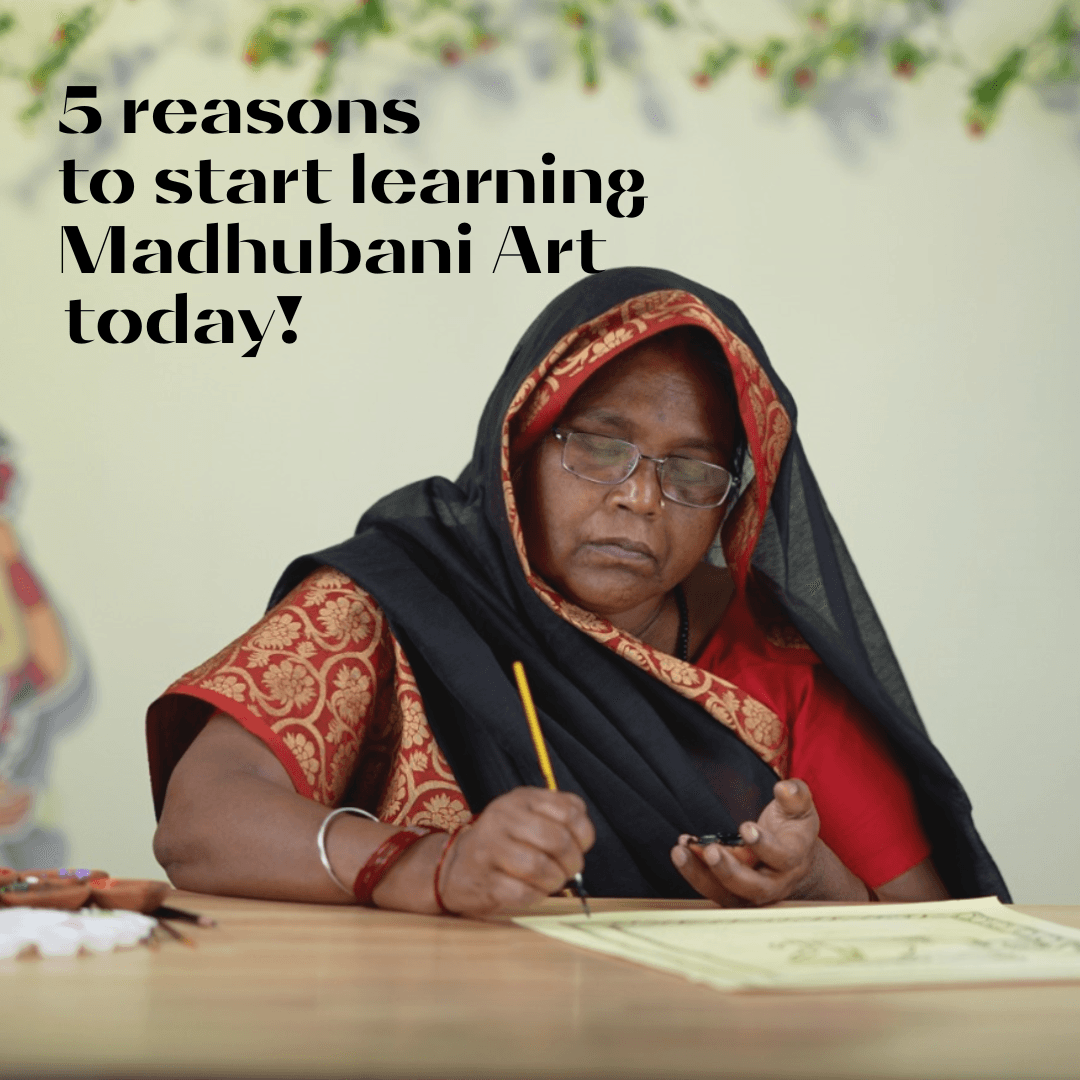
There is still so much people can learn from you, and that learning should begin by listening to your stories. Rooftop's Madhubani Painting Course with Padma Shri Dulari Devi offers one such opportunity. Across eight chapters and 55 lessons, Dulari Devi shares her artistic knowledge alongside the experiences that shaped her life. She speaks about learning the art, overcoming challenges, and finding her place as an artist and teacher. Her journey, from working as domestic help in the home of artist Mahasundari Devi to receiving the Padma Shri, reminds us that the women who carry these traditions forward have their own stories of struggle, perseverance, and achievement.
Perhaps that is where a deeper appreciation for Madhubani begins. Not with another product bearing its familiar designs, but with the willingness to understand the hands that made them and the lives behind them. The women of Mithila should not have to watch their art become more valuable while their own labour remains undervalued. Madhubani deserves to flourish, and so do the artists who have given it so much of their lives. As more people discover this beautiful tradition, may they also learn to seek out its artists, listen to their voices, and give their work the recognition it has always deserved.