
Gond Painting Workshop
Gond Painting Workshop: What Happens When a Gond Artist Teaches You to See Like One
Learn what to expect from a Gond art workshop, from traditional patterns and techniques to the stories and cultural context behind this distinctive art form.

Rooftop
Author
Almost everyone has come across Gond painting in some form. Even if you do not know much about the art form itself, chances are you have seen its distinctive patterns, animals, plants, and intricate lines somewhere. Naturally, that visibility can spark curiosity. You may want to pick up a brush and try it yourself, but before learning how to make Gond art, it is worth understanding what you are actually learning. Gond painting is a living artistic tradition with its own history, communities, visual language, and ways of working.
Its growing popularity has also taken it far beyond its traditional contexts, appearing in galleries, public spaces, textiles, stationery, home décor, and across social media. That wider visibility has introduced Gond art to new audiences, but it can also make the tradition seem like a collection of patterns and techniques that anyone can simply reproduce. Learning Gond art responsibly begins with looking beyond the surface. Understanding where the tradition comes from, how its visual elements developed, and how contemporary Gond artists practise it today gives you a much clearer foundation before you start creating your own work.
Why People Seek This Experience Out
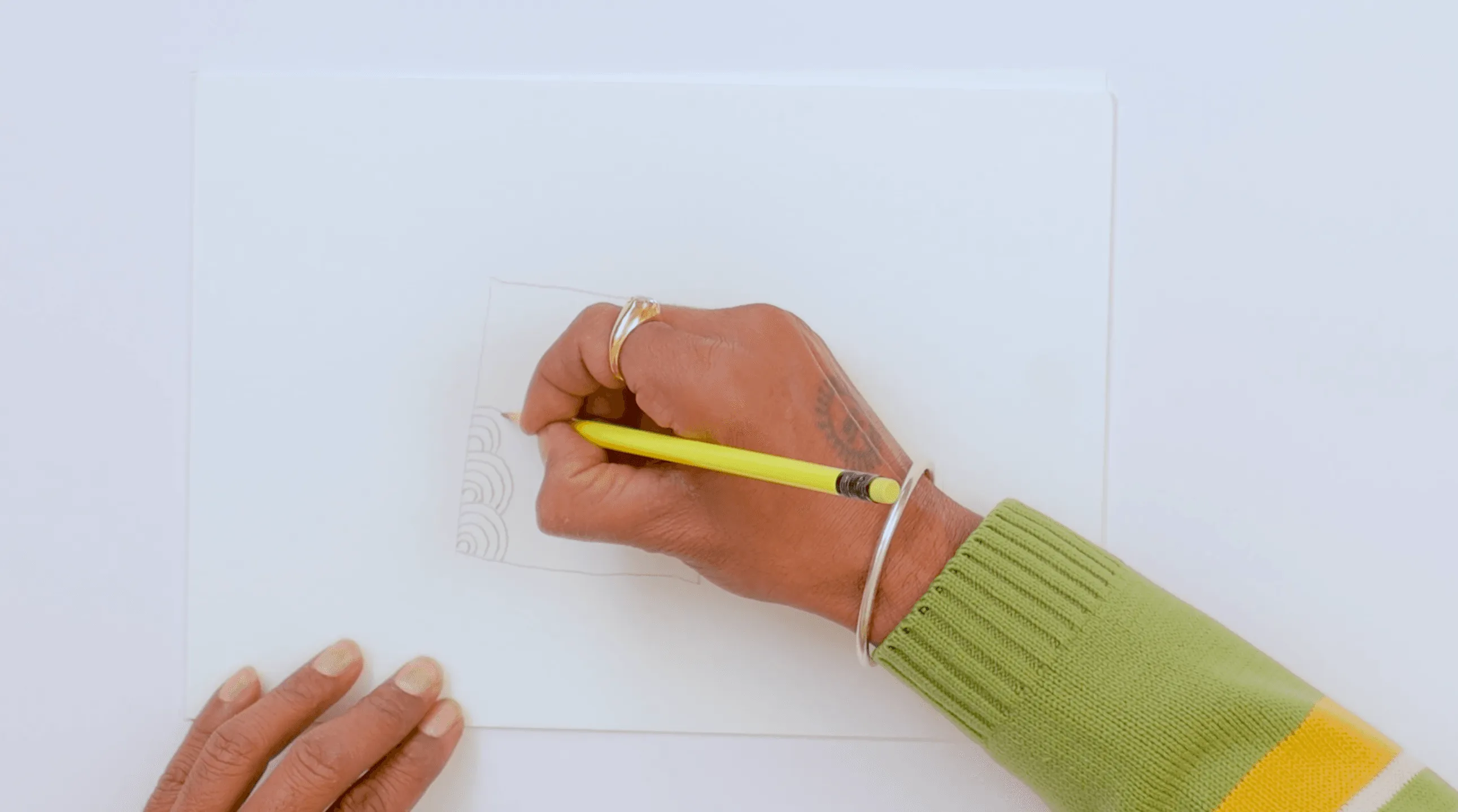
Gond Art Workshop Experience
The growing demand for Gond-inspired imagery has created a market where the visual elements of the tradition can sometimes become detached from the artists and communities behind them. Once an artwork is photographed or digitised, it can be reproduced across products, marketing material, and online marketplaces with little information about its original creator.
Unattributed Print-on-Demand Goods
Gond-inspired patterns appear across online marketplaces on products such as tote bags, phone cases, wall plates, posters, and cushion covers. These designs may be described simply as “boho,” “tribal,” or “ethnic” patterns, without identifying the Gond tradition or the artists whose work may have influenced them. Without clear attribution or a licensing arrangement, the artist can disappear entirely from the commercial transaction.
Gond-Inspired Corporate Homeware
Gond motifs and visual elements have also found their way into mass-produced furniture, textiles, tableware, stationery, and other homeware. There is a meaningful difference between collaborating with Gond artists and drawing from the tradition without their involvement. When brands use recognisable elements of Gond art without proper context, attribution, or a relationship with the artists, consumers have little way of knowing where the imagery comes from or whether the people behind the tradition have benefited from its commercial use.
Uncontrolled Digital Circulation
The internet has made the circulation of Gond artwork even harder to track. Photographs and high-resolution scans of original paintings can be copied and reposted across websites, image databases, and social media, sometimes travelling far beyond the context in which they were originally published.
If those images are later used in packaging, advertising, publishing, or merchandise without the artist's knowledge or permission, tracing the use and establishing how it happened can become difficult. The result is a growing market for Gond imagery where the artwork can travel much further than the name, story, and livelihood of the artist behind it.
What Actually Happens Inside the Session
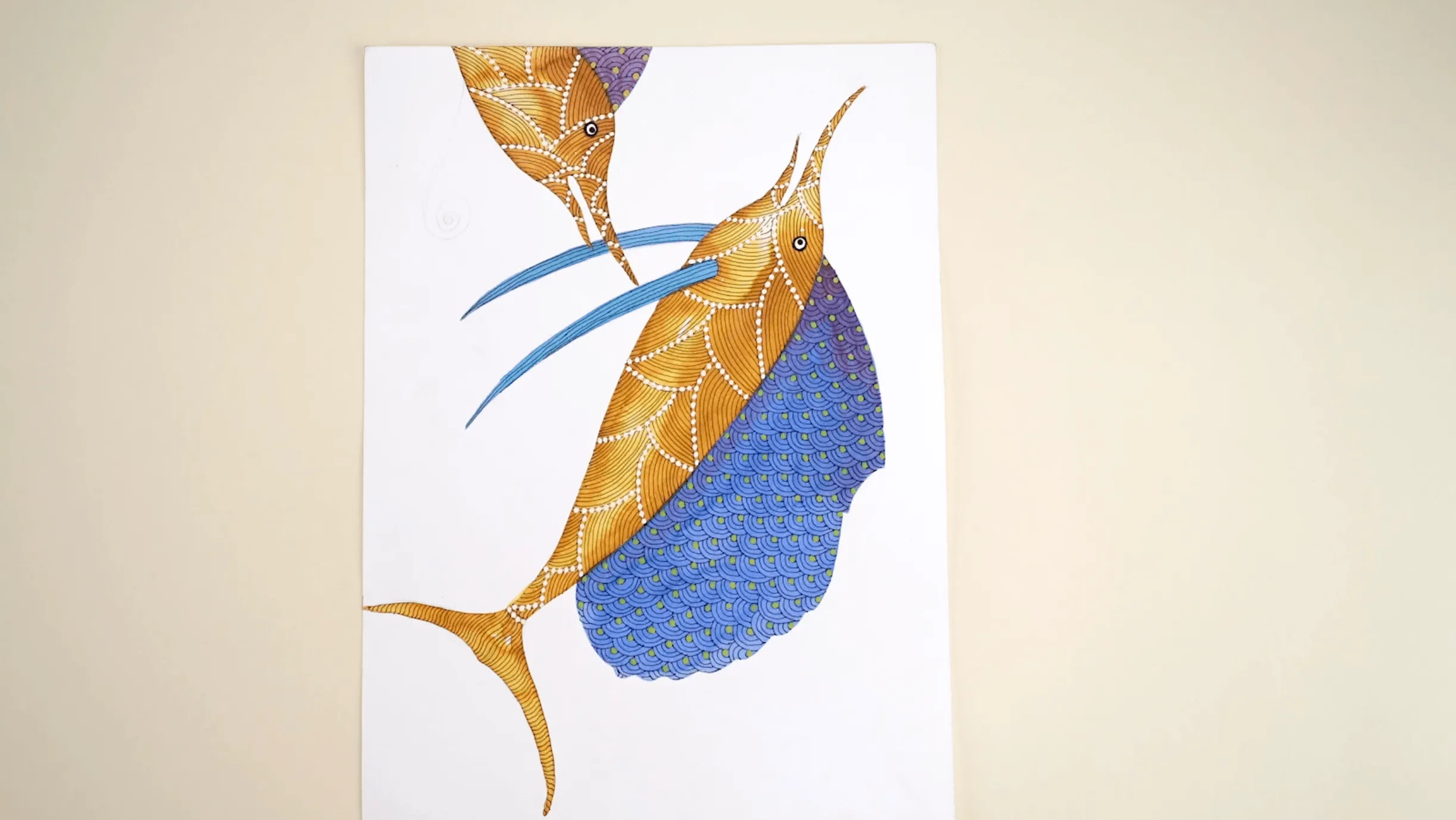
Gond Art Learning Session
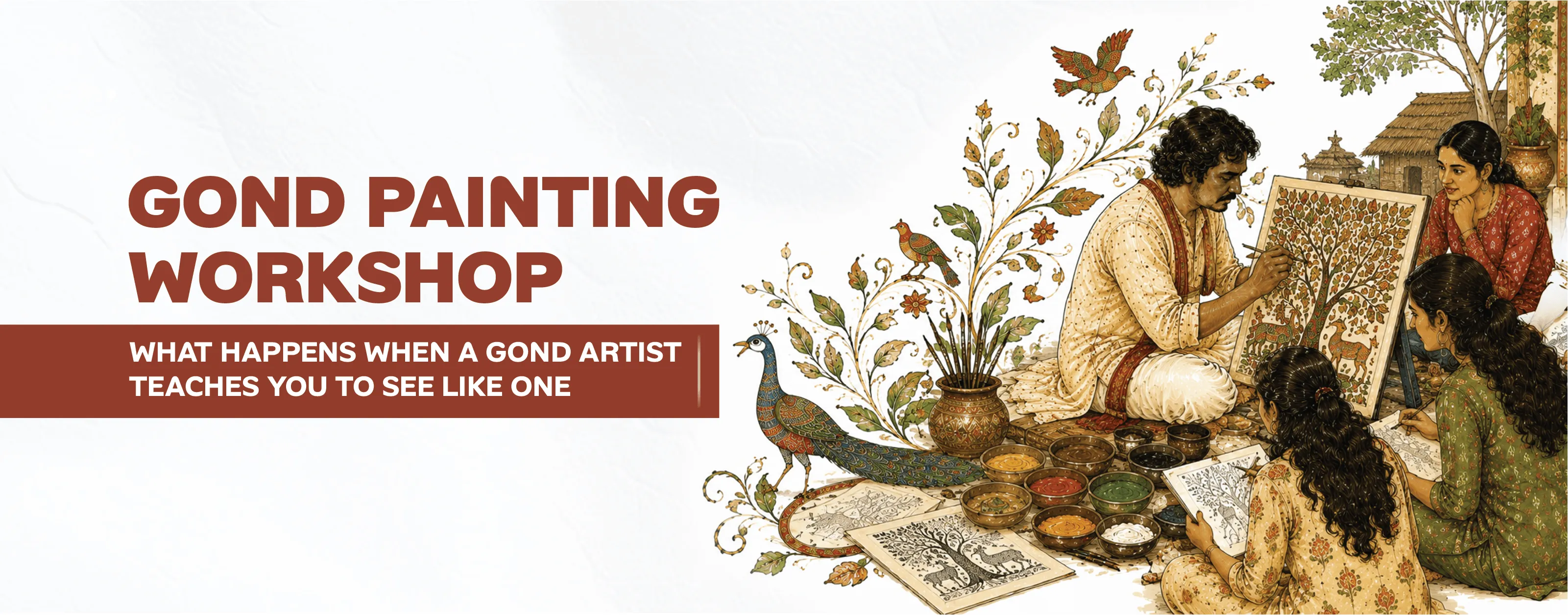
A Rooftop Gond art workshop takes participants through the basics of the art form with guidance from Gond artists and practitioners. The session starts with context before moving into practical exercises, so participants understand the ideas behind the patterns they are learning to draw.
- Understanding the Tradition: Before picking up a brush, participants are introduced to the origins of Gond art and the stories, beliefs, and symbolism associated with its imagery. They learn about recurring elements such as trees, birds, and animals, and how these appear within Gond painting.
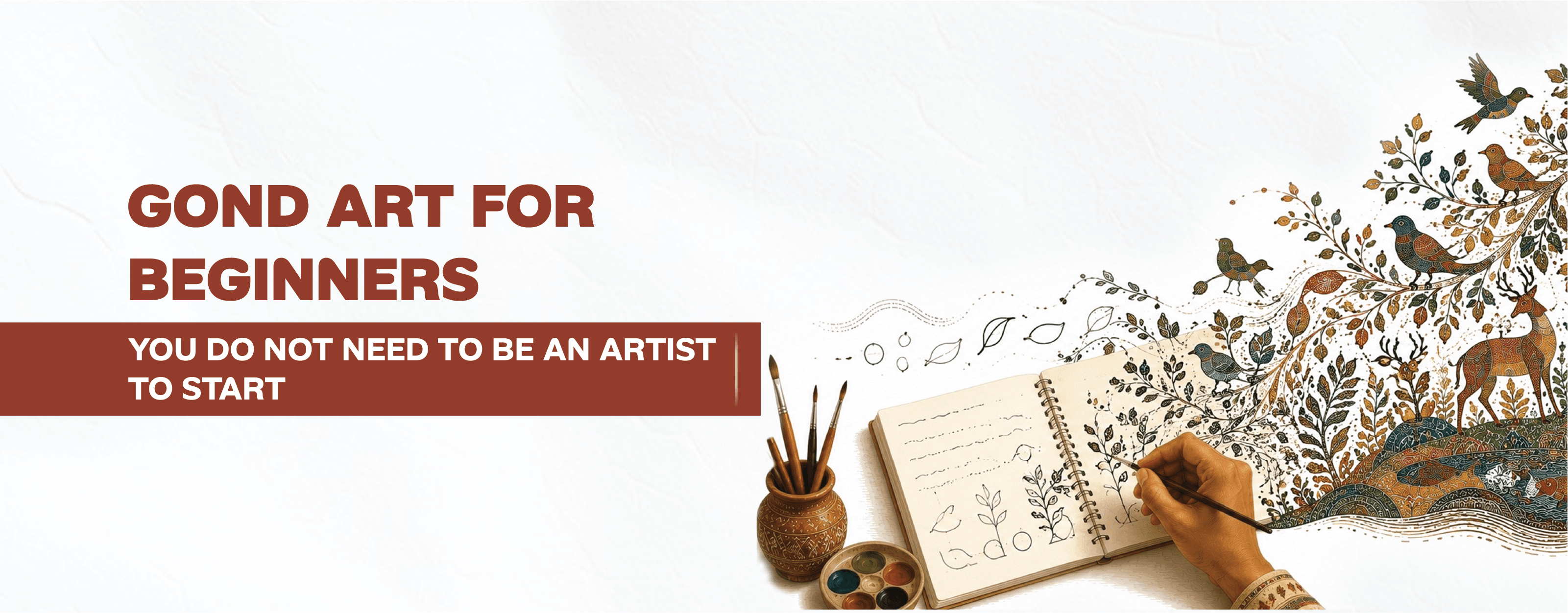
- Starting with the Contour: The first drawing exercise focuses on creating simple, fluid outlines. Participants practise drawing the contours of trees, birds, or animals without worrying about making every line perfectly uniform. This helps them get comfortable with the organic shapes that form the base of a Gond composition.
- Practising Patterns Separately: Instead of immediately filling an entire painting with intricate details, participants first practise individual Gond patterns on scrap paper. Scales, vertical dashes, dots, and other repeated marks can be worked on separately, helping beginners become more comfortable with the movements before they apply them to a larger composition.
The Moment It Clicks
At some point during the workshop, the patterns start to feel less intimidating. Instead of thinking about every individual dot or worrying about whether every line is perfectly straight, participants begin to focus on the movement of the brush itself. Repeating the same marks across a shape makes the process feel more natural with each section.
This is often when the practice starts to make sense. What initially feels like a slow and deliberate exercise becomes a steady rhythm of drawing and filling. The patterns begin to take shape almost instinctively, and participants can focus less on getting every mark right and more on how the different elements come together to form the painting.
What You Take Away Beyond the Painting
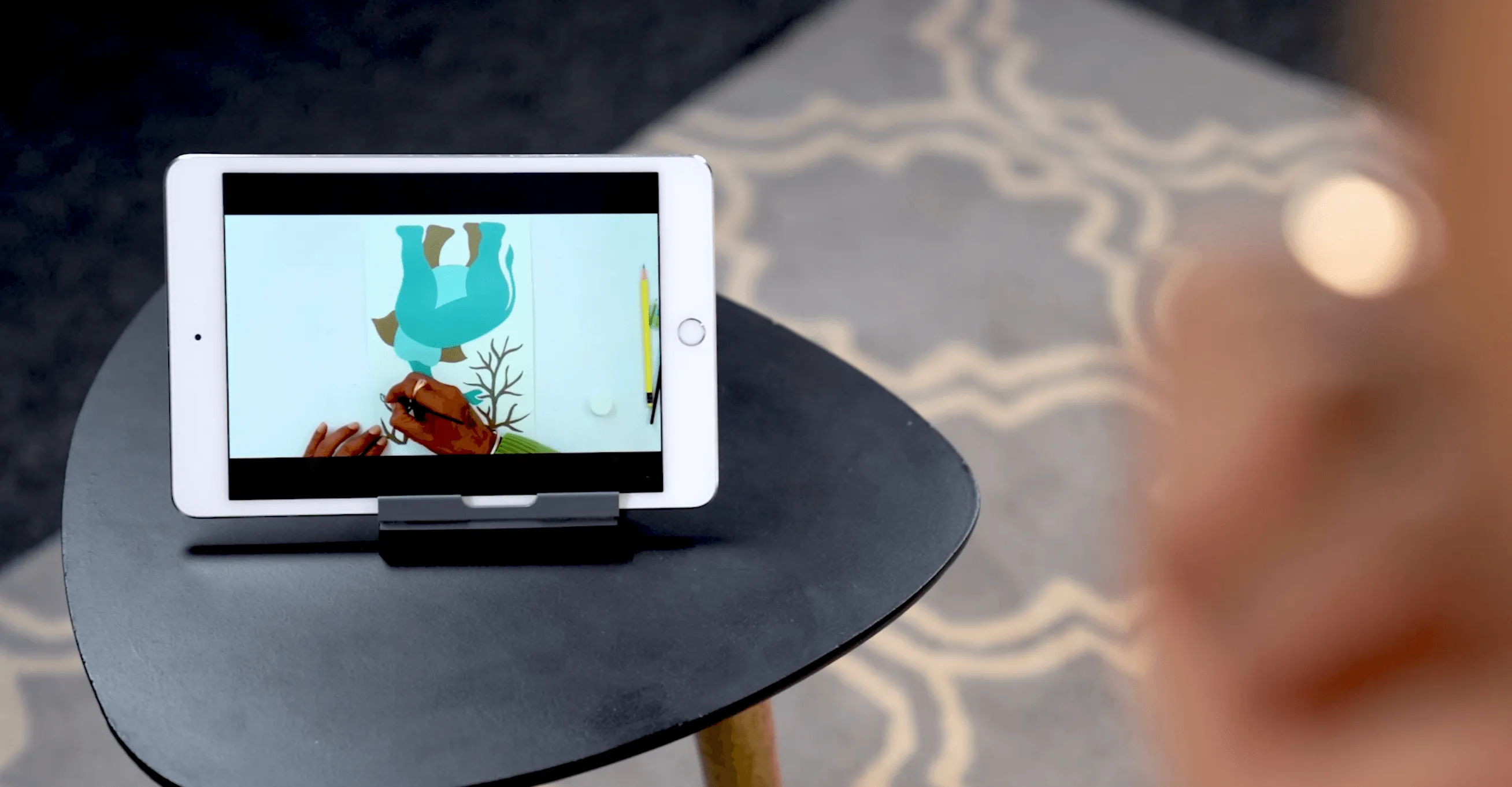
Digital Gond Art Workshop
Participants leave the workshop with a completed Gond painting, but the experience also changes how they look at the art form. After spending time working through the same small marks and patterns themselves, details that may have seemed easy to overlook become much easier to notice.
A Better Appreciation for Slowness
Gond painting requires time and repetition. Working through one pattern at a time shows how hundreds of small marks can gradually build up an entire composition. It gives participants a practical understanding of why patience is such an important part of the process.
A Different Way of Looking at Gond Art
Once you have tried the basic patterns yourself, Gond paintings can become easier to read. You start noticing the different fills, repeated lines, dots, colours, and ways artists use patterns to build up animals, plants, and other forms. Looking at the work after the workshop comes with a better understanding of what goes into creating it.
Greater Respect for Handmade Work
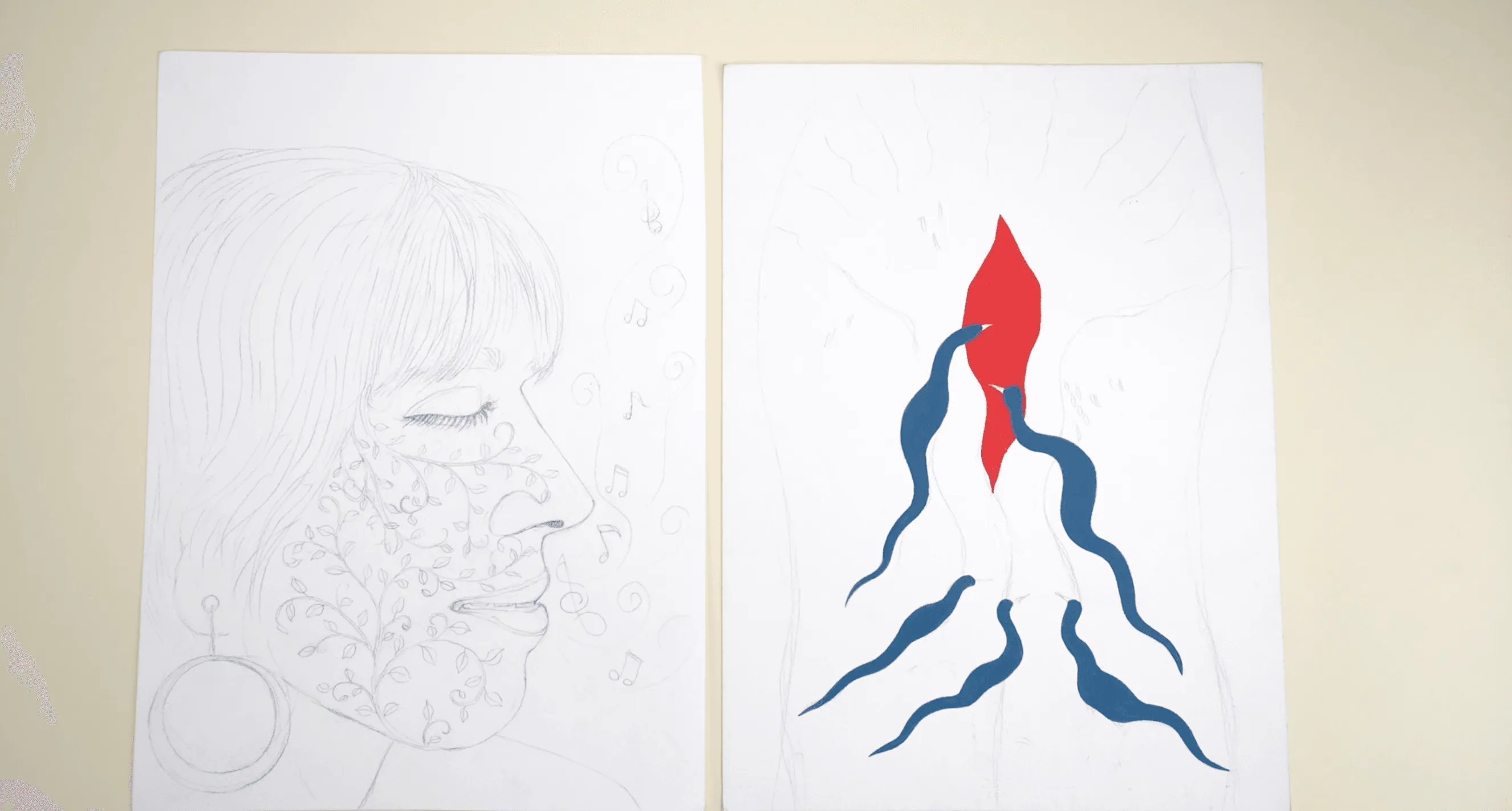
Handmade Gond Art
Making even one Gond painting gives you a sense of the time and concentration involved in producing a hand-painted work. That experience can change the way you look at handmade art, particularly when comparing an original painting with a mass-produced print or reproduction.
Who These Workshops Are For
You do not need to be an experienced artist to take part in a Gond painting workshop. The exercises start with basic shapes, contours, and patterns, making the format approachable for people with different levels of experience.
Complete Beginners
Adults with little or no drawing experience can use the workshop as an introduction to Gond painting. The focus is on learning the basic techniques step by step rather than producing a perfect painting.
Parents and Children
A workshop can also be a way for families to spend time creating something together. Children can learn about Gond art, animals, plants, and the stories associated with the tradition while working on their own artwork.
Corporate Groups
For teams, a hands-on art session offers a break from the usual work environment. Working through repetitive patterns and creating a shared activity can give colleagues time to slow down and focus on something outside their regular routines.
Cultural Travellers
Visitors interested in Indian art and culture can experience Gond painting by actually trying the techniques rather than simply seeing finished works in a gallery or museum. It offers a more practical introduction to the tradition and the process behind the paintings.
Learn Gond Art With Rooftop
Learn Gond with Rooftop
Learning Gond art is more meaningful when the techniques are accompanied by an understanding of the tradition behind them. That is the approach Rooftop takes with its Gond art experiences, giving participants the chance to learn the basics while also hearing about the history, stories, patterns, and practices associated with the art form.
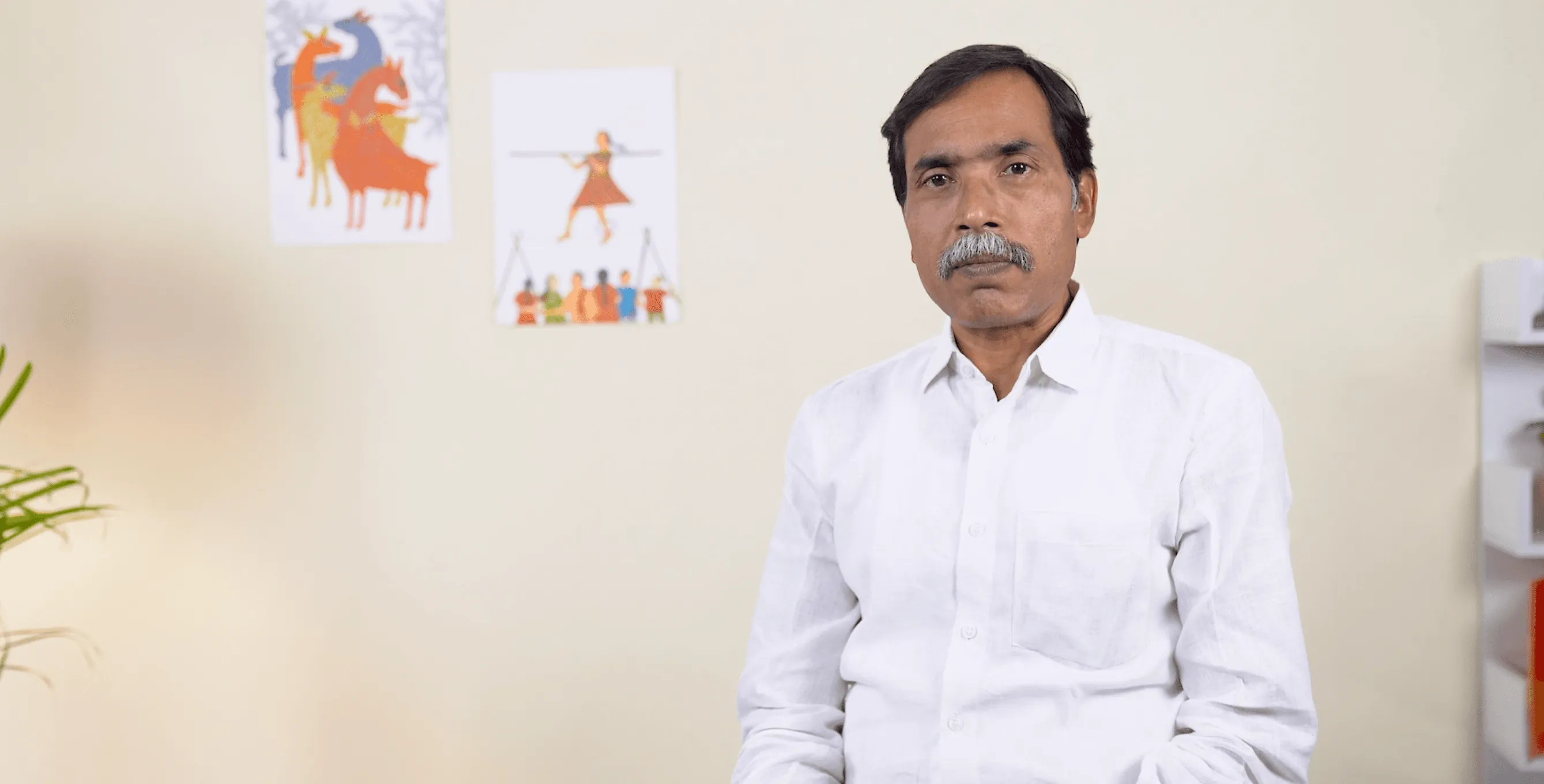
Rooftop's Gond Art Course with Venkat Raman Singh Shyam takes this a step further. Venkat is a second-generation Pardhan Gond artist who has spent more than four decades practising the art form. The 6-hour course is divided into 4 chapters and 28 lessons, covering the history and origins of Gond art, patterns, brushes, colours, and the creative process before moving into beginner, intermediate, and advanced exercises. The focus is on understanding how the different elements come together rather than simply copying a set of designs.
For those who prefer learning in person, Rooftop also conducts Gond art workshops where participants can work through the basic exercises with guidance and finish their own hand-painted artwork. It gives beginners a chance to experience the patience and repetition involved in Gond painting while learning more about the tradition behind the patterns.
The more Gond art reaches new audiences, the more important it becomes to understand what sits behind the familiar patterns. Learning from artists and engaging with the tradition on its own terms is one way to look beyond the surface and approach Gond painting with greater context and respect.